
Fusion Energy Market Report 2026
Global Outlook – By Type (Magnetic Confinement Fusion, Inertial Confinement Fusion, Stellarators, Spheromaks), By System Type (Experimental Reactors, Pilot Plants, Commercial Reactors), By Investment Type (Public Sector Investments, Private Sector Investments, International Collaborations), By Fuel Type (Deuterium-Tritium, Deuterium-Deuterium, Proton-Boron), By Application (Power Generation, Research And Development, Space Propulsion, Industrial Applications) – Market Size, Trends, Strategies, and Forecast to 2030
Fusion Energy Market Overview
• Fusion Energy market size has reached to $288.05 billion in 2025 • Expected to grow to $419.84 billion in 2030 at a compound annual growth rate (CAGR) of 7.8% • Growth Driver: Increasing Demand For Clean Energy Sources Fuelling The Growth Of The Market Due To Sustainability And Energy Security Needs • Market Trend: Technological Advancements Driving Innovation In Clean Energy Generation • Asia-Pacific was the largest region in 2025 and North America is the fastest growing region.Market Gains By 2030 – Top Opportunities By Segment
Market Gain identifies the most promising market opportunities by highlighting the segments or products expected to generate the highest incremental revenue growth over the next five years.
What Is Covered Under Fusion Energy Market?
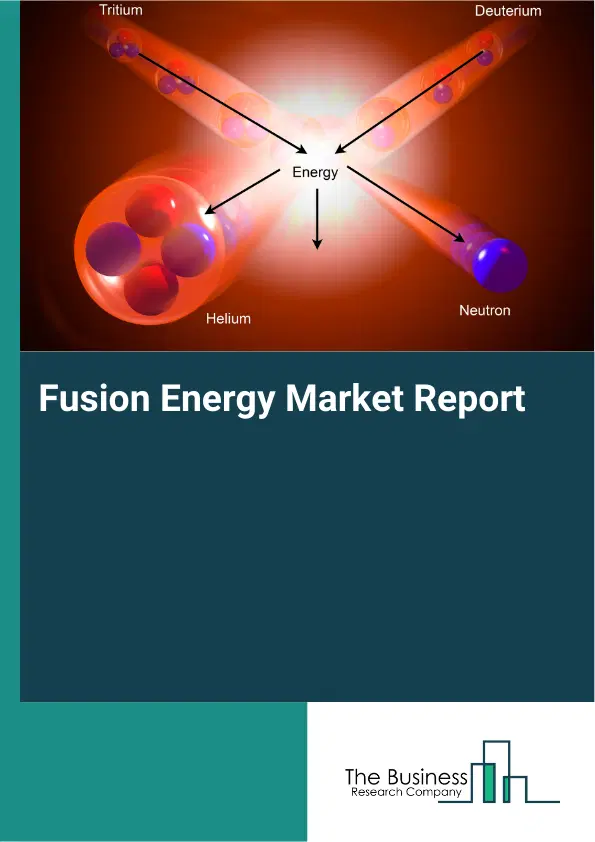
Fusion energy refers to the energy produced by nuclear fusion, where two light atomic nuclei, typically isotopes of hydrogen (such as deuterium and tritium), combine to form a heavier nucleus, releasing much energy. Fusion energy has the potential to provide a nearly limitless, clean source of power, as it produces little to no greenhouse gas emissions and generates minimal radioactive waste compared to traditional nuclear fission. The main types of fusion energy are magnetic confinement fusion, inertial confinement fusion, stellarators, and spheromaks. Magnetic confinement fusion is a method that uses powerful magnetic fields to control and confine plasma at extremely high temperatures, allowing nuclear fusion reactions to occur. The system types involved are experimental reactors, pilot plants, commercial reactors with public and private sector investments, and international collaborations. The fuel types involved are deuterium-tritium, deuterium-deuterium, and proton-boron, used for power generation, research and development, space propulsion, and industrial applications.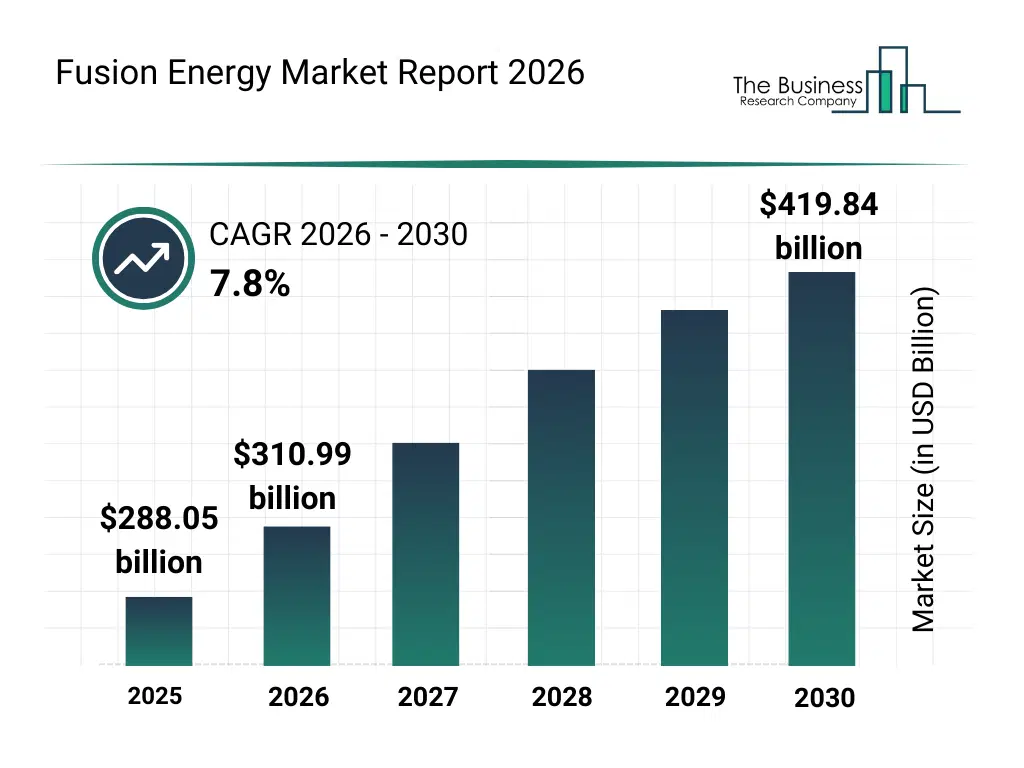
What Is The Fusion Energy Market Size and Share 2026?
The fusion energy market size has grown strongly in recent years. It will grow from $288.05 billion in 2025 to $310.99 billion in 2026 at a compound annual growth rate (CAGR) of 8.0%. The growth in the historic period can be attributed to extensive research in tokamaks and stellarators, early government-funded experimental reactors, international fusion collaborations, advancements in plasma physics, development of superconducting magnets.What Is The Fusion Energy Market Growth Forecast?
The fusion energy market size is expected to see strong growth in the next few years. It will grow to $419.84 billion in 2030 at a compound annual growth rate (CAGR) of 7.8%. The growth in the forecast period can be attributed to commercial pilot fusion plants, breakthroughs in net energy gain, rising private sector investments, integration with national power grids, development of tritium breeding and advanced fuel cycles. Major trends in the forecast period include advancements in magnetic confinement techniques, development of high-efficiency inertial confinement systems, investment in compact and modular fusion reactors, enhancement of fuel cycle optimization technologies, growth of international research collaborations.
Global Fusion Energy Market Segmentation
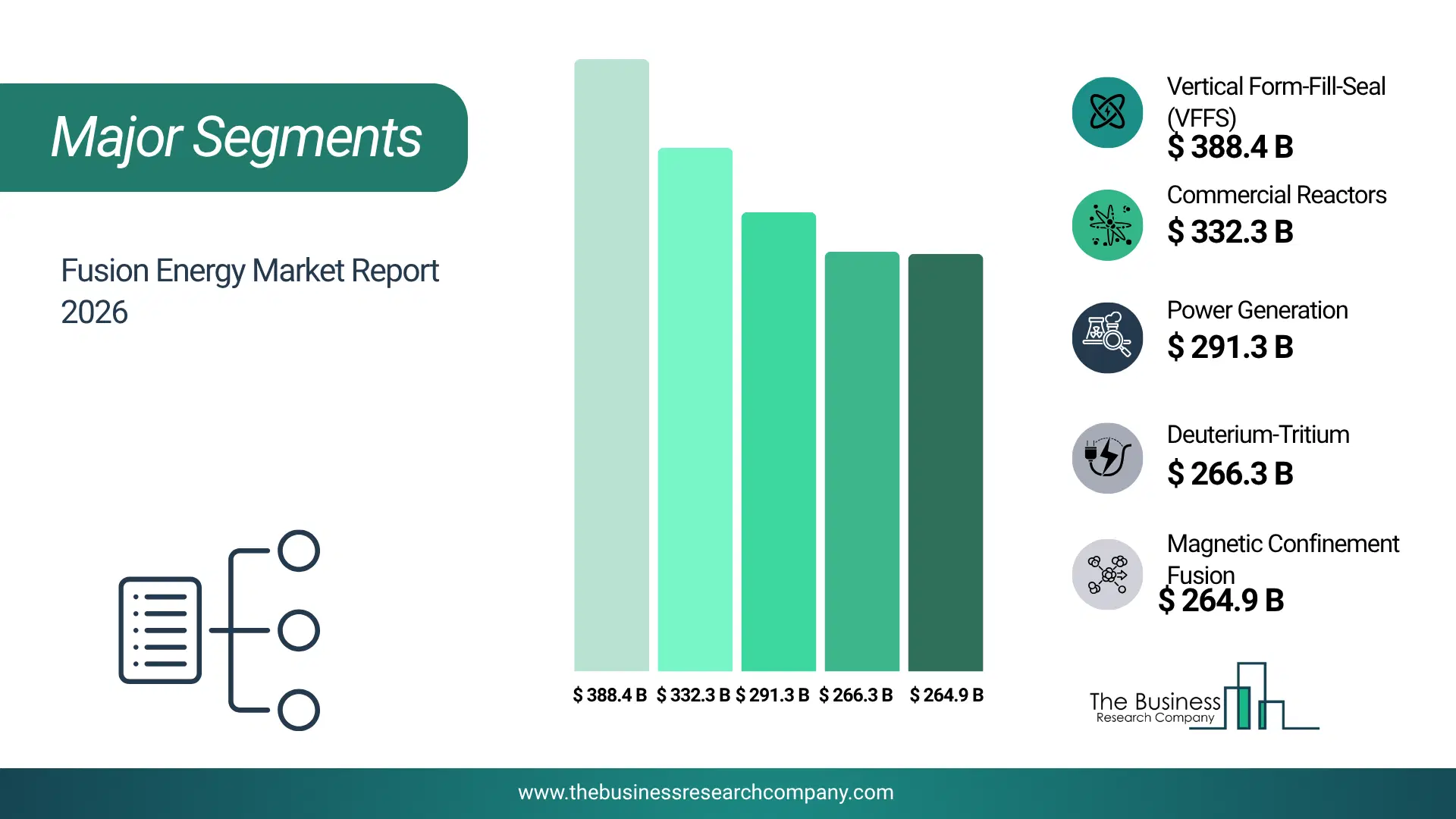
1) By Type: Magnetic Confinement Fusion, Inertial Confinement Fusion, Stellarators, Spheromaks 2) By System Type: Experimental Reactors, Pilot Plants, Commercial Reactors 3) By Investment Type: Public Sector Investments, Private Sector Investments, International Collaborations 4) By Fuel Type: Deuterium-Tritium, Deuterium-Deuterium, Proton-Boron 5) By Application: Power Generation, Research And Development, Space Propulsion, Industrial Applications Subsegments: 1) By Magnetic Confinement Fusion: Tokamaks, Stellarators, Compact Tori, Magnetic Mirrors 2) By Inertial Confinement Fusion: Laser-Driven Fusion, Heavy-Ion Beam Fusion, Z-Pinch Fusion 3) By Stellarators: Helical Stellarators, Torsatron Stellarators, Heliac Stellarators 4) By Spheromaks: Coaxial Helicity Injection (CHI) Spheromaks, Inductive Spheromaks The top segments in the fusion energy market will be: • Private Sector Investments will reach $388430 Million by 2030. • Commercial Reactors will reach $332293.86 Million by 2030. • Power Generation will reach $291329.63 Million by 2030. • Magnetic Confinement Fusion will reach $264904.1 Million by 2030. • Deuterium-Tritium will reach $266329.33 Million by 2030.What Is The Driver Of The Fusion Energy Market?
The increasing demand for clean energy sources is expected to drive the growth of the fusion energy market going forward. Clean energy sources are renewable or low-carbon options, such as solar, wind, and hydropower, that produce little to no greenhouse gas emissions and minimize environmental impact. The demand for clean energy sources is rising due to growing concerns over climate change and the depletion of fossil fuel resources. As global temperatures rise and extreme weather events become more frequent, there is increasing urgency to transition to renewable energy options such as solar, wind, and hydroelectric power, which produce little to no emissions. Fusion energy offers clean energy sources by providing a nearly limitless and environmentally friendly alternative to fossil fuels. Nuclear fusion generates energy by combining light atomic nuclei, typically isotopes of hydrogen, to form a heavier nucleus, releasing vast amounts of energy. For instance, in March 2025, according to the International Renewable Energy Agency (IRENA), a UAE-based intergovernmental organization, in 2024, global renewable power capacity increased by about 585 gigawatts (GW), accounting for over 90% of total power capacity additions and reaching a total of 4,448 GW of installed renewable energy capacity worldwide. Therefore, the increasing demand for clean energy sources is driving the growth of the fusion energy industry.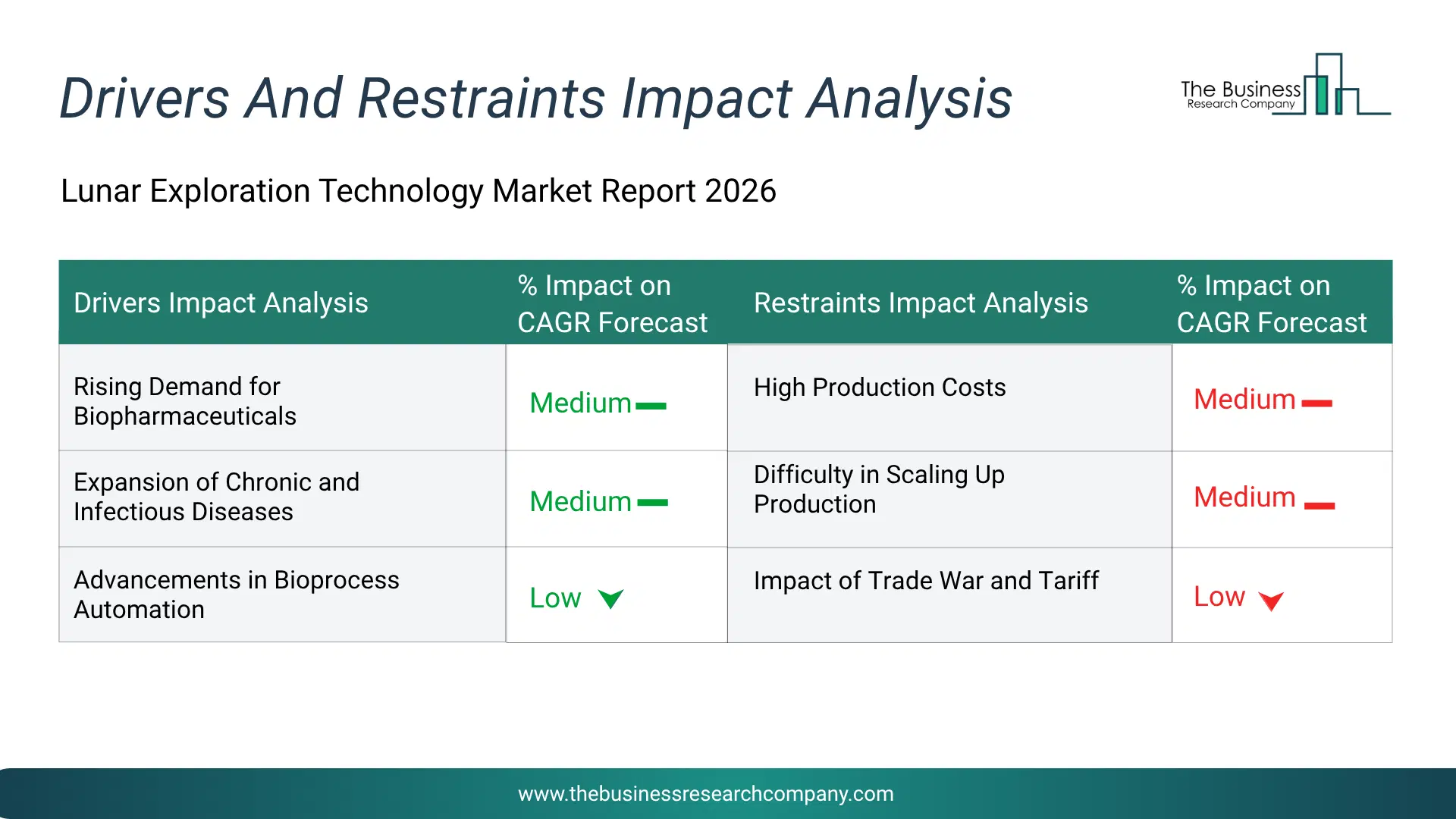
Infographic Chart Showing Key Market Drivers Analysis And Restraints For Fusion Energy Market
The chart presents an impact analysis of key drivers and restraints, quantifying their relative influence on the market's growth rate and helping assess the balance between growth enablers and limiting factors. This chart offers a high-level perspective; the full report contains more detailed insights.
How Will The Drivers Impact Growth In The Global Fusion Energy Market?
• Growing Need To Reduce Carbon Emissions (Medium) – During the forecast period, the growing need to reduce carbon emissions will become a key driver of growth in the fusion energy market by 2030. governments, corporations, and research institutions are increasingly seeking clean, sustainable alternatives to traditional fossil fuels, positioning fusion energy as a key solution. its potential to deliver large-scale, low-carbon power aligns with worldwide climate targets and energy transition goals. investments in advanced technologies, government incentives, and strategic partnerships are further accelerating market adoption. as industries and nations prioritize decarbonization, the demand for fusion energy solutions is expected to rise, creating substantial opportunities for market expansion and innovation. as a result, the growing need to reduce carbon emissions is anticipated to contributing to a 1.5% annual growth in the market. • Expansion Of Net-Zero Emission Targets (Medium) – During the forecast period, the expansion of net-zero emission targets will emerge as a major factor driving the expansion of the fusion energy market by 2030 as governments and corporations commit to achieving carbon neutrality, there is increasing demand for sustainable and low-carbon energy solutions. fusion energy, with its potential to provide large-scale, reliable, and environmentally friendly power, is emerging as a strategic option to meet these targets. rising investments in research and development, coupled with supportive policies and international collaborations are further accelerating market adoption. consequently, the growing focus on decarbonization and clean energy is set to create significant opportunities for the fusion energy sector. consequently, the expansion of net-zero emission targets is projected to contributing to a 1.0% annual growth in the market. • Increasing Demand For Clean Energy Source (Low) – During the forecast period, the increasing demand for clean energy source will serve as a key growth catalyst for the fusion energy market by 2030. as industries and governments worldwide focus on reducing greenhouse gas emissions and transitioning away from fossil fuels, fusion energy is gaining attention for its ability to provide large-scale, low-carbon power. technological advancements, increased r&d investments, and supportive policies are further accelerating market adoption. additionally, growing environmental awareness and the pursuit of energy security are encouraging stakeholders to explore fusion as a long-term solution. therefore, this increasing demand for clean energy source is projected to supporting to a 0.8% annual growth in the market. • Increasing Energy Security Needs (Low) – During the forecast period, increasing energy security needs is expected to propel the growth of the fusion energy market in the forecast period. as nations seek reliable and sustainable energy sources to reduce dependence on fossil fuels and volatile energy imports, fusion energy presents a promising solution. its potential to deliver large-scale, continuous, and low-carbon power aligns with strategic energy objectives, ensuring stable and resilient supply. investments in technological development, government support, and international collaborations are accelerating commercialization efforts. with energy security becoming a top priority for governments and industries alike, demand for fusion energy solutions is expected to rise, creating significant opportunities for market expansion. therefore, increasing energy security needs is projected to supporting to a 0.5% annual growth in the market.How Will The Restraints Impact Growth In The Global Fusion Energy Market?
• Regulatory And Permitting Uncertainty (Medium) – During the forecast period, regulatory and permitting uncertainty is expected to hinder the growth of the fusion energy market in forecast period. the complex approval processes, varying national regulations, and evolving policy frameworks can delay project development and increase operational costs for companies. navigating these regulatory landscapes requires significant time, expertise, and investment, which may slow market adoption. additionally, inconsistencies in safety standards and licensing procedures across regions can create additional hurdles for international collaborations and large-scale deployment. as a result, while technological advancements and market demand support growth, regulatory complexities are likely to act as a constraint, potentially limiting the pace of expansion in the fusion energy sector. therefore, regulatory and permitting uncertainty may hinder the growth of the fusion energy market. Growth affected by the regulatory and permitting uncertainty during the forecast period in 2025 is -15.0%. • Insufficient Trained Workforce (Medium) – During the forecast period, insufficient trained workforce is expected to hinder the growth of the fusion energy market. developing, operating, and maintaining fusion energy systems require highly specialized skills in nuclear physics, engineering, and advanced technologies. a shortage of qualified professionals can slow project timelines, increase operational risks, and raise labor costs, limiting the speed of market adoption. furthermore, the gap in technical expertise may affect research and development efforts, delaying innovation and commercialization of new fusion technologies. therefore, insufficient trained workforce may hinder the growth of the fusion energy market. Growth affected by the insufficient trained workforce during the forecast period in 2025 is -12.0%. • Trade War And Tariffs (Low) – During the forecast period, trade wars and tariffs are expected to restrain the growth of the fusion energy market during the forecast period by increasing the costs of imported equipment, specialized materials, advanced components, and critical technology systems, as well as software solutions and related services required for fusion reactor development, operation, and energy management. increase in import duties on critical equipment, specialized materials, and advanced reactor components can raise project costs, affecting the economic feasibility of new developments. tariffs on essential technology systems, software, and related services may further disrupt supply chains, delay project timelines, and limit access to cutting-edge innovations. additionally, geopolitical tensions can reduce international collaborations and investments, slowing global market expansion. therefore, trade wars and tariffs may restrain the growth of the fusion energy market. Growth affected by the impact of trade war and tariffs during the forecast period in 2025 is -0.2%.Key Players In The Global Fusion Energy Market
Major companies operating in the fusion energy market are Commonwealth Fusion Systems, TAE Technologies, Helion Energy, General Fusion, Zap Energy, Tokamak Energy, Proxima Fusion, OpenStar Technologies, LPPFusion, First Light Fusion, Focused Energy, EX‑Fusion, Blue Laser Fusion, LaserFusionX, Pacific Fusion, HB11 Energy, Renaissance Fusion, Gauss Fusion, Type One Energy Group, Energy Singularity Fusion Power Technology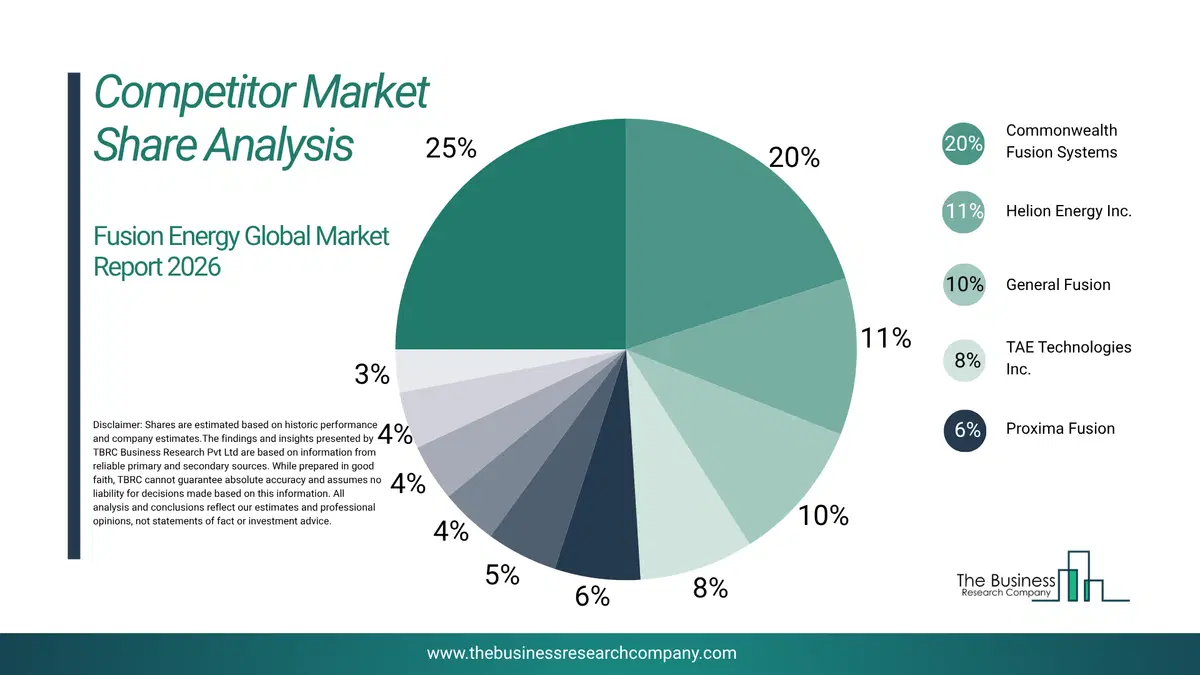
This chart is for illustrative purposes; the full report includes a detailed competitor analysis and comprehensive overview of the top 10 companies in the market.
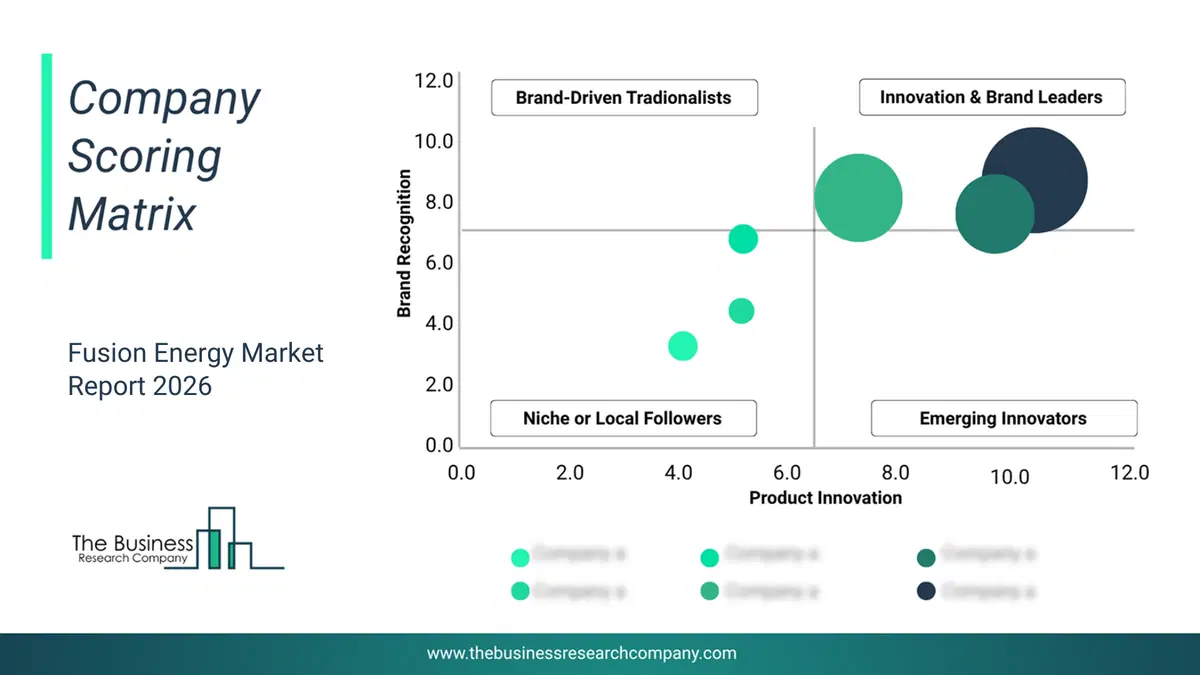
This chart maps companies by product innovation and brand strength, with bubble size indicating relative revenue, helping identify market leaders, challengers, and niche players. This is an illustrative chart; the full report provides a complete and accurate competitive analysis.
Global Fusion Energy Market Trends and Insights
Major companies operating in the fusion energy market are focusing on developing innovative technology, such as innovative fusion technology, to enhance clean energy generation. The fusion technology is equipped with advanced low-energy nuclear reaction (LENR) capabilities and is designed to provide sustainable energy solutions across various applications. For instance, in July 2024, Hylenr Technologies Private Limited, an India-based company specializing in low-energy nuclear reactor (LENR) technology, launched cold fusion technology to generate clean energy using its patented Low Energy Nuclear Reactor (LENR) technology. HYLENR’s Low Energy Nuclear Reactor is designed for steam generation, space missions (MMRTG), room heating across cold regions globally, and induction heating for industrial and domestic requirements. HYLENR devices are equipped with advanced nuclear reaction technology and have the potential to reduce the risk profile for space missions significantly.What Are Latest Mergers And Acquisitions In The Fusion Energy Market?
In July 2023, Tokamak Energy Ltd., a UK-based fusion energy company, collaborated with Sumitomo Corporation for an undisclosed amount. The collaboration aims to accelerate commercial fusion energy development, implementation, and scaling in Japan and globally. Sumitomo Corporation is a Japan-based trading and investment company engaged in diverse industries, including metals, energy, infrastructure, and finance.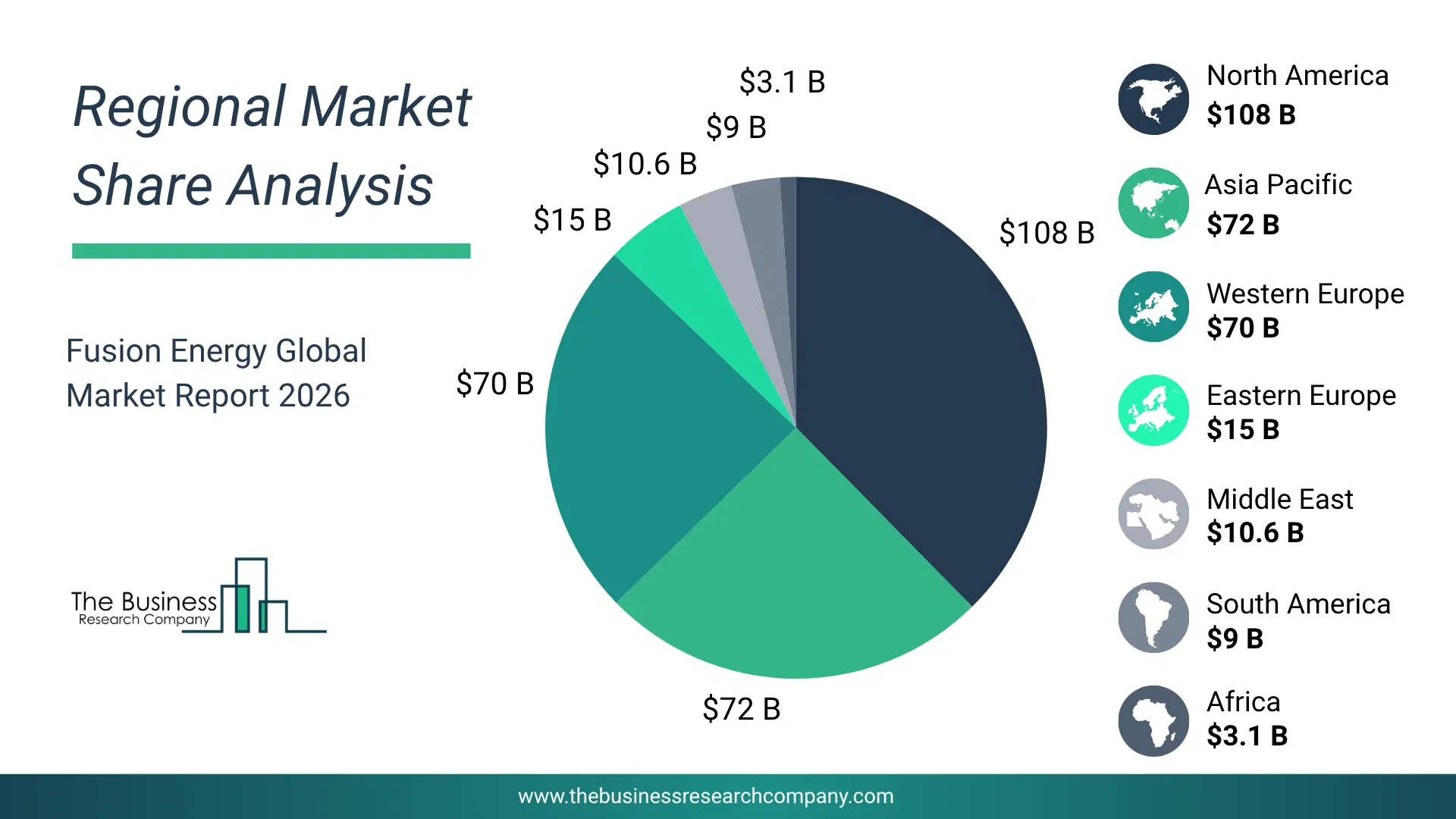
Regional Outlook
Asia-Pacific was the largest region in the fusion energy market in 2025. North America is expected to be the fastest-growing region in the forecast period. The regions covered in this market report are Asia-Pacific, South East Asia, Western Europe, Eastern Europe, North America, South America, Middle East, Africa. The countries covered in this market report are Australia, Brazil, China, France, Germany, India, Indonesia, Japan, Taiwan, Russia, South Korea, UK, USA, Canada, Italy, SpainWhat Defines the Fusion Energy Market?
The fusion energy market consists of revenues earned by entities by providing fusion energy services such as research and development services, consulting and feasibility studies, and fusion power plant development and engineering. The market value includes the value of related goods sold by the service provider or included within the service offering. The fusion energy market also includes sales of superconducting magnets, helion energy’s fusion generator, and tokamak-based reactors. Values in this market are ‘factory gate’ values, that is the value of goods sold by the manufacturers or creators of the goods, whether to other entities (including downstream manufacturers, wholesalers, distributors and retailers) or directly to end customers. The value of goods in this market includes related services sold by the creators of the goods.How is Market Value Defined and Measured?
The market value is defined as the revenues that enterprises gain from the sale of goods and/or services within the specified market and geography through sales, grants, or donations in terms of the currency (in USD unless otherwise specified). The revenues for a specified geography are consumption values that are revenues generated by organizations in the specified geography within the market, irrespective of where they are produced. It does not include revenues from resales along the supply chain, either further along the supply chain or as part of other products.
This chart presents market attractiveness based on a quantitative evaluation of growth, competition, strategic alignment, and risk, offering a clear view of opportunity areas for decision-making. This chart is for illustrative purposes; the full report contains the complete analysis.

This chart highlights the Total Addressable Market (TAM) by estimating the maximum revenue opportunity using an assumption-driven approach, supporting strategic planning and opportunity sizing across markets. The chart is illustrative; the full report provides a more comprehensive analysis.
What Key Data and Analysis Are Included in the Fusion Energy Market Report 2026?
The fusion energy market research report is one of a series of new reports from The Business Research Company that provides market statistics, including Market Report 2026?global market size, regional shares, competitors with the market share, detailed market segments, market trends and opportunities, and any further data you may need to thrive in the fusion energy Market Report 2026? The market research report delivers a complete perspective of everything you need, with an in-depth analysis of the current and future state of the Market Report 2026?Fusion Energy Market Report Forecast Analysis
| Report Attribute | Details |
|---|---|
| Market Size Value In 2026 | $310.99 billion |
| Revenue Forecast In 2030 | $419.84 billion |
| Growth Rate | CAGR of 8.0% from 2026 to 2030 |
| Base Year For Estimation | 2025 |
| Actual Estimates/Historical Data | 2020-2025 |
| Forecast Period | 2026 - 2030 - 2035 |
| Market Representation | Revenue in USD Billion and CAGR from 2026 to 2030 |
| Segments Covered | Type, System Type, Investment Type, Fuel Type, Application |
| Regional Scope | Asia-Pacific, Western Europe, Eastern Europe, North America, South America, Middle East, Africa |
| Country Scope | The countries covered in the report are Australia, Brazil, China, France, Germany, India, Indonesia, Japan, Taiwan, Russia, South Korea, UK, USA, Canada, Italy, Spain. |
| Key Companies Profiled | Commonwealth Fusion Systems, TAE Technologies, Helion Energy, General Fusion, Zap Energy, Tokamak Energy, Proxima Fusion, OpenStar Technologies, LPPFusion, First Light Fusion, Focused Energy, EX‑Fusion, Blue Laser Fusion, LaserFusionX, Pacific Fusion, HB11 Energy, Renaissance Fusion, Gauss Fusion, Type One Energy Group, Energy Singularity Fusion Power Technology |
| Customization Scope | Request for Customization |
| Pricing And Purchase Options | Explore Purchase Options |