
Food Certification Services Market Report 2026
Global Outlook – By Type (International Organization For Standardization (ISO) 22000, British Retail Consortium Global Standards (BRCGS), Safe Quality Food (SQF), International Featured Standards (IFS), Halal, Kosher, Other Types), By Application (Dairy Products, Meat, Poultry, Seafood, Bakery And Confectionery, Beverages, Fruits And Vegetables, Other Applications), By End-User (Food Manufacturers, Food Retailers, Food Service Providers, Other End-Users) – Market Size, Trends, Strategies, and Forecast to 2030
Food Certification Services Market Overview
• Food Certification Services market size has reached to $15.76 billion in 2025 • Expected to grow to $23.06 billion in 2030 at a compound annual growth rate (CAGR) of 7.9% • Growth Driver: Increasing Food Safety Awareness Driving Industry Growth Due To Heightened Consumer Focus On Hygiene And Regulatory Compliance • Market Trend: Development Of Multi-Criteria Certification Frameworks To Drive Sustainability And Waste Reduction In Food Operations • North America was the largest region in 2025 and Asia-Pacific is the fastest growing region.Market Gains By 2030 – Top Opportunities By Segment
Market Gain identifies the most promising market opportunities by highlighting the segments or products expected to generate the highest incremental revenue growth over the next five years.
What Is Covered Under Food Certification Services Market?
Food certification services involve the inspection, testing, and validation of food products, processes, and systems to ensure compliance with national and international safety, quality, and regulatory standards. These services are provided by accredited third-party organizations. It helps to assure consumers of food safety, enhance brand credibility, and facilitate market access for food producers and exporters. The main types of food certification services are International Organization for Standardization (ISO) 22000, British Retail Consortium Global Standards (BRCGS), Safe Quality Food (SQF), International Featured Standards (IFS), Halal, Kosher, and others. International Organization for Standardization (ISO) 22000 refers to an international food safety management standard that ensures safe food handling across the entire food supply chain. It covers a broad range of applications, including dairy products, meat, poultry, seafood, bakery and confectionery, beverages, fruits and vegetables, and others, serving end-users, such as food manufacturers, food retailers, food service providers, and others.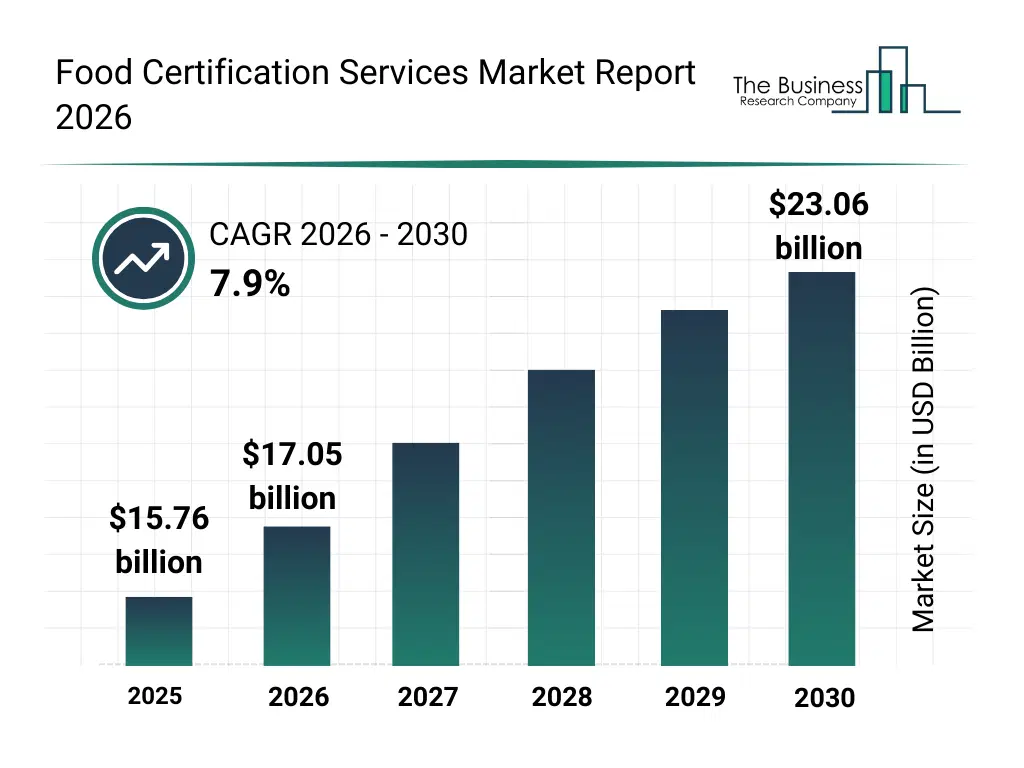
What Is The Food Certification Services Market Size and Share 2026?
The food certification services market size has grown strongly in recent years. It will grow from $15.76 billion in 2025 to $17.05 billion in 2026 at a compound annual growth rate (CAGR) of 8.1%. The growth in the historic period can be attributed to increasing global food trade activities, tightening food safety regulations, rising consumer awareness of certified food products, expansion of processed food manufacturing, growth of export-oriented food producers.What Is The Food Certification Services Market Growth Forecast?
The food certification services market size is expected to see strong growth in the next few years. It will grow to $23.06 billion in 2030 at a compound annual growth rate (CAGR) of 7.9%. The growth in the forecast period can be attributed to increasing adoption of blockchain-based traceability systems, rising demand for sustainable and ethical food certifications, expansion of cross-border food trade compliance needs, growing focus on supply chain transparency, increasing regulatory harmonization across regions. Major trends in the forecast period include increasing adoption of digital certification platforms, rising demand for multi-standard food certifications, growing focus on traceability and transparency audits, expansion of halal and kosher certification services, enhanced emphasis on regulatory compliance support.
Global Food Certification Services Market Segmentation
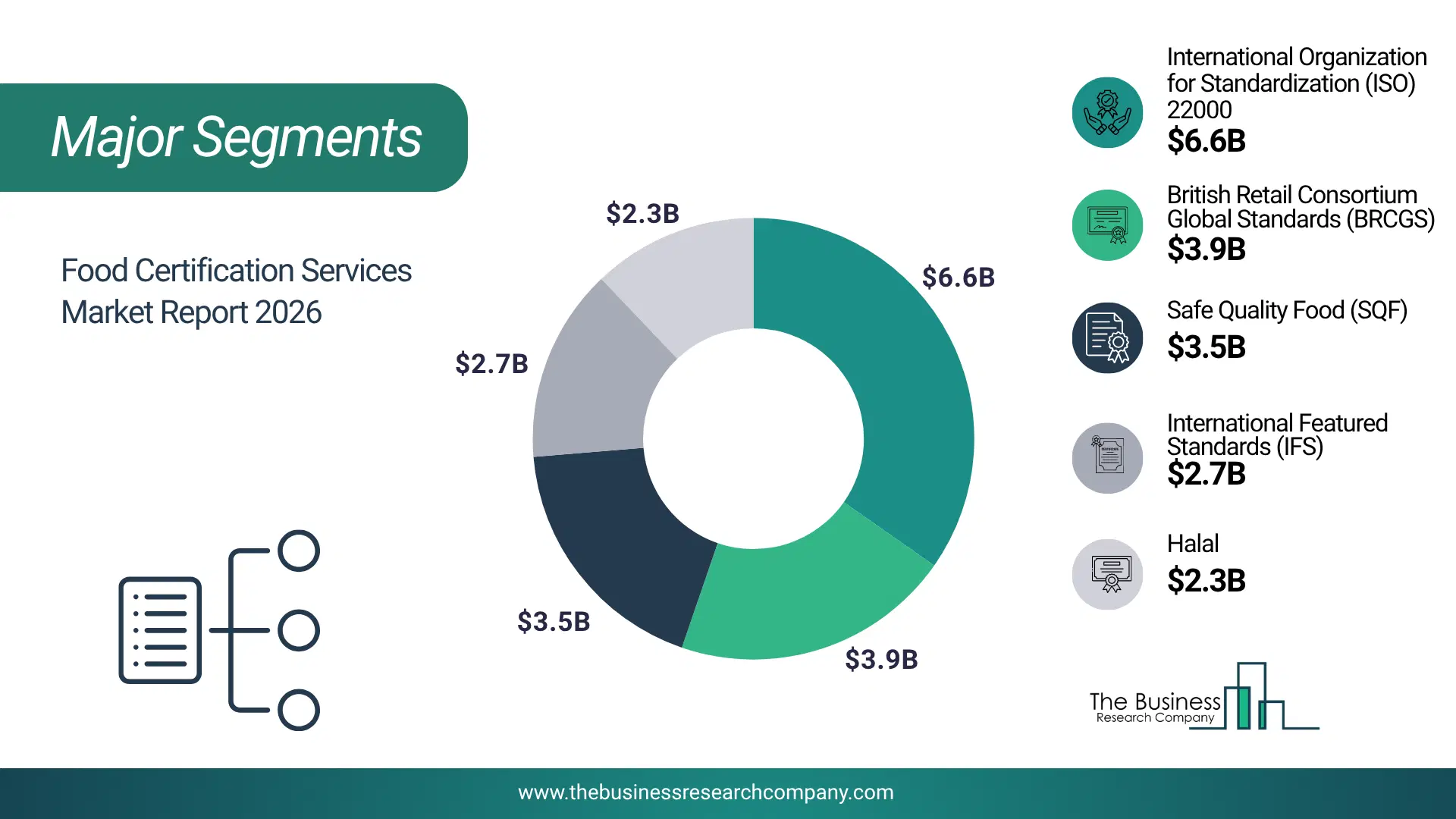
1) By Type: International Organization For Standardization (ISO) 22000, British Retail Consortium Global Standards (BRCGS), Safe Quality Food (SQF), International Featured Standards (IFS), Halal, Kosher, Other Types 2) By Application: Dairy Products, Meat, Poultry, Seafood, Bakery And Confectionery, Beverages, Fruits And Vegetables, Other Applications 3) By End-User: Food Manufacturers, Food Retailers, Food Service Providers, Other End-Users Subsegments: 1) By International Organization For Standardization 22000: Food Safety Management System, Quality Assurance Certification, Risk Management And Hazard Control 2) By British Retail Consortium Global Standards: Food Safety Certification, Packaging And Materials Certification, Storage And Distribution Certification 3) By Safe Quality Food: Manufacturing Certification, Primary Production Certification, Retail And Foodservice Certification 4) By International Featured Standards: Food Certification, Logistics Certification, Broker Certification 5) By Halal: Food And Beverage Certification, Cosmetics And Personal Care Certification, Pharmaceuticals Certification 6) By Kosher: Processed Food Certification, Meat And Poultry Certification, Ingredient Certification 7) By Other Types: Organic Certification, Fair Trade Certification, Non Genetically Modified Certification The top segments in the food certification services market will be: • International Organization for Standardization (ISO) 22000 will reach $6.54 billion by 2030. • British Retail Consortium Global Standards (BRCGS) will reach $3.88 billion by 2030. • Safe Quality Food (SQF) will reach $3.45 billion by 2030. • International Featured Standards (IFS) will reach $2.63 billion by 2030. • Halal will reach $2.3 billion by 2030.What Is The Driver Of The Food Certification Services Market?
The increasing food safety awareness are expected to propel the growth of the food certification services market going forward. Food safety awareness refers to the understanding and knowledge of safe food handling, preparation, and storage practices to prevent contamination and foodborne illnesses. The increase in food safety awareness is driven by growing consumer concern over foodborne illnesses, leading to higher demand for certified and hygienically processed food products. Food certification services help increase food safety awareness by ensuring compliance with stringent hygiene and quality standards, educating producers and consumers about safe food practices, and building trust through transparent verification and labelling. For instance, in June 2024, according to the Abu Dhabi Media Office (ADMO), UAE-based government news agency, Abu Dhabi Agriculture and Food Safety Authority (ADAFSA) conducted more than 103,000 inspection visits during 2023, covering all food establishments within the emirate. These visits resulted in 3,391 violations and 27,895 warnings. Therefore, the increasing food safety awareness are driving the growth of the food certification services industry.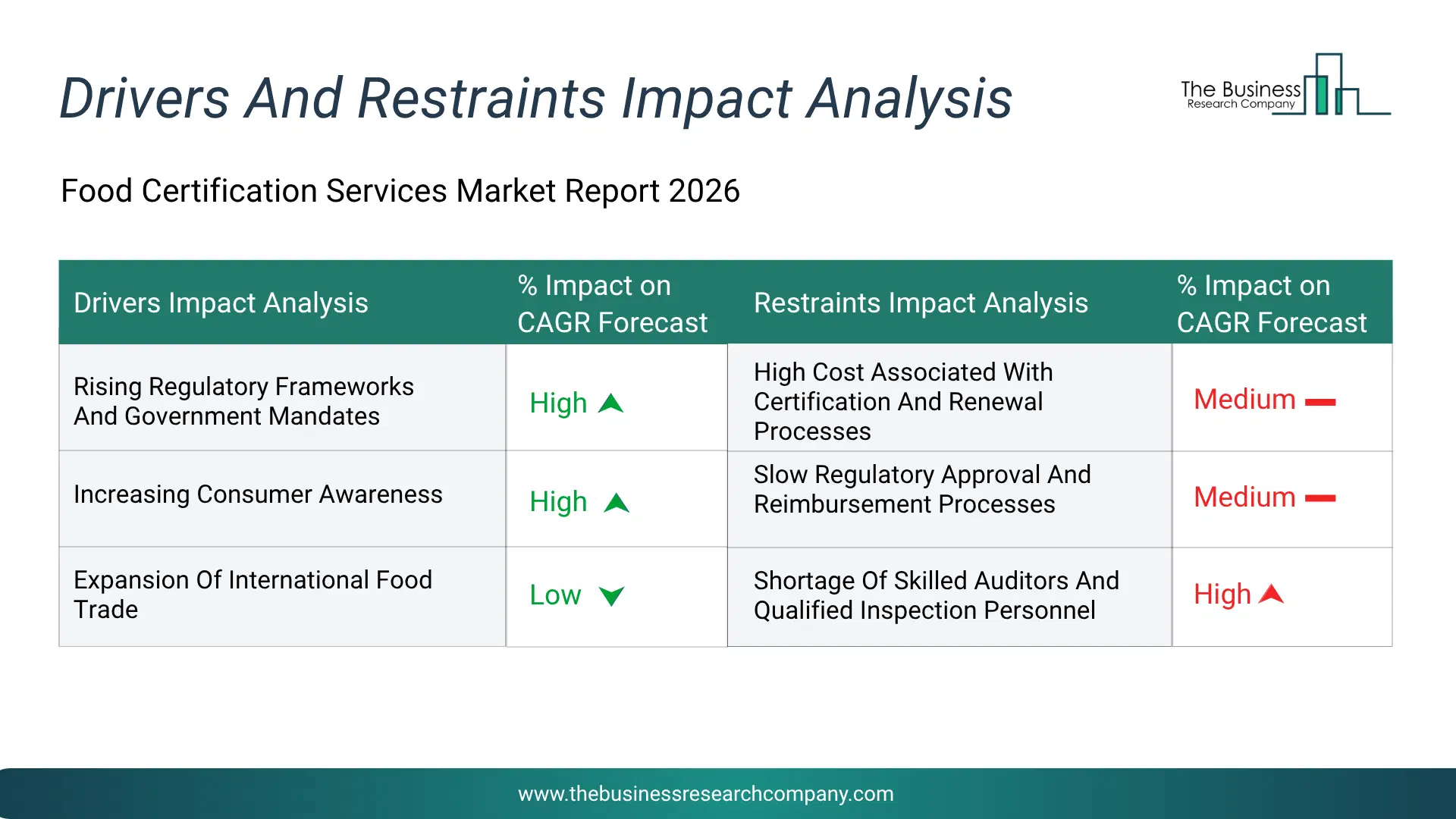
Infographic Chart Showing Key Market Drivers Analysis And Restraints For Food Certification Services Market
The chart presents an impact analysis of key drivers and restraints, quantifying their relative influence on the market's growth rate and helping assess the balance between growth enablers and limiting factors. This chart offers a high-level perspective; the full report contains more detailed insights.
How Will The Drivers Impact Growth In The Global Food Certification Services Market?
• Rising Regulatory Frameworks And Government Mandates (High) – During the forecast period, rising regulatory frameworks and government mandates are expected to become a key growth driver for the food certification services market by 2030. Governments and international regulatory bodies are increasingly enforcing stringent food safety standards, labeling requirements, and traceability regulations to ensure product quality and consumer protection. This is encouraging food producers, processors, and distributors to obtain certifications such as haccp, iso, and organic labels to demonstrate compliance. • Increasing Consumer Awareness (High) – During the forecast period, increasing consumer awareness is expected to emerge as a major factor driving the expansion of the food certification services market by 2030. Consumers are becoming more conscious about food safety, quality, sourcing, and sustainability, leading to higher demand for certified and transparently labeled products. This is prompting companies to adopt recognized certification standards to build trust and ensure product authenticity. • Expansion Of International Food Trade (Low) – During the forecast period, the expansion of international food trade is expected to act as a key growth catalyst for the food certification services market by 2030. As global food supply chains become more interconnected, exporters and importers must comply with diverse regulatory and quality standards across different countries. Certification services play a vital role in ensuring compliance with international standards, facilitating smooth cross-border trade, and maintaining product integrity.How Will The Restraints Impact Growth In The Global Food Certification Services Market?
• High Cost Associated With Certification And Renewal Processes (Medium) – During the forecast period, the high costs associated with certification and renewal processes act as a restraint on the food certification services market, particularly for small and medium-sized food producers. Expenses related to audits, documentation, testing, and periodic renewals can create financial pressure and limit adoption. This cost burden may discourage companies from pursuing multiple or advanced certifications, slowing overall market growth. • Slow Regulatory Approval And Reimbursement Processes (Medium) – During the forecast period, the slow regulatory approval and compliance validation processes act as a restraint on the food certification services market by delaying certification timelines for food manufacturers. Lengthy documentation reviews, inspections, and approval cycles increase time-to-market and operational uncertainty. This can discourage companies from promptly adopting certification services, thereby limiting market expansion. • Shortage Of Skilled Auditors And Qualified Inspection Personnel (High) – During the forecast period, the the shortage of skilled auditors and qualified inspection personnel restrains the food certification services market by limiting the capacity to conduct timely and accurate assessments. Insufficient expertise can lead to longer audit schedules and delays in certification issuance. This bottleneck increases operational costs and reduces scalability for certification bodies and food producers alike.Key Players In The Global Food Certification Services Market
Major companies operating in the food certification services market are Société Générale de Surveillance (SGS), Eurofins Scientific SE, Bureau Veritas, Intertek Group plc, ALS Limited, Underwriters Laboratories Solutions (UL), DEKRA SE, TUV SUD, Det Norske Veritas (DNV), National Sanitation Foundation International (NSF), AsureQuality Ltd., Kiwa N.V., LRQA Ltd., Perry Johnson Registrars Inc., FoodChain ID Certification, SCS Global Services, INTL Certification Limited, Control Union Certifications, Eagle Certification Group, AssureCloud, AIB International, Meraux NutriSciences, QIMA, ASI Food Safety, Safe Food Alliance, CCOF Certification Services LLC., and CIRQ.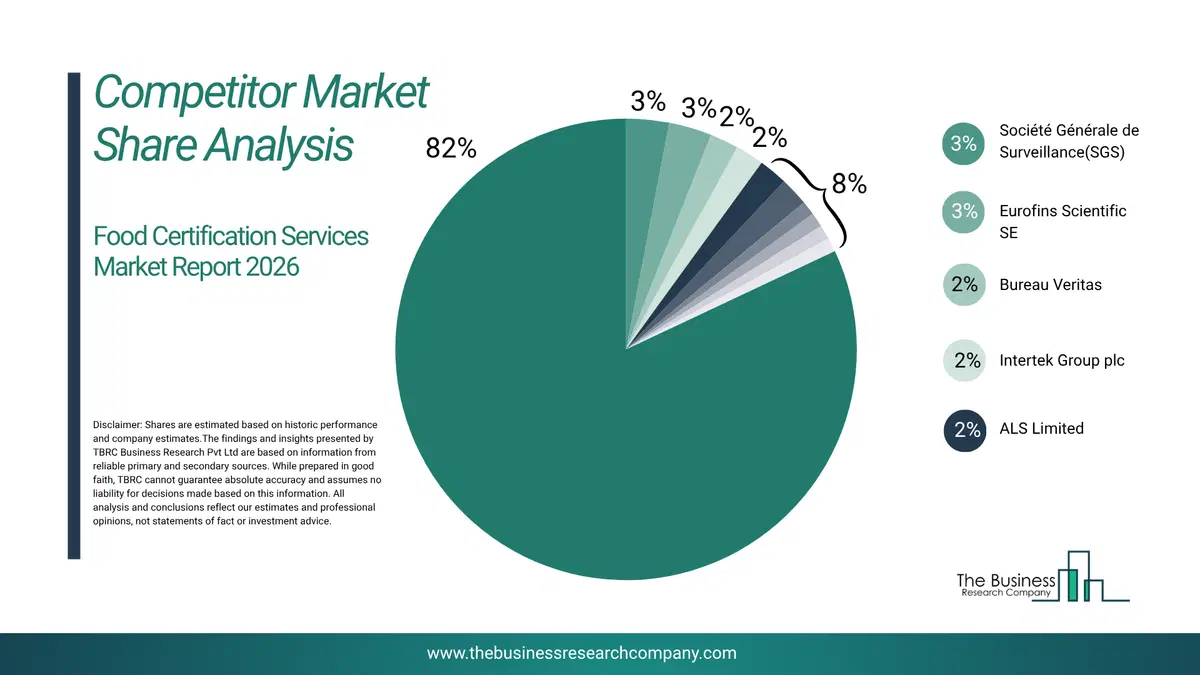
This chart is for illustrative purposes; the full report includes a detailed competitor analysis and comprehensive overview of the top 10 companies in the market.
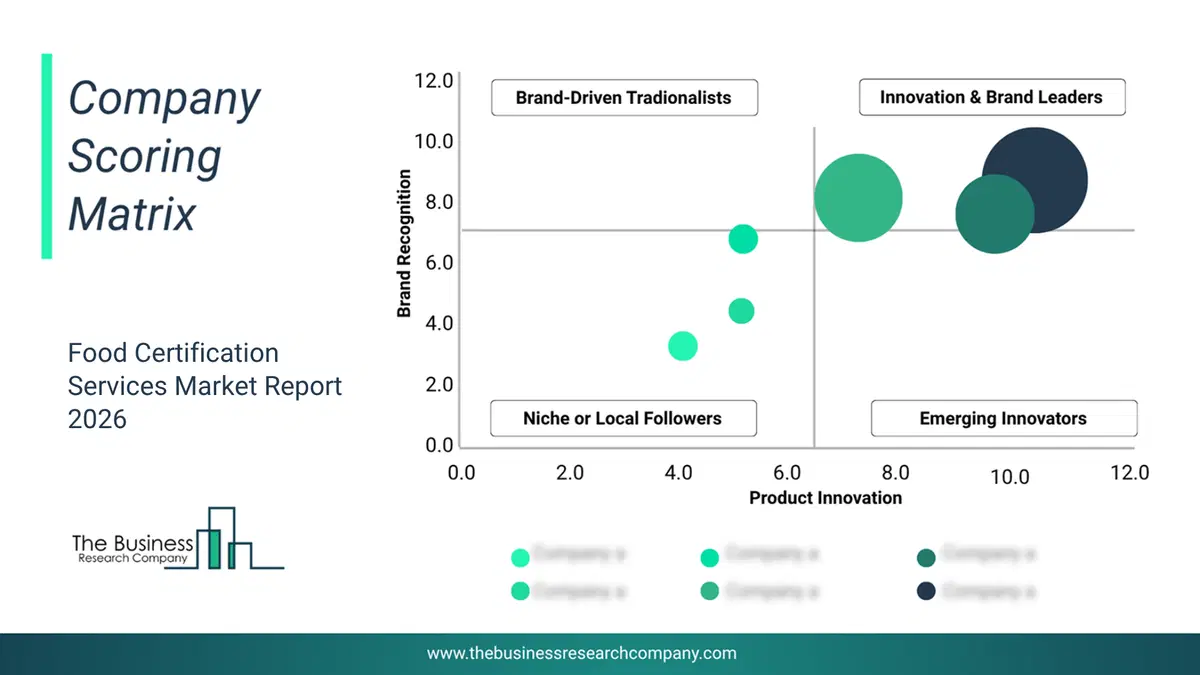
This chart maps companies by product innovation and brand strength, with bubble size indicating relative revenue, helping identify market leaders, challengers, and niche players. This is an illustrative chart; the full report provides a complete and accurate competitive analysis.
Global Food Certification Services Market Trends and Insights
Major companies operating in the food certification services market are focusing on innovative solutions, such as food safety certification, to enhance compliance, improve traceability, and help food producers meet stringent global quality standards. Food safety certification refers to a formal validation process that confirms food products are produced and handled in compliance with established safety and hygiene standards. For instance, in August 2024, Letis S.A., an Argentina-based company that provides certification for quality and sustainability standards, launched a certification service based on the BRCGS Food Safety standard, becoming the first company in Argentina to earn this globally recognized accreditation. This certification ensures robust food safety management across the entire supply chain, from production to distribution, guaranteeing that food products meet the highest safety and quality standards. This launch marks a significant step for LETIS in providing assurance and compliance in food safety both locally and internationally.What Are Latest Mergers And Acquisitions In The Food Certification Services Market?
In March 2025, TÜV Rheinland, a Germany-based provider of testing, inspection, certification and technical services, acquired SYGMA CERTIFICATION, S.L. for an undisclosed amount. With this acquisition, TÜV Rheinland seeks to strengthen and expand its agri-food certification capabilities and local market presence in Spain (and adjacent markets such as Morocco and Chile), diversifying its certification portfolio and accelerating growth in the agri-food sector. SYGMA CERTIFICATION, S.L. is a Spain-based provider of ENAC-accredited agri-food certification services, specialising in standards such as GLOBALG.A.P., IFS and BRCGS and serving clients across Spain, Morocco and Chile.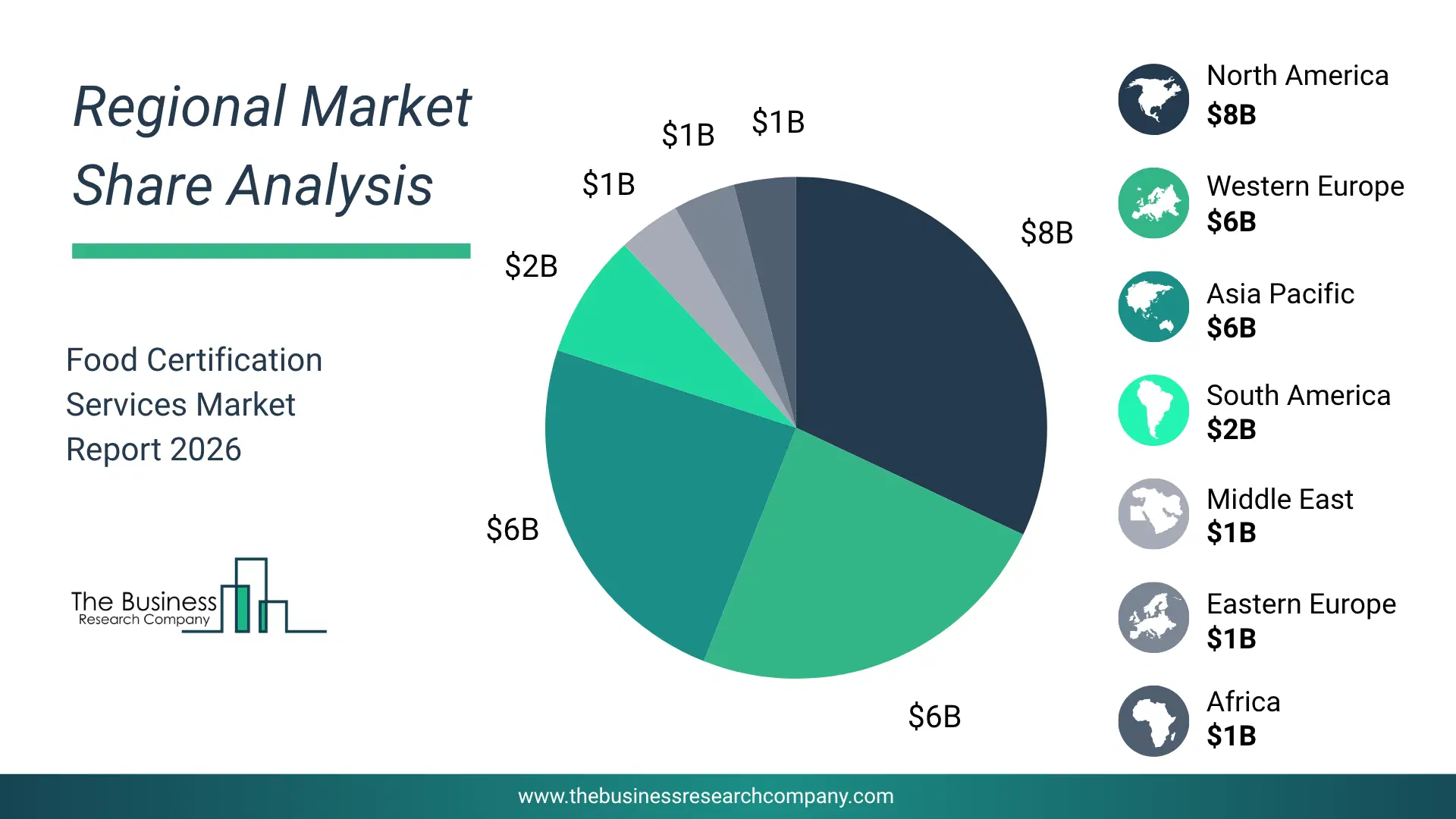
Regional Outlook
North America was the largest region in the food certification services market in 2025. Asia-Pacific is expected to be the fastest-growing region in the forecast period. The regions covered in this market report are Asia-Pacific, South East Asia, Western Europe, Eastern Europe, North America, South America, Middle East and Africa. The countries covered in this market report are Australia, Brazil, China, France, Germany, India, Indonesia, Japan, Taiwan, Russia, South Korea, UK, USA, Italy, Spain, CanadaWhat Defines the Food Certification Services Market?
The food certification services market includes revenues earned by entities through food safety audits, quality assurance testing, compliance verification, labeling certification, hygiene inspection, and management system certification. The market value includes the value of related goods and services provided by the certifying body or included within the service offering. Only goods and services traded between entities or sold to end consumers are included.How is Market Value Defined and Measured?
The market value is defined as the revenues that enterprises gain from the sale of goods and/or services within the specified market and geography through sales, grants, or donations in terms of the currency (in USD unless otherwise specified). The revenues for a specified geography are consumption values that are revenues generated by organizations in the specified geography within the market, irrespective of where they are produced. It does not include revenues from resales along the supply chain, either further along the supply chain or as part of other products.
This chart presents market attractiveness based on a quantitative evaluation of growth, competition, strategic alignment, and risk, offering a clear view of opportunity areas for decision-making. This chart is for illustrative purposes; the full report contains the complete analysis.

This chart highlights the Total Addressable Market (TAM) by estimating the maximum revenue opportunity using an assumption-driven approach, supporting strategic planning and opportunity sizing across markets. The chart is illustrative; the full report provides a more comprehensive analysis.
What Key Data and Analysis Are Included in the Food Certification Services Market Report 2026?
The food certification services market research report is one of a series of new reports from The Business Research Company that provides market statistics, including industry global market size, regional shares, competitors with the market share, detailed market segments, market trends and opportunities, and any further data you may need to thrive in the food certification services industry. The market research report delivers a complete perspective of everything you need, with an in-depth analysis of the current and future state of the industry.Food Certification Services Market Report Forecast Analysis
| Report Attribute | Details |
|---|---|
| Market Size Value In 2026 | $17.05 billion |
| Revenue Forecast In 2030 | $23.06 billion |
| Growth Rate | CAGR of 7.9% from 2026 to 2030 |
| Base Year For Estimation | 2025 |
| Actual Estimates/Historical Data | 2020-2025 |
| Forecast Period | 2026 - 2030 |
| Market Representation | Revenue in USD Billion and CAGR from 2026 to 2030 |
| Segments Covered | Type, Application, End-User |
| Regional Scope | Asia-Pacific, Western Europe, Eastern Europe, North America, South America, Middle East, Africa |
| Country Scope | The countries covered in the report are Australia, Brazil, China, France, Germany, India, ... |
| Key Companies Profiled | Société Générale de Surveillance (SGS), Eurofins Scientific SE, Bureau Veritas, Intertek Group plc, ALS Limited, Underwriters Laboratories Solutions (UL), DEKRA SE, TUV SUD, Det Norske Veritas (DNV), National Sanitation Foundation International (NSF), AsureQuality Ltd., Kiwa N.V., LRQA Ltd., Perry Johnson Registrars Inc., FoodChain ID Certification, SCS Global Services, INTL Certification Limited, Control Union Certifications, Eagle Certification Group, AssureCloud, AIB International, Meraux NutriSciences, QIMA, ASI Food Safety, Safe Food Alliance, CCOF Certification Services LLC., and CIRQ. </b> |
| Customization Scope | Request for Customization |
| Pricing And Purchase Options | Explore Purchase Options |