
Grid Modernization Market Report 2026
Global Outlook – By Component (Hardware, Software, Services), By Application (Residential, Commercial, Industrial), By End-User (Utilities, Independent Power Producers (IPPs), Government And Municipalities) – Market Size, Trends, Strategies, and Forecast to 2030
Grid Modernization Market Overview
• Grid Modernization market size has reached to $38.91 billion in 2025 • Expected to grow to $81.97 billion in 2030 at a compound annual growth rate (CAGR) of 16% • Growth Driver: Rising Demand For Renewable Energy Sources Fueling The Growth Of The Market Due To The Need For Smarter And More Flexible Energy Infrastructure • Market Trend: Innovative AI-Driven Solutions Transforming Grid Operations • North America was the largest region in 2025 and Asia-Pacific is the fastest growing region.Market Gains By 2030 – Top Opportunities By Segment
Market Gain identifies the most promising market opportunities by highlighting the segments or products expected to generate the highest incremental revenue growth over the next five years.
What Is Covered Under Grid Modernization Market?
Grid modernization refers to the process of upgrading the existing electrical grid with advanced technologies to enhance its efficiency, reliability, and resilience. Its purpose is to enable better management of energy distribution, integrate renewable sources, and improve overall grid performance to meet future energy demands. The main components of grid modernization are hardware, software, and services. Grid modernization hardware refers to the physical equipment used to upgrade and improve the electricity grid for better reliability, efficiency, and control. It is used across various applications, including residential, commercial, and industrial sectors. The key end-users include utilities, independent power producers (IPPs), and government and municipal organizations.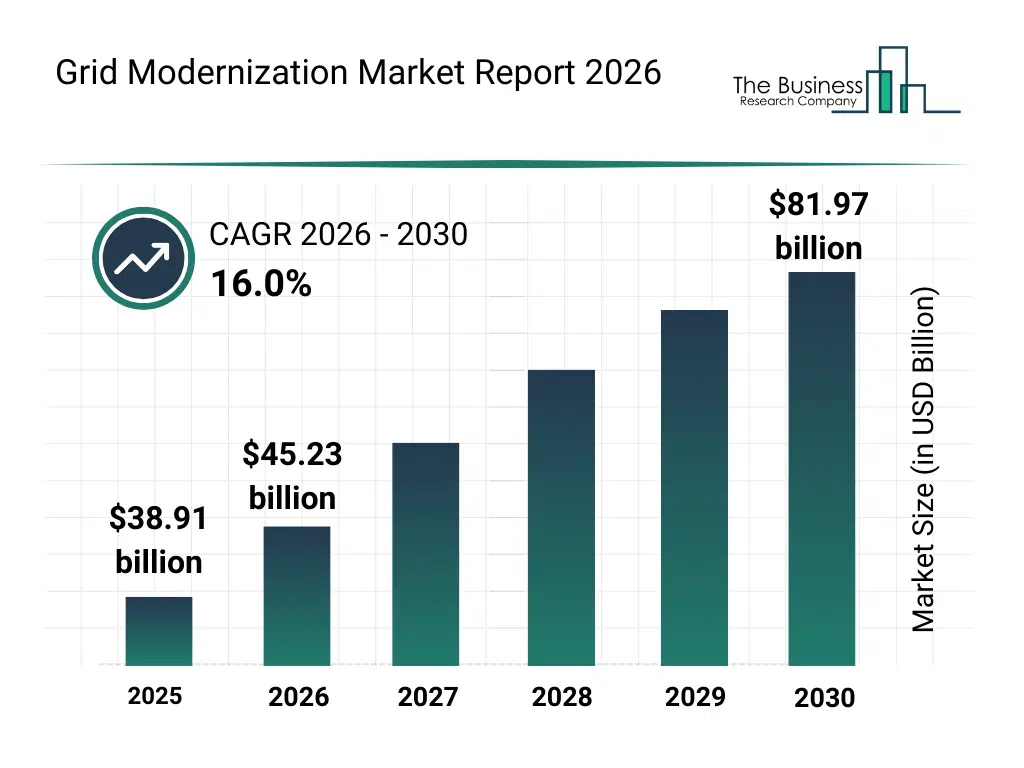
What Is The Grid Modernization Market Size and Share 2026?
The grid modernization market size has grown rapidly in recent years. It will grow from $38.91 billion in 2025 to $45.23 billion in 2026 at a compound annual growth rate (CAGR) of 16.2%. The growth in the historic period can be attributed to growing electricity demand, aging grid infrastructure, increasing renewable energy integration, government incentives for smart grids, advancements in communication and sensor technologies.What Is The Grid Modernization Market Growth Forecast?
The grid modernization market size is expected to see rapid growth in the next few years. It will grow to $81.97 billion in 2030 at a compound annual growth rate (CAGR) of 16.0%. The growth in the forecast period can be attributed to rising adoption of ai and analytics for grid optimization, expansion of renewable energy capacity, deployment of smart meters and sensors, increased investment in grid resilience, integration with electric mobility and energy storage solutions. Major trends in the forecast period include integration of smart grid hardware components, adoption of advanced energy management software, implementation of predictive maintenance solutions, expansion of distributed energy resource management, deployment of grid automation and monitoring systems.
Global Grid Modernization Market Segmentation
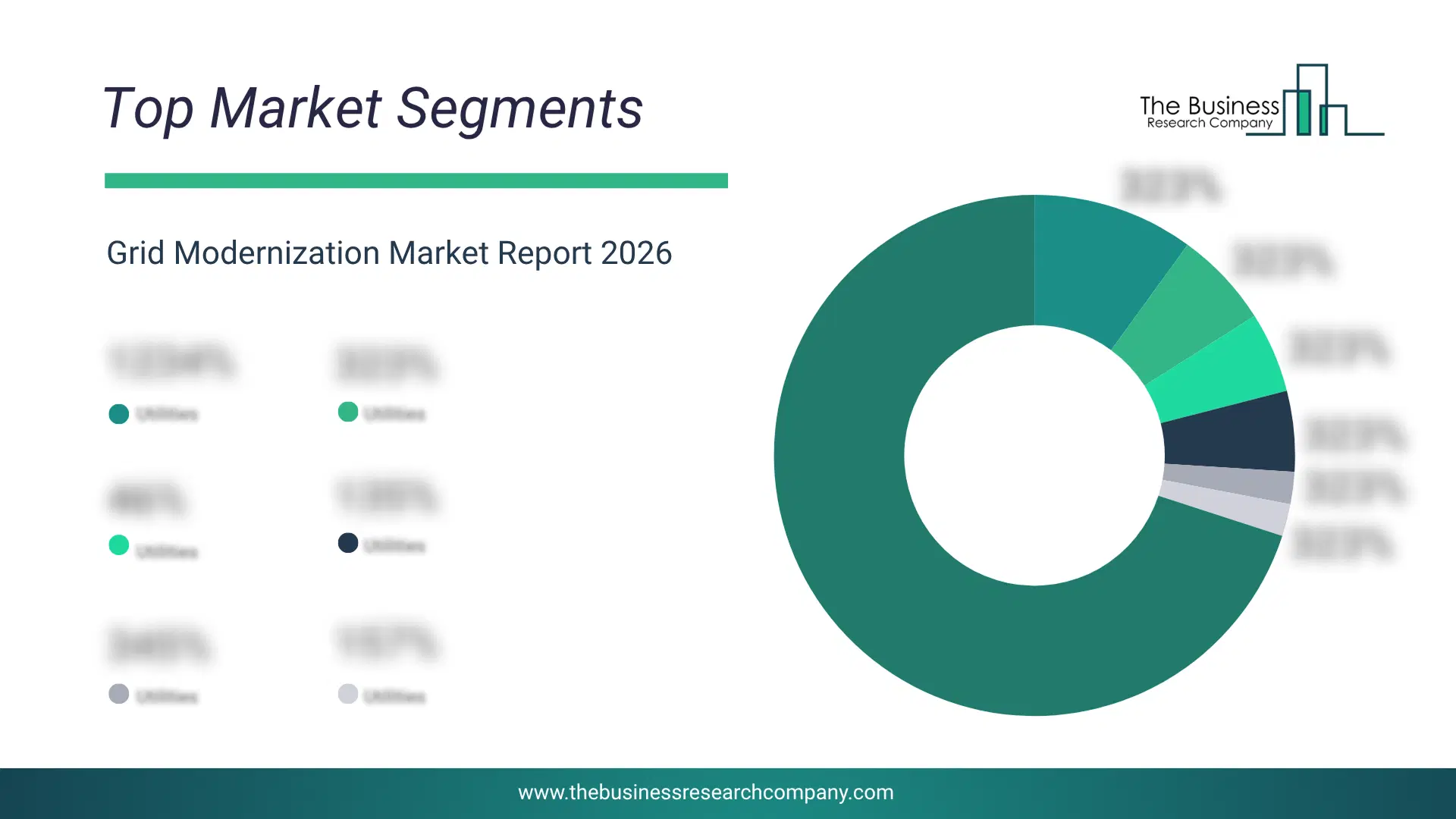
1) By Component: Hardware, Software, Services 2) By Application: Residential, Commercial, Industrial 3) By End-User: Utilities, Independent Power Producers (IPPs), Government And Municipalities Subsegments: 1) By Hardware: Smart Meters, Circuit Breakers, Switchgear, Transformers, Sensors, Communication Equipment, Distribution Automation Devices 2) By Software: Advanced Distribution Management Systems (ADMS), Energy Management Systems (EMS), Grid Operations and Control Software, SCADA Systems, Analytics Software, Forecasting and Optimization Software 3) By Services: Consulting Services, Integration and Deployment Services, Maintenance and Support Services, Managed Services, Training and Certification Services The top segments in the grid modernization market will be: • Hardware will reach $49.97 Billion by 2030. • Software will reach $19.21 Billion by 2030. • Services will reach $15.43 Billion by 2030.What Is The Driver Of The Grid Modernization Market?
Rising demand for renewable energy sources is expected to propel the growth of the grid modernization market. Renewable energy sources are natural sources of energy that can be used again and again, like sunlight, wind, water, and heat from the Earth. The growing demand for renewable energy sources is due to the need to reduce carbon emissions and fight climate change. Grid modernization helps support the demand for renewable energy sources by making the power grid smarter, more flexible, and capable of handling variable energy from sources like solar and wind. For instance, in January 2024, the Energy Information Administration (EIA), a US-based government administration, reported that solar power generation in the U.S. is projected to increase by 75%, from 163 billion kWh in 2023 to 286 billion kWh by 2025. Similarly, wind power generation is expected to grow by 11%, rising from 430 billion kWh in 2023 to 476 billion kWh in 2025. Therefore, rising demand for renewable energy sources will drive the growth of the grid modernization industry.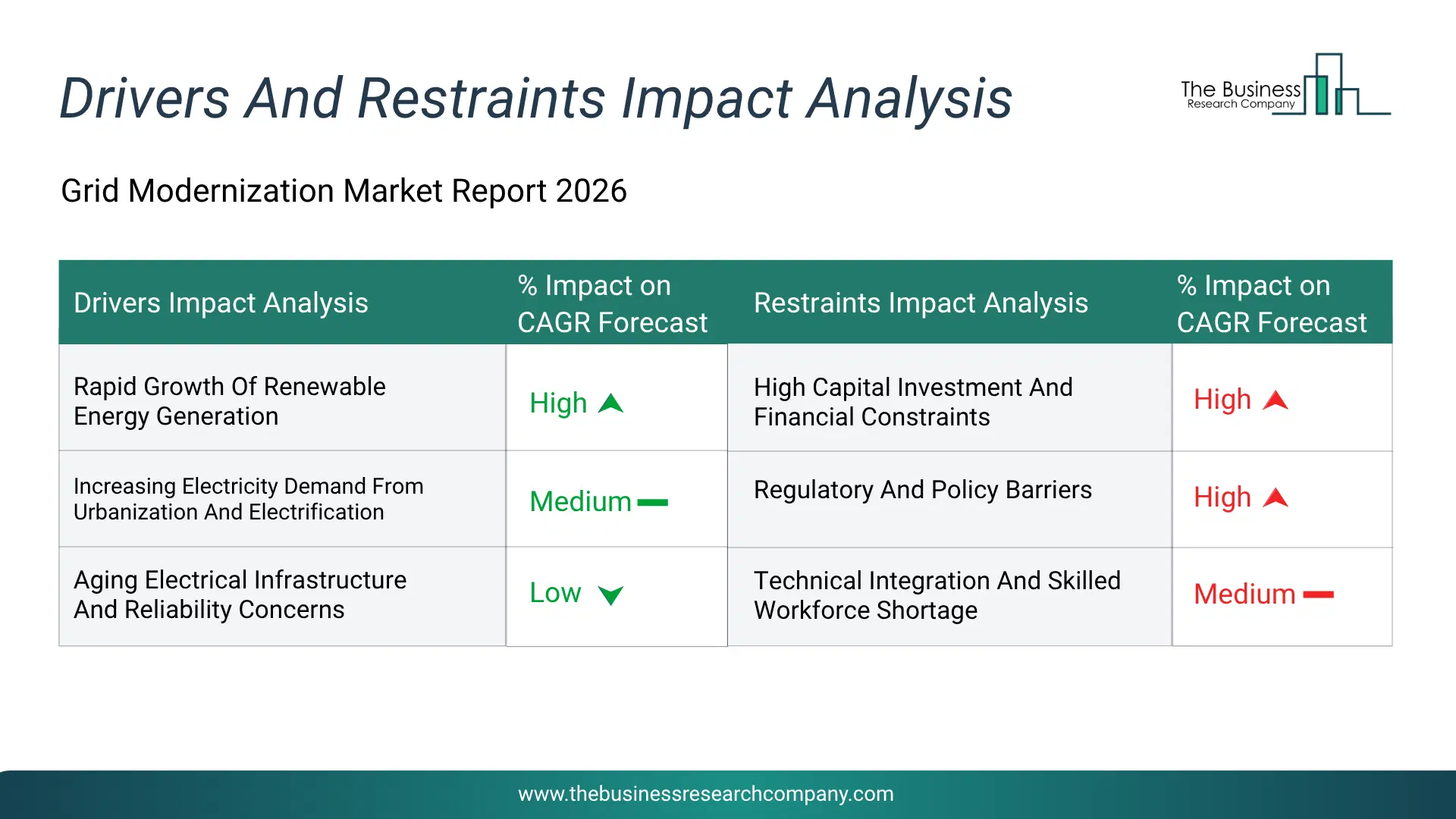
Infographic Chart Showing Key Market Drivers Analysis And Restraints For Grid Modernization Market
The chart presents an impact analysis of key drivers and restraints, quantifying their relative influence on the market's growth rate and helping assess the balance between growth enablers and limiting factors. This chart offers a high-level perspective; the full report contains more detailed insights.
How Will The Drivers Impact Growth In The Global Grid Modernization Market?
• Rapid Growth Of Renewable Energy Generation (High) – During the forecast period, the rapid growth of renewable energy generation is expected to become a key growth driver for the grid modernization market by 2030. The increasing installation of solar, wind, and other renewable energy sources is creating the need for advanced grid systems capable of handling variable and decentralized power generation. Traditional grids are not designed to manage bidirectional energy flows, prompting utilities to invest in modern grid technologies that enable real-time balancing and efficient energy dispatch. This shift is accelerating the deployment of smart inverters, grid-edge technologies, and flexible transmission systems. As renewable energy penetration continues to rise globally, the need for grid upgrades is expected to intensify. • Increasing Electricity Demand From Urbanization And Electrification (Medium) – During the forecast period, the increasing electricity demand from urbanization and electrification is expected to emerge as a major factor driving the expansion of the grid modernization market by 2030. Rapid urban development, along with the electrification of transportation, heating, and industrial processes, is significantly increasing power consumption across both developed and emerging economies. This surge in demand requires enhanced grid capacity, improved load management, and efficient energy distribution systems. Utilities are therefore focusing on deploying advanced demand response solutions, grid automation technologies, and digital monitoring platforms to manage peak loads effectively. • Aging Electrical Infrastructure And Reliability Concerns (Low) – During the forecast period, the aging electrical infrastructure and reliability concerns are expected to act as a key growth catalyst for the grid modernization market by 2030. A large portion of existing transmission and distribution networks has exceeded its operational lifespan, leading to increased risks of outages, inefficiencies, and maintenance challenges. Utilities are increasingly prioritizing the replacement and refurbishment of legacy systems with modern, resilient grid infrastructure to ensure uninterrupted power supply. Additionally, the growing frequency of power disruptions is driving investments in predictive maintenance and grid resilience solutions. As utilities focus on enhancing system reliability and operational longevity, modernization initiatives are expected to accelerate globally.How Will The Restraints Impact Growth In The Global Grid Modernization Market?
• High Capital Investment And Financial Constraints (High) – During the forecast period, high Capital Investment And Financial Constraints act as a key restraint because grid modernization projects require very large upfront expenditures for advanced hardware, software, automation systems, and network upgrades. The high cost creates challenges for utilities and governments, especially in regions with limited budget capacity or weak financial incentives, slowing modernization rollout. Many utilities operate under traditional tariff models that do not allow rapid cost recovery, making it difficult to justify large investments despite long-term benefits. As a result, organizations often delay or scale back modernization initiatives, reducing immediate market demand. The extended payback period further discourages private investors from participating in grid upgrades. This financial barrier is particularly impactful for developing economies and smaller utilities with tighter budgets. Hence, high cost pressures limit the pace and scale of adoption of grid modernization technologies. • Regulatory And Policy Barriers (Medium) – During the forecast period, regulatory And Policy Barriers act as another significant restraint because existing energy regulation frameworks were designed for traditional grid operations and often lag behind technological innovations. Outdated or inconsistent regulations governing cost recovery, grid access, and technology standards make it difficult for utilities to adopt modern grid solutions efficiently. Lengthy approval processes and unclear policy incentives can delay project execution, discourage investment, and create uncertainty for market participants. In some regions, regulatory inertia hampers the introduction of new business models and technologies. This slows down modernization efforts even when technical solutions are available and needed. Furthermore, lack of harmonized standards across regions complicates large‑scale implementation and interoperability. As a result, regulatory challenges increase complexity and cost for grid modernization projects. • Technical Integration And Skilled Workforce Shortage (Low) – During the forecast period, technical Integration And Skilled Workforce Shortage is a major restraint because modern grid systems require complex technology interoperability and specialized expertise to deploy and manage advanced digital solutions. Integrating new smart meters, data analytics platforms, and automation with existing legacy infrastructure can be technically challenging, leading to operational disruptions and cost overruns. Many utilities face shortages of qualified professionals with the skills needed in cybersecurity, power electronics, and grid automation, which amplifies implementation risk. This lack of skilled workforce increases reliance on external consultants and raises project costs. The technical complexity also slows down adoption, as utilities must carefully plan and execute upgrades without disrupting service. Together, these technical and human resource challenges make large‑scale modernization more difficult and slower, restricting market growth.Key Players In The Global Grid Modernization Market
Major companies operating in the grid modernization market are Hitachi Energy Ltd., Siemens AG, Schneider Electric SE, ABB Ltd., Mitsubishi Electric Corporation, General Electric Company, Eaton Corporation plc, Toshiba Corporation, Honeywell International Inc., Oracle Corporation, Cisco Systems Inc., Itron Inc., Kamstrup A/S, Trilliant Holdings Inc., Tantalus Systems Holding Inc., Fluentgrid Limited, eSmart Systems AS, Landis+Gyr Group AG, Open Systems International Inc., Alstom SA, CG Power and Industrial Solutions Ltd., Larsen & Toubro Limited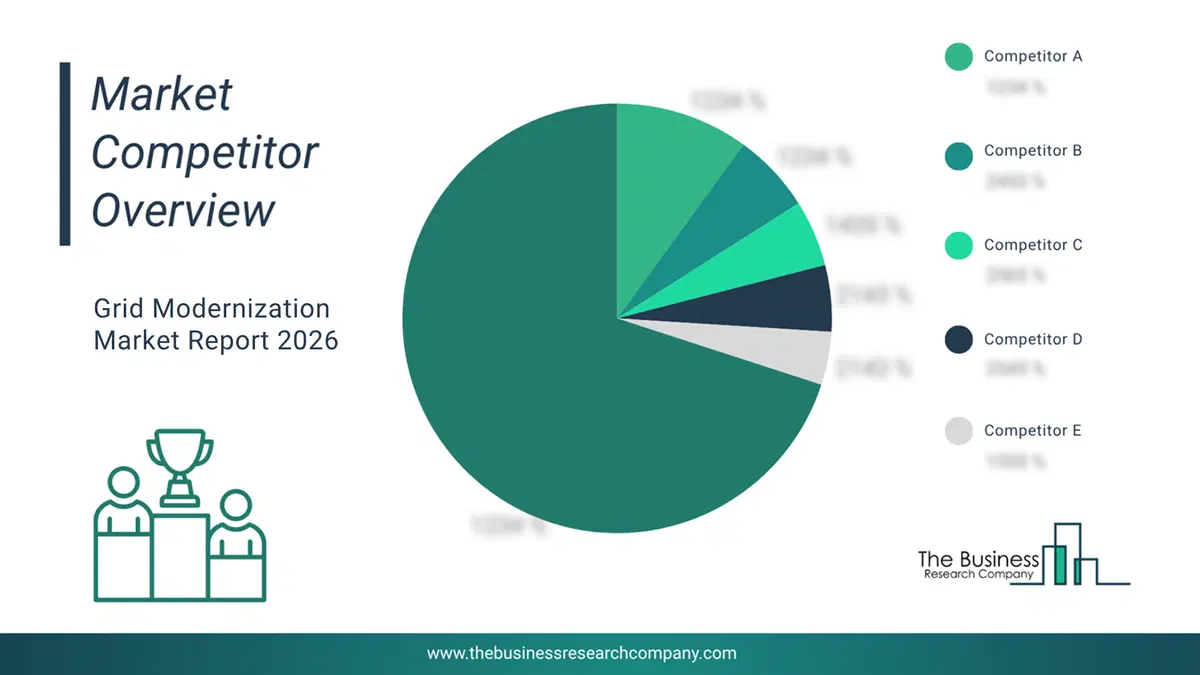
This chart is for illustrative purposes; the full report includes a detailed competitor analysis and comprehensive overview of the top 10 companies in the market.
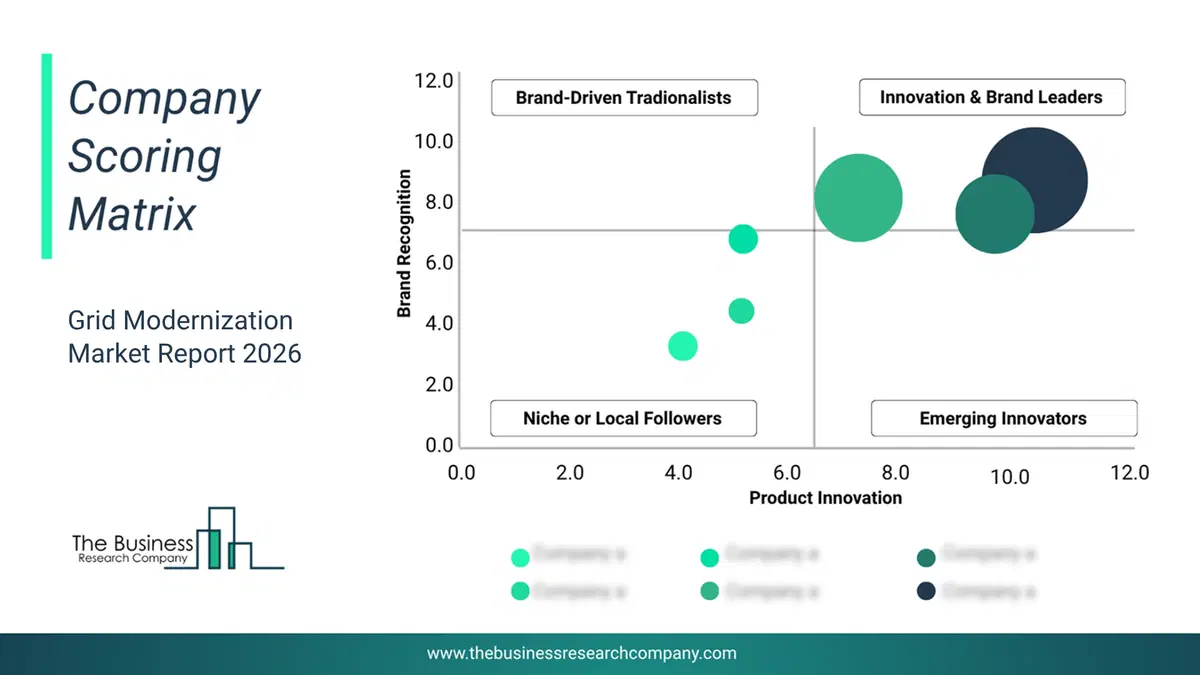
This chart maps companies by product innovation and brand strength, with bubble size indicating relative revenue, helping identify market leaders, challengers, and niche players. This is an illustrative chart; the full report provides a complete and accurate competitive analysis.
Global Grid Modernization Market Trends and Insights
Major companies operating in the grid modernization are focusing on innovative solutions such as AI-driven ecosystems for utilities to enhance grid resiliency, efficiently manage distributed energy resources, and improve outage response and system reliability. AI-powered, hybrid cloud platforms are smart technology systems that use artificial intelligence and a mix of private and public cloud services to analyze data, make decisions, and manage operations more efficiently. For instance, In March 2025, Schneider Electric SE, a France-based company specializing in energy management and automation solutions, launched One Digital Grid Platform, an AI-powered, hybrid cloud solution. This platform enhances grid resiliency, reliability, and efficiency by integrating independent software solutions, enabling utilities to modernize operations, reduce outages by up to 40%, shorten DER interconnection timelines by 25%, and speed up application deployment by 60%. With robust cybersecurity and seamless interoperability, the platform provides a comprehensive, cost-effective solution for delivering cleaner, more affordable energy.What Are Latest Mergers And Acquisitions In The Grid Modernization Market?
In October 2023, Qualus Corporation, a US-based power services firm, acquired GridBright for an undisclosed amount. With this acquisition, Qualus aims to strengthen its position in the energy transition by expanding its capabilities in grid modernization, resiliency, security, and sustainability and offering comprehensive end-to-end solutions to its clients. GridBright is a US-based technology company specializing in secure and sustainable grid integration solutions for utilities and renewable energy developers.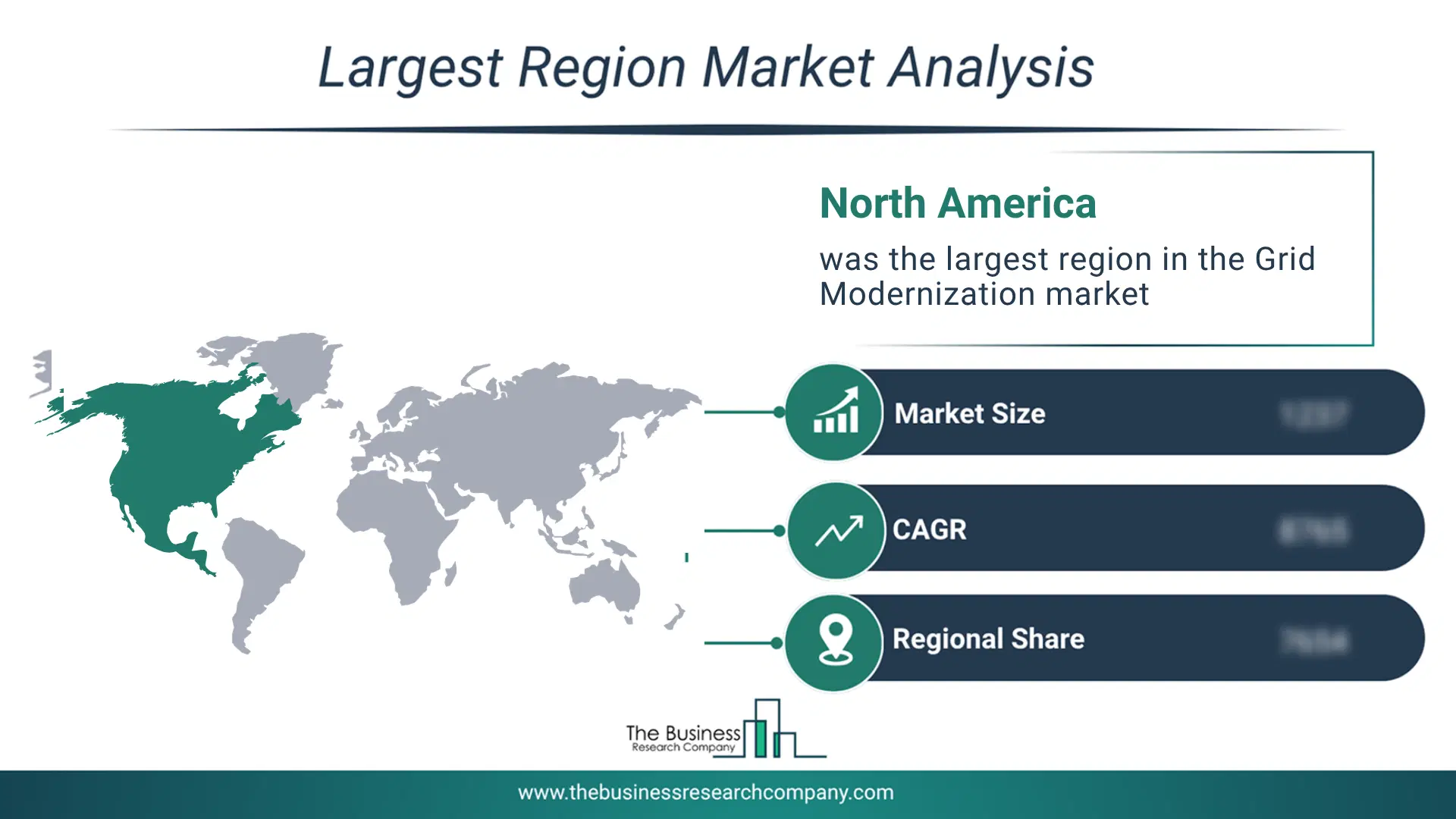
Regional Outlook
North America was the largest region in the grid modernization market in 2025. Asia-Pacific is expected to be the fastest-growing region in the forecast period. The regions covered in this market report are Asia-Pacific, South East Asia, Western Europe, Eastern Europe, North America, South America, Middle East, Africa. The countries covered in this market report are Australia, Brazil, China, France, Germany, India, Indonesia, Japan, Taiwan, Russia, South Korea, UK, USA, Canada, Italy, SpainWhat Defines the Grid Modernization Market?
The grid modernization market consists of revenues earned by entities by providing services such as grid automation services, demand response services, consulting, and system design services. The market value includes the value of related goods sold by the service provider or included within the service offering. The grid modernization market also includes sales of smart meters, smart grid communication devices, power inverters, electric vehicle (EV) charging infrastructure, circuit breakers, and switchgear. Values in this market are ‘factory gate’ values, that is, the value of goods sold by the manufacturers or creators of the goods, whether to other entities (including downstream manufacturers, wholesalers, distributors, and retailers) or directly to end customers. The value of goods in this market includes related services sold by the creators of the goods.How is Market Value Defined and Measured?
The market value is defined as the revenues that enterprises gain from the sale of goods and/or services within the specified market and geography through sales, grants, or donations in terms of the currency (in USD unless otherwise specified). The revenues for a specified geography are consumption values that are revenues generated by organizations in the specified geography within the market, irrespective of where they are produced. It does not include revenues from resales along the supply chain, either further along the supply chain or as part of other products.
This chart presents market attractiveness based on a quantitative evaluation of growth, competition, strategic alignment, and risk, offering a clear view of opportunity areas for decision-making. This chart is for illustrative purposes; the full report contains the complete analysis.

This chart highlights the Total Addressable Market (TAM) by estimating the maximum revenue opportunity using an assumption-driven approach, supporting strategic planning and opportunity sizing across markets. The chart is illustrative; the full report provides a more comprehensive analysis.
What Key Data and Analysis Are Included in the Grid Modernization Market Report 2026?
The grid modernization market research report is one of a series of new reports from The Business Research Company that provides market statistics, including Market Report 2026?global market size, regional shares, competitors with the market share, detailed market segments, market trends and opportunities, and any further data you may need to thrive in the grid modernization Market Report 2026? The market research report delivers a complete perspective of everything you need, with an in-depth analysis of the current and future state of the Market Report 2026?Grid Modernization Market Report Forecast Analysis
| Report Attribute | Details |
|---|---|
| Market Size Value In 2026 | $45.23 billion |
| Revenue Forecast In 2030 | $81.97 billion |
| Growth Rate | CAGR of 16.2% from 2026 to 2030 |
| Base Year For Estimation | 2025 |
| Actual Estimates/Historical Data | 2020-2025 |
| Forecast Period | 2026 - 2030 |
| Market Representation | Revenue in USD Billion and CAGR from 2026 to 2030 |
| Segments Covered | Component, Application, End-User |
| Regional Scope | Asia-Pacific, Western Europe, Eastern Europe, North America, South America, Middle East, Africa |
| Country Scope | The countries covered in the report are Australia, Brazil, China, France, Germany, India, Indonesia, Japan, Taiwan, Russia, South Korea, UK, USA, Canada, Italy, Spain. |
| Key Companies Profiled | Hitachi Energy Ltd., Siemens AG, Schneider Electric SE, ABB Ltd., Mitsubishi Electric Corporation, General Electric Company, Eaton Corporation plc, Toshiba Corporation, Honeywell International Inc., Oracle Corporation, Cisco Systems Inc., Itron Inc., Kamstrup A/S, Trilliant Holdings Inc., Tantalus Systems Holding Inc., Fluentgrid Limited, eSmart Systems AS, Landis+Gyr Group AG, Open Systems International Inc., Alstom SA, CG Power and Industrial Solutions Ltd., Larsen & Toubro Limited |
| Customization Scope | Request for Customization |
| Pricing And Purchase Options | Explore Purchase Options |