
Hemoglobin A1c Testing Devices Market Report 2026
Global Outlook – By Type (Bench Top Device, Handheld Device), By Technology (Ion-Exchange HPLC, Immunoassay, Boronate Affinity Chromatography, Direct Enzymatic Assay, Other Technologies), By End Use (Hospitals, Pharmaceuticals, Medical Devices, Laboratory Testing) – Market Size, Trends, Strategies, and Forecast to 2030
Hemoglobin A1c Testing Devices Market Overview
• Hemoglobin A1c Testing Devices market size has reached to $2.08 billion in 2025 • Expected to grow to $3.53 billion in 2030 at a compound annual growth rate (CAGR) of 11.1% • Growth Driver: Hemoglobin A1C Testing Devices Market Set To Soar Amid Diabetes Prevalence • Market Trend: At-Home Hba1c Testing Technologies Gain Momentum As Companies Target Decentralized Care Trends • North America was the largest region in 2025 and Asia-Pacific is the fastest growing region.What Is Covered Under Hemoglobin A1c Testing Devices Market?
The hemoglobin A1C testing device is the analytical device used in the quantification of HbA1C, in which glucose attaches to hemoglobin to form glycated hemoglobin in an individual blood sample. It is used to monitor blood sugar levels regularly for efficient and effective diabetic management. The main types of hemoglobin A1C testing devices are bench top device and handheld device. Benchtop devices are devices for convenient use on a laboratory workbench. Benchtop hemoglobin A1C testing devices are used in laboratories for testing blood sugar levels in a patient. The major technologies are ion exchange HPLC, immunoassay, boronate affinity chromatography, direct enzymatic assay and others, that are used in hospitals, pharmaceuticals, medical devices, and laboratory testing.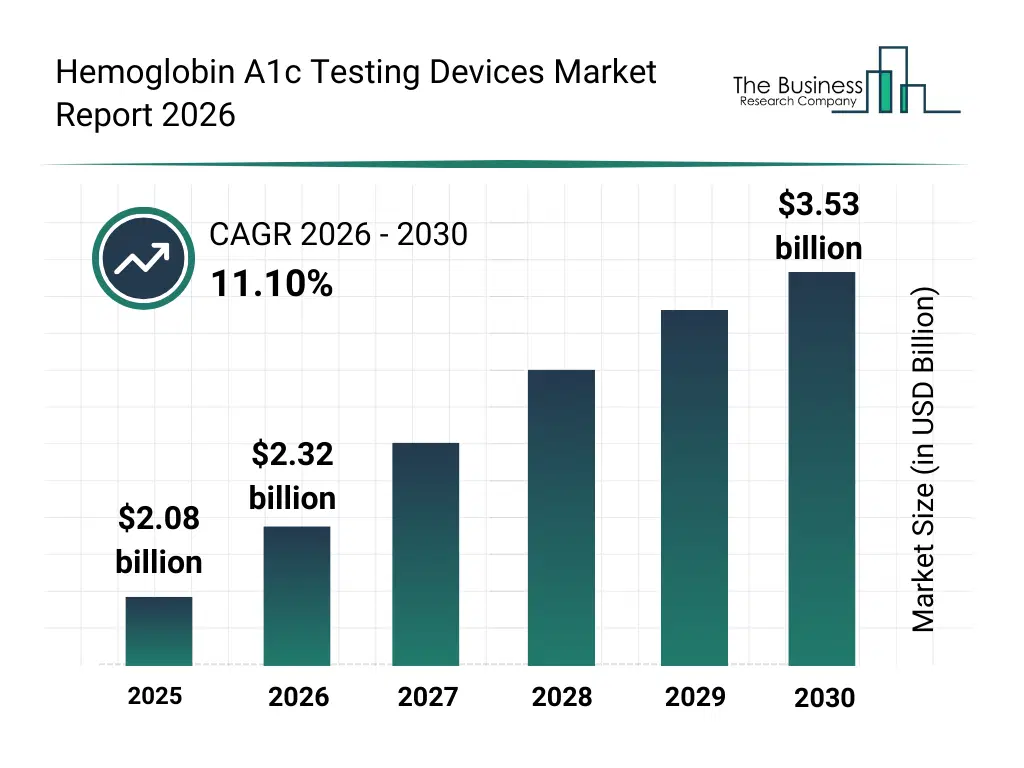
What Is The Hemoglobin A1c Testing Devices Market Size and Share 2026?
The hemoglobin a1c testing devices market size has grown rapidly in recent years. It will grow from $2.08 billion in 2025 to $2.32 billion in 2026 at a compound annual growth rate (CAGR) of 11.7%. The growth in the historic period can be attributed to rising prevalence of diabetes, expansion of routine blood glucose monitoring practices, improved availability of laboratory diagnostics, growing awareness of glycemic control, adoption of standardized diabetes testing protocols.What Is The Hemoglobin A1c Testing Devices Market Growth Forecast?
The hemoglobin a1c testing devices market size is expected to see rapid growth in the next few years. It will grow to $3.53 billion in 2030 at a compound annual growth rate (CAGR) of 11.1%. The growth in the forecast period can be attributed to increasing demand for home-based diabetes monitoring, rising integration of ai-driven analytics, expansion of remote patient monitoring, growing focus on personalized diabetes care, increasing adoption of smart diagnostic devices. Major trends in the forecast period include increasing adoption of point-of-care hba1c testing, rising use of portable and handheld devices, growing integration with digital diabetes management platforms, expansion of rapid and high-accuracy assays, enhanced focus on patient-centric monitoring.
Global Hemoglobin A1c Testing Devices Market Segmentation
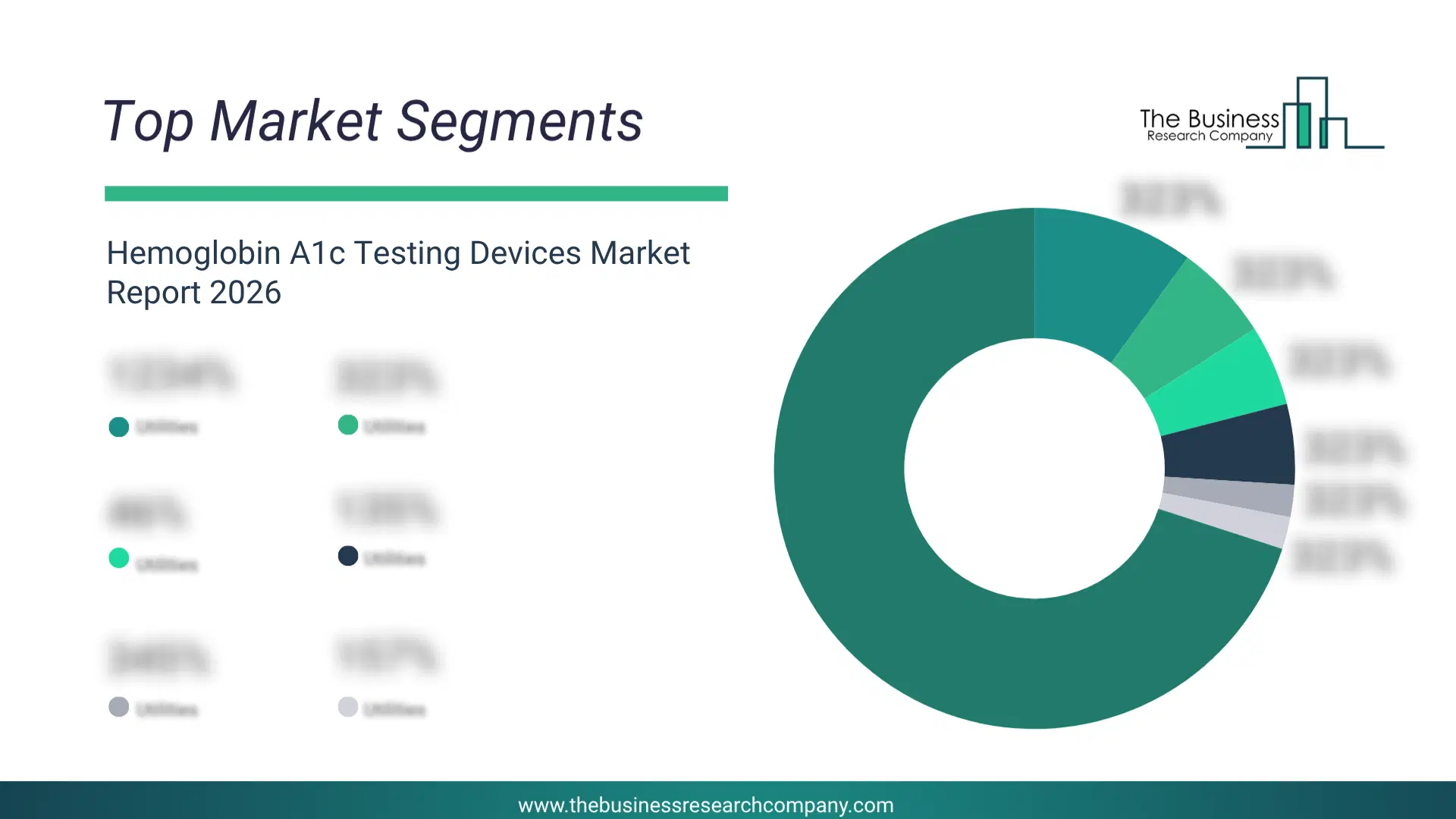
1) By Type: Bench Top Device, Handheld Device 2) By Technology: Ion-Exchange HPLC, Immunoassay, Boronate Affinity Chromatography, Direct Enzymatic Assay, Other Technologies 3) By End Use: Hospitals, Pharmaceuticals, Medical Devices, Laboratory Testing Subsegments: 1) By Bench Top Device: Automated Hemoglobin A1C Analyzers, Laboratory-Grade Analyzers, Multi-Parameter Testing Devices 2) By Handheld Device: Portable Hemoglobin A1C Testers, Point-Of-Care Testing Devices, Smartphone-Integrated Testing DevicesWhat Is The Driver Of The Hemoglobin A1c Testing Devices Market?
The rising prevalence of diabetes is expected to propel the growth of the hemoglobin A1C testing devices market. Diabetes is a chronic metabolic disorder that elevates blood glucose levels. Hemoglobin A1C testing is used in providing information on average blood glucose levels in individuals that are used in the diagnosis of type 2 diabetes, pre-diabetes, and diabetes management, which enables the individuals to monitor the disease and help make treatment decisions to prevent complications. For instance, in June 2024, according to the National Health Service, a UK-based government department, in 2023, the NHS identified over half a million (549,000) additional individuals in England at risk of developing type 2 diabetes, bringing the total number of people with non-diabetic hyperglycemia, or pre-diabetes, registered with a GP to 3,615,330. This represents a significant increase compared to 3,065,825 in 2022, highlighting a rise of nearly 20%. Therefore, the increased cases of diabetes patients will drive the hemoglobin A1C testing devices industry.Key Players In The Global Hemoglobin A1c Testing Devices Market
Major companies operating in the hemoglobin a1c testing devices market are Arkray Inc, Abbott Laboratories, Polymer Technology Systems Inc, Bio-Rad Laboratories Inc, Menarini Group, F Hoffmann-La Roche AG, Siemens Healthineers AG, Tosoh Corporation, Trinity Biotech plc, Transasia Bio-Medicals Limited, Beckman Coulter Inc, Diazyme Laboratories Inc, EKF Diagnostics Holdings plc, HemoCue AB, OSANG Healthcare Co Ltd, Danaher, Thermo Fisher Scientific Inc., PTS Diagnostics India Private Limited, Nova Biomedical, Randox Laboratories Ltd., ACON Laboratories Inc., DiaSys Diagnostic Systems GmbH, Erba Mannheim, Green Cross Medical Science Corp., Infopia Co. Ltd., TaiDoc Technology Corporation, Werfen, Zhejiang Orient Gene Biotech Co. Ltd.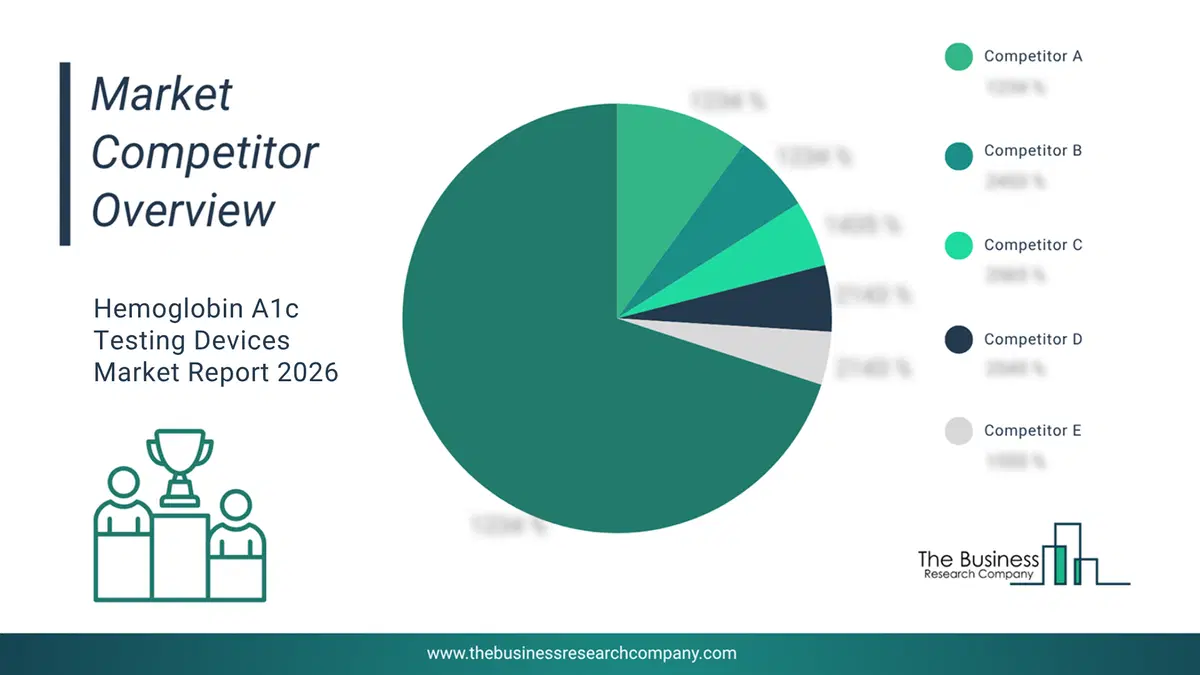
This chart is for illustrative purposes; the full report includes a detailed competitor analysis and comprehensive overview of the top 10 companies in the market.
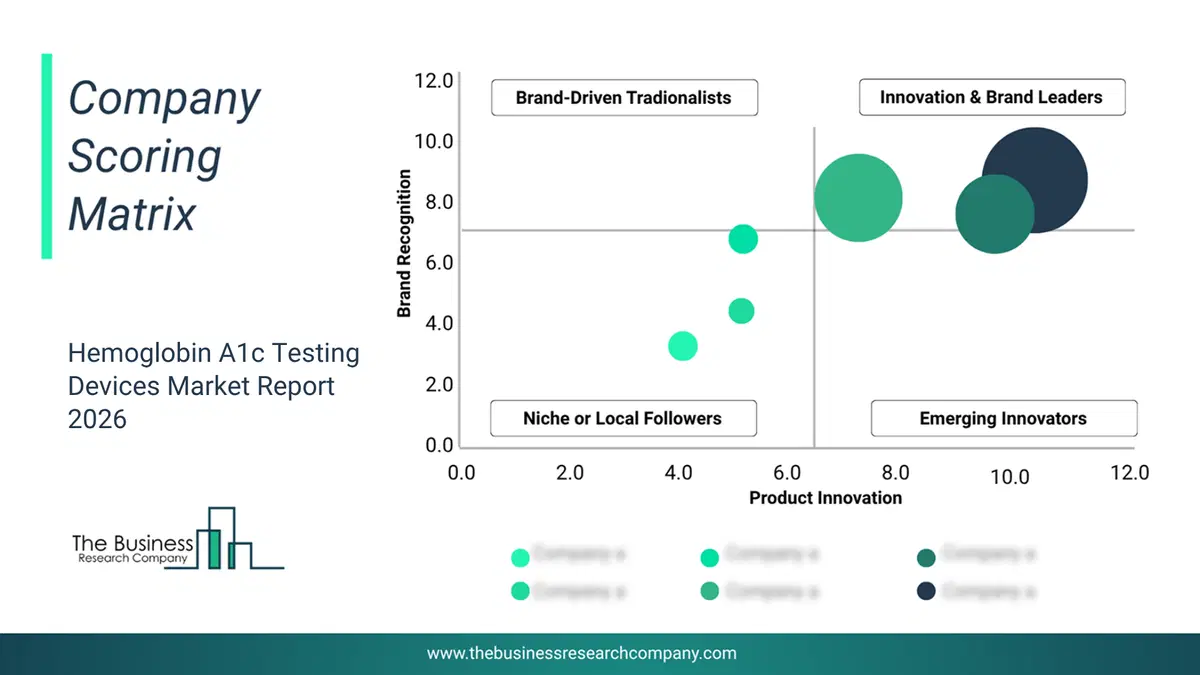
This chart maps companies by product innovation and brand strength, with bubble size indicating relative revenue, helping identify market leaders, challengers, and niche players. This is an illustrative chart; the full report provides a complete and accurate competitive analysis.
Global Hemoglobin A1c Testing Devices Market Trends and Insights
Major companies operating in the hemoglobin A1c testing devices market are focusing on developing innovative solutions, such as at-home or micro-sample HbA1c collection kits to meet the rising demand driven by growing diabetes prevalence, the shift to decentralized care and telehealth, and patient preference for convenient, lower-cost monitoring options. An at-home HbA1c collection kit is a consumer-friendly kit that lets a patient perform a small finger-prick blood collection (usually a few drops), stabilize the micro-sample for transport, and send it to a certified laboratory for high-accuracy analysis. For instance, in February 2023, Hurdle, US–based diagnostics-as-a-service company, launched the Hemoglobin A1c (HbA1c) Test, an at-home HbA1c test made available through its Chronomics direct-to-consumer store. The Hemoglobin A1c Test is supplied as a home collection kit that includes finger-prick lancets and a sample card/tube, secure registration via a personal dashboard, and courier return to partner CLIA-certified labs; the service promises lab-grade analysis with a typical turnaround of about three days after lab receipt, integrated result explanations, and optional one-to-one access to healthcare professionals for follow-up, combining the convenience of point-of-care or home sampling with the accuracy and standardization of central laboratory assays.What Are Latest Mergers And Acquisitions In The Hemoglobin A1c Testing Devices Market?
In October 2023, Abbott Laboratories, a US-based medical device company, partnered with WW International. Abbott and WeightWatchers have partnered to integrate Abbott's FreeStyle Libre continuous glucose monitoring technology with WeightWatchers' diabetes-focused weight management program, providing real-time glucose insights and personalized nutritional guidance to help individuals with diabetes make informed dietary choices and improve both weight management and glycemic control. WW International, Inc. is a US-based company that offers weight loss and maintenance, fitness, and mindset services such as the Weight Watchers comprehensive diet program.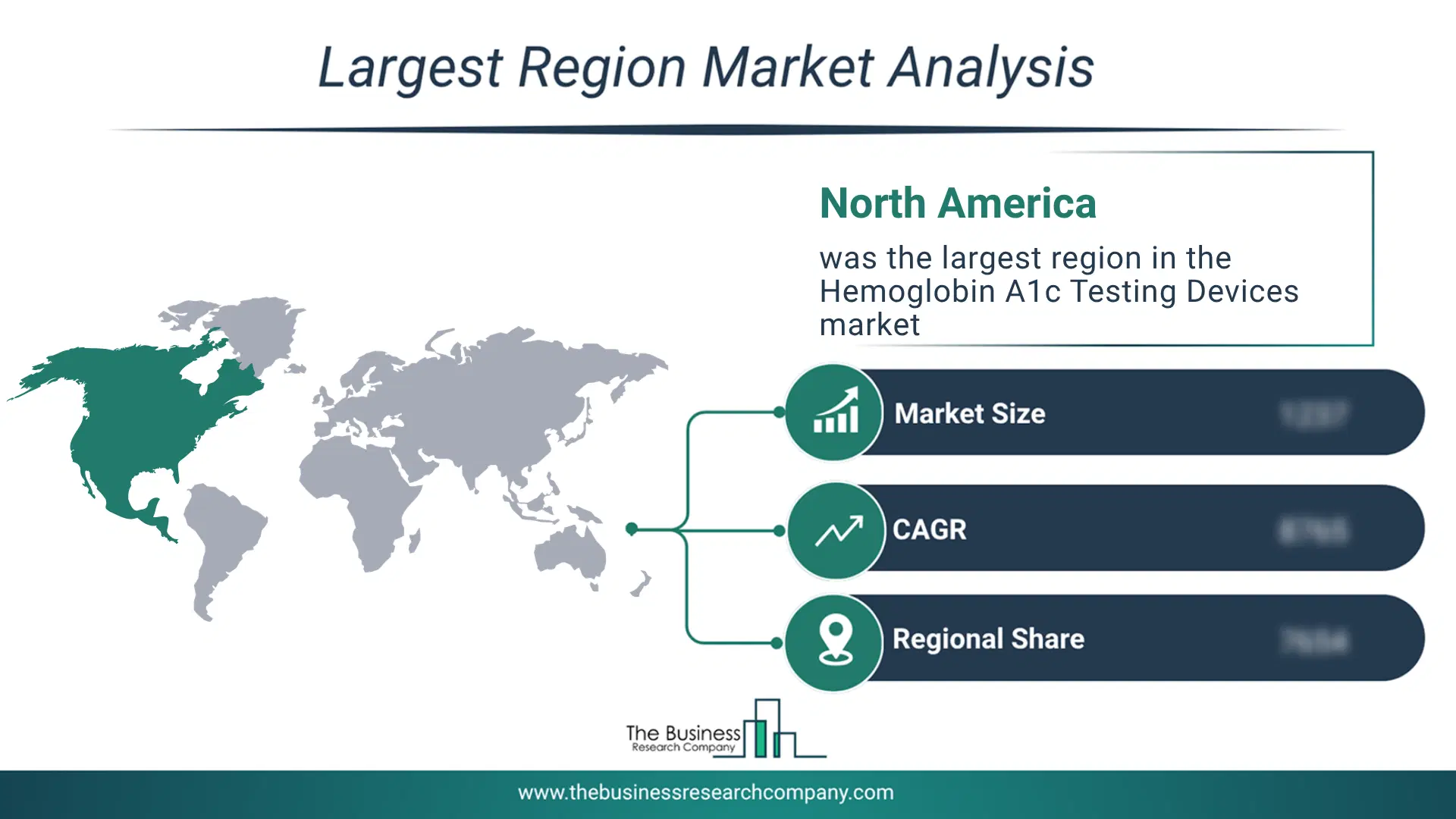
Regional Outlook
North America was the largest region in the hemoglobin A1C testing devices market in 2025. Asia-Pacific is expected to be the fastest-growing region in the hemoglobin A1C testing devices market during the forecast period. The regions covered in this market report are Asia-Pacific, South East Asia, Western Europe, Eastern Europe, North America, South America, Middle East, Africa. The countries covered in this market report are Australia, Brazil, China, France, Germany, India, Indonesia, Japan, Taiwan, Russia, South Korea, UK, USA, Canada, Italy, SpainWhat Defines the Hemoglobin A1c Testing Devices Market?
The hemoglobin A1C testing device market consists of sales of automated, semi-automated, and bio-sensor-based hemoglobin A1C testing devices. Values in this market are ‘factory gate’ values, that is the value of goods sold by the manufacturers or creators of the goods, whether to other entities (including downstream manufacturers, wholesalers, distributors, and retailers) or directly to end customers. The value of goods in this market includes related services sold by the creators of the goods.How is Market Value Defined and Measured?
The market value is defined as the revenues that enterprises gain from the sale of goods and/or services within the specified market and geography through sales, grants, or donations in terms of the currency (in USD unless otherwise specified). The revenues for a specified geography are consumption values that are revenues generated by organizations in the specified geography within the market, irrespective of where they are produced. It does not include revenues from resales along the supply chain, either further along the supply chain or as part of other products.
This chart presents market attractiveness based on a quantitative evaluation of growth, competition, strategic alignment, and risk, offering a clear view of opportunity areas for decision-making. This chart is for illustrative purposes; the full report contains the complete analysis.

This chart highlights the Total Addressable Market (TAM) by estimating the maximum revenue opportunity using an assumption-driven approach, supporting strategic planning and opportunity sizing across markets. The chart is illustrative; the full report provides a more comprehensive analysis.
What Key Data and Analysis Are Included in the Hemoglobin A1c Testing Devices Market Report 2026?
The hemoglobin a1c testing devices market research report is one of a series of new reports from The Business Research Company that provides market statistics, including industry global market size, regional shares, competitors with the market share, detailed market segments, market trends and opportunities, and any further data you may need to thrive in the hemoglobin a1c testing devices industry. The market research report delivers a complete perspective of everything you need, with an in-depth analysis of the current and future state of the industry.Hemoglobin A1c Testing Devices Market Report Forecast Analysis
| Report Attribute | Details |
|---|---|
| Market Size Value In 2026 | $2.32 billion |
| Revenue Forecast In 2030 | $3.53 billion |
| Growth Rate | CAGR of 11.1% from 2026 to 2030 |
| Base Year For Estimation | 2025 |
| Actual Estimates/Historical Data | 2020-2025 |
| Forecast Period | 2026 - 2030 |
| Market Representation | Revenue in USD Billion and CAGR from 2026 to 2030 |
| Segments Covered | Type, Technology, End Use |
| Regional Scope | Asia-Pacific, Western Europe, Eastern Europe, North America, South America, Middle East, Africa |
| Country Scope | The countries covered in the report are Australia, Brazil, China, France, Germany, India, Indonesia, Japan, Taiwan, Russia, South Korea, UK, USA, Canada, Italy, Spain. |
| Key Companies Profiled | Arkray Inc, Abbott Laboratories, Polymer Technology Systems Inc, Bio-Rad Laboratories Inc, Menarini Group, F Hoffmann-La Roche AG, Siemens Healthineers AG, Tosoh Corporation, Trinity Biotech plc, Transasia Bio-Medicals Limited, Beckman Coulter Inc, Diazyme Laboratories Inc, EKF Diagnostics Holdings plc, HemoCue AB, OSANG Healthcare Co Ltd, Danaher, Thermo Fisher Scientific Inc., PTS Diagnostics India Private Limited, Nova Biomedical, Randox Laboratories Ltd., ACON Laboratories Inc., DiaSys Diagnostic Systems GmbH, Erba Mannheim, Green Cross Medical Science Corp., Infopia Co. Ltd., TaiDoc Technology Corporation, Werfen, Zhejiang Orient Gene Biotech Co. Ltd. |
| Customization Scope | Request for Customization |
| Pricing And Purchase Options | Explore Purchase Options |