
Hospital Acquired Infections Testing Kits Market Report 2026
Global Outlook – By Product (Consumables And Reagents, Instruments), By Test Type (Pneumoia Infection, Urinary Track Infection, Blood Stream Associated Infection, Surgical Site Infection, MRSA infection, Others), By Pathogen Type (Viral, Bacterial, Fungal), By Application (Drug Resistance Testing, Disease Testing) – Market Size, Trends, Strategies, and Forecast to 2030
Hospital Acquired Infections Testing Kits Market Overview
• Hospital Acquired Infections Testing Kits market size has reached to $4.79 billion in 2025 • Expected to grow to $7.2 billion in 2030 at a compound annual growth rate (CAGR) of 8.5% • Growth Driver: Growth Of Healthcare Settings Drives The Hospital Acquired Infections Testing Kits Market • Market Trend: Advancements In Microfluidic-Based Point-Of-Care Technologies Accelerate Rapid Detection In HAI Testing • North America was the largest region in 2025 and Asia-Pacific is the fastest growing region.What Is Covered Under Hospital Acquired Infections Testing Kits Market?
The hospital-acquired infection testing kits are tools used to check the infections people get while in a healthcare facility. Hospital-acquired infections testing kits are used to check the infections associated with pathogens such as vancomycin-resistant enterococci (VRE), methicillin-resistant staphylococcus aureus (MRSA), multi-resistant gram-negative bacilli, norovirus, and Clostridium difficile. The main products of hospital-acquired infection testing kits are instruments, reagents, and consumables. The hospital-acquired infections testing kit instruments involve the various instruments that are required for hospital-acquired infections testing to aid scientists in growing new cells in the culture media for drug development, tissue culture, engineering, gene therapy, vaccine production, and toxicity testing. Pathogens tested using hospital-acquired infections testing kits include viral, bacterial, and fungal pathogens using sterilization, chemical, and radiation methods of treatment to test for pneumonia infection, urinary tract infection, bloodstream infection, surgical site infection, MRSA infection, and others. The various applications include drug-resistance testing and disease testing.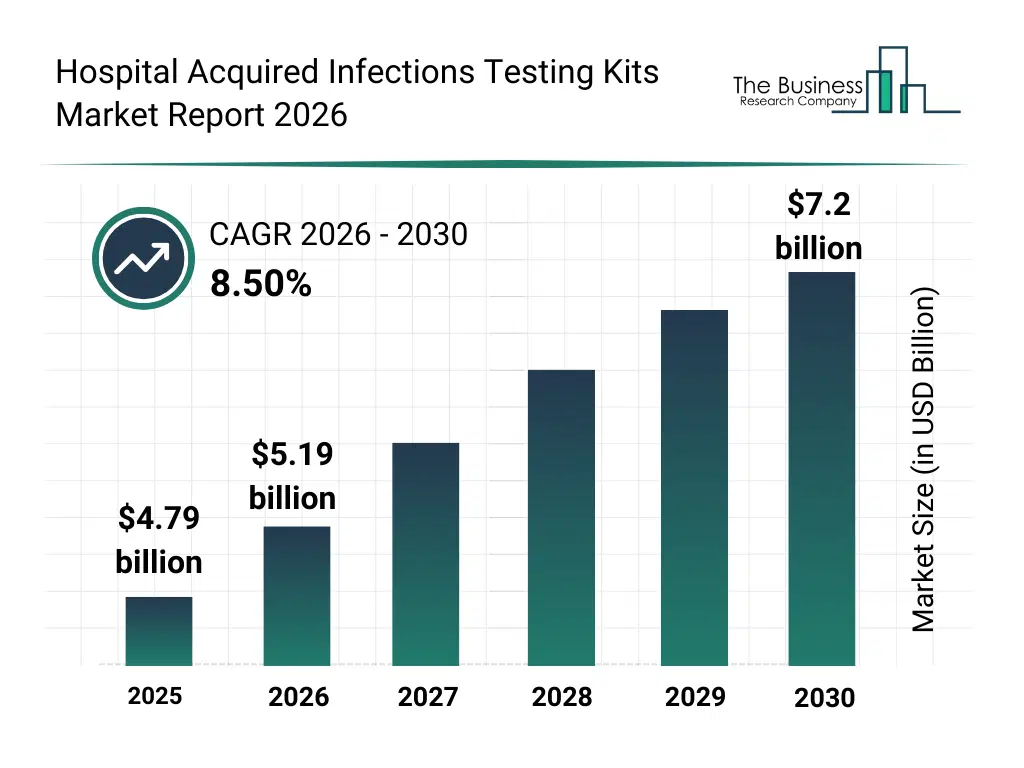
What Is The Hospital Acquired Infections Testing Kits Market Size and Share 2026?
The hospital acquired infections testing kits market size has grown strongly in recent years. It will grow from $4.79 billion in 2025 to $5.19 billion in 2026 at a compound annual growth rate (CAGR) of 8.5%. The growth in the historic period can be attributed to increasing hospital infection surveillance, rising prevalence of antibiotic-resistant pathogens, expansion of clinical microbiology labs, implementation of infection control protocols, availability of molecular diagnostic tools.What Is The Hospital Acquired Infections Testing Kits Market Growth Forecast?
The hospital acquired infections testing kits market size is expected to see strong growth in the next few years. It will grow to $7.2 billion in 2030 at a compound annual growth rate (CAGR) of 8.5%. The growth in the forecast period can be attributed to increasing focus on early infection detection, rising investments in hospital safety infrastructure, expansion of rapid testing adoption, growing demand for automated diagnostic workflows, advancements in molecular diagnostics technology. Major trends in the forecast period include increasing adoption of rapid diagnostic test kits, rising use of molecular testing for hais, growing integration of automated diagnostic instruments, expansion of point-of-care infection testing, enhanced focus on multi-pathogen detection.
Global Hospital Acquired Infections Testing Kits Market Segmentation
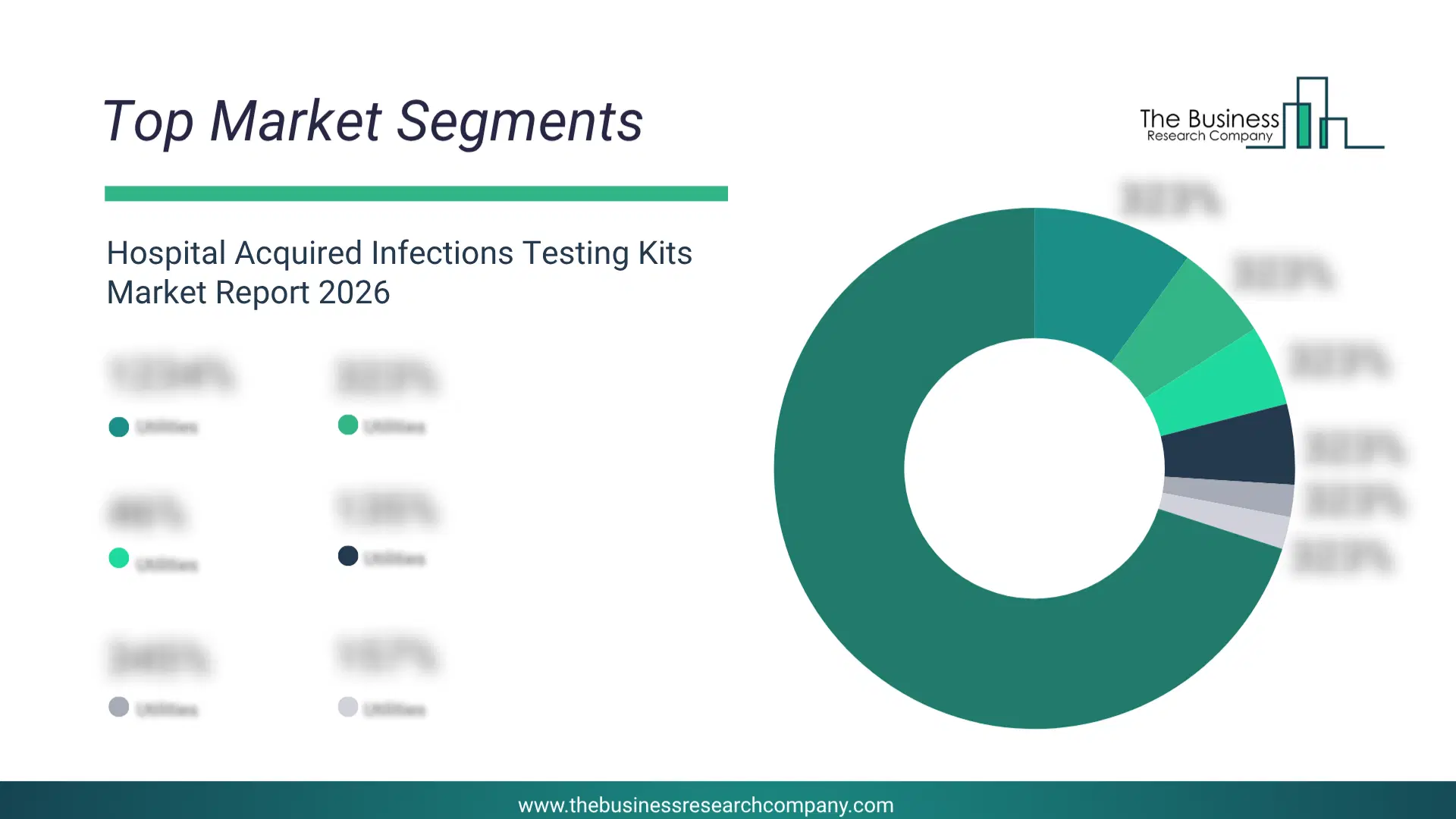
1) By Product: Consumables And Reagents, Instruments 2) By Test Type: Pneumoia Infection, Urinary Track Infection, Blood Stream Associated Infection, Surgical Site Infection, MRSA infection, Others 3) By Pathogen Type: Viral, Bacterial, Fungal 4) By Application: Drug Resistance Testing, Disease Testing Subsegments: 1) By Consumables and Reagents: Culture Media (Used for isolating and identifying pathogens), Reagents For Molecular Testing (Includes PCR reagents and kits for detecting specific pathogens), Test Kits (Rapid tests and other kits designed for various infections), Other Consumables (Includes swabs, sample collection devices, and preservation solutions) 2) By Instruments: Automated Analyzers (Equipment used for blood culture analysis and identification of pathogens), Molecular Diagnostic Instruments (Machines used for PCR and other molecular testing methods), Microscopes (Used for the identification of pathogens in samples), Incubators And Growth Chambers (For culturing samples under controlled conditions)What Are The Drivers Of The Hospital Acquired Infections Testing Kits Market?
The rising number of healthcare settings is expected to propel the growth of the hospital-acquired infections testing kits market going forward. In a healthcare setting, various healthcare facilities and services are available, including acute care hospitals, urgent care centers, rehabilitation facilities, nursing homes, and long-term care facilities, collectively offering comprehensive healthcare solutions. Hospital-acquired infections testing kits are vital tools for detecting and preventing nosocomial infections, enhancing patient safety in healthcare facilities. For instance, in May 2023, according to the American Hospital Association, a US-based healthcare industry trade group, the total number of hospitals in the U.S. region saw a significant increase from 6,093 in 2022 to 60,129 in 2023. Additionally, admissions in community hospitals also experienced growth, rising from 31,393,318 in 2022 to 31,967,073 in 2023. Therefore, the rising number of healthcare settings drives the hospital-acquired infections testing kits market. The increase in surgical procedures is expected to propel the growth of the hospital-acquired infections testing kits market going forward. Surgical procedures refer to medical operations performed in operating theaters that involve incision, excision, or manipulation of tissue requiring regional or general anesthesia or profound sedation to control pain. The growing number of surgical procedures is largely driven by the rapidly aging population, as older adults require more medical interventions for age-related conditions and chronic diseases. The rising volume of surgical procedures boosts demand for testing kits, as surgeries create entry points for pathogens, increasing the risk of infections that require systematic detection and monitoring through specialized diagnostic tools. For instance, in May 2025, according to the Australian Institute of Health and Welfare, an Australia-based government agency providing health and welfare statistics, hospitalizations involving surgery increased from 3.0 million in 2022-23 to 3.1 million in 2023-24, reflecting an increase of 100,000 cases. Therefore, an increase in surgical procedures is driving the growth of the hospital-acquired infections testing kits market.Key Players In The Global Hospital Acquired Infections Testing Kits Market
Major companies operating in the hospital acquired infections testing kits market are Becton Dickinson and Company, Abbott Laboratories, Cepheid, F. Hoffmann-La Roche Ltd, STERIS plc, QIAGEN, Meridian Bioscience Inc., BioMérieux SA, GE Healthcare, Seegene, SD Biosensor, Fujirebio, Sysmex Corporation, Getein Biotech, Hangzhou Biotest Biotech, AmonMed Biotechnology, Beijing Tigsun Diagnostics, Hunan Lituo Biotechnology, ImmunoScience, Vivacheck Lab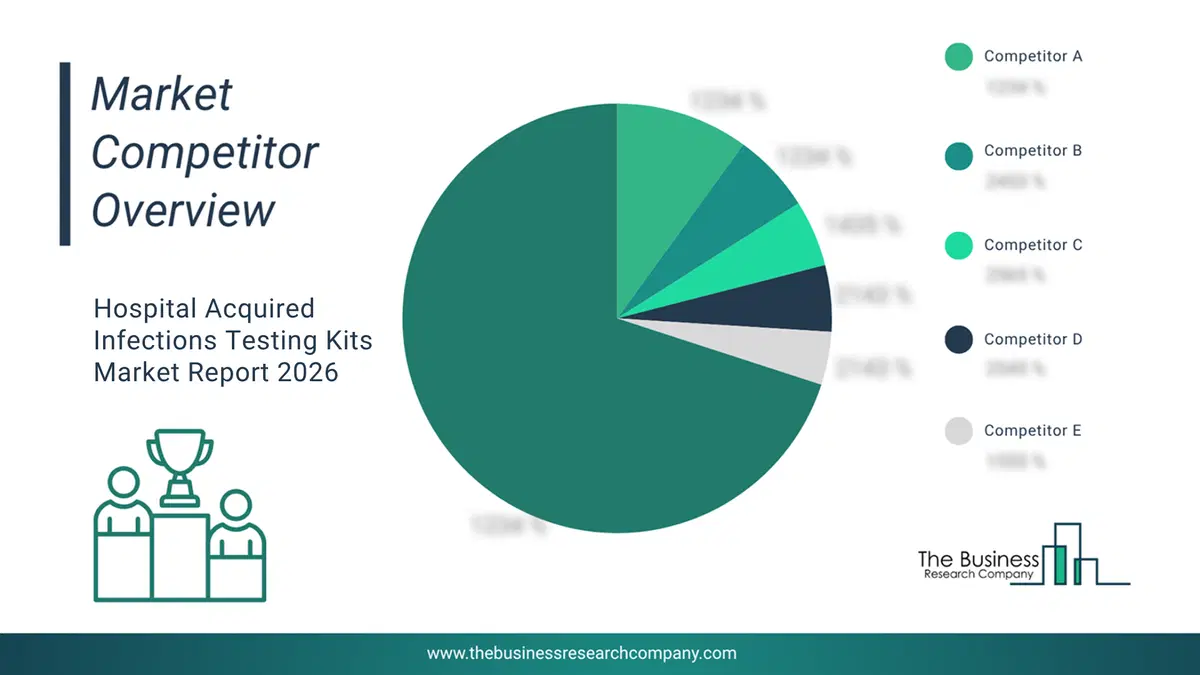
This chart is for illustrative purposes; the full report includes a detailed competitor analysis and comprehensive overview of the top 10 companies in the market.
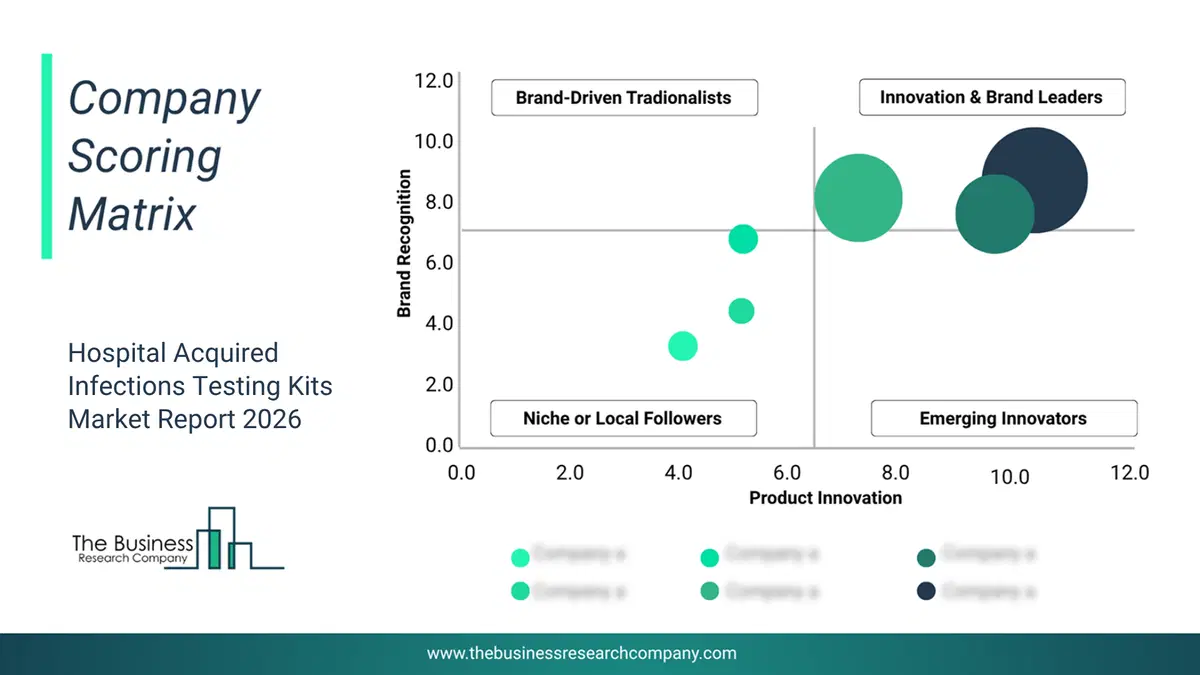
This chart maps companies by product innovation and brand strength, with bubble size indicating relative revenue, helping identify market leaders, challengers, and niche players. This is an illustrative chart; the full report provides a complete and accurate competitive analysis.
Global Hospital Acquired Infections Testing Kits Market Trends and Insights
Major companies operating in the hospital-acquired infections (HAI) testing kits market are focusing on developing advanced point-of-care antimicrobial susceptibility testing (AST) solutions to enable rapid diagnosis, guide targeted therapy, and combat antimicrobial resistance (AMR). Point-of-care AST leverages proprietary microfluidic technology to quickly detect bacterial presence and assess antibiotic effectiveness directly from patient urine samples, reducing diagnostic delays and improving treatment decisions. For instance, in June 2023, Sysmex Corporation, a Japan-based diagnostics company, introduced the world’s first point-of-care testing system in Europe capable of performing antimicrobial susceptibility testing in just 30 minutes. Using a microfluidic-based AST approach for patients suspected of urinary tract infections, the system significantly reduces turnaround time and supports antimicrobial stewardship in primary care settings by enabling timely and informed antibiotic use, thereby contributing to global efforts to curb AMR.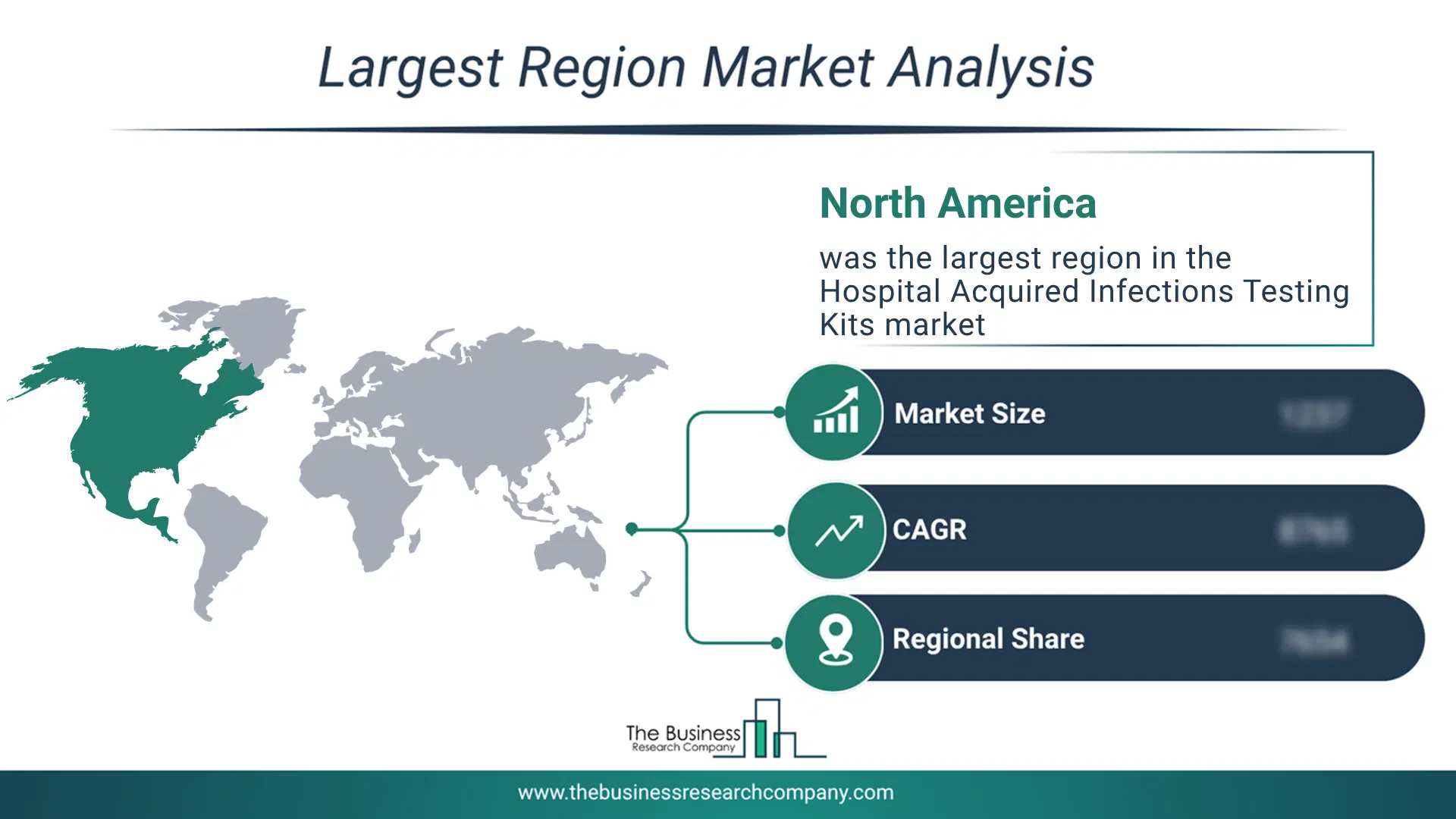
Regional Outlook
North America was the largest region in the hospital-acquired infections testing kits market in 2025. Asia-Pacific is expected to be the fastest-growing region in the forecast period. The regions covered in this market report are Asia-Pacific, South East Asia, Western Europe, Eastern Europe, North America, South America, Middle East, Africa. The countries covered in this market report are Australia, Brazil, China, France, Germany, India, Indonesia, Japan, Taiwan, Russia, South Korea, UK, USA, Canada, Italy, SpainWhat Defines the Hospital Acquired Infections Testing Kits Market?
The hospital-acquired infections testing kits market consist of sales of testing kits and devices. Values in this market are factory gate values, that is the value of goods sold by the manufacturers or creators of the goods, whether to other entities (including downstream manufacturers, wholesalers, distributors, and retailers) or directly to end customers. The value of goods in this market includes related services sold by the creators of the goods.How is Market Value Defined and Measured?
The market value is defined as the revenues that enterprises gain from the sale of goods and/or services within the specified market and geography through sales, grants, or donations in terms of the currency (in USD unless otherwise specified). The revenues for a specified geography are consumption values that are revenues generated by organizations in the specified geography within the market, irrespective of where they are produced. It does not include revenues from resales along the supply chain, either further along the supply chain or as part of other products.
This chart presents market attractiveness based on a quantitative evaluation of growth, competition, strategic alignment, and risk, offering a clear view of opportunity areas for decision-making. This chart is for illustrative purposes; the full report contains the complete analysis.

This chart highlights the Total Addressable Market (TAM) by estimating the maximum revenue opportunity using an assumption-driven approach, supporting strategic planning and opportunity sizing across markets. The chart is illustrative; the full report provides a more comprehensive analysis.
What Key Data and Analysis Are Included in the Hospital Acquired Infections Testing Kits Market Report 2026?
The hospital acquired infections testing kits market research report is one of a series of new reports from The Business Research Company that provides market statistics, including industry global market size, regional shares, competitors with the market share, detailed market segments, market trends and opportunities, and any further data you may need to thrive in the hospital acquired infections testing kits industry. The market research report delivers a complete perspective of everything you need, with an in-depth analysis of the current and future state of the industry.Hospital Acquired Infections Testing Kits Market Report Forecast Analysis
| Report Attribute | Details |
|---|---|
| Market Size Value In 2026 | $5.19 billion |
| Revenue Forecast In 2030 | $7.2 billion |
| Growth Rate | CAGR of 8.5% from 2026 to 2030 |
| Base Year For Estimation | 2025 |
| Actual Estimates/Historical Data | 2020-2025 |
| Forecast Period | 2026 - 2030 |
| Market Representation | Revenue in USD Billion and CAGR from 2026 to 2030 |
| Segments Covered | Product, Test Type, Pathogen Type, Application |
| Regional Scope | Asia-Pacific, Western Europe, Eastern Europe, North America, South America, Middle East, Africa |
| Country Scope | The countries covered in the report are Australia, Brazil, China, France, Germany, India, Indonesia, Japan, Taiwan, Russia, South Korea, UK, USA, Canada, Italy, Spain. |
| Key Companies Profiled | Becton Dickinson and Company, Abbott Laboratories, Cepheid, F. Hoffmann-La Roche Ltd, STERIS plc, QIAGEN, Meridian Bioscience Inc., BioMérieux SA, GE Healthcare, Seegene, SD Biosensor, Fujirebio, Sysmex Corporation, Getein Biotech, Hangzhou Biotest Biotech, AmonMed Biotechnology, Beijing Tigsun Diagnostics, Hunan Lituo Biotechnology, ImmunoScience, Vivacheck Lab |
| Customization Scope | Request for Customization |
| Pricing And Purchase Options | Explore Purchase Options |