
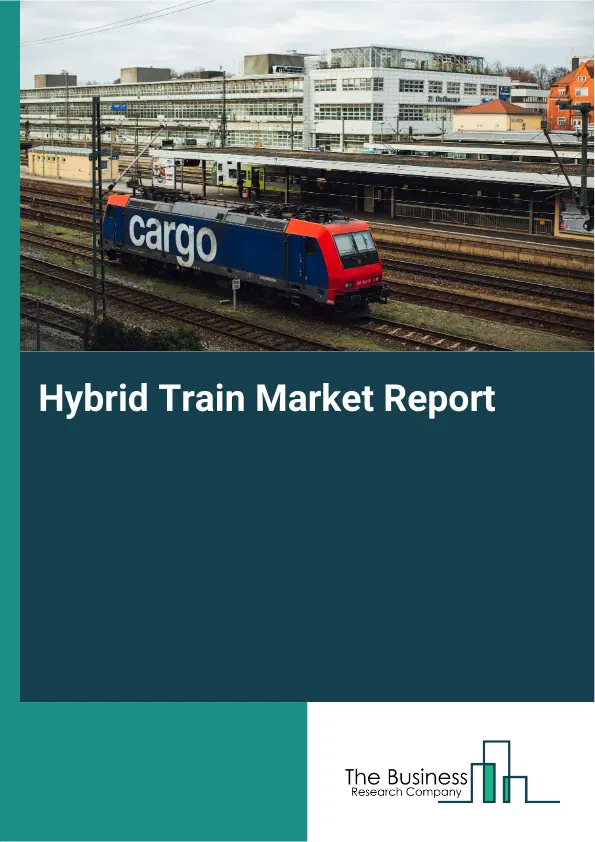
Hybrid Train Market Report 2026
Global Outlook – By Propulsion (Electro-Diesel, Battery Operated, Hydrogen Powered, Gas Powered, Solar Powered), By Operational Speed (Below 100 km/h, 100-200 km/h, Above 200 km/h), By Application (Freight, Passenger) – Market Size, Trends, Strategies, and Forecast to 2030
Hybrid Train Market Overview
• Hybrid Train market size has reached to $19.63 billion in 2025 • Expected to grow to $27.18 billion in 2030 at a compound annual growth rate (CAGR) of 6.8% • Growth Driver: Hybrid Train Market Gains Momentum With Growing Emphasis On Emission Reduction In Rail Transportation • Market Trend: Hydrogen-Powered Solutions Transforming Rail Networks • Europe was the largest region in 2025.Market Gains By 2030 – Top Opportunities By Segment
Market Gain identifies the most promising market opportunities by highlighting the segments or products expected to generate the highest incremental revenue growth over the next five years.
What Is Covered Under Hybrid Train Market?
A hybrid train is a type of locomotive that combines a traditional power source, such as a diesel engine, with an onboard rechargeable energy storage system (RESS). This system captures and stores energy from regenerative braking, which can then be used to assist with acceleration and reduce fuel consumption. Hybrid trains are environmentally friendly, offering reduced emissions and noise compared to conventional trains, and they are used in both passenger and freight transportation to improve efficiency and sustainability. The main types of hybrid train propulsion include electro-diesel, battery-operated, hydrogen-powered, gas-powered, and solar-powered. Electro-diesel hybrid trains are capable of running on both diesel and electricity. The operational speed for hybrid trains includes below 100 km/h, 100-200 km/h and above 200 km/h, used for applications in freight and passenger.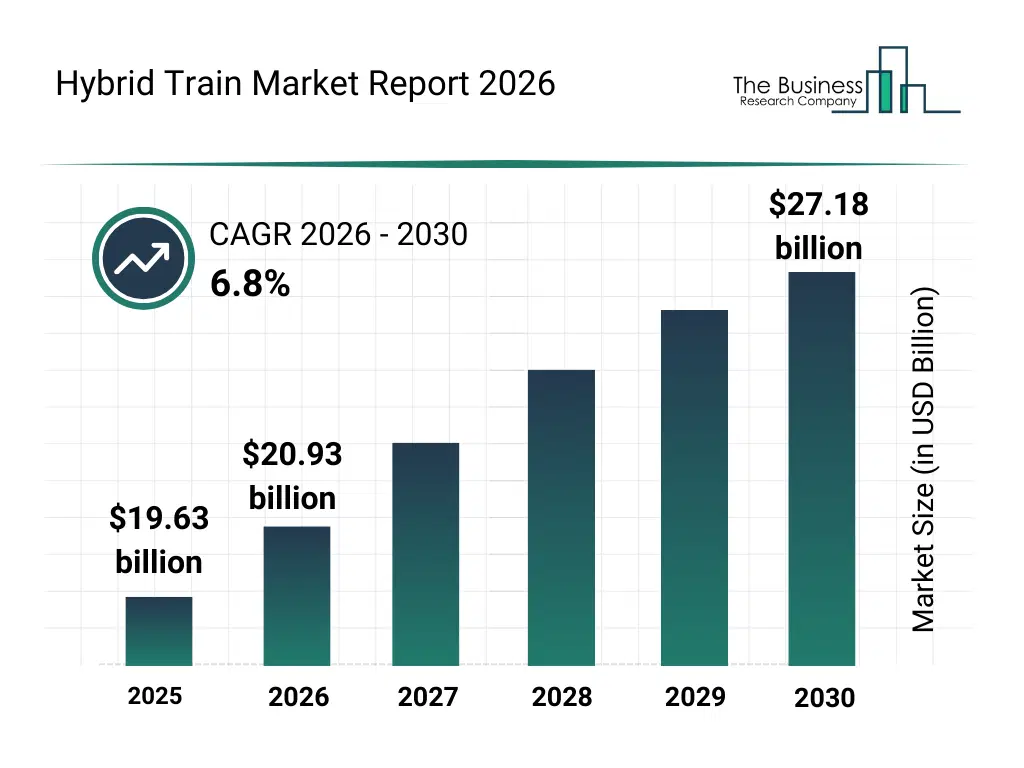
What Is The Hybrid Train Market Size and Share 2026?
The hybrid train market size has grown strongly in recent years. It will grow from $19.63 billion in 2025 to $20.93 billion in 2026 at a compound annual growth rate (CAGR) of 6.6%. The growth in the historic period can be attributed to railway electrification limits, fuel cost volatility, emission reduction initiatives, early hybrid locomotive pilots, advancements in battery systems.What Is The Hybrid Train Market Growth Forecast?
The hybrid train market size is expected to see strong growth in the next few years. It will grow to $27.18 billion in 2030 at a compound annual growth rate (CAGR) of 6.8%. The growth in the forecast period can be attributed to government rail decarbonization plans, expansion of hybrid rail corridors, advancements in RESS technology, rising freight efficiency demand, lifecycle cost optimization. Major trends in the forecast period include rising adoption of regenerative braking, increasing focus on fuel efficiency optimization, expansion of hybrid locomotive fleets, integration of energy storage systems, reduction of rail emissions.
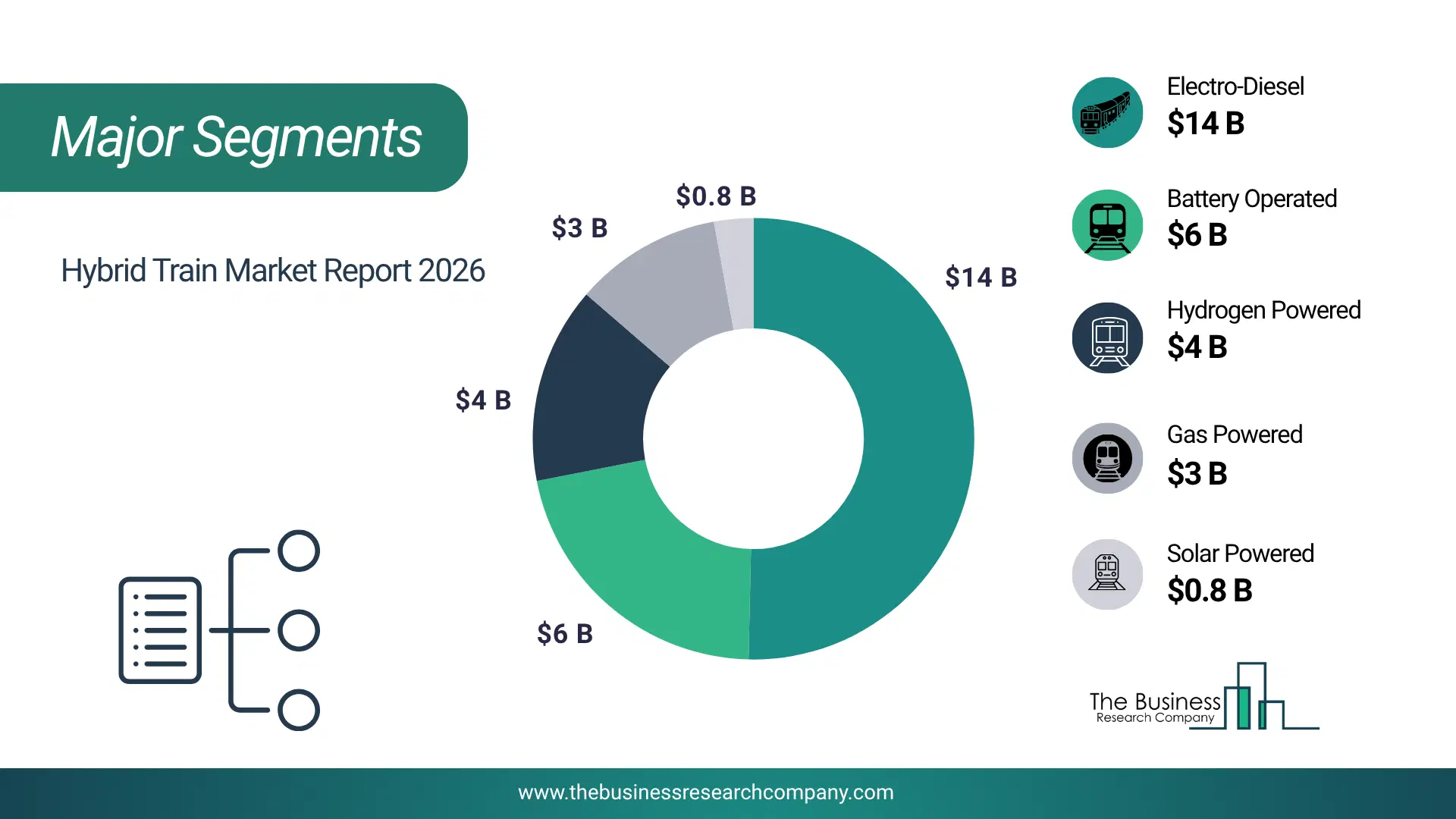
Global Hybrid Train Market Segmentation
1) By Propulsion: Electro-Diesel, Battery Operated, Hydrogen Powered, Gas Powered, Solar Powered 2) By Operational Speed: Below 100 km/h, 100-200 km/h, Above 200 km/h 3) By Application: Freight, Passenger Subsegments: 1) By Electro-Diesel: Dual-Mode Electro-Diesel Trains, Diesel-Electric Locomotives, Battery Operated 2) By Battery Operated: Rechargeable Battery Trains, Hybrid Battery-Diesel Trains 3) By Hydrogen Powered: Hydrogen Fuel Cell Trains, Hydrogen Internal Combustion Engine Trains 4) By Gas Powered: Compressed Natural Gas (CNG) Trains, Liquefied Natural Gas (LNG) Trains 5) By Solar Powered: Solar Panel Integrated Trains, Hybrid Solar-Diesel Trains The top segments in the hybrid train market will be: • Electro-Diesel will reach $13.53 Billion by 2030. • Battery Operated will reach $5.65 Billion by 2030. • Hydrogen Powered will reach $4.26 Billion by 2030. • Gas Powered will reach $2.68 Billion by 2030. • Solar Powered will reach $0.84 Billion by 2030.What Is The Driver Of The Hybrid Train Market?
The increasing focus on reducing emissions from railways is expected to drive the hybrid train market. Governments and stakeholders across the world are focusing on reducing carbon footprints and overall emissions from transportation. Hybrid trains achieve reduced fuel consumption, which provides environmental benefits and economic savings. For instance, in October 2024, according to the US Department of Transportation’s Federal Railroad Administration (FRA), a US-based federal government agency, the organization announced over $2.4 billion in Bipartisan Infrastructure Law funding for 122 rail improvement projects across 41 states and Washington, D.C., aimed at improving reliability and reducing pollution in the rail system. Hence, the growing focus on reducing emissions from railroads will drive the market.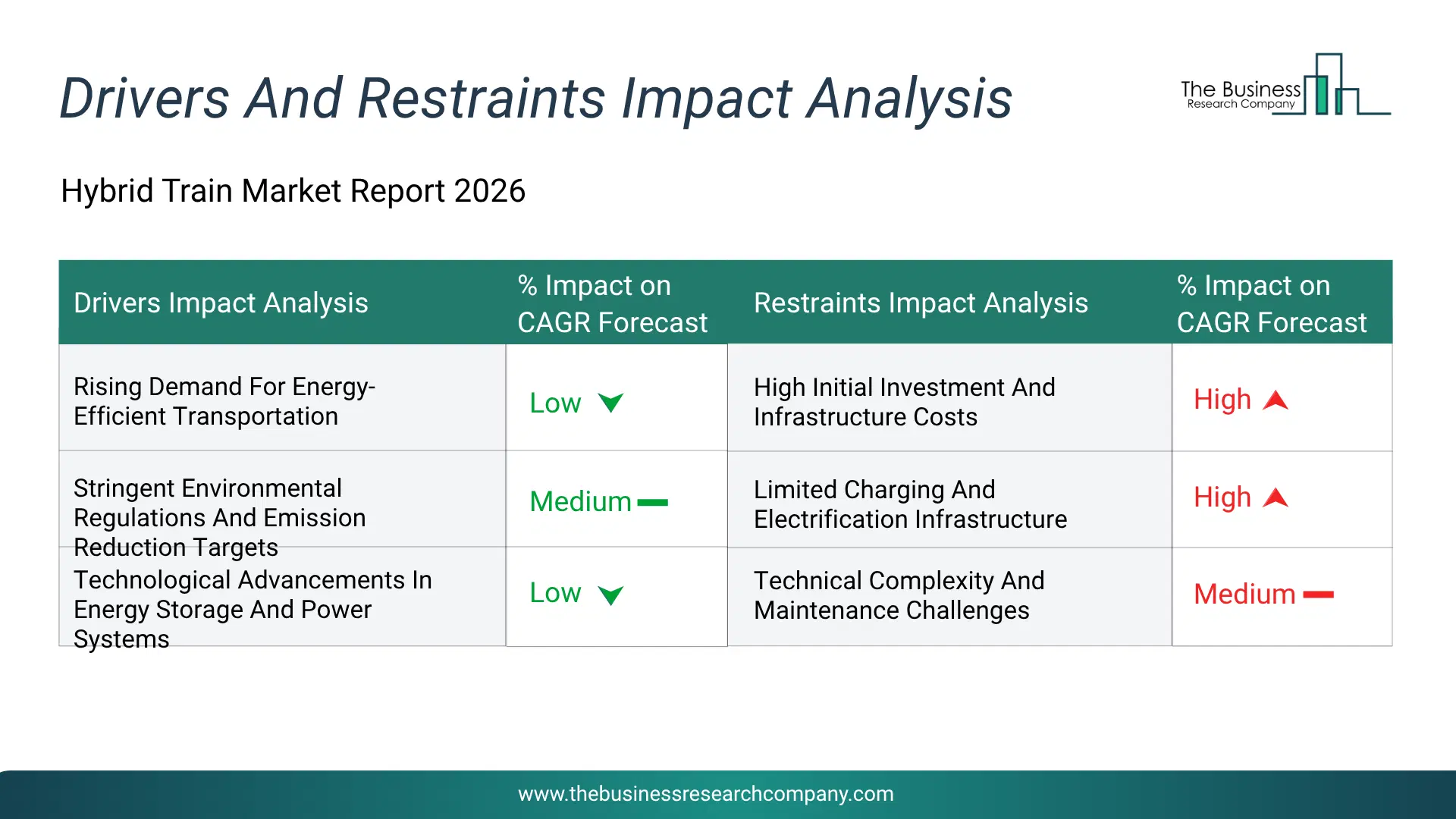
Infographic Chart Showing Key Market Drivers Analysis And Restraints For Hybrid Train Market
The chart presents an impact analysis of key drivers and restraints, quantifying their relative influence on the market's growth rate and helping assess the balance between growth enablers and limiting factors. This chart offers a high-level perspective; the full report contains more detailed insights.
How Will The Drivers Impact Growth In The Global Hybrid Train Market?
• Rising Demand For Energy-Efficient Transportation (Low) – During the forecast period, the rising demand for energy-efficient transportation is expected to become a key growth driver for the hybrid train market by 2030. Rail operators are increasingly focusing on reducing fuel consumption and optimizing operational efficiency, particularly across long-distance and regional routes. Hybrid trains enable the combination of electric and conventional power sources, significantly improving energy utilization and lowering operating costs. This is particularly beneficial in regions with partial electrification, where hybrid systems ensure seamless and efficient operations. Growing urbanization and freight movement are further amplifying the need for energy-efficient rail solutions. • Stringent Environmental Regulations And Emission Reduction Targets (Medium) – During the forecast period, stringent environmental regulations and emission reduction targets are expected to emerge as a major factor driving the expansion of the hybrid train market by 2030. Governments and regulatory bodies across key regions are imposing stricter limits on greenhouse gas emissions and diesel usage in rail transport. Hybrid trains offer a viable solution by significantly reducing carbon emissions compared to conventional diesel locomotives, while maintaining operational flexibility. Rail operators are therefore accelerating the adoption of hybrid technologies to comply with sustainability mandates and improve environmental performance. This regulatory push is further complemented by global decarbonization goals and climate commitments. • Technological Advancements In Energy Storage And Power Systems (Low) – During the forecast period, technological advancements in energy storage and power systems are expected to act as a key growth catalyst for the hybrid train market by 2030. Continuous improvements in battery technologies, power electronics, and energy management systems are enhancing the efficiency, reliability, and performance of hybrid trains. Advanced lithium-ion batteries, regenerative braking systems, and intelligent power distribution solutions are enabling better energy recovery and utilization. These innovations are also reducing lifecycle costs and improving the feasibility of hybrid deployment across diverse rail applications. As technology continues to evolve, hybrid trains are becoming more competitive with fully electric alternatives.How Will The Restraints Impact Growth In The Global Hybrid Train Market?
• High Initial Investment And Infrastructure Costs (Low) – During the forecast period, high initial investment and infrastructure costs are significantly restricting the growth of the hybrid train market. The substantial capital required for hybrid train development, retrofitting existing fleets, and upgrading supporting infrastructure is creating financial barriers for rail operators and government agencies. • Limited Charging And Electrification Infrastructure (Medium) – During the forecast period, limited charging and electrification infrastructure is significantly restricting the growth of the hybrid train market. Inadequate availability of charging stations, electrified rail networks, and supporting energy infrastructure is constraining large-scale deployment and operational efficiency of hybrid trains. • Technical Complexity And Maintenance Challenges (Low) – During the forecast period, technical complexity and maintenance challenges are restricting the growth of the hybrid train market. Integration of dual propulsion systems increases engineering complexity, maintenance requirements, and operational downtime, thereby raising lifecycle costs and limiting widespread adoption.Key Players In The Global Hybrid Train Market
Major companies operating in the hybrid train market report include CRRC Corporation Limited, Alstom SA, Siemens AG, Wabtec Corporation, Hyundai Rotem Company, Stadler Rail AG, Hitachi Ltd., Ballard Power Systems Inc., Construcciones y Auxiliar de Ferrocarriles SA, The Kinki Sharyo Co. Ltd., Toshiba Infrastructure Systems & Solutions Corporation, Vivarail Ltd., Thales Group, Kawasaki Heavy Industries Ltd., Cummins Inc., ABB Ltd., Voith GmbH & Co. KGaA, Mitsubishi Heavy Industries Ltd., Vossloh AG, Škoda Transportation AS, Newag S.A., PESA Bydgoszcz S.A., Stäubli Electrical Connectors AG, Prodrive Technologies B.V., TMH International AG, ZF Friedrichshafen AG, Faiveley Transport S.A., Knorr-Bremse AG, Akiem Group S.A., Talgo S.A.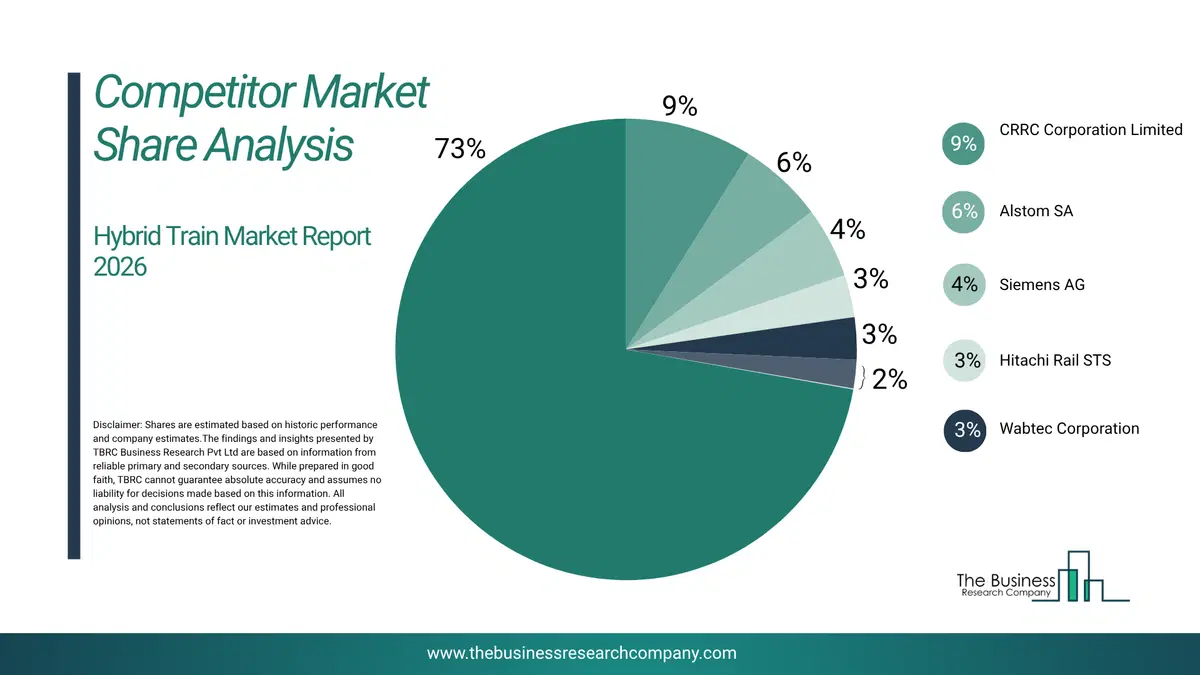
This chart is for illustrative purposes; the full report includes a detailed competitor analysis and comprehensive overview of the top 10 companies in the market.
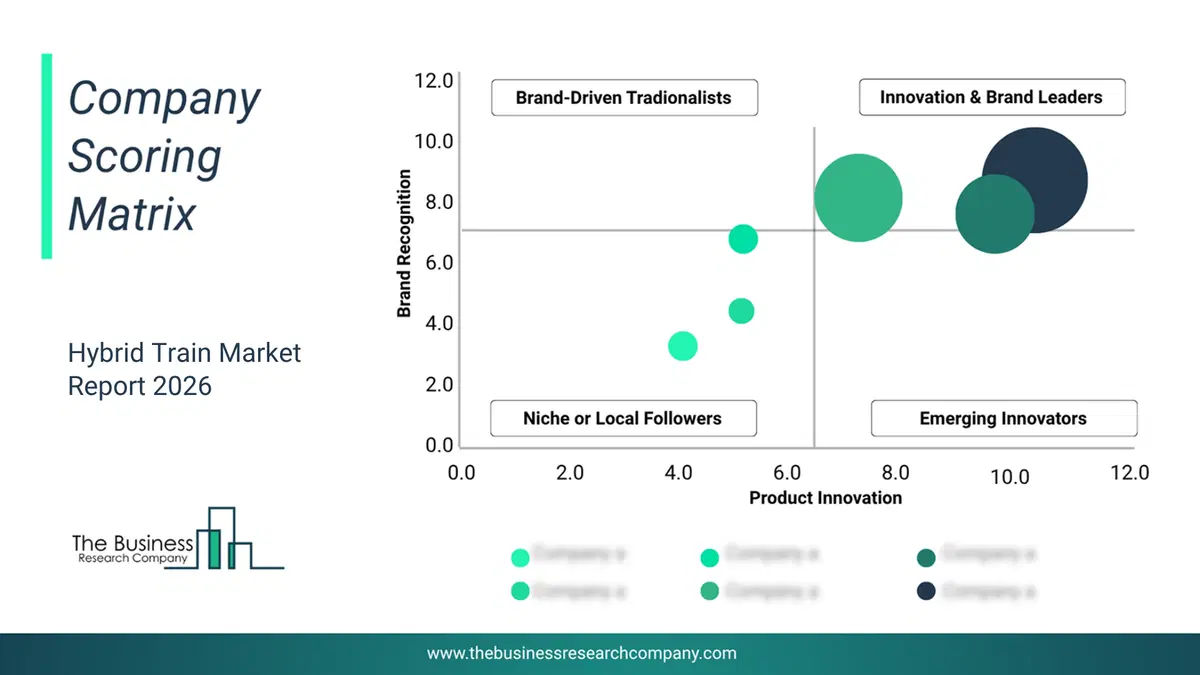
This chart maps companies by product innovation and brand strength, with bubble size indicating relative revenue, helping identify market leaders, challengers, and niche players. This is an illustrative chart; the full report provides a complete and accurate competitive analysis.
Global Hybrid Train Market Trends and Insights
Major companies operating in the hybrid train market are focusing on developing clean-energy propulsion technologies, such as hydrogen passenger trains, to enhance energy efficiency and support zero-emission operations on non-electrified routes. Hydrogen passenger trains are powered by hydrogen fuel cells paired with onboard batteries, which generate electricity for traction while emitting only water vapor, enabling capabilities such as long-range operation, reduced fuel dependency, and lower environmental impact. For instance, in December 2024, Siemens Mobility GmbH, a Germany-based rail technology and rolling stock manufacturer, launched the Mireo Plus H, a hydrogen-electric train designed to deliver emission-free regional passenger transport, featuring high-capacity fuel cells, advanced lithium-ion battery systems, and a dual-power architecture for continuous operation on non-electrified lines. The Mireo Plus H improves operational sustainability, reduces diesel reliance, and supports the transition toward greener regional rail mobility.What Are Latest Mergers And Acquisitions In The Hybrid Train Market?
In February 2023, Great Western Railway (GWR), a UK-based train operating company, acquired multiple assets from Vivarail, for an undisclosed amount. This acquisition includes intellectual property, rolling stock, and equipment related to the development of battery and hybrid trains, as well as FastCharge technology. Vivarail is a UK-based battery and hybrid trains manufacturer.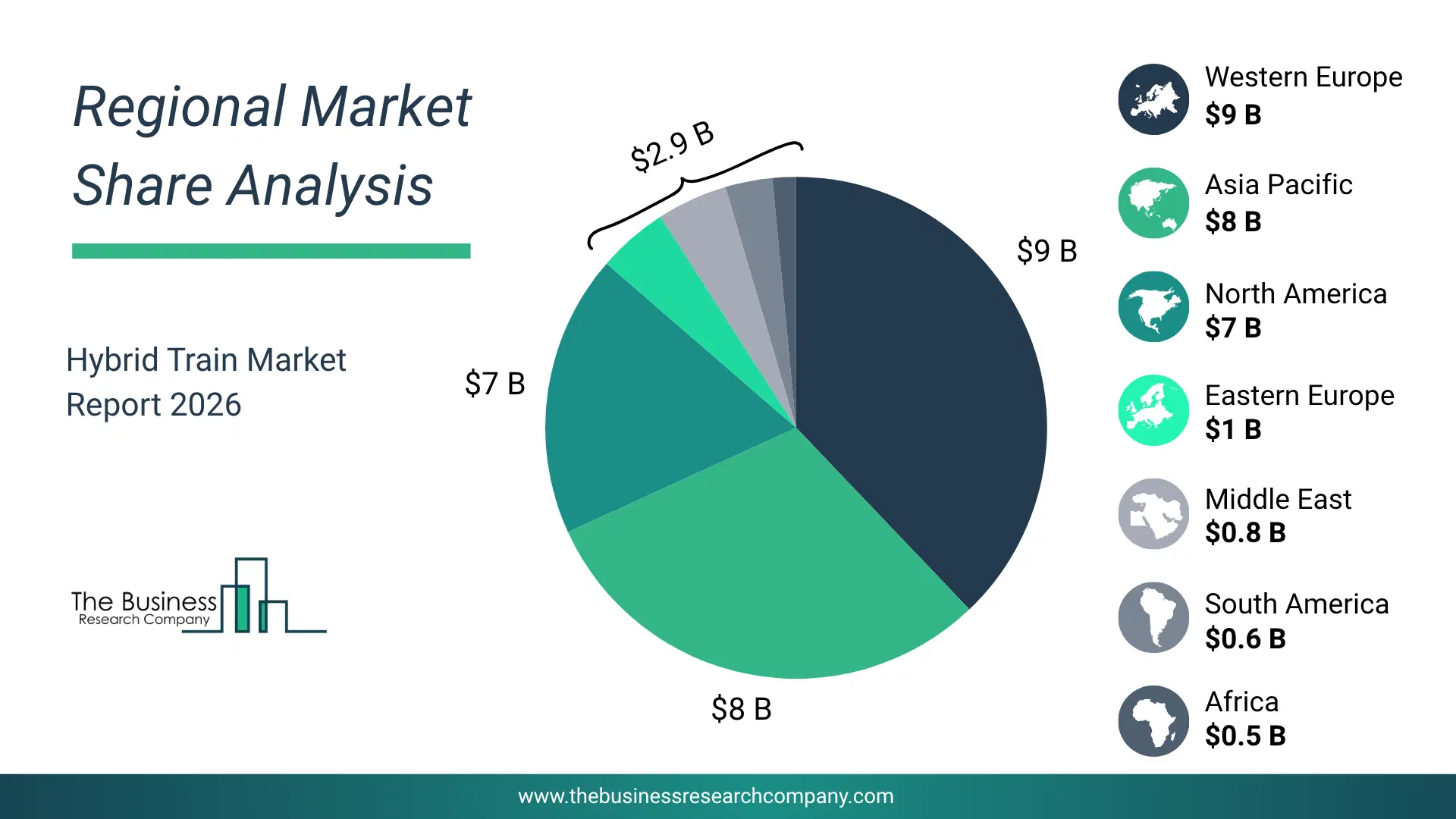
Regional Outlook
Europe was the largest region in the hybrid train market share in 2025. The regions covered in this market report include Asia-Pacific, South East Asia, Western Europe, Eastern Europe, North America, South America, Middle East, Africa. The countries covered in this market report include Australia, Brazil, China, France, Germany, India, Indonesia, Japan, Taiwan, Russia, South Korea, UK, USA, Canada, Italy, SpainWhat Defines the Hybrid Train Market?
The hybrid train market consists of sales of batteries, super capacitors, electronic power converters, and electric motors. Values in this market are ‘factory gate’ values, that is, the value of goods sold by the manufacturers or creators of the goods, whether to other entities (including downstream manufacturers, wholesalers, distributors, and retailers) or directly to end customers. The value of goods in this market includes related services sold by the creators of the goods.How is Market Value Defined and Measured?
The market value is defined as the revenues that enterprises gain from the sale of goods and/or services within the specified market and geography through sales, grants, or donations in terms of the currency (in USD unless otherwise specified). The revenues for a specified geography are consumption values that are revenues generated by organizations in the specified geography within the market, irrespective of where they are produced. It does not include revenues from resales along the supply chain, either further along the supply chain or as part of other products.
This chart presents market attractiveness based on a quantitative evaluation of growth, competition, strategic alignment, and risk, offering a clear view of opportunity areas for decision-making. This chart is for illustrative purposes; the full report contains the complete analysis.

This chart highlights the Total Addressable Market (TAM) by estimating the maximum revenue opportunity using an assumption-driven approach, supporting strategic planning and opportunity sizing across markets. The chart is illustrative; the full report provides a more comprehensive analysis.
What Key Data and Analysis Are Included in the Hybrid Train Market Report 2026?
The hybrid train market research report is one of a series of new reports from The Business Research Company that provides market statistics, including industry global market size, regional shares, competitors with the market share, detailed market segments, market trends and opportunities, and any further data you may need to thrive in the hybrid train industry. The market research report delivers a complete perspective of everything you need, with an in-depth analysis of the current and future state of the industry.Hybrid Train Market Report Forecast Analysis
| Report Attribute | Details |
|---|---|
| Market Size Value In 2026 | $20.93 billion |
| Revenue Forecast In 2030 | $27.18 billion |
| Growth Rate | CAGR of 6.6% from 2026 to 2030 |
| Base Year For Estimation | 2025 |
| Actual Estimates/Historical Data | 2020-2025 |
| Forecast Period | 2026 - 2030 |
| Market Representation | Revenue in USD Billion and CAGR from 2026 to 2030 |
| Segments Covered | Propulsion, Operational Speed, Application |
| Regional Scope | Asia-Pacific, Western Europe, Eastern Europe, North America, South America, Middle East, Africa |
| Country Scope | The countries covered in the report are Australia, Brazil, China, France, Germany, India, Indonesia, Japan, Taiwan, Russia, South Korea, UK, USA, Canada, Italy, Spain. |
| Key Companies Profiled | CRRC Corporation Limited, Alstom SA, Siemens AG, Wabtec Corporation, Hyundai Rotem Company, Stadler Rail AG, Hitachi Ltd., Ballard Power Systems Inc., Construcciones y Auxiliar de Ferrocarriles SA, The Kinki Sharyo Co. Ltd., Toshiba Infrastructure Systems & Solutions Corporation, Vivarail Ltd., Thales Group, Kawasaki Heavy Industries Ltd., Cummins Inc., ABB Ltd., Voith GmbH & Co. KGaA, Mitsubishi Heavy Industries Ltd., Vossloh AG, Škoda Transportation AS, Newag S.A., PESA Bydgoszcz S.A., Stäubli Electrical Connectors AG, Prodrive Technologies B.V., TMH International AG, ZF Friedrichshafen AG, Faiveley Transport S.A., Knorr-Bremse AG, Akiem Group S.A., Talgo S.A. |
| Customization Scope | Request for Customization |
| Pricing And Purchase Options | Explore Purchase Options |