
Implantable Neurostimulation Devices Market Report 2026
Global Outlook – By Type (Spinal Cord Stimulation (SCS), Gastric Electric Stimulation (GES), Deep Brain Stimulation (DBS), Sacral Nerve Stimulation (SNS), Vagus Nerve Stimulation (VNS), Other Types), By Application (Pain Management, Parkinson's Disease, Urinary And Fecal Incontinence, Epilepsy, Gastroparesis, Other Applications), By End-User (Hospitals, Clinics, Ambulatory Surgical Centers) – Market Size, Trends, Strategies, and Forecast to 2030
Implantable Neurostimulation Devices Market Overview
• Implantable Neurostimulation Devices market size has reached to $5.62 billion in 2025 • Expected to grow to $10.02 billion in 2030 at a compound annual growth rate (CAGR) of 12.4% • Growth Driver: Rising Prevalence Of Neurological Disorders To Drive Growth In Implantable Neurostimulation Device Market • Market Trend: Advancements In Rechargeable Brain-Sensing Neurostimulators Enabling More Personalized Neurological Therapy • North America was the largest region in 2025 and Asia-Pacific is the fastest growing region.What Is Covered Under Implantable Neurostimulation Devices Market?
Implantable neurostimulation devices are medical devices designed to deliver electrical stimulation to specific areas of the nervous system to treat various neurological and psychological conditions. These devices are surgically implanted into the body and are used to modulate nerve activity. The devices represent a sophisticated approach to managing conditions that may not respond well to medication alone, offering patients a chance to improve their quality of life. The main implantable neurostimulation devices are spinal cord stimulation (SCS), gastric electric stimulation (GES), deep brain stimulation (DBS), sacral nerve stimulation (SNS), vagus nerve stimulation (VNS), and others. Spinal cord stimulation (SCS) is a therapy that uses mild electrical currents to block pain signals from reaching the brain, effectively managing chronic pain conditions. It is applied for pain management, Parkinson's disease, urinary and fecal incontinence, epilepsy, gastroparesis, and others and is used by various end-users, including hospitals, clinics, and ambulatory surgical centers.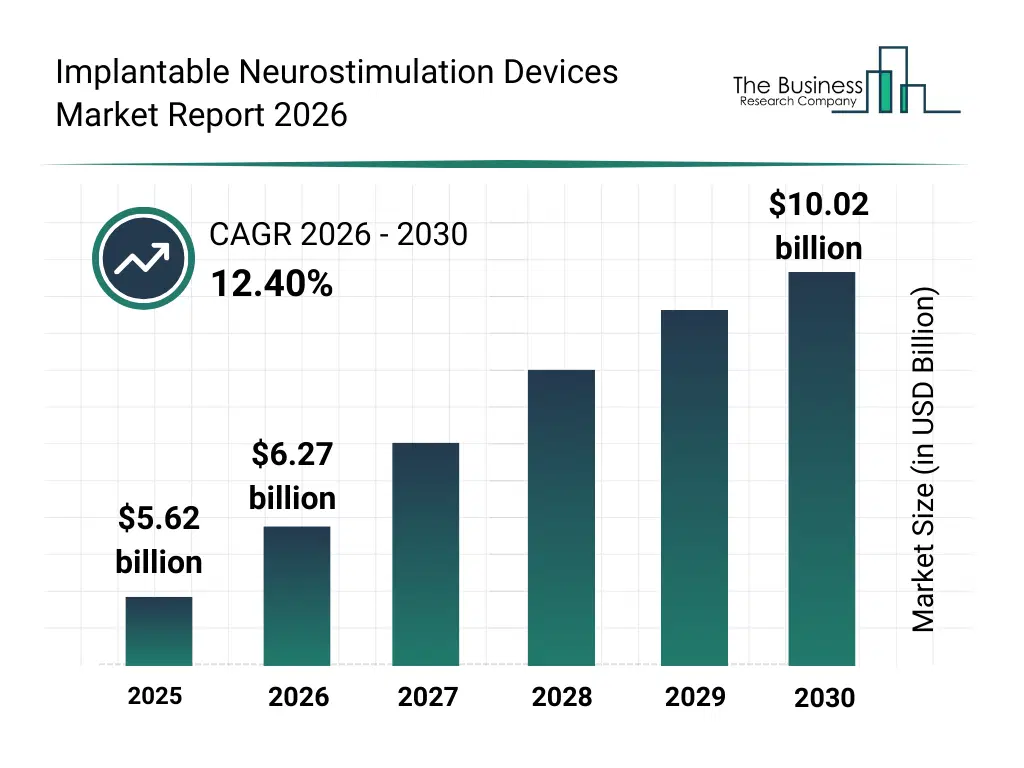
What Is The Implantable Neurostimulation Devices Market Size and Share 2026?
The implantable neurostimulation devices market size has grown rapidly in recent years. It will grow from $5.62 billion in 2025 to $6.27 billion in 2026 at a compound annual growth rate (CAGR) of 11.7%. The growth in the historic period can be attributed to rising prevalence of neurological disorders, expansion of pain management treatments, adoption of implantable stimulation technologies, increasing clinical acceptance of neuromodulation, availability of implantable electronic systems.What Is The Implantable Neurostimulation Devices Market Growth Forecast?
The implantable neurostimulation devices market size is expected to see rapid growth in the next few years. It will grow to $10.02 billion in 2030 at a compound annual growth rate (CAGR) of 12.4%. The growth in the forecast period can be attributed to increasing demand for non-pharmacological therapies, rising focus on precision neuromodulation, expansion of outpatient neurological treatments, growing investment in brain-machine interface research, increasing innovation in stimulation algorithms. Major trends in the forecast period include increasing deployment of advanced neurostimulation therapies, rising adoption of rechargeable stimulation devices, growing use of personalized neuromodulation treatments, expansion of multi-indication neurostimulation systems, enhanced focus on long-term therapy effectiveness.
Global Implantable Neurostimulation Devices Market Segmentation
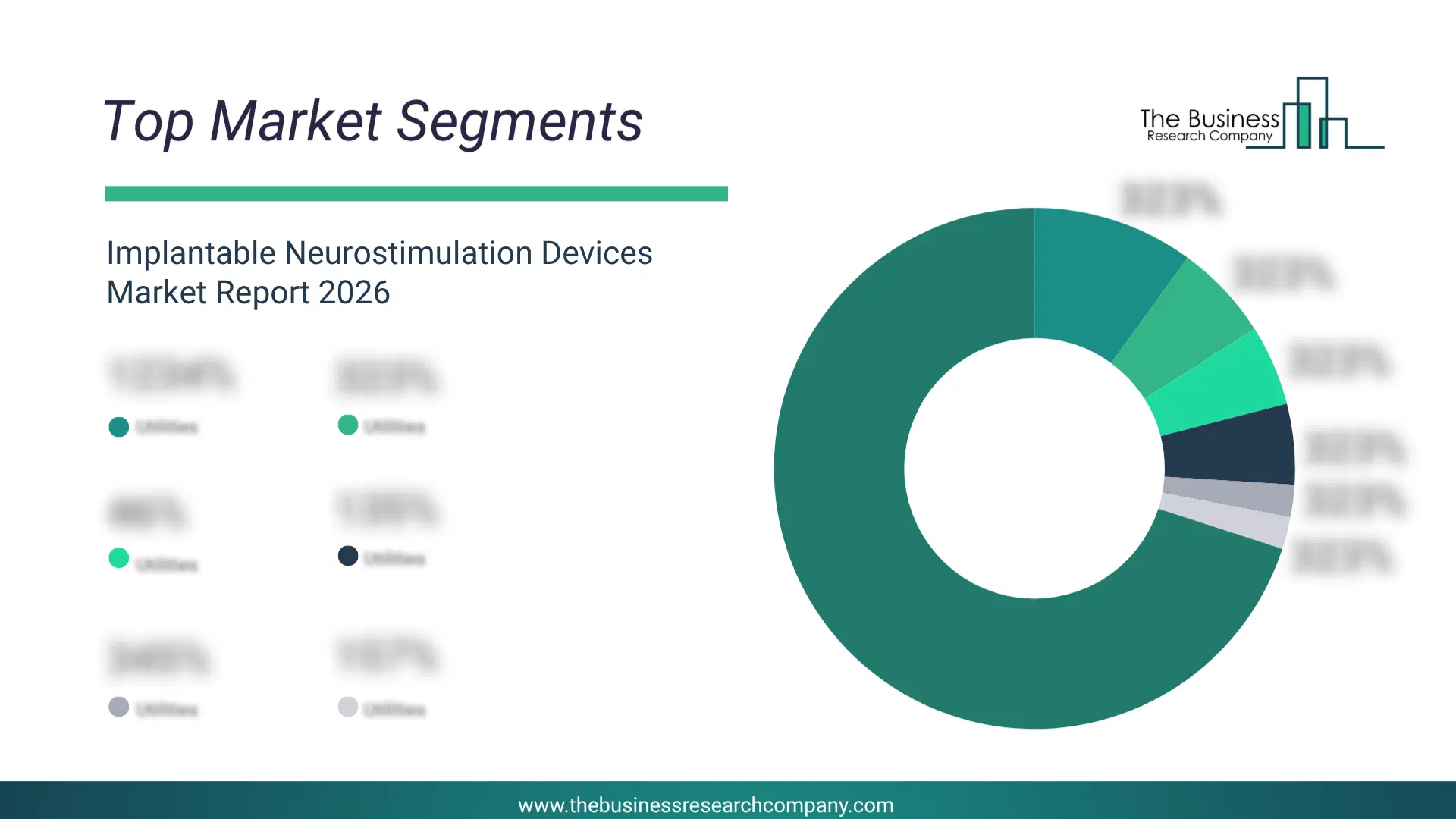
1) By Type: Spinal Cord Stimulation (SCS), Gastric Electric Stimulation (GES), Deep Brain Stimulation (DBS), Sacral Nerve Stimulation (SNS), Vagus Nerve Stimulation (VNS), Other Types 2) By Application: Pain Management, Parkinson's Disease, Urinary And Fecal Incontinence, Epilepsy, Gastroparesis, Other Applications 3) By End-User: Hospitals, Clinics, Ambulatory Surgical Centers Subsegments: 1) By Spinal Cord Stimulation (SCS): Rechargeable SCS Devices, Non-Rechargeable SCS Devices 2) By Gastric Electric Stimulation (GES): Implantable Gastric Stimulators, Adjustable Gastric Stimulators 3) By Deep Brain Stimulation (DBS): DBS Devices for Movement Disorders, DBS Devices for Psychiatric Disorders 4) By Sacral Nerve Stimulation (SNS): SNS Devices for Urinary Incontinence, SNS Devices for Fecal Incontinence 5) By Vagus Nerve Stimulation (VNS): VNS Devices for Epilepsy, VNS Devices for Depression 6) By Other Types: Peripheral Nerve Stimulation (PNS), Cortical Stimulation Devices, Novel Neurostimulation TechnologiesWhat Is The Driver Of The Implantable Neurostimulation Devices Market?
The rising prevalence of neurological disorders is expected to propel the growth of the implantable neurostimulation device market going forward. A neurological disorder is any condition that affects the structure or function of the nervous system, resulting in various symptoms such as paralysis, seizures, and cognitive impairments. The increased exposure to risk factors such as high blood pressure, developmental abnormalities, trauma or injury leads to higher detection rates of neurological disorders. Implantable neurostimulation devices are used for neurological disorders to modulate nerve activity and alleviate symptoms when other treatments are ineffective or insufficient. For instance, in 2024, according to the Alzheimer's Association, a US-based non-profit voluntary health organization, an estimated 6.9 million Americans aged 65 and older are living with Alzheimer's disease, with 73% being age 75 or older. This number is projected to grow to 12.7 million by 2050. Therefore, the rising prevalence of neurological disorders will drive the implantable neurostimulation device industry.Key Players In The Global Implantable Neurostimulation Devices Market
Major companies operating in the implantable neurostimulation devices market are Abbott Laboratories, Medtronic PLC, Boston Scientific Corporation, St. Jude Medical LLC, LivaNova PLC, Nevro Corp., Axonics Inc., NeuroPace Inc., Bioness Inc., Saluda Medical Pty Ltd., SceneRay Co. Ltd., NeuroMetrix Inc., Synapse Biomedical Inc., NeuroSigma Inc., Nuvectra Corporation, MicroTransponder Inc., Curonix LLC, Inspire Medical Systems Inc., SetPoint Medical Corporation, ElectroCore Inc.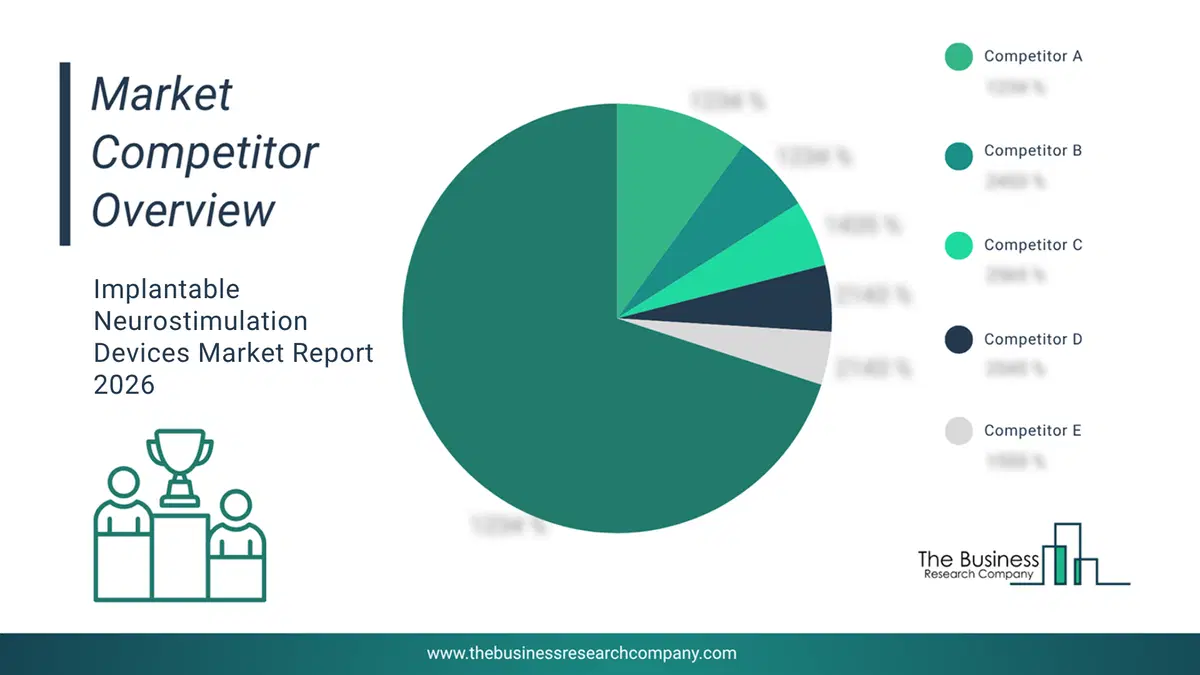
This chart is for illustrative purposes; the full report includes a detailed competitor analysis and comprehensive overview of the top 10 companies in the market.
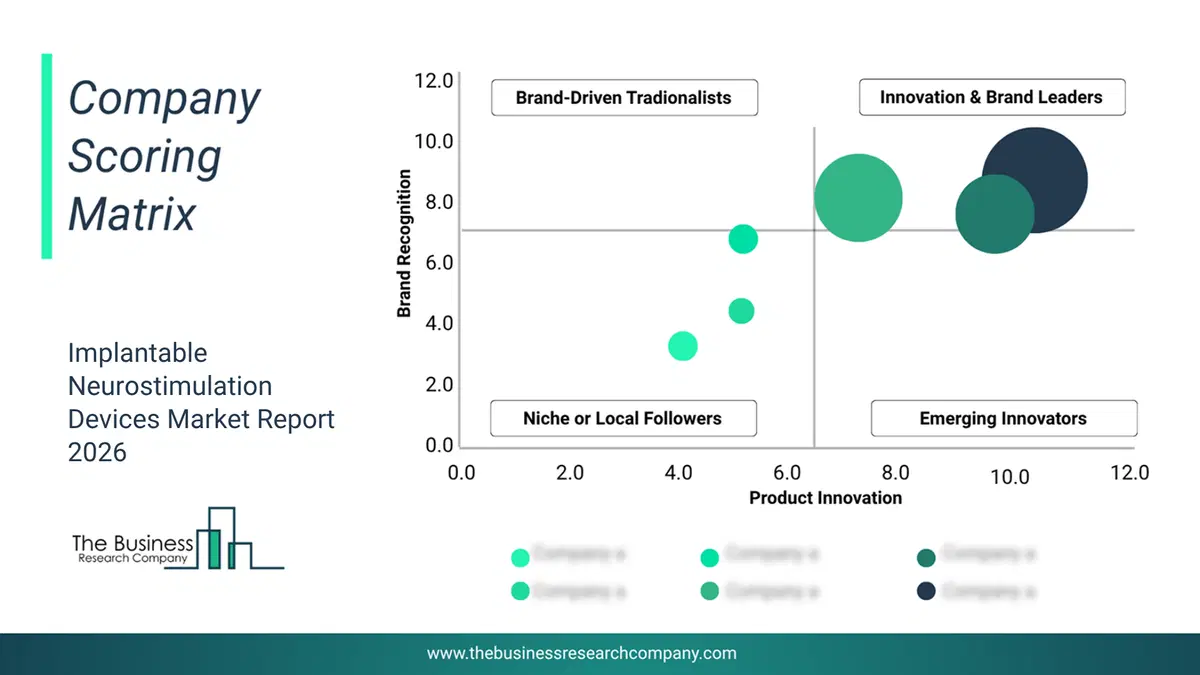
This chart maps companies by product innovation and brand strength, with bubble size indicating relative revenue, helping identify market leaders, challengers, and niche players. This is an illustrative chart; the full report provides a complete and accurate competitive analysis.
Global Implantable Neurostimulation Devices Market Trends and Insights
Major companies operating in the implantable neurostimulation devices market are focusing on developing advanced systems, such as rechargeable brain-sensing neurostimulators, to deliver more personalized and adaptive therapy for patients with movement and neurological disorders. Rechargeable brain-sensing neurostimulators are implantable devices designed to record real-time brain signals while delivering targeted stimulation, enabling clinicians to adjust therapy more precisely based on individual neural activity and long-term treatment needs. For instance, in January 2024, Medtronic, a US-based medical device company, announced the U.S. Food and Drug Administration (FDA) approval for its Percept RC neurostimulator, a rechargeable deep brain stimulation (DBS) system featuring exclusive BrainSense technology that captures and tracks brain signals for personalized therapy optimization. The device offers a long service life of at least 15 years, provides flexible and directional stimulation programming, and features rapid recharging capabilities, giving patients a more durable and customizable treatment option for managing movement disorders.What Are Latest Mergers And Acquisitions In The Implantable Neurostimulation Devices Market?
In September 2023, Amber Therapeutics, a UK-based provider of neuromodulation therapies, acquired Bioinduction for an undisclosed amount. This acquisition strengthens Amber’s strategic capabilities by adding Bioinduction’s implantable-device hardware, engineering expertise, and manufacturing know-how to support next-generation neuromodulation solutions. It further accelerates the development and commercialization of Amber-UI by integrating proven implantable neurostimulation technology into Amber’s platform. Bioinduction is a UK-based manufacturer of implantable neurostimulation devices.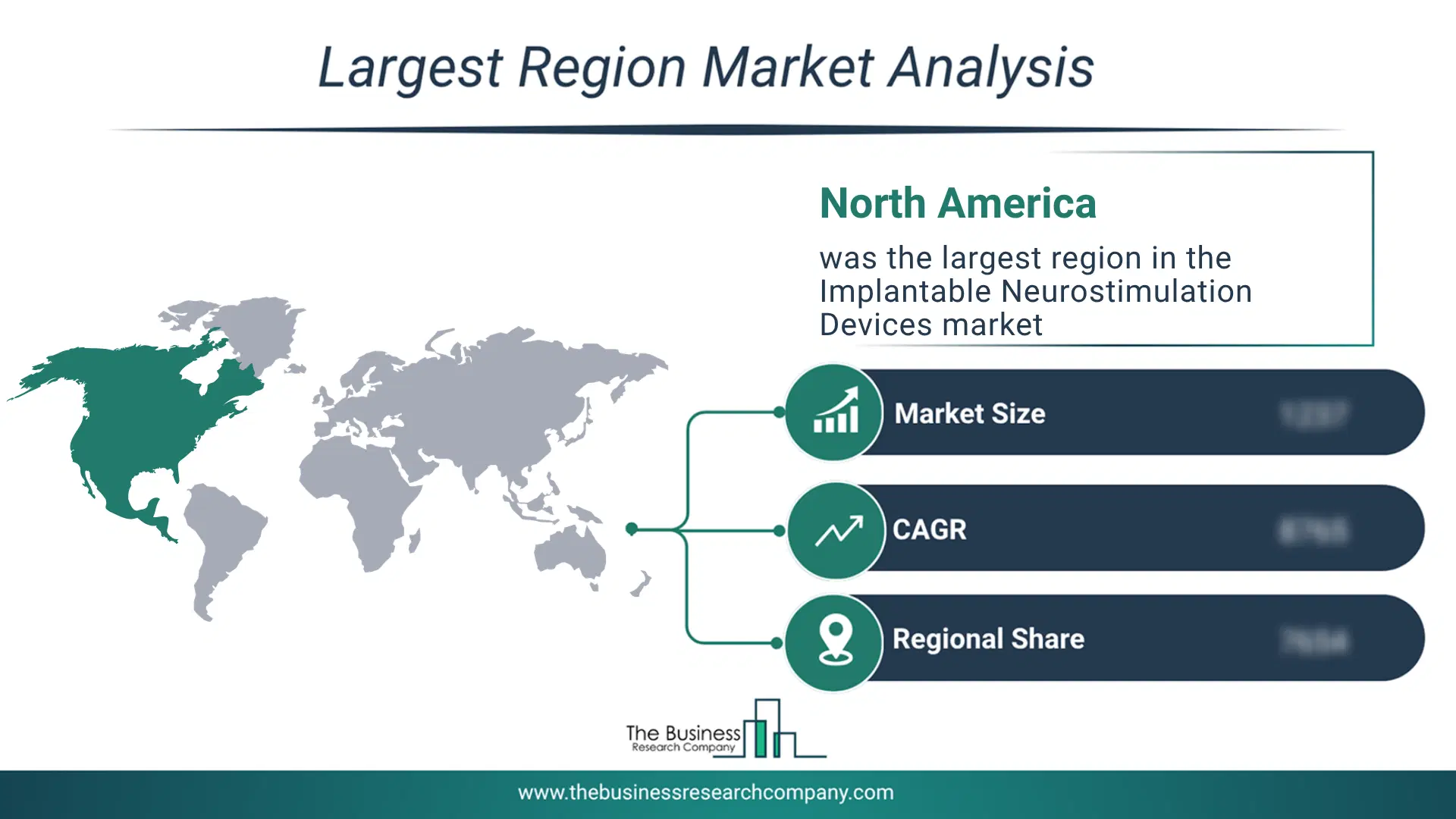
Regional Outlook
North America was the largest region in the implantable neurostimulation devices market in 2025. Asia-Pacific is expected to be the fastest-growing region in the forecast period. The regions covered in this market report are Asia-Pacific, South East Asia, Western Europe, Eastern Europe, North America, South America, Middle East, Africa. The countries covered in this market report are Australia, Brazil, China, France, Germany, India, Indonesia, Japan, Taiwan, Russia, South Korea, UK, USA, Canada, Italy, SpainWhat Defines the Implantable Neurostimulation Devices Market?
The implantable neurostimulation devices market consists of sales of responsive neurostimulation systems, peripheral nerve stimulation systems, cerebral spinal fluid shunt systems and electroceutical devices. Values in this market are ‘factory gate’ values, that is the value of goods sold by the manufacturers or creators of the goods, whether to other entities (including downstream manufacturers, wholesalers, distributors and retailers) or directly to end customers. The value of goods in this market includes related services sold by the creators of the goods.How is Market Value Defined and Measured?
The market value is defined as the revenues that enterprises gain from the sale of goods and/or services within the specified market and geography through sales, grants, or donations in terms of the currency (in USD unless otherwise specified). The revenues for a specified geography are consumption values that are revenues generated by organizations in the specified geography within the market, irrespective of where they are produced. It does not include revenues from resales along the supply chain, either further along the supply chain or as part of other products.
This chart presents market attractiveness based on a quantitative evaluation of growth, competition, strategic alignment, and risk, offering a clear view of opportunity areas for decision-making. This chart is for illustrative purposes; the full report contains the complete analysis.

This chart highlights the Total Addressable Market (TAM) by estimating the maximum revenue opportunity using an assumption-driven approach, supporting strategic planning and opportunity sizing across markets. The chart is illustrative; the full report provides a more comprehensive analysis.
What Key Data and Analysis Are Included in the Implantable Neurostimulation Devices Market Report 2026?
The implantable neurostimulation devices market research report is one of a series of new reports from The Business Research Company that provides market statistics, including industry global market size, regional shares, competitors with the market share, detailed market segments, market trends and opportunities, and any further data you may need to thrive in the implantable neurostimulation devices industry. The market research report delivers a complete perspective of everything you need, with an in-depth analysis of the current and future state of the industry.Implantable Neurostimulation Devices Market Report Forecast Analysis
| Report Attribute | Details |
|---|---|
| Market Size Value In 2026 | $6.27 billion |
| Revenue Forecast In 2030 | $10.02 billion |
| Growth Rate | CAGR of 12.4% from 2026 to 2030 |
| Base Year For Estimation | 2025 |
| Actual Estimates/Historical Data | 2020-2025 |
| Forecast Period | 2026 - 2030 |
| Market Representation | Revenue in USD Billion and CAGR from 2026 to 2030 |
| Segments Covered | Type, Application, End-User |
| Regional Scope | Asia-Pacific, Western Europe, Eastern Europe, North America, South America, Middle East, Africa |
| Country Scope | The countries covered in the report are Australia, Brazil, China, France, Germany, India, Indonesia, Japan, Taiwan, Russia, South Korea, UK, USA, Canada, Italy, Spain. |
| Key Companies Profiled | Abbott Laboratories, Medtronic PLC, Boston Scientific Corporation, St. Jude Medical LLC, LivaNova PLC, Nevro Corp., Axonics Inc., NeuroPace Inc., Bioness Inc., Saluda Medical Pty Ltd., SceneRay Co. Ltd., NeuroMetrix Inc., Synapse Biomedical Inc., NeuroSigma Inc., Nuvectra Corporation, MicroTransponder Inc., Curonix LLC, Inspire Medical Systems Inc., SetPoint Medical Corporation, ElectroCore Inc. |
| Customization Scope | Request for Customization |
| Pricing And Purchase Options | Explore Purchase Options |