
Infant Formula Ingredients Market Report 2026
Global Outlook – By Ingredients Type (Carbohydrates, Oil And Fats, Protein, Vitamin, Minerals, Prebiotics), By Form (Powder, Liquid), By Application (Growing Milk, Standard Infant, Follow-On Formula, Specialty Formula) – Market Size, Trends, Strategies, and Forecast to 2030
Infant Formula Ingredients Market Overview
• Infant Formula Ingredients market size has reached to $25.32 billion in 2025 • Expected to grow to $38.65 billion in 2030 at a compound annual growth rate (CAGR) of 8.9% • Growth Driver: Rise In Birth Rates Is Anticipated To Fuel The Infant Formula Ingredients Market • Market Trend: Alpha-Rich Infant Formula Ingredient To Address Growing Need For Low-Protein Infant Formula Formulations • North America was the largest region in 2025 and Asia-Pacific is the fastest growing region.Market Gains By 2030 – Top Opportunities By Segment
Market Gain identifies the most promising market opportunities by highlighting the segments or products expected to generate the highest incremental revenue growth over the next five years.
What Is Covered Under Infant Formula Ingredients Market?
The infant formula ingredients refer to the infant formula product based on a cow, any other animal milk, or a combination thereof, which is suitable for infant feeding. This formula sources a replacement for women's breast milk with the nutrients available in the cow's milk, soymilk, and protein hydrolysates form. The infant formula ingredients are combined with the essential vitamins, minerals, oils & fats, and all required ingredients necessary for the infants. The main types of infant formula ingredients are carbohydrates, oil & fats, protein, vitamins, minerals, and prebiotics. Carbohydrate is an ingredient used in infant formula. The forms of infant formula ingredients are powder, liquid, and semi-liquid. Infant formula ingredients are used in growing milk, standard infant, follow-on formula, and specialty formula.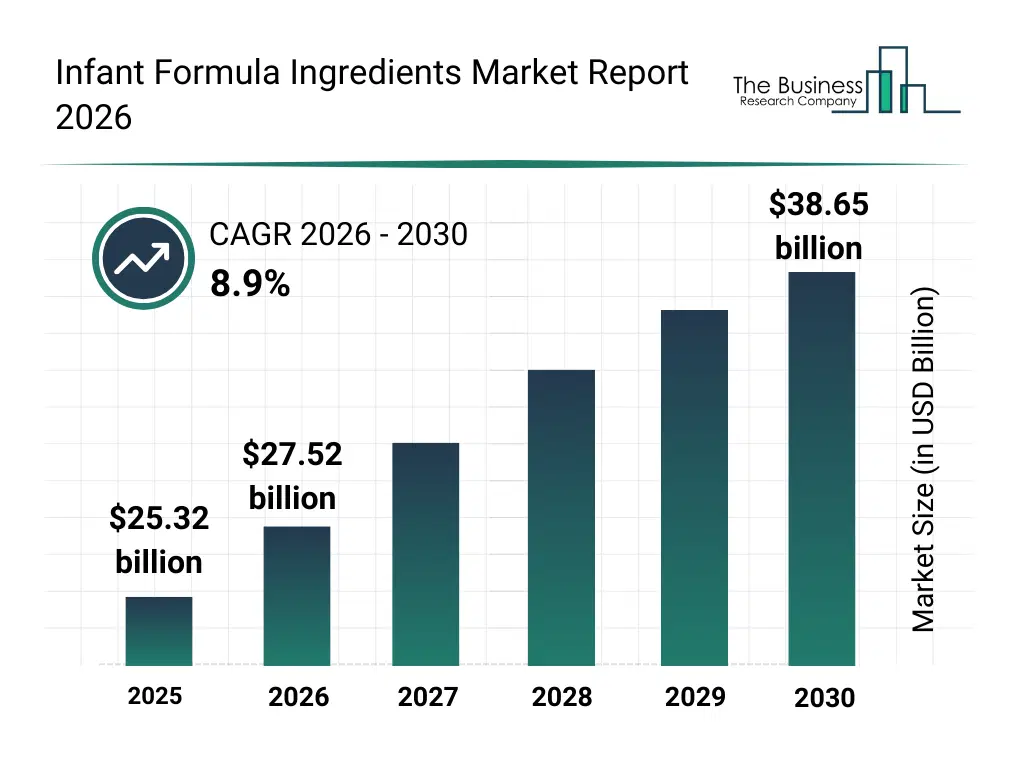
What Is The Infant Formula Ingredients Market Size and Share 2026?
The infant formula ingredients market size has grown strongly in recent years. It will grow from $25.32 billion in 2025 to $27.52 billion in 2026 at a compound annual growth rate (CAGR) of 8.7%. The growth in the historic period can be attributed to rising infant population in emerging economies, increasing urbanization and maternal employment, expansion of organized infant nutrition markets, growing awareness of infant nutritional requirements, availability of diverse dairy and plant-based inputs.What Is The Infant Formula Ingredients Market Growth Forecast?
The infant formula ingredients market size is expected to see strong growth in the next few years. It will grow to $38.65 billion in 2030 at a compound annual growth rate (CAGR) of 8.9%. The growth in the forecast period can be attributed to increasing demand for premium infant nutrition, rising prevalence of infant food sensitivities, expansion of specialty and therapeutic formulas, growing investments in infant nutrition R&D, increasing regulatory focus on ingredient quality and safety. Major trends in the forecast period include increasing focus on bio-equivalent nutrient formulations, rising demand for clean-label infant nutrition ingredients, growing use of specialized protein hydrolysates, expansion of micronutrient fortification solutions, enhanced emphasis on ingredient traceability and safety.
Global Infant Formula Ingredients Market Segmentation
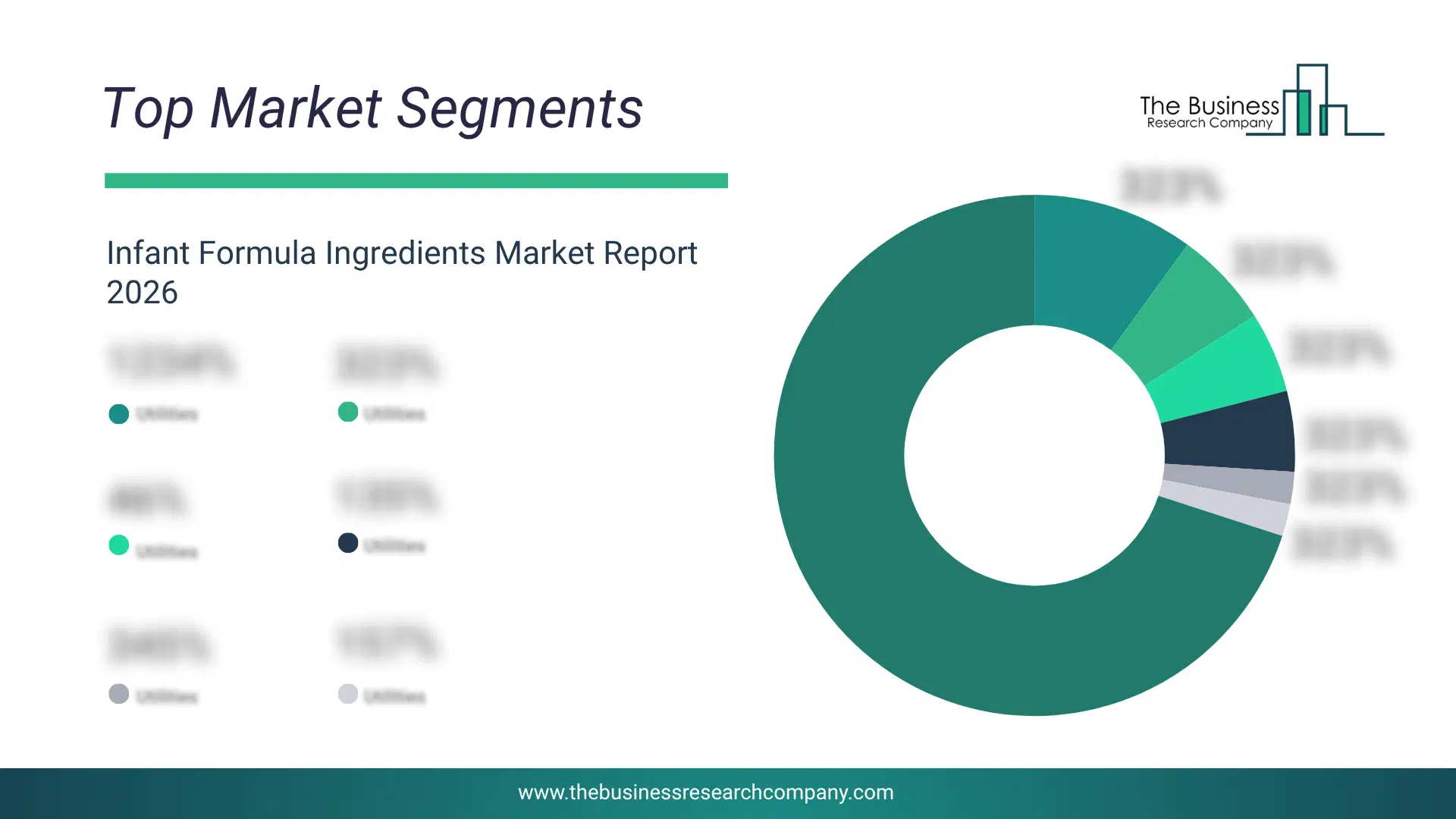
1) By Ingredients Type: Carbohydrates, Oil And Fats, Protein, Vitamin, Minerals, Prebiotics 2) By Form: Powder, Liquid 3) By Application: Growing Milk, Standard Infant, Follow-On Formula, Specialty Formula Subsegments: 1) By Carbohydrates: Lactose, Maltodextrin, Starch 2) By Oil and Fats: Vegetable Oils, Fish Oils, Medium-Chain Triglycerides (MCTs) 3) By Protein: Whey Protein, Casein Protein, Soy Protein 4) By Vitamins: Fat-Soluble Vitamins (A, D, E, K), Water-Soluble Vitamins (B-complex, C) 5) By Minerals: Calcium, Iron, Zinc, Phosphorus, 6) By Prebiotics: Oligosaccharides, Inulin The top segments in the infant formula ingredients market will be: • Carbohydrates will reach $14.94 Billion by 2030. • Oil and Fats will reach $10.78 Billion by 2030. • Protein will reach $7.63 Billion by 2030. • Minerals will reach $2.24 Billion by 2030. • Vitamins will reach $1.68 Billion by 2030.What Is The Driver Of The Infant Formula Ingredients Market?
The rise in birth rates by industries is expected to propel the infant formula ingredients market going forward. Birth rates refer to the number of live births in a year. It is often used to assess the population growth and demographic trends of a region or country. Infant formula ingredients are essential for regions with increasing birth rates to ensure optimal nutrition for the growing number of newborns. For instance, in January 2023, according to UNICEF, a US-based global non-governmental organization, in 2023, a total of 132,110,264 babies were born across the globe. Out of this group, 33,384,189 were male and 28,267,419 were female. Therefore, the rise in birth rates is driving the infant formula ingredients industry.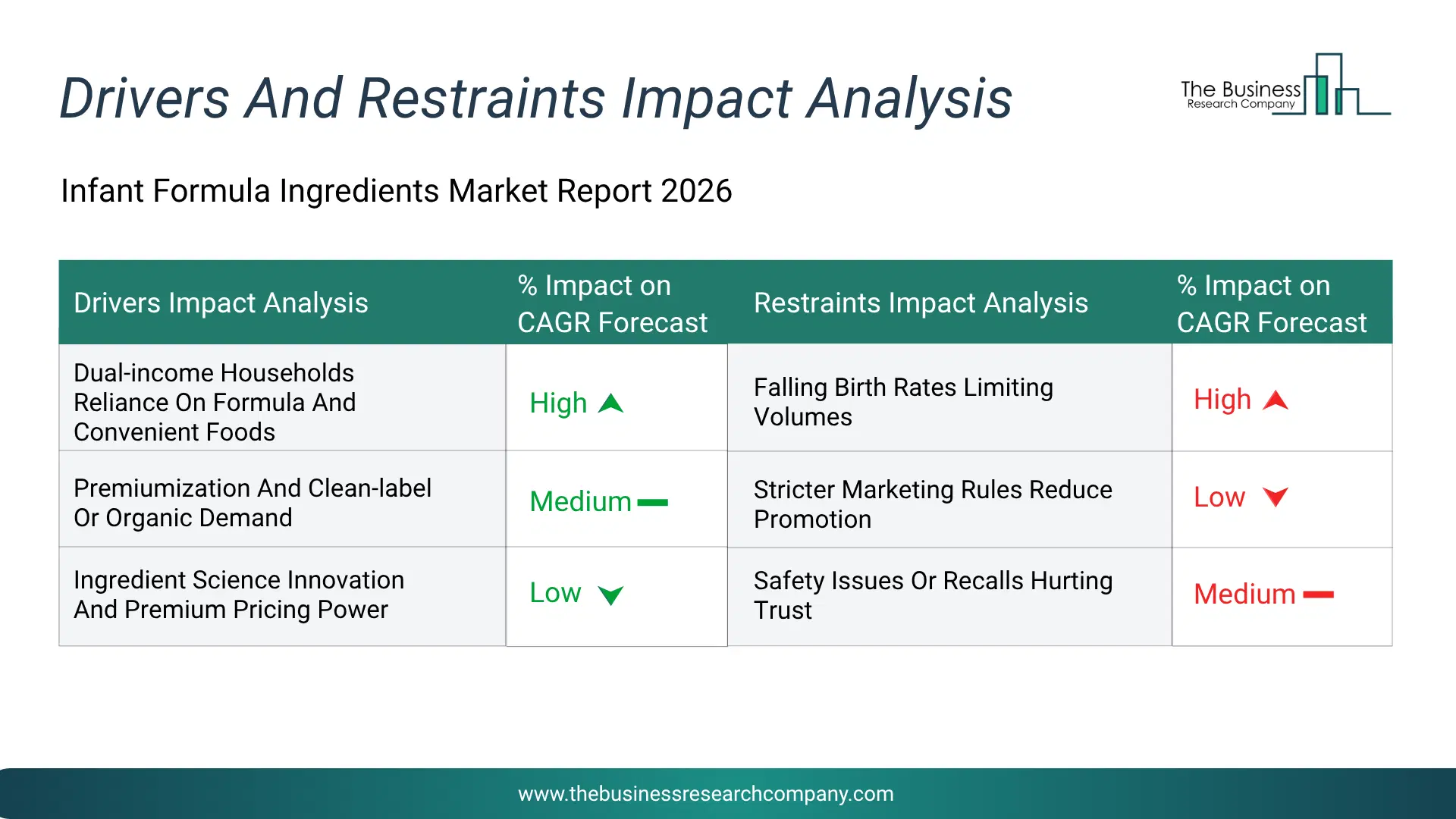
Infographic Chart Showing Key Market Drivers Analysis And Restraints For Infant Formula Ingredients Market
The chart presents an impact analysis of key drivers and restraints, quantifying their relative influence on the market's growth rate and helping assess the balance between growth enablers and limiting factors. This chart offers a high-level perspective; the full report contains more detailed insights.
How Will The Drivers Impact Growth In The Global Infant Formula Ingredients Market?
• Dual-income Households Reliance On Formula And Convenient Foods (High) – During the forecast period, the dual-income households reliance on formula and convenient foods is expected to become a key growth driver for the infant formula ingredients market by 2030. The increasing prevalence of dual-income households is significantly driving demand in the market, as working parents often face time constraints in preparing traditional meals. This shift leads to greater dependence on ready-to-use formula products and convenient food options that save time while ensuring nutritional adequacy. Busy lifestyles also encourage the purchase of packaged and easy-to-prepare food solutions, making convenience a key purchasing factor. Additionally, urbanization and rising disposable incomes further reinforce this trend. As more families prioritize efficiency without compromising on quality, demand for such products continues to rise. This creates consistent growth opportunities for manufacturers offering convenient and reliable food solutions. Ultimately, this lifestyle shift strengthens long-term market expansion. • Premiumization And Clean-label Or Organic Demand (Medium) – During the forecast period, the premiumization and clean-label or organic demand is expected to emerge as a major factor driving the expansion of the infant formula ingredients market by 2030. Consumers are increasingly becoming health-conscious and prefer products that are perceived as safe, natural, and free from harmful additives. This has led to a strong shift toward premium, clean-label, and organic offerings in the market. Parents, in particular, are willing to pay higher prices for products that guarantee transparency in ingredients and sourcing. Clean-label trends also emphasize minimal processing and recognizable ingredients, enhancing consumer trust. As awareness of health and sustainability grows, premium products gain higher acceptance across urban populations. This trend enables companies to differentiate their offerings and build brand loyalty. • Ingredient Science Innovation And Premium Pricing Power (Low) – During the forecast period, the ingredient science innovation and premium pricing power is expected to act as a key growth catalyst for the infant formula ingredients market by 2030. Advancements in ingredient science have enabled manufacturers to develop products with enhanced nutritional profiles and functional benefits. Innovations such as fortified ingredients, improved formulations, and bioavailability enhancements attract health-conscious consumers. These scientific advancements justify premium pricing, as consumers perceive added value in improved quality and efficacy. Companies leverage innovation to introduce differentiated products that cater to specific dietary needs. This also helps brands establish credibility and trust in the market. Furthermore, continuous research and development create a competitive edge for leading players. As a result, ingredient innovation not only drives demand but also strengthens profit margins through premium pricing power.How Will The Restraints Impact Growth In The Global Infant Formula Ingredients Market?
• Falling Birth Rates Limiting Volumes (High) – During the forecast period, the declining birth rates across many regions pose a significant challenge to market growth by directly reducing the target consumer base. With fewer infants being born each year, the demand for related products naturally decreases, impacting overall sales volumes. This demographic shift is particularly evident in developed and some emerging economies. Lower birth rates also create long-term uncertainty for manufacturers relying on consistent population growth. Companies may face difficulties in maintaining revenue growth despite strong product offerings. Additionally, this trend intensifies competition among existing players for a shrinking customer base. As a result, businesses must explore diversification strategies to sustain growth. Overall, falling birth rates act as a structural restraint on market expansion. • Stricter Marketing Rules Reduce Promotion (Medium) – During the forecast period, the regulatory authorities have imposed stricter marketing guidelines to ensure ethical promotion and protect consumer interests. These regulations limit the ways companies can advertise and promote their products, especially in sensitive categories. Restrictions on claims, labeling, and promotional messaging reduce the effectiveness of marketing campaigns. Companies must invest more effort in compliance, which increases operational costs. Additionally, reduced promotional flexibility can limit brand visibility and awareness among potential consumers. This creates challenges for new entrants trying to establish a foothold in the market. Established players may also find it harder to differentiate their products through advertising. Consequently, stringent marketing rules act as a restraint by limiting growth opportunities and promotional reach. • Safety Issues Or Recalls Hurting Trust (Low) – During the forecast period, the product safety concerns and recalls can significantly damage consumer trust and brand reputation in the market. Even isolated incidents can create widespread fear and hesitation among consumers, especially when products are intended for sensitive groups. Negative publicity from safety issues can lead to a decline in sales and long-term brand erosion. Companies may also face financial losses due to recalls, legal liabilities, and compensation costs. Rebuilding consumer confidence after such incidents requires substantial time and investment. Furthermore, heightened scrutiny from regulators can increase compliance burdens for manufacturers. These challenges collectively hinder market growth and discourage new product adoption. Therefore, safety issues and recalls remain a critical restraint affecting overall market stability.Key Players In The Global Infant Formula Ingredients Market
Major companies operating in the infant formula ingredients market are Arla Foods AMBA, Fonterra Co-Operative Group Limited, Royal FrieslandCampina NV, DuPont de Nemours Inc., Sachsenmilch Leppersdorf GmbH, AAK AB, Carbery Food Ingredients Limited, Kerry Group plc, BASF SE, Koninklijke DSM N.V., Chr. Hansen Holding A/S, Ingredion Incorporated, Tate & Lyle PLC, Archer Daniels Midland Company, Omega Ingredients Ltd., Bunge Limited, Cargill Inc., FrieslandCampina Ingredients, Hilmar Ingredients Inc., Lactalis American Group Inc., Glanbia Nutritionals Inc., Nestle S.A., A2 Milk Company Limited, Feihe International Inc., H&H Group, Meiji Holdings Co. Ltd., Morinaga Milk Industry Co. Ltd., Westland Milk Products, Wissun International Group Co. Ltd.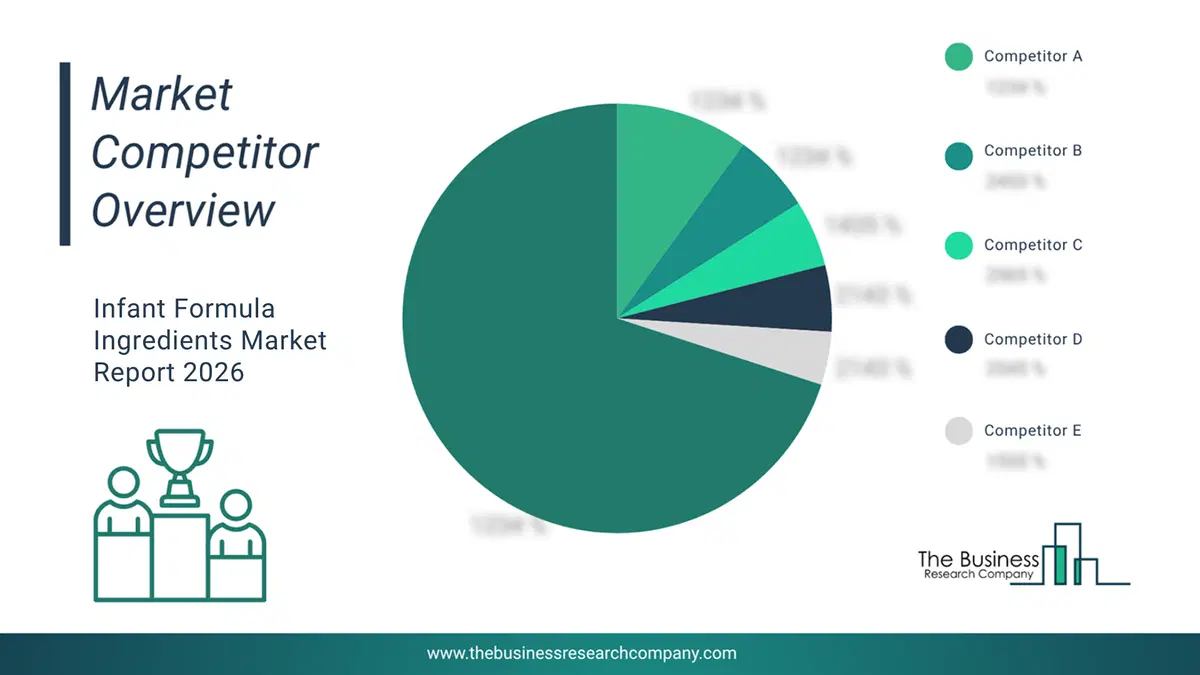
This chart is for illustrative purposes; the full report includes a detailed competitor analysis and comprehensive overview of the top 10 companies in the market.
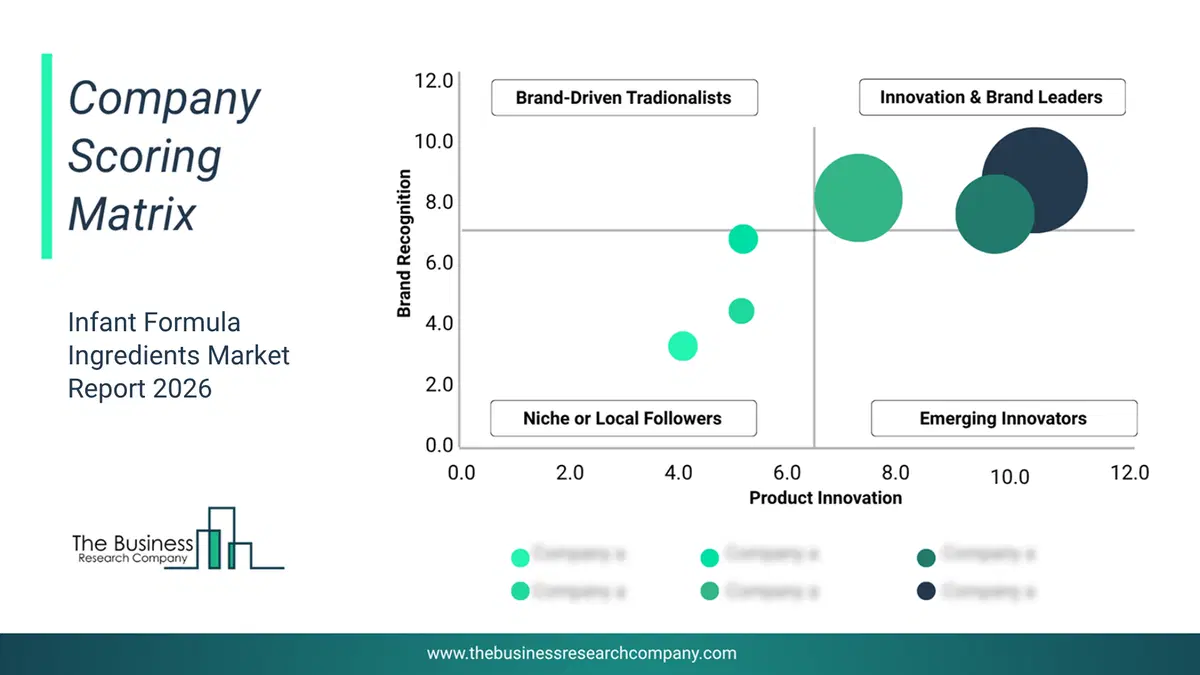
This chart maps companies by product innovation and brand strength, with bubble size indicating relative revenue, helping identify market leaders, challengers, and niche players. This is an illustrative chart; the full report provides a complete and accurate competitive analysis.
Global Infant Formula Ingredients Market Trends and Insights
Major companies operating in the infant formula ingredients market are launching alpha-rich infant formula ingredients such as Lacprodan Alpha-50 to address growing need for low-protein infant formula formulations. Lacprodan Alpha-50 is an ingredient rich in alpha-lactalbumin, designed for infant formulas. For instance, in May 2023, Arla Foods Ingredients, a Denmark-based company that specializes in the development and application of functional and nutritional ingredients., launched the Lacprodan Alpha-50, an alpha-lactalbumin-rich ingredient for infant formulas. Alpha-lactalbumin, abundant in human milk but lesser in standard formulas, provides essential amino acids. Lacprodan Alpha-50, containing 90% of its protein from alpha-lactalbumin, allows for low-protein formulas that mirror human milk's nutritional quality. It can be mixed with other ingredients such as Arla’s Lacprodan MFGM-10, beneficial for infant nutrition.What Are Latest Mergers And Acquisitions In The Infant Formula Ingredients Market?
In July 2023, Bobbie, US-based infant formula company acquired Nature’s One for an undisclosed amount. With this acquisition, Bobbie aims to control Nature’s One entire production process, expand its market share, and further its mission to evolve the infant formula industry. Nature’s One is a US-based company pediatric nutrition company providing organic premium infant formula.Regional Outlook
North America was the largest region in the infant formula ingredients market in 2025. Asia-Pacific is expected to be the fastest-growing region in the global infant formula ingredients market share during the forecast period. The regions covered in this market report are Asia-Pacific, South East Asia, Western Europe, Eastern Europe, North America, South America, Middle East and Africa. The countries covered in this market report are Australia, Brazil, China, France, Germany, India, Indonesia, Japan, Taiwan, Russia, South Korea, UK, USA, Italy, Spain, CanadaWhat Defines the Infant Formula Ingredients Market?
The infant formula ingredients market consists of sales of protein, linoleic acid, fat-soluble vitamins A, D, E, K, niacin, and thiamine. Values in this market are ‘factory gate’ values, that is the value of goods sold by the manufacturers or creators of the goods, whether to other entities (including downstream manufacturers, wholesalers, distributors, and retailers) or directly to end customers. The value of goods in this market includes related services sold by the creators of the goods.How is Market Value Defined and Measured?
The market value is defined as the revenues that enterprises gain from the sale of goods and/or services within the specified market and geography through sales, grants, or donations in terms of the currency (in USD unless otherwise specified). The revenues for a specified geography are consumption values that are revenues generated by organizations in the specified geography within the market, irrespective of where they are produced. It does not include revenues from resales along the supply chain, either further along the supply chain or as part of other products.
This chart presents market attractiveness based on a quantitative evaluation of growth, competition, strategic alignment, and risk, offering a clear view of opportunity areas for decision-making. This chart is for illustrative purposes; the full report contains the complete analysis.

This chart highlights the Total Addressable Market (TAM) by estimating the maximum revenue opportunity using an assumption-driven approach, supporting strategic planning and opportunity sizing across markets. The chart is illustrative; the full report provides a more comprehensive analysis.
What Key Data and Analysis Are Included in the Infant Formula Ingredients Market Report 2026?
The infant formula ingredients market research report is one of a series of new reports from The Business Research Company that provides market statistics, including industry global market size, regional shares, competitors with the market share, detailed market segments, market trends and opportunities, and any further data you may need to thrive in the infant formula ingredients industry. The market research report delivers a complete perspective of everything you need, with an in-depth analysis of the current and future state of the industry.Infant Formula Ingredients Market Report Forecast Analysis
| Report Attribute | Details |
|---|---|
| Market Size Value In 2026 | $27.52 billion |
| Revenue Forecast In 2030 | $38.65 billion |
| Growth Rate | CAGR of 8.7% from 2026 to 2030 |
| Base Year For Estimation | 2025 |
| Actual Estimates/Historical Data | 2020-2025 |
| Forecast Period | 2026 - 2030 |
| Market Representation | Revenue in USD Billion and CAGR from 2026 to 2030 |
| Segments Covered | Ingredients Type, Form, Application |
| Regional Scope | Asia-Pacific, Western Europe, Eastern Europe, North America, South America, Middle East, Africa |
| Country Scope | The countries covered in the report are Australia, Brazil, China, France, Germany, India, Indonesia, Japan, Taiwan, Russia, South Korea, UK, USA, Canada, Italy, Spain. |
| Key Companies Profiled | Arla Foods AMBA, Fonterra Co-Operative Group Limited, Royal FrieslandCampina NV, DuPont de Nemours Inc., Sachsenmilch Leppersdorf GmbH, AAK AB, Carbery Food Ingredients Limited, Kerry Group plc, BASF SE, Koninklijke DSM N.V., Chr. Hansen Holding A/S, Ingredion Incorporated, Tate & Lyle PLC, Archer Daniels Midland Company, Omega Ingredients Ltd., Bunge Limited, Cargill Inc., FrieslandCampina Ingredients, Hilmar Ingredients Inc., Lactalis American Group Inc., Glanbia Nutritionals Inc., Nestle S.A., A2 Milk Company Limited, Feihe International Inc., H&H Group, Meiji Holdings Co. Ltd., Morinaga Milk Industry Co. Ltd., Westland Milk Products, Wissun International Group Co. Ltd. |
| Customization Scope | Request for Customization |
| Pricing And Purchase Options | Explore Purchase Options |