

Soy Protein Market Report 2026
Global Outlook – By Product Type (Soy Protein Concentrates, Soy Protein Isolates, Textured Soy Protein, Soy Flour, Grits, Chunks), By Nature (Organic Soy Protein, Conventional Soy Protein), By Form (Powder, Granules, Flakes, Chunks, Liquid/Suspension, Textured Forms (TVP)), By Application (Bakery And Confectionery, Meat Alternatives, Functional Foods, Dairy Replacers, Infant Foods, Other Applications), By Distribution Channel (Business-to-Business (Food & Beverage Manufacturers, Nutraceutical & Dietary Supplement Manufacturers, Animal Feed Manufacturers), Business-to-Consumer (Supermarkets & Hypermarkets, Specialty & Health Food Stores, Online/E-commerce), Foodservice & Institutional Channels) – Market Size, Trends, Strategies, and Forecast to 2030
Soy Protein Market Overview
• Soy Protein market size has reached to $11.59 billion in 2025 • Expected to grow to $15.04 billion in 2030 at a compound annual growth rate (CAGR) of 5.4% • Growth Driver: Growing Vegan Population Drives Demand For Soy Protein Boosting Market Growth • Market Trend: Emerging Ingredients Transforming Plant-Based Food Formulation • North America was the largest region in 2025 and Asia-Pacific is the fastest growing region.What Is Covered Under Soy Protein Market?
Soy protein is a protein that is isolated from the soybean. Soy protein is a high-protein source that can help to lose weight, increase energy, and build muscle. Soy protein has been utilized as an ingredient in a range of cuisines, including vegetarian foods, salad dressings, soups, and meat substitutes, due to its functional characteristics. Emulsification and texturizing are two of its functional features. The main types of products in soy protein are soy protein isolates, soy protein concentrates, textured soy protein and soy flour, grits, and chunks. Soy protein isolate is the most useful form of soy protein and is primarily used to enhance texture and eating quality in meat ingredients. Soy protein isolate contains approximately 90% protein. The different forms of soy protein include powder, ready-to-drink, bars, capsules, tablets, and others and are found in various natures such as organic soy protein and conventional soy protein. The different applications include bakery and confectionery, meat alternatives, functional foods, dairy replacers, infant foods, and others and are distributed through several channels such as specialty stores, convenience stores, e-commerce or online sale channels, and supermarkets or hypermarkets.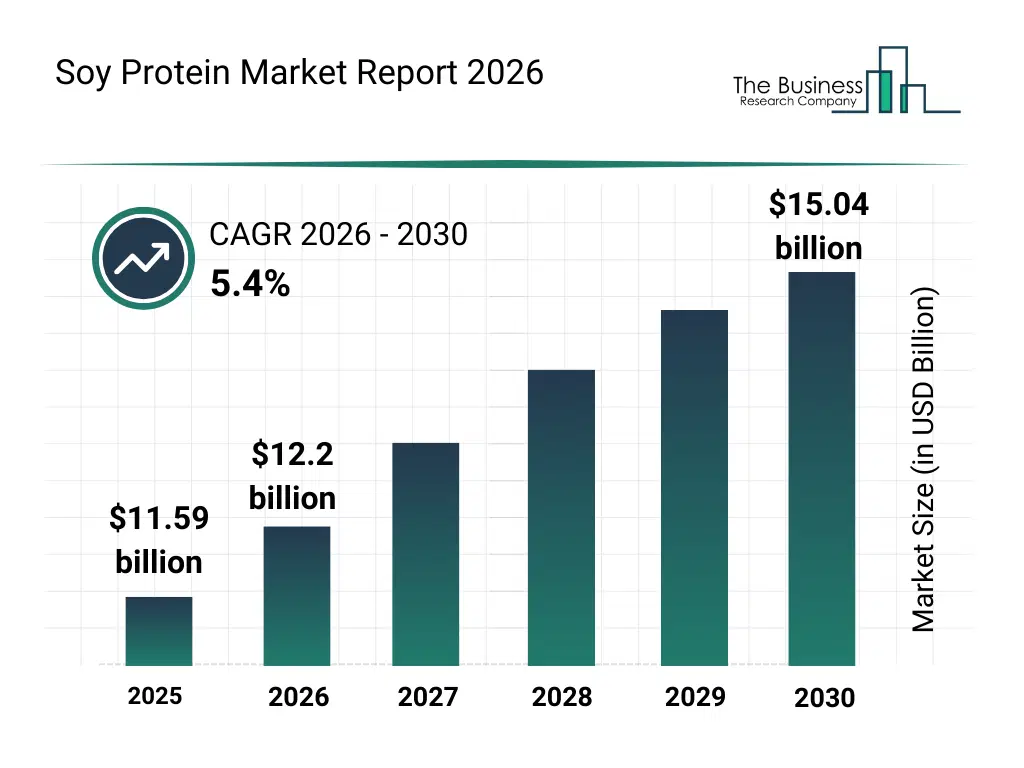
What Is The Soy Protein Market Size and Share 2026?
The soy protein market size has grown strongly in recent years. It will grow from $11.59 billion in 2025 to $12.2 billion in 2026 at a compound annual growth rate (CAGR) of 5.3%. The growth in the historic period can be attributed to rising vegetarian and vegan population, increasing awareness of plant-based nutrition, expansion of soy processing capacity, growing use of soy ingredients in food manufacturing, improved protein extraction technologies.What Is The Soy Protein Market Growth Forecast?
The soy protein market size is expected to see strong growth in the next few years. It will grow to $15.04 billion in 2030 at a compound annual growth rate (CAGR) of 5.4%. The growth in the forecast period can be attributed to increasing demand for plant-based meat substitutes, rising focus on sustainable protein sources, expansion of functional food and sports nutrition markets, growing innovation in soy protein formulations, increasing online distribution of protein products. Major trends in the forecast period include increasing use of soy protein in meat alternatives, rising demand for high-protein functional foods, growing adoption of organic soy protein, expansion of textured soy protein applications, enhanced focus on clean-label protein sources.
Global Soy Protein Market Segmentation
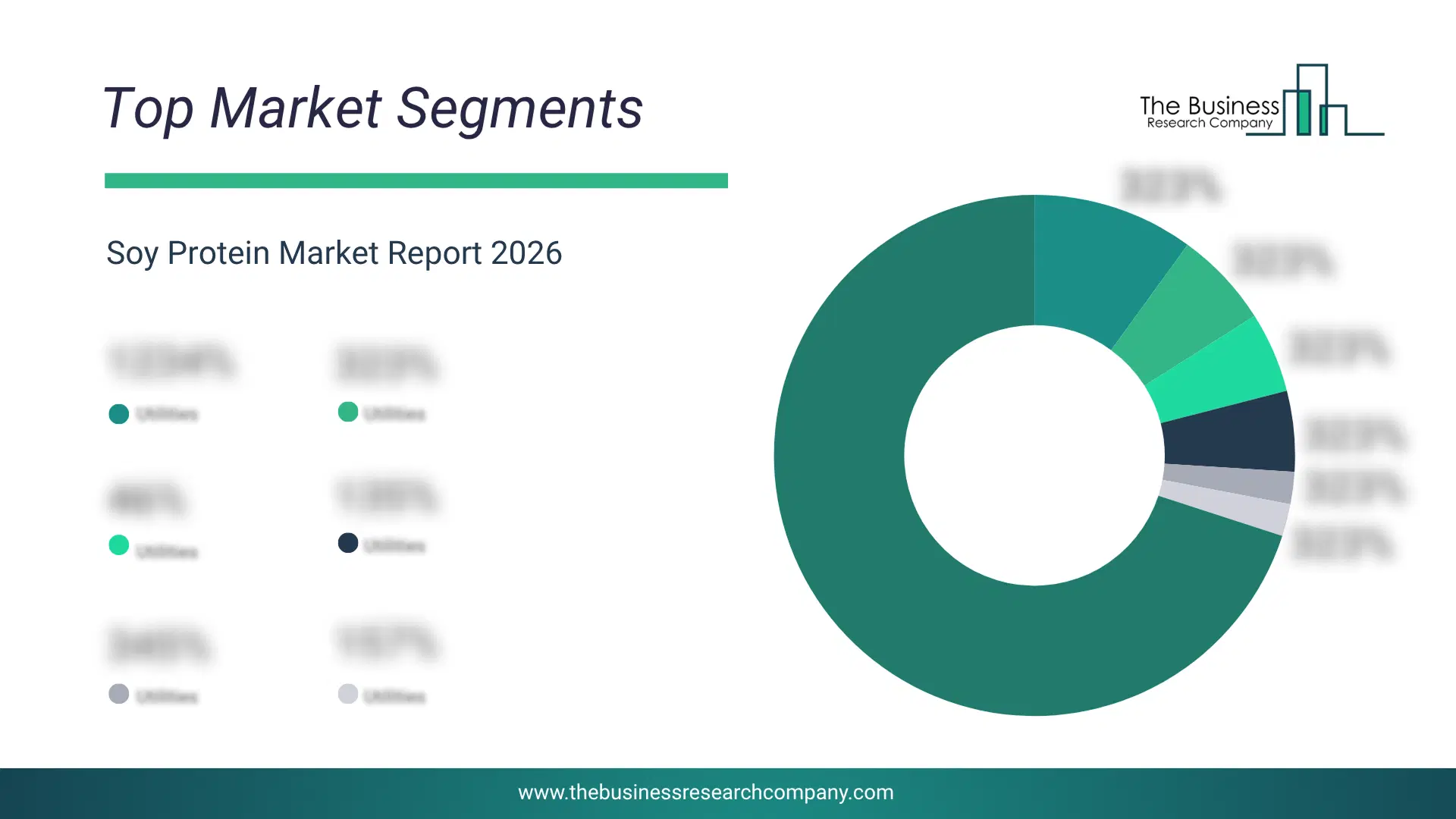
1) By Product Type: Soy Protein Concentrates, Soy Protein Isolates, Textured Soy Protein, Soy Flour, Grits, Chunks 2) By Nature: Organic Soy Protein, Conventional Soy Protein 3) By Form: Powder, Granules, Flakes, Chunks, Liquid/Suspension, Textured Forms (TVP) 4) By Application: Bakery And Confectionery, Meat Alternatives, Functional Foods, Dairy Replacers, Infant Foods, Other Applications 5) By Distribution Channel: Business-to-Business (Food & Beverage Manufacturers, Nutraceutical & Dietary Supplement Manufacturers, Animal Feed Manufacturers), Business-to-Consumer (Supermarkets & Hypermarkets, Specialty & Health Food Stores, Online/E-commerce), Foodservice & Institutional Channels Subsegments: 1) By Soy Protein Concentrates: Regular Soy Protein Concentrate, Instant Soy Protein Concentrate 2) By Soy Protein Isolates: Regular Soy Protein Isolate, Instant Soy Protein Isolate 3) By Textured Soy Protein: Textured Vegetable Protein (TVP), Soy Meat Alternatives 4) By Soy Flour: Defatted Soy Flour, Full-Fat Soy Flour 5) By Grits: Coarse Grits, Fine Grits 6) By Chunks: Soy Protein Chunks, Soy Protein NuggetsWhat Is The Driver Of The Soy Protein Market?
The increasing vegan population is contributing to the growth of the soy protein market. A vegan diet excludes animal products such as fish, dairy, meat, and eggs. Vegan and flexitarian diets are becoming more popular as the plant-based business has developed and people becoming more conscious of the difficulties surrounding meat production. With a surge in the vegan population, there is an increase in demand for soy protein as people seek to add soy protein to their diet to maintain a protein balance. For instance, in January 2023, according to Food Manufacture, a UK-based internet publishing company focused on the food and drink processing industry, a new study reveals that the number of vegans in the UK grew by 1.1 million between 2023 and 2024. According to research by Finder, the vegan population in the UK has reached 2.5 million over the past year, now making up 4.7% of the adult population. Therefore, the rise in the vegan population is expected to propel the growth of the soy protein industry in the coming years.Key Players In The Global Soy Protein Market
Major companies operating in the soy protein market are Archer Daniels Midland Company, Cargill Incorporated, Bunge Limited, Wilmar International Limited, CHS Inc., Fuji Oil Holdings Inc., Sojaprotein a.d., Roquette Frères, Ingredion Incorporated, DuPont de Nemours Inc., Kerry Group plc, Axiom Foods Inc., Burcon NutraScience Corporation, Benson Hill Inc., SunOpta Inc., Shandong Yuxin Soybean Protein Co., Ltd., Solbar Industries Ltd., Nordic Soya Oy, Titan Biotech Limited, Sonic Biochem Extractions Pvt. Ltd., Halcyon Proteins Pty Ltd., Vyas Bio Life Sciences Pvt. Ltd., Solae LLC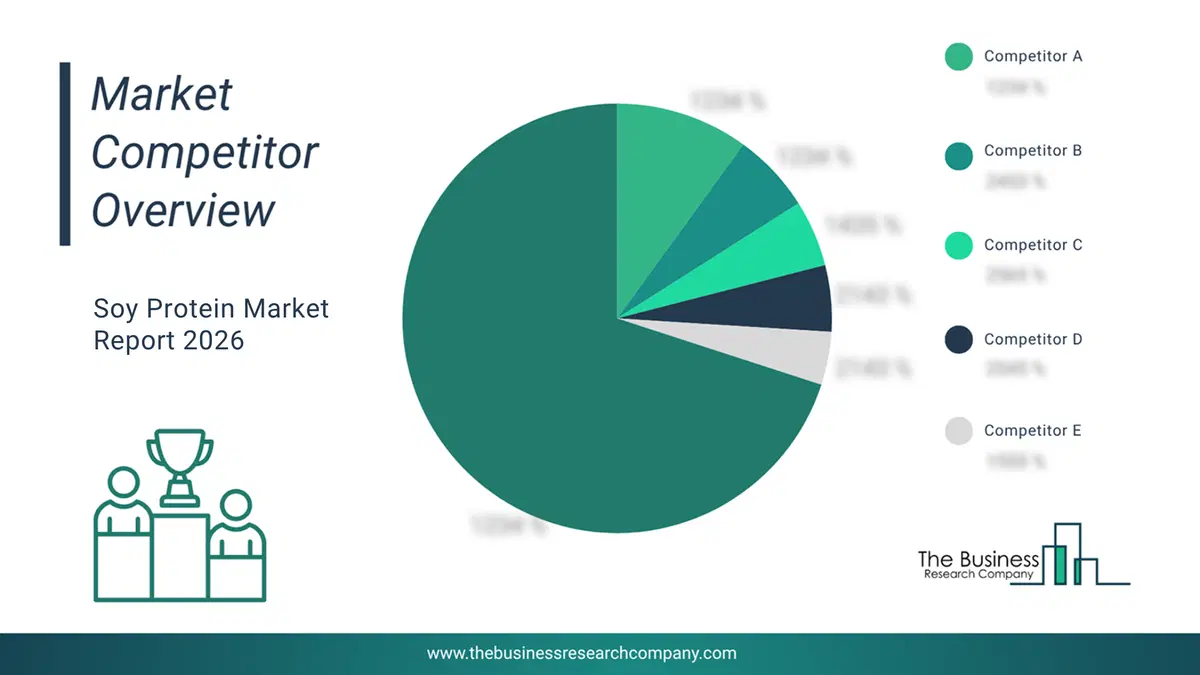
This chart is for illustrative purposes; the full report includes a detailed competitor analysis and comprehensive overview of the top 10 companies in the market.
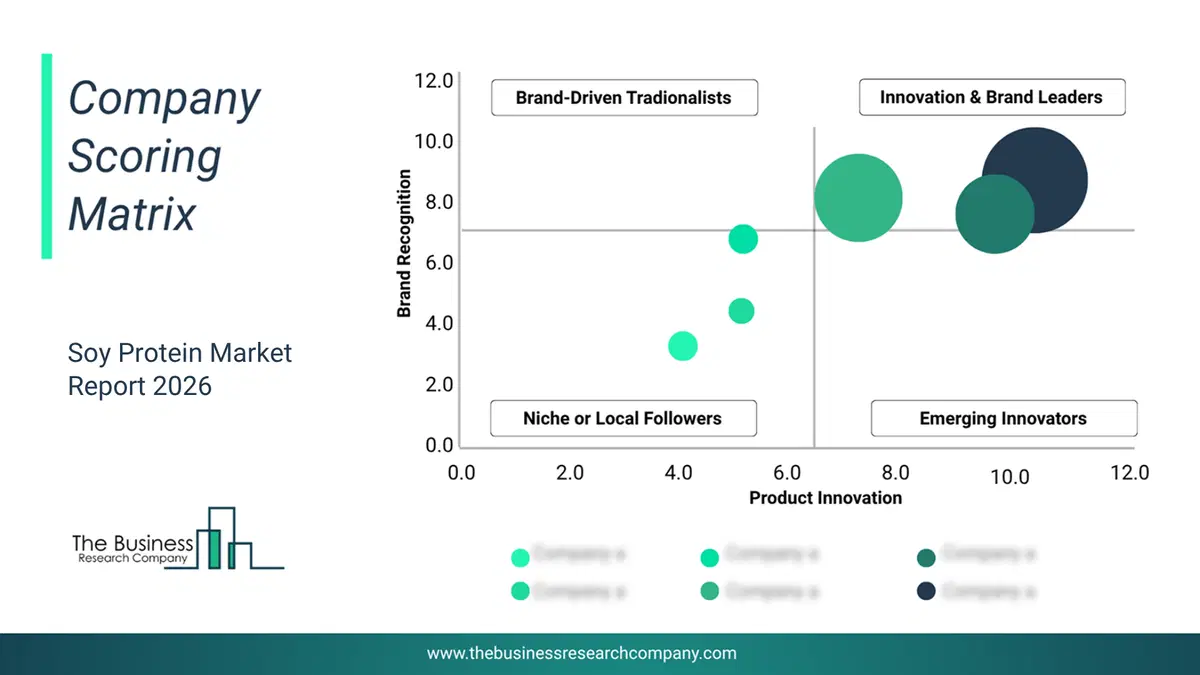
This chart maps companies by product innovation and brand strength, with bubble size indicating relative revenue, helping identify market leaders, challengers, and niche players. This is an illustrative chart; the full report provides a complete and accurate competitive analysis.
Global Soy Protein Market Trends and Insights
Major companies operating in the soy protein market are focusing on developing innovations in plant-based protein such as textured soy protein to enhance taste, texture, and nutritional performance in meat and seafood substitutes. Textured soy proteins are soy-based ingredients processed to replicate the fibrous, chewy texture of animal protein, enabling applications such as realistic plant-based meat and seafood. For instance, in November 2024, ICL Food Specialties, an US-based manufacturer of functional food ingredients, in partnership with DAIZ Engineering, a Japan based food-tech startup, launched ROVITARIS SprouTx, a textured soy protein designed to support next-generation plant-based meat and seafood development, featuring proprietary germination technology to reduce beany flavors and improved texture with high nutritional value. ROVITARIS SprouTx improves product taste, sensory experience, and formulation versatility for manufacturers.What Are Latest Mergers And Acquisitions In The Soy Protein Market?
In April 2023, Moolec Science SA, a Luxembourg-based food-technology company, acquired ValoraSoy S.A. for US$ 6.0 million. With this acquisition, Moolec aimed to expand its plant-based food-ingredient capabilities by integrating ValoraSoy’s industrial soy-protein processing infrastructure and global commercial network. ValoraSoy S.A. was an Argentina-based manufacturer specializing in textured soy proteins, producing functional plant-based proteins used for meat-alternative applications such as burgers, sausages and other analogues.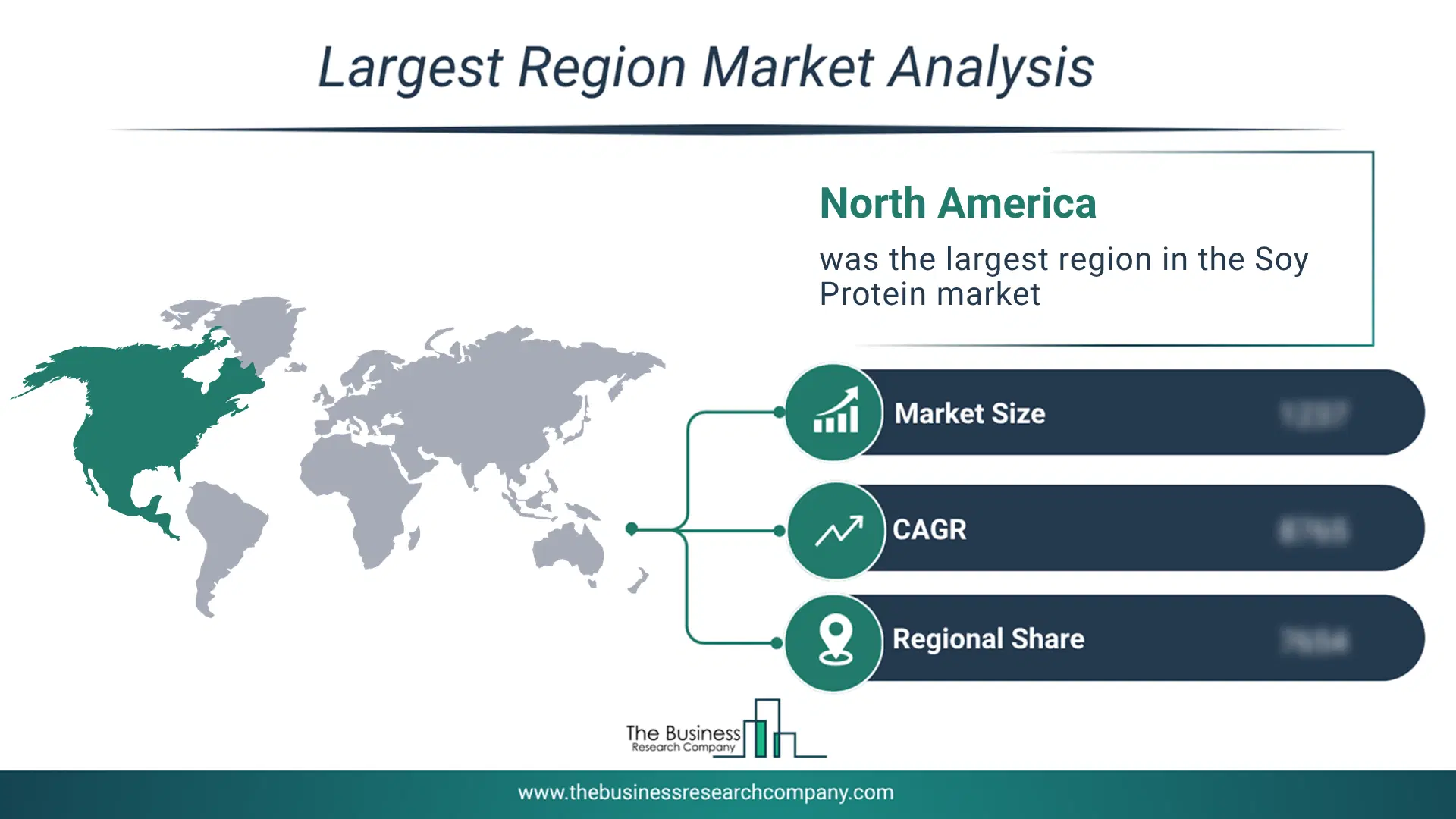
Regional Outlook
North America was the largest region in the Soy Protein market in 2025. Asia-Pacific is expected to be the fastest-growing region in the forecast period. The regions covered in this market report are Asia-Pacific, South East Asia, Western Europe, Eastern Europe, North America, South America, Middle East and Africa. The countries covered in this market report are Australia, Brazil, China, France, Germany, India, Indonesia, Japan, Taiwan, Russia, South Korea, UK, USA, Italy, Spain, CanadaWhat Defines the Soy Protein Market?
The soy protein market consists of sales of textured soy protein, soy protein isolates, soy protein concentrates, and other soy protein products. Values in this market are ‘factory gate’ values, that is the value of goods sold by the manufacturers or creators of the goods, whether to other entities (including downstream manufacturers, wholesalers, distributors and retailers) or directly to end customers. The value of goods in this market includes related services sold by the creators of the goods.How is Market Value Defined and Measured?
The market value is defined as the revenues that enterprises gain from the sale of goods and/or services within the specified market and geography through sales, grants, or donations in terms of the currency (in USD unless otherwise specified). The revenues for a specified geography are consumption values that are revenues generated by organizations in the specified geography within the market, irrespective of where they are produced. It does not include revenues from resales along the supply chain, either further along the supply chain or as part of other products.
This chart presents market attractiveness based on a quantitative evaluation of growth, competition, strategic alignment, and risk, offering a clear view of opportunity areas for decision-making. This chart is for illustrative purposes; the full report contains the complete analysis.

This chart highlights the Total Addressable Market (TAM) by estimating the maximum revenue opportunity using an assumption-driven approach, supporting strategic planning and opportunity sizing across markets. The chart is illustrative; the full report provides a more comprehensive analysis.
What Key Data and Analysis Are Included in the Soy Protein Market Report 2026?
The soy protein market research report is one of a series of new reports from The Business Research Company that provides market statistics, including industry global market size, regional shares, competitors with the market share, detailed market segments, market trends and opportunities, and any further data you may need to thrive in the soy protein industry. The market research report delivers a complete perspective of everything you need, with an in-depth analysis of the current and future state of the industry.Soy Protein Market Report Forecast Analysis
| Report Attribute | Details |
|---|---|
| Market Size Value In 2026 | $12.2 billion |
| Revenue Forecast In 2030 | $15.04 billion |
| Growth Rate | CAGR of 5.3% from 2026 to 2030 |
| Base Year For Estimation | 2025 |
| Actual Estimates/Historical Data | 2020-2025 |
| Forecast Period | 2026 - 2030 |
| Market Representation | Revenue in USD Billion and CAGR from 2026 to 2030 |
| Segments Covered | Product Type, Nature, Form, Application, Distribution Channel |
| Regional Scope | Asia-Pacific, Western Europe, Eastern Europe, North America, South America, Middle East, Africa |
| Country Scope | The countries covered in the report are Australia, Brazil, China, France, Germany, India, Indonesia, Japan, Taiwan, Russia, South Korea, UK, USA, Canada, Italy, Spain. |
| Key Companies Profiled | Archer Daniels Midland Company, Cargill Incorporated, Bunge Limited, Wilmar International Limited, CHS Inc., Fuji Oil Holdings Inc., Sojaprotein a.d., Roquette Frères, Ingredion Incorporated, DuPont de Nemours Inc., Kerry Group plc, Axiom Foods Inc., Burcon NutraScience Corporation, Benson Hill Inc., SunOpta Inc., Shandong Yuxin Soybean Protein Co., Ltd., Solbar Industries Ltd., Nordic Soya Oy, Titan Biotech Limited, Sonic Biochem Extractions Pvt. Ltd., Halcyon Proteins Pty Ltd., Vyas Bio Life Sciences Pvt. Ltd., Solae LLC |
| Customization Scope | Request for Customization |
| Pricing And Purchase Options | Explore Purchase Options |