

Live Cell Imaging Market Report 2026
Global Outlook – By Product (Equipment, Consumable, Software), By Technology (Time-Lapse Microscopy, Fluorescence Recovery After Photobleaching (FRAP), Fluorescence Resonance Energy Transfer (FRET), High Content Screening (HCS), Other Technologies), By Application (Cell Biology, Developmental Biology, Stem Cell and Drug Discovery, Other Applications), By End-User (Pharmaceutical and Biotechnology Companies, Academic and Research Institutes, Contract Research Organizations (CROs)) – Market Size, Trends, Strategies, and Forecast to 2030
Live Cell Imaging Market Overview
• Live Cell Imaging market size has reached to $5.67 billion in 2025 • Expected to grow to $11.23 billion in 2030 at a compound annual growth rate (CAGR) of 14.5% • Growth Driver: The Rising Incidence Of Cancer Fueling The Growth Of The Market Due To Increasing Need For Advanced Cellular Research • Market Trend: Advances In High-Precision Microscopy Accelerate Biological Discovery • North America was the largest region in 2025.What Is Covered Under Live Cell Imaging Market?
Live cell imaging is a technique of in vivo imaging of living cells for diagnosis and treatment purpose. Live cell imaging equipment helps in providing a detailed study of internal structures and cellular processes for understanding the cellular structures of cell biology. The main types of live cell imaging products include equipment, consumables, and software. The technologies used in live cell imaging are time-lapse microscopy, fluorescence recovery after photobleaching (FRAP), fluorescence resonance energy transfer (FRET), high content screening (HCS), etc. Live cell imaging finds its applications in cell biology, developmental biology, stem cell and drug discovery, others. It is used in various sectors, including pharmaceutical and biotechnology companies, academic and research institutes, and contract research organizations (CROs).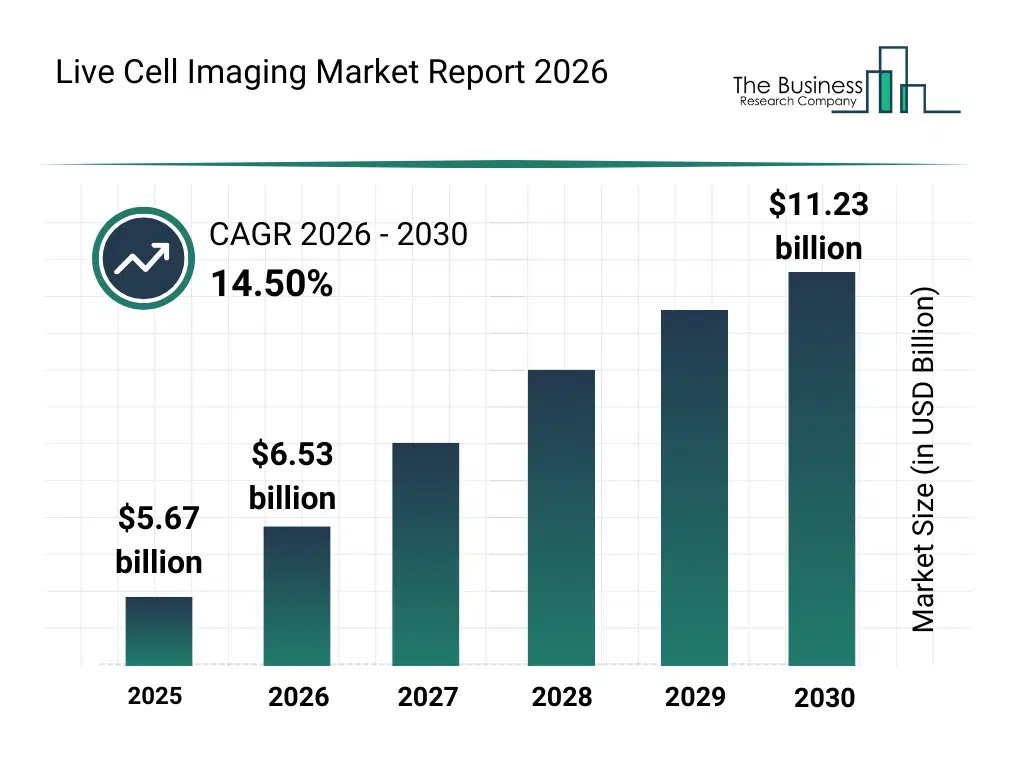
What Is The Live Cell Imaging Market Size and Share 2026?
The live cell imaging market size has grown rapidly in recent years. It will grow from $5.67 billion in 2025 to $6.53 billion in 2026 at a compound annual growth rate (CAGR) of 15.1%. The growth in the historic period can be attributed to expansion of cell biology research activities, increased funding for life sciences research, adoption of advanced microscopy techniques, growth in drug discovery programs, availability of improved imaging consumables.What Is The Live Cell Imaging Market Growth Forecast?
The live cell imaging market size is expected to see rapid growth in the next few years. It will grow to $11.23 billion in 2030 at a compound annual growth rate (CAGR) of 14.5%. The growth in the forecast period can be attributed to increasing demand for real-time cellular analysis, rising investments in precision medicine research, expansion of stem cell and regenerative medicine studies, growing use of ai-enabled image analytics, increasing adoption of high-content screening platforms. Major trends in the forecast period include increasing adoption of high-resolution live cell imaging systems, rising use of fluorescence-based imaging techniques, growing integration of automated image analysis software, expansion of time-lapse microscopy applications, enhanced focus on real-time cellular monitoring.
Global Live Cell Imaging Market Segmentation
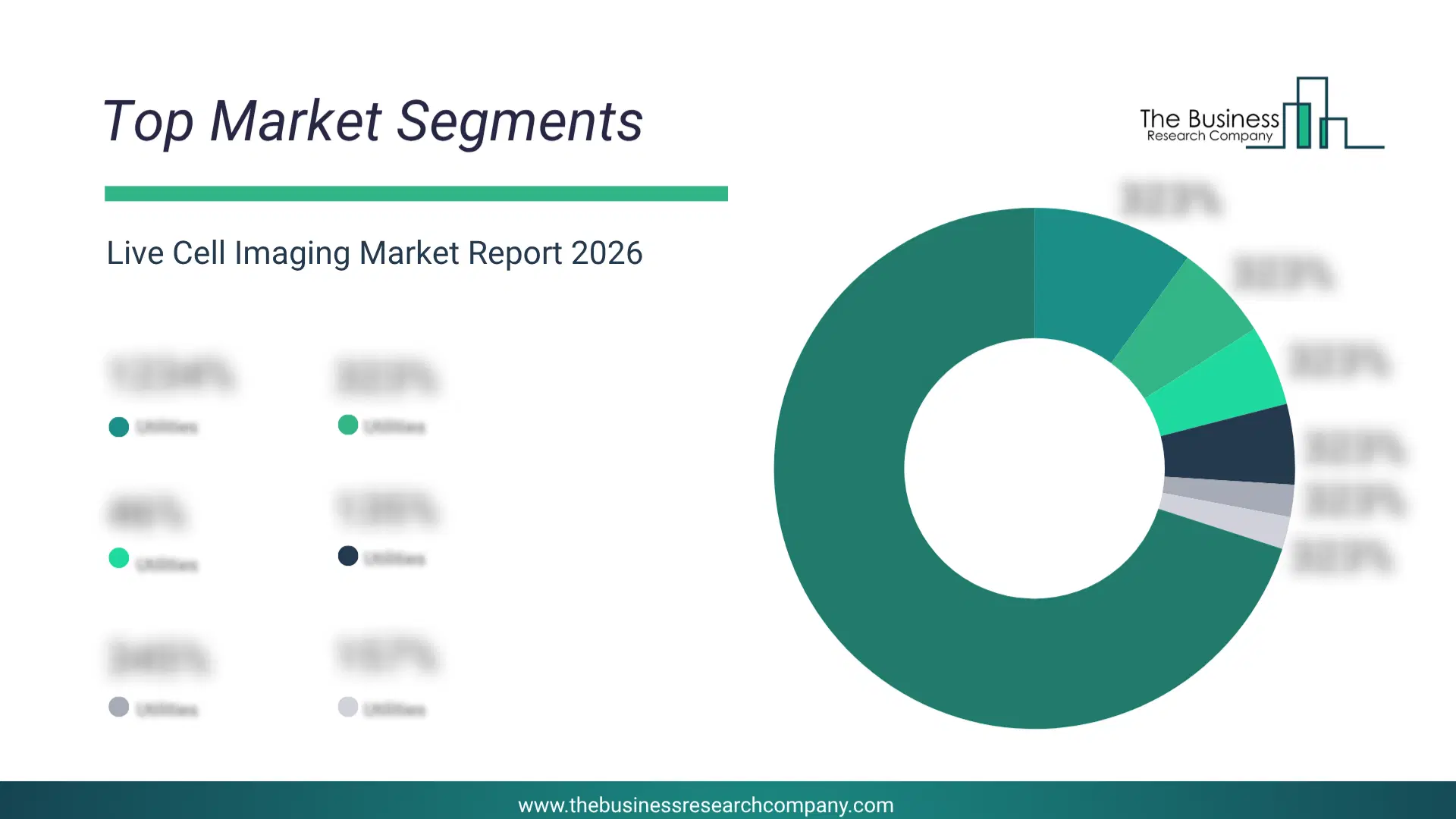
1) By Product: Equipment, Consumable, Software 2) By Technology: Time-Lapse Microscopy, Fluorescence Recovery After Photobleaching (FRAP), Fluorescence Resonance Energy Transfer (FRET), High Content Screening (HCS), Other Technologies 3) By Application: Cell Biology, Developmental Biology, Stem Cell and Drug Discovery, Other Applications 4) By End-User: Pharmaceutical and Biotechnology Companies, Academic and Research Institutes, Contract Research Organizations (CROs) Subsegments: 1) By Equipment: Microscopes, Imaging Systems, Light Sheet Microscopes, Cameras And Detectors 2) By Consumable: Cell Culture Plates And Dishes, Reagents And Stains, Media And Supplements 3) By Software: Image Analysis Software, Data Management Software, Visualization Software, Image Processing ToolsWhat Is The Driver Of The Live Cell Imaging Market?
The rising incidence of cancer is expected to propel the growth of the live cell imaging market going forward. Cancer refers to a group of diseases characterized by uncontrolled cell growth and the potential to invade or spread to other parts of the body, making it one of the world’s leading causes of illness and death. The increase in cancer cases is driven by factors such as aging populations, lifestyle risks, and improved diagnostic capabilities. Live cell imaging supports cancer research by enabling real-time visualization and analysis of dynamic cellular processes, helping scientists better understand tumor behavior, evaluate drug responses, and accelerate the development of targeted therapies. For instance, in February 2025, according to Cancer Australia, an Australia-based government agency, there were 4,641 new pancreatic cancer cases in 2024, with 2,414 in males and 2,227 in females. Therefore, the rising incidence of cancer is driving the growth of the live cell imaging industry.Key Players In The Global Live Cell Imaging Market
Major companies operating in the live cell imaging market are Leica Microsystems GmbH, Olympus Corporation, PerkinElmer Inc., GE Healthcare Technologies Inc., Carl Zeiss Meditec AG, Becton Dickinson and Company, Molecular Devices LLC, Bruker Corporation, Sartorius AG, Oxford Instruments plc, BioTek Instruments Inc., Etaluma Inc., CytoSMART Technologies B.V., CYTENA GmbH, Nanolive SA, Abberior GmbH, Phase Holographic Imaging AB, Corning Incorporated, KEYENCE Corporation, Axion BioSystems Inc., Bio-Rad Laboratories Inc., NanoEnTek Inc., Danaher Corporation, Agilent Technologies Inc., Phasefocus Ltd.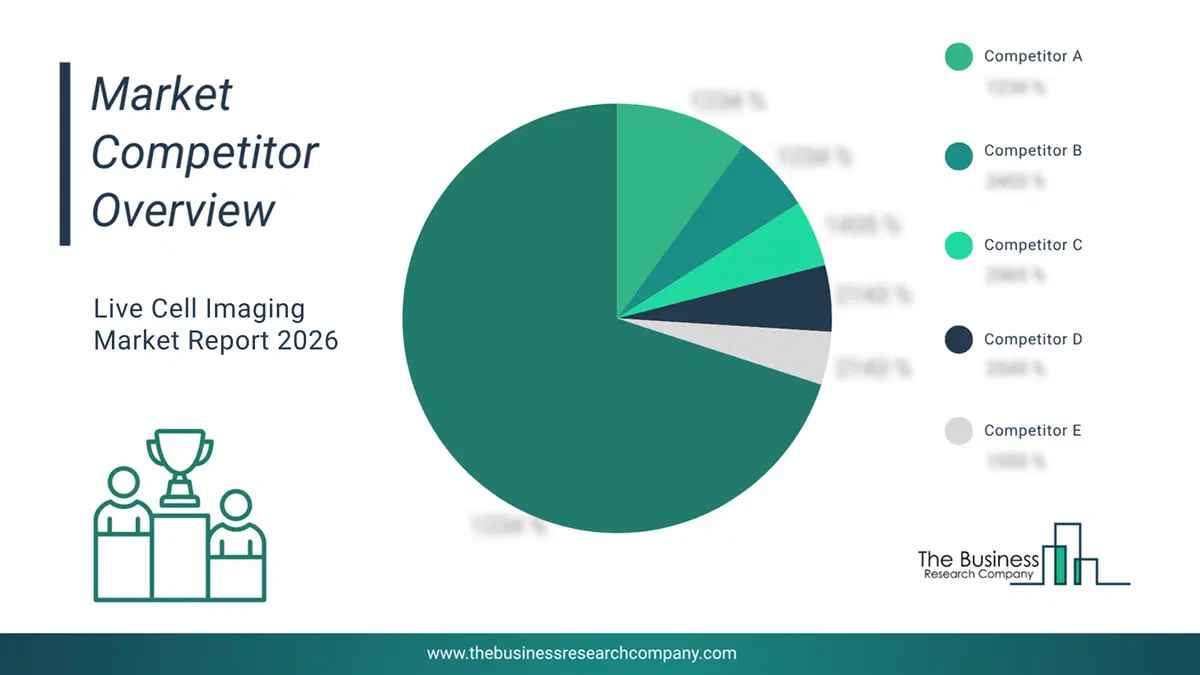
This chart is for illustrative purposes; the full report includes a detailed competitor analysis and comprehensive overview of the top 10 companies in the market.
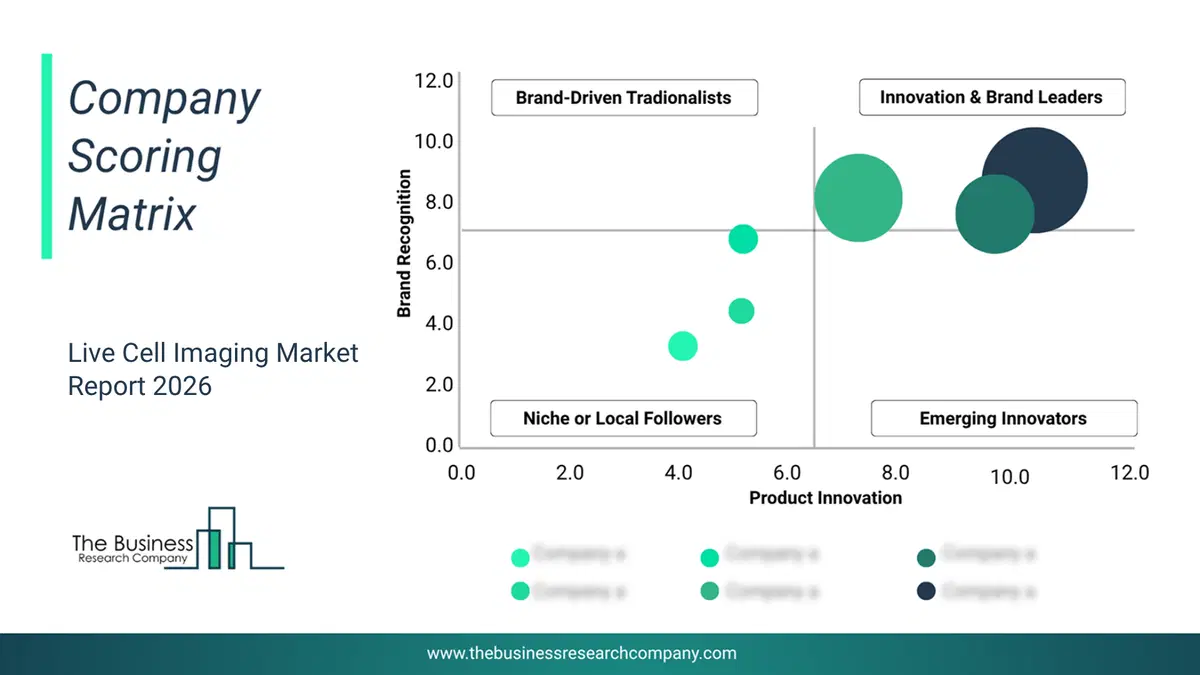
This chart maps companies by product innovation and brand strength, with bubble size indicating relative revenue, helping identify market leaders, challengers, and niche players. This is an illustrative chart; the full report provides a complete and accurate competitive analysis.
Global Live Cell Imaging Market Trends and Insights
Major companies operating in the live-cell imaging market are focusing on developing advanced solutions, such as single-molecule super-resolution microscopes, to meet the rising demand for real-time visualization of molecular interactions, high-content drug screening, and biomarker research. Single-molecule super-resolution microscopy is an imaging technology that enables researchers to track individual molecules within living cells at nanometer-scale resolution, surpassing the limits of traditional fluorescence microscopy and allowing much finer spatial detail. For instance, in January 2025, Oxford Nanoimaging (ONI), a UK-based life-science tools company, launched the Aplo Scope, a compact benchtop system designed to alternate seamlessly between low-power live-cell imaging and high-power super-resolution modes without hardware adjustments. The Aplo Scope integrates a custom laser module, application-specific reagent kits, automated workflows, and cloud-connected software to provide high-resolution, real-time imaging with simplified operation, supporting applications such as drug delivery studies, biomarker discovery, and antibody therapeutics.What Are Latest Mergers And Acquisitions In The Live Cell Imaging Market?
In December 2023, Bruker Corporation, a US-based scientific instruments company, acquired Phasefocus Holdings Limited for an undisclosed amount. With this acquisition, Bruker aims to enhance its cell analysis and microscopy offerings by integrating Phasefocus’s label free, high contrast live cell imaging technology. Phasefocus Holdings Limited. is a UK-based technology company that specializes in optical cell imaging and image processing algorithms, including its livecyte microscope for time lapse, single cell analysis.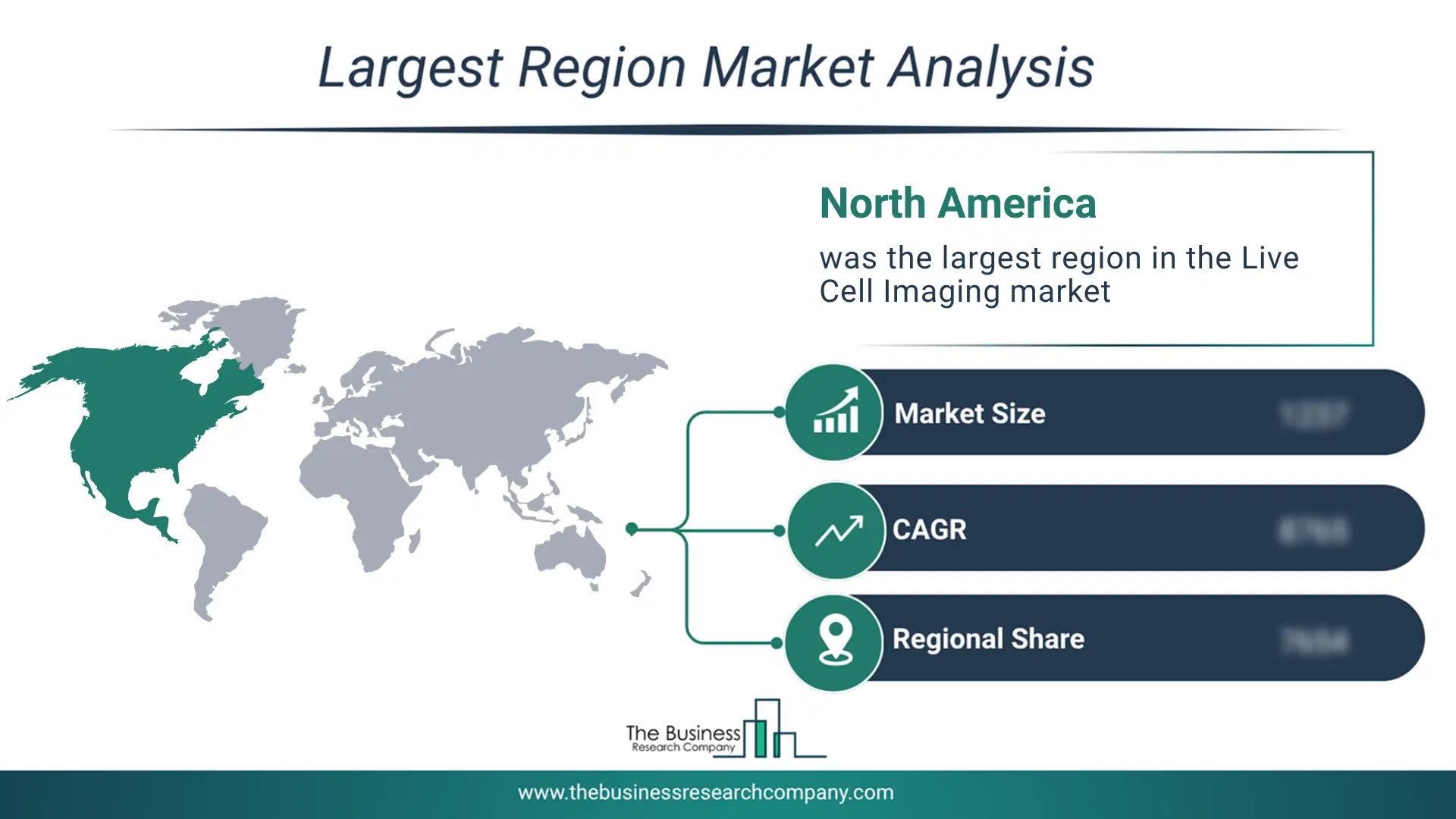
Regional Outlook
North America was the largest region in the live cell imaging market in 2025. The regions covered in this market report are Asia-Pacific, South East Asia, Western Europe, Eastern Europe, North America, South America, Middle East, Africa. The countries covered in this market report are Australia, Brazil, China, France, Germany, India, Indonesia, Japan, Taiwan, Russia, South Korea, UK, USA, Canada, Italy, SpainWhat Defines the Live Cell Imaging Market?
The live cell imaging market consists of sales of light microscopes, objective lenses, accessories, and reagents. Values in this market are ‘factory gate’ values, that is the value of goods sold by the manufacturers or creators of the goods, whether to other entities (including downstream manufacturers, wholesalers, distributors and retailers) or directly to end customers. The value of goods in this market includes related services sold by the creators of the goods.How is Market Value Defined and Measured?
The market value is defined as the revenues that enterprises gain from the sale of goods and/or services within the specified market and geography through sales, grants, or donations in terms of the currency (in USD unless otherwise specified). The revenues for a specified geography are consumption values that are revenues generated by organizations in the specified geography within the market, irrespective of where they are produced. It does not include revenues from resales along the supply chain, either further along the supply chain or as part of other products.
This chart presents market attractiveness based on a quantitative evaluation of growth, competition, strategic alignment, and risk, offering a clear view of opportunity areas for decision-making. This chart is for illustrative purposes; the full report contains the complete analysis.

This chart highlights the Total Addressable Market (TAM) by estimating the maximum revenue opportunity using an assumption-driven approach, supporting strategic planning and opportunity sizing across markets. The chart is illustrative; the full report provides a more comprehensive analysis.
What Key Data and Analysis Are Included in the Live Cell Imaging Market Report 2026?
The live cell imaging market research report is one of a series of new reports from The Business Research Company that provides market statistics, including industry global market size, regional shares, competitors with the market share, detailed market segments, market trends and opportunities, and any further data you may need to thrive in the live cell imaging industry. The market research report delivers a complete perspective of everything you need, with an in-depth analysis of the current and future state of the industry.Live Cell Imaging Market Report Forecast Analysis
| Report Attribute | Details |
|---|---|
| Market Size Value In 2026 | $6.53 billion |
| Revenue Forecast In 2030 | $11.23 billion |
| Growth Rate | CAGR of 14.5% from 2026 to 2030 |
| Base Year For Estimation | 2025 |
| Actual Estimates/Historical Data | 2020-2025 |
| Forecast Period | 2026 - 2030 |
| Market Representation | Revenue in USD Billion and CAGR from 2026 to 2030 |
| Segments Covered | Product, Technology, Application, End-User |
| Regional Scope | Asia-Pacific, Western Europe, Eastern Europe, North America, South America, Middle East, Africa |
| Country Scope | The countries covered in the report are Australia, Brazil, China, France, Germany, India, Indonesia, Japan, Taiwan, Russia, South Korea, UK, USA, Canada, Italy, Spain. |
| Key Companies Profiled | Leica Microsystems GmbH, Olympus Corporation, PerkinElmer Inc., GE Healthcare Technologies Inc., Carl Zeiss Meditec AG, Becton Dickinson and Company, Molecular Devices LLC, Bruker Corporation, Sartorius AG, Oxford Instruments plc, BioTek Instruments Inc., Etaluma Inc., CytoSMART Technologies B.V., CYTENA GmbH, Nanolive SA, Abberior GmbH, Phase Holographic Imaging AB, Corning Incorporated, KEYENCE Corporation, Axion BioSystems Inc., Bio-Rad Laboratories Inc., NanoEnTek Inc., Danaher Corporation, Agilent Technologies Inc., Phasefocus Ltd. |
| Customization Scope | Request for Customization |
| Pricing And Purchase Options | Explore Purchase Options |