
Low-Glycemic Beverages Market Report 2026
Global Outlook – By Product Type (Juices, Teas, Functional Drinks, Plant-Based Beverages, Other Product Types), By Sweetener Type (Natural Sweeteners, Artificial Sweeteners, Other Sweetener Types), By Distribution Channel (Supermarkets/Hypermarkets, Online Stores, Specialty Stores, Convenience Stores, Other Distributions Channels), By End-User (Adults, Children, Diabetics, Other End-Users) – Market Size, Trends, Strategies, and Forecast to 2030
Low-Glycemic Beverages Market Overview
• Low-Glycemic Beverages market size has reached to $5.12 billion in 2025 • Expected to grow to $8.65 billion in 2030 at a compound annual growth rate (CAGR) of 11% • Growth Driver: Growing Prevalence Of Diabetes Fueling The Growth Of The Market Due To Rising Need For Blood Sugar Management And Healthier Sugar Alternatives • Market Trend: Clinically Proven Nutrition Drinks To Support Blood Sugar Management • North America was the largest region in 2025 and Asia-Pacific is the fastest growing region.What Is Covered Under Low-Glycemic Beverages Market?
Low-glycemic beverages are drinks formulated to release glucose slowly, helping maintain steady blood sugar levels. They are made using ingredients that have a naturally lower glycemic response compared to traditional sugary beverages. These beverages aim to provide sweetness and energy without causing rapid spikes in blood glucose. The main product types of low-glycemic beverages include juices, teas, functional drinks, plant-based beverages, and other product types. Juices provide consumers with beverage options that have a reduced impact on blood sugar levels while catering to taste, nutrition, and lifestyle preferences. There are sweetener types such as natural sweeteners, artificial sweeteners, and other sweetener types. The distribution channels include supermarkets/hypermarkets, online stores, specialty stores, convenience stores, and others, and they are used by several end-users such as adults, children, diabetics, and others.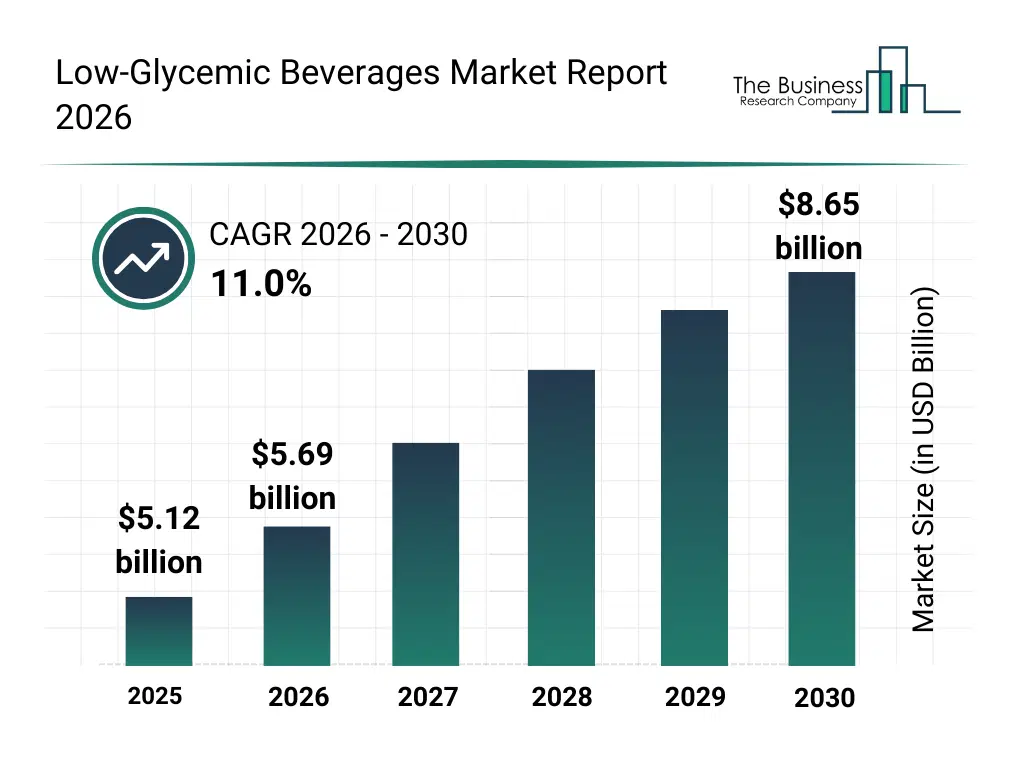
What Is The Low-Glycemic Beverages Market Size and Share 2026?
The low-glycemic beverages market size has grown rapidly in recent years. It will grow from $5.12 billion in 2025 to $5.69 billion in 2026 at a compound annual growth rate (CAGR) of 11.2%. The growth in the historic period can be attributed to increasing health awareness, growing demand for diabetic-friendly drinks, rising consumption of functional beverages, expansion of natural sweetener use, and increasing adoption of low-calorie beverages.What Is The Low-Glycemic Beverages Market Growth Forecast?
The low-glycemic beverages market size is expected to see rapid growth in the next few years. It will grow to $8.65 billion in 2030 at a compound annual growth rate (CAGR) of 11.0%. The growth in the forecast period can be attributed to rising consumer preference for low-glycemic products, growing investment in functional beverage R&D, expansion of distribution channels, increasing adoption of plant-based ingredients, and growing regulatory support for healthier drinks. Major trends in the forecast period include technology advancements in formulation, innovations in natural sweeteners, developments in low-calorie flavouring, research and developments in functional ingredients, and emerging trends in personalized nutrition.
Global Low-Glycemic Beverages Market Segmentation
1) By Product Type: Juices, Teas, Functional Drinks, Plant-Based Beverages, Other Product Types 2) By Sweetener Type: Natural Sweeteners, Artificial Sweeteners, Other Sweetener Types 3) By Distribution Channel: Supermarkets/Hypermarkets, Online Stores, Specialty Stores, Convenience Stores, Other Distributions Channels 4) By End-User: Adults, Children, Diabetics, Other End-Users Subsegments: 1) By Juices: Citrus Juices, Berry Juices, Tropical Juices, Vegetable Juices 2) By Teas: Green Tea, Black Tea, Herbal Tea, Fruit-Infused Tea 3) By Functional Drinks: Energy Drinks, Electrolyte Drinks, Probiotic Drinks, Antioxidant Drinks 4) By Plant-Based Beverages: Almond Beverages, Oat Beverages, Soy Beverages, Coconut Beverages 5) By Other Product Types: Fermented Beverages, Infused Waters, Botanical Extract Drinks, Specialty Wellness DrinksWhat Is The Driver Of The Low-Glycemic Beverages Market?
The growing prevalence of diabetes is expected to propel the growth of the low‑glycemic beverages market going forward. Diabetes prevalence refers to the proportion of people in a population living with diabetes at a given time, reflecting ongoing treatment need and lifetime therapy demand. The rise in diabetes prevalence is due to increasing sedentary lifestyles and poor dietary habits that lead to obesity, insulin resistance, and higher rates of type 2 diabetes. Low glycemic beverages aid in diabetes management by helping maintain stable blood sugar levels, making them ideal for individuals with diabetes and those seeking healthier sugar alternatives. They support better dietary control by providing a safer, low-sugar option, improving overall health and wellness. For instance, in June 2024, according to the National Health Service, a UK-based government department, 3,615,330 individuals registered with a general practitioner (GP) were diagnosed with non-diabetic hyperglycemia or pre-diabetes in 2023, marking an 18% increase from 3,065,825 cases in 2022. Therefore, the growing prevalence of diabetes is driving the growth of the low‑glycemic beverages market.Key Players In The Global Low-Glycemic Beverages Market
Major companies operating in the low-glycemic beverages market are Nestlé S.A., PepsiCo Inc., Unilever plc, The Coca-Cola Company, Danone S.A., BioSteel Sports Nutrition Inc., Keurig Dr Pepper Inc., Otsuka Pharmaceutical Co. Ltd., Monster Beverage Corporation, Yakult Honsha Co. Ltd., The Hain Celestial Group Inc., Bolthouse Farms Inc., SunOpta Inc., Vita Coco Company Inc., Zevia PBC, Suja Life LLC, Nuun Hydration, Bai Brands LLC, Diabliss Consumer Products Pvt. Ltd., ICONIC Protein Inc.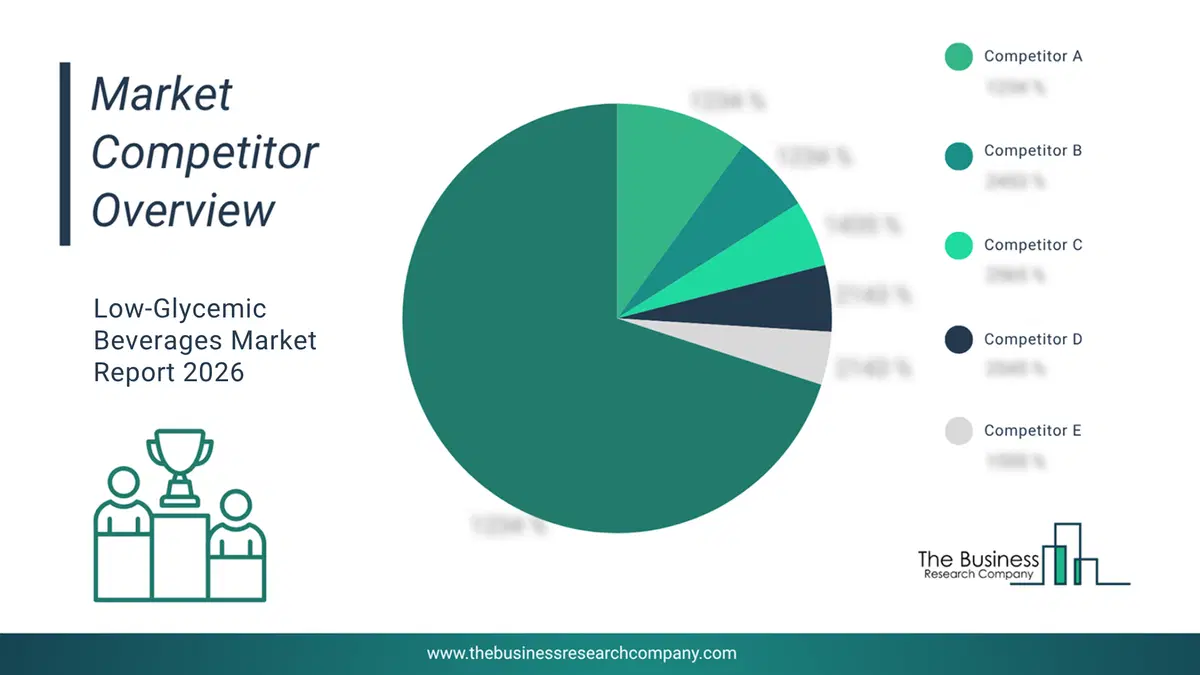
This chart is for illustrative purposes; the full report includes a detailed competitor analysis and comprehensive overview of the top 10 companies in the market.
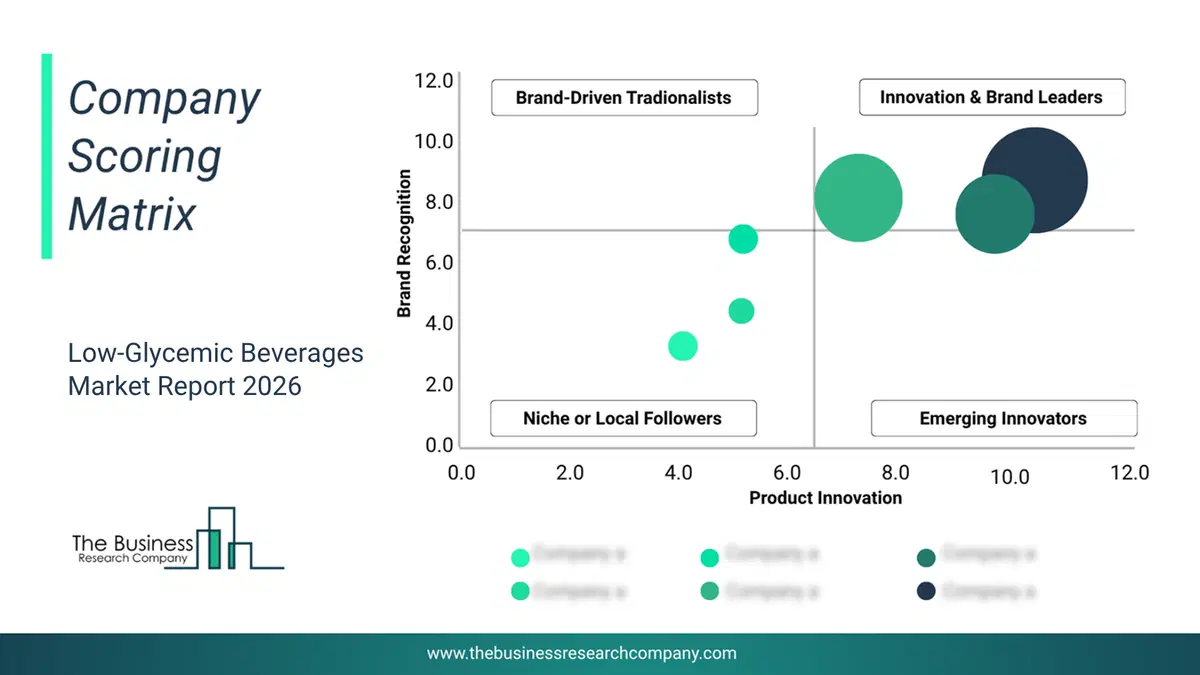
This chart maps companies by product innovation and brand strength, with bubble size indicating relative revenue, helping identify market leaders, challengers, and niche players. This is an illustrative chart; the full report provides a complete and accurate competitive analysis.
Global Low-Glycemic Beverages Market Trends and Insights
Major companies operating in the low-glycemic beverages market are focusing on developing advanced nutritional drinks, such as clinically proven formulas to help manage blood sugar, enhance overall metabolic health, and reduce the burden of diabetes management. Clinically proven nutritional formulas refer to science-based products specifically designed with ingredient blends, such as slow-digested carbohydrates and high fiber, that are clinically tested to support glycemic control and related health outcomes. For instance, in November 2025, Abbott Laboratories, a US-based healthcare company, launched the new and advanced Ensure Diabetes Care, a clinically proven nutrition drink designed for people with diabetes. It features a low-glycemic index carbohydrate blend, high protein and fiber content, prebiotic FOS, and no added sucrose. These formulations support blood sugar management, provide essential micronutrients, and improve overall cardiometabolic health, representing a significant advancement in low-glycemic beverage options by combining nutritional completeness, glycemic control, and metabolic support.What Are Latest Mergers And Acquisitions In The Low-Glycemic Beverages Market?
In March 2025, PepsiCo Inc., a US-based food and beverage company, acquired Poppi Inc. for $1.95 billion. With this acquisition, PepsiCo aims to expand its portfolio of better-for-you and functional beverages, leveraging Poppi’s prebiotic soda line to target health-conscious consumers and the growing low-sugar, low-glycemic beverage market. Poppi Inc. is a US-based functional beverage company specializing in prebiotic, lower-sugar, and low-glycemic drinks.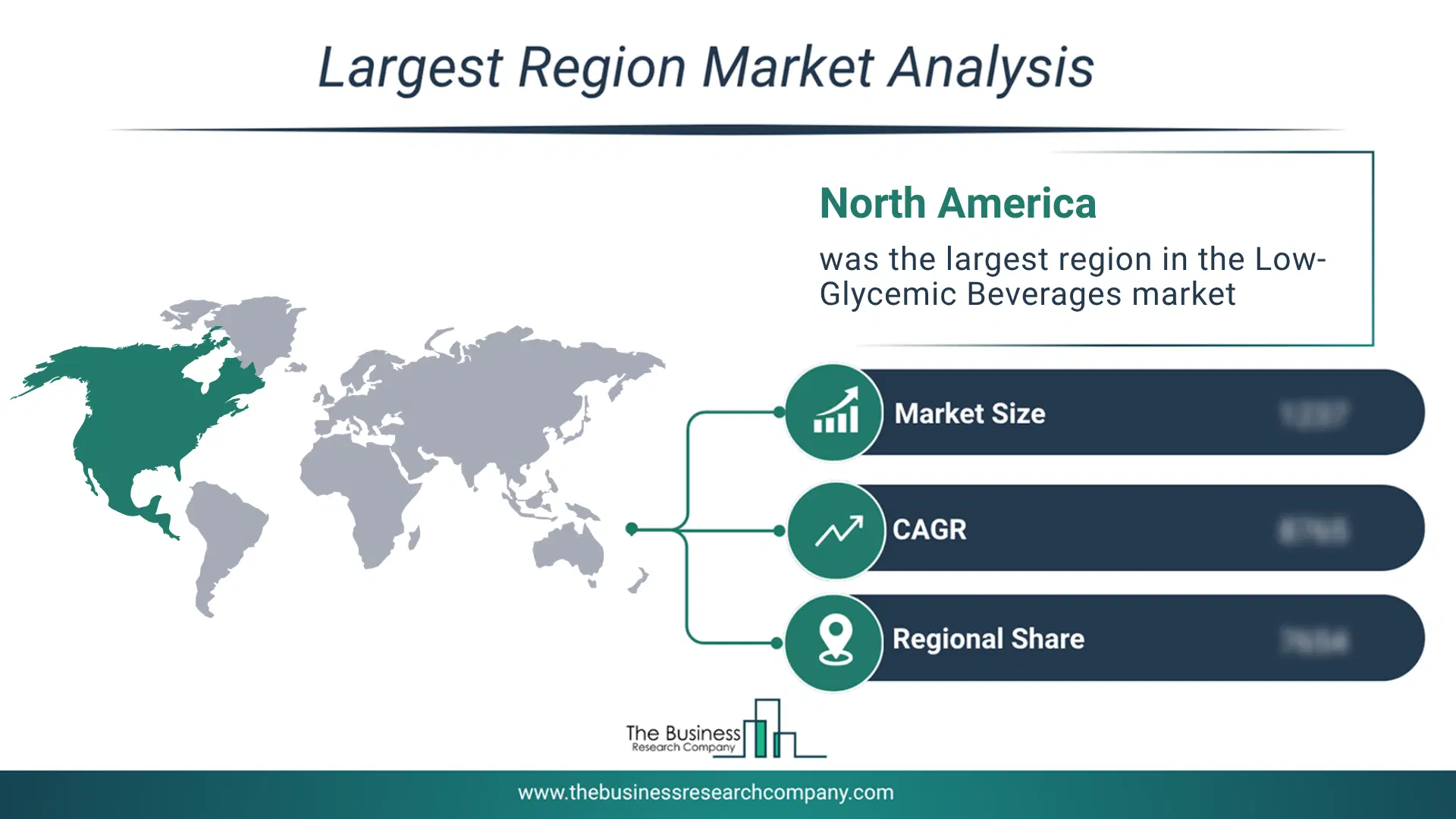
Regional Insights
North America was the largest region in the low-glycemic beverages market in 2025. Asia-Pacific is expected to be the fastest-growing region in the forecast period. The regions covered in this market report are Asia-Pacific, South East Asia, Western Europe, Eastern Europe, North America, South America, Middle East, Africa. The countries covered in this market report are Australia, Brazil, China, France, Germany, India, Indonesia, Japan, Taiwan, Russia, South Korea, UK, USA, Canada, Italy, Spain.What Defines the Low-Glycemic Beverages Market?
The low-glycemic beverages market consists of sales of low-GI juices, functional health drinks, reduced-sugar teas, plant-based energy beverages, and low-glycemic nutritional drinks. Values in this market are ‘factory gate’ values, that is, the value of goods sold by the manufacturers or creators of the goods, whether to other entities (including downstream manufacturers, wholesalers, distributors, and retailers) or directly to end customers. The value of goods in this market includes related services sold by the creators of the goods.How is Market Value Defined and Measured?
The market value is defined as the revenues that enterprises gain from the sale of goods and/or services within the specified market and geography through sales, grants, or donations in terms of the currency (in USD unless otherwise specified). The revenues for a specified geography are consumption values that are revenues generated by organizations in the specified geography within the market, irrespective of where they are produced. It does not include revenues from resales along the supply chain, either further along the supply chain or as part of other products.
This chart presents market attractiveness based on a quantitative evaluation of growth, competition, strategic alignment, and risk, offering a clear view of opportunity areas for decision-making. This chart is for illustrative purposes; the full report contains the complete analysis.

This chart highlights the Total Addressable Market (TAM) by estimating the maximum revenue opportunity using an assumption-driven approach, supporting strategic planning and opportunity sizing across markets. The chart is illustrative; the full report provides a more comprehensive analysis.
What Key Data and Analysis Are Included in the Low-Glycemic Beverages Market Report 2026?
The low-glycemic beverages market research report is one of a series of new reports from The Business Research Company that provides market statistics, including industry global market size, regional shares, competitors with the market share, detailed market segments, market trends and opportunities, and any further data you may need to thrive in the low-glycemic beverages industry. The market research report delivers a complete perspective of everything you need, with an in-depth analysis of the current and future state of the industry.Low-Glycemic Beverages Market Report Forecast Analysis
| Report Attribute | Details |
|---|---|
| Market Size Value In 2026 | $5.69 billion |
| Revenue Forecast In 2030 | $8.65 billion |
| Growth Rate | CAGR of 11.2% from 2026 to 2030 |
| Base Year For Estimation | 2025 |
| Actual Estimates/Historical Data | 2020-2025 |
| Forecast Period | 2026 - 2030 |
| Market Representation | Revenue in USD Billion and CAGR from 2026 to 2030 |
| Segments Covered | Product Type, Sweetener Type, Distribution Channel, End-User |
| Regional Scope | Asia-Pacific, Western Europe, Eastern Europe, North America, South America, Middle East, Africa |
| Country Scope | The countries covered in the report are Australia, Brazil, China, France, Germany, India, Indonesia, Japan, Taiwan, Russia, South Korea, UK, USA, Canada, Italy, Spain. |
| Key Companies Profiled | Nestlé S.A., PepsiCo Inc., Unilever plc, The Coca-Cola Company, Danone S.A., BioSteel Sports Nutrition Inc., Keurig Dr Pepper Inc., Otsuka Pharmaceutical Co. Ltd., Monster Beverage Corporation, Yakult Honsha Co. Ltd., The Hain Celestial Group Inc., Bolthouse Farms Inc., SunOpta Inc., Vita Coco Company Inc., Zevia PBC, Suja Life LLC, Nuun Hydration, Bai Brands LLC, Diabliss Consumer Products Pvt. Ltd., ICONIC Protein Inc. |
| Customization Scope | Request for Customization |
| Pricing And Purchase Options | Explore Purchase Options |