

Lung Cancer Screening Market Report 2026
Global Outlook – By Diagnosis Type (Low Dose Spiral Computed Tomography Scan, Chest-X-Ray), By Cancer Type (Non-Small Cell Lung Cancer, Small Cell Lung Cancer), By Age Group (50 And Older, Below 50), By End-User (Hospitals And Clinics, Diagnostic Centers, Other End-Users) - Market Size, Trends, Strategies, and Forecast to 2030
Lung Cancer Screening Market Overview
• Lung Cancer Screening market size has reached to $3.33 billion in 2025 • Expected to grow to $5.24 billion in 2030 at a compound annual growth rate (CAGR) of 9.5% • Growth Driver: Rise In Smoking Rates Fueling The Growth Of The Market Due To Increasing Tobacco Accessibility And Health Awareness • Market Trend: Innovations In Artificial Intelligence (AI) Technology Enhance Early Detection And Diagnostic Precision In Chest Imaging • North America was the largest region in 2025 and Asia-Pacific is the fastest growing region.What Is Covered Under Lung Cancer Screening Market?
Lung cancer screening is a preventive approach aimed at identifying cancer in the lungs at an early stage, often before any noticeable symptoms develop. It focuses on individuals who may have a higher risk due to specific health or lifestyle factors. The purpose of this process is to detect any unusual changes or growths in the lung tissue early, which can help improve the chances of effective treatment and reduce the overall impact of the disease. The main diagnosis types of lung cancer screening include low-dose spiral computed tomography scans and chest X-rays. Low-dose spiral computed tomography scan refers to an imaging technique that uses low-dose radiation to create detailed cross-sectional images of the lungs, enabling early detection of lung abnormalities with high sensitivity. It is used for different cancer types, such as non-small cell lung cancer and small cell lung cancer, for different age groups, including 50 and older and below 50. It is used by several end-users, including hospitals and clinics, diagnostic centers, and others.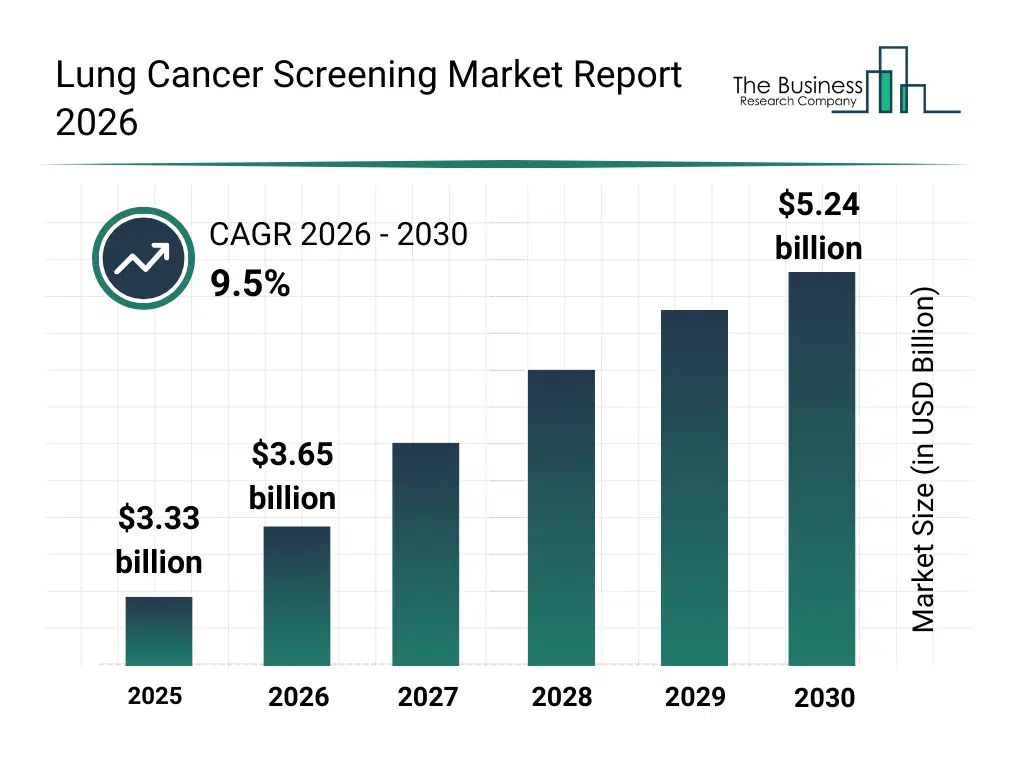
What Is The Lung Cancer Screening Market Size and Share 2026?
The lung cancer screening market size has grown strongly in recent years. It will grow from $3.33 billion in 2025 to $3.65 billion in 2026 at a compound annual growth rate (CAGR) of 9.6%. The growth in the historic period can be attributed to rising incidence of lung cancer among aging populations, increased awareness of early screening benefits, expansion of diagnostic imaging infrastructure, improvements in ct imaging technology, adoption of guideline-based screening protocols.What Is The Lung Cancer Screening Market Growth Forecast?
The lung cancer screening market size is expected to see strong growth in the next few years. It will grow to $5.24 billion in 2030 at a compound annual growth rate (CAGR) of 9.5%. The growth in the forecast period can be attributed to increasing adoption of ai-assisted diagnostic workflows, expansion of population-based screening programs, growing focus on personalized risk assessment, rising investments in early cancer detection technologies, increasing healthcare policy support for screening. Major trends in the forecast period include increasing adoption of low-dose ct screening programs, rising integration of ai in imaging analysis, growing focus on high-risk population screening, expansion of preventive oncology initiatives, enhanced emphasis on early lung cancer detection.
Global Lung Cancer Screening Market Segmentation
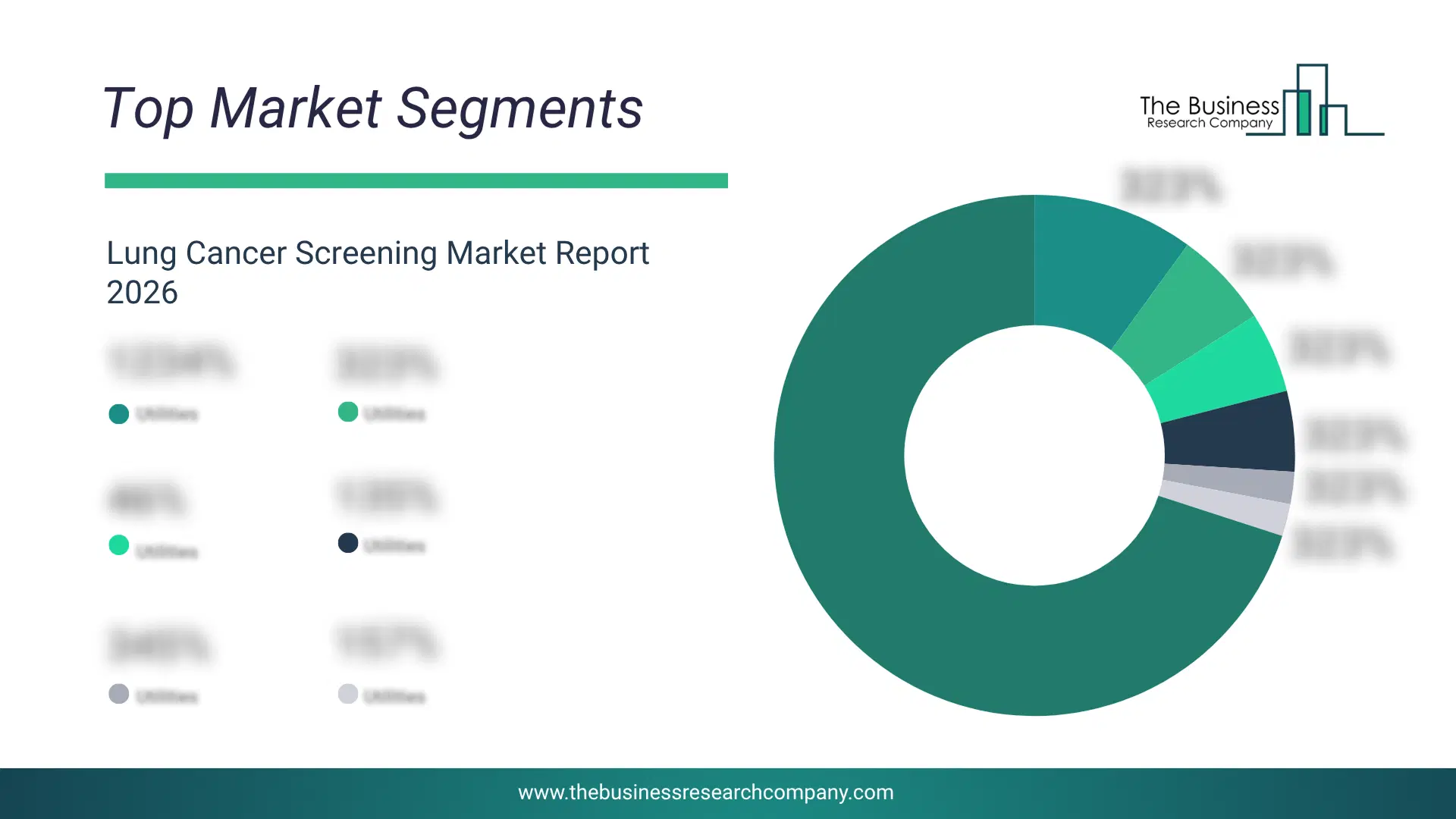
1) By Diagnosis Type: Low Dose Spiral Computed Tomography Scan, Chest-X-Ray 2) By Cancer Type: Non-Small Cell Lung Cancer, Small Cell Lung Cancer 3) By Age Group: 50 And Older, Below 50 4) By End-User: Hospitals And Clinics, Diagnostic Centers, Other End-Users Subsegments: 1) By Low Dose Spiral Computed Tomography Scan: Screening, Diagnostic, Follow-Up 2) By Chest X-Ray: Posterior Anterior, Lateral, PortableWhat Is The Driver Of The Lung Cancer Screening Market?
The rising smoking rates are expected to propel the growth of the lung cancer screening market going forward. Smoking is the practice of breathing in smoke from burning substances, typically tobacco, through the mouth and lungs. The rise in smoking rates is due to increasing stress levels, leading more people to turn to smoking as a coping mechanism. Lung cancer screening is helpful in addressing rising smoking rates by enabling early detection of smoking-related health risks, which can motivate individuals to quit and support broader public health efforts in reducing tobacco use For instance, in October 2024, the Office for Health Improvement & Disparities, a UK-based government organisation, the prevalence of current smokers in the routine and manual occupation group (aged 18 to 64) in 2023 was 19.5%. Therefore, the rising smoking rates are driving the growth of the lung cancer screening industry.Key Players In The Global Lung Cancer Screening Market
Major companies operating in the lung cancer screening market are Abbott Laboratories Inc., Canon Inc., Siemens Healthineers AG, Koninklijke Philips N.V., GE Healthcare Technologies Inc., Quest Diagnostics Incorporated, Shimadzu Corporation, NeoGenomics Laboratories Inc., Freenome Holdings Inc., Biodesix Inc., Lunit Inc., Infervision, Riverain Technologies, VisionGate, Delfi Diagnostics Inc., Hologic Inc., Fujifilm Holdings Corporation, United Imaging Healthcare Co. Ltd., Samsung Medison Co. Ltd., Carestream Health Inc., Analogic Corporation, Toshiba Medical Systems Corporation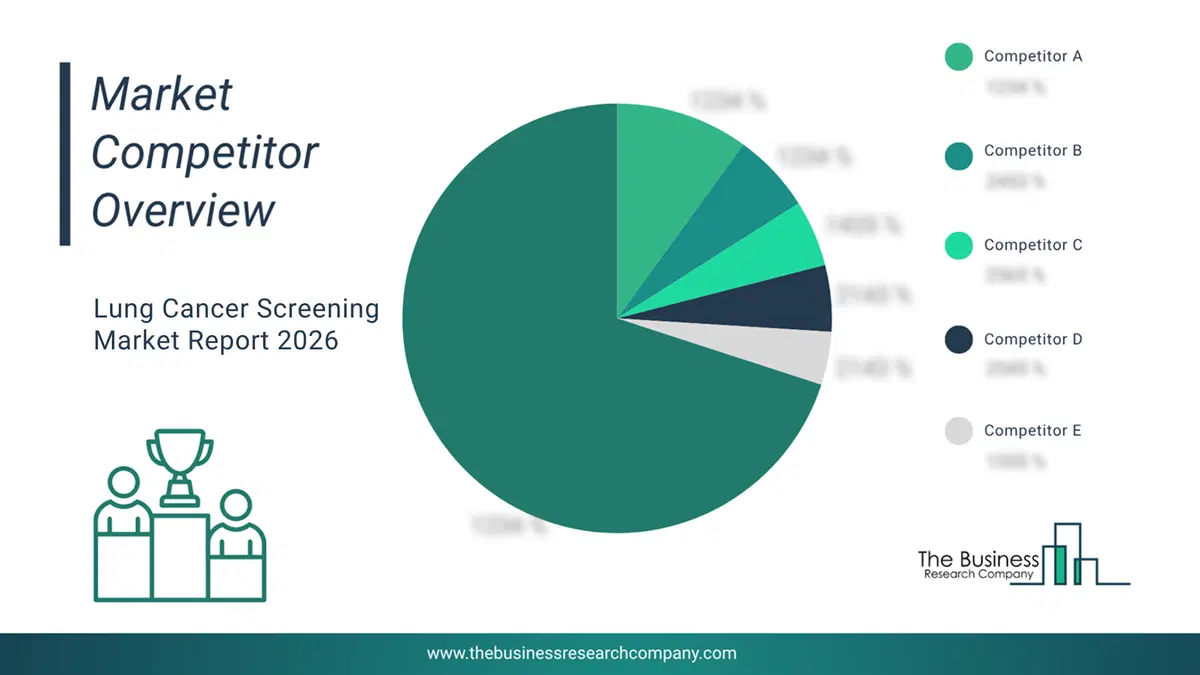
This chart is for illustrative purposes; the full report includes a detailed competitor analysis and comprehensive overview of the top 10 companies in the market.
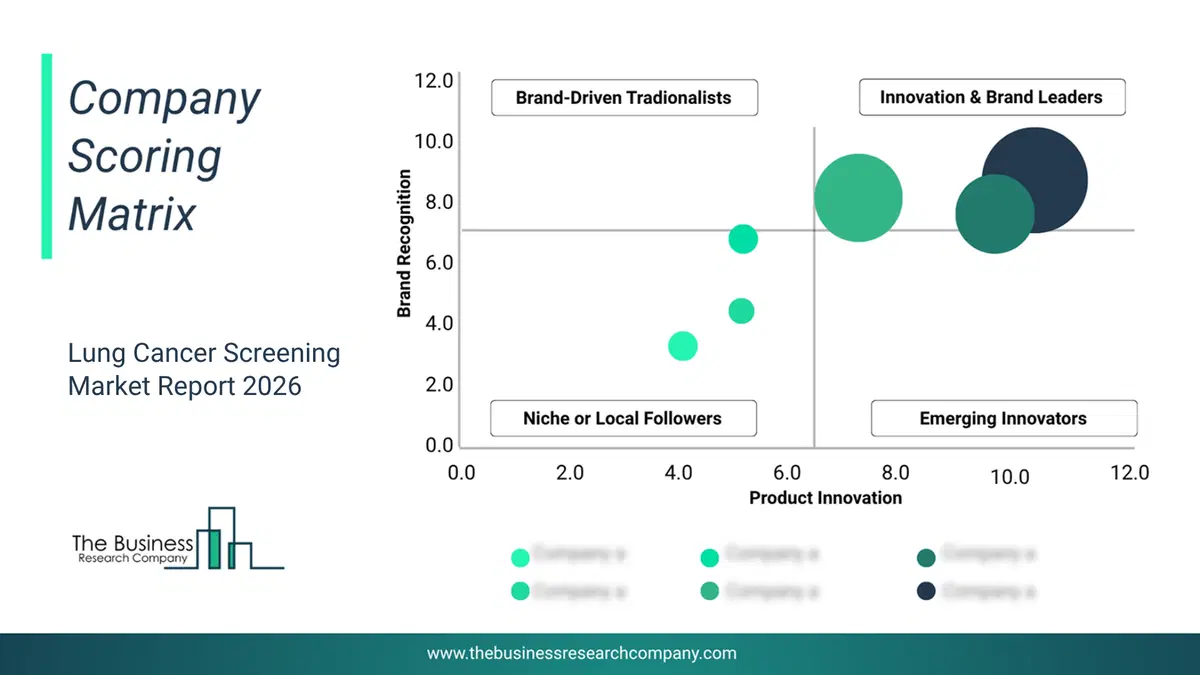
This chart maps companies by product innovation and brand strength, with bubble size indicating relative revenue, helping identify market leaders, challengers, and niche players. This is an illustrative chart; the full report provides a complete and accurate competitive analysis.
Global Lung Cancer Screening Market Trends and Insights
Major companies operating in the lung cancer screening market are focusing on developing advanced solutions, such as normal flagging, to enhance diagnostic accuracy, reduce false positives, and improve early detection of cancerous nodules. Normal flagging refers to a technological feature in lung cancer screening that automatically identifies and flags scans with no abnormal findings, helping prioritize cases that need further review. For instance, in May 2025, Lunit Inc., a South Korea-based medical technology company, launched INSIGHT CXR4, its next-generation artificial intelligence (AI)-powered chest X-ray analysis solution, which is now CE MDR-certified for deployment across Europe. Designed to assist radiologists with improved diagnostic accuracy and workflow efficiency, the solution detects 12 chest abnormalities, including lung nodules, pneumonia, and acute bone fractures, and introduces features such as current-prior image comparison to support early disease detection and clinical decision-making.What Are Latest Mergers And Acquisitions In The Lung Cancer Screening Market?
In May 2025, Johnson & Johnson MedTech, a US-based healthcare technology company, partnered with Qure.ai to boost early detection of lung cancer in India. With this partnership, Johnson & Johnson MedTech aimed to enhance its AI-driven diagnostic capabilities and expand access to early-stage lung-cancer screening by establishing AI-led Incidental Pulmonary Nodule (IPN) detection clinics across major hospitals in India. QURE AI TECHNOLOGIES PRIVATE LIMITED is an India-based healthcare technology company that specialises in AI-powered medical-imaging solutions (X-ray and CT) for automated lung-nodule detection, triage, and IPN management.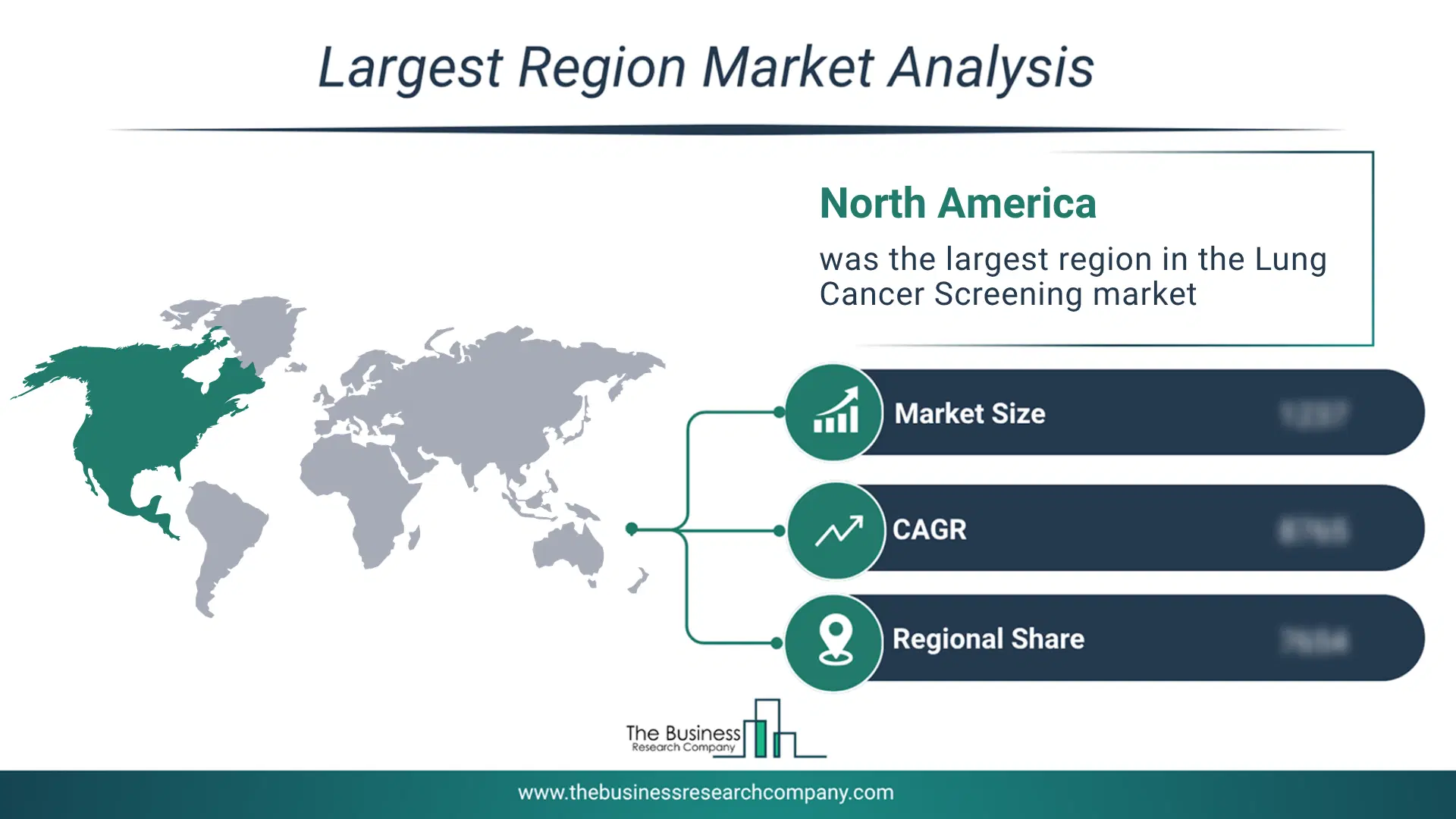
Regional Outlook
North America was the largest region in the lung cancer screening market in 2025. Asia-Pacific is expected to be the fastest-growing region in the forecast period. The regions covered in this market report are Asia-Pacific, South East Asia, Western Europe, Eastern Europe, North America, South America, Middle East, Africa. The countries covered in this market report are Australia, Brazil, China, France, Germany, India, Indonesia, Japan, Taiwan, Russia, South Korea, UK, USA, Canada, Italy, Spain.What Defines the Lung Cancer Screening Market?
The lung cancer screening market includes revenues earned by entities by providing services such as radiology interpretation, diagnostic follow-up procedures, patient risk assessment, and telehealth consultation. The market value includes the value of related goods sold by the service provider or included within the service offering. Only goods and services traded between entities or sold to end consumers are included.How is Market Value Defined and Measured?
The market value is defined as the revenues that enterprises gain from the sale of goods and/or services within the specified market and geography through sales, grants, or donations in terms of the currency (in USD unless otherwise specified). The revenues for a specified geography are consumption values that are revenues generated by organizations in the specified geography within the market, irrespective of where they are produced. It does not include revenues from resales along the supply chain, either further along the supply chain or as part of other products.
This chart presents market attractiveness based on a quantitative evaluation of growth, competition, strategic alignment, and risk, offering a clear view of opportunity areas for decision-making. This chart is for illustrative purposes; the full report contains the complete analysis.

This chart highlights the Total Addressable Market (TAM) by estimating the maximum revenue opportunity using an assumption-driven approach, supporting strategic planning and opportunity sizing across markets. The chart is illustrative; the full report provides a more comprehensive analysis.
What Key Data and Analysis Are Included in the Lung Cancer Screening Market Report 2026?
The lung cancer screening market research report is one of a series of new reports from The Business Research Company that provides market statistics, including industry global market size, regional shares, competitors with the market share, detailed market segments, market trends and opportunities, and any further data you may need to thrive in the lung cancer screening industry. The market research report delivers a complete perspective of everything you need, with an in-depth analysis of the current and future state of the industry.Lung Cancer Screening Market Report Forecast Analysis
| Report Attribute | Details |
|---|---|
| Market Size Value In 2026 | $3.65 billion |
| Revenue Forecast In 2030 | $5.24 billion |
| Growth Rate | CAGR of 9.5% from 2026 to 2030 |
| Base Year For Estimation | 2025 |
| Actual Estimates/Historical Data | 2020-2025 |
| Forecast Period | 2026 - 2030 |
| Market Representation | Revenue in USD Billion and CAGR from 2026 to 2030 |
| Segments Covered | Diagnosis Type, Cancer Type, Age Group, End-User |
| Regional Scope | Asia-Pacific, Western Europe, Eastern Europe, North America, South America, Middle East, Africa |
| Country Scope | The countries covered in the report are Australia, Brazil, China, France, Germany, India, Indonesia, Japan, Taiwan, Russia, South Korea, UK, USA, Canada, Italy, Spain |
| Key Companies Profiled | Abbott Laboratories Inc., Canon Inc., Siemens Healthineers AG, Koninklijke Philips N.V., GE Healthcare Technologies Inc., Quest Diagnostics Incorporated, Shimadzu Corporation, NeoGenomics Laboratories Inc., Freenome Holdings Inc., Biodesix Inc., Lunit Inc., Infervision, Riverain Technologies, VisionGate, Delfi Diagnostics Inc., Hologic Inc., Fujifilm Holdings Corporation, United Imaging Healthcare Co. Ltd., Samsung Medison Co. Ltd., Carestream Health Inc., Analogic Corporation, Toshiba Medical Systems Corporation |
| Customization Scope | Request for Customization |
| Pricing And Purchase Options | Explore Purchase Options |