
Lysine Market Report 2026
Global Outlook – By Type (Lysine Hydrochloride, Lysine Monohydrate, Other Types), By Grade (Food Grade, Feed Grade, Pharma Grade), By Form (Powder, Liquid), By Application (Food And Beverages, Pharmaceuticals And Nutraceuticals, Animal Feed) – Market Size, Trends, Strategies, and Forecast to 2030
Lysine Market Overview
• Lysine market size has reached to $9.2 billion in 2025 • Expected to grow to $13.24 billion in 2030 at a compound annual growth rate (CAGR) of 7.7% • Growth Driver: Rising Meat Consumption Boosts Lysine Market As Essential Supplement For Optimal Animal Growth • Market Trend: Breakthrough In Precision Amino Acid Balancing And Nutritional Innovation • Asia-Pacific was the largest region in 2025.Market Gains By 2030 – Top Opportunities By Segment
Market Gain identifies the most promising market opportunities by highlighting the segments or products expected to generate the highest incremental revenue growth over the next five years.
What Is Covered Under Lysine Market?
Lysine refers to essential amino acids that contribute to the structure and function of proteins. Lysine is involved in various biological processes such as collagen production, tissue repair, calcium absorption, antibody synthesis, muscle recovery, and the prevention of infections by the herpes simplex virus. The main types of lysine are lysine hydrochloride, lysine monohydrate, and others. Lysine hydrochloride is a salt form of the essential amino acid derived from lysine by combining it with hydrochloric acid, and it is used as a dietary supplement in crystalline powder, tablet, or capsule form. The various grades include food-grade, feed-grade, and pharmaceutical-grade and are manufactured in various forms, including powder, liquid, capsule, and cream. It is used in different applications, such as food and beverages, pharmaceuticals and nutraceuticals, personal care, and animal feed.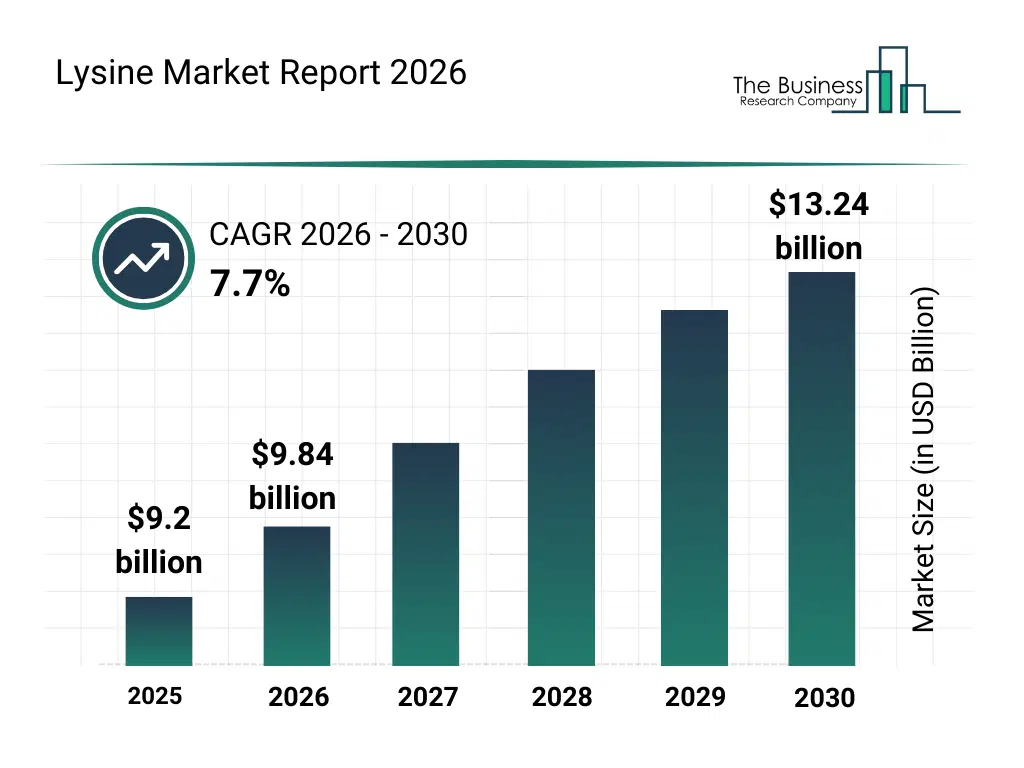
What Is The Lysine Market Size and Share 2026?
The lysine market size has grown strongly in recent years. It will grow from $9.2 billion in 2025 to $9.84 billion in 2026 at a compound annual growth rate (CAGR) of 6.9%. The growth in the historic period can be attributed to expansion of livestock farming activities, increasing use of feed additives, growth of amino acid fermentation technologies, rising demand for protein-rich diets, expansion of pharmaceutical manufacturing.What Is The Lysine Market Growth Forecast?
The lysine market size is expected to see strong growth in the next few years. It will grow to $13.24 billion in 2030 at a compound annual growth rate (CAGR) of 7.7%. The growth in the forecast period can be attributed to increasing demand for sustainable feed ingredients, rising use of lysine in nutraceutical formulations, expansion of precision fermentation techniques, growing demand for plant-based protein optimization, increasing focus on pharmaceutical-grade amino acids. Major trends in the forecast period include increasing use of lysine in animal nutrition, rising demand for amino acid fortification, expansion of pharmaceutical-grade lysine applications, growing adoption in functional foods, enhanced focus on high-purity production processes.
Global Lysine Market Segmentation
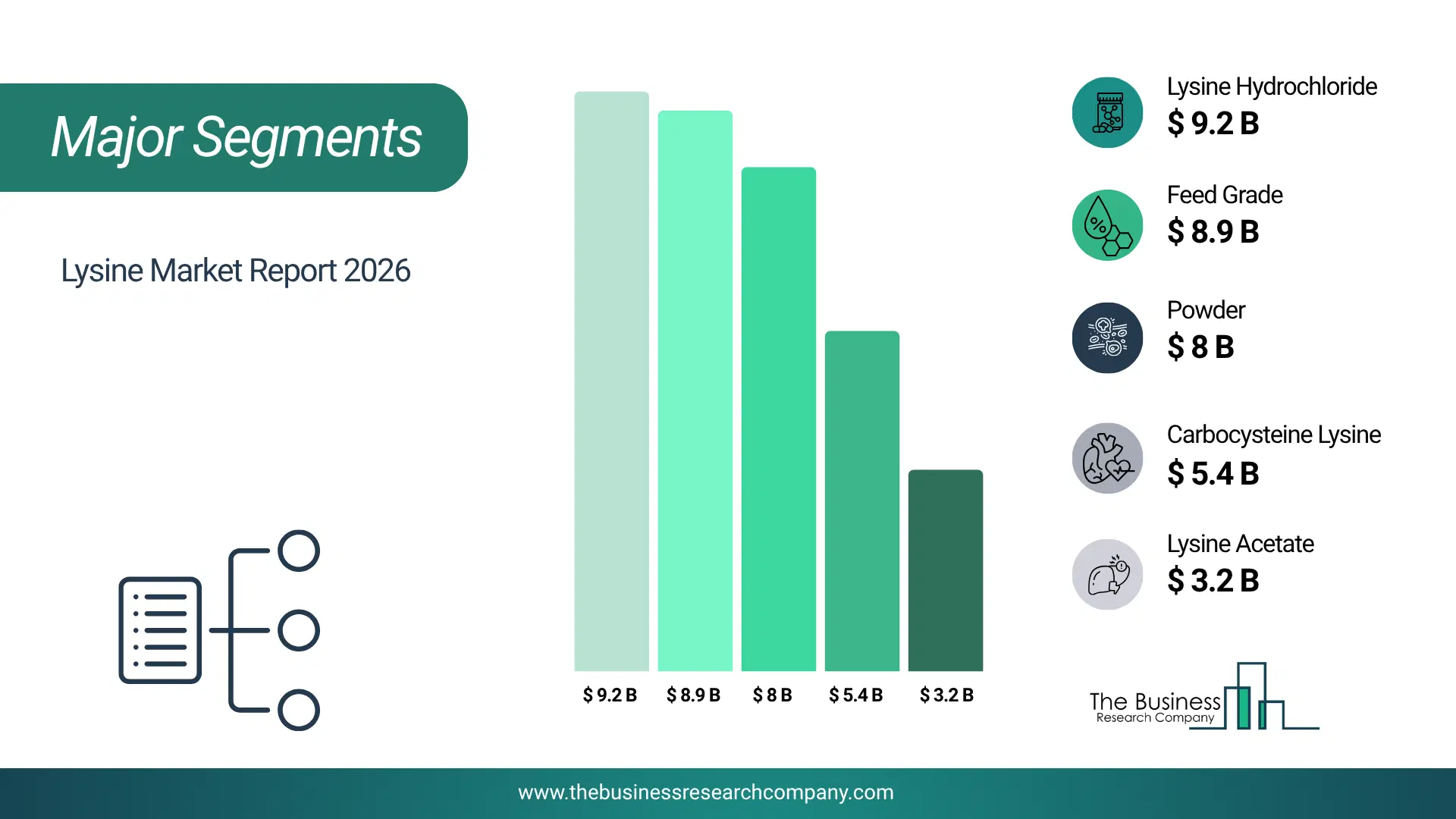
1) By Type: Lysine Hydrochloride, Lysine Monohydrate, Other Types 2) By Grade: Food Grade, Feed Grade, Pharma Grade 3) By Form: Powder, Liquid 4) By Application: Food And Beverages, Pharmaceuticals And Nutraceuticals, Animal Feed Subsegments: 1) By Lysine Hydrochloride: Feed Grade Lysine Hydrochloride, Food Grade Lysine Hydrochloride 2) By Lysine Monohydrate: Feed Grade Lysine Monohydrate, Food Grade Lysine Monohydrate 3) By Other Types: L-Lysine, Lysine Blends The top segments in the lysine market will be: • Lysine Hydrochloride will reach $9233.39 Million by 2030. • Feed Grade will reach $8937.09 Million by 2030. • Powder will reach $8044.73 Million by 2030. • Carbocysteine Lysine will reach $5471.02 Million by 2030. • Lysine Acetate will reach $3245.38 Million by 2030.What Is The Driver Of The Lysine Market?
The increase in meat consumption is expected to propel the growth of the lysine market going forward. Meat consumption refers to the amount of meat products that individuals or populations consume as part of diet. Lysine supplementation in animal feed formulations ensures optimal growth, meets lysine requirements, supports overall health and development, and promotes the production of high-quality meat. For instance, in July 2025, according to the Department for Environment, Food and Rural Affairs (Defra), a UK-based government department, total UK meat production in 2024 was 4,166 thousand tons, up from 4,059 thousand tons in 2023. Therefore, the increase in meat consumption is driving the growth of the lysine industry.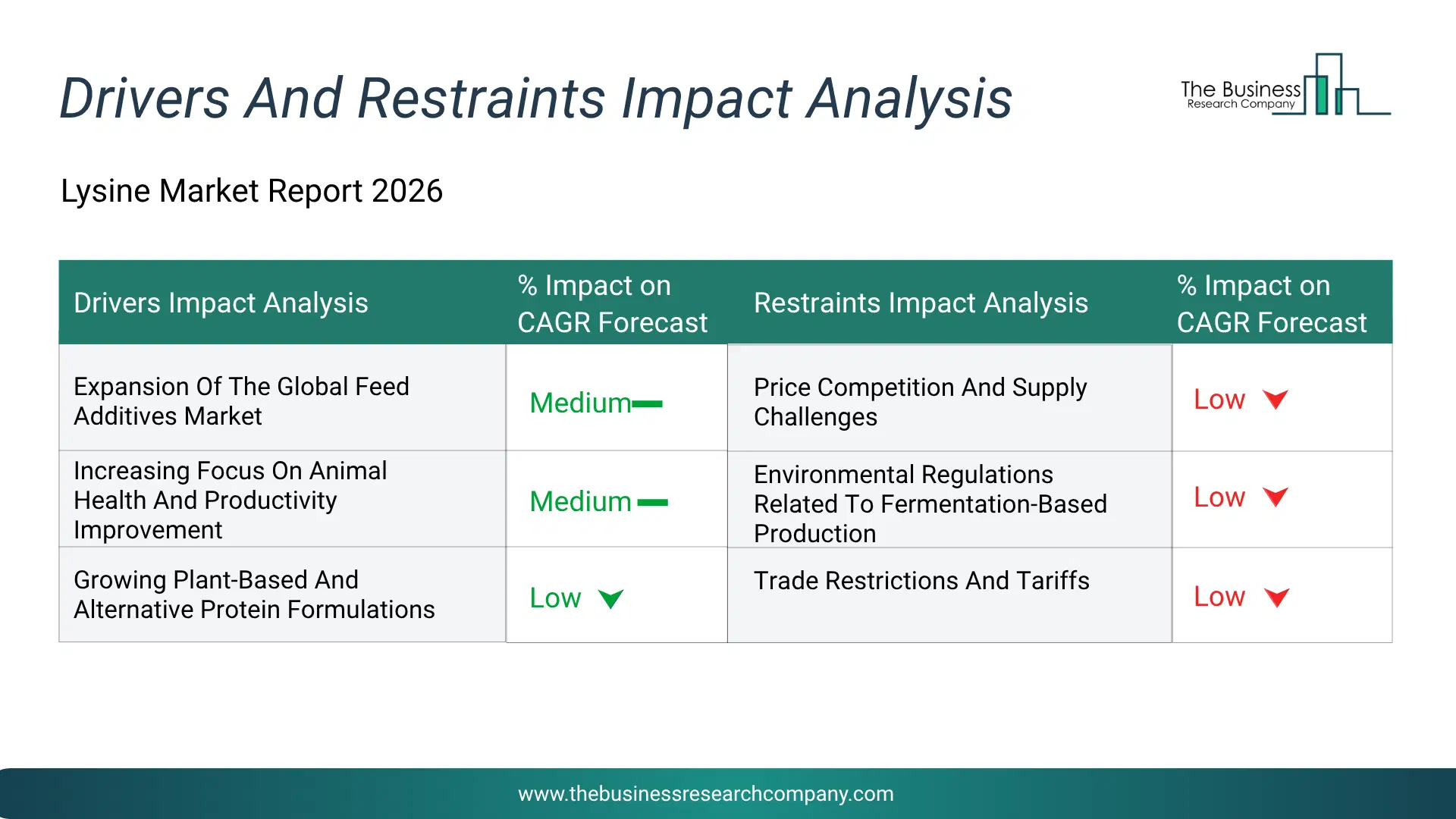
Infographic Chart Showing Key Market Drivers Analysis And Restraints For Lysine Market
The chart presents an impact analysis of key drivers and restraints, quantifying their relative influence on the market's growth rate and helping assess the balance between growth enablers and limiting factors. This chart offers a high-level perspective; the full report contains more detailed insights.
How Will The Drivers Impact Growth In The Global Lysine Market?
• Expansion Of The Global Feed Additives Market (Medium) – During the forecast period, the expansion of the global feed additives are expected propel growth in the lysine market. The rapid expansion of the global feed additives industry facilitates wider availability of lysine-enriched premixes and concentrates. Enhanced distribution channels, new product launches and technological improvements in feed processing allow producers to integrate lysine more effectively. Increasing regulatory approvals and international collaborations also streamline adoption across regions. These developments enable consistent supplementation, supporting productivity and overall health in livestock and poultry. The expansion of the global feed additives market growth contribution during the forecast period in 2025 is 1.5%. • Increasing Focus On Animal Health And Productivity Improvement (Medium) – During the forecast period, the increasing focus on animal health and productivity improvement is expected to propel growth in the lysine market. Intensified focus on animal health and productivity encourages the use of lysine to prevent growth deficiencies and optimize feed conversion ratios. Livestock producers are increasingly monitoring performance indicators, requiring precise amino acid supplementation for reproductive success, weight gain and immunity. Veterinary guidance and precision feeding practices emphasize lysine inclusion as a key nutrient to sustain high-yield operations. Enhanced awareness of health management strategies strengthens its role in maintaining robust and productive herds. The increasing focus on animal health and productivity improvement growth contribution during the forecast period in 2025 is 1.2%. • Growing Plant-Based And Alternative Protein Formulations (Low) – During the forecast period, the expansion of growing plant-based and alternative protein formulations is expected to propel growth in the lysine market. Development of plant-based and alternative protein blends offers opportunities to enrich feed with essential amino acids like lysine to meet livestock and aquaculture requirements. Innovations in pea, lentil and insect-based proteins necessitate lysine fortification to achieve balanced diets. Manufacturers are formulating specialized products to improve digestibility, feed efficiency and muscle development. The shift toward diversified protein sources in nutrition strategies amplifies reliance on lysine as a critical additive for growth and performance optimization. The growing plant-based and alternative protein formulations growth contribution during the forecast period in 2025 is 0.8%. • Rising Focus Towards Legumes And Soy Products Intake (Low) – During the forecast period, the rising focus towards legumes and soy products intake is expected to driver lysine market. Rising consumption of protein-rich legumes and soy products is driving the use of lysine in animal nutrition, as these ingredients naturally support amino acid balance. Feed formulations increasingly incorporate soybean meal and pulses to enhance growth, reproductive performance and immune function in livestock and poultry. The nutritional profile of these crops complements lysine supplementation, ensuring optimal protein utilization. Consumer interest in sustainable and plant-based protein further encourages their adoption, indirectly boosting lysine integration in feed. The rising focus towards legumes and soy products intake growth contribution during the forecast period in 2025 is 0.5%.How Will The Restraints Impact Growth In The Global Lysine Market?
• Price Competition And Supply Challenges (Medium) – During the forecast period, price competition and supply challenges is restricting the growth of the lysine market. Intense rivalry among lysine manufacturers pushes selling prices downward, squeezing profit margins and limiting funds for capacity expansion or technological upgrades. Supply chain disruptions, including raw material shortages or logistics bottlenecks, exacerbate the situation by creating imbalances between production and demand. Together, these factors can cause instability in availability, making it difficult for producers to maintain consistent supply levels and invest in growth initiatives. Growth affected by the price competition and supply challenges during the forecast period in 2025 is -0.8%. • Environmental Regulations Related To Fermentation-Based Production (Medium) – During the forecast period, environmental regulations related to fermentation-based production are restricting the growth of the lysine market. Stricter environmental laws on waste management, emissions and water usage increase operational costs for lysine producers using fermentation processes. Compliance often requires investment in advanced treatment systems, slowing down production expansion. These regulations can also limit the number of feasible production sites, reduce overall output and create uncertainties in long-term planning. Small and mid-sized manufacturers may struggle more, as they lack resources for rapid adaptation, making it harder to meet growing demand efficiently. Growth affected by the environmental regulations related to fermentation-based production during the forecast period in 2025 is -0.5%. • Trade Restrictions And Tariffs (Low) – During the forecast period, the trade restrictions and tariffs is restricting the growth of the lysine market. Import-export barriers and tariffs on raw materials or finished lysine restrict cross-border flows, increasing costs for buyers and producers. Such measures may force manufacturers to rely on costlier local inputs or alternative sourcing strategies, reducing production efficiency. Additionally, geopolitical tensions or sudden policy changes create uncertainty in international transactions, discouraging long-term contracts and investment. Overall, these constraints can slow global expansion and affect the scalability of operations. Growth affected by the trade restrictions and tariffs during the forecast period in 2025 is -0.3%.Key Players In The Global Lysine Market
Major companies operating in the lysine market are CJ CheilJedang Corporation, Ajinomoto Co Inc, Archer Daniels Midland Company, Evonik Industries AG, Meihua Holdings Group Co Ltd, Fufeng Group Limited, COFCO Biochemical Anhui Co Ltd, Shandong Eppen Biotech Co Ltd, Ningxia Eppen Biotech Co Ltd, Changchun Dacheng Group, Shandong Shouguang Juneng Group Golden Corn Co Ltd, East Hope Group, Cargill Inc, Bluestar Adisseo Company, Novus International Inc, Pancosma SA, Biomin Holding GmbH, BASF SE, Zhejiang NHU Co Ltd, Qilu Synva Biological Technology Co Ltd, Shaanxi Sciphar Biotechnology Co Ltd, Chia Tai Group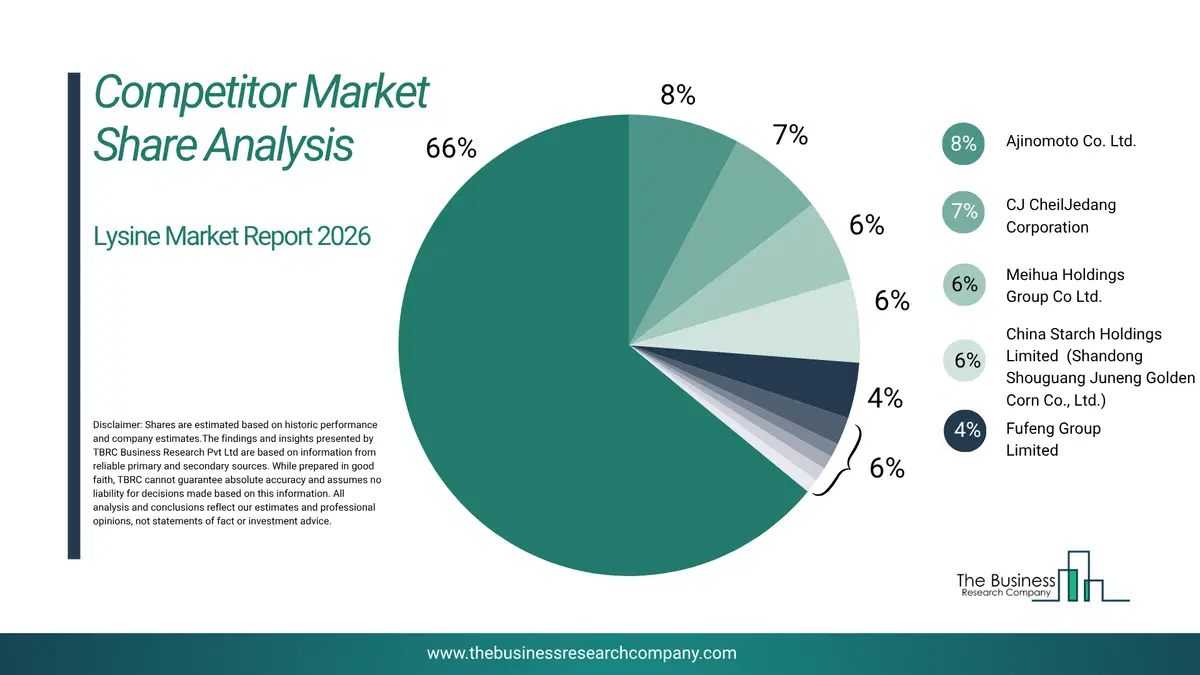
This chart is for illustrative purposes; the full report includes a detailed competitor analysis and comprehensive overview of the top 10 companies in the market.
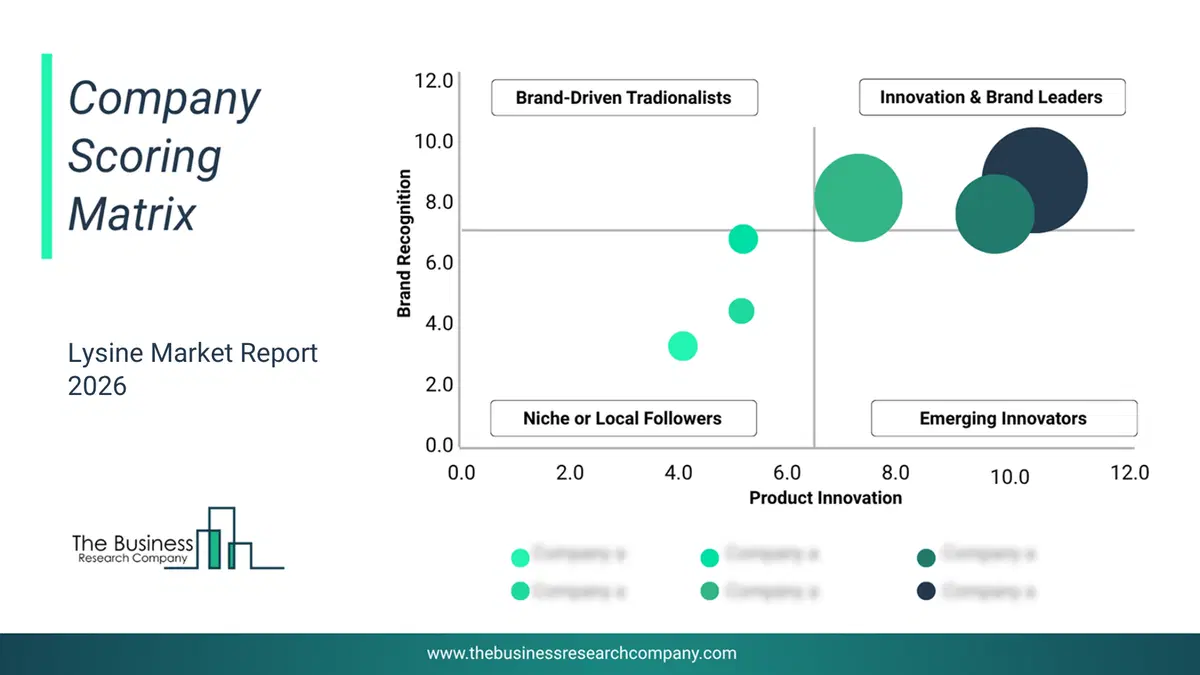
This chart maps companies by product innovation and brand strength, with bubble size indicating relative revenue, helping identify market leaders, challengers, and niche players. This is an illustrative chart; the full report provides a complete and accurate competitive analysis.
Global Lysine Market Trends and Insights
Major companies operating in the lysine sector are focused on developing innovative products such as Biolys to strengthen their position in the market. Biolys is a highly effective and reliable source of lysine that enables unsurpassed precision in balancing amino acids. For instance, in May 2023, Evonik Industries AG, a Germany-based specialty chemicals company launched Biolys. This product meets the requirements for the essential amino acid L-lysine because it contains a higher proportion of L-lysine than is typically found in comparable products. With its excellent handling and processing properties, Biolys is a high bulk density, free-flowing granulate. Animals of all kinds can biologically access it since it is produced without using any animal byproducts. Additional essential amino acids and phosphorus are also present in the product.What Are Latest Mergers And Acquisitions In The Lysine Market?
In July 2024, Avril Group, a France‑based agro-industrial company, acquired Metex Nøøvistago for an undisclosed amount. With this acquisition, Avril seeks to secure and revive a European fermentation‑based amino‑acid production capacity ensuring regional supply sovereignty and stabilizing supply of critical feed‑grade amino acids (notably lysine) amid global competition and imports. Metex Nøøvistago is a France‑based company that specializes in providing essential amino acids for animal nutrition, manufactured lysine at its Amiens facility.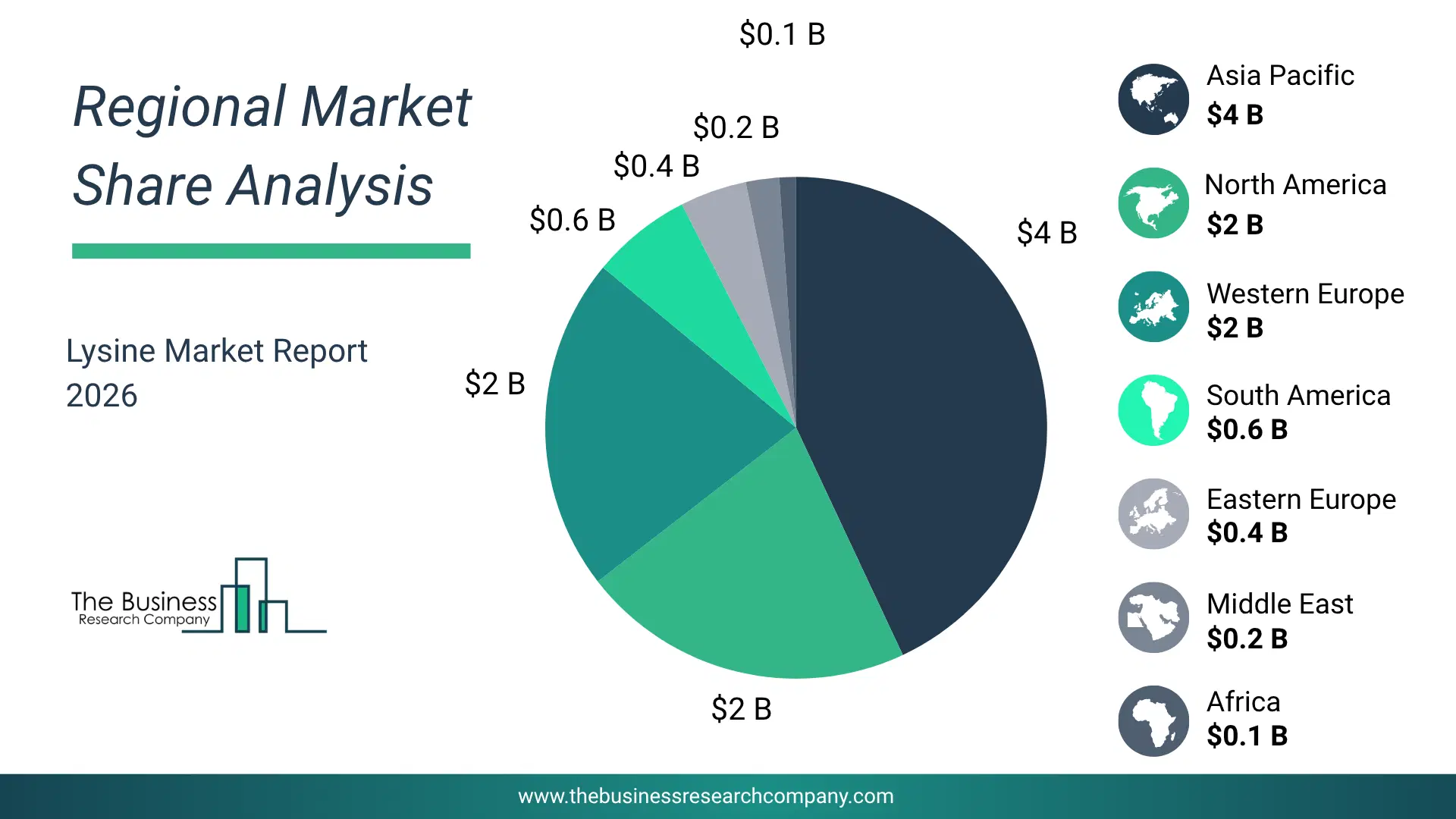
Regional Outlook
Asia-Pacific was the largest region in the lysine market in 2025. The regions covered in this market report are Asia-Pacific, South East Asia, Western Europe, Eastern Europe, North America, South America, Middle East and Africa. The countries covered in this market report are Australia, Brazil, China, France, Germany, India, Indonesia, Japan, Taiwan, Russia, South Korea, UK, USA, Italy, Spain, CanadaWhat Defines the Lysine Market?
The lysine market consists of sales of lysine l-aspartate, lysine orotate, and lysine acetate. Values in this market are ‘factory gate’ values, that is the value of goods sold by the manufacturers or creators of the goods, whether to other entities (including downstream manufacturers, wholesalers, distributors, and retailers) or directly to end customers. The value of goods in this market includes related services sold by the creators of the goods.How is Market Value Defined and Measured?
The market value is defined as the revenues that enterprises gain from the sale of goods and/or services within the specified market and geography through sales, grants, or donations in terms of the currency (in USD unless otherwise specified). The revenues for a specified geography are consumption values that are revenues generated by organizations in the specified geography within the market, irrespective of where they are produced. It does not include revenues from resales along the supply chain, either further along the supply chain or as part of other products.
This chart presents market attractiveness based on a quantitative evaluation of growth, competition, strategic alignment, and risk, offering a clear view of opportunity areas for decision-making. This chart is for illustrative purposes; the full report contains the complete analysis.

This chart highlights the Total Addressable Market (TAM) by estimating the maximum revenue opportunity using an assumption-driven approach, supporting strategic planning and opportunity sizing across markets. The chart is illustrative; the full report provides a more comprehensive analysis.
What Key Data and Analysis Are Included in the Lysine Market Report 2026?
The lysine market research report is one of a series of new reports from The Business Research Company that provides market statistics, including industry global market size, regional shares, competitors with the market share, detailed market segments, market trends and opportunities, and any further data you may need to thrive in the lysine industry. The market research report delivers a complete perspective of everything you need, with an in-depth analysis of the current and future state of the industry.Lysine Market Report Forecast Analysis
| Report Attribute | Details |
|---|---|
| Market Size Value In 2026 | $9.84 billion |
| Revenue Forecast In 2030 | $13.24 billion |
| Growth Rate | CAGR of 6.9% from 2026 to 2030 |
| Base Year For Estimation | 2025 |
| Actual Estimates/Historical Data | 2020-2025 |
| Forecast Period | 2026 - 2030 - 2035 |
| Market Representation | Revenue in USD Billion and CAGR from 2026 to 2030 |
| Segments Covered | Type, Grade, Form, Application |
| Regional Scope | Asia-Pacific, Western Europe, Eastern Europe, North America, South America, Middle East, Africa |
| Country Scope | The countries covered in the report are Australia, Brazil, China, France, Germany, India, Indonesia, Japan, Taiwan, Russia, South Korea, UK, USA, Canada, Italy, Spain. |
| Key Companies Profiled | CJ CheilJedang Corporation, Ajinomoto Co Inc, Archer Daniels Midland Company, Evonik Industries AG, Meihua Holdings Group Co Ltd, Fufeng Group Limited, COFCO Biochemical Anhui Co Ltd, Shandong Eppen Biotech Co Ltd, Ningxia Eppen Biotech Co Ltd, Changchun Dacheng Group, Shandong Shouguang Juneng Group Golden Corn Co Ltd, East Hope Group, Cargill Inc, Bluestar Adisseo Company, Novus International Inc, Pancosma SA, Biomin Holding GmbH, BASF SE, Zhejiang NHU Co Ltd, Qilu Synva Biological Technology Co Ltd, Shaanxi Sciphar Biotechnology Co Ltd, Chia Tai Group |
| Customization Scope | Request for Customization |
| Pricing And Purchase Options | Explore Purchase Options |