
Odor Control System Market Report 2026
Global Outlook – By Type (Chemical Odor Control System, Biological Odor Control System), By Installation Type (Fixed Odor Control Systems, Portable Odor Control Systems), By Application (Waste Treatment Facilities, Food And Beverage Industry, Pulp And Paper, Chemical And Petrochemical, Other Applications) – Market Size, Trends, Strategies, and Forecast to 2030
Odor Control System Market Overview
• Odor Control System market size has reached to $6.52 billion in 2025 • Expected to grow to $9.08 billion in 2030 at a compound annual growth rate (CAGR) of 6.8% • Growth Driver: Surge In Industrialization Fueling The Growth Of The Market Due To Expanding Manufacturing Activities And Urban Population Growth • Market Trend: Innovative Biological Solutions Revolutionize Hydrogen Sulfide Removal In Wastewater Treatment • North America was the largest region in 2025 and Asia-Pacific is the fastest growing region.What Is Covered Under Odor Control System Market?
Odor control system refers to a set of technologies and processes designed to detect, neutralize, or eliminate unpleasant or harmful odors from industrial, commercial, or municipal environments. These systems commonly utilize methods such as chemical scrubbers, activated carbon filters, bio filters, or thermal oxidizers to ensure air quality compliance and enhance environmental safety. The main types of odor control systems include physical odor control systems, chemical odor control systems, and biological odor control systems. Physical odor control systems refer to methods that remove or mask odors using physical processes such as filtration, adsorption, or oxidation without chemical reactions. Various installation types include fixed odor control systems and portable odor control systems and are applied for waste treatment facilities, the food and beverage industry, pulp and paper, chemical and petrochemical, and others.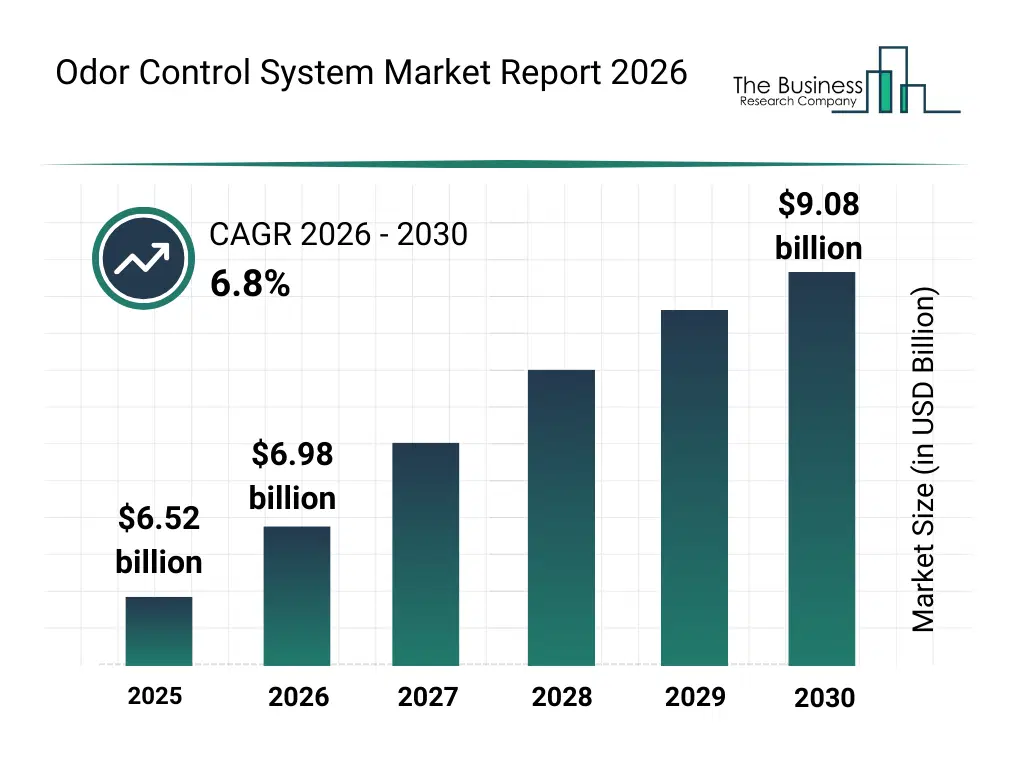
What Is The Odor Control System Market Size and Share 2026?
The odor control system market size has grown strongly in recent years. It will grow from $6.52 billion in 2025 to $6.98 billion in 2026 at a compound annual growth rate (CAGR) of 7.1%. The growth in the historic period can be attributed to industrial air quality regulations, expansion of wastewater treatment facilities, food processing odor management needs, chemical industry emissions control, municipal waste management growth.What Is The Odor Control System Market Growth Forecast?
The odor control system market size is expected to see strong growth in the next few years. It will grow to $9.08 billion in 2030 at a compound annual growth rate (CAGR) of 6.8%. The growth in the forecast period can be attributed to stricter environmental regulations, urbanization driven odor mitigation demand, adoption of smart odor monitoring, expansion of industrial manufacturing, sustainability focused infrastructure investments. Major trends in the forecast period include adoption of advanced biofiltration systems, integration of real time odor monitoring, growth of portable odor control solutions, increased use of activated carbon technologies, rising demand for regulatory compliance systems.Tariff Impact On Odor Control System Market
Tariffs have impacted the odor control system market by increasing costs of imported filtration media, chemical reagents, and monitoring components. Fixed and large scale systems used in industrial applications are most affected, particularly in asia pacific regions. Elevated system costs have influenced project budgets and timelines. At the same time, tariffs are supporting localized manufacturing and innovation in cost efficient odor control technologies.
Global Odor Control System Market Segmentation
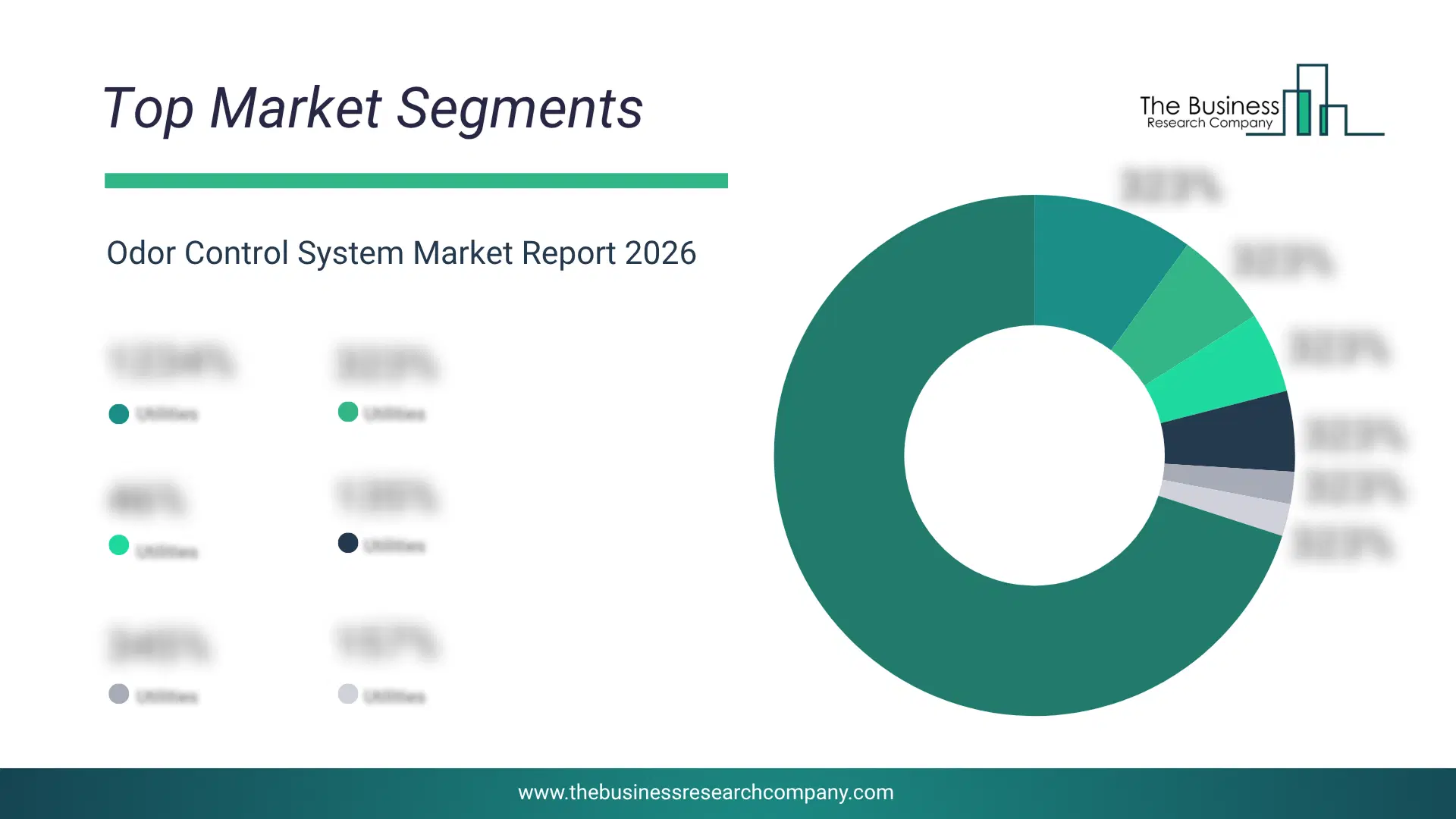
1) By Type: Chemical Odor Control System, Biological Odor Control System 2) By Installation Type: Fixed Odor Control Systems, Portable Odor Control Systems 3) By Application: Waste Treatment Facilities, Food And Beverage Industry, Pulp And Paper, Chemical And Petrochemical, Other Applications Subsegments: 1) By Chemical Odor Control System: Chemical Scrubbers, Ozonation Systems, Chlorination Systems, Chemical Neutralizers, Catalytic Oxidation 2) By Biological Odor Control System: Biofilters, Bioscrubbers, Biotrickling Filters, Enzyme-Based SystemsWhat Is The Driver Of The Odor Control System Market?
The increase in demand for industrialization is expected to propel the growth of the odor control systems market going forward. Industrialization refers to the process of transforming an economy from primarily agricultural to one based on manufacturing and industry. The rise in industrialization is due to the urban population growth, as increasing demand for infrastructure and services fuels the expansion of manufacturing and industrial activities. Odor control systems support industrialization by ensuring a cleaner and safer working environment, reducing harmful emissions, and enabling compliance with environmental regulations, thereby facilitating sustainable industrial growth. For instance, in July 2023, according to the report published by Statistics Canada, a Canada-based government agency, nearly 9.0% of manufacturing businesses planned to expand to other locations within the same province, a figure comparable to those in administrative and support, waste management, and remediation services (9.1%). Additionally, over 5.5% of manufacturing businesses had plans to expand internationally, with similar aspirations reported by 5.3% of businesses in arts, entertainment, and recreation, and 4.5% in wholesale trade. Therefore, the increase in demand for industrialization is driving the growth of the odor control systems industry.Key Players In The Global Odor Control System Market
Major companies operating in the odor control system market are Veolia Environnement S.A., Ecolab Inc., DuPont de Nemours, Inc., CECO Environmental Corp., Anguil Environmental Systems, Inc., Dürr Systems AG, Kuraray Co., Ltd., MANN+HUMMEL GmbH, TANN Corporation, Scotmas Limited, AER Control Systems, LLC, Tholander Ablufttechnik GmbH, Pollution Systems, Inc., Catalytic Products International, Inc., Evoqua Water Technologies LLC, Quark Glass India Pvt. Ltd., Monroe Environmental Corp., Bionomic Industries, Inc., BioAir Solutions, LLC, Camfil AB, Anguil Environmental Technologies, Inc., Environmental Integrated Solutions Ltd., Advanced Odor Control, Inc., Filtra Systems Company, LLC, Aeroex Technologies, Inc.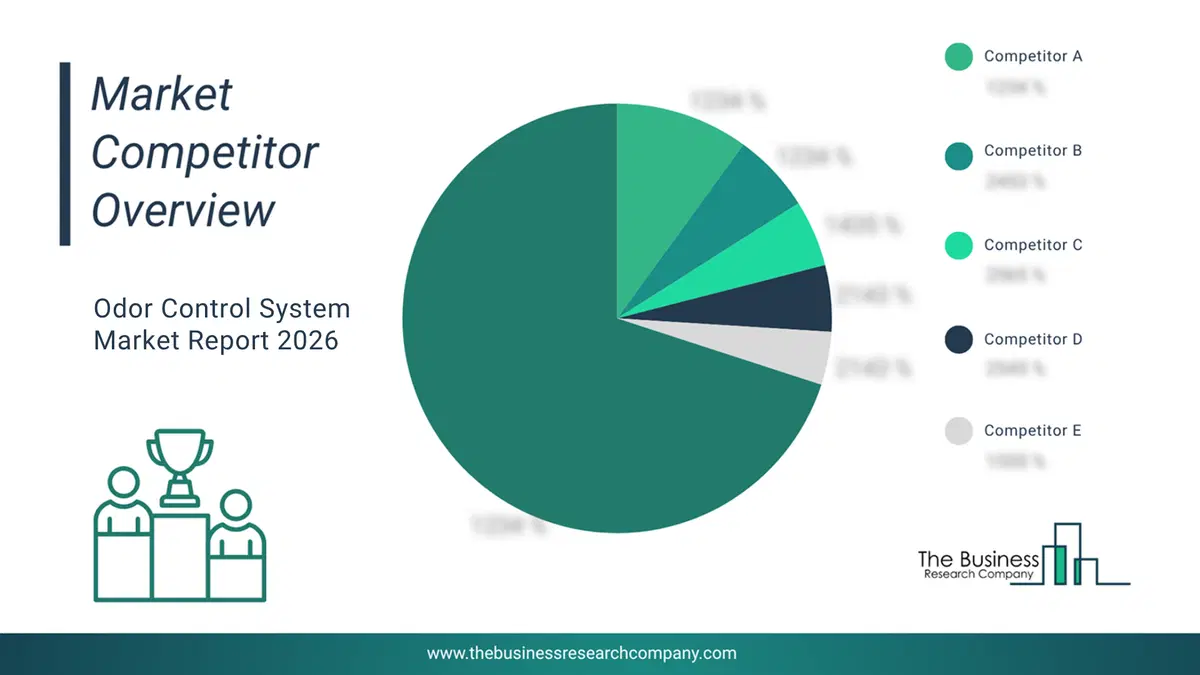
This chart is for illustrative purposes; the full report includes a detailed competitor analysis and comprehensive overview of the top 10 companies in the market.
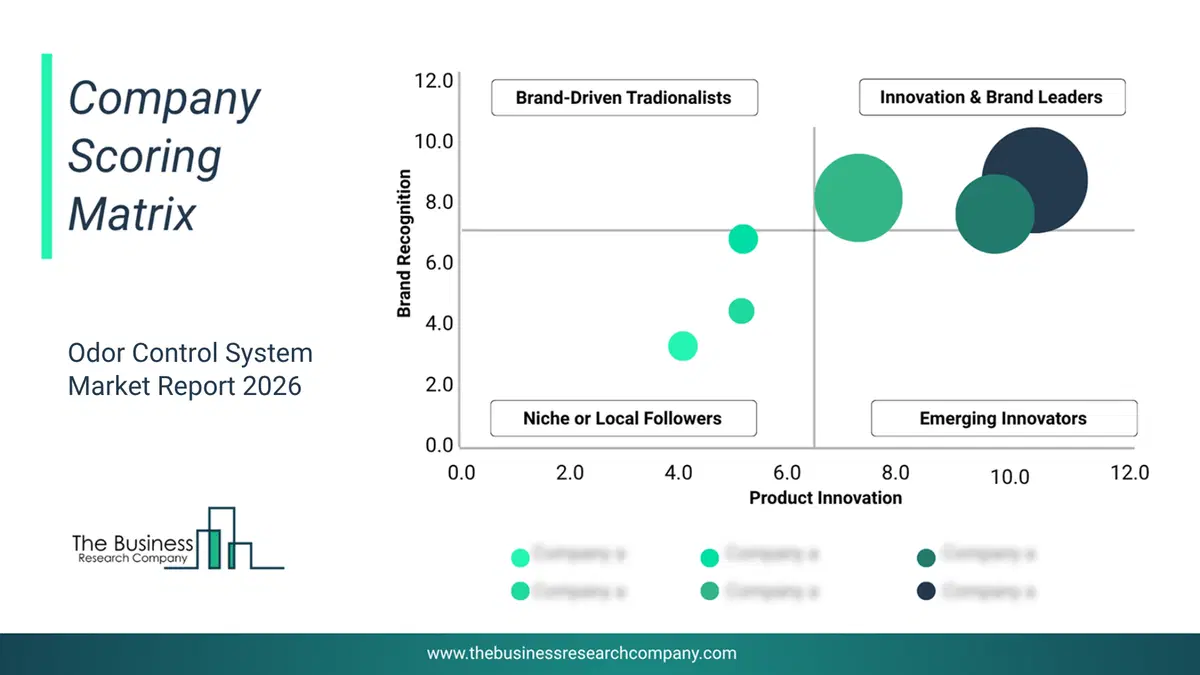
This chart maps companies by product innovation and brand strength, with bubble size indicating relative revenue, helping identify market leaders, challengers, and niche players. This is an illustrative chart; the full report provides a complete and accurate competitive analysis.
Global Odor Control System Market Trends and Insights
Major companies operating in the odor control systems market are focusing on developing advanced solutions, such as biological hydrogen sulfide removal, to enhance efficiency, reduce environmental impact, and provide safer, chemical-free solutions for industrial and municipal wastewater treatment applications. Biological hydrogen sulfide removal refers to the use of natural bacteria to convert toxic hydrogen sulfide gas into harmless substances, eliminating odors without chemicals. For instance, in September 2024, Aquacycl, a US-based wastewater treatment company, launched SulfideFix, an innovative odor control product. This technology employs a micro-aeration process to effectively eliminate odors from wastewater tanks by biologically preventing sulfide emissions. SulfideFix offers a sustainable and eco-friendly solution tailored to tackle odor issues at their source. Key industries benefiting from this technology include oil and gas, recycling, wastewater management, and large-scale food and beverage production. Its adoption addresses the critical need for reliable odor control and sulfide emission reduction across these sectors.What Are Latest Mergers And Acquisitions In The Odor Control System Market?
In February 2025, Cleanwater1, a US-based water technology company, acquired Integrity Municipal Systems (IMS) for an undisclosed amount. This acquisition expands Cleanwater1’s odor control and chemical feed solutions, strengthens its portfolio of engineered treatment systems, and enhances its offerings for the wastewater industry. Integrity Municipal Systems (IMS) is a US-based manufacturer of odor control systems, particularly for wastewater treatment plants and sewage pump stations.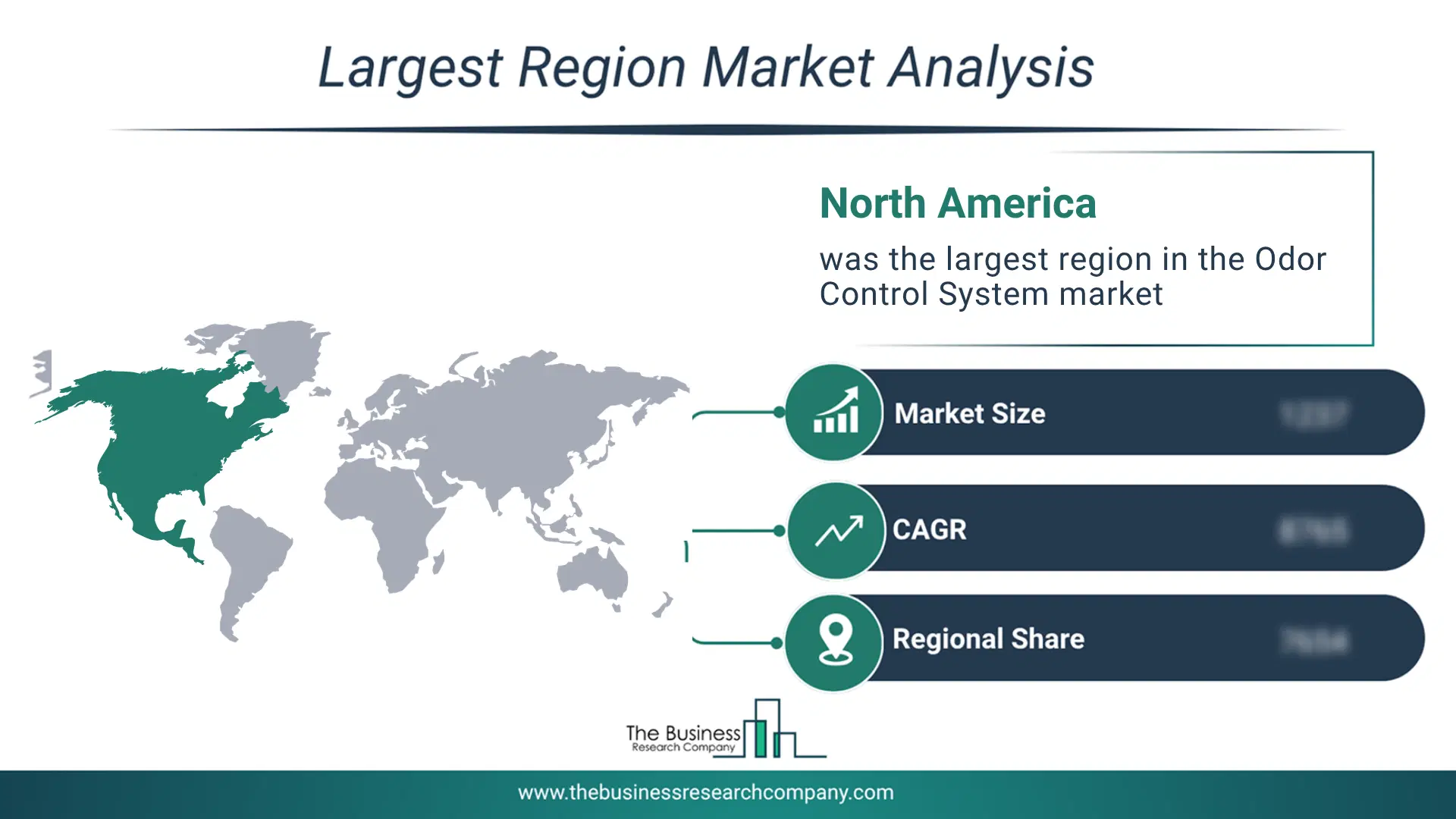
Regional Outlook
North America was the largest region in the odor control system market in 2025. Asia-Pacific is expected to be the fastest-growing region in the forecast period. The regions covered in this market report are Asia-Pacific, South East Asia, Western Europe, Eastern Europe, North America, South America, Middle East, Africa The countries covered in this market report are Australia, Brazil, China, France, Germany, India, Indonesia, Japan, Taiwan, Russia, South Korea, UK, USA, Canada, Italy, Spain.What Defines the Odor Control System Market?
The odor control system market consists of sales of electrostatic precipitators, bio-scrubbers, neutralizing chemicals, and masking agents. Values in this market are ‘factory gate’ values, that is the value of goods sold by the manufacturers or creators of the goods, whether to other entities (including downstream manufacturers, wholesalers, distributors and retailers) or directly to end customers. The value of goods in this market includes related services sold by the creators of the goods.How is Market Value Defined and Measured?
The market value is defined as the revenues that enterprises gain from the sale of goods and/or services within the specified market and geography through sales, grants, or donations in terms of the currency (in USD unless otherwise specified). The revenues for a specified geography are consumption values that are revenues generated by organizations in the specified geography within the market, irrespective of where they are produced. It does not include revenues from resales along the supply chain, either further along the supply chain or as part of other products.
This chart presents market attractiveness based on a quantitative evaluation of growth, competition, strategic alignment, and risk, offering a clear view of opportunity areas for decision-making. This chart is for illustrative purposes; the full report contains the complete analysis.

This chart highlights the Total Addressable Market (TAM) by estimating the maximum revenue opportunity using an assumption-driven approach, supporting strategic planning and opportunity sizing across markets. The chart is illustrative; the full report provides a more comprehensive analysis.
What Key Data and Analysis Are Included in the Odor Control System Market Report 2026?
The odor control system market research report is one of a series of new reports from The Business Research Company that provides market statistics, including industry global market size, regional shares, competitors with the market share, detailed market segments, market trends and opportunities, and any further data you may need to thrive in the odor control system industry. The market research report delivers a complete perspective of everything you need, with an in-depth analysis of the current and future state of the industry.Odor Control System Market Report Forecast Analysis
| Report Attribute | Details |
|---|---|
| Market Size Value In 2026 | $6.98 billion |
| Revenue Forecast In 2030 | $9.08 billion |
| Growth Rate | CAGR of 6.8% from 2026 to 2030 |
| Base Year For Estimation | 2025 |
| Actual Estimates/Historical Data | 2020-2025 |
| Forecast Period | 2026 - 2030 |
| Market Representation | Revenue in USD Billion and CAGR from 2026 to 2030 |
| Segments Covered | Type, Installation Type, Application |
| Regional Scope | Asia-Pacific, Western Europe, Eastern Europe, North America, South America, Middle East, Africa |
| Key Companies Profiled | Veolia Environnement S.A., Ecolab Inc., DuPont de Nemours, Inc., CECO Environmental Corp., Anguil Environmental Systems, Inc., Dürr Systems AG, Kuraray Co., Ltd., MANN+HUMMEL GmbH, TANN Corporation, Scotmas Limited, AER Control Systems, LLC, Tholander Ablufttechnik GmbH, Pollution Systems, Inc., Catalytic Products International, Inc., Evoqua Water Technologies LLC, Quark Glass India Pvt. Ltd., Monroe Environmental Corp., Bionomic Industries, Inc., BioAir Solutions, LLC, Camfil AB, Anguil Environmental Technologies, Inc., Environmental Integrated Solutions Ltd., Advanced Odor Control, Inc., Filtra Systems Company, LLC, Aeroex Technologies, Inc. |
| Customization Scope | Request for Customization |
| Pricing And Purchase Options | Explore Purchase Options |