
Paleo Foods Market Report 2026
Global Outlook – By Type (Vegetables And Fruits, Seeds, Nuts, Meat, Healthy Oil Or Fat), By Distribution Channel (Supermarkets And Hypermarkets, Convenience Stores, Specialist Retailers, Online Retailers, Other Distribution Channels), By End Use (Cereals, Bakery Products, Snacks, Other End Uses) – Market Size, Trends, Strategies, and Forecast to 2030
Paleo Foods Market Overview
• Paleo Foods market size has reached to $11.38 billion in 2025 • Expected to grow to $14.8 billion in 2030 at a compound annual growth rate (CAGR) of 5.4% • Growth Driver: Rising Demand For Fresh And Natural Foods Fueling The Growth Of The Market Due To Increasing Health Awareness • Market Trend: Innovation In Sustainable Food Development Driven By Plant-Based Ingredient Advancements • North America was the largest region in 2025 and Asia-Pacific is the fastest growing region.What Is Covered Under Paleo Foods Market?
Paleo foods refer to foods that align with the dietary habits believed to have been followed by early humans during the paleolithic era, before the advent of agriculture and modern food processing. The paleo diet focuses on whole, unprocessed foods that could be hunted, fished, or gathered. They are typically high in protein and fiber while being low in carbohydrates and additives. The main types of paleo food are vegetables and fruits, seeds, nuts, meat, and healthy oil or fat. Vegetables and fruits are edible plant parts rich in vitamins, minerals, fiber, and antioxidants essential for overall health. It is distributed through supermarkets and hypermarkets, convenience stores, specialist retailers, online retailers, and others, and is used for cereals, bakery products, snacks, and others.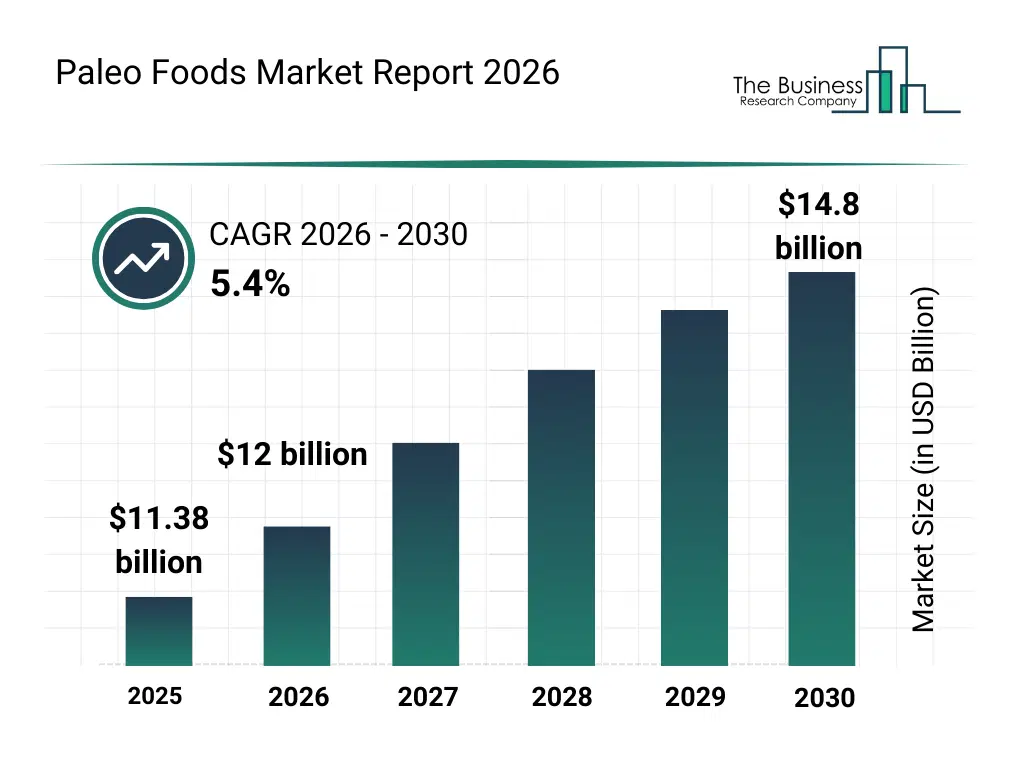
What Is The Paleo Foods Market Size and Share 2026?
The paleo foods market size has grown strongly in recent years. It will grow from $11.38 billion in 2025 to $12 billion in 2026 at a compound annual growth rate (CAGR) of 5.5%. The growth in the historic period can be attributed to growing consumer interest in ancestral diets, expansion of health-focused food retail, increased awareness of processed food risks, growth of specialty food brands, rising demand for natural ingredients.What Is The Paleo Foods Market Growth Forecast?
The paleo foods market size is expected to see strong growth in the next few years. It will grow to $14.8 billion in 2030 at a compound annual growth rate (CAGR) of 5.4%. The growth in the forecast period can be attributed to increasing adoption of personalized diet plans, rising focus on functional and nutrient-dense foods, expansion of online specialty food sales, growing innovation in paleo-approved products, increasing health and fitness awareness. Major trends in the forecast period include increasing demand for clean-label foods, rising popularity of high-protein diets, expansion of paleo snack offerings, growing preference for grain-free products, enhanced focus on whole and natural ingredients.
Global Paleo Foods Market Segmentation
1) By Type: Vegetables And Fruits, Seeds, Nuts, Meat, Healthy Oil Or Fat 2) By Distribution Channel: Supermarkets And Hypermarkets, Convenience Stores, Specialist Retailers, Online Retailers, Other Distribution Channels 3) By End Use: Cereals, Bakery Products, Snacks, Other End Uses Subsegments: 1) By Vegetables And Fruits: Leafy Greens, Cruciferous Vegetables, Root Vegetables, Berries, Citrus Fruits, Tropical Fruits, Apples And Pears 2) By Seeds: Chia Seeds, Flax Seeds, Pumpkin Seeds, Sunflower Seeds, Hemp Seeds, Sesame Seeds 3) By Nuts: Almonds, Walnuts, Cashews, Pecans, Brazil Nuts, Macadamia Nuts, Hazelnuts 4) By Meat: Grass-Fed Beef, Free-Range Poultry, Game Meat, Pork, Lamb, Organ Meats, Processed Paleo-Approved Meat 5) By Healthy Oil Or Fat: Coconut Oil, Olive Oil, Avocado Oil, Ghee, Animal Fats, Nut OilsWhat Is The Driver Of The Paleo Foods Market?
The rising demand for fresh and natural foods is projected to propel the growth of the paleo foods market going forward. Fresh and natural foods emphasize health, purity, and natural origins and are minimally processed items free of artificial ingredients. Demand for fresh and natural foods is rising as people seek healthier lifestyles and want to avoid processed products that may contain harmful additives, which they believe can negatively affect their long-term health and well-being. The growing demand for fresh and natural foods positively impacts paleo food as it encourages more people to choose diets centered around whole, unprocessed ingredients, which are the foundation of paleo eating. For instance, in December 2024, according to the Department for Environment, Food and Rural Affairs, a UK-based government department, in the United Kingdom, the proportion of fresh fruit provided by domestic producers increased from 15% in 2021 to 16% in 2023. Therefore, the rising demand for fresh and natural foods is driving the growth of the paleo foods industry.Key Players In The Global Paleo Foods Market
Major companies operating in the paleo foods market are Sun Basket Inc., Bob's Red Mill, Hungryroot Inc., Pacific Foods of Oregon LLC, Thrive Market Inc., Nutiva Inc., Daily Harvest Inc, Snap Kitchen Investments LLC, Siete Family Foods LLC, Primal Nutrition LLC, Pete's Paleo LLC, Birch Benders LLC, Blue Mountain Organics Distribution LLC, Caveman Foods LLC, EPIC Provisions LLC, Paleo Leap, Paleo Pure Pty Ltd, Saucy Lips Foods LLC, The Paleo Foods Company Limited, True Primal LLC, Paleo India Food Enterprises Pvt. Ltd.
This chart is for illustrative purposes; the full report includes a detailed competitor analysis and comprehensive overview of the top 10 companies in the market.
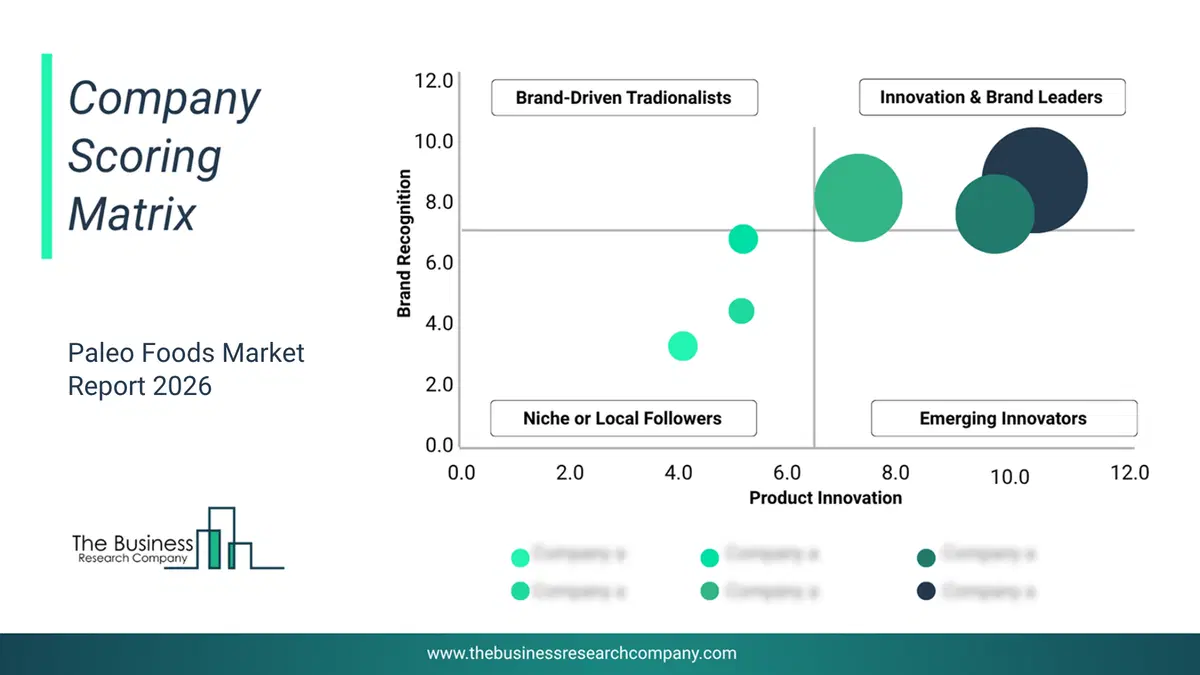
This chart maps companies by product innovation and brand strength, with bubble size indicating relative revenue, helping identify market leaders, challengers, and niche players. This is an illustrative chart; the full report provides a complete and accurate competitive analysis.
Global Paleo Foods Market Trends and Insights
Major companies operating in the paleo foods market are developing innovative products, such as plant-based ingredients, to offer healthier, more sustainable, and environmentally friendly alternatives to animal-based components. Plant-based ingredients are ingredients sourced entirely from plants, including vegetables, fruits, grains, legumes, nuts, and seeds, with no involvement of animal products. For instance, in October 2024, Revo Foods, an Austrian-based food-tech company, partnered with Paleo NV, a Belgium-based paleo food company, to develop a plant-based salmon alternative. As a result of the $2.4 million (€2.2 million) partnership, Revo Foods will enhance its plant-based salmon filet by incorporating myoglobin produced through Paleo’s precision fermentation technology. This innovation allows Revo to improve the taste, color, and nutritional profile of its 3D-structured vegan salmon, delivering a more realistic and sustainable alternative to conventional fish.What Are Latest Mergers And Acquisitions In The Paleo Foods Market?
In August 2023, Mars Incorporated, a US-based food company, acquired Kevin's Natural Foods for an undisclosed amount. As a result of the acquisition, Kevin’s Natural Foods becomes part of Mars Food & Nutrition, complementing its portfolio of well-known food brands and recent innovations. This partnership will support Kevin’s growth and innovation while helping bring its healthier, flavorful products to a broader audience. Kevin's Natural Foods is a US-based company that specializes in paleo-certified meals.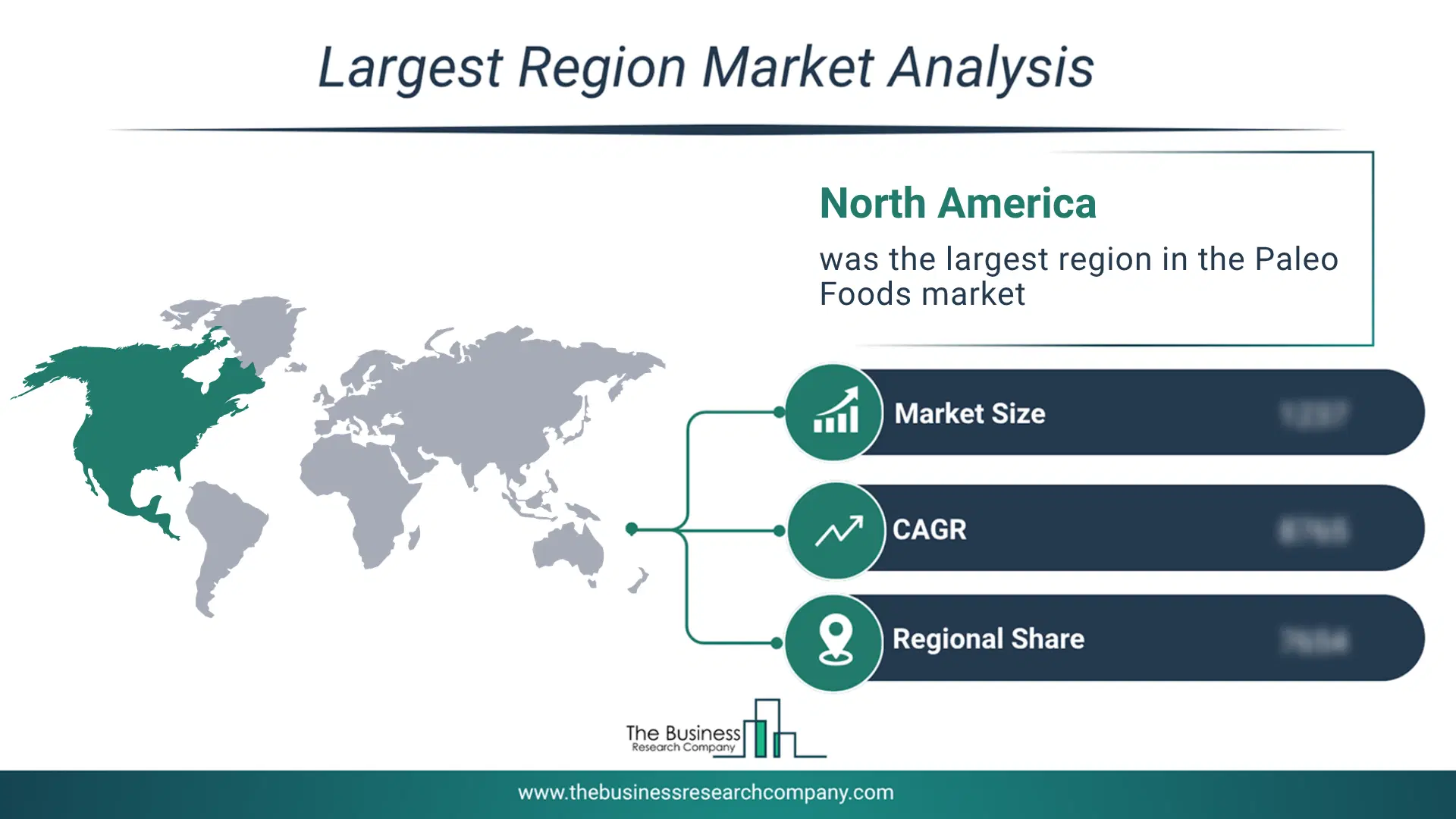
Regional Outlook
North America was the largest region in the paleo foods market in 2025. Asia-Pacific is expected to be the fastest-growing region in the forecast period. The regions covered in this market report are Asia-Pacific, South East Asia, Western Europe, Eastern Europe, North America, South America, Middle East and Africa. The countries covered in this market report are Australia, Brazil, China, France, Germany, India, Indonesia, Japan, Taiwan, Russia, South Korea, UK, USA, Italy, Spain, CanadaWhat Defines the Paleo Foods Market?
The paleo foods market consists of sales of grass-fed meats, paleo protein bars, nut butters, vegetable chips, and bone broth. Values in this market are ‘factory gate’ values, that is the value of goods sold by the manufacturers or creators of the goods, whether to other entities (including downstream manufacturers, wholesalers, distributors and retailers) or directly to end customers. The value of goods in this market includes related services sold by the creators of the goods.How is Market Value Defined and Measured?
The market value is defined as the revenues that enterprises gain from the sale of goods and/or services within the specified market and geography through sales, grants, or donations in terms of the currency (in USD unless otherwise specified). The revenues for a specified geography are consumption values that are revenues generated by organizations in the specified geography within the market, irrespective of where they are produced. It does not include revenues from resales along the supply chain, either further along the supply chain or as part of other products.
This chart presents market attractiveness based on a quantitative evaluation of growth, competition, strategic alignment, and risk, offering a clear view of opportunity areas for decision-making. This chart is for illustrative purposes; the full report contains the complete analysis.

This chart highlights the Total Addressable Market (TAM) by estimating the maximum revenue opportunity using an assumption-driven approach, supporting strategic planning and opportunity sizing across markets. The chart is illustrative; the full report provides a more comprehensive analysis.
What Key Data and Analysis Are Included in the Paleo Foods Market Report 2026?
The paleo foods market research report is one of a series of new reports from The Business Research Company that provides market statistics, including industry global market size, regional shares, competitors with the market share, detailed market segments, market trends and opportunities, and any further data you may need to thrive in the paleo foods industry. The market research report delivers a complete perspective of everything you need, with an in-depth analysis of the current and future state of the industry.Paleo Foods Market Report Forecast Analysis
| Report Attribute | Details |
|---|---|
| Market Size Value In 2026 | $12 billion |
| Revenue Forecast In 2030 | $14.8 billion |
| Growth Rate | CAGR of 5.5% from 2026 to 2030 |
| Base Year For Estimation | 2025 |
| Actual Estimates/Historical Data | 2020-2025 |
| Forecast Period | 2026 - 2030 |
| Market Representation | Revenue in USD Billion and CAGR from 2026 to 2030 |
| Segments Covered | Type, Distribution Channel, End Use |
| Regional Scope | Asia-Pacific, Western Europe, Eastern Europe, North America, South America, Middle East, Africa |
| Country Scope | The countries covered in the report are Australia, Brazil, China, France, Germany, India, Indonesia, Japan, Taiwan, Russia, South Korea, UK, USA, Canada, Italy, Spain. |
| Key Companies Profiled | Sun Basket Inc., Bob's Red Mill, Hungryroot Inc., Pacific Foods of Oregon LLC, Thrive Market Inc., Nutiva Inc., Daily Harvest Inc, Snap Kitchen Investments LLC, Siete Family Foods LLC, Primal Nutrition LLC, Pete's Paleo LLC, Birch Benders LLC, Blue Mountain Organics Distribution LLC, Caveman Foods LLC, EPIC Provisions LLC, Paleo Leap, Paleo Pure Pty Ltd, Saucy Lips Foods LLC, The Paleo Foods Company Limited, True Primal LLC, Paleo India Food Enterprises Pvt. Ltd. |
| Customization Scope | Request for Customization |
| Pricing And Purchase Options | Explore Purchase Options |