
Peer-To-Peer Dining Market Report 2026
Global Outlook – By Dining (Casual Home Dining, Fine Dining, Themed Dinners, Food Tours), By Nationality (Domestic, International), By Demographic (Male, Female, Kid), By Age Group (Below 15 Years, 16 To 25, 26 To 35, 36 To 45, 46 To 55, Above 55), By Booking Channel (Direct Bookings, Online Travel Agencies (OTAs), Other Booking Platforms) – Market Size, Trends, Strategies, and Forecast to 2030
Peer-To-Peer Dining Market Overview
• Peer-To-Peer Dining market size has reached to $6.64 billion in 2025 • Expected to grow to $8.07 billion in 2030 at a compound annual growth rate (CAGR) of 3.9% • Growth Driver: Home Cooking Growth Propels Peer-To-Peer Dining Market Expansion Forward • Market Trend: Affordable And Customizable Home-Cooked Meals Boost Peer-To-Peer Dining • North America was the largest region in 2025.What Is Covered Under Peer-To-Peer Dining Market?
Peer-to-peer dining refers to a social eating concept where individuals host meals in their homes and invite guests, often through an online platform. This allows guests to experience home-cooked meals and local culture, while hosts can earn money or make new connections. It's used for cultural exchange, unique dining experiences, and community building. The main types of dining in peer-to-peer dining are casual home dining, fine dining, themed dinners, and food tours. Casual home dining refers to informal meals enjoyed at home, often characterized by relaxed settings and simple, everyday food. Peer-to-peer dining caters to various nationalities including domestic and international, across different demographics such as male, female, and kids, and spans age groups from below 15 years, 16 to 25, 26 to 35, 36 to 45, 46 to 55, and above 55. The booking options are available through direct bookings, online travel agencies (OTAs), and others.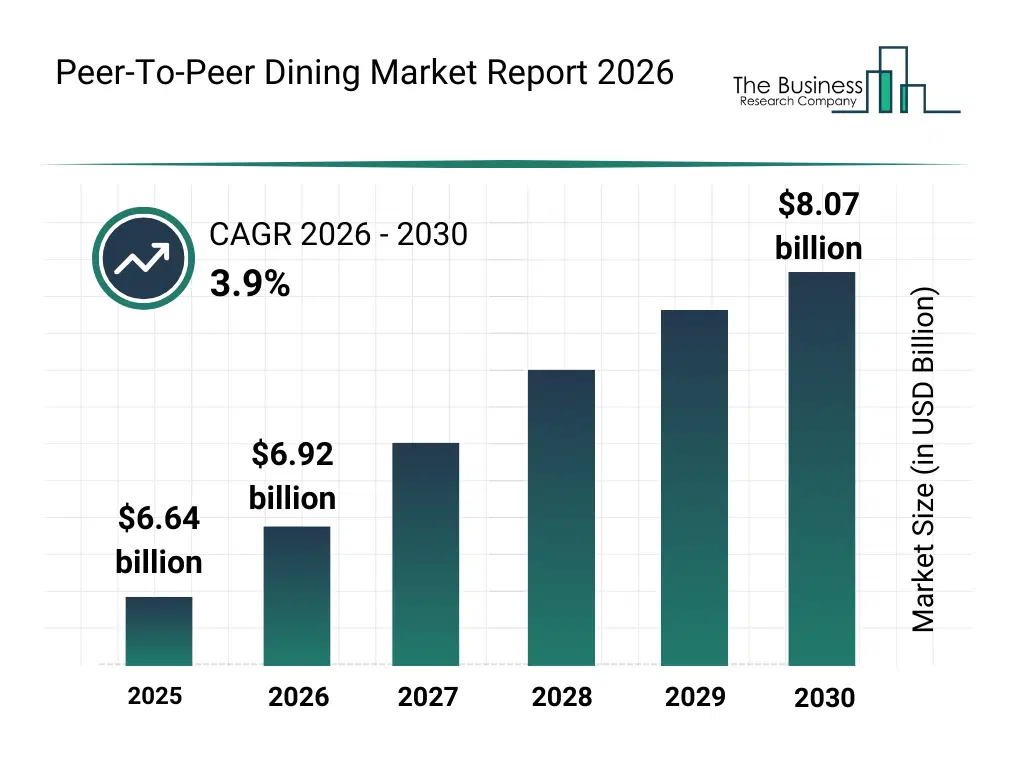
What Is The Peer-To-Peer Dining Market Size and Share 2026?
The peer-to-peer dining market size has grown steadily in recent years. It will grow from $6.64 billion in 2025 to $6.92 billion in 2026 at a compound annual growth rate (CAGR) of 4.2%. The growth in the historic period can be attributed to growth of sharing economy platforms, rising interest in cultural exchange through food, expansion of social networking applications, increasing preference for personalized dining experiences, growth of home-based entrepreneurship.What Is The Peer-To-Peer Dining Market Growth Forecast?
The peer-to-peer dining market size is expected to see steady growth in the next few years. It will grow to $8.07 billion in 2030 at a compound annual growth rate (CAGR) of 3.9%. The growth in the forecast period can be attributed to increasing demand for authentic local dining experiences, rising adoption of secure digital payment platforms, expansion of travel-related social dining, growing focus on safety and hygiene standards, increasing platform-based dining innovations. Major trends in the forecast period include growing popularity of experiential and social dining, rising use of digital platforms for meal bookings, expansion of cultural and themed home dining experiences, enhanced focus on community-based food experiences, increasing trust in peer reviews and ratings.
Global Peer-To-Peer Dining Market Segmentation
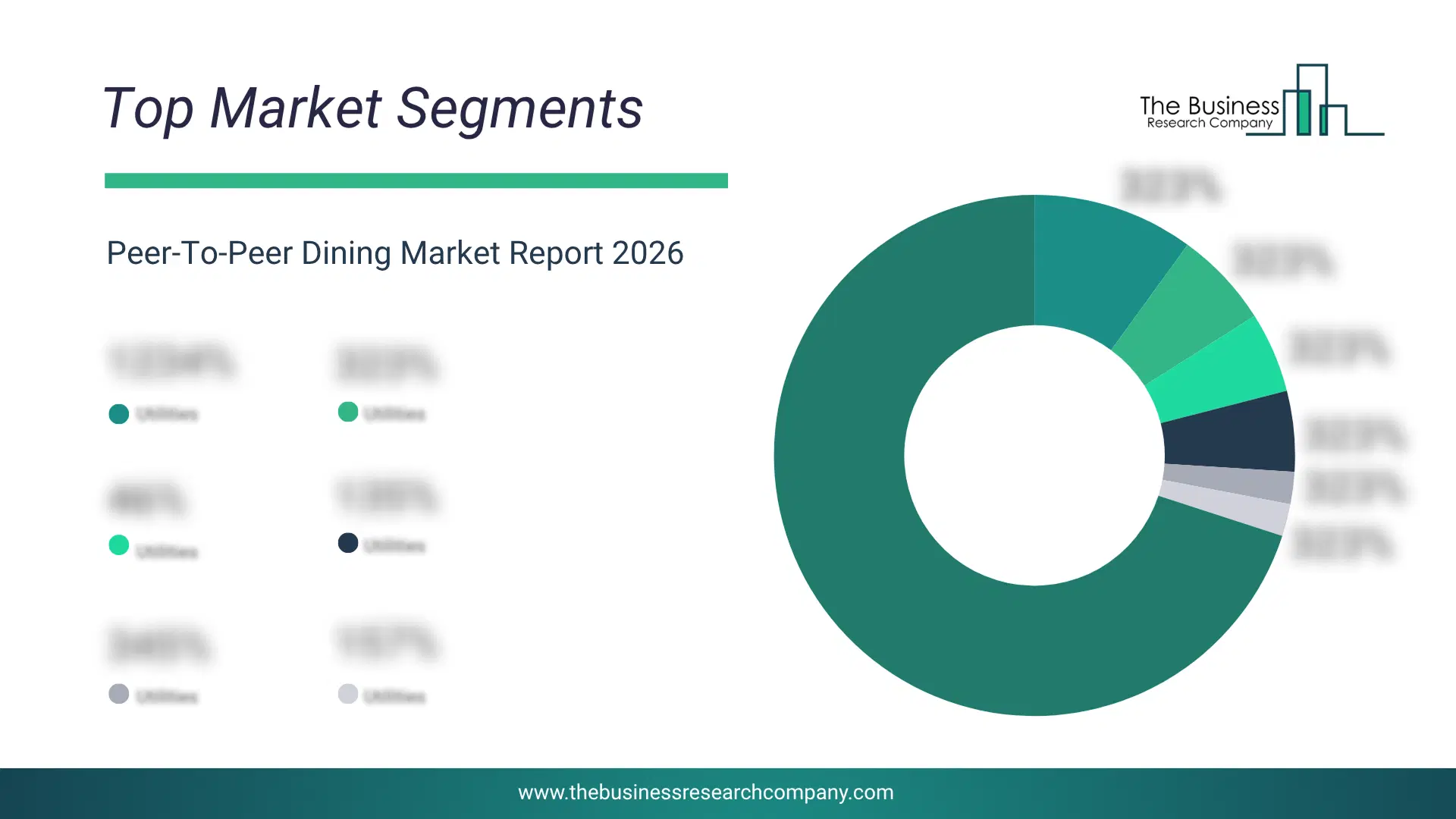
1) By Dining: Casual Home Dining, Fine Dining, Themed Dinners, Food Tours 2) By Nationality: Domestic, International 3) By Demographic: Male, Female, Kid 4) By Age Group: Below 15 Years, 16 To 25, 26 To 35, 36 To 45, 46 To 55, Above 55 5) By Booking Channel: Direct Bookings, Online Travel Agencies (OTAs), Other Booking Platforms Subsegments: 1) By Casual Home Dining: Family-Style Meals, Potluck Gatherings, Informal Cooking Classes 2) By Fine Dining: Gourmet Experiences, Chef’s Table Events, Exclusive Tasting Menus 3) By Themed Dinners: Cultural Cuisine Nights, Seasonal Celebrations, Movie or Book-Inspired Dinners 4) By Food Tours: Culinary Walks, Market Tours, Street Food ExperiencesWhat Is The Driver Of The Peer-To-Peer Dining Market?
The increase in home cooking is expected to propel the growth of the peer-to-peer dining market going forward. Home cooking refers to the practice of preparing and cooking food at home using raw ingredients and basic cooking techniques. Home cooking has gained popularity due to the increased focus on health, cost savings, and the enjoyment of preparing personalized, nutritious meals. Peer-to-peer dining promotes home cooking by connecting individuals to share home-cooked meals, fostering community and cultural exchange. For instance, in October 2024, according to the Department for Environment, Food and Rural Affairs, a UK-based government department, average weekly spending per person on food and non-alcoholic beverages at home rose from (US$ 37.5) £28.23 in FYE 2022 to (US$39.4) £29.66 in FYE 2023, reflecting a 5.1% increase. Therefore, the increase in home cooking is driving the growth of the peer-to-peer dining industry.Key Players In The Global Peer-To-Peer Dining Market
Major companies operating in the peer-to-peer dining market are Feastly, Withlocals, Traveling Spoon, The London Supper Club, EatWith, Hobnob, B'Ville Diner, Supper Club, Cookly, BonAppetour, CookUp, EatMeet, EatWithMe, FoodieTrip, Homecooked, Kitchen Surfing Inc., Secret Dinner, ShareDine, Table at Home, MealSharing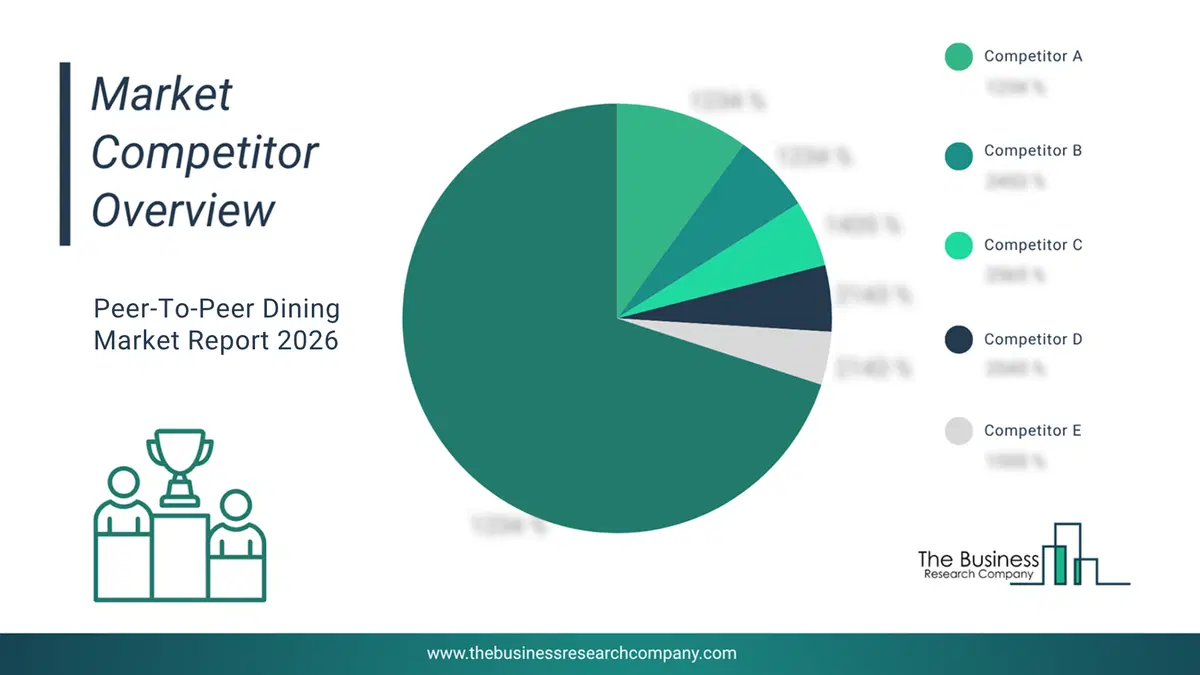
This chart is for illustrative purposes; the full report includes a detailed competitor analysis and comprehensive overview of the top 10 companies in the market.
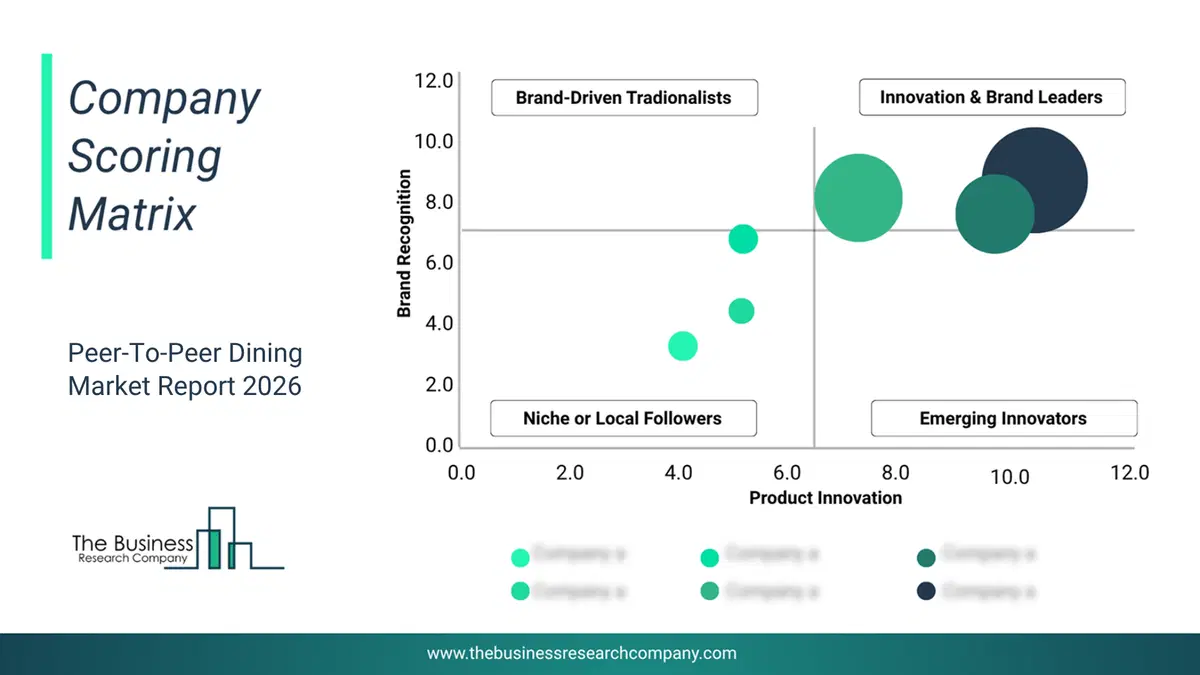
This chart maps companies by product innovation and brand strength, with bubble size indicating relative revenue, helping identify market leaders, challengers, and niche players. This is an illustrative chart; the full report provides a complete and accurate competitive analysis.
Global Peer-To-Peer Dining Market Trends and Insights
Major companies operating in the peer-to-peer dining market are focused on developing innovative offerings, such as home-cooked meal service, to provide affordable, fresh, and wholesome home-style meals. A home-cooked meal service involves individuals or platforms offering meals prepared in private residences for consumption by others, typically emphasizing homemade, local, or personalized culinary experiences. For instance, in February 2023, Zomato, an India-based online restaurant guide and food ordering platform, launched a new service called Zomato Everyday, which aims to provide home-cooked meals starting at an affordable price. This initiative is designed to cater to individuals who live away from their families and often miss the comfort of home-cooked food. The meals will be prepared by real home chefs, ensuring a taste reminiscent of home cooking. This service replaces Zomato's earlier 10-minute delivery feature, reflecting a strategic shift towards offering wholesome, home-style meals at competitive prices.What Are Latest Mergers And Acquisitions In The Peer-To-Peer Dining Market?
In January 2024, Tourism Fiji, a Fiji-based government's tourism marketing agency, partnered with Travelling Spoon to promote the rich culinary heritage of Fiji. This collaboration aims to empower local home cooks to become culinary hosts, allowing them to share their cooking skills and authentic Fijian dishes with visitors. Traveling Spoon is a US-based company that connects travelers with authentic food experiences in people's homes around the world.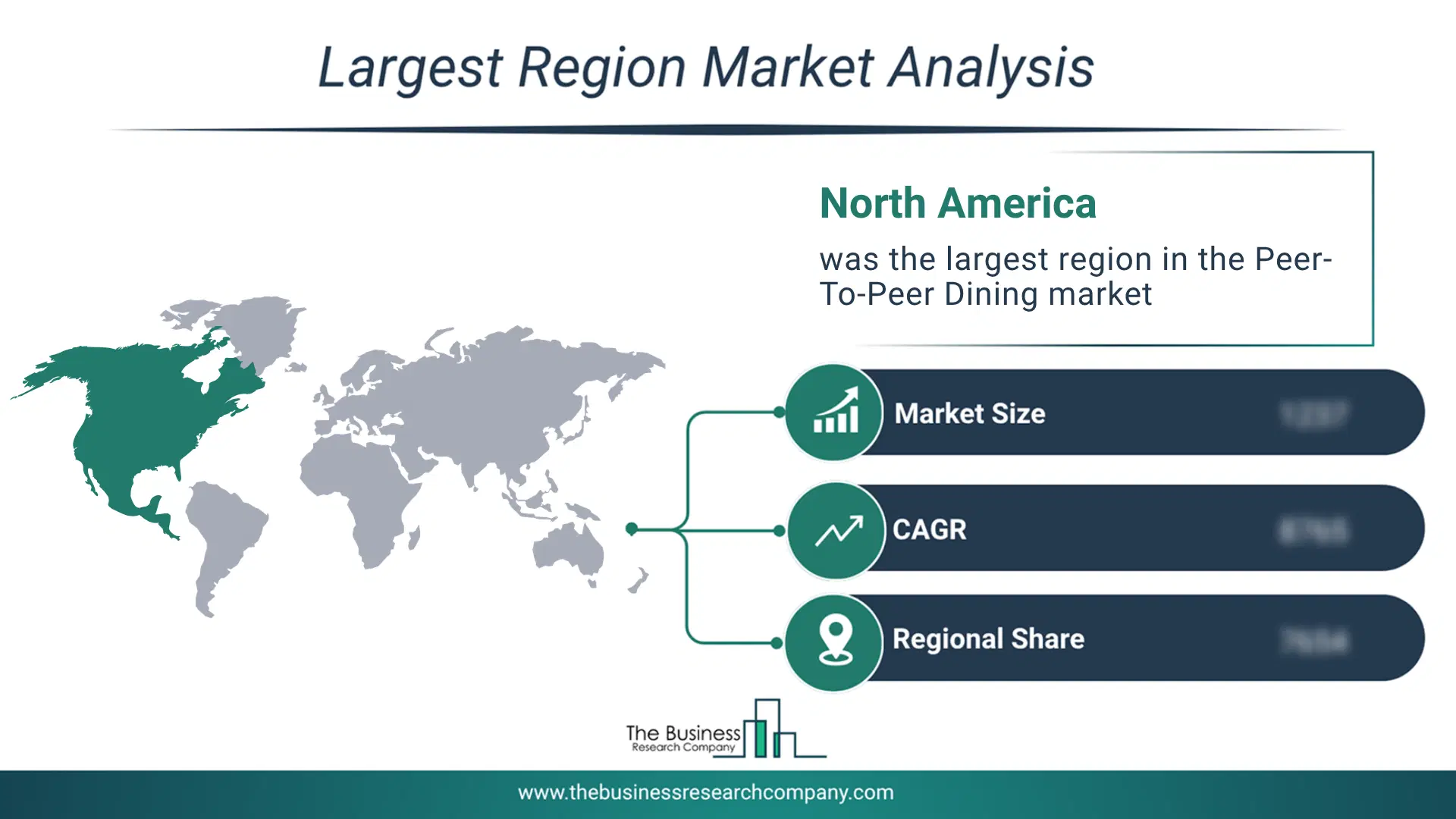
Regional Outlook
North America was the largest region in the peer-to-peer dining market in 2025. The regions covered in this market report are Asia-Pacific, South East Asia, Western Europe, Eastern Europe, North America, South America, Middle East and Africa. The countries covered in this market report are Australia, Brazil, China, France, Germany, India, Indonesia, Japan, Taiwan, Russia, South Korea, UK, USA, Italy, Spain, CanadaWhat Defines the Peer-To-Peer Dining Market?
The peer-to-peer dining market includes revenues earned by entities by providing services such as cooking classes, farm-to-table experiences, home-cooked meal delivery, and cultural food experiences. The market value includes the value of related goods sold by the service provider or included within the service offering. Only goods and services traded between entities or sold to end consumers are included.How is Market Value Defined and Measured?
The market value is defined as the revenues that enterprises gain from the sale of goods and/or services within the specified market and geography through sales, grants, or donations in terms of the currency (in USD unless otherwise specified). The revenues for a specified geography are consumption values that are revenues generated by organizations in the specified geography within the market, irrespective of where they are produced. It does not include revenues from resales along the supply chain, either further along the supply chain or as part of other products.
This chart presents market attractiveness based on a quantitative evaluation of growth, competition, strategic alignment, and risk, offering a clear view of opportunity areas for decision-making. This chart is for illustrative purposes; the full report contains the complete analysis.

This chart highlights the Total Addressable Market (TAM) by estimating the maximum revenue opportunity using an assumption-driven approach, supporting strategic planning and opportunity sizing across markets. The chart is illustrative; the full report provides a more comprehensive analysis.
What Key Data and Analysis Are Included in the Peer-To-Peer Dining Market Report 2026?
The peer-to-peer dining market research report is one of a series of new reports from The Business Research Company that provides market statistics, including industry global market size, regional shares, competitors with the market share, detailed market segments, market trends and opportunities, and any further data you may need to thrive in the peer-to-peer dining industry. The market research report delivers a complete perspective of everything you need, with an in-depth analysis of the current and future state of the industry.Peer-To-Peer Dining Market Report Forecast Analysis
| Report Attribute | Details |
|---|---|
| Market Size Value In 2026 | $6.92 billion |
| Revenue Forecast In 2030 | $8.07 billion |
| Growth Rate | CAGR of 4.2% from 2026 to 2030 |
| Base Year For Estimation | 2025 |
| Actual Estimates/Historical Data | 2020-2025 |
| Forecast Period | 2026 - 2030 |
| Market Representation | Revenue in USD Billion and CAGR from 2026 to 2030 |
| Segments Covered | Dining, Nationality, Demographic, Age Group, Booking Channel |
| Regional Scope | Asia-Pacific, Western Europe, Eastern Europe, North America, South America, Middle East, Africa |
| Country Scope | The countries covered in the report are Australia, Brazil, China, France, Germany, India, Indonesia, Japan, Taiwan, Russia, South Korea, UK, USA, Canada, Italy, Spain. |
| Key Companies Profiled | Feastly, Withlocals, Traveling Spoon, The London Supper Club, EatWith, Hobnob, B'Ville Diner, Supper Club, Cookly, BonAppetour, CookUp, EatMeet, EatWithMe, FoodieTrip, Homecooked, Kitchen Surfing Inc., Secret Dinner, ShareDine, Table at Home, MealSharing |
| Customization Scope | Request for Customization |
| Pricing And Purchase Options | Explore Purchase Options |