
Second Skin Dressing Market Report 2026
Global Outlook – By Product Type (Hydrocolloid Dressings, Hydrogel Dressings, Film Dressings), By Distribution Channel (Hospital Pharmacies, Retail Pharmacies, Online Pharmacies, Other Distribution Channels), By Application (Chronic Wounds, Acute Wounds, Surgical Wounds, Burns, Other Applications), By End-User (Hospitals, Clinics, Homecare Settings, Other End-Users) – Market Size, Trends, Strategies, and Forecast to 2030
Second Skin Dressing Market Overview
• Second Skin Dressing market size has reached to $2.56 billion in 2025 • Expected to grow to $3.82 billion in 2030 at a compound annual growth rate (CAGR) of 8.3% • Growth Driver: Rising Diabetes Cases Fuel Demand For The Market Due To Slow Wound Healing And Infection Risks • Market Trend: Bridges Consumer Healthcare Expands Specialty OTC Portfolio Through Acquisition Of KT Tape • North America was the largest region in 2025 and Asia-Pacific is the fastest growing region.What Is Covered Under Second Skin Dressing Market?
Second skin dressing is a highly flexible, transparent, and biocompatible wound dressing that closely mimics the natural properties of human skin to protect wounds, burns, or surgical sites. It promotes a moist and healing-friendly environment, reduces the risk of infections, enhances patient comfort, and helps minimize scarring for faster recovery. The main product types of second skin dressing are hydrocolloid dressings, hydrogel dressings, foam dressings, film dressings, alginate dressings, and others. Hydrocolloid dressings are made of gel-forming agents that absorb wound exudate while maintaining a moist healing environment. These dressings are distributed through hospital pharmacies, retail pharmacies, online pharmacies, and others. They are commonly used for applications such as chronic wounds, acute wounds, surgical wounds, burns, and others, serving end-users including hospitals, clinics, homecare settings, and others.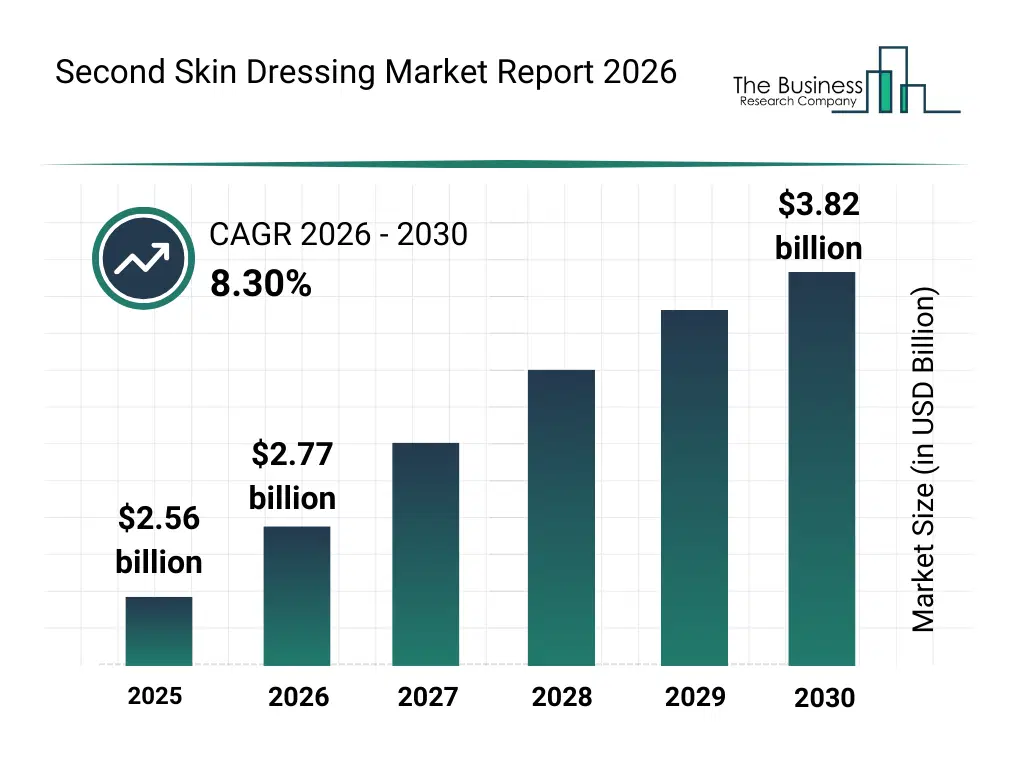
What Is The Second Skin Dressing Market Size and Share 2026?
The second skin dressing market size has grown strongly in recent years. It will grow from $2.56 billion in 2025 to $2.77 billion in 2026 at a compound annual growth rate (CAGR) of 8.6%. The growth in the historic period can be attributed to growth in surgical procedures, increasing burn cases, hospital wound care protocols, adoption of moisture healing techniques, expansion of emergency care services.What Is The Second Skin Dressing Market Growth Forecast?
The second skin dressing market size is expected to see strong growth in the next few years. It will grow to $3.82 billion in 2030 at a compound annual growth rate (CAGR) of 8.3%. The growth in the forecast period can be attributed to rise in chronic wound cases, homecare wound management growth, innovation in biocompatible materials, aging population, expansion of online pharmacies. Major trends in the forecast period include advanced wound protection solutions, transparent and breathable dressings, infection prevention dressings, long-wear flexible dressings, scar minimization technologies.
Global Second Skin Dressing Market Segmentation
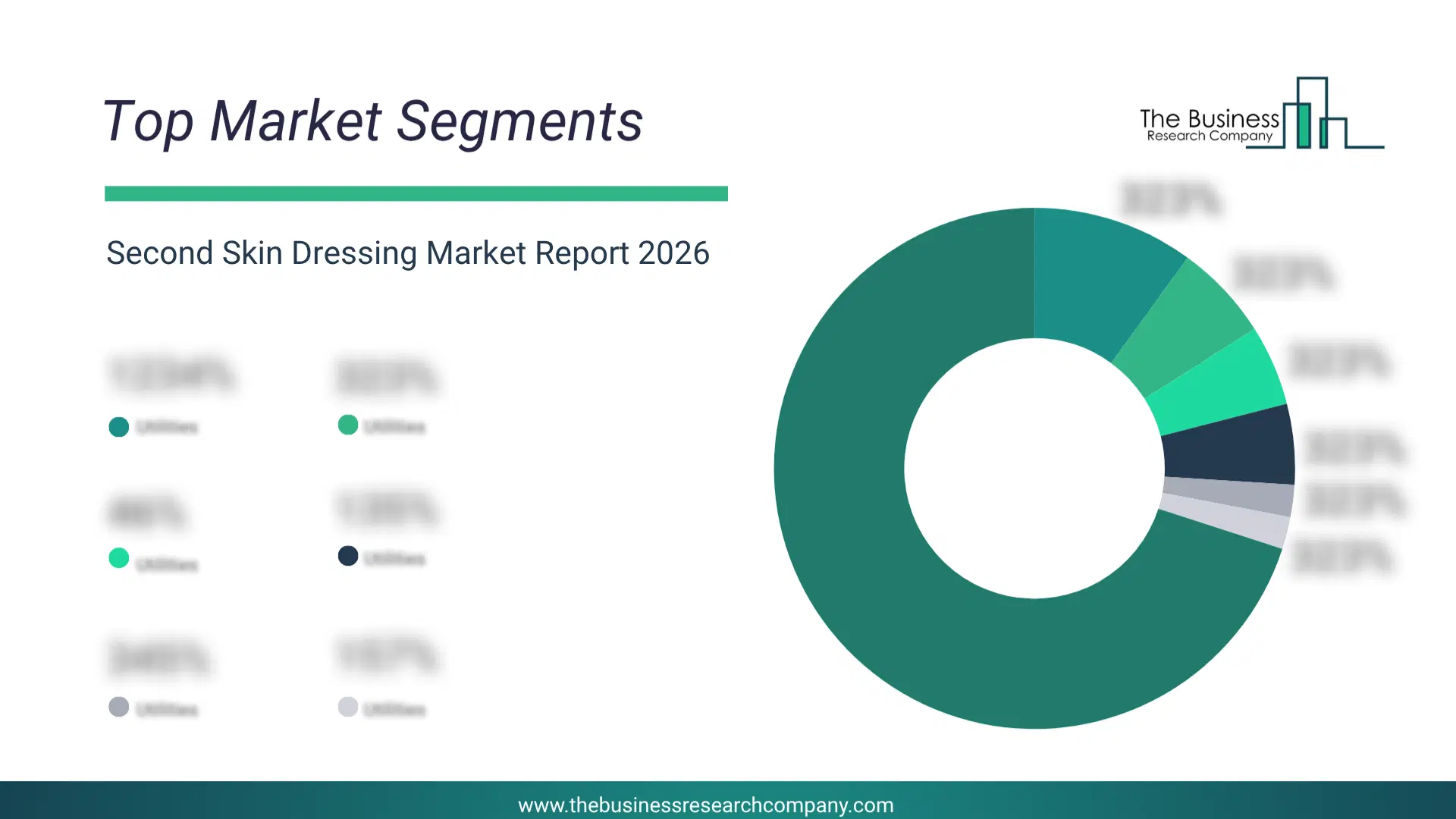
1) By Product Type: Hydrocolloid Dressings, Hydrogel Dressings, Film Dressings 2) By Distribution Channel: Hospital Pharmacies, Retail Pharmacies, Online Pharmacies, Other Distribution Channels 3) By Application: Chronic Wounds, Acute Wounds, Surgical Wounds, Burns, Other Applications 4) By End-User: Hospitals, Clinics, Homecare Settings, Other End-Users Subsegments: 1) By Hydrocolloid Dressings: Thin Hydrocolloid, Extra-Thin Hydrocolloid 2) By Hydrogel Dressings: Sheet Hydrogel, Amorphous Hydrogel, Impregnated Hydrogel 3) By Film Dressings: Transparent Film, Semi-Permeable Film, Adhesive FilmWhat Are The Drivers Of The Second Skin Dressing Market?
The rising prevalence of diabetes is expected to propel the growth of the second skin dressing market going forward. Diabetes is a long-term health condition characterized by high blood sugar levels due to the body’s inability to produce or properly use insulin. Increasing diabetes is largely driven by sedentary lifestyles and unhealthy diets, resulting to obesity and insulin resistance. Second skin dressings help people with diabetes by protecting wounds, maintaining a moist healing environment, and reducing the risk of infection, which is important because diabetic patients often experience slow wound healing. For instance, in March 2024, according to the Office for Health Improvement & Disparities, a UK-based government department, between March 2022 and March 2023, the percentage of individuals with type 1 diabetes receiving all eight recommended care processes increased by 22%, and for type 2 diabetes, it increased by 21%, while the percentage achieving target HbA1c levels rose to 37.9%, the highest value ever reported by the National Diabetes Audit (NDA). Therefore, the rising prevalence of diabetes is driving the growth of the second skin dressing industry. The growing healthcare expenditure is expected to propel the growth of the second skin dressing market going forward. Healthcare expenditure is the total financial resources spent on preventing, diagnosing, treating, and managing health conditions for individuals and populations. Healthcare expenditure is increasing because aging populations demand more medical services, long-term care, and advanced treatments. Increasing healthcare expenditure helps the Second Skin Dressing market by enabling hospitals, clinics, and patients to afford advanced wound care products, invest in innovative dressings, and adopt modern treatment protocols that improve healing outcomes and reduce complications. For instance, in June 2025, according to the Centers for Medicare & Medicaid Services (CMS), the US-based federal agency, National Health Expenditure (NHE) grew 7.5% to $4.9 trillion in 2023, or $14,570 per person, and accounted for 17.6% of Gross Domestic Product (GDP). Hospital expenditures grew 10.4% to $1,519.7 billion in 2023, faster than the 3.2% growth in 2022. Therefore, the growing healthcare expenditure is driving the growth of the second skin dressing industry.Key Players In The Global Second Skin Dressing Market
Major companies operating in the second skin dressing market are Cardinal Health Inc., Avery Dennison Corporation, Nitto Denko Corporation, Smith & Nephew plc, Coloplast A/S, Hartmann Group, ConvaTec Group PLC, Integra LifeSciences, DeRoyal Industries Inc., Winner Medical Co. Ltd., Scapa Healthcare, DermaRite Industries LLC, Anhui Jinye Industrial Co. Ltd., ACTO GmbH, Beiersdorf AG, Advancis Medical, Amparo Medical Technologies Inc., Gujarat Healthcare, Jiangsu WLD Medical Co. Ltd., Wuhan Huawei Technology Co. Ltd., Yangzhou Goldenwell Import & Export Co. Ltd., Zhejiang Bangli Medical Products Co. Ltd.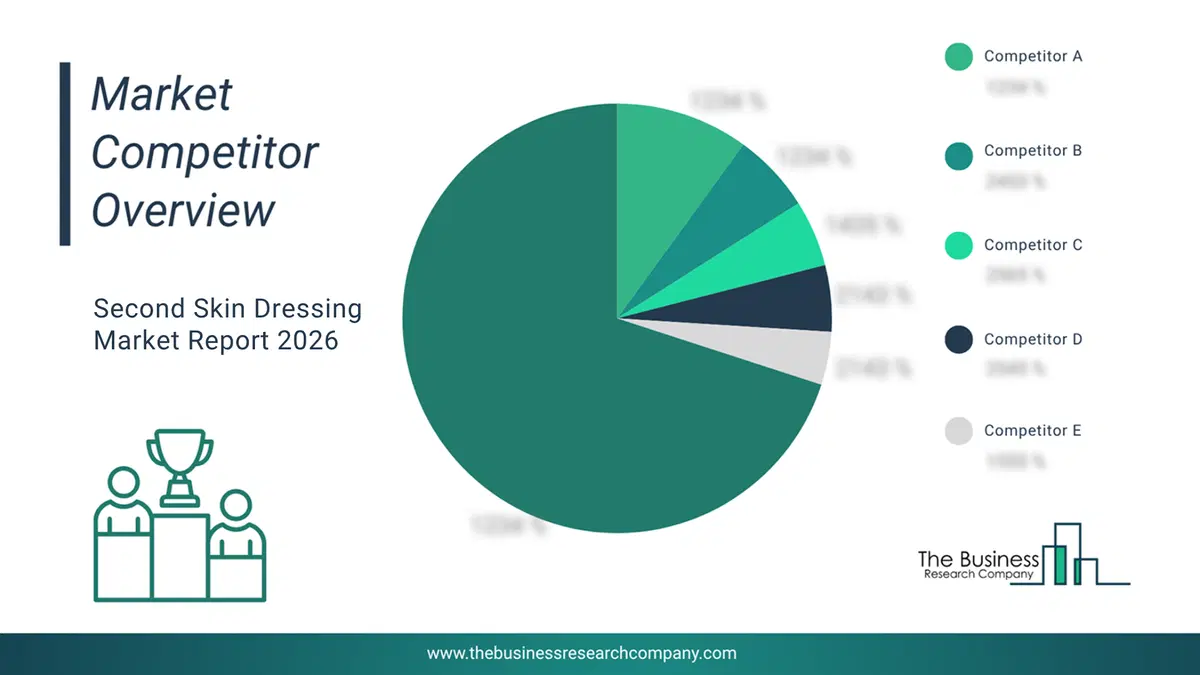
This chart is for illustrative purposes; the full report includes a detailed competitor analysis and comprehensive overview of the top 10 companies in the market.
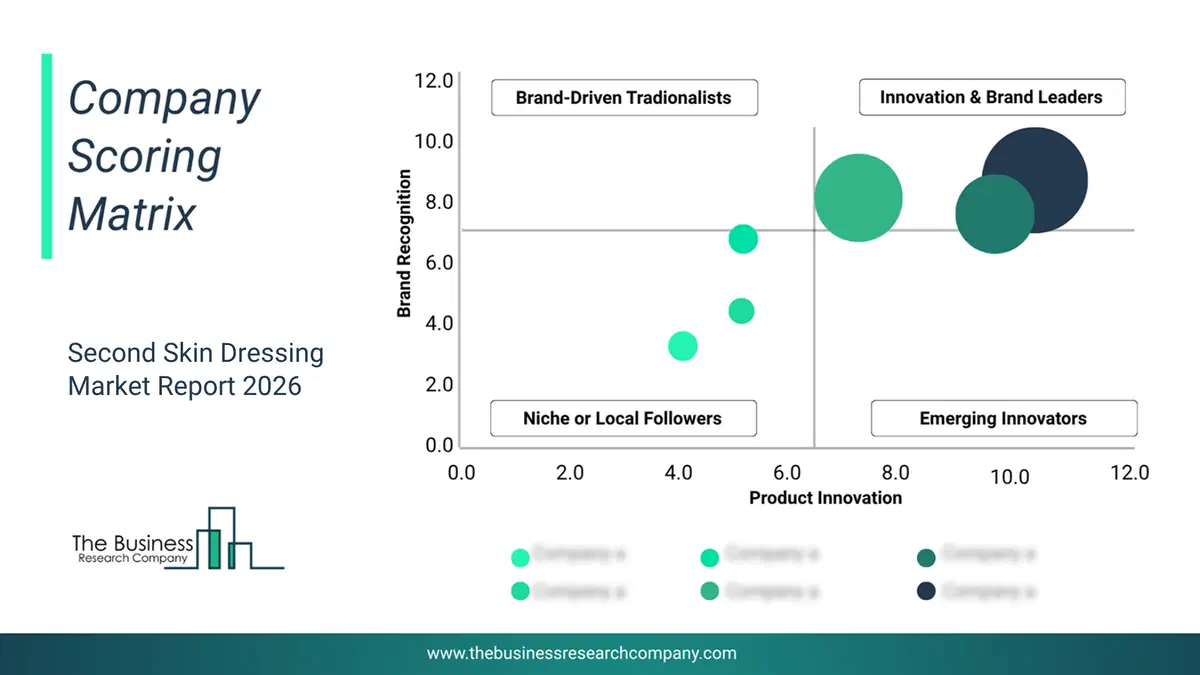
This chart maps companies by product innovation and brand strength, with bubble size indicating relative revenue, helping identify market leaders, challengers, and niche players. This is an illustrative chart; the full report provides a complete and accurate competitive analysis.
Global Second Skin Dressing Market Trends and Insights
Major companies operating in the second skin dressing market are focusing on developing innovative solutions such as next-generation plasters to enhance wound healing, improve patient comfort, and reduce the risk of infections and scarring. Next-generation plasters refer to modern wound dressings that closely mimic natural skin, offering features such as flexibility, transparency, breathability, and controlled drug delivery to promote faster and more effective healing. For instance, in January 2025, Beiersdorf AG, a Germany-based manufacturing company, launched a Second Skin Protection plaster to provide enhanced wound coverage and faster healing. It uses advanced hydrocolloid technology to absorb wound fluid and create a moist healing environment, thereby promoting faster and better-quality healing while reducing infection risk and scarring. It is ultra-thin, flexible, and 100% waterproof, providing a strong hold and comfort even on difficult areas such as knees and elbows. Its purpose is to offer a professional-grade treatment for everyday minor wounds, educating users on modern wound care benefits and dispelling outdated myths about healing.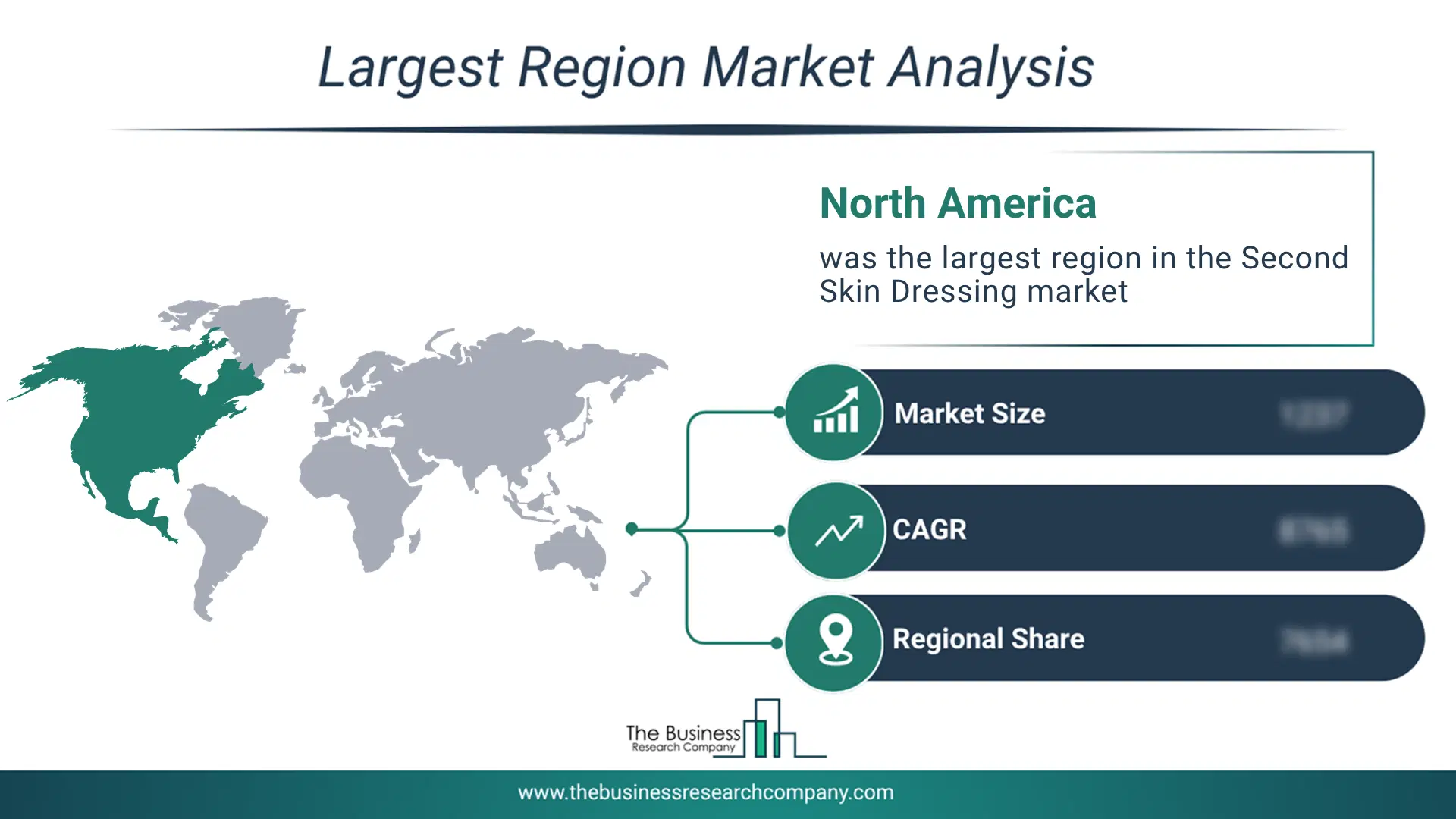
Regional Outlook
North America was the largest region in the second skin dressing market in 2025. Asia-Pacific is expected to be the fastest-growing region in the forecast period. The regions covered in this market report are Asia-Pacific, South East Asia, Western Europe, Eastern Europe, North America, South America, Middle East, Africa. The countries covered in this market report are Australia, Brazil, China, France, Germany, India, Indonesia, Japan, Taiwan, Russia, South Korea, UK, USA, Canada, Italy, SpainWhat Defines the Second Skin Dressing Market?
The second skin dressing market consists of sales of silicone dressings, polyurethane dressings, and collagen dressings. Values in this market are ‘factory gate’ values; that is, the value of goods sold by the manufacturers or creators of the goods, whether to other entities (including downstream manufacturers, wholesalers, distributors, and retailers) or directly to end customers. The value of goods in this market includes related services sold by the creators of the goods.How is Market Value Defined and Measured?
The market value is defined as the revenues that enterprises gain from the sale of goods and/or services within the specified market and geography through sales, grants, or donations in terms of the currency (in USD unless otherwise specified). The revenues for a specified geography are consumption values that are revenues generated by organizations in the specified geography within the market, irrespective of where they are produced. It does not include revenues from resales along the supply chain, either further along the supply chain or as part of other products.
This chart presents market attractiveness based on a quantitative evaluation of growth, competition, strategic alignment, and risk, offering a clear view of opportunity areas for decision-making. This chart is for illustrative purposes; the full report contains the complete analysis.

This chart highlights the Total Addressable Market (TAM) by estimating the maximum revenue opportunity using an assumption-driven approach, supporting strategic planning and opportunity sizing across markets. The chart is illustrative; the full report provides a more comprehensive analysis.
What Key Data and Analysis Are Included in the Second Skin Dressing Market Report 2026?
The second skin dressing market research report is one of a series of new reports from The Business Research Company that provides market statistics, including industry global market size, regional shares, competitors with the market share, detailed market segments, market trends and opportunities, and any further data you may need to thrive in the second skin dressing industry. The market research report delivers a complete perspective of everything you need, with an in-depth analysis of the current and future state of the industry.Second Skin Dressing Market Report Forecast Analysis
| Report Attribute | Details |
|---|---|
| Market Size Value In 2026 | $2.77 billion |
| Revenue Forecast In 2030 | $3.82 billion |
| Growth Rate | CAGR of 8.3% from 2026 to 2030 |
| Base Year For Estimation | 2025 |
| Actual Estimates/Historical Data | 2020-2025 |
| Forecast Period | 2026 - 2030 |
| Market Representation | Revenue in USD Billion and CAGR from 2026 to 2030 |
| Segments Covered | Product Type, Distribution Channel, Application, End-User |
| Regional Scope | Asia-Pacific, Western Europe, Eastern Europe, North America, South America, Middle East, Africa |
| Country Scope | The countries covered in the report are Australia, Brazil, China, France, Germany, India, Indonesia, Japan, Taiwan, Russia, South Korea, UK, USA, Canada, Italy, Spain. |
| Key Companies Profiled | Cardinal Health Inc., Avery Dennison Corporation, Nitto Denko Corporation, Smith & Nephew plc, Coloplast A/S, Hartmann Group, ConvaTec Group PLC, Integra LifeSciences, DeRoyal Industries Inc., Winner Medical Co. Ltd., Scapa Healthcare, DermaRite Industries LLC, Anhui Jinye Industrial Co. Ltd., ACTO GmbH, Beiersdorf AG, Advancis Medical, Amparo Medical Technologies Inc., Gujarat Healthcare, Jiangsu WLD Medical Co. Ltd., Wuhan Huawei Technology Co. Ltd., Yangzhou Goldenwell Import & Export Co. Ltd., Zhejiang Bangli Medical Products Co. Ltd. |
| Customization Scope | Request for Customization |
| Pricing And Purchase Options | Explore Purchase Options |