
Smart Air Purifier Market Report 2026
Global Outlook – By Product Type ( Dust Collectors, Fume And Smoke Collectors, Others Product Types), By Technique ( High-Efficiency Particulate Air (HEPA), Thermodynamic Sterilization System (TSS), Ultraviolet Germicidal Irradiation, Ionizer Purifiers, Activated Carbon Filtration, Other Techniques), By End-Users ( Residential, Commercial), By Distribution Channel ( Aftermarket, Original Equipment Manufacturers) – Market Size, Trends, Strategies, and Forecast to 2030
Smart Air Purifier Market Overview
• Smart Air Purifier market size has reached to $9.33 billion in 2025 • Expected to grow to $17.58 billion in 2030 at a compound annual growth rate (CAGR) of 13.6% • Growth Driver: Rising Airborne Diseases Drives The Market • Market Trend: Innovative Air Purifiers Enhance Personal Air Quality and Market Competition • Asia-Pacific was the largest region in 2025.Market Gains By 2030 – Top Opportunities By Segment
Market Gain identifies the most promising market opportunities by highlighting the segments or products expected to generate the highest incremental revenue growth over the next five years.
What Is Covered Under Smart Air Purifier Market?
Smart air purifiers are devices equipped with advanced sensors and connectivity features that automatically monitor and improve air quality. They can detect pollutants, allergens, and particles in the air, and adjust their settings accordingly. Often controllable via mobile apps or voice commands, they provide real-time data on air quality and can integrate with other smart home systems for enhanced convenience and efficiency. The main types of products in smart air purifiers are dust collectors, fume and smoke collectors, and others. Dust collectors are air cleansing equipment designed to improve commercial or industrial air quality by capturing particulate matter. The different techniques include high-efficiency particulate air (HEPA), thermodynamic sterilization systems (TSS), ultraviolet germicidal irradiation, ionizer purifiers, activated carbon filtration, and others. It is employed in commercial and residential sectors and is distributed through aftermarket and original equipment manufacturers.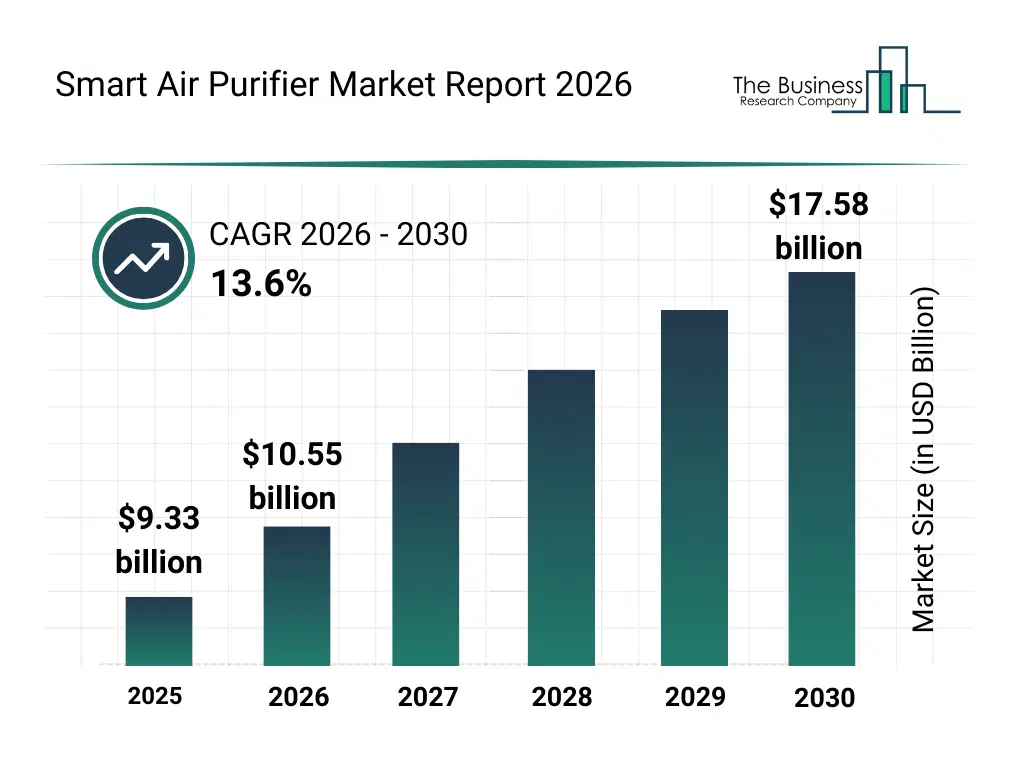
What Is The Smart Air Purifier Market Size 2026 And Growth Rate?
The smart air purifier market size has grown rapidly in recent years. It will grow from $9.33 billion in 2025 to $10.55 billion in 2026 at a compound annual growth rate (CAGR) of 13.2%. The growth in the historic period can be attributed to rising awareness of indoor air quality, early adoption of hepa filtration, growth in residential purifier sales, reliance on carbon filtration systems, increasing commercial demand.What Is The Smart Air Purifier Market Growth Forecast?
The smart air purifier market size is expected to see rapid growth in the next few years. It will grow to $17.58 billion in 2030 at a compound annual growth rate (CAGR) of 13.6%. The growth in the forecast period can be attributed to increasing deployment of smart home ecosystems, rising need for real-time air quality analytics, expansion of low-energy purification technologies, development of advanced filtration techniques, growth in pollution-driven residential adoption. Major trends in the forecast period include adoption of AI-driven air quality optimization, expansion of cloud-integrated purification platforms, development of IoT-connected indoor air systems, growth of energy-efficient sustainable purifiers, advancement of autonomous pollution detection technologies.
Global Smart Air Purifier Market Segmentation
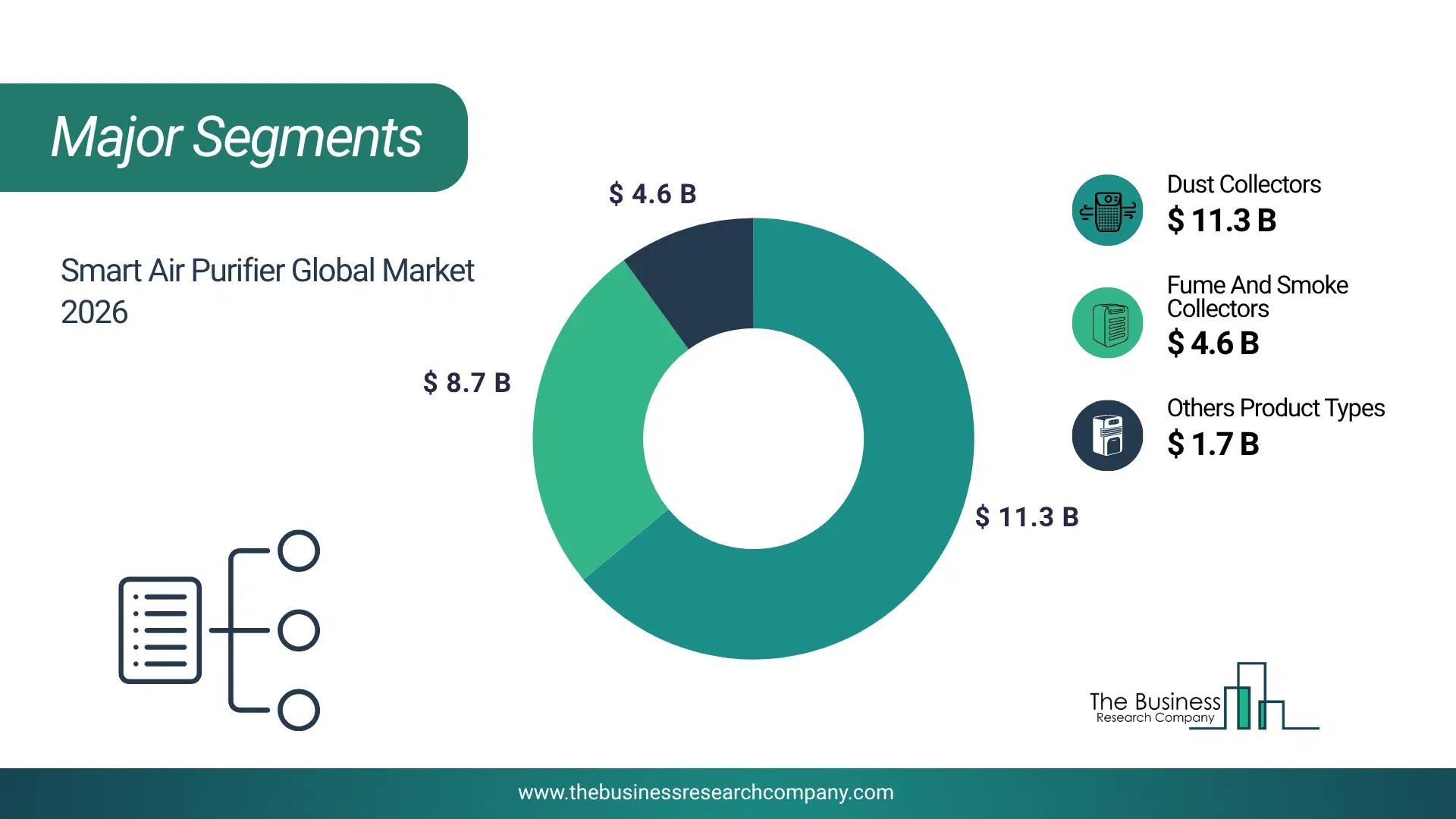
1) By Product Type: Dust Collectors, Fume And Smoke Collectors, Others Product Types 2) By Technique: High-Efficiency Particulate Air (HEPA), Thermodynamic Sterilization System (TSS), Ultraviolet Germicidal Irradiation, Ionizer Purifiers, Activated Carbon Filtration, Other Techniques 3) By End-Users: Residential, Commercial 4) By Distribution Channel: Aftermarket, Original Equipment Manufacturers Subsegments: 1) By Dust Collectors: HEPA Dust Collectors, Electrostatic Dust Collectors, Cyclone Dust Collectors 2) By Fume and Smoke Collectors: Smart Smoke Purifiers, Smart VOC & Fume Purifiers, Portable Smart Fume & Smoke Purifiers 3) By Other Product Types: Odor Eliminators, Chemical Fume Scrubbers, Air Quality Monitors The top segments in the smart air purifier market will be: • Dust Collectors will reach $11.3 billion by 2030. • Fume And Smoke Collectors will reach $4.59 billion by 2030. • Others Product Types will reach $1.69 billion by 2030.What Is The Driver Of The Smart Air Purifier Market?
The increasing prevalence of airborne diseases is expected to fuel the growth of the smart air purifier market going forward. Airborne diseases such as COVID-19 are caused by the transmission of viruses through the air from one person to another in the form of droplets or aerosolized particles. Rising airborne disease cases promote the use of air purifiers as the patients face breathing issues. For instance, in April 2025, the Australian Bureau of Statistics, an Australia-based Commonwealth statutory agency, reported that influenza-related mortality in 2024 was 65.7% higher than that recorded in 2023. Therefore, the increasing prevalence of airborne diseases will increase the growth of the smart air purifier industry.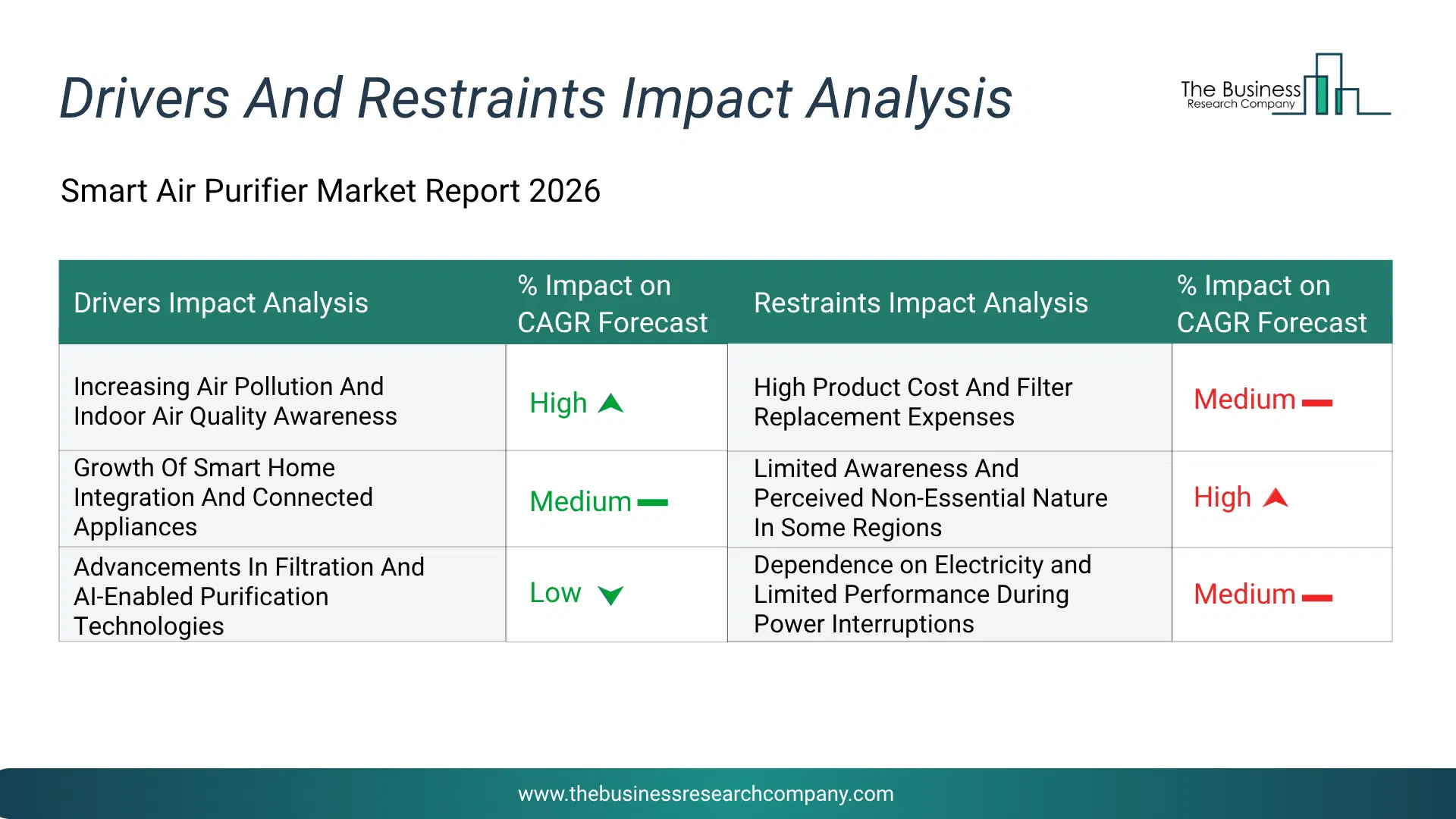
Infographic Chart Showing Key Market Drivers Analysis And Restraints For Smart Air Purifier Market
The chart presents an impact analysis of key drivers and restraints, quantifying their relative influence on the market's growth rate and helping assess the balance between growth enablers and limiting factors. This chart offers a high-level perspective; the full report contains more detailed insights.
How Will The Drivers Impact Growth In The Global Smart Air Purifier Market?
• Increasing Air Pollution And Indoor Air Quality Awareness (High) – During the forecast period, the increasing air pollution and indoor air quality awareness is expected to become a key growth driver for the smart air purifier market by 2030. Rising air pollution levels and growing awareness of indoor air quality (iaq) are key growth drivers for the smart air purifier market. Rapid urbanization, industrial emissions, vehicle -related pollution, and seasonal smog conditions are increasing health concerns worldwide. Consumers are becoming more aware of respiratory health issues, allergies, and airborne contaminants, which is driving demand for advanced air filtration solutions. Smart air purifiers featuring hepa filters, real -time air quality monitoring sensors, and automated purification capabilities are experiencing strong adoption across both residential and commercial sectors. • Growth Of Smart Home Integration And Connected Appliances (Medium) – During the forecast period, the growth of smart home integration and connected appliances is expected to emerge as a major factor driving the expansion of the smart air purifier market by 2030. The rapid expansion of smart homes and iot-enabled ecosystems significantly supports market growth. Smart air purifiers integrate with mobile apps, voice assistants, and home automation systems, allowing remote monitoring and control. Real-time air quality tracking, filter replacement alerts, and ai-based performance optimization enhance user convenience and efficiency. As consumers increasingly adopt connected appliances, smart air purifiers are becoming an integral component of modern smart home environments. • Advancements In Filtration And AI-Enabled Purification Technologies (Low) – During the forecast period, the advancements in filtration and ai-enabled purification technologies is expected to act as a key growth catalyst for the smart air purifier market by 2030. Technological advancements in filtration systems and ai-driven purification technologies further accelerate adoption. Innovations such as multi-layer filtration, uv sterilization, activated carbon filters, and sensor-based auto-adjustment modes improve purification efficiency. Energy-efficient motors and compact designs also enhance device appeal for residential and office use. Continuous r&d investments are improving performance while gradually reducing operating costs, strengthening long-term market prospects.How Will The Restraints Impact Growth In The Global Smart Air Purifier Market?
• High Product Cost And Filter Replacement Expenses (Medium) – During the forecast period, the high initial product costs and recurring maintenance expenses act as major restraints in the smart air purifier market. Premium models with advanced sensors and smart connectivity features are relatively expensive, limiting adoption in price-sensitive regions. Additionally, periodic replacement of filters increases ongoing operating costs. These financial considerations may slow penetration among middle- and lower-income households. • Limited Awareness And Perceived Non-Essential Nature In Some Regions (High) – During the forecast period, the limited consumer awareness in rural and underdeveloped regions also restrains market growth. In certain markets, air purifiers are still perceived as non-essential luxury appliances rather than health-focused necessities. Additionally, lack of standardized air quality monitoring infrastructure may reduce urgency for adoption. Overcoming these awareness barriers is critical for expanding market reach beyond urban centers. • Dependence on Electricity and Limited Performance During Power Interruptions (Medium) – During the forecast period, the dependence on electricity and limited performance during power interruptions act as a restraint for the smart air purifier market by reducing their reliability in regions with unstable power supply. Continuous operation is essential for maintaining indoor air quality, but frequent outages disrupt functionality and reduce effectiveness. This limitation makes consumers in such areas hesitant to invest in smart air purification systems. Additionally, backup power solutions increase overall cost, further discouraging adoption.Key Players In The Global Smart Air Purifier Market
Major companies operating in the smart air purifier market are Honeywell International Inc., Koninklijke Philips N.V., Xiaomi Corp., Unilever Blueair / Blueair AB, Coway Co. Ltd., Sharp Corporation, Dyson Technology Limited / Dyson Limited, LG Electronics Inc., Sunbeam Products Inc., Whirlpool Corporation, Amaircare Corp., Alen Corp., Arovast Corporation (Levoit brand), Winix Inc., Bluestar Limited, Smart Air Filters Pvt. Ltd., Oransi LLC, Airpura Industries Inc., 3M Company, A.O. Smith Corporation, Airfree Produtos Electrónicos Ltda, IQAir AG, Levoit Technologies LLC, Molekule Inc.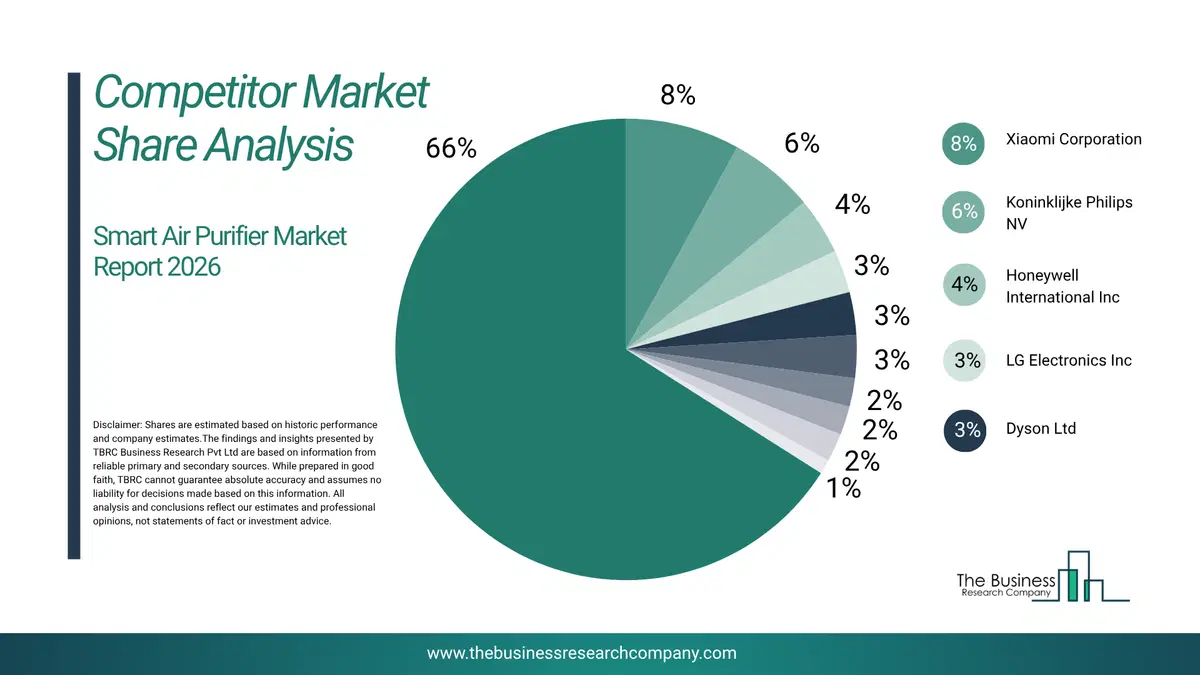
This chart is for illustrative purposes; the full report includes a detailed competitor analysis and comprehensive overview of the top 10 companies in the market.
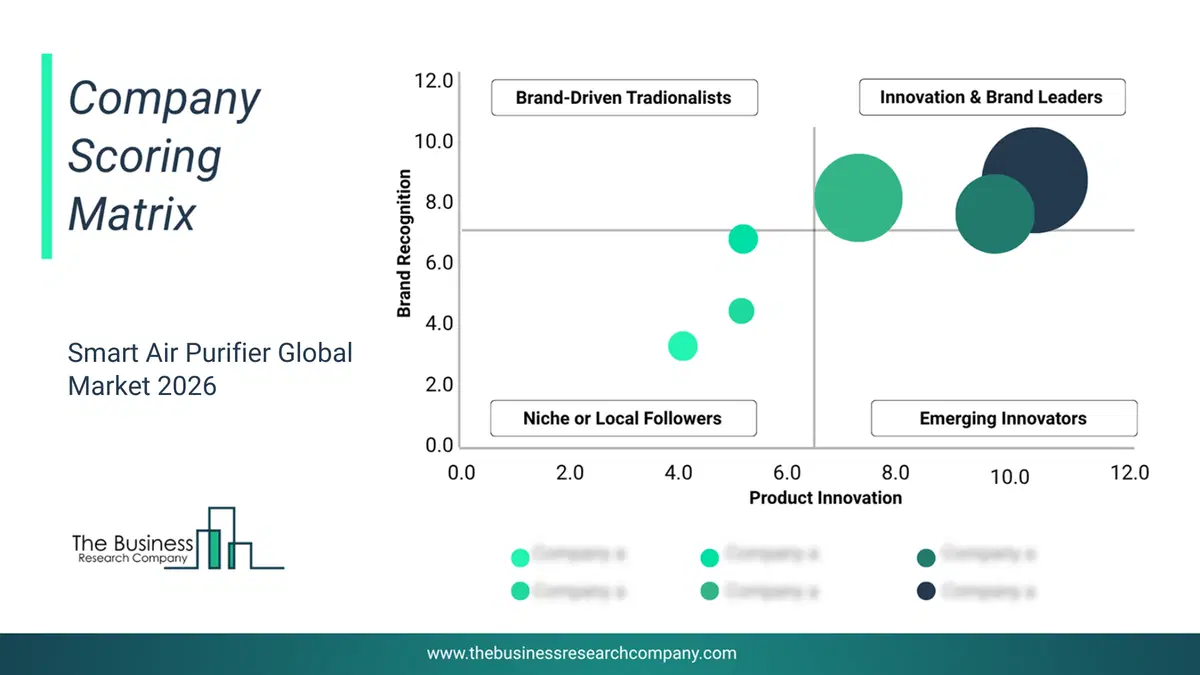
This chart maps companies by product innovation and brand strength, with bubble size indicating relative revenue, helping identify market leaders, challengers, and niche players. This is an illustrative chart; the full report provides a complete and accurate competitive analysis.
Global Smart Air Purifier Market Trends and Insights
Major companies operating in the smart air purifier market are focusing on developing innovations, such as triple layer filtration, to boost their revenues. Triple-layer filtration in air purifiers typically includes a pre-filter for large particles, a HEPA filter for fine dust and allergens, and an activated carbon filter to remove odors and harmful gases. For instance, in April 2023, Xiaomi Inc., a China-based consumer electronics company, launched Smart Air Purifier 4 as a budget-friendly alternative to premium air purifiers. A new air purifier has arrived in India, featuring an upgraded filter, a larger coverage area, and quieter operation claiming to be quieter than a premium competitor. It boasts a sleek, boxy design with a touch-sensitive OLED display for controls. The multi-layer filtration system captures 99.99% of particles as small as 0.1 microns, and it can purify spaces between 301 sq. ft. and 516 sq. ft. with a clean air delivery rate of 400 m2/h and noise levels around 33 dB.What Are Latest Mergers And Acquisitions In The Smart Air Purifier Market?
In February 2023, Molekule, a US-based manufacturing company, acquired Aura Smart Air Ltd. for $10 million. This acquisition aims to enhance its product offerings with smart air quality solutions, providing customers with better insights into indoor air conditions and enabling more effective purification. Aura Smart Air Ltd. is an Israel-based company that specializes in air purification and monitoring solutions.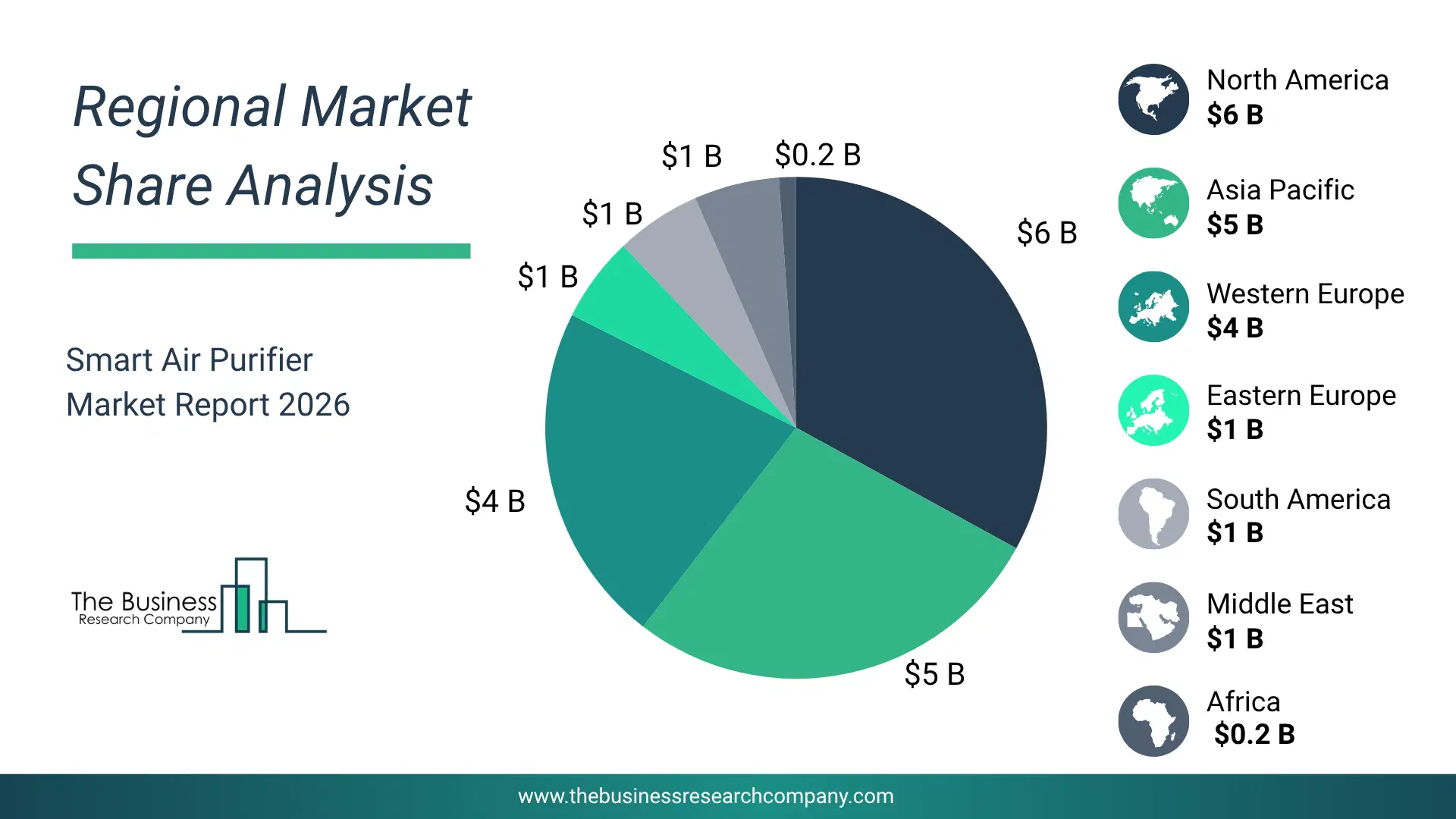
Regional Outlook
Asia-Pacific was the largest region in the smart air purifier market in 2025. The regions covered in this market report are Asia-Pacific, South East Asia, Western Europe, Eastern Europe, North America, South America, Middle East, Africa. The countries covered in this market report are Australia, Brazil, China, France, Germany, India, Indonesia, Japan, Taiwan, Russia, South Korea, UK, USA, Canada, Italy, Spain.What Defines the Smart Air Purifier Market?
The smart air purifier market consists of sales of UV-light-filter-based, activated-carbon filter-based, and HEPA filter-based smart air purifiers. Values in this market are ‘factory gate’ values, that is the value of goods sold by the manufacturers or creators of the goods, whether to other entities (including downstream manufacturers, wholesalers, distributors, and retailers) or directly to end customers. The value of goods in this market includes related services sold by the creators of the goods.How is Market Value Defined and Measured?
The market value is defined as the revenues that enterprises gain from the sale of goods and/or services within the specified market and geography through sales, grants, or donations in terms of the currency (in USD unless otherwise specified). The revenues for a specified geography are consumption values that are revenues generated by organizations in the specified geography within the market, irrespective of where they are produced. It does not include revenues from resales along the supply chain, either further along the supply chain or as part of other products.
This chart presents market attractiveness based on a quantitative evaluation of growth, competition, strategic alignment, and risk, offering a clear view of opportunity areas for decision-making. This chart is for illustrative purposes; the full report contains the complete analysis.

This chart highlights the Total Addressable Market (TAM) by estimating the maximum revenue opportunity using an assumption-driven approach, supporting strategic planning and opportunity sizing across markets. The chart is illustrative; the full report provides a more comprehensive analysis.
What Key Data and Analysis Are Included in the Smart Air Purifier Market Report 2026?
The smart air purifier market research report is one of a series of new reports from The Business Research Company that provides market statistics, including industry global market size, regional shares, competitors with the market share, detailed market segments, market trends and opportunities, and any further data you may need to thrive in the smart air purifier industry. The market research report delivers a complete perspective of everything you need, with an in-depth analysis of the current and future state of the industry.Smart Air Purifier Market Report 2026 Market Report Forecast Analysis
| Report Attribute | Details |
|---|---|
| Market Size Value In 2026 | $10.55 billion |
| Revenue Forecast In 2030 | $17.58 billion |
| Growth Rate | CAGR of 13.2% from 2026 to 2030 |
| Base Year For Estimation | 2025 |
| Actual Estimates/Historical Data | 2020-2025 |
| Forecast Period | 2026 - 2030 |
| Market Representation | Revenue in USD Billion and CAGR from 2026 to 2030 |
| Segments Covered | Product Type, Technique, End-Users, Distribution Channel |
| Regional Scope | Asia-Pacific, Western Europe, Eastern Europe, North America, South America, Middle East, Africa |
| Country Scope | The countries covered in the report are Australia, Brazil, China, France, Germany, India, Indonesia, Japan, Taiwan, Russia, South Korea, UK, USA, Canada, Italy, Spain. |
| Key Companies Profiled | Honeywell International Inc., Koninklijke Philips N.V., Xiaomi Corp., Unilever Blueair / Blueair AB, Coway Co. Ltd., Sharp Corporation, Dyson Technology Limited / Dyson Limited, LG Electronics Inc., Sunbeam Products Inc., Whirlpool Corporation, Amaircare Corp., Alen Corp., Arovast Corporation (Levoit brand), Winix Inc., Bluestar Limited, Smart Air Filters Pvt. Ltd., Oransi LLC, Airpura Industries Inc., 3M Company, A.O. Smith Corporation, Airfree Produtos Electrónicos Ltda, IQAir AG, Levoit Technologies LLC, Molekule Inc. |
| Customization Scope | Request for Customization |
| Pricing And Purchase Options | Explore Purchase Options |