

Smart Materials Market Report 2026
Global Outlook – By Product Type (Piezoelectric Materials, Electro-Rheostatic, Magneto-Rheostatic, Shape Memory Materials, Smart Hydrogels, Electrochromic Materials, Other Product Types), By Application Type (Transducers, Actuators And Motors, Sensors, Structural Materials, Coating, Other Applications), By End User (Industrial, Defense And Aerospace, Automotive, Consumer Electronics, Healthcare, Other End User) – Market Size, Trends, Strategies, and Forecast to 2030
Smart Materials Market Overview
• Smart Materials market size has reached to $70.28 billion in 2025 • Expected to grow to $121.4 billion in 2030 at a compound annual growth rate (CAGR) of 11.6% • Growth Driver: Rising Consumer Electronics Demand Driving Market Growth Due To Increasing Integration Into Daily Life • Market Trend: Innovative Smart Materials Advancing Industrial Applications With Ultrasonic Conversion And Actuator Technology • North America was the largest region in 2025 and Asia-Pacific is the fastest growing region.Market Gains By 2030 – Top Opportunities By Segment
Market Gain identifies the most promising market opportunities by highlighting the segments or products expected to generate the highest incremental revenue growth over the next five years.
What Is Covered Under Smart Materials Market?
Smart materials are advanced substances that can sense and respond dynamically to changes in their environment, such as variations in temperature, pressure, moisture, electric or magnetic fields, and chemical stimuli, by altering their physical properties like shape, color, stiffness, or conductivity. These materials integrate adaptive functionalities, enabling them to self-heal, change phase, or exhibit controlled transformations in real-time, making them highly versatile for innovative applications. The main product types of smart materials are piezoelectric materials, electro-rheostatic, magneto-rheostatic, shape memory materials, smart fluids, smart hydrogels, electrochromic materials, others. Piezoelectric materials refer to materials that generate an electric charge in response to mechanical stress, enabling applications in sensors, actuators, and energy harvesting. These are used by various application types such as transducers, actuators and motors, sensors, structural materials, coating, others and also by various end users such as industrial, defense and aerospace, automotive, consumer electronics, healthcare, others.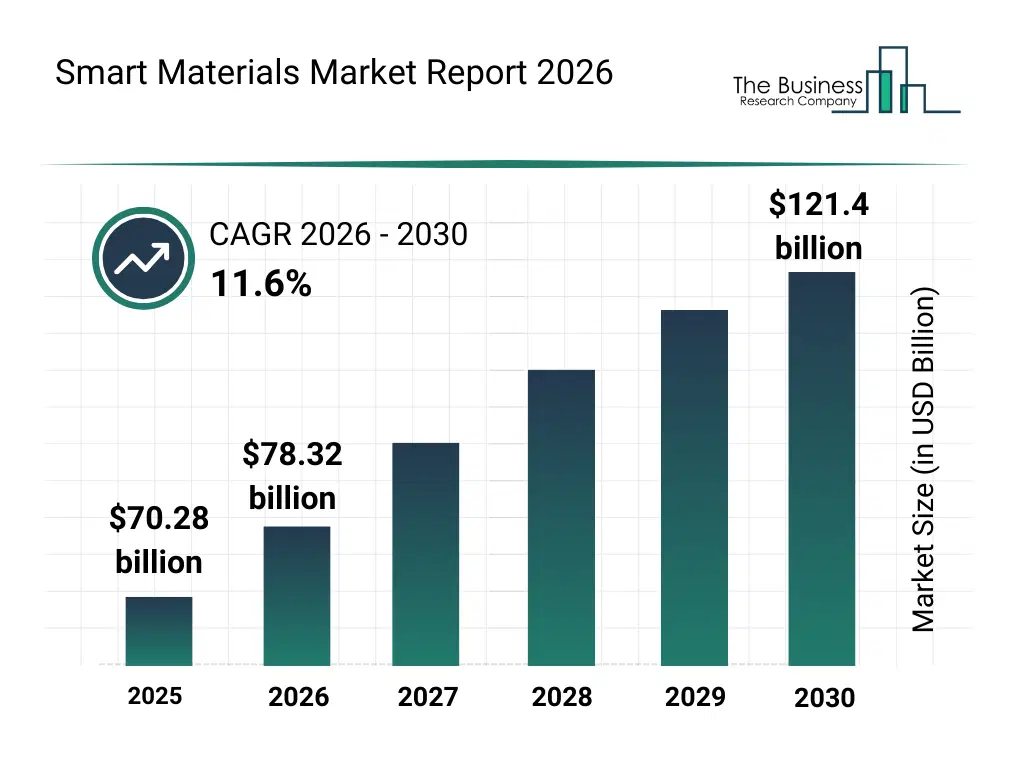
What Is The Smart Materials Market Size and Share 2026?
The smart materials market size has grown rapidly in recent years. It will grow from $70.28 billion in 2025 to $78.32 billion in 2026 at a compound annual growth rate (CAGR) of 11.4%. The growth in the historic period can be attributed to defense research investments, aerospace innovation, demand for adaptive systems, early piezoelectric applications, academic research funding.What Is The Smart Materials Market Growth Forecast?
The smart materials market size is expected to see rapid growth in the next few years. It will grow to $121.4 billion in 2030 at a compound annual growth rate (CAGR) of 11.6%. The growth in the forecast period can be attributed to smart infrastructure development, wearable electronics growth, electric vehicle sensor demand, healthcare device innovation, AI enabled material systems. Major trends in the forecast period include rising adoption of self healing materials, growing use in sensors and actuators, expansion in adaptive aerospace structures, increased demand for shape memory materials, integration into smart consumer electronics.
Global Smart Materials Market Segmentation
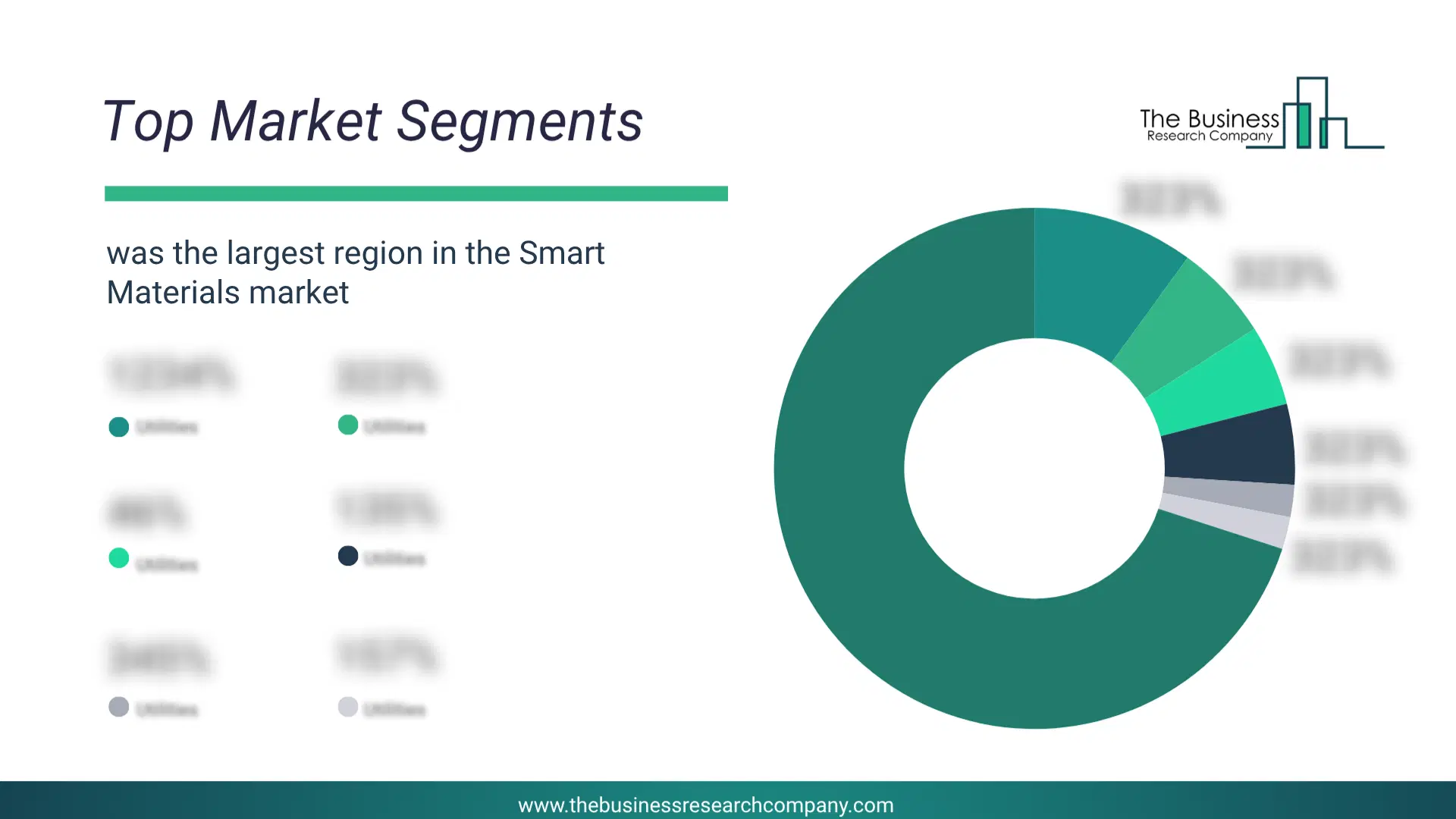
1) By Product Type: Piezoelectric Materials, Electro-Rheostatic, Magneto-Rheostatic, Shape Memory Materials, Smart Hydrogels, Electrochromic Materials, Other Product Types 2) By Application Type: Transducers, Actuators And Motors, Sensors, Structural Materials, Coating, Other Applications 3) By End User: Industrial, Defense And Aerospace, Automotive, Consumer Electronics, Healthcare, Other End User Subsegments: 1) By Piezoelectric Materials: Piezoelectric Ceramics, Piezoelectric Polymers, Piezoelectric Composites, Piezoelectric Crystals 2) By Electro-Rheostatic: ER Fluids with Liquid Crystals, ER Fluids with Polymers, ER Fluids with Suspended Particles 3) By Magneto-Rheostatic: MR Fluids with Iron Particles, MR Fluids with Cobalt Particles, MR Fluids with Nickel Particles 4) By Shape Memory Materials: Shape Memory Alloys, Shape Memory Polymers, Shape Memory Ceramics, Shape Memory Hydrogels 5) By Smart Hydrogels: pH-Responsive Hydrogels, Temperature-Responsive Hydrogels, Light-Responsive Hydrogels, Electric-Responsive Hydrogels 6) By Electrochromic Materials: Organic Electrochromic Materials, Inorganic Electrochromic Materials, Hybrid Electrochromic Materials 7) By Other Product Types: Self-Healing Materials, Conductive Polymers, Photomechanical Materials, Thermochromic Materials The top segments in the smart materials market will be: • Actuators And Motors will reach $27906.63 Million by 2025. • Piezoelectric Materials will reach $24121.22 Million by 2025. • Defense And Aerospace will reach $21615.66 Million by 2025. • Industrial will reach $16180.21 Million by 2025. • Shape Memory Materials will reach $15271.47 Million by 2025.What Is The Driver Of The Smart Materials Market?
The increasing demand for consumer electronics is expected to propel the growth of the smart materials market going forward. Consumer electronics are electronic devices designed for everyday personal or home use, including smartphones, laptops, TVs, gaming consoles, and smart home gadgets. The demand for consumer electronics is increasing due to their growing integration into daily life, enhancing communication, productivity, entertainment, and convenience, while also adapting to evolving consumer needs and lifestyle changes. Smart materials enhance consumer electronics by enabling innovative functionalities such as self-healing screens, flexible displays, energy-efficient components, and adaptive responses to environmental changes, ultimately improving durability, performance, and user experience. For instance, in May 2023, according to the Japan Electronics and Information Technology Industries Association, a Japan-based trade association, the total consumer electronic equipment production in Japan reached $209.16 million (¥32,099 million), compared to $164.65 million (¥25,268 million) in May 2022. Therefore, the increasing demand for consumer electronics drives the smart materials industry.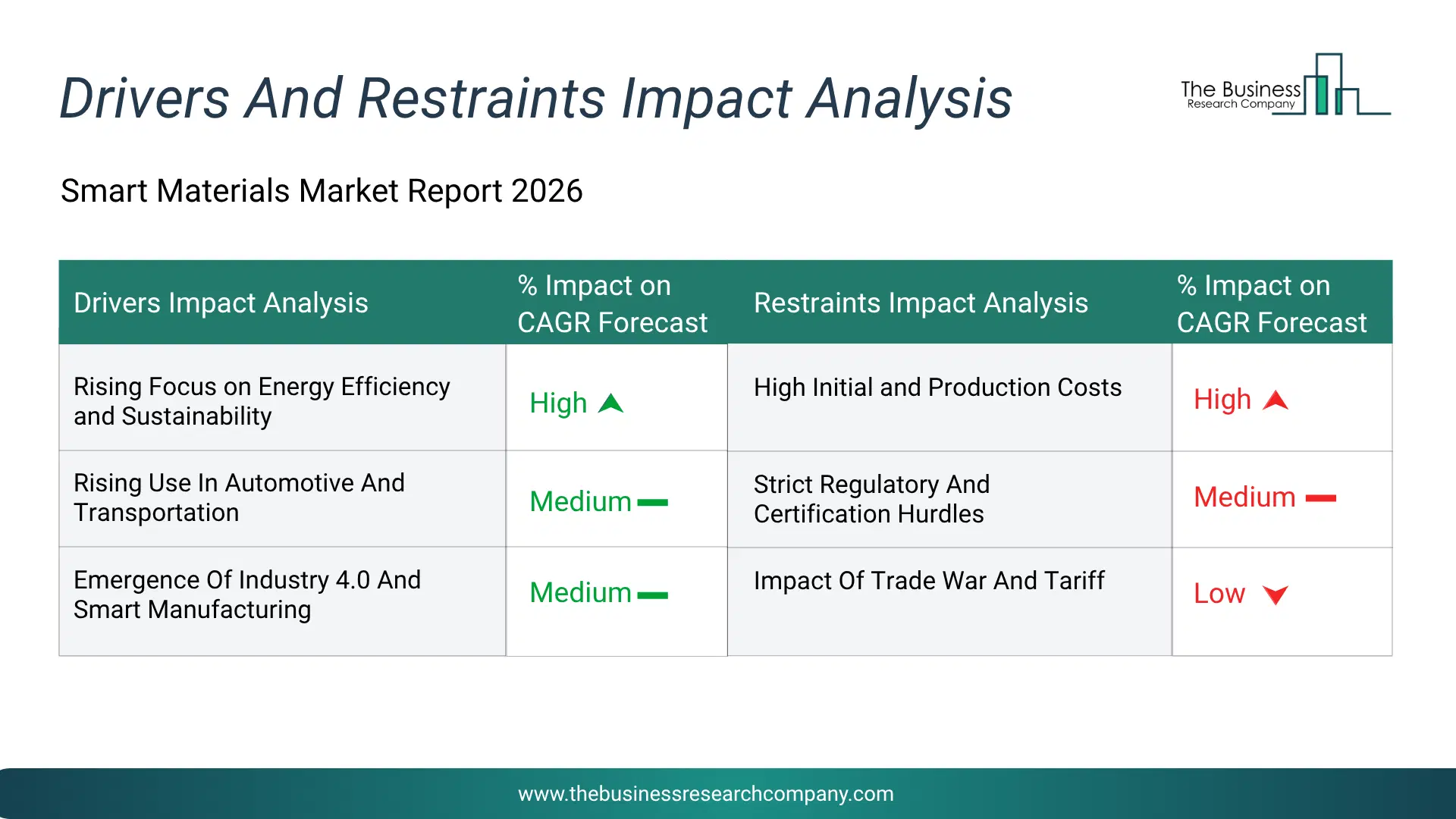
Infographic Chart Showing Key Market Drivers Analysis And Restraints For Smart Materials Market
The chart presents an impact analysis of key drivers and restraints, quantifying their relative influence on the market's growth rate and helping assess the balance between growth enablers and limiting factors. This chart offers a high-level perspective; the full report contains more detailed insights.
How Will The Drivers Impact Growth In The Global Smart Materials Market?
• Rising Focus on Energy Efficiency and Sustainability (High) – The rising focus on energy efficiency and sustainability will become a key driver of growth in the smart materials market by 2030. As governments and industries intensify efforts to achieve global climate targets, there is an increasing emphasis on technologies and materials that reduce energy consumption, enhance performance and support decarbonization. Smart materials, with their ability to adapt to environmental changes, improve thermal regulation and extend product lifecycles, are expected to play a pivotal role in meeting these objectives. The transition toward energy-efficient infrastructure, sustainable mobility and low-carbon manufacturing will further accelerate demand for smart materials that enable higher efficiency and lower environmental impact. As a result, the rising focus on energy efficiency and sustainability is anticipated to contributing to a 2.0% annual growth in the market. • Rising Use In Automotive And Transportation (Medium) – The rising use in automotive and transportation will emerge as a major factor driving the expansion of the smart materials market by 2030. The global transition toward electric mobility, lightweight vehicle design and advanced safety technologies is increasing the demand for materials that enhance performance, durability and energy efficiency. Smart materials, including piezoelectric actuators, shape-memory alloys and adaptive composites, are being increasingly integrated into vehicle systems for vibration control, energy recovery and structural optimization. Government initiatives promoting sustainable transport and domestic manufacturing are further accelerating innovation in this space. Consequently, the rising use in automotive and transportation is projected to contributing to a 1.7% annual growth in the market. • Emergence Of Industry 4.0 And Smart Manufacturing (Medium) – The emergence of industry 4.0 and smart manufacturing will serve as a key growth catalyst for the smart materials market by 2030, The integration of advanced technologies such as artificial intelligence, robotics, additive manufacturing and the Internet of Things (IoT) is transforming industrial production systems globally. Smart materials play a pivotal role in this transformation by enabling real-time responsiveness, self-monitoring and adaptive performance within manufacturing environments. The shift toward data-driven, efficient and sustainable manufacturing models will therefore accelerate the adoption of smart materials across industrial applications during the forecast period. therefore, this emergence of industry 4.0 and smart manufacturing is projected to supporting to a 1.0% annual growth in the market. • Rising Adoption In Healthcare And Biomedical Applications (Low) – The rising adoption in healthcare and biomedical applications will become a significant driver contributing to the growth of the Smart Materials market by 2030. The growing demand for advanced medical technologies, personalized treatments and minimally invasive procedures is driving the integration of smart materials into healthcare systems. These materials, including bio-compatible polymers, piezoelectric sensors and shape-memory alloys, enable innovations such as adaptive implants, responsive wound dressings and intelligent prosthetics. The expansion of private healthcare and the increasing investment in high-performance medical devices are further accelerating the adoption of these materials. As healthcare providers continue to prioritize efficiency, precision and patient-centered innovation, smart materials are expected to play a crucial role in advancing biomedical engineering and next-generation healthcare solutions during the forecast period. Consequently, rising adoption in healthcare and biomedical applications is projected to contributing to a 0.5% annual growth in the market.How Will The Restraints Impact Growth In The Global Smart Materials Market?
• High Initial and Production Costs (High) – High Initial and Production Costs will restrict the growth of the Smart Materials market during the forecast period. Smart materials often involve complex manufacturing processes and expensive raw materials, resulting in significantly higher costs compared to conventional materials. The premium pricing limits adoption to specialized applications where the unique properties justify the cost. This cost barrier is a major obstacle for widespread commercialization, particularly in price-sensitive industries. • Strict Regulatory And Certification Hurdles (Medium) – Strict Regulatory And Certification Hurdles will restrict the growth of the Smart Materials market during the forecast period. Smart materials intended for automotive, aerospace, and medical applications must undergo rigorous testing and certification to demonstrate safety and reliability. The lengthy and expensive certification process delays time-to-market and adds to development costs. Regulatory uncertainty about the long-term performance and safety of novel smart materials further complicates market entry. • Impact Of Trade War And Tariff (Medium) – Impact Of Trade War And Tariff will restrict the growth of the Smart Materials market during the forecast period. Smart material production relies on international supply chains for specialized raw materials and advanced manufacturing equipment. Trade tariffs and restrictions can increase costs and disrupt availability of critical inputs. Trade barriers may also limit international technology transfer, affecting innovation and market growth.Key Players In The Global Smart Materials Market
Major companies operating in the smart materials market are Honeywell International Inc., 3M Company, Toray Industries Inc., Evonik Industries AG, TDK Corporation, DuPont de Nemours Inc., Arkema S.A., AMETEK Inc., Schott AG, CeramTec AG, CTS Corporation, SAES Getters S.p.A, Piezo Kinetics Inc., PI Ceramic GmbH, Kyocera Corporation, APC International, LORD Corporation, Smart Material Corp., Murata Manufacturing Co., Ltd., Solvay S.A., Covestro AG, Eastman Chemical Company, Gentex Corporation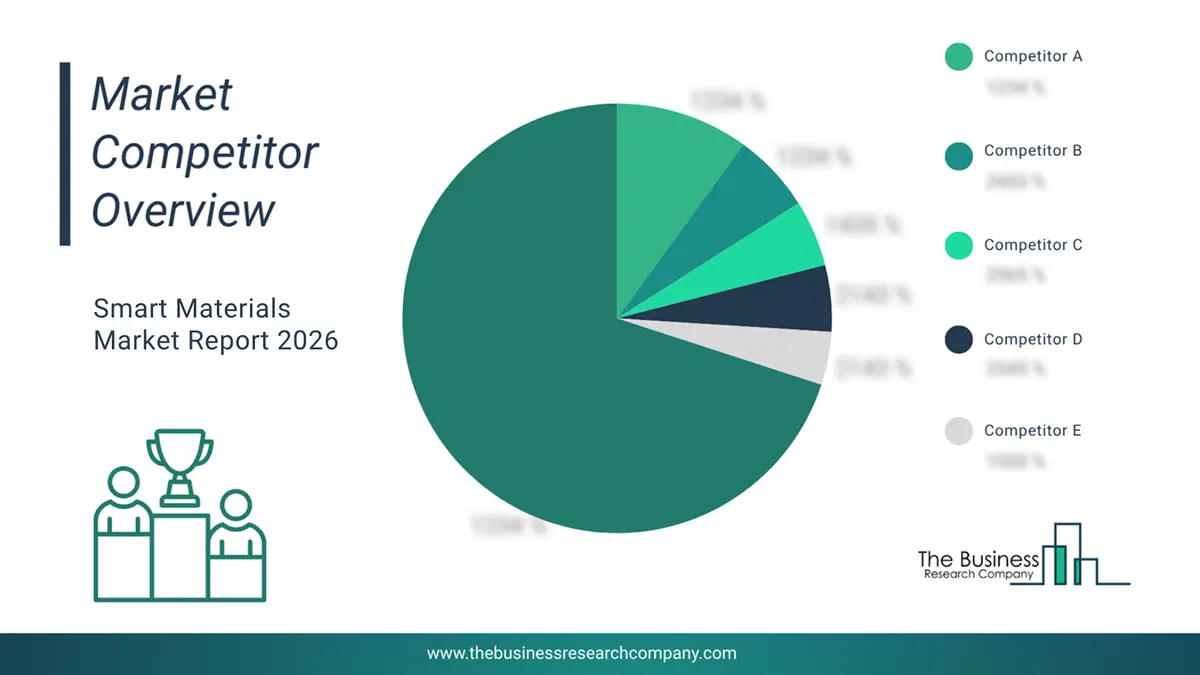
This chart is for illustrative purposes; the full report includes a detailed competitor analysis and comprehensive overview of the top 10 companies in the market.
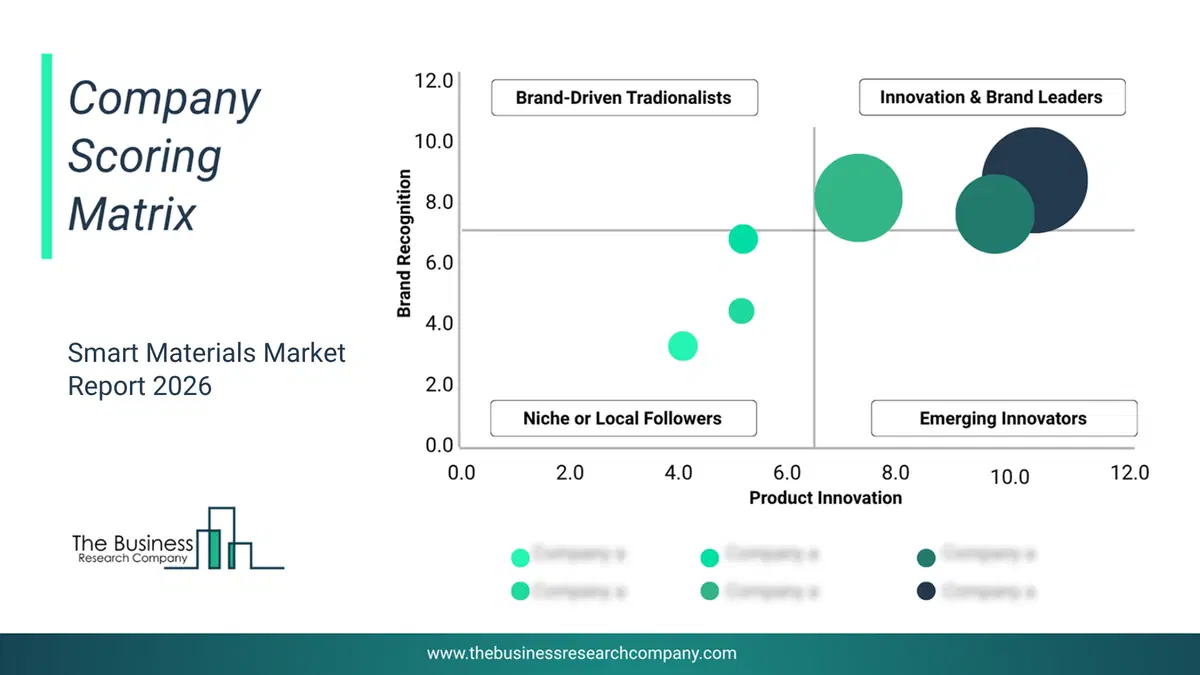
This chart maps companies by product innovation and brand strength, with bubble size indicating relative revenue, helping identify market leaders, challengers, and niche players. This is an illustrative chart; the full report provides a complete and accurate competitive analysis.
Global Smart Materials Market Trends and Insights
Major companies operating in the smart materials market are focusing on developing innovative smart materials utilizing ultrasonic conversion and actuator technology combined with filling polymers to enhance adaptability and performance for diverse industrial and medical applications. Ultrasonic conversion is the process of transforming electrical energy into high-frequency mechanical vibrations, while actuator technology enables precise motion control using these vibrations, offering benefits such as high efficiency, precision, fast response, low maintenance, and applications in medical, industrial, and automation fields. For instance, in May 2024, PI Ceramic GmbH, a Germany-based advanced materials company, introduced piezoceramic composites by embedding piezoelectric ceramics in filling polymers utilizing ultrasonic conversion and actuator technology. The technique enhances adaptability for applications in medical technology, such as high-intensity focused ultrasound and diagnostic imaging, as well as industrial uses such as flow rate metering and non-destructive measurement, by improving acoustic impedance matching, precision, sensitivity, and resolution.What Are Latest Mergers And Acquisitions In The Smart Materials Market?
In October 2023, Resonetics LLC, a US-based medical device manufacturing company, acquired SAES Smart Materials Inc. for an undisclosed amount. With this acquisition, Resonetics expands its nitinol material and processing capabilities by integrating Memry Corporation and SAES Smart Materials, adding new facilities, advanced manufacturing techniques, and a dedicated Lightspeed Lab in Bethel, Connecticut, to enhance innovation, accelerate prototyping. SAES Smart Materials Inc. is a US-based advanced materials company that manufactures smart materials.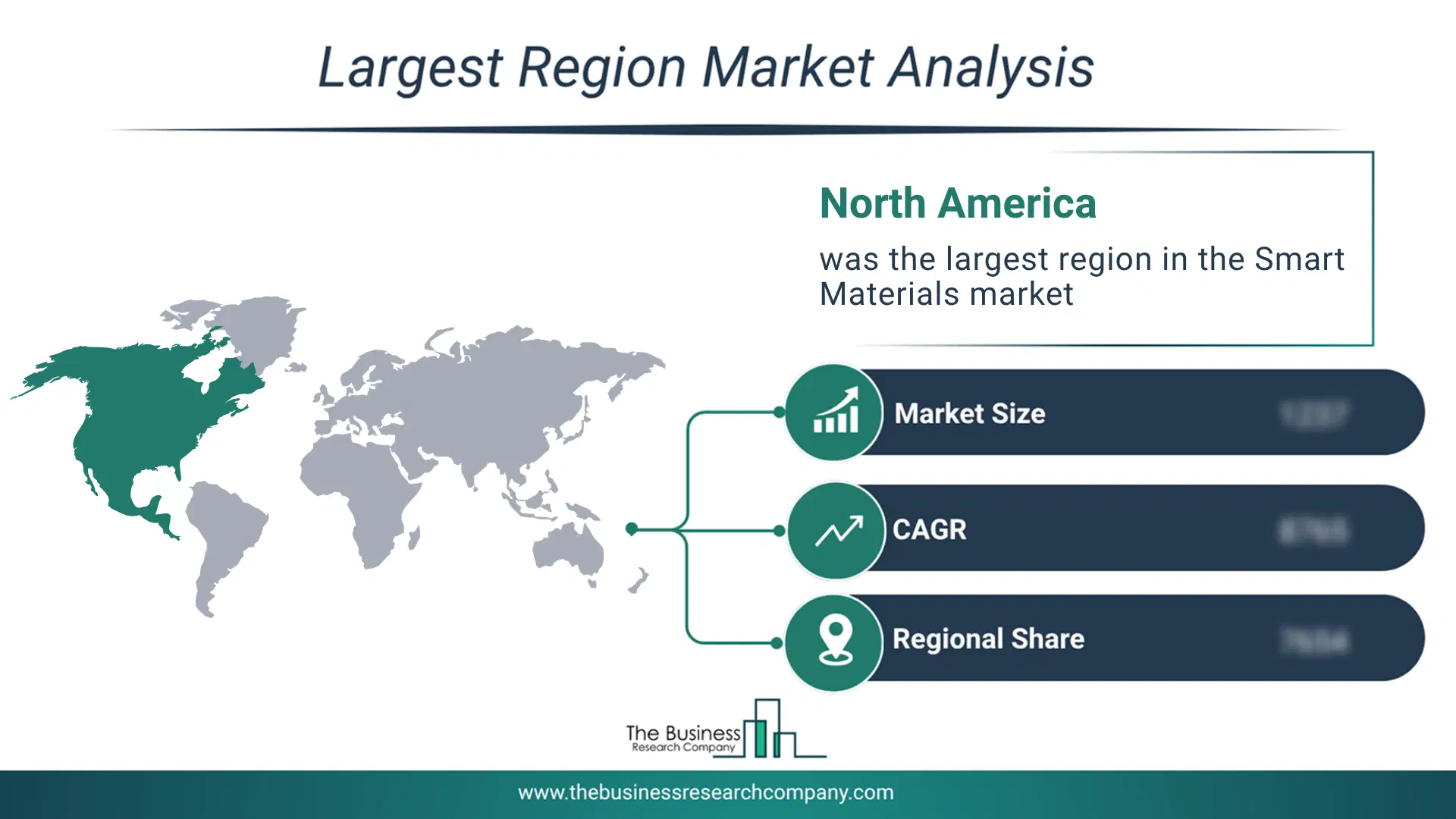
Regional Insights
North America was the largest region in the smart materials market in 2025. Asia-Pacific is expected to be the fastest-growing region in the forecast period. The regions covered in this market report are Asia-Pacific, South East Asia, Western Europe, Eastern Europe, North America, South America, Middle East, Africa The countries covered in this market report are Australia, Brazil, China, France, Germany, India, Indonesia, Japan, Taiwan, Russia, South Korea, UK, USA, Canada, Italy, SpainWhat Defines the Smart Materials Market?
The smart materials market consists of sales of electroactive polymers, thermochromic materials, thermoelectric materials, self-healing materials, and phase change materials. Values in this market are ‘factory gate’ values, that is, the value of goods sold by the manufacturers or creators of the goods, whether to other entities (including downstream manufacturers, wholesalers, distributors, and retailers) or directly to end customers. The value of goods in this market includes related services sold by the creators of the goods.How is Market Value Defined and Measured?
The market value is defined as the revenues that enterprises gain from the sale of goods and/or services within the specified market and geography through sales, grants, or donations in terms of the currency (in USD unless otherwise specified). The revenues for a specified geography are consumption values that are revenues generated by organizations in the specified geography within the market, irrespective of where they are produced. It does not include revenues from resales along the supply chain, either further along the supply chain or as part of other products.
This chart presents market attractiveness based on a quantitative evaluation of growth, competition, strategic alignment, and risk, offering a clear view of opportunity areas for decision-making. This chart is for illustrative purposes; the full report contains the complete analysis.

This chart highlights the Total Addressable Market (TAM) by estimating the maximum revenue opportunity using an assumption-driven approach, supporting strategic planning and opportunity sizing across markets. The chart is illustrative; the full report provides a more comprehensive analysis.
What Key Data and Analysis Are Included in the Smart Materials Market Report 2026?
The smart materials market research report is one of a series of new reports from The Business Research Company that provides market statistics, including industry global market size, regional shares, competitors with the market share, detailed market segments, market trends and opportunities, and any further data you may need to thrive in the smart materials industry. The market research report delivers a complete perspective of everything you need, with an in-depth analysis of the current and future state of the industry.Smart Materials Market Report Forecast Analysis
| Report Attribute | Details |
|---|---|
| Market Size Value In 2026 | $78.32 billion |
| Revenue Forecast In 2030 | $121.4 billion |
| Growth Rate | CAGR of 11.4% from 2026 to 2030 |
| Base Year For Estimation | 2025 |
| Actual Estimates/Historical Data | 2020-2025 |
| Forecast Period | 2026 - 2030 |
| Market Representation | Revenue in USD Billion and CAGR from 2026 to 2030 |
| Segments Covered | Product Type, Application Type, End User |
| Regional Scope | Asia-Pacific, Western Europe, Eastern Europe, North America, South America, Middle East, Africa |
| Country Scope | The countries covered in the report are Australia, Brazil, China, France, Germany, India, Indonesia, Japan, Taiwan, Russia, South Korea, UK, USA, Canada, Italy, Spain. |
| Key Companies Profiled | Honeywell International Inc., 3M Company, Toray Industries Inc., Evonik Industries AG, TDK Corporation, DuPont de Nemours Inc., Arkema S.A., AMETEK Inc., Schott AG, CeramTec AG, CTS Corporation, SAES Getters S.p.A, Piezo Kinetics Inc., PI Ceramic GmbH, Kyocera Corporation, APC International, LORD Corporation, Smart Material Corp., Murata Manufacturing Co., Ltd., Solvay S.A., Covestro AG, Eastman Chemical Company, Gentex Corporation |
| Customization Scope | Request for Customization |
| Pricing And Purchase Options | Explore Purchase Options |