
Still Bottled Water Market Report 2026
Global Outlook – By Bottle Type (Polyethylene Terephthalate (PET), Glass), By Size (Up To 0.5 Liters, 0.5 Liters To 1.0 Liters, 1.0 Liters To 1.5 Liters, More Than 1.5 Liters), By Distribution Channel (Supermarkets And Hypermarkets, Convenience Stores, Grocery Stores, Online, Other Distribution Channels) – Market Size, Trends, Strategies, and Forecast to 2030
Still Bottled Water Market Overview
• Still Bottled Water market size has reached to $270.87 billion in 2025 • Expected to grow to $364.41 billion in 2030 at a compound annual growth rate (CAGR) of 6.1% • Growth Driver: Increasing Health Consciousness Propels Market Growth Due To Mindful Consumption And Sustainable Choices • Market Trend: VOSS Water Launches Innovative On-The-Go 250ml Bottle • Asia-Pacific was the largest region in 2025 and North America is the fastest growing region.What Is Covered Under Still Bottled Water Market?
Still bottled water is non-carbonated packaged water that does not contain added carbonation or bubbles. It is sourced from natural springs, wells, or purified municipal supplies and is typically filtered to remove impurities while retaining essential minerals. Still bottled water is commonly used for drinking and hydration, offering consumers a convenient and portable option. The main types of bottles in still bottled water are polyethylene terephthalate (PET) and glass. Polyethylene terephthalate (PET) refers to a type of thermoplastic polymer resin that is widely used in the manufacturing of a variety of products, including plastic bottles, food containers, clothing fibers, and films. It can be available in various sizes, including up to 0.5 liters, 0.5 liters to 1.0 liters, 1.0 liters to 1.5 liters, and more than 1.5 liters, and distributed through supermarkets and hypermarkets, convenience stores, grocery stores, online, and others.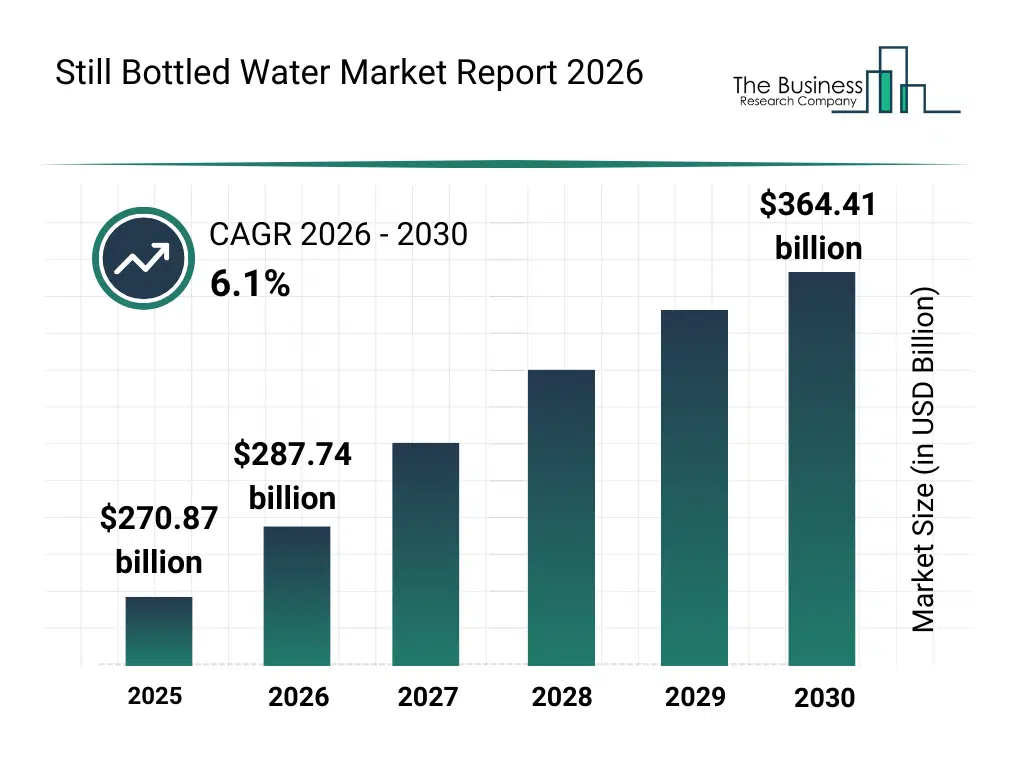
What Is The Still Bottled Water Market Size and Share 2026?
The still bottled water market size has grown strongly in recent years. It will grow from $270.87 billion in 2025 to $287.74 billion in 2026 at a compound annual growth rate (CAGR) of 6.2%. The growth in the historic period can be attributed to growth of urban population, rising concerns over tap water quality, expansion of retail distribution networks, increased on-the-go consumption, availability of natural water sources.What Is The Still Bottled Water Market Growth Forecast?
The still bottled water market size is expected to see strong growth in the next few years. It will grow to $364.41 billion in 2030 at a compound annual growth rate (CAGR) of 6.1%. The growth in the forecast period can be attributed to increasing focus on sustainable packaging solutions, rising demand for mineral-enriched water, expansion of e-commerce water delivery services, growing health-conscious consumer base, increased investment in water purification technologies. Major trends in the forecast period include increasing demand for premium packaged drinking water, rising adoption of recycled and refillable bottles, expansion of large-format bottled water consumption, growing focus on source transparency, enhanced emphasis on product purity.
Global Still Bottled Water Market Segmentation
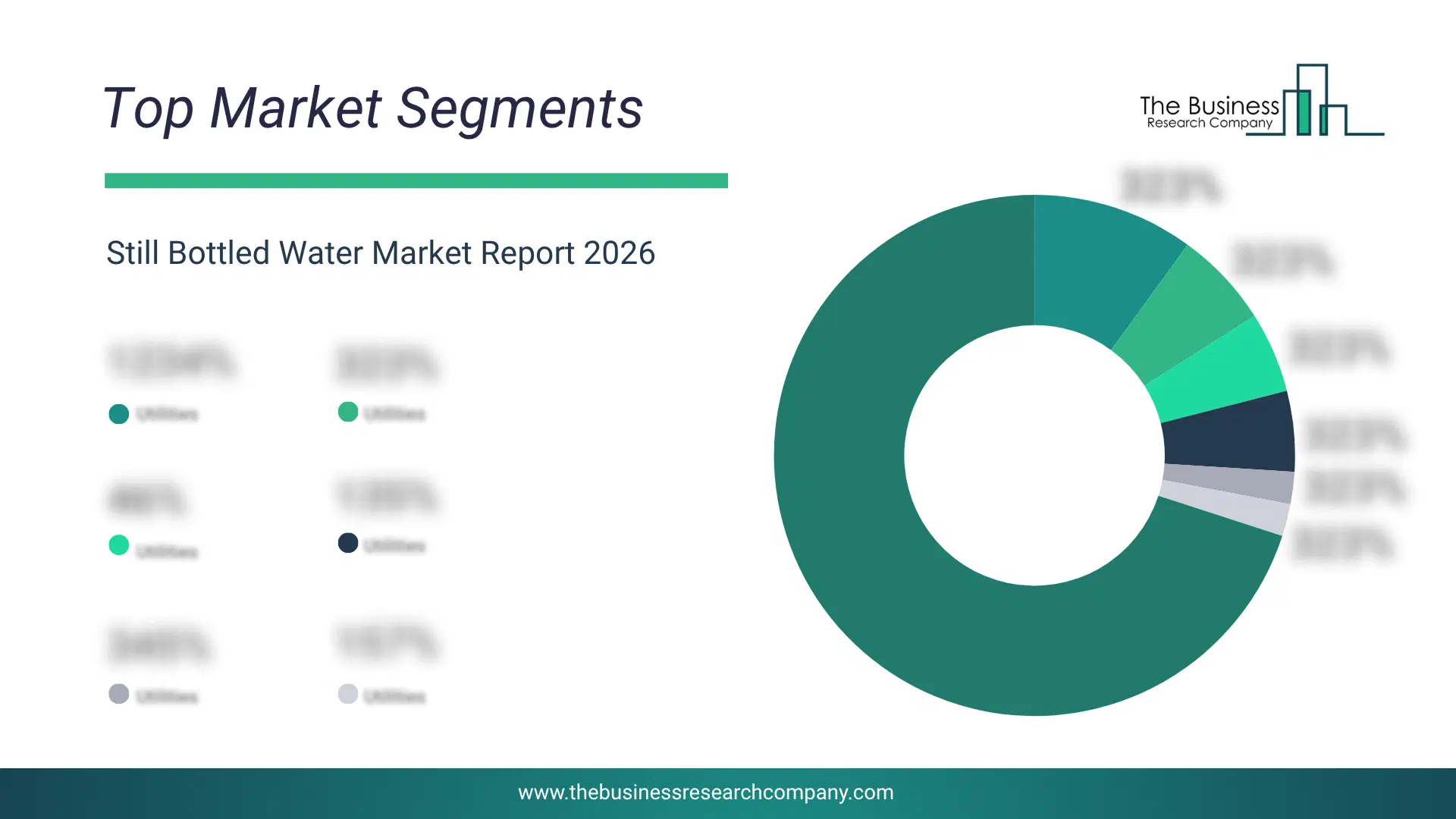
1) By Bottle Type: Polyethylene Terephthalate (PET), Glass 2) By Size: Up To 0.5 Liters, 0.5 Liters To 1.0 Liters, 1.0 Liters To 1.5 Liters, More Than 1.5 Liters 3) By Distribution Channel: Supermarkets And Hypermarkets, Convenience Stores, Grocery Stores, Online, Other Distribution Channels Subsegments: 1) By Polyethylene Terephthalate (PET): Single-Use PET Bottles, Refillable PET Bottles, Recycled PET Bottles 2) By Glass: Returnable Glass Bottles, Non-Returnable Glass Bottles, Premium Glass BottlesWhat Is The Driver Of The Still Bottled Water Market?
The increasing health consciousness is expected to propel the growth of the still bottled water market going forward. Health consciousness refers to an individual's awareness, concern, and proactive attitude toward health and well-being. Health consciousness is increasing due to shifts in lifestyle trends, social influences, and cultural shifts. Still bottled water supports health consciousness in numerous ways, mindful consumption and choosing sustainable options are key to balancing health benefits with environmental considerations. For instance, in Jun 2024, according to the International Food Information Council (IFIC), a US based non profit organization, the proportion of Americans following a specific diet or eating pattern over the past year remains high at 54%. Most people are looking to increase their protein intake, with interest climbing from 59% in 2022 to 67% in 2023, and reaching 71% in 2024. Additionally, roughly half of consumers aim to eat more fresh foods, which are widely considered the healthiest options. Therefore, increasing health consciousness drives growth in the Still bottled water industry.Key Players In The Global Still Bottled Water Market
Major companies operating in the still bottled water market are Danone S.A., Nongfu Spring Co. Ltd., Culligan International Company, Primo Brands, Tata Consumer Products Limited, Bisleri International Pvt. Ltd., FIJI Water Company LLC, Highland Spring Ltd., Société Anonyme des Eaux Minérales d'Évian, Hildon Ltd., Aqua Carpatica, Nestlé Waters France, Belu Water Ltd., Mattoni a.s., Evocus, CG Roxane LLC, Spa Monopole N.V., Hassia Mineralquellen GmbH & Co. KG, PepsiCo Inc., San Benedetto S.p.A.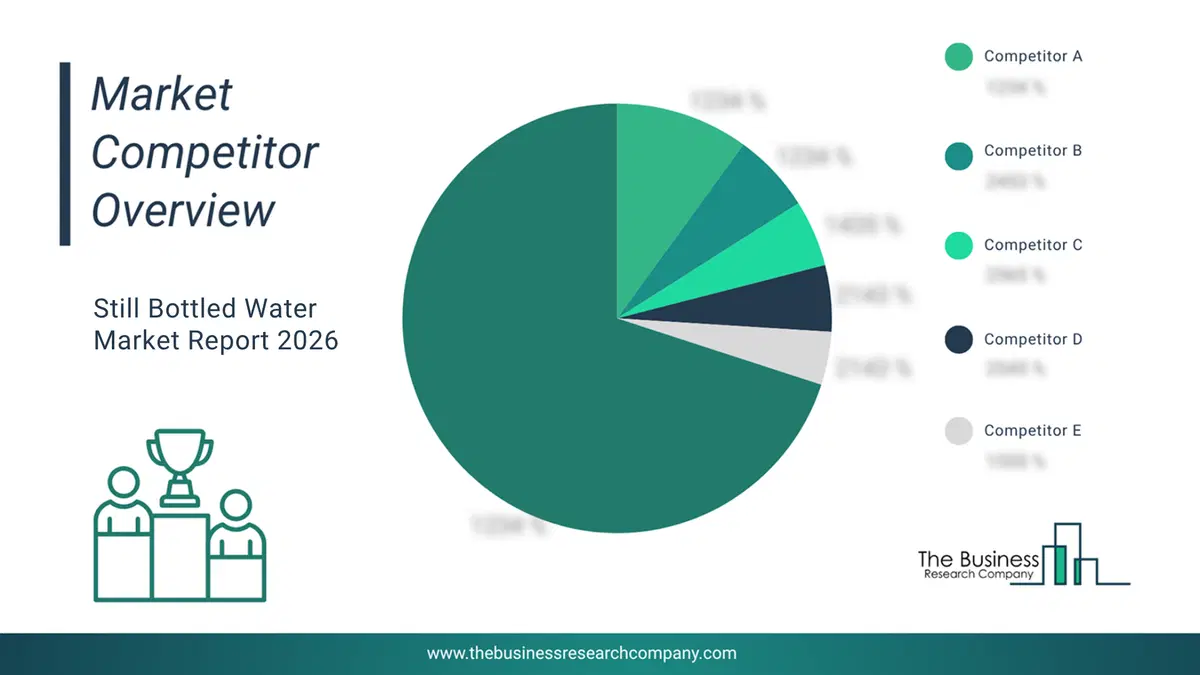
This chart is for illustrative purposes; the full report includes a detailed competitor analysis and comprehensive overview of the top 10 companies in the market.
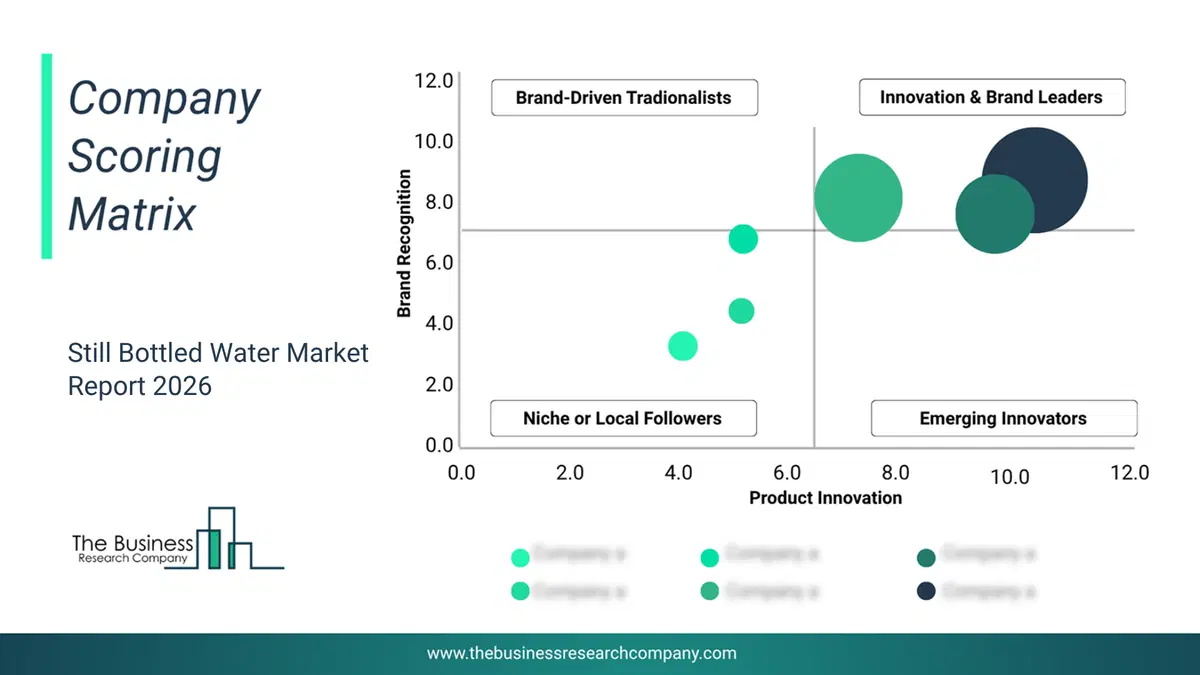
This chart maps companies by product innovation and brand strength, with bubble size indicating relative revenue, helping identify market leaders, challengers, and niche players. This is an illustrative chart; the full report provides a complete and accurate competitive analysis.
Global Still Bottled Water Market Trends and Insights
Major companies operating in the still bottled water market are focusing on developing innovative products, such as on-the-go still water bottles, to cater to consumer convenience and health trends. An on-the-go still water bottle is a portable, single-serving bottle of still (non-carbonated) water designed for convenience and ease of use while traveling or during active moments. For instance, in January 2025, VOSS Water, a US-based bottled water company, launched a sleek new 250ml Still Water bottle in the UAE, designed to blend luxury with convenience for today's fast-paced lifestyle. This compact bottle is perfect for on-the-go consumption at the gym or during daily commutes. Crafted from 100% recycled PET, it reflects VOSS's commitment to sustainability and environmental responsibility, aligning with the UAE's focus on reducing carbon footprints. VOSS water is sourced from a pristine aquifer in Southern Norway, ensuring exceptional purity and taste.What Are Latest Mergers And Acquisitions In The Still Bottled Water Market?
In December 2023, Clear Premium Water, an India-based company that provides packaged drinking water, acquired Kelzai Volcanic Water for an undisclosed amount. The acquisitions aim to expand its product portfolio by incorporating Kelzai's unique volcanic spring water, renowned for its mineral-rich composition, which allows Clear Premium to leverage its extensive distribution network across India. Kelzai Volcanic Water is an India-based natural mineral still bottled water company.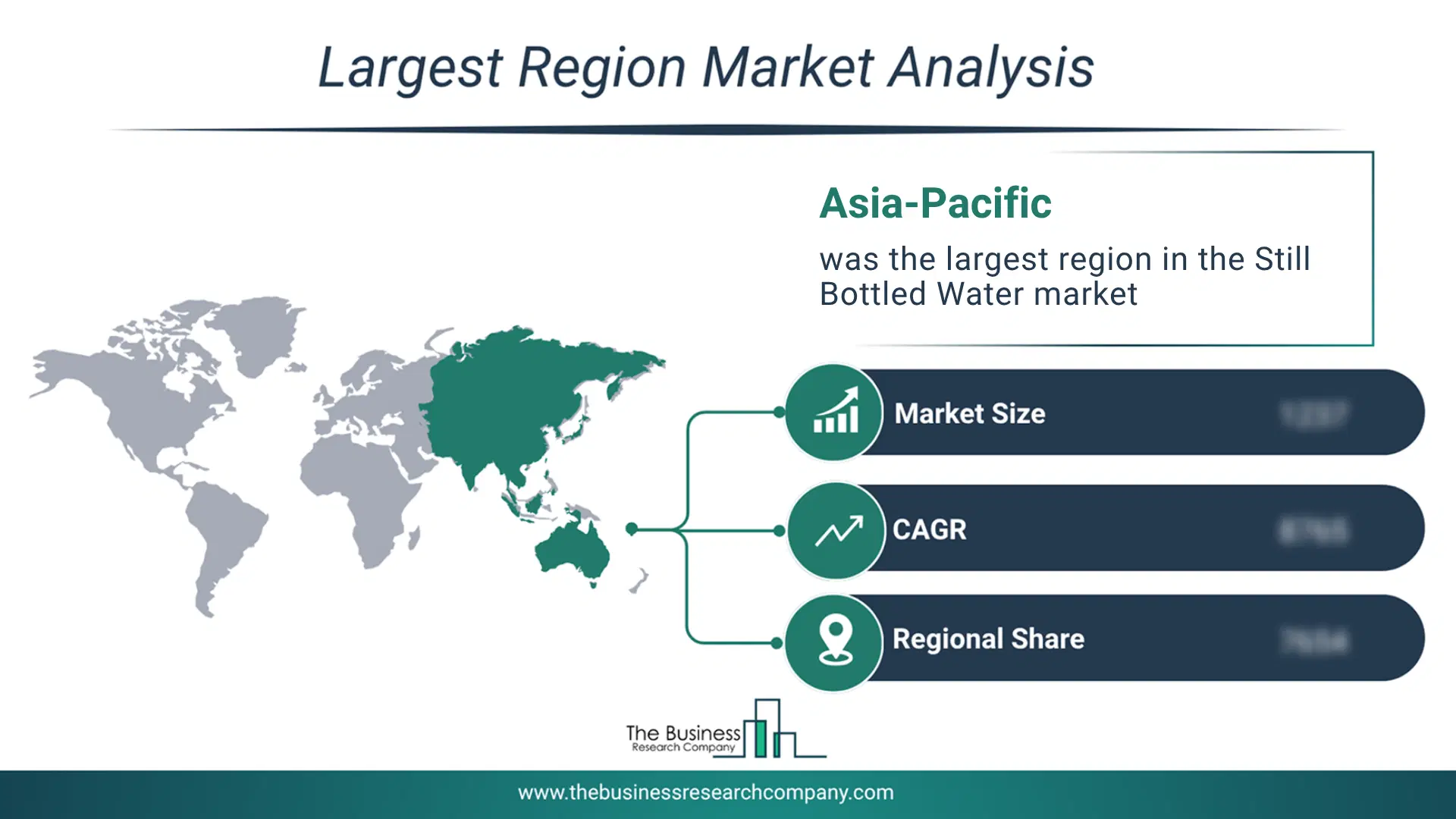
Regional Outlook
Asia-Pacific was the largest region in the still bottled water market in 2025. North America is expected to be the fastest-growing region in the forecast period. The regions covered in this market report are Asia-Pacific, South East Asia, Western Europe, Eastern Europe, North America, South America, Middle East and Africa. The countries covered in this market report are Australia, Brazil, China, France, Germany, India, Indonesia, Japan, Taiwan, Russia, South Korea, UK, USA, Italy, Spain, CanadaWhat Defines the Still Bottled Water Market?
The still bottled water market consists of sales of spring water, mineral water, purified water, distilled water, alkaline water, and filtered water. Values in this market are ‘factory gate’ values, that is, the value of goods sold by the manufacturers or creators of the goods, whether to other entities (including downstream manufacturers, wholesalers, distributors, and retailers) or directly to end customers. The value of goods in this market includes related services sold by the creators of the goodsHow is Market Value Defined and Measured?
The market value is defined as the revenues that enterprises gain from the sale of goods and/or services within the specified market and geography through sales, grants, or donations in terms of the currency (in USD unless otherwise specified). The revenues for a specified geography are consumption values that are revenues generated by organizations in the specified geography within the market, irrespective of where they are produced. It does not include revenues from resales along the supply chain, either further along the supply chain or as part of other products.
This chart presents market attractiveness based on a quantitative evaluation of growth, competition, strategic alignment, and risk, offering a clear view of opportunity areas for decision-making. This chart is for illustrative purposes; the full report contains the complete analysis.

This chart highlights the Total Addressable Market (TAM) by estimating the maximum revenue opportunity using an assumption-driven approach, supporting strategic planning and opportunity sizing across markets. The chart is illustrative; the full report provides a more comprehensive analysis.
What Key Data and Analysis Are Included in the Still Bottled Water Market Report 2026?
The still bottled water market research report is one of a series of new reports from The Business Research Company that provides market statistics, including industry global market size, regional shares, competitors with the market share, detailed market segments, market trends and opportunities, and any further data you may need to thrive in the still bottled water industry. The market research report delivers a complete perspective of everything you need, with an in-depth analysis of the current and future state of the industry.Still Bottled Water Market Report Forecast Analysis
| Report Attribute | Details |
|---|---|
| Market Size Value In 2026 | $287.74 billion |
| Revenue Forecast In 2030 | $364.41 billion |
| Growth Rate | CAGR of 6.2% from 2026 to 2030 |
| Base Year For Estimation | 2025 |
| Actual Estimates/Historical Data | 2020-2025 |
| Forecast Period | 2026 - 2030 |
| Market Representation | Revenue in USD Billion and CAGR from 2026 to 2030 |
| Segments Covered | Bottle Type, Size, Distribution Channel |
| Regional Scope | Asia-Pacific, Western Europe, Eastern Europe, North America, South America, Middle East, Africa |
| Country Scope | The countries covered in the report are Australia, Brazil, China, France, Germany, India, Indonesia, Japan, Taiwan, Russia, South Korea, UK, USA, Canada, Italy, Spain. |
| Key Companies Profiled | Danone S.A., Nongfu Spring Co. Ltd., Culligan International Company, Primo Brands, Tata Consumer Products Limited, Bisleri International Pvt. Ltd., FIJI Water Company LLC, Highland Spring Ltd., Société Anonyme des Eaux Minérales d'Évian, Hildon Ltd., Aqua Carpatica, Nestlé Waters France, Belu Water Ltd., Mattoni a.s., Evocus, CG Roxane LLC, Spa Monopole N.V., Hassia Mineralquellen GmbH & Co. KG, PepsiCo Inc., San Benedetto S.p.A. |
| Customization Scope | Request for Customization |
| Pricing And Purchase Options | Explore Purchase Options |