
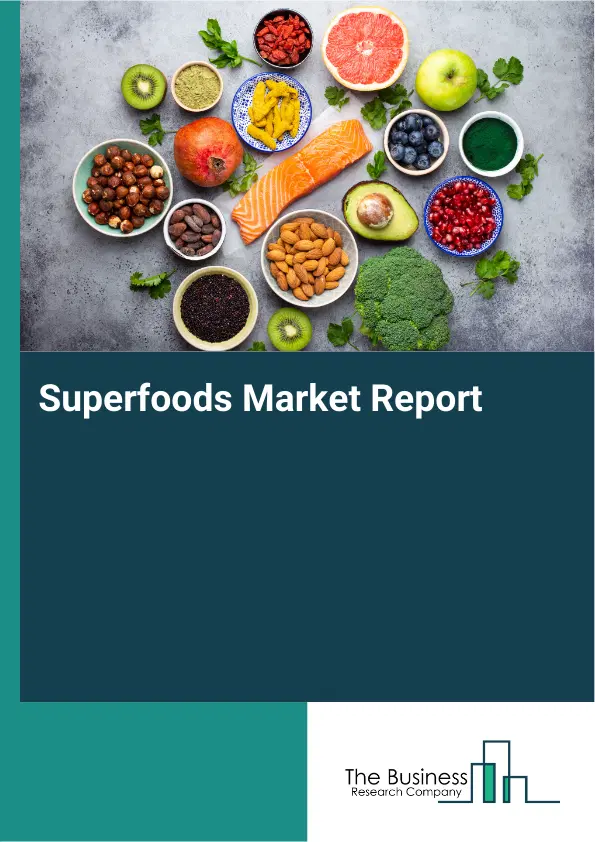
Superfoods Market Report 2026
Global Outlook – By Product Type (Fruits, Vegetables, Grains And Seeds, Herbs And Roots, Other Products ), By Application (Bakery And Confectionery, Beverages, Supplements, Convenience Or Ready-To-Eat Foods, Other Applications ), By Distribution Channel (Supermarkets Or Hypermarkets, Online Channels, Traditional Grocery Stores, Convenience Stores, Other Distribution Channels) – Market Size, Trends, Strategies, and Forecast to 2030
Superfoods Market Overview
• Superfoods market size has reached to $187.17 billion in 2025 • Expected to grow to $284.7 billion in 2030 at a compound annual growth rate (CAGR) of 8.8% • Growth Driver: Superfoods Surge Riding The Wave Of Growing Health-Conscious Consumer Trends • Market Trend: Rise Of Personalization And Customized Nutrition • North America was the largest region in 2025 and Asia-Pacific is the fastest growing region.Market Gains By 2030 – Top Opportunities By Segment
Market Gain identifies the most promising market opportunities by highlighting the segments or products expected to generate the highest incremental revenue growth over the next five years.
What Is Covered Under Superfoods Market?
Superfoods refer to highly nutritious foods that provide substantial health benefits due to their rich content of vitamins, minerals, antioxidants, and essential nutrients. They are commonly used in various forms, such as supplements, smoothies, snacks, and meal components, to enhance nutritional value. The benefits of incorporating superfoods into your diet include improved immune function, reduced inflammation, increased energy, and better digestion. The main superfoods product types are fruits, vegetables, grains, seeds, herbs, roots, meat, and other products. Fruits have high fiber and vitamin content, such as apples, avocados, berries, grapes, kiwi, and others. The different applications of superfoods include bakery and confectionery, beverages, supplements, convenience/ready-to-eat foods and other applications, which are distributed through channels such as supermarkets and hypermarkets, online channels, traditional grocery stores, convenience stores, and other distribution channels.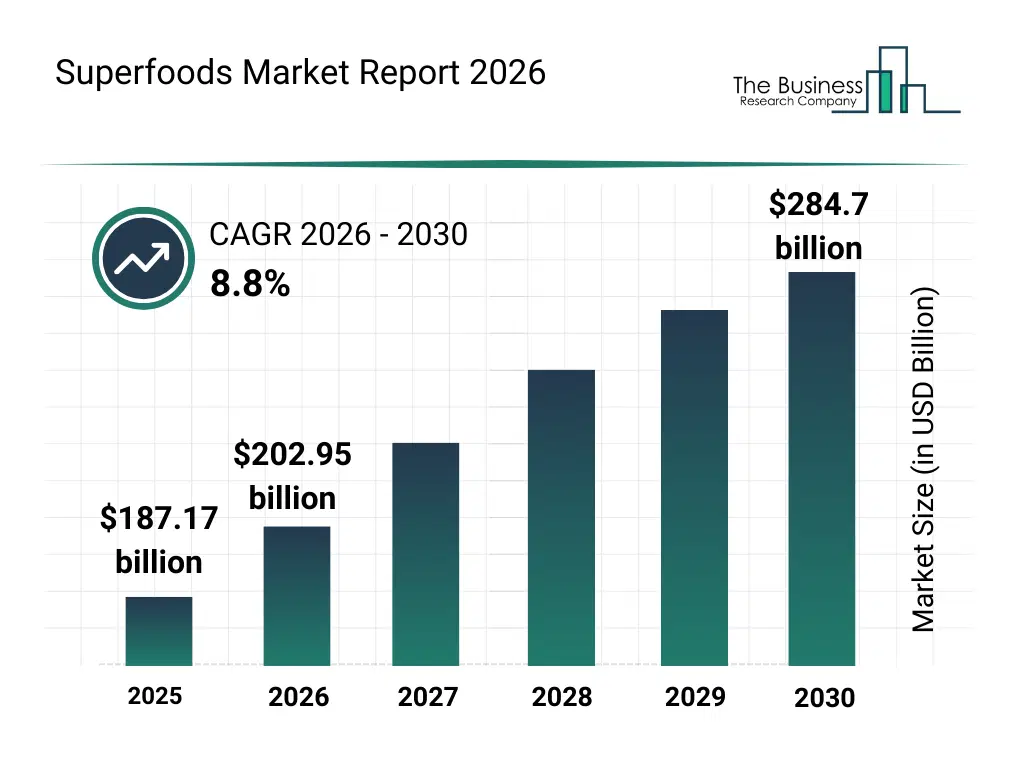
What Is The Superfoods Market Size and Share 2026?
The superfoods market size has grown strongly in recent years. It will grow from $187.17 billion in 2025 to $202.95 billion in 2026 at a compound annual growth rate (CAGR) of 8.4%. The growth in the historic period can be attributed to increasing consumer health consciousness, expansion of organic food consumption, rising adoption of preventive nutrition, growth of dietary supplement usage, improved global availability of superfood ingredients.What Is The Superfoods Market Growth Forecast?
The superfoods market size is expected to see strong growth in the next few years. It will grow to $284.7 billion in 2030 at a compound annual growth rate (CAGR) of 8.8%. The growth in the forecast period can be attributed to increasing demand for immune-boosting foods, expansion of functional beverage categories, rising focus on sustainable sourcing, growing e-commerce penetration for health foods, continuous innovation in superfood formulations. Major trends in the forecast period include increasing demand for functional and nutrient-dense foods, rising popularity of plant-based superfoods, growing use of superfood ingredients in beverages, expansion of superfood supplements and powders, enhanced focus on traceability and ingredient transparency.
Global Superfoods Market Segmentation
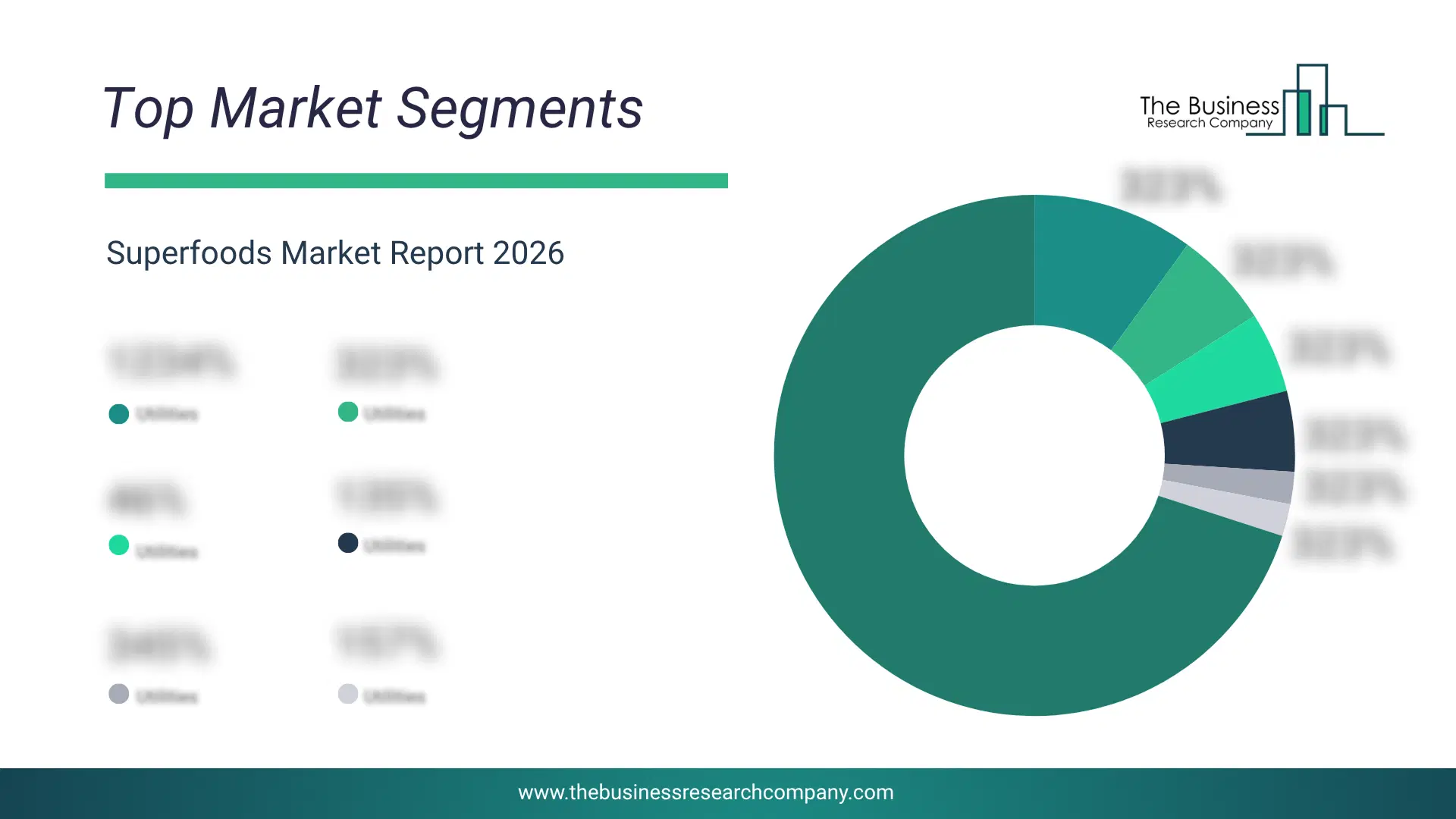
1) By Product Type: Fruits, Vegetables, Grains And Seeds, Herbs And Roots, Other Products 2) By Application: Bakery And Confectionery, Beverages, Supplements, Convenience Or Ready-To-Eat Foods, Other Applications 3) By Distribution Channel: Supermarkets Or Hypermarkets, Online Channels, Traditional Grocery Stores, Convenience Stores, Other Distribution Channels Subsegments: 1) By Fruits: Berries, Avocado, Pomegranate, Goji Berries 2) By Vegetables: Leafy Greens, Cruciferous Vegetables, Sweet Potatoes, Beets 3) By Grains And Seeds: Quinoa, Chia Seeds, Flaxseeds, Amaranth 4) By Herbs And Roots: Turmeric, Ginger, Garlic, Ashwagandha 5) By Other Products: Superfood Powders, Snacks, Beverages The top segments in the healthcare claims management solutions market will be: • Software will reach $15.13 Billion by 2030. • Services will reach $9.24 Billion by 2030. The top segments in the superfoods market will be: • Fruits will reach $101.31 Billion by 2030. • Grains And Seeds will reach $74.72 Billion by 2030. • Vegetables will reach $63.86 Billion by 2030. • Herbs And Roots will reach $27.07 Billion by 2030. • Other Products will reach $16.3 Billion by 2030.What Is The Driver Of The Superfoods Market?
The increasing number of health-conscious consumers is expected to propel the growth of the superfoods market going forward. Health-conscious consumers are individuals who actively make dietary and lifestyle choices aimed at improving their overall health, nutrition, and well-being. The rise of health-conscious consumers is fueled by growing awareness of the benefits of nutritious diets, including disease prevention, improved energy, and better long-term health outcomes. Superfoods help meet the nutritional needs of health-conscious consumers by providing concentrated sources of essential vitamins, minerals, and antioxidants that support overall wellness. For instance, in May 2023, according to the International Food Information Council (IFIC), a US-based nonprofit organization focused on food and health research, its annual Food and Health Survey found that 52% of American adults reported following a specific eating pattern or diet in 2023, with the share among boomers rising to 41% up from 29% in 2022, and the most common eating patterns reported were high protein at 18%, mindful eating at 17%, calorie counting at 12%, clean eating at 12%, and intermittent fasting at 12%. Therefore, the increasing number of health-conscious consumers is driving the growth of the superfoods industry.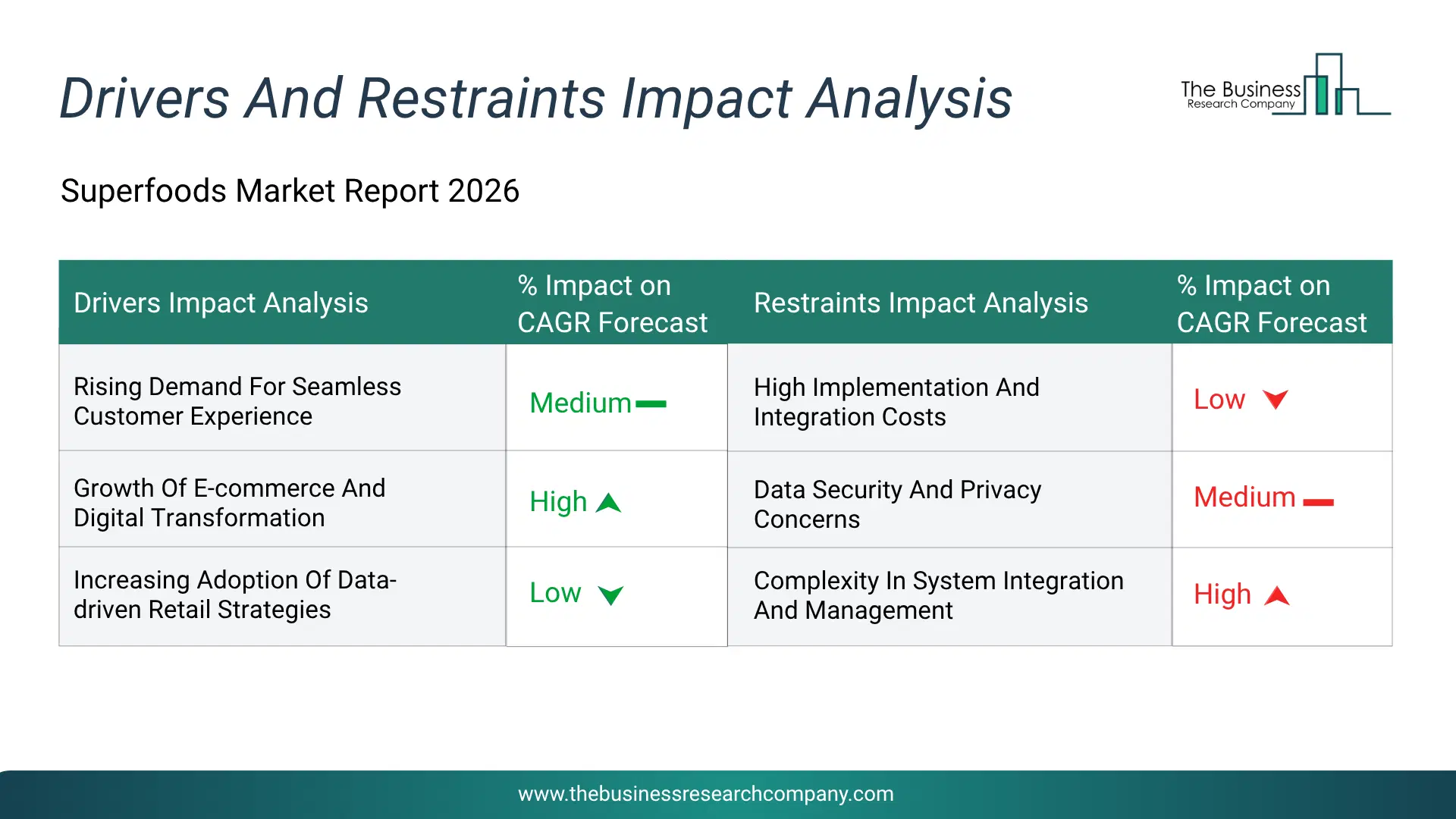
Infographic Chart Showing Key Market Drivers Analysis And Restraints For Superfoods Market
The chart presents an impact analysis of key drivers and restraints, quantifying their relative influence on the market's growth rate and helping assess the balance between growth enablers and limiting factors. This chart offers a high-level perspective; the full report contains more detailed insights.
How Will The Drivers Impact Growth In The Global Superfoods Market?
• Rising Demand For Seamless Customer Experience (Medium) – During the forecast period, the rising health and wellness awareness among consumers is expected to become a key growth driver for the superfoods market by 2030. Consumers are increasingly prioritizing health and wellness, leading to greater demand for nutrient-dense foods. Superfoods such as berries, leafy greens, seeds, and ancient grains are perceived as natural sources of vitamins, antioxidants, and essential minerals. This shift toward preventive health management encourages individuals to incorporate superfoods into their daily diets. • Growth Of E-commerce And Digital Transformation (High) – During the forecast period, the growing demand for functional and fortified foods is expected to emerge as a major driver for the superfoods market by 2030. Consumers seek foods that offer specific health benefits beyond basic nutrition, such as immune support, digestive health, and cognitive function. Superfoods naturally provide these functional properties, making them attractive ingredients for food and beverage manufacturers. The growing popularity of plant-based diets and clean-label products further supports the demand for minimally processed superfood ingredients. Additionally, innovations in food processing and packaging are extending the shelf life and accessibility of superfood products across retail channels. • Increasing Adoption Of Data-driven Retail Strategies (Low) – During the forecast period, the expansion of e-commerce and direct-to-consumer sales channels is expected to act as a key growth catalyst for the superfoods market by 2030. The rapid growth of e-commerce platforms is increasing the accessibility of superfood products to a wider consumer base. Online retail allows specialty superfood brands to reach health-conscious consumers directly, offering detailed product information, customer reviews, and subscription-based delivery models. This channel expansion is particularly beneficial for exotic and imported superfoods that may have limited availability in traditional brick-and-mortar stores. Furthermore, social media and influencer marketing are driving awareness and trial of new superfood products among younger demographics.How Will The Restraints Impact Growth In The Global Superfoods Market?
• High Implementation And Integration Costs (Medium) – During the forecast period, the the adoption of omnichannel retail commerce platforms requires significant investment in software, infrastructure, and training. Integrating modern platforms with existing legacy systems can be complex and expensive. Small and medium-sized enterprises often face budget constraints that limit adoption. Additionally, ongoing maintenance and system upgrades increase total costs. These financial barriers can delay implementation decisions. Businesses may hesitate to invest without clear short-term returns. As a result, high costs restrict widespread adoption of omnichannel solutions. • Data Security And Privacy Concerns (High) – During the forecast period, the omnichannel platforms handle large volumes of sensitive customer data, raising concerns about security and privacy. The integration of multiple channels increases vulnerability to cyber threats and data breaches. Compliance with data protection regulations requires additional resources and expertise. Any security failure can lead to reputational damage and financial penalties. Ensuring secure data flow across systems is technically challenging. These risks discourage some organizations from adopting such platforms. Consequently, data security concerns act as a major restraint on market growth. • Complexity In System Integration And Management (Low) – During the forecast period, the implementing omnichannel platforms involves integrating multiple systems such as CRM, inventory, logistics, and payment gateways. This creates operational and technical complexities. Ensuring seamless data synchronization across channels is challenging. System failures or inconsistencies can disrupt customer experience. Businesses require skilled professionals to manage and maintain these systems. Continuous monitoring and updates are necessary to ensure efficiency. These complexities can slow down adoption and reduce effectiveness. Hence, integration challenges act as a restraint for market growth.Key Players In The Global Superfoods Market
Major companies operating in the superfoods market are Sunfood Corporation, Pukka Herbs Ltd., Navitas Organics LLC, Nutiva Inc., Organic Traditions Inc., Barlean’s Organic Oils LLC, Creative Nature Ltd., Pines International Inc., Rainforest Foods Ltd., Suncore Foods Inc., Impact Foods International Ltd., Rhythm Superfoods LLC, Aduna Ltd., Nature’s Superfoods LLP, Essential Living Foods Inc., Rritual Superfoods Inc., Superlife Co Pte. Ltd., OMG! Organic Meets Good, Imlak’esh Organics, Supernutrients Limited, Matakana SuperFoods Ltd., Organic Burst Limited, Sevenhills Wholefoods Ltd., The Chia Co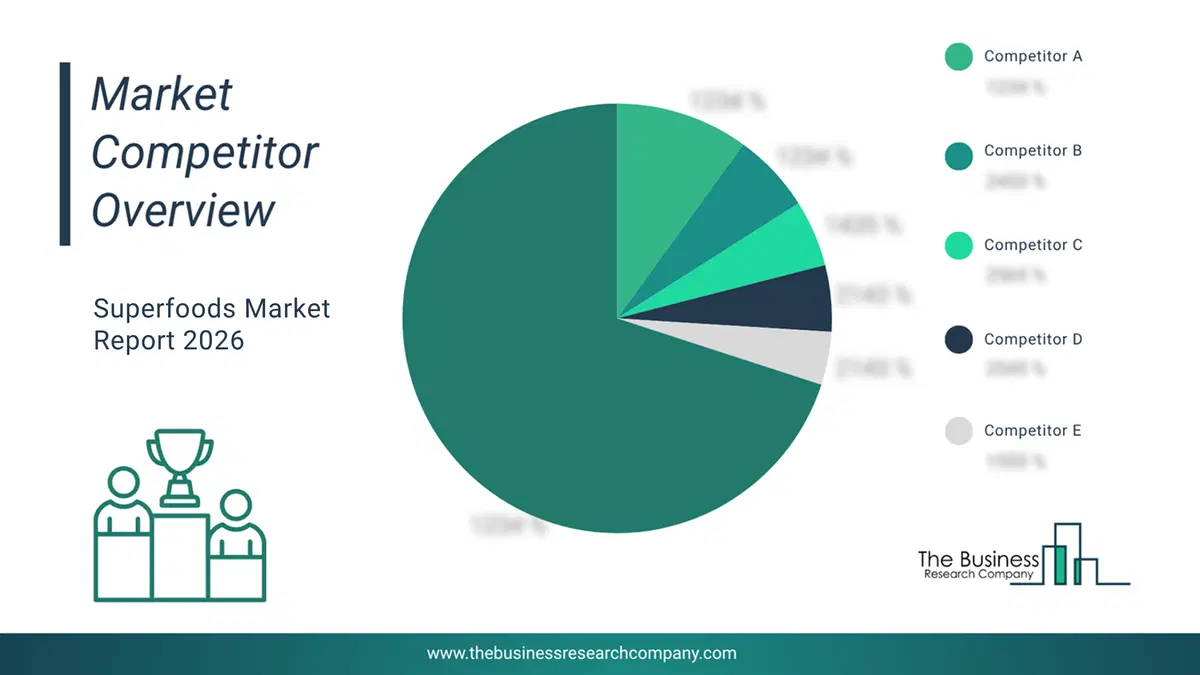
This chart is for illustrative purposes; the full report includes a detailed competitor analysis and comprehensive overview of the top 10 companies in the market.
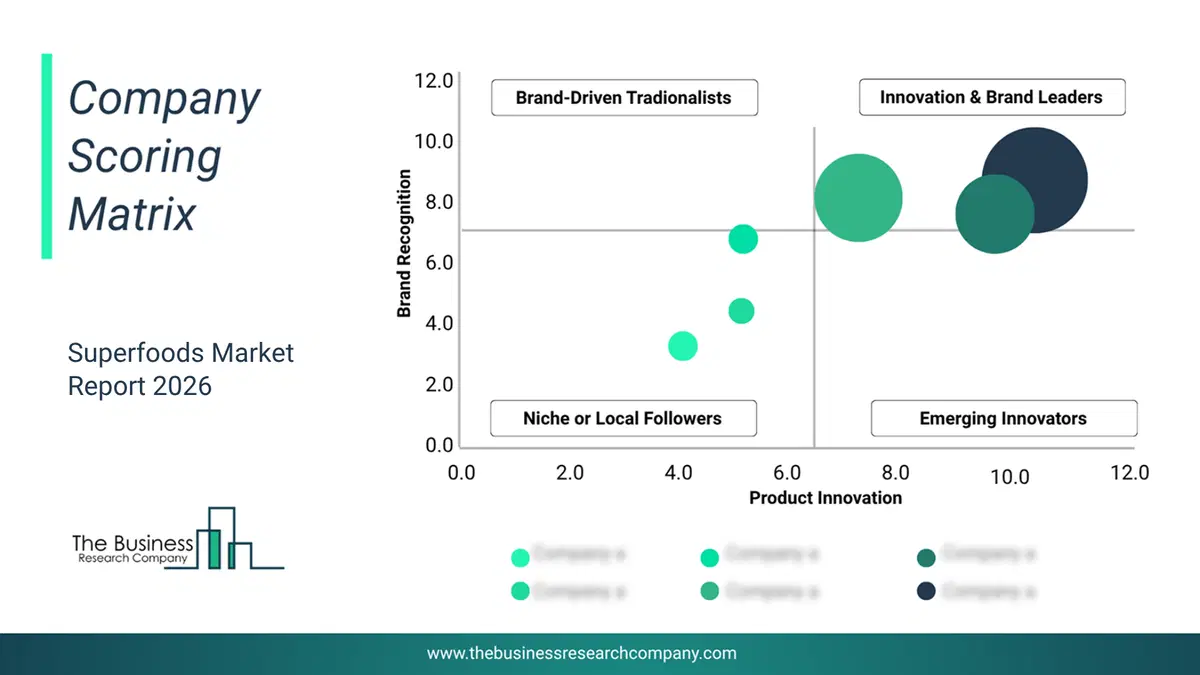
This chart maps companies by product innovation and brand strength, with bubble size indicating relative revenue, helping identify market leaders, challengers, and niche players. This is an illustrative chart; the full report provides a complete and accurate competitive analysis.
Global Superfoods Market Trends and Insights
Major companies operating in the superfoods market are focusing on leveraging personalization in nutritional offerings such as plant-based protein blends to enhance convenience and support individual health goals. Plant-based protein blends are combinations of proteins derived from plant sources that are formulated to deliver high-quality protein without animal ingredients, enabling benefits such as improved nutritional intake and functional support in everyday beverages. For instance, in May 2024, Laird Superfood Inc., a US-based manufacturer of plant-based superfood products, launched Laird Superfood Protein Creamer, a plant-based protein blend designed to help consumers boost their protein consumption in coffee or tea, featuring 12 grams of protein per serving, naturally occurring MCTs from coconut, and a performance mushroom blend for functional wellness. Laird Superfood Protein Creamer improves personalized nutrition by offering a convenient way to add protein and functional ingredients to commonly consumed beverages.What Are Latest Mergers And Acquisitions In The Superfoods Market?
In January 2025, Wellful Inc., a US-based omni-channel health and wellness platform, acquired Ancient Nutrition LLC for an undisclosed amount. Through this acquisition, Wellful, Inc. aims to expand its portfolio of innovative health and wellness brands, strengthen its omnichannel presence in vitamin, mineral, and supplement categories, and grow its distribution footprint in the natural retail channel. Ancient Nutrition LLC is a US-based company providing superfood-based nutritional products, including protein, gut health, and greens supplements.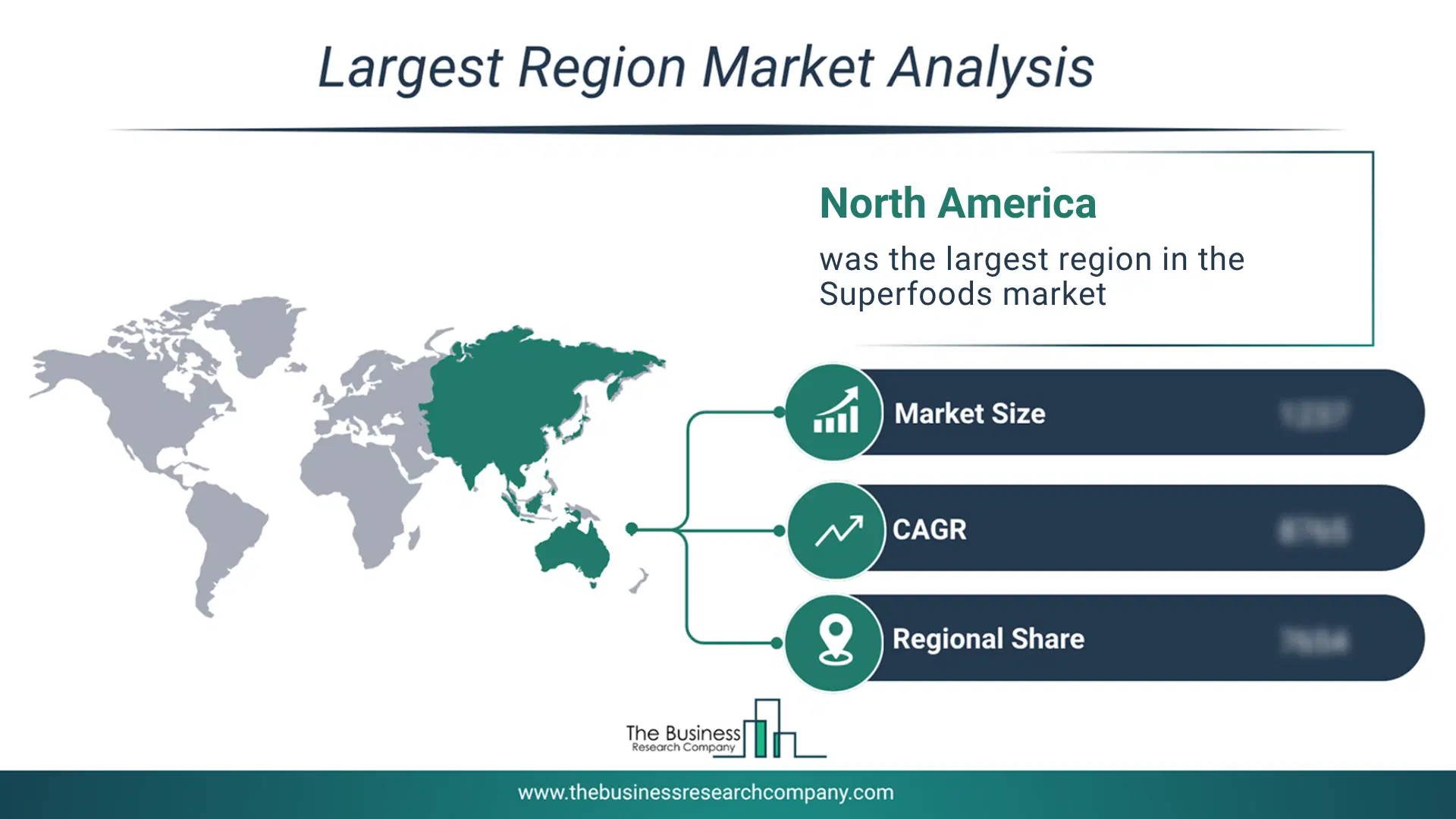
Regional Outlook
North America was the largest region in the superfoods market share in 2025. Asia-Pacific is expected to be the fastest-growing region in the forecast period. The regions covered in this market report are Asia-Pacific, South East Asia, Western Europe, Eastern Europe, North America, South America, Middle East and Africa. The countries covered in this market report are Australia, Brazil, China, France, Germany, India, Indonesia, Japan, Taiwan, Russia, South Korea, UK, USA, Italy, Spain, CanadaWhat Defines the Superfoods Market?
The superfoods market consists of sales of food items that have high levels of specific nutrients such as antioxidants, vitamins, or minerals and extra health benefits. The different types of superfoods included are fruits, vegetables, herbs and roots, meat, grains and seeds, and others. Values in this market are ‘factory gate’ values, that is the value of goods sold by the manufacturers or creators of the goods, whether to other entities (including downstream manufacturers, wholesalers, distributors and retailers) or directly to end customers. The value of goods in this market includes related services sold by the creators of the goods.How is Market Value Defined and Measured?
The market value is defined as the revenues that enterprises gain from the sale of goods and/or services within the specified market and geography through sales, grants, or donations in terms of the currency (in USD unless otherwise specified). The revenues for a specified geography are consumption values that are revenues generated by organizations in the specified geography within the market, irrespective of where they are produced. It does not include revenues from resales along the supply chain, either further along the supply chain or as part of other products.
This chart presents market attractiveness based on a quantitative evaluation of growth, competition, strategic alignment, and risk, offering a clear view of opportunity areas for decision-making. This chart is for illustrative purposes; the full report contains the complete analysis.

This chart highlights the Total Addressable Market (TAM) by estimating the maximum revenue opportunity using an assumption-driven approach, supporting strategic planning and opportunity sizing across markets. The chart is illustrative; the full report provides a more comprehensive analysis.
What Key Data and Analysis Are Included in the Superfoods Market Report 2026?
The superfoods market research report is one of a series of new reports from The Business Research Company that provides market statistics, including industry global market size, regional shares, competitors with the market share, detailed market segments, market trends and opportunities, and any further data you may need to thrive in the superfoods industry. The market research report delivers a complete perspective of everything you need, with an in-depth analysis of the current and future state of the industry.Superfoods Market Report Forecast Analysis
| Report Attribute | Details |
|---|---|
| Market Size Value In 2026 | $202.95 billion |
| Revenue Forecast In 2030 | $284.7 billion |
| Growth Rate | CAGR of 8.4% from 2026 to 2030 |
| Base Year For Estimation | 2025 |
| Actual Estimates/Historical Data | 2020-2025 |
| Forecast Period | 2026 - 2030 |
| Market Representation | Revenue in USD Billion and CAGR from 2026 to 2030 |
| Segments Covered | Product Type, Application, Distribution Channel |
| Regional Scope | Asia-Pacific, Western Europe, Eastern Europe, North America, South America, Middle East, Africa |
| Country Scope | The countries covered in the report are Australia, Brazil, China, France, Germany, India, Indonesia, Japan, Taiwan, Russia, South Korea, UK, USA, Canada, Italy, Spain. |
| Key Companies Profiled | Sunfood Corporation, Pukka Herbs Ltd., Navitas Organics LLC, Nutiva Inc., Organic Traditions Inc., Barlean’s Organic Oils LLC, Creative Nature Ltd., Pines International Inc., Rainforest Foods Ltd., Suncore Foods Inc., Impact Foods International Ltd., Rhythm Superfoods LLC, Aduna Ltd., Nature’s Superfoods LLP, Essential Living Foods Inc., Rritual Superfoods Inc., Superlife Co Pte. Ltd., OMG! Organic Meets Good, Imlak’esh Organics, Supernutrients Limited, Matakana SuperFoods Ltd., Organic Burst Limited, Sevenhills Wholefoods Ltd., The Chia Co |
| Customization Scope | Request for Customization |
| Pricing And Purchase Options | Explore Purchase Options |