
Cold Storage Construction Market Report 2026
Global Outlook – By Type (Production Stores, Bulk Stores, Ports, Other Types), By Construction Type (Concrete Masonry Unit, Metal Panel, Tilt-up Concrete, Steel Frame), By Warehouse (Private And Semi-private Warehouses, Public Warehouses), By Automation Level (Manual, Semi-Automated, Automated), By Application (Food And Beverage, Pharmaceutical And Healthcare, Industrial And Manufacturing, Retail And Commercial) – Market Size, Trends, Strategies, and Forecast to 2030
Cold Storage Construction Market Overview
• Cold Storage Construction market size has reached to $17.04 billion in 2025 • Expected to grow to $35.47 billion in 2030 at a compound annual growth rate (CAGR) of 15.7% • Growth Driver: Rising Demand For Processed Food Fuels Growth Of The Market Due To Increasing Need For Temperature-Controlled Facilities To Preserve Quality And Extend Shelf Life • Market Trend: Innovative Energy-Efficient Warehouses Enhance Perishable Goods Storage And Operational Efficiency • North America was the largest region in 2025 and Asia-Pacific is the fastest growing region.Market Gains By 2030 – Top Opportunities By Segment
Market Gain identifies the most promising market opportunities by highlighting the segments or products expected to generate the highest incremental revenue growth over the next five years.
What Is Covered Under Cold Storage Construction Market?
Cold storage construction refers to the specialized design and building of temperature-controlled facilities used for preserving perishable goods such as food, pharmaceuticals, and chemicals. It involves the use of advanced insulation, refrigeration systems, and structural techniques to maintain specific temperature and humidity levels for long-term product safety and quality. The main types of cold storage construction are production stores, bulk stores, ports, and other types. Production stores refer to the materials, components, and supplies kept in stock for use during the manufacturing or production process. These facilities can be constructed using various methods such as concrete masonry units, metal panels, tilt-up concrete, and steel frames. They may operate as private and semi-private warehouses and public warehouses and can feature different levels of automation (manual, semi-automated, and automated) and serve a wide range of industries, including food and beverage, pharmaceutical and healthcare, industrial and manufacturing, and retail and commercial.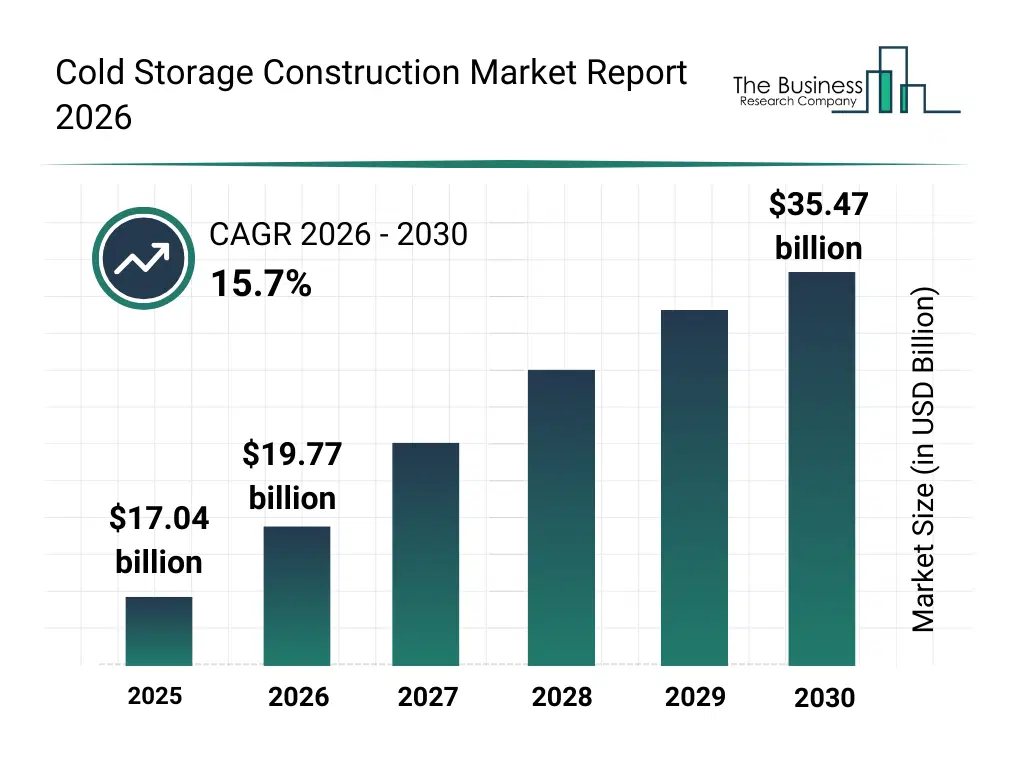
What Is The Cold Storage Construction Market Size and Share 2026?
The cold storage construction market size has grown rapidly in recent years. It will grow from $17.04 billion in 2025 to $19.77 billion in 2026 at a compound annual growth rate (CAGR) of 16.0%. The growth in the historic period can be attributed to increasing demand for perishable goods storage, growth of pharmaceutical cold supply chains, rising investment in food and beverage preservation, expansion of industrial and manufacturing storage, adoption of refrigerated storage facilities.What Is The Cold Storage Construction Market Growth Forecast?
The cold storage construction market size is expected to see rapid growth in the next few years. It will grow to $35.47 billion in 2030 at a compound annual growth rate (CAGR) of 15.7%. The growth in the forecast period can be attributed to increasing use of IoT and AI-enabled temperature monitoring, growth of automated cold storage systems, expansion of energy-efficient refrigeration technologies, adoption of predictive maintenance in cold storage, development of modular and scalable storage solutions. Major trends in the forecast period include integration of smart refrigeration and monitoring systems, deployment of AI-enabled temperature control platforms, implementation of automated insulation and structural solutions, expansion of IOT-connected cold storage infrastructure, adoption of predictive maintenance and energy optimization solutions.
Global Cold Storage Construction Market Segmentation
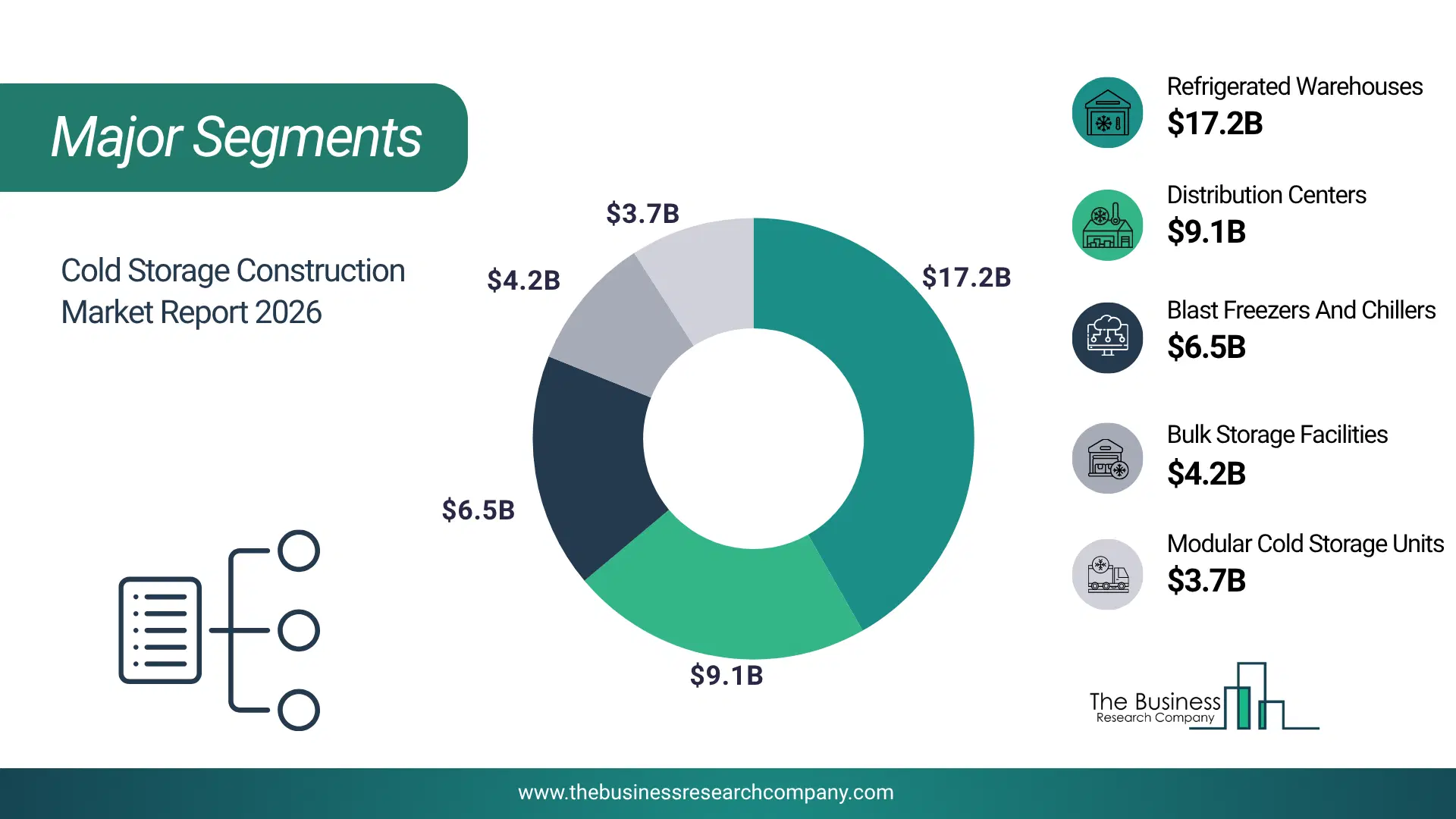
1) By Type: Production Stores, Bulk Stores, Ports, Other Types 2) By Construction Type: Concrete Masonry Unit, Metal Panel, Tilt-up Concrete, Steel Frame 3) By Warehouse: Private And Semi-private Warehouses, Public Warehouses 4) By Automation Level: Manual, Semi-Automated, Automated 5) By Application: Food And Beverage, Pharmaceutical And Healthcare, Industrial And Manufacturing, Retail And Commercial Subsegments: 1) By Production Stores: Dry Goods Storage, Refrigerated Storage, Frozen Storage, Controlled Atmosphere Storage 2) By Bulk Stores: Grain Storage, Fruit Storage, Vegetable Storage, Dairy Storage 3) By Ports: Container Storage, Refrigerated Container Storage, Bulk Cargo Storage, Cold Chain Terminals 4) By Other Types: Pharmaceutical Storage, Floral Storage, Seafood Storage, Beverage Storage The top segments in the cold storage construction market will be: • Refrigerated Warehouses will reach $17.16 billion by 2030. • Distribution Centers will reach $9.07 billion by 2030. • Blast Freezers And Chillers will reach $6.48 billion by 2030. • Bulk Storage Facilities will reach $4.2 billion by 2030. • Modular Cold Storage Units will reach $3.62 billion by 2030.What Is The Driver Of The Cold Storage Construction Market?
The increasing demand for processed food is expected to propel the growth of the cold storage construction market going forward. Processed food refers to any food product that has been altered from its original state through methods such as cooking, freezing, canning, or adding preservatives and flavorings to enhance shelf life, taste, or convenience. The increasing demand for processed food as modern life places a premium on convenience, consistency, and year-round availability and people with busier schedules and dispersed households favour items that save time and reduce meal-planning friction. Cold storage construction supports the processed food industry by providing temperature-controlled facilities that preserve product quality, extend shelf life, and ensure safe distribution from production to retail. For instance, in May 2023, according to the United States Department of Agriculture, a US-based federal agency, the total value of US processed food products exported from the country increased to $36.59 billion in 2023, an increase of 1.7% compared to previous years. Therefore, the increasing demand for processed food drives the cold storage construction industry.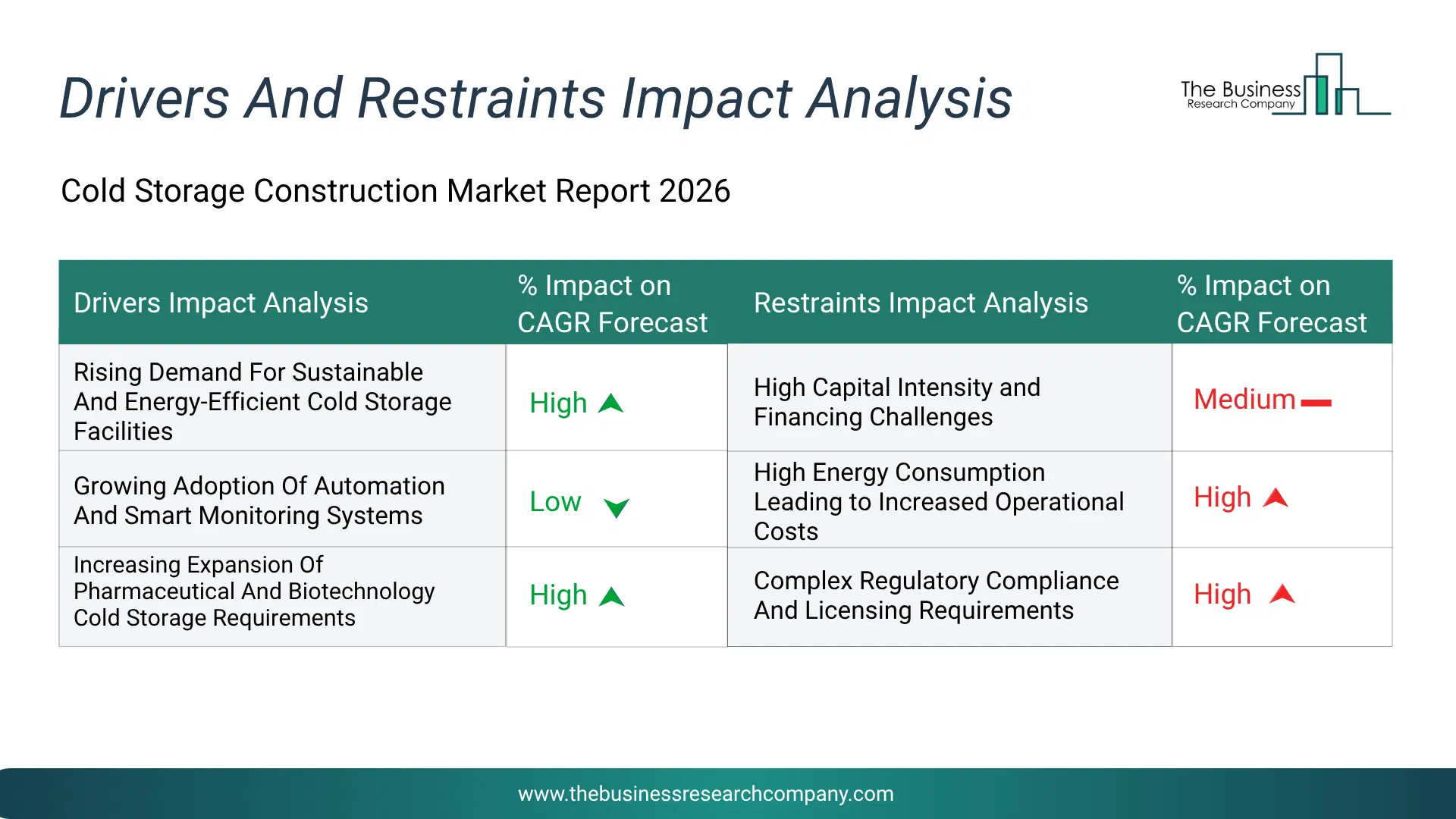
Infographic Chart Showing Key Market Drivers Analysis And Restraints For Cold Storage Construction Market
The chart presents an impact analysis of key drivers and restraints, quantifying their relative influence on the market's growth rate and helping assess the balance between growth enablers and limiting factors. This chart offers a high-level perspective; the full report contains more detailed insights.
How Will The Drivers Impact Growth In The Global Cold Storage Construction Market?
• Rising Demand For Sustainable And Energy-Efficient Cold Storage Facilities (High) – During the forecast period, the rising demand for sustainable and energy-efficient cold storage facilities is expected to become a key growth driver for the cold storage construction market by 2030. Rising demand for sustainable and energy-efficient cold storage facilities is a major factor driving growth in the cold storage construction market, as it promotes the creation of modern, eco-friendly, and cost-efficient infrastructure. Increasing emphasis on minimizing energy use and carbon emissions has led developers to integrate advanced insulation systems, natural refrigerants, and renewable energy technologies into their projects. These improvements not only reduce operating expenses but also help meet stricter environmental and regulatory standards. Additionally, companies across the food, pharmaceutical, and logistics industries are adopting sustainability-focused strategies, boosting the need for green and energy-efficient storage spaces. • Growing Adoption Of Automation And Smart Monitoring Systems (Low) – During the forecast period, the growing adoption of automation and smart monitoring systems is expected to emerge as a major factor driving the expansion of the cold storage construction market by 2030. Growing adoption of automation and smart monitoring systems is a significant driver of the cold storage construction market, as it enhances operational efficiency, reliability, and safety. The integration of technologies such as the internet of things (iot), artificial intelligence (ai), and advanced sensors enables real-time temperature control, predictive maintenance, and remote facility management. These systems help reduce human error, lower energy consumption, and minimize product spoilage by maintaining consistent storage conditions. Furthermore, automated handling and monitoring solutions streamline operations and optimize inventory management, making facilities more cost-effective and responsive to market demand. Overall, the adoption of automation and smart monitoring technologies is transforming cold storage infrastructure, driving modernization, and boosting market growth. • Increasing Expansion Of Pharmaceutical And Biotechnology Cold Storage Requirements (High) – During the forecast period, the increasing expansion of pharmaceutical and biotechnology cold storage requirements is expected to act as a key growth catalyst for the cold storage construction market by 2030. Increasing expansion of pharmaceutical and biotechnology cold storage requirements is a key driver of growth in the cold storage construction market, as the demand for temperature-controlled facilities continues to rise across the healthcare sector. The growing production of biologics, vaccines, and other temperature-sensitive drugs requires specialized storage environments with precise temperature and humidity control. Additionally, advancements in biotechnology research and the global distribution of pharmaceuticals have accelerated the need for reliable cold chain infrastructure.How Will The Restraints Impact Growth In The Global Cold Storage Construction Market?
• High Capital Intensity and Financing Challenges (Medium) – During the forecast period, the high capital intensity and financing challenges act as a major restraint on the growth of the cold storage construction market, as developing these facilities requires significant upfront investment. Constructing temperature-controlled warehouses involves high costs for land acquisition, specialized insulation materials, advanced refrigeration systems, and automation technology. Additionally, the need for compliance with strict safety and environmental standards further raises construction expenses. Securing financing for such capital-intensive projects can be difficult, particularly for small and medium-sized developers, due to long payback periods and perceived investment risks. As a result, many potential projects are delayed or canceled, limiting overall market expansion and slowing the pace of infrastructure modernization. • High Energy Consumption Leading to Increased Operational Costs (High) – During the forecast period, the high energy consumption leading to increased operational costs is a significant restraint on the cold storage construction market, as these facilities require continuous power to maintain precise temperature and humidity levels. Refrigeration systems, lighting, and automated equipment consume large amounts of electricity, making operational costs a major concern for operators. Fluctuations in energy prices can further increase expenses, reducing profit margins and discouraging new investments in cold storage projects. Additionally, older facilities with inefficient systems face even higher energy demands, creating a need for costly upgrades. This high operational cost can slow market growth by limiting the attractiveness of new construction and expansion projects. • Complex Regulatory Compliance And Licensing Requirements (High) – During the forecast period, the complex regulatory compliance and licensing requirements act as a restraint for the cold storage construction market by increasing project approval time and development complexity. Developers must adhere to strict building codes, food safety standards, environmental regulations, and fire safety norms, which vary across regions. Meeting these requirements often involves additional documentation, inspections, and design modifications, leading to delays in project execution. The complexity of navigating multiple regulatory frameworks increases administrative burden and raises overall project costs. As a result, these challenges discourage new entrants and slow down the expansion of cold storage infrastructure.Key Players In The Global Cold Storage Construction Market
Major companies operating in the cold storage construction market are Kajima Corporation, Primus Builders Inc., Graycor Inc., Tippmann Group, Alston Construction Company Inc., Astron Buildings S.A., E Pack Polymers Private Limited, Darwin Chambers Company LLC, Clarion Construction Inc., Stancold Limited, Hems Infratech Private Limited, Blue Cold Refrigeration Private Limited, BlueAce Limited, Cold Care Group, Bally Refrigerated Boxes Inc., ISOCOLD Engineering, Frick India Ltd., ICS Group, Panel Built Inc., Therma Refrigeration & Construction.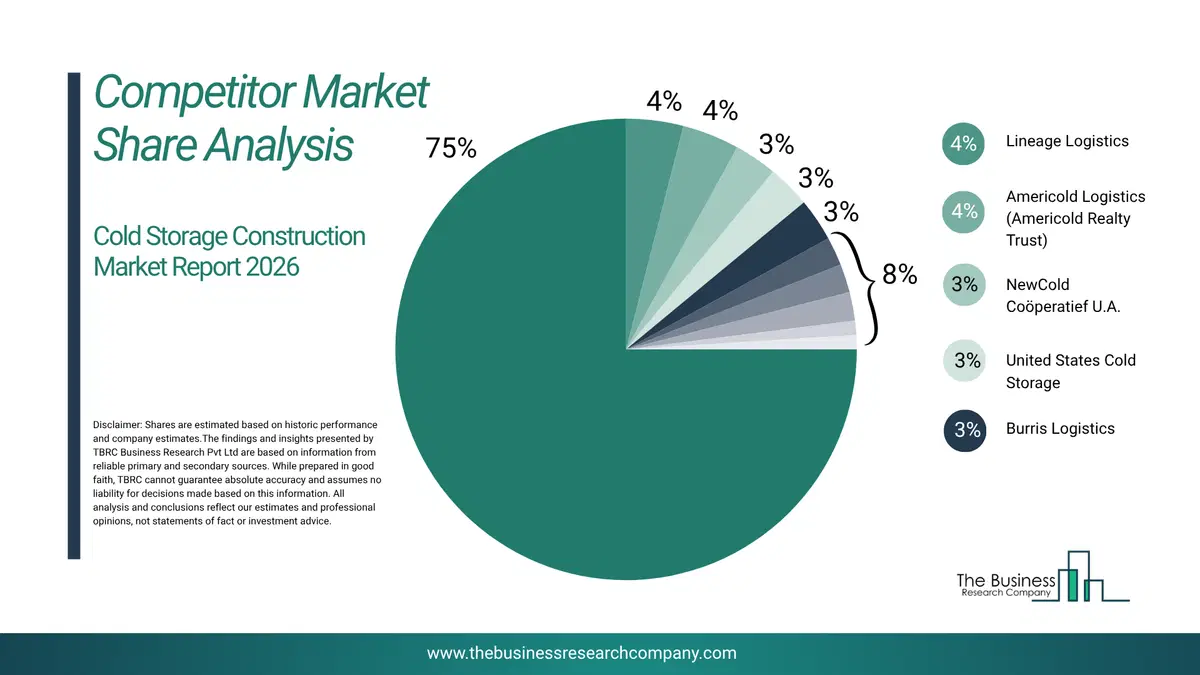
This chart is for illustrative purposes; the full report includes a detailed competitor analysis and comprehensive overview of the top 10 companies in the market.
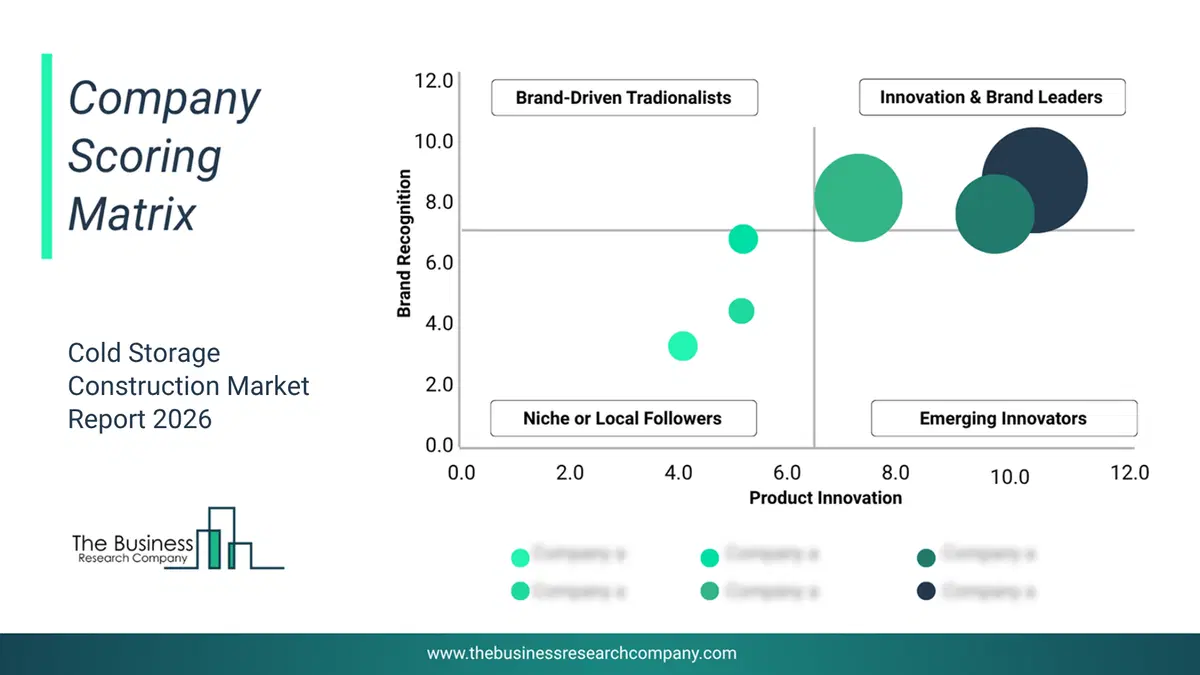
This chart maps companies by product innovation and brand strength, with bubble size indicating relative revenue, helping identify market leaders, challengers, and niche players. This is an illustrative chart; the full report provides a complete and accurate competitive analysis.
Global Cold Storage Construction Market Trends and Insights
Major companies operating in the cold storage construction market are focusing on developing innovative solutions, such as energy-efficient temperature-controlled warehouses, to meet the rising demand for safe and longer-lasting storage of perishable goods. Energy-efficient temperature-controlled warehouses are storage facilities designed to maintain precise temperatures while minimizing energy consumption through advanced insulation, refrigeration systems, and smart monitoring technologies. For instance, in May 2025, Indicold Private Limited, an India-based cold chain logistics company, launched its second fully automated frozen Automated Storage and Retrieval System (ASRS) facility in Detroj, Gujarat, marking a significant milestone for the country’s cold chain infrastructure. The 90,000-square-foot warehouse, with a 10,000-pallet capacity, is maintained at a precise -20°C and features India’s first Four-Way Shuttle ASRS system in the frozen segment, enabling optimal space utilization and operational flexibility. The facility integrates a real-time Warehouse Management System (WMS) for enhanced traceability and incorporates energy-efficient design measures to minimize temperature loss and promote sustainability.What Are Latest Mergers And Acquisitions In The Cold Storage Construction Market?
In June 2024, EQT AB, a Sweden-based private equity company, acquired Constellation Cold Logistics for an undisclosed amount. With this acquisition, EQT AB aims to strengthen its presence in the fast-growing European cold storage sector by scaling Constellation Cold Logistics through expansion, digitalization, and sustainability-driven growth. Constellation Cold Logistics S.à.r.l is a UK-based company that undertakes cold storage construction.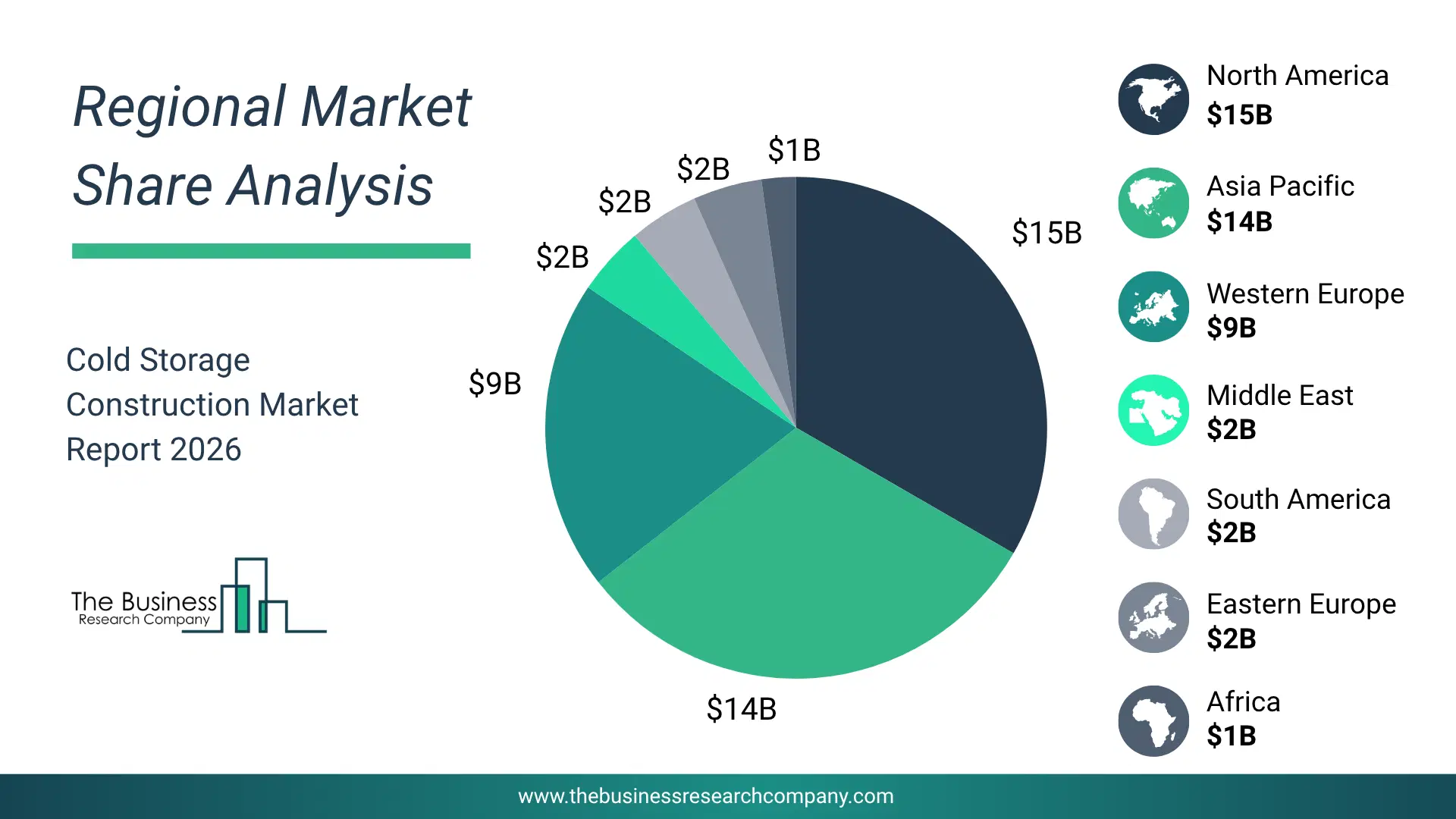
Regional Insights
North America was the largest region in the cold storage construction market in 2025. Asia-Pacific is expected to be the fastest-growing region in the forecast period. The regions covered in this market report are Asia-Pacific, South East Asia, Western Europe, Eastern Europe, North America, South America, Middle East, Africa. The countries covered in this market report are Australia, Brazil, China, France, Germany, India, Indonesia, Japan, Taiwan, Russia, South Korea, UK, USA, Canada, Italy, Spain.What Defines the Cold Storage Construction Market?
The cold storage construction market includes revenues earned by entities through design and engineering services, building and infrastructure construction, refrigeration and insulation systems installations, maintenance and repair services, and turnkey project management. The market value includes the value of related goods sold by the service provider or included within the service offering. Only goods and services traded between entities or sold to end consumers are included.How is Market Value Defined and Measured?
The market value is defined as the revenues that enterprises gain from the sale of goods and/or services within the specified market and geography through sales, grants, or donations in terms of the currency (in USD unless otherwise specified). The revenues for a specified geography are consumption values that are revenues generated by organizations in the specified geography within the market, irrespective of where they are produced. It does not include revenues from resales along the supply chain, either further along the supply chain or as part of other products.
This chart presents market attractiveness based on a quantitative evaluation of growth, competition, strategic alignment, and risk, offering a clear view of opportunity areas for decision-making. This chart is for illustrative purposes; the full report contains the complete analysis.

This chart highlights the Total Addressable Market (TAM) by estimating the maximum revenue opportunity using an assumption-driven approach, supporting strategic planning and opportunity sizing across markets. The chart is illustrative; the full report provides a more comprehensive analysis.
What Key Data and Analysis Are Included in theCold Storage Construction Market Report 2026?
The cold storage construction market research report is one of a series of new reports from The Business Research Company that provides market statistics, including industry global market size, regional shares, competitors with the market share, detailed market segments, market trends and opportunities, and any further data you may need to thrive in the cold storage construction industry. The market research report delivers a complete perspective of everything you need, with an in-depth analysis of the current and future state of the industry.Cold Storage Construction Market Report Forecast Analysis
| Report Attribute | Details |
|---|---|
| Market Size Value In 2026 | $19.77 billion |
| Revenue Forecast In 2030 | $35.47 billion |
| Growth Rate | CAGR of 15.7% from 2026 to 2030 |
| Base Year For Estimation | 2025 |
| Actual Estimates/Historical Data | 2020-2025 |
| Forecast Period | 2026 - 2030 |
| Market Representation | Revenue in USD Billion and CAGR from 2026 to 2030 |
| Segments Covered | Type, Construction Type, Warehouse, Automation Level, Application |
| Regional Scope | Asia-Pacific, Western Europe, Eastern Europe, North America, South America, Middle East, Africa |
| Country Scope | The countries covered in the report are Australia, Brazil, China, France, Germany, India, ... |
| Key Companies Profiled | Kajima Corporation, Primus Builders Inc., Graycor Inc., Tippmann Group, Alston Construction Company Inc., Astron Buildings S.A., E Pack Polymers Private Limited, Darwin Chambers Company LLC, Clarion Construction Inc., Stancold Limited, Hems Infratech Private Limited, Blue Cold Refrigeration Private Limited, BlueAce Limited, Cold Care Group, Bally Refrigerated Boxes Inc., ISOCOLD Engineering, Frick India Ltd., ICS Group, Panel Built Inc., Therma Refrigeration & Construction. |
| Customization Scope | Request for Customization |
| Pricing And Purchase Options | Explore Purchase Options |