
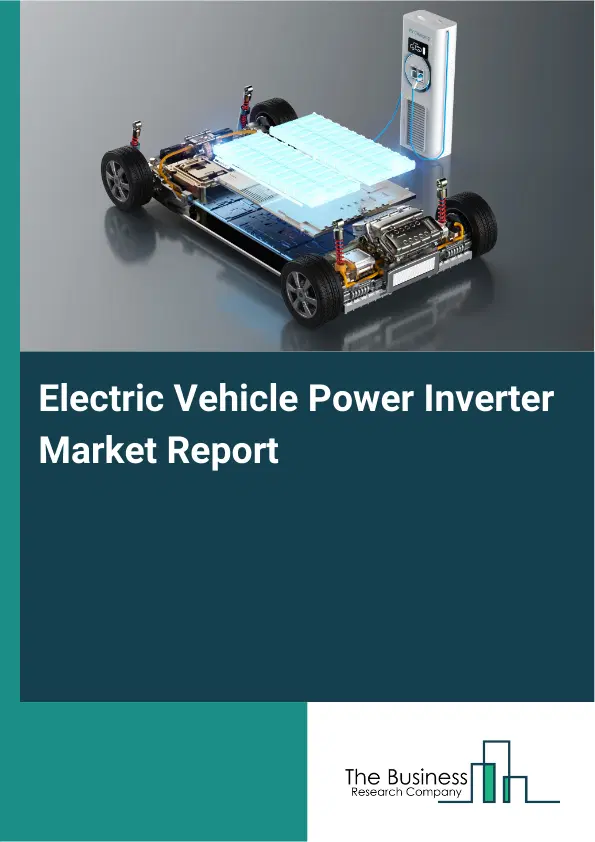
Electric Vehicle Power Inverter Market Report 2026
Global Outlook – By Inverter Type ( Traction Inverters, Soft Switching Inverters), By Propulsion Type ( Hybrid Electric Vehicles, Plug-in Hybrid Electric Vehicles, Battery Electric Vehicles, Fuel Cell Electric Vehicles), By Vehicle Type ( Passenger Cars, Light Commercial Vehicles, Heavy Commercial Vehicles And Buses), By Power Output ( Up To 100 kilowatt (kW), 101- 300 kilowatt (kW), 301- 600 kilowatt (kW), 601 kilowatt (kW) And Above), By Distribution Channel ( Original Equipment Manufacturer (OEM), Aftermarket) – Market Size, Trends, Strategies, and Forecast to 2030
Electric Vehicle Power Inverter Market Overview
• Electric Vehicle Power Inverter market size has reached to $11.03 billion in 2025 • Expected to grow to $24.14 billion in 2030 at a compound annual growth rate (CAGR) of 16.9% • Growth Driver: Rise In Demand For Battery Electric Vehicles Fueling The Growth Of The Market Due To Increasing Energy Efficiency And Performance Enhancement • Market Trend: Advanced SiC Power Semiconductors Reduce Energy Loss In EVs • Asia-Pacific was the largest region and fastest growing region.What Is Covered Under Electric Vehicle Power Inverter Market?
An electric vehicle power inverter is an electronic device that converts direct current (DC) from the vehicle’s battery into alternating current (AC) to drive the electric motor. It regulates power flow to control motor speed and torque, and facilitates regenerative braking by converting alternating current (AC) from the motor back into direct current (DC) to recharge the battery. This component is vital for ensuring efficient and smooth vehicle operation through optimal power delivery between the battery and motor. The main inverter types of electric vehicle power inverter are traction inverters and soft switching inverters. Traction inverters are key components used to convert DC power from the vehicle’s battery into AC power to drive electric motors, ensuring efficient vehicle propulsion and performance control. It is categorized based on propulsion types into hybrid electric vehicles (HEVs), plug-in hybrid electric vehicles (PHEVs), battery electric vehicles (BEVs), and fuel cell electric vehicles (FCEVs) and serving various vehicle type such as passenger cars, light commercial vehicles, and heavy commercial vehicles and buses. Based on power output, electric vehicle power inverter are categorized as up to 100 kilowatt (kW), 101–300 kilowatt (kW), 301–600 kilowatt (kW), and 601 kilowatt (kW) and above and distributed through various channel including original equipment manufacturers (OEMs) and aftermarket.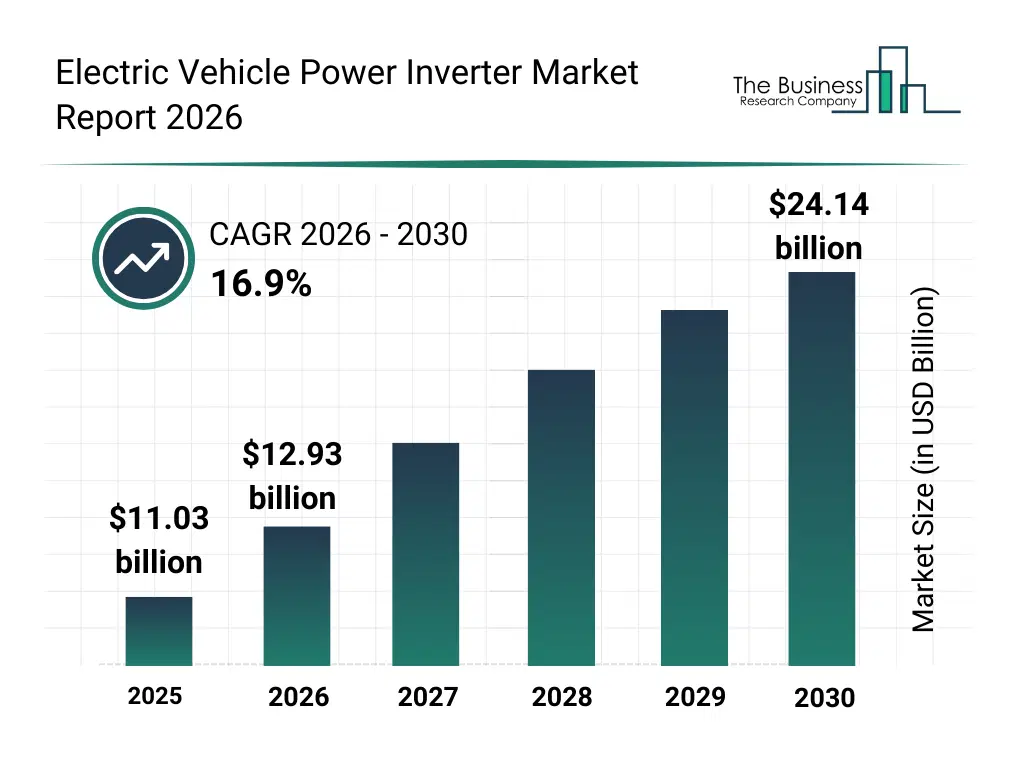
What Is The Electric Vehicle Power Inverter Market Size 2026 And Growth Rate?
The electric vehicle power inverter market size has grown rapidly in recent years. It will grow from $11.03 billion in 2025 to $12.93 billion in 2026 at a compound annual growth rate (CAGR) of 17.2%. The growth in the historic period can be attributed to early electrification initiatives for passenger cars, initial deployment of hybrid vehicle inverters, adoption of single-level inverter modules, regulatory incentives for clean mobility, development of low-power traction inverters.What Is The Electric Vehicle Power Inverter Market Growth Forecast?
The electric vehicle power inverter market size is expected to see rapid growth in the next few years. It will grow to $24.14 billion in 2030 at a compound annual growth rate (CAGR) of 16.9%. The growth in the forecast period can be attributed to rising battery electric vehicle sales, demand for high-power inverters above 600 kW, integration of advanced multi-level inverter technologies, expansion in commercial and heavy-duty EV segments, innovation in soft switching and resonant inverter systems. Major trends in the forecast period include adoption of high-efficiency traction inverters for battery electric vehicles, integration of soft switching inverters to reduce power losses and heat, development of multi-level and modular inverter architectures, growing use of inverters in hybrid and plug-in hybrid electric vehicles, demand for scalable inverter solutions for passenger and commercial EVs.
Global Electric Vehicle Power Inverter Market Segmentation
1) By Inverter Type: Traction Inverters, Soft Switching Inverters 2) By Propulsion Type: Hybrid Electric Vehicles, Plug-in Hybrid Electric Vehicles, Battery Electric Vehicles, Fuel Cell Electric Vehicles 3) By Vehicle Type: Passenger Cars, Light Commercial Vehicles, Heavy Commercial Vehicles And Buses 4) By Power Output: Up To 100 kilowatt (kW), 101- 300 kilowatt (kW), 301- 600 kilowatt (kW), 601 kilowatt (kW) And Above 5) By Distribution Channel: Original Equipment Manufacturer (OEM), Aftermarket Subsegments: 1) By Traction Inverters: Single-Level Inverters, Multi-Level Inverters, Integrated Inverter Modules, Centralized Inverters, Distributed Inverters 2) By Soft Switching Inverters: Zero Voltage Switching Inverters, Zero Current Switching Inverters, Resonant Inverters, Phase-Shifted Inverters, Quasi-Resonant InvertersWhat Is The Driver Of The Electric Vehicle Power Inverter Market?
The rise in demand for battery electric vehicles is expected to propel the growth of the electric vehicle power inverter market going forward. Battery electric vehicles (BEVs) refer to electric vehicles powered entirely by electricity stored in onboard rechargeable batteries, which supply energy to one or more electric motors for propulsion, eliminating the need for internal combustion engines. The adoption of battery electric vehicles is rising due to declining battery costs, which are making electric cars more affordable and accessible to a broader range of consumers. Electric vehicle power inverters aid in battery electric vehicle adoption by efficiently converting battery power to drive the electric motor. They enhance vehicle performance through precise control of speed and torque, support regenerative braking for energy recovery, and improve overall energy efficiency, accelerating the shift toward sustainable transportation. For instance, in October 2024, according to the European Environment Agency (EEA), a Denmark-based intergovernmental organization, electric vehicles accounted for nearly 23% of newly registered passenger cars in the European Union in 2023, with battery electric vehicles (BEVs) alone representing about 15%. Therefore, the rise in demand for battery electric vehicles is driving the growth of the electric vehicle power inverter industry.Key Players In The Global Electric Vehicle Power Inverter Market
Major companies operating in the electric vehicle power inverter market are HyundAI Motor Group, Robert Bosch GmbH, DENSO Corporation, Continental AG, ZF Friedrichshafen AG, Magna International Inc., Mitsubishi Electric Corporation, Valeo SA, Eaton Corporation plc, Schaeffler AG, STMicroelectronics NV, Nidec Corporation, BorgWarner Inc., Delta Electronics Inc., Dana Incorporated, Hitachi Astemo Ltd, CWB Automotive Electronics Co Ltd., Meidensha Corporation, Sungchang Autotech Co Ltd., Lucid Group Inc.
This chart is for illustrative purposes; the full report includes a detailed competitor analysis and comprehensive overview of the top 10 companies in the market.
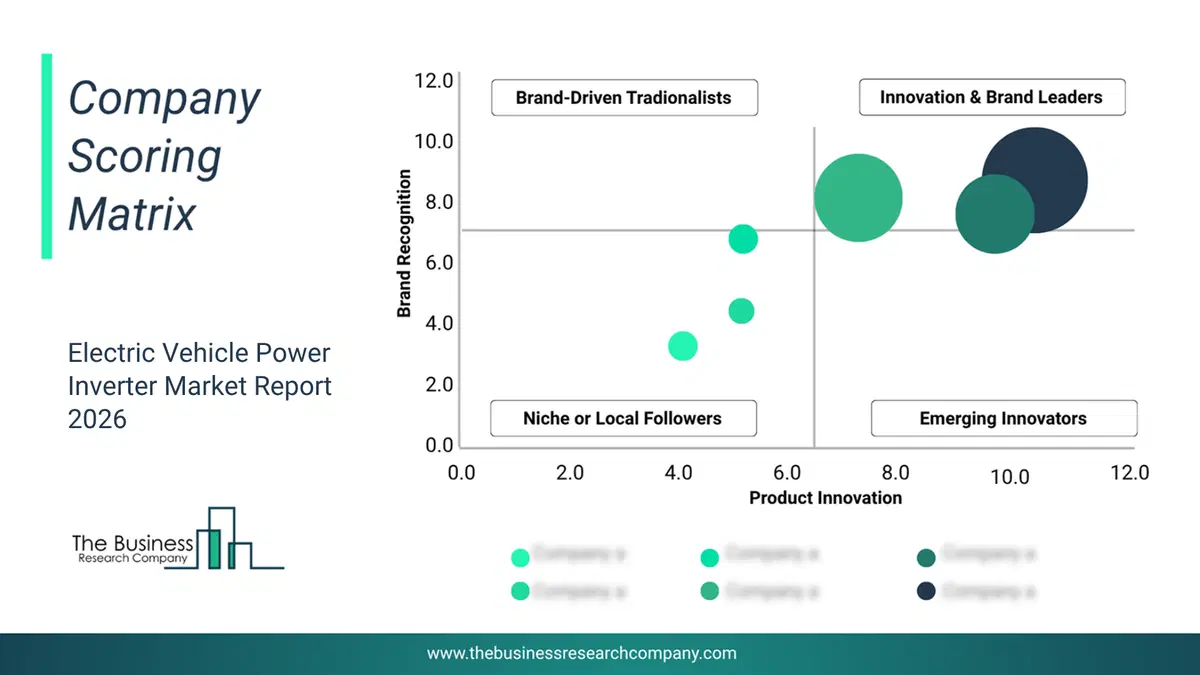
This chart maps companies by product innovation and brand strength, with bubble size indicating relative revenue, helping identify market leaders, challengers, and niche players. This is an illustrative chart; the full report provides a complete and accurate competitive analysis.
Global Electric Vehicle Power Inverter Market Trends and Insights
Major companies operating in the electric vehicle power inverter market are focusing on developing advanced products, such as metal–oxide–semiconductors, to enhance energy efficiency, thermal management, and overall performance. Metal–oxide–semiconductors (MOS) refer to electronic structures that use a metal gate, an insulating oxide layer, and a semiconductor substrate to control the flow of electrical current. For instance, in March 2023, DENSO Corporation, a Japan-based automotive components manufacturer, launched the first inverter using SiC power semiconductors. It uses a next-generation power conversion technology designed to increase energy efficiency and extend the driving range of battery electric vehicles. The product features a proprietary trench-type metal–oxide–semiconductor (MOS) structure, high-quality SiC epitaxial wafers with fewer crystal defects, and is integrated into an eAxle module for the Lexus RZ model. The SiC-based inverter demonstrated more than a 50% reduction in power loss compared with a conventional silicon inverter. This results in improved power consumption and a greater driving range for electric vehicles, accelerating the transition to an electrified automotive future.What Are Latest Mergers And Acquisitions In The Electric Vehicle Power Inverter Market?
In December 2023, BorgWarner Inc., a US-based provider of automotive propulsion and energy solutions, acquired the electric hybrid systems (EHS) business segment from Eldor Corporation S.p.A. for an undisclosed amount. With this acquisition, BorgWarner gains access to Eldor’s advanced high-voltage power electronics portfolio, including on-board chargers, converters, and compact inverters, thereby enhancing its electric vehicle power electronics capabilities and strengthening its position across the electric vehicle power inverter ecosystem. Eldor Corporation S.p.A. is an Italy-based manufacturer of automotive electronic systems that provides electric vehicle (EV) power inverters.
Regional Outlook
Asia-Pacific was the largest region in the electric vehicle power inverter market in 2025. Asia-Pacific is expected to be the fastest-growing region in the forecast period. The regions covered in this market report are Asia-Pacific, South East Asia, Western Europe, Eastern Europe, North America, South America, Middle East, Africa. The countries covered in this market report are Australia, Brazil, China, France, Germany, India, Indonesia, Japan, Taiwan, Russia, South Korea, UK, USA, Canada, Italy, Spain.What Defines the Electric Vehicle Power Inverter Market?
The electric vehicle power inverter market consists of sales of power modules, control units, gate drivers, direct current link capacitors, cooling systems, and semiconductor switches. Values in this market are ‘factory gate’ values, that is the value of goods sold by the manufacturers or creators of the goods, whether to other entities (including downstream manufacturers, wholesalers, distributors and retailers) or directly to end customers. The value of goods in this market includes related services sold by the creators of the goods.How is Market Value Defined and Measured?
The market value is defined as the revenues that enterprises gain from the sale of goods and/or services within the specified market and geography through sales, grants, or donations in terms of the currency (in USD unless otherwise specified). The revenues for a specified geography are consumption values that are revenues generated by organizations in the specified geography within the market, irrespective of where they are produced. It does not include revenues from resales along the supply chain, either further along the supply chain or as part of other products.
This chart presents market attractiveness based on a quantitative evaluation of growth, competition, strategic alignment, and risk, offering a clear view of opportunity areas for decision-making. This chart is for illustrative purposes; the full report contains the complete analysis.

This chart highlights the Total Addressable Market (TAM) by estimating the maximum revenue opportunity using an assumption-driven approach, supporting strategic planning and opportunity sizing across markets. The chart is illustrative; the full report provides a more comprehensive analysis.
What Key Data and Analysis Are Included in the Electric Vehicle Power Inverter Market Report 2026?
The electric vehicle power inverter market research report is one of a series of new reports from The Business Research Company that provides market statistics, including industry global market size, regional shares, competitors with the market share, detailed market segments, market trends and opportunities, and any further data you may need to thrive in the electric vehicle power inverter industry. The market research report delivers a complete perspective of everything you need, with an in-depth analysis of the current and future state of the industry.Electric Vehicle Power Inverter Market Report Forecast Analysis
| Report Attribute | Details |
|---|---|
| Market Size Value In 2026 | $12.93 billion |
| Revenue Forecast In 2030 | $24.14 billion |
| Growth Rate | CAGR of 16.9% from 2026 to 2030 |
| Base Year For Estimation | 2025 |
| Actual Estimates/Historical Data | 2020-2025 |
| Forecast Period | 2026 - 2030 |
| Market Representation | Revenue in USD Billion and CAGR from 2026 to 2030 |
| Segments Covered | Inverter Type, Propulsion Type, Vehicle Type, Power Output, Distribution Channel |
| Regional Scope | Asia-Pacific, Western Europe, Eastern Europe, North America, South America, Middle East, Africa |
| Country Scope | The countries covered in the report are Australia, Brazil, China, France, Germany, India, Indonesia, Japan, Taiwan, Russia, South Korea, UK, USA, Canada, Italy, Spain. |
| Key Companies Profiled | HyundAI Motor Group, Robert Bosch GmbH, DENSO Corporation, Continental AG, ZF Friedrichshafen AG, Magna International Inc., Mitsubishi Electric Corporation, Valeo SA, Eaton Corporation plc, Schaeffler AG, STMicroelectronics NV, Nidec Corporation, BorgWarner Inc., Delta Electronics Inc., Dana Incorporated, Hitachi Astemo Ltd, CWB Automotive Electronics Co Ltd., Meidensha Corporation, Sungchang Autotech Co Ltd., Lucid Group Inc. |
| Customization Scope | Request for Customization |
| Pricing And Purchase Options | Explore Purchase Options |