
Fast Fashion Market Report 2026
Global Outlook – By Gender (Men’s Wear, Women’s Wear), By Distribution Channel (Brand-Owned Retail Stores, Online Or E-Commerce Platforms, Multi-Brand Retailers, Franchise Stores, Wholesale And Distributors), By Application (Casual Wear, Work or Formal Wear, Sportswear and Activewear, Outerwear, Intimate and Loungewear, Accessories and Footwear, Kids and Teen Wear, Seasonal and Occasion Wear) – Market Size, Trends, Strategies, and Forecast to 2030
Fast Fashion Market Overview
• Fast Fashion market size has reached to $161.7 billion in 2025 • Expected to grow to $222.71 billion in 2030 at a compound annual growth rate (CAGR) of 6.6% • Growth Driver: Increasing Adoption Of Affordable Fashion By Young Population To Drive Market Growth • Market Trend: Ai-Enhanced Shopping Revolutionizing The Fast Fashion Market • Western Europe was the largest region in 2025 and Asia-Pacific is the fastest growing region.Market Gains By 2030 – Top Opportunities By Segment
Market Gain identifies the most promising market opportunities by highlighting the segments or products expected to generate the highest incremental revenue growth over the next five years.
What Is Covered Under Fast Fashion Market?
Fast fashion refers to a strategy for the design, development, and marketing of apparel designs that place an emphasis on giving consumers access to fashion trends quickly and affordably. Fast fashion means garments that move quickly from the catwalk to the stores to meet new trends. Fast fashion clothing collections are supported by the foremost recent fashion trends presented at Fashion Week. The main types of fast fashion are pants, coat, skirt and others. Skirt is defined as a garment worn by women and girls that are secured around the waist and hang down around the legs. It is available in different genders such as women's wear, men's wear and various age including adult’s wear, teens wear, kids wear and others.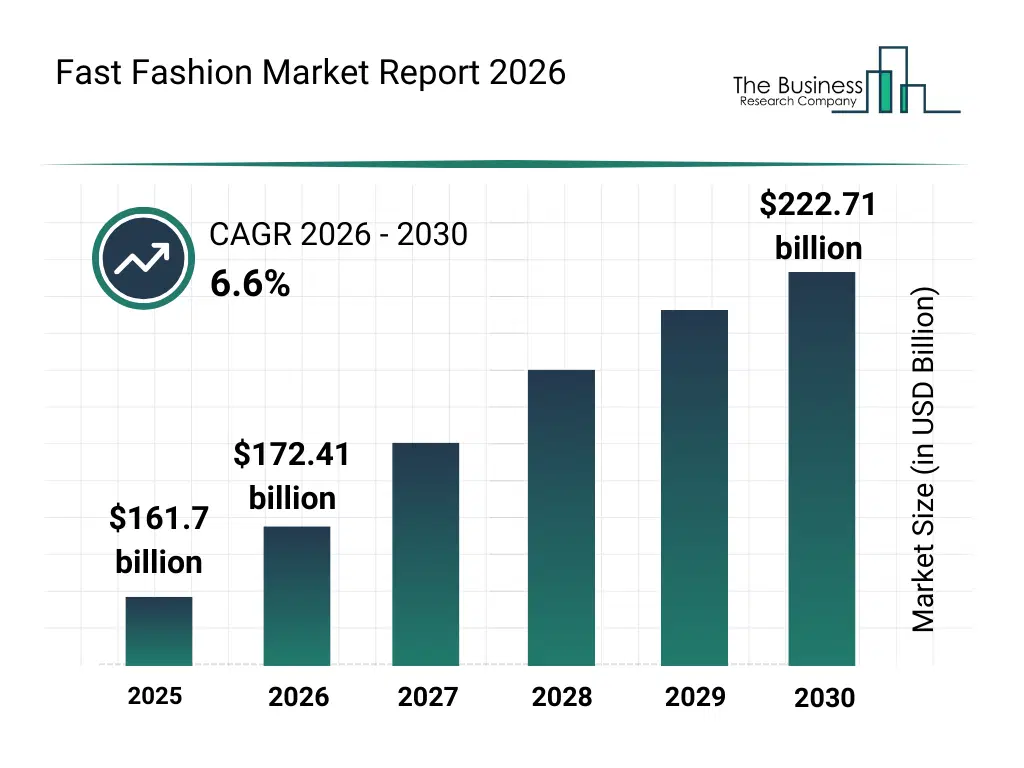
What Is The Fast Fashion Market Size and Share 2026?
The fast fashion market size has grown strongly in recent years. It will grow from $161.7 billion in 2025 to $172.41 billion in 2026 at a compound annual growth rate (CAGR) of 6.6%. The growth in the historic period can be attributed to growth of global apparel consumption, expansion of international fashion retail chains, increasing influence of fashion weeks and runways, availability of low-cost manufacturing hubs, rising youth-driven fashion demand.What Is The Fast Fashion Market Growth Forecast?
The fast fashion market size is expected to see strong growth in the next few years. It will grow to $222.71 billion in 2030 at a compound annual growth rate (CAGR) of 6.6%. The growth in the forecast period can be attributed to increasing adoption of AI-based demand forecasting, growing focus on sustainable fast fashion models, expansion of online fashion retail platforms, rising use of nearshoring strategies, increasing demand for trend-responsive apparel collections. Major trends in the forecast period include rising adoption of data-driven trend forecasting, increasing speed-to-market apparel cycles, growing integration of digital design and sampling tools, expansion of omnichannel retail strategies, enhanced focus on cost-optimized production models.
Global Fast Fashion Market Segmentation
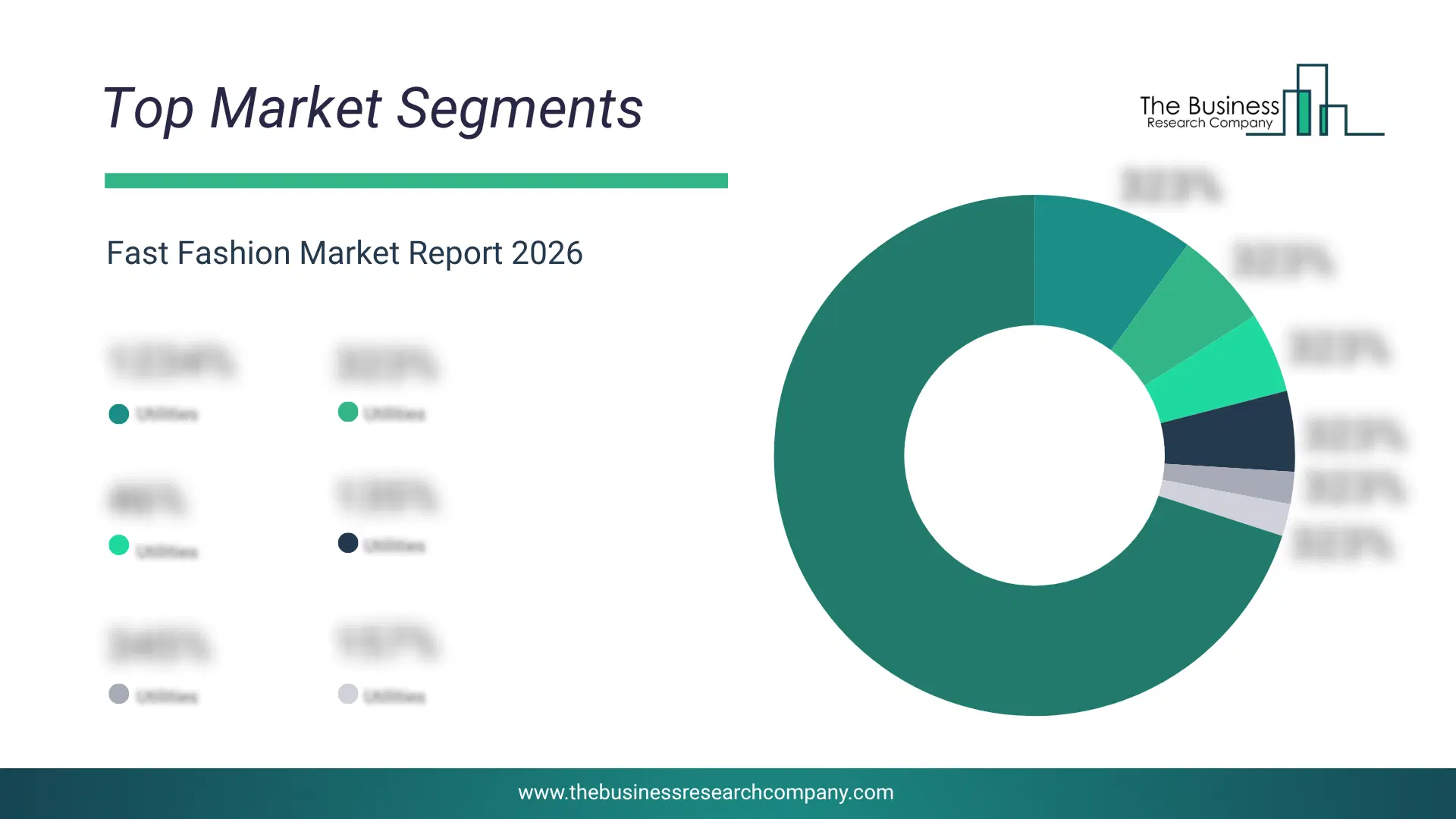
1) By Gender: Men’s Wear, Women’s Wear 2) By Distribution Channel: Brand-Owned Retail Stores, Online Or E-Commerce Platforms, Multi-Brand Retailers, Franchise Stores, Wholesale And Distributors 3) By Application: Casual Wear, Work or Formal Wear, Sportswear and Activewear, Outerwear, Intimate and Loungewear, Accessories and Footwear, Kids and Teen Wear, Seasonal and Occasion Wear Subsegments: 1) By Men’s Wear: Casual Wear, Trend-Led Formal Wear, Athleisure & Active-Inspired Wear, Fast-Fashion Outerwear, Denim Wear, Trend Accessories 2) By Women’s Wear: Casual Wear, Dresses & Jumpsuits, Trend-Led Formal Wear, Athleisure & Active-Inspired Wear, Fast-Fashion Outerwear, Denim Wear, Trend Accessories The top segments in the fast fashion market will be: • Women’s Wear will reach $139.66 Billion by 2030. • Men’s Wear will reach $81.24 Billion by 2030.What Are The Drivers Of The Fast Fashion Market?
The increasing adoption of affordable clothing among the growing youth population is expected to propel the growth of the fast fashion market going forward. The youth population refers to individuals typically aged between 15 and 24 years, who are highly influenced by changing fashion trends, social media, and celebrity culture, driving demand for stylish yet cost-effective apparel. The global youth population is rising steadily, which is contributing to higher consumption of fast-fashion products, as young consumers prefer unique, trendy, and affordable clothing that aligns with the latest fashion movements. Fast fashion brands support this demand by rapidly translating the most recent styles showcased at international fashion weeks into mass-produced, low-cost apparel, enabling quick access to current trends. According to United Nations estimates of the world’s youth population, it is projected to grow by 7.9% to 1.3 million by 2030. The youth population is attracted to unique, trendy, and affordable clothes. The apparel manufacturing companies are therefore focusing on bringing fashion clothes from the most recent fashion trends presented in Fashion Week. The growing preference for affordable fast-fashion clothes by the increasing youth population boosted the fast-fashion market. The increasing penetration of social media platforms is expected to propel the growth of the fast fashion market going forward. Social media platforms are websites or mobile applications that allow users to connect with others and share content such as photos, videos, and messages. Social media facilitates rapid dissemination of fashion information, encourages trend awareness, and fosters user-generated content and real-time engagement. It also supports influencer marketing, flash sales, and limited editions. Furthermore, social commerce, customer feedback, data collection for personalization, and the potential for viral trends contribute to the fast fashion industry’s growth. For instance, in November 2024, according to the report published by Office of Communications (Ofcom), a UK-based government office, by June 2024, Reddit had become the fastest-growing major social media platform in the UK, reaching over half of online adults 24.6 million users, or 52% of the population. Its audience grew 47% year-on-year, surpassing X (formerly Twitter) and LinkedIn to become the fifth-largest platform. Growth was particularly strong among younger adults, with 71% of 18-24-year-olds and 63% of 25-34-year-olds using Reddit, up from 58% and 49% the previous year. Therefore, the increasing penetration of social media platforms is driving the growth of the fast fashion industry.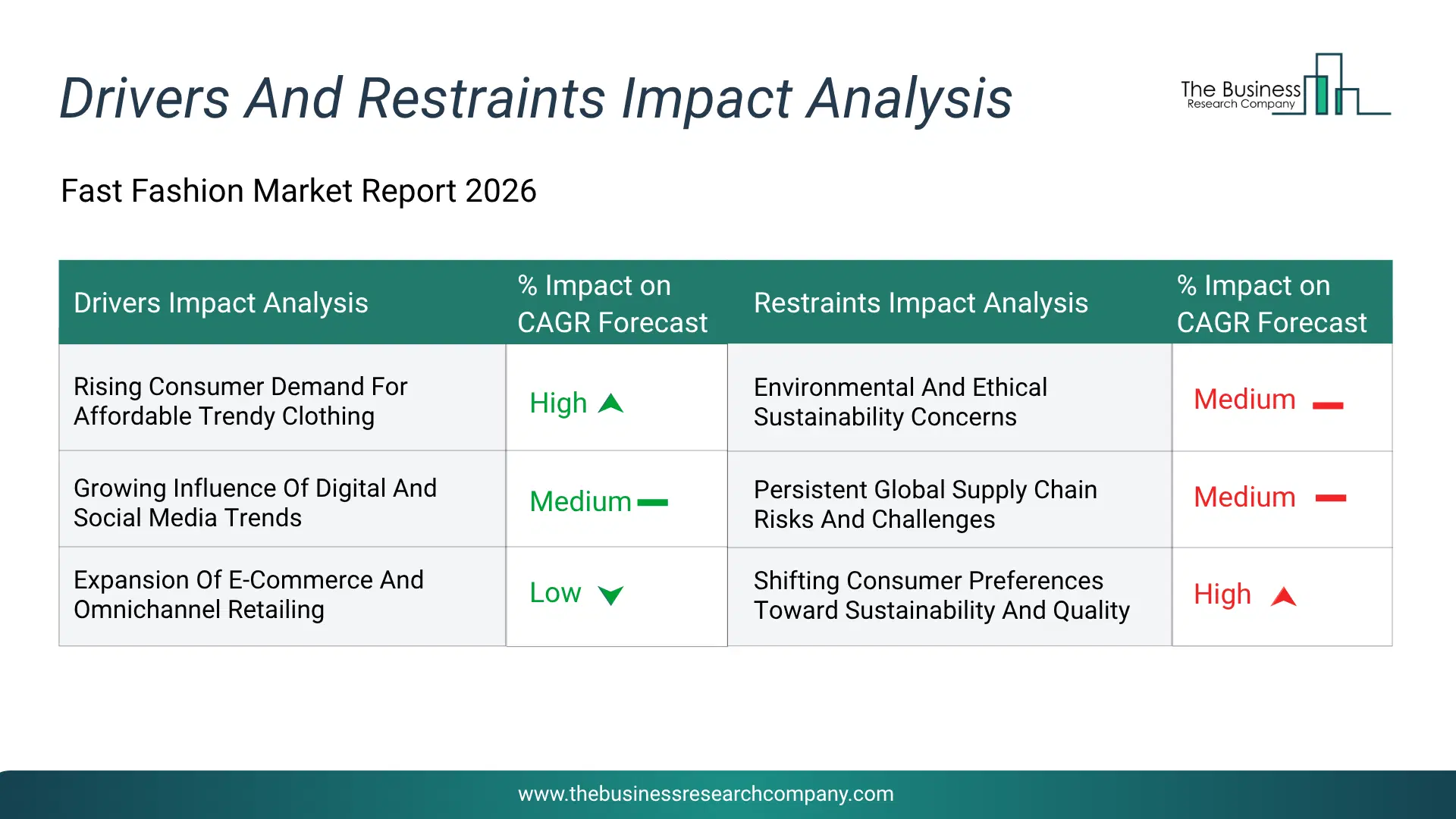
Infographic Chart Showing Key Market Drivers Analysis And Restraints For Fast Fashion Market
The chart presents an impact analysis of key drivers and restraints, quantifying their relative influence on the market's growth rate and helping assess the balance between growth enablers and limiting factors. This chart offers a high-level perspective; the full report contains more detailed insights.
How Will The Drivers Impact Growth In The Global Fast Fashion Market?
• Rising Consumer Demand For Affordable Trendy Clothing (High) – During the forecast period, the rising consumer demand for affordable trendy clothing is expected to become a key growth driver for the fast fashion market by 2030. Consumers are increasingly seeking fashion-forward apparel at accessible price points, encouraging brands to accelerate design-to-shelf timelines and introduce new collections more frequently. The ability to replicate runway-inspired styles at lower costs is enabling wider consumer participation in evolving fashion trends. Additionally, price-sensitive shoppers in emerging markets are driving volume growth by prioritizing affordability without compromising on style. Retailers are therefore optimizing sourcing strategies and production efficiencies to meet this demand. • Growing Influence Of Digital And Social Media Trends (Medium) – During the forecast period, the growing influence of digital and social media trends is expected to emerge as a major factor driving the expansion of the fast fashion market by 2030. Fashion trends are increasingly shaped by social media platforms, influencer collaborations, and real-time content consumption, significantly shortening trend cycles. Brands are leveraging data analytics and consumer insights from digital platforms to rapidly design and launch new collections aligned with viral trends. This continuous demand for fresh styles is accelerating product turnover and boosting purchase frequency among younger demographics. Moreover, interactive and personalized marketing strategies are enhancing consumer engagement and brand visibility. • Expansion Of E-Commerce And Omnichannel Retailing (Low) – During the forecast period, the expansion of e-commerce and omnichannel retailing is expected to act as a key growth catalyst for the fast fashion market by 2030. The integration of online and offline retail channels is enabling seamless shopping experiences, including features such as click-and-collect, same-day delivery, and easy returns. Digital platforms are allowing brands to reach a broader consumer base while optimizing inventory management and reducing operational inefficiencies. Additionally, advancements in mobile commerce and digital payment systems are further supporting online apparel sales growth. Retailers are increasingly investing in omnichannel capabilities to enhance customer convenience and retention.How Will The Restraints Impact Growth In The Global Fast Fashion Market?
• Environmental And Ethical Sustainability Concerns (High) – During the forecast period, environmental And Ethical Sustainability Concerns restrain the fast fashion market because the industry’s high volumes of production and rapid turnover have significant environmental consequences, including excessive resource use, water pollution, and textile waste, which amplify negative public perception. Fast fashion’s environmental impacts have become central to consumer awareness, leading many shoppers to reconsider purchases and favour brands with better sustainability credentials. Ethical issues such as poor working conditions and unfair labour practices also drive boycotts and scepticism toward fast fashion labels. These environmental and social pressures force brands to invest in costly sustainability initiatives, which can reduce profit margins and slow expansion. Increased regulatory scrutiny and compliance costs further challenge the traditional fast fashion model. As consumer preferences shift toward more responsible consumption, these concerns dampen growth in the traditional fast fashion segment. • Persistent Global Supply Chain Risks And Challenges (Medium) – During the forecast period, persistent Global Supply Chain Risks And Challenges act as a restraint on the fast fashion market because the reliance on global, fragmented production networks exposes brands to disruptions, rising input costs, and logistical bottlenecks. Fast fashion’s rapid production cycles depend on smooth operations across multiple countries, but issues like transportation delays, geopolitical instability, and rising freight costs can interrupt supply flow and increase expenses. These disruptions make it harder for companies to deliver trends quickly at low cost, undermining the fast fashion value proposition of speed and affordability. Additionally, scrutiny over transparency and ethical sourcing in global supply chains adds pressure on brands to overhaul practices, which can be slow and expensive. These challenges constrain operational efficiency and profitability in the long term. • Shifting Consumer Preferences Toward Sustainability And Quality (Low) – During the forecast period, shifting Consumer Preferences Toward Sustainability And Quality restrain the fast fashion market because more buyers—especially younger generations—are increasingly valuing products that are ethically made, durable, and environmentally sustainable over cheap, disposable trends. As awareness about environmental damage and social issues linked to fast fashion grows, many consumers choose slow fashion, second‑hand clothing, or brands that prioritise transparency and ethical production. This change in purchasing behaviour reduces the volume of traditional fast fashion sales and pushes brands to rethink their models, often at higher costs and longer production times. The rising interest in quality and sustainability challenges the core fast fashion business model, which thrives on frequent purchases of low‑cost items. Consequently, consumer demand shifts away from conventional fast fashion, slowing market growth.Key Players In The Global Fast Fashion Market
Major companies operating in the fast fashion market are Inditex (Zara), H&M Group, The Gap Inc., Fast Retailing (Uniqlo), Associated British Foods plc (Primark), ASOS Plc, Mango, New Look, C&A, Forever 21, Cotton On Group, Topshop, Bershka, Boohoo Group, LPP SA., Aeropostale, American Eagle Outfitters, Old Navy, Hollister, Next, Urban Outfitters, Esprit, Esprit Holdings Limited, United Arrows Ltd., Allen Solly, Future Lifestyle Fashions, Jack Wills, Colin's, Zumiez, Colcci, MoroZoni, Houpa, Zadea Group, Osman Jamjoom Group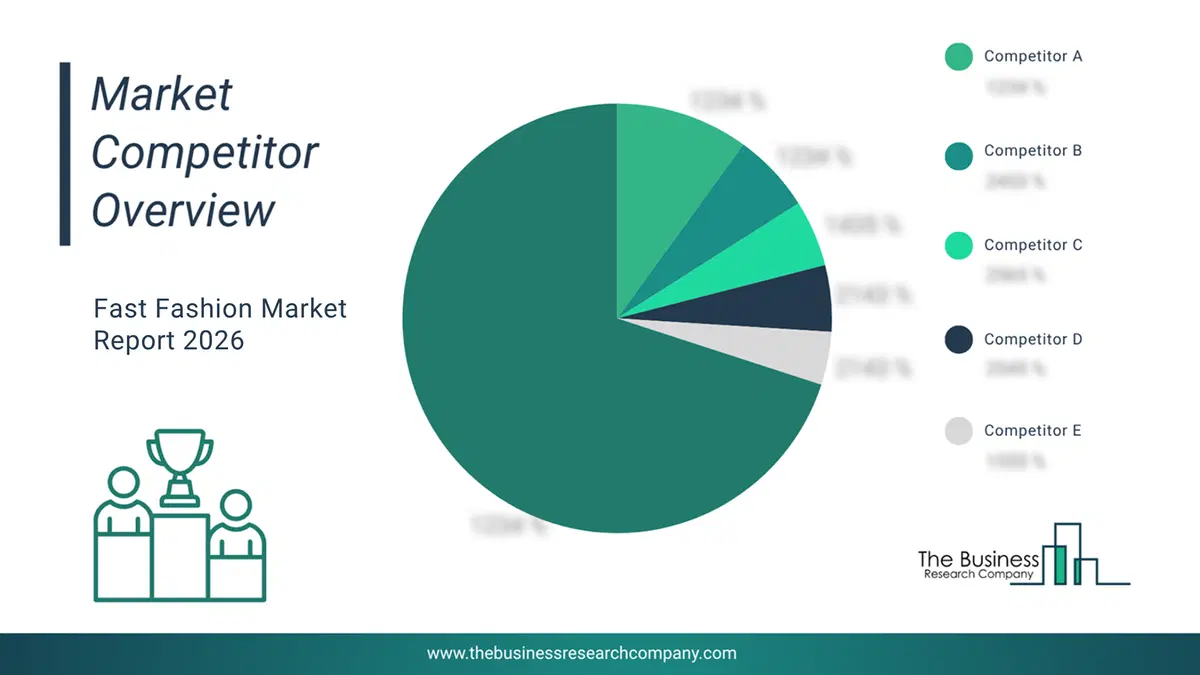
This chart is for illustrative purposes; the full report includes a detailed competitor analysis and comprehensive overview of the top 10 companies in the market.
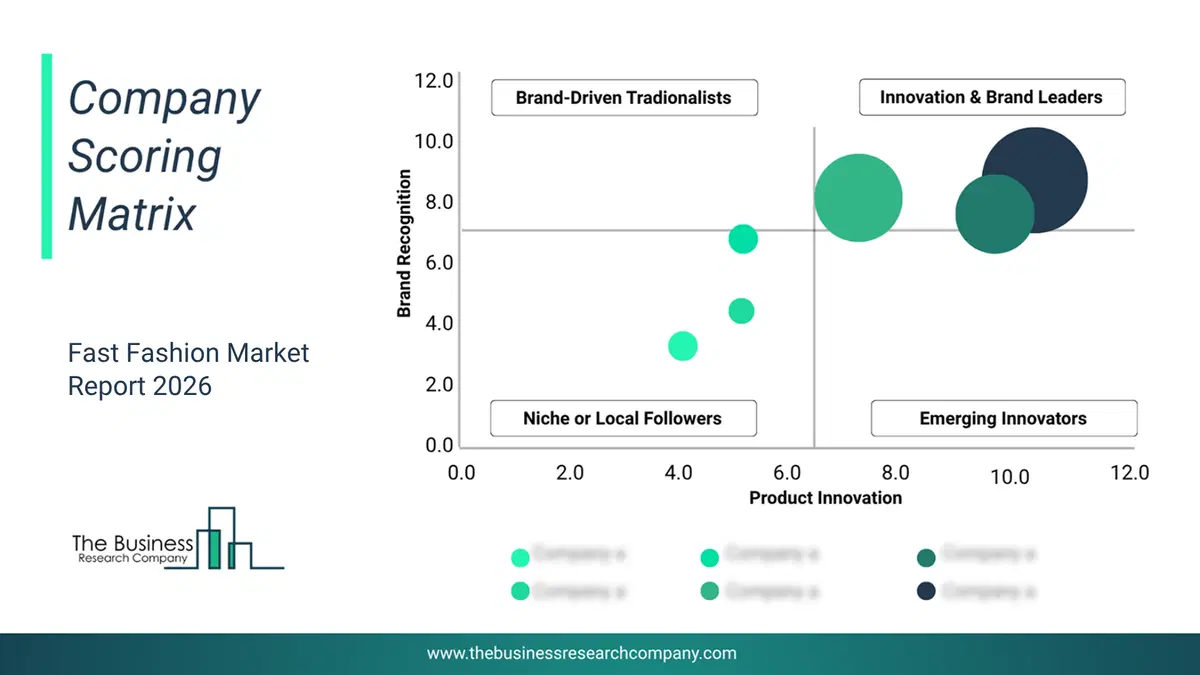
This chart maps companies by product innovation and brand strength, with bubble size indicating relative revenue, helping identify market leaders, challengers, and niche players. This is an illustrative chart; the full report provides a complete and accurate competitive analysis.
Global Fast Fashion Market Trends and Insights
Major companies operating in the fast fashion market are incorporating AI into their applications to stay ahead of the competition. For instance, in August 2023, Sizekick GmbH, a Germany-based software development company, launched sizing AI for fashion e-commerce stores. This AI-based technology leverages precise individual body measurements to recommend the correct clothing sizes, aiming to eliminate size uncertainty and reduce returns in online shopping. It offers two size recommendation options BodyFinder, which suggests realistic body shapes, and BodyScanner, which enables users to scan their bodies using a smartphone. This technology aims to reduce size-related returns and has garnered attention from industry leaders and brand partnerships.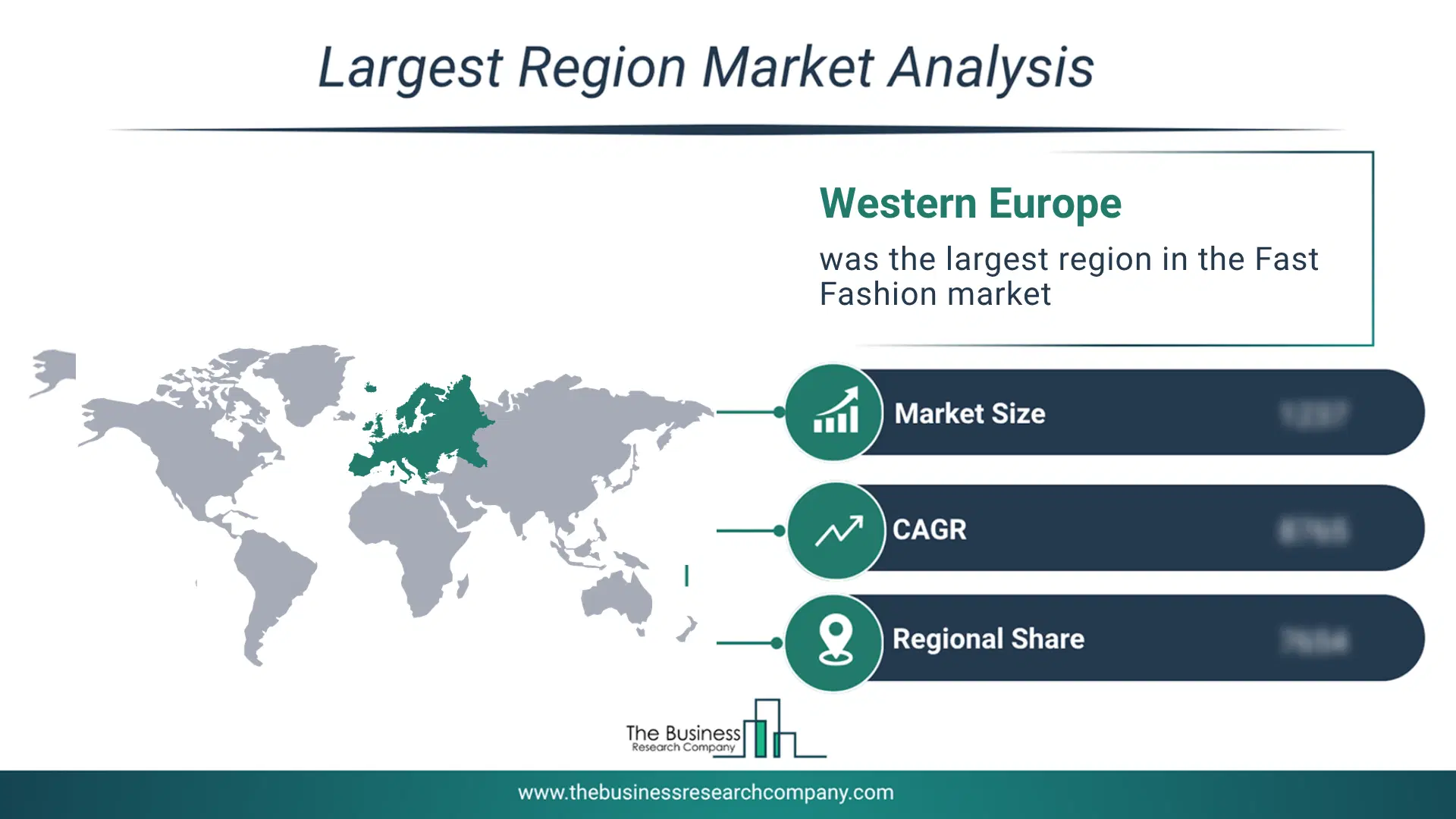
Regional Outlook
Western Europe was the largest region in the fast fashion market in 2025. Asia-Pacific was the second largest region in the global fast fashion market share. The regions covered in this market report are Asia-Pacific, South East Asia, Western Europe, Eastern Europe, North America, South America, Middle East, Africa. The countries covered in this market report are Australia, Brazil, China, France, Germany, India, Indonesia, Japan, Taiwan, Russia, South Korea, UK, USA, Canada, Italy, Spain.What Defines the Fast Fashion Market?
The fast fashion market consists of sales of polyester, acrylic, and nylon. Values in this market are factory gate values, that is the value of goods sold by the manufacturers or creators of the goods, whether to other entities (including downstream manufacturers, wholesalers, distributors and retailers) or directly to end customers. The value of goods in this market includes related services sold by the creators of the goods.How is Market Value Defined and Measured?
The market value is defined as the revenues that enterprises gain from the sale of goods and/or services within the specified market and geography through sales, grants, or donations in terms of the currency (in USD unless otherwise specified). The revenues for a specified geography are consumption values that are revenues generated by organizations in the specified geography within the market, irrespective of where they are produced. It does not include revenues from resales along the supply chain, either further along the supply chain or as part of other products.
This chart presents market attractiveness based on a quantitative evaluation of growth, competition, strategic alignment, and risk, offering a clear view of opportunity areas for decision-making. This chart is for illustrative purposes; the full report contains the complete analysis.

This chart highlights the Total Addressable Market (TAM) by estimating the maximum revenue opportunity using an assumption-driven approach, supporting strategic planning and opportunity sizing across markets. The chart is illustrative; the full report provides a more comprehensive analysis.
What Key Data and Analysis Are Included in the Fast Fashion Market Report 2026?
The fast fashion market research report is one of a series of new reports from The Business Research Company that provides market statistics, including Market Report 2026?global market size, regional shares, competitors with the market share, detailed market segments, market trends and opportunities, and any further data you may need to thrive in the fast fashion Market Report 2026? The market research report delivers a complete perspective of everything you need, with an in-depth analysis of the current and future state of the Market Report 2026?Fast Fashion Market Report Forecast Analysis
| Report Attribute | Details |
|---|---|
| Market Size Value In 2026 | $172.41 billion |
| Revenue Forecast In 2030 | $222.71 billion |
| Growth Rate | CAGR of 6.6% from 2026 to 2030 |
| Base Year For Estimation | 2025 |
| Actual Estimates/Historical Data | 2020-2025 |
| Forecast Period | 2026 - 2030 |
| Market Representation | Revenue in USD Billion and CAGR from 2026 to 2030 |
| Segments Covered | Gender, Distribution Channel, Application |
| Regional Scope | Asia-Pacific, Western Europe, Eastern Europe, North America, South America, Middle East, Africa |
| Country Scope | The countries covered in the report are Australia, Brazil, China, France, Germany, India, Indonesia, Japan, Taiwan, Russia, South Korea, UK, USA, Canada, Italy, Spain. |
| Key Companies Profiled | Inditex (Zara), H&M Group, The Gap Inc., Fast Retailing (Uniqlo), Associated British Foods plc (Primark), ASOS Plc, Mango, New Look, C&A, Forever 21, Cotton On Group, Topshop, Bershka, Boohoo Group, LPP SA., Aeropostale, American Eagle Outfitters, Old Navy, Hollister, Next, Urban Outfitters, Esprit, Esprit Holdings Limited, United Arrows Ltd., Allen Solly, Future Lifestyle Fashions, Jack Wills, Colin's, Zumiez, Colcci, MoroZoni, Houpa, Zadea Group, Osman Jamjoom Group |
| Customization Scope | Request for Customization |
| Pricing And Purchase Options | Explore Purchase Options |