
Biogas To Hydrogen Market Report 2026
Global Outlook – By Biogas Input (Agricultural Feedstock, Industrial Wastewater, Municipal Wastewater, Energy Crops), By Hydrogen Purification technology (Pressure Swing Adsorption (PSA), Membrane Separation, Cryogenic Separation), By Production Process (Steam Methane Reforming, Autothermal Reforming, Partial Oxidation Reforming, Other Production Processes), By Hydrogen Storage Method (Compressed Hydrogen Gas, Liquid Hydrogen, Metal Hydrides), By Application (Power Generation, Chemicals, Marine, Transport, Other Applications) – Market Size, Trends, Strategies, and Forecast to 2030
Biogas To Hydrogen Market Overview
• Biogas To Hydrogen market size has reached to $1.75 billion in 2025 • Expected to grow to $3.14 billion in 2030 at a compound annual growth rate (CAGR) of 12.4% • Growth Driver: Surge In Rising Demand For Wastewater Treatment Solutions Fuelling The Growth Of The Market Due To Need For Resource Recovery • Market Trend: Technological Advancements Driving Clean Carbon-Negative Hydrogen Production • North America was the largest region in 2025 and Asia-Pacific is the fastest growing region.Market Gains By 2030 – Top Opportunities By Segment
Market Gain identifies the most promising market opportunities by highlighting the segments or products expected to generate the highest incremental revenue growth over the next five years.
What Is Covered Under Biogas To Hydrogen Market?
Biogas to hydrogen refers to a conversion process in which biogas, produced from the anaerobic digestion of organic waste, is reformed at high temperatures using catalysts to generate hydrogen gas and byproducts such as carbon monoxide and carbon dioxide. The technology often involves steam reforming, partial oxidation, or advanced tri-reforming methods tailored for methane-rich biogas streams. This approach enables renewable hydrogen production while reducing reliance on fossil fuels and supporting decarbonization efforts in energy and industry applications. The main biogas inputs for biogas to hydrogen are agricultural feedstock, industrial wastewater, municipal wastewater, and energy crops. Agricultural feedstock involves using organic materials such as crop residues, animal manure, and plant waste derived from farming activities for biogas production. Hydrogen purification technologies include pressure swing adsorption (PSA), membrane separation, and cryogenic separation, while production processes encompass steam methane reforming, autothermal reforming, partial oxidation reforming, and others. Various hydrogen storage methods include compressed hydrogen gas, liquid hydrogen, and metal hydrides, and they are used in various applications such as power generation, chemical production, marine, transportation, and others.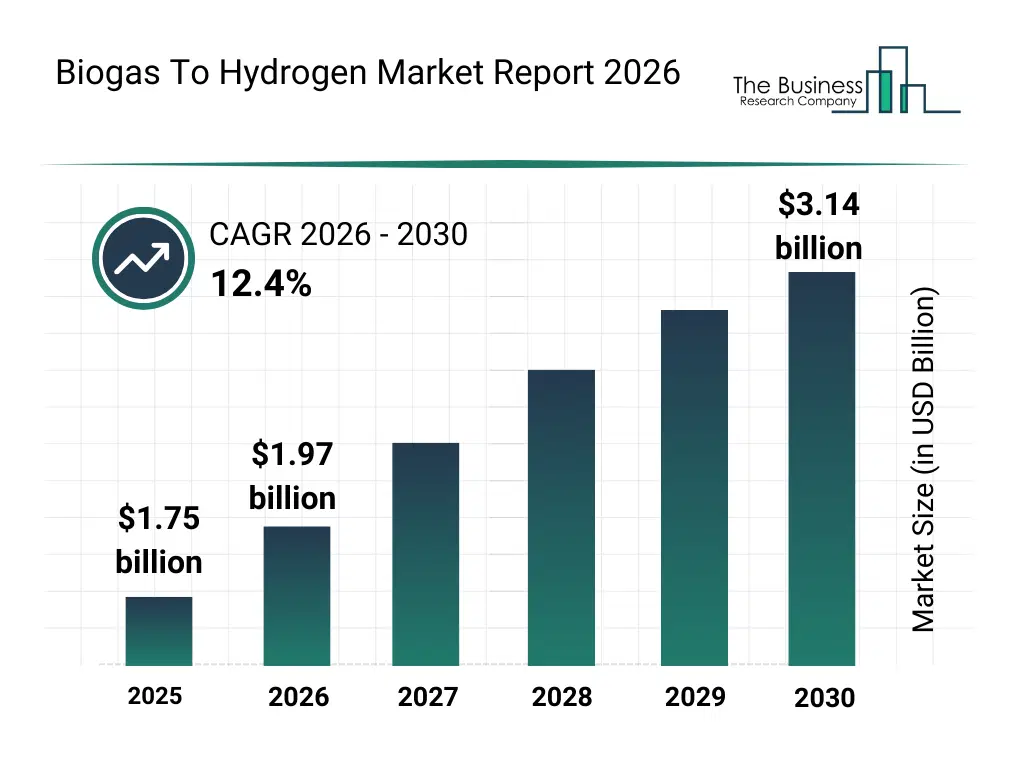
What Is The Biogas To Hydrogen Market Size and Share 2026?
The biogas to hydrogen market size has grown rapidly in recent years. It will grow from $1.75 billion in 2025 to $1.97 billion in 2026 at a compound annual growth rate (CAGR) of 12.6%. The growth in the historic period can be attributed to expansion of biogas production infrastructure, availability of organic waste feedstocks, early adoption of steam methane reforming systems, initial investments in renewable gas technologies, development of anaerobic digestion facilities.What Is The Biogas To Hydrogen Market Growth Forecast?
The biogas to hydrogen market size is expected to see rapid growth in the next few years. It will grow to $3.14 billion in 2030 at a compound annual growth rate (CAGR) of 12.4%. The growth in the forecast period can be attributed to increasing demand for low-carbon hydrogen, rising investments in hydrogen infrastructure, expansion of decarbonization initiatives, growing adoption of hydrogen in transport and industry, advancements in reforming catalyst technologies. Major trends in the forecast period include increasing deployment of biogas reforming systems, rising adoption of renewable hydrogen production pathways, growing integration of advanced reforming technologies, expansion of distributed hydrogen generation facilities, enhanced focus on feedstock flexibility.
Global Biogas To Hydrogen Market Segmentation
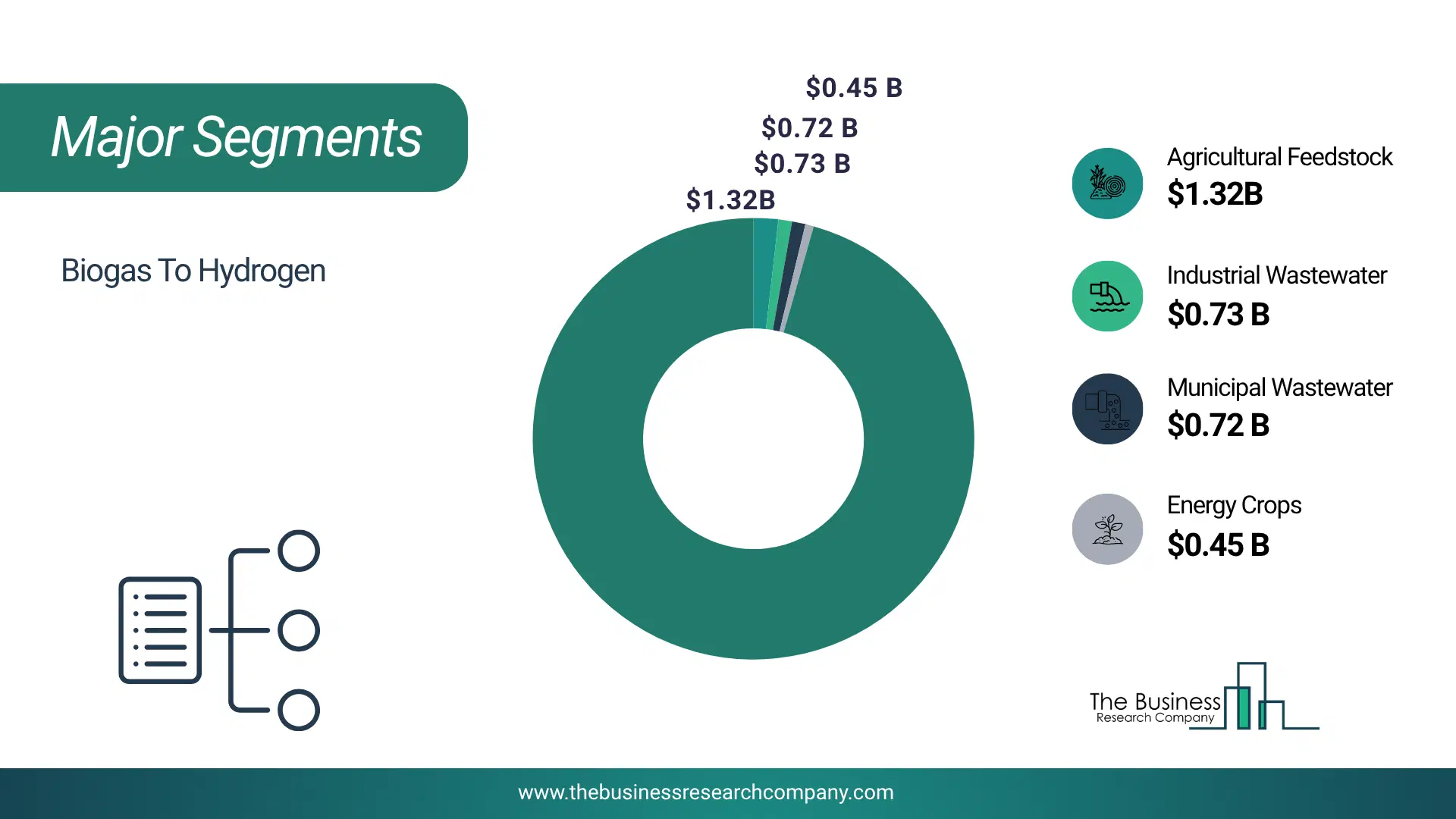
1) By Biogas Input: Agricultural Feedstock, Industrial Wastewater, Municipal Wastewater, Energy Crops 2) By Hydrogen Purification technology: Pressure Swing Adsorption (PSA), Membrane Separation, Cryogenic Separation 3) By Production Process: Steam Methane Reforming, Autothermal Reforming, Partial Oxidation Reforming, Other Production Processes 4) By Hydrogen Storage Method: Compressed Hydrogen Gas, Liquid Hydrogen, Metal Hydrides 5) By Application: Power Generation, Chemicals, Marine, Transport, Other Applications Subsegments: 1) By Agricultural Feedstock: Crop Residues, Animal Manure, Food Processing Waste, Orchard And Vineyard Waste 2) By Industrial Wastewater: Food And Beverage Wastewater, Pulp And Paper Wastewater, Chemical Manufacturing Wastewater, Pharmaceutical Wastewater 3) By Municipal Wastewater: Domestic Sewage, Stormwater Runoff, Sludge From Treatment Plants, Combined Sewer Waste 4) By Energy Crops: Switchgrass, Maize, Miscanthus, Sorghum The top segments in the biogas to hydrogen market will be: • Agricultural Feedstock will reach $1.32 Billion by 2030. • Municipal Wastewater will reach $0.72 Billion by 2030. • Industrial Wastewater will reach $0.73 Billion by 2030. • Energy Crops will reach $0.45 Billion by 2030.What Is The Driver Of The Biogas To Hydrogen Market?
The rising demand for wastewater treatment solutions is expected to propel the growth of the biogas-to-hydrogen market going forward. Wastewater treatment solutions represent technological and infrastructure processes that remove contaminants from used water before it's safe reuse or discharge into the environment. Demand for wastewater treatment solutions is rising because rapid urbanization and industrial growth significantly increase the volume of municipal and industrial wastewater requiring safe management and disposal, creating a critical public health and environmental challenge. The biogas-to-hydrogen process directly helps address the rising demand for wastewater treatment solutions by converting the methane-rich biogas generated as a by-product of anaerobic digestion in wastewater treatment plants into high-value, clean hydrogen fuel, essentially turning a waste stream into a recoverable resource. For instance, in 2024, according to the United Nations Sustainable Development, a US-based intergovernmental organization, 3.4 billion people still lacked access to safely managed sanitation services, indicating a massive, unmet need for expanded treatment infrastructure that generates biogas feedstocks. Therefore, a rising demand for wastewater treatment solutions is driving the growth of the biogas-to-hydrogen market.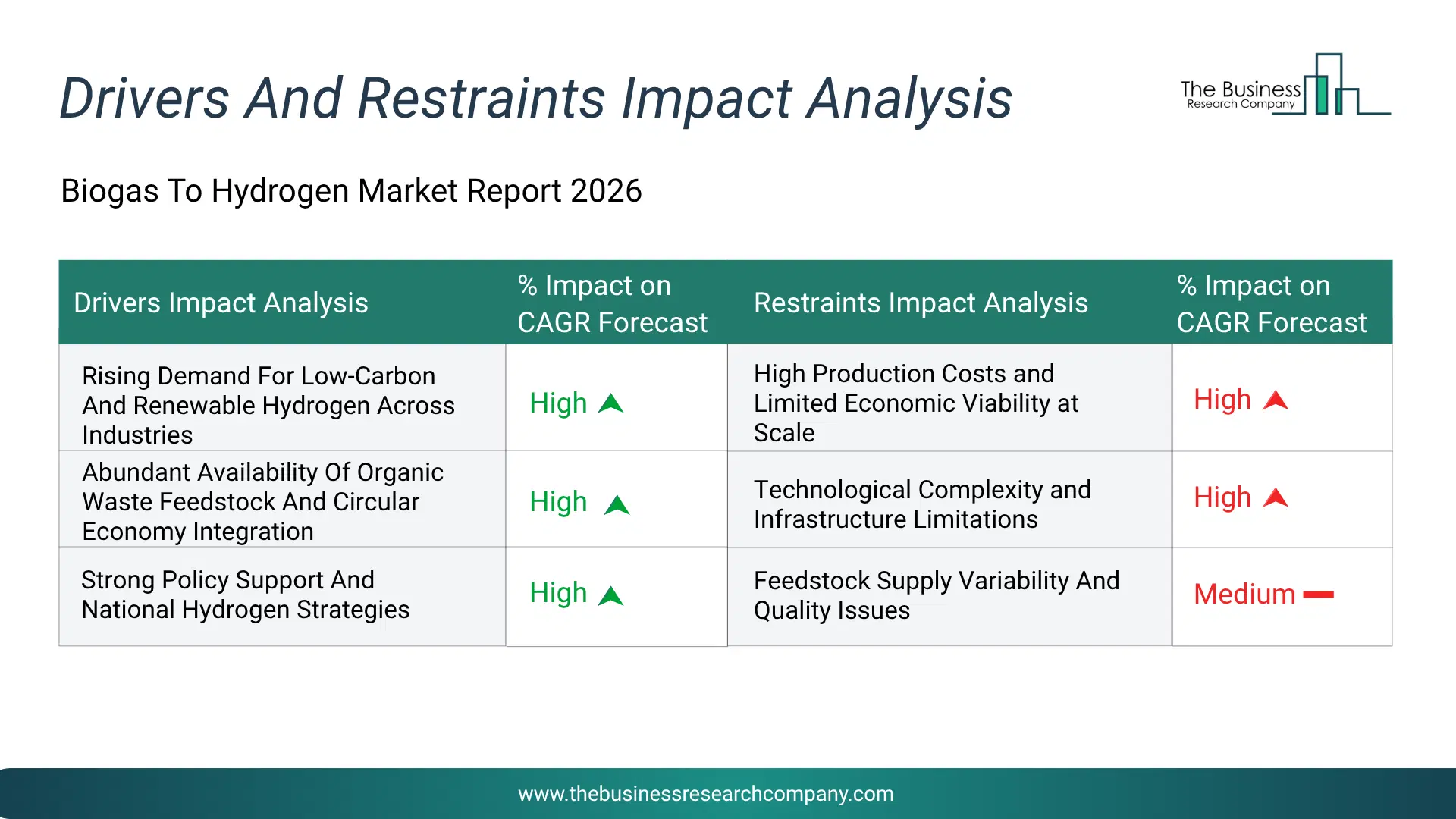
Infographic Chart Showing Key Market Drivers Analysis And Restraints For Biogas To Hydrogen Market
The chart presents an impact analysis of key drivers and restraints, quantifying their relative influence on the market's growth rate and helping assess the balance between growth enablers and limiting factors. This chart offers a high-level perspective; the full report contains more detailed insights.
How Will The Drivers Impact Growth In The Global Biogas To Hydrogen Market?
• Rising Demand For Low-Carbon And Renewable Hydrogen Across Industries (High) – During the forecast period, the rising demand for low-carbon and renewable hydrogen across industries is expected to become a key growth driver for the biogas to hydrogen market by 2030. Industries including refining, ammonia production, and heavy transport are increasingly transitioning toward hydrogen to reduce lifecycle emissions and meet sustainability targets. Biogas derived hydrogen provides a renewable alternative that aligns with carbon reduction goals while utilizing existing gas infrastructure. The shift toward cleaner industrial feedstocks and fuels is encouraging large-scale adoption of renewable hydrogen solutions. This growing preference for low-emission hydrogen sources is reinforcing market expansion across multiple end-use sectors. • Abundant Availability Of Organic Waste Feedstock And Circular Economy Integration (High) – During the forecast period, the abundant availability of organic waste feedstock and circular economy integration is expected to emerge as a major factor driving the expansion of the biogas to hydrogen market by 2030. Increasing volumes of agricultural residues, food waste, and wastewater sludge are being redirected toward energy generation instead of disposal, supporting continuous biogas production. This enables efficient resource utilization while reducing environmental burdens associated with waste management. The integration of hydrogen production with waste treatment facilities is further strengthening value chain efficiency and operational viability. As circular economy models gain traction globally, the use of waste-derived feedstocks is expected to scale significantly. • Strong Policy Support And National Hydrogen Strategies (High) – During the forecast period, strong policy support and national hydrogen strategies are expected to act as a key growth catalyst for the biogas to hydrogen market by 2030. Governments are increasingly introducing regulatory frameworks, carbon reduction mandates, and funding programs to accelerate hydrogen adoption across energy and industrial sectors. National hydrogen missions and renewable energy targets are encouraging investments in biogas upgrading and hydrogen production technologies. In addition, carbon pricing mechanisms and emission trading systems are improving the economic attractiveness of low-carbon hydrogen solutions. These supportive regulatory environments are facilitating faster commercialization and deployment of projects.How Will The Restraints Impact Growth In The Global Biogas To Hydrogen Market?
• High Production Costs and Limited Economic Viability at Scale (High) – During the forecast period, high production costs and limited economic viability at scale are restricting the growth of the biogas to hydrogen market. Expensive feedstock processing, upgrading technologies, and capital-intensive infrastructure requirements are increasing overall production costs, making hydrogen derived from biogas less competitive compared to conventional hydrogen sources and thereby limiting large-scale commercialization • Technological Complexity and Infrastructure Limitations (High) – During the forecast period, technological complexity and infrastructure limitations are restricting the growth of the biogas to hydrogen market. Advanced conversion technologies such as reforming and purification require specialized systems and skilled expertise, while inadequate hydrogen storage, transportation, and distribution infrastructure is constraining efficient deployment across regions • Feedstock Supply Variability And Quality Issues (High) – During the forecast period, feedstock supply variability and quality issues are restricting the growth of the biogas to hydrogen market. Inconsistent availability of organic waste and fluctuations in biogas composition are impacting process efficiency and hydrogen yield, leading to operational uncertainties and limiting reliable large-scale productionKey Players In The Global Biogas To Hydrogen Market
Major companies operating in the biogas to hydrogen market are Air Liquide SA, Air Products and Chemicals Inc, Linde plc, Siemens Energy AG, Thyssenkrupp AG, Xebec Adsorption Inc, Hitachi Zosen Inova AG, ENGIE SA, Shell plc, Bioenergy DevCo, Greenlane Renewables Inc, EnviTec Biogas AG, Nel ASA, ITM Power plc, McPhy Energy SA, Plug Power Inc, Snam S.pA, BASF SE, Green Hydrogen Systems A/S, Ballard Power Systems Inc.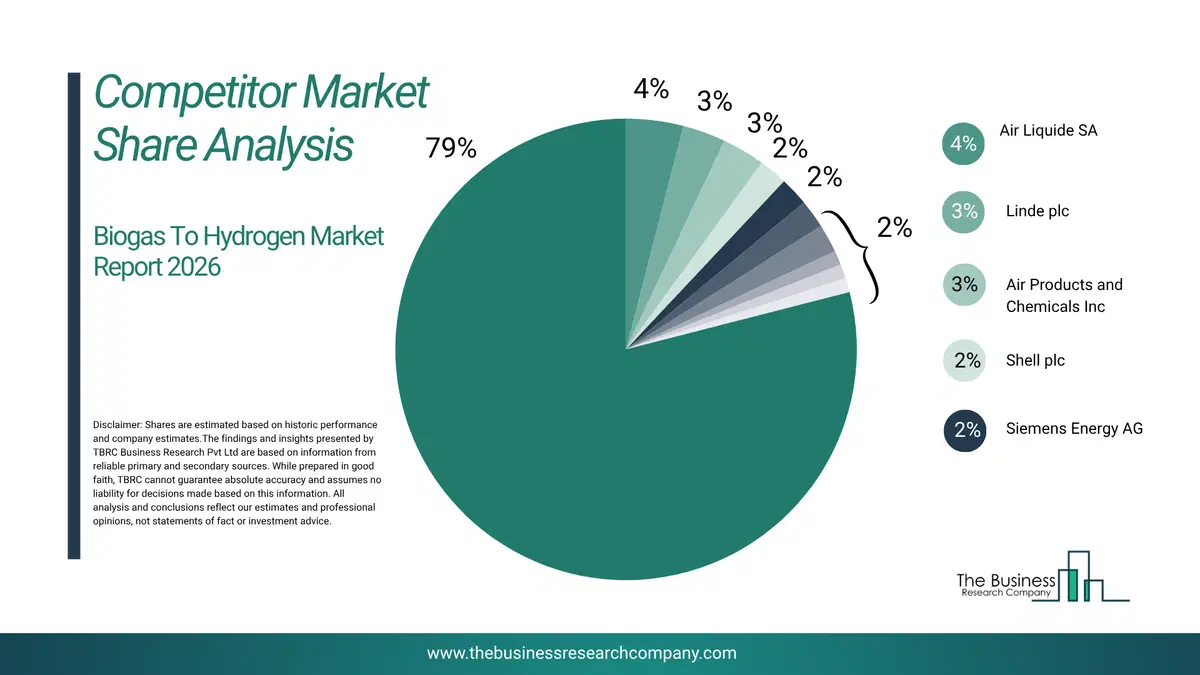
This chart is for illustrative purposes; the full report includes a detailed competitor analysis and comprehensive overview of the top 10 companies in the market.
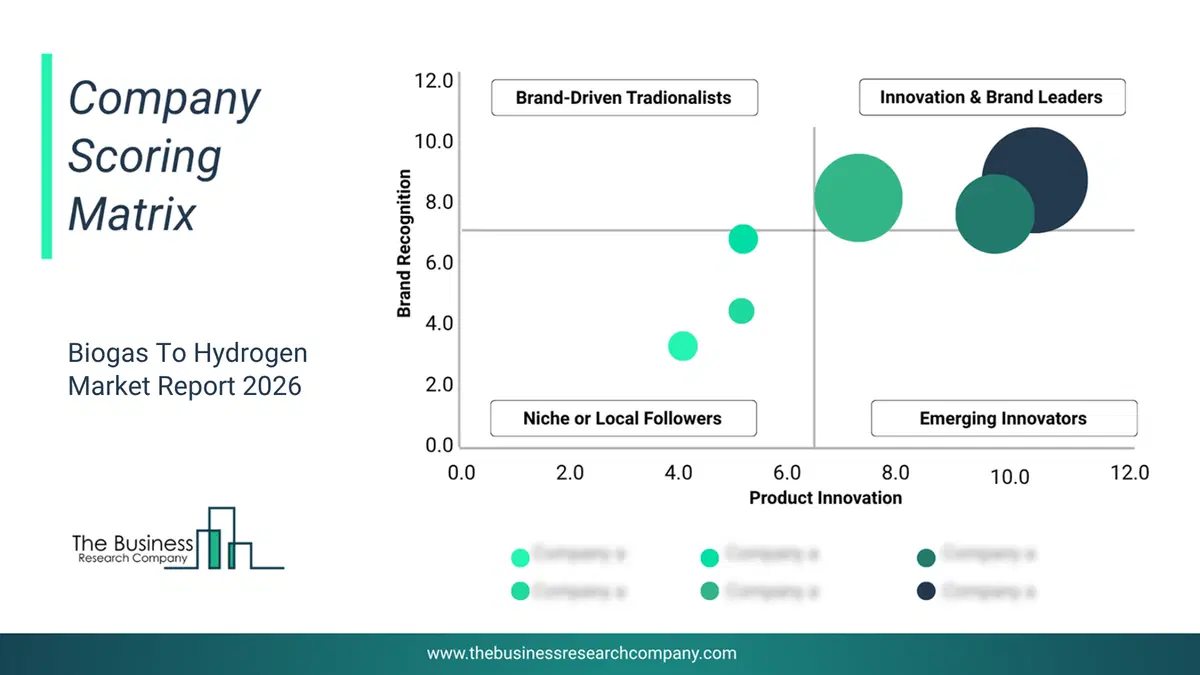
This chart maps companies by product innovation and brand strength, with bubble size indicating relative revenue, helping identify market leaders, challengers, and niche players. This is an illustrative chart; the full report provides a complete and accurate competitive analysis.
Global Biogas To Hydrogen Market Trends and Insights
Major companies operating in the biogas-to-hydrogen market are focusing on technological advancements in clean carbon-negative hydrogen to gain a competitive advantage. Clean carbon-negative hydrogen refers to hydrogen produced from renewable or waste-derived biogas where the process permanently captures or utilizes carbon, resulting in net-negative greenhouse-gas emissions. For instance, in April 2025, Utility and Ghena, a US-based clean hydrogen technology company, introduced its H2GEN reactor system for biogas-to-hydrogen conversion. The system enables direct hydrogen generation from biogas without prior upgrading, operates with modular scalability, and achieves a negative carbon-intensity output verified for mobility applications in South Korea. This trend accelerates the shift toward climate-positive hydrogen production, strengthens decarbonization strategies, and enhances circular economy integration, though technology commercialization and lifecycle validation remain key challenges.What Are Latest Mergers And Acquisitions In The Biogas To Hydrogen Market?
In February 2023, Shell plc, a UK-based oil and gas company, acquired Nature Energy Biogas A/S for an undisclosed amount. With this acquisition, Shell aims to strengthen its leadership position in the renewable natural gas (RNG) sector and expand its integrated RNG value chain globally. Nature Energy Biogas A/S is a Denmark-based manufacturer of hydrogen from biogas production services utilizing agricultural, industrial, and household waste feedstocks to produce renewable energy alternatives to fossil fuels.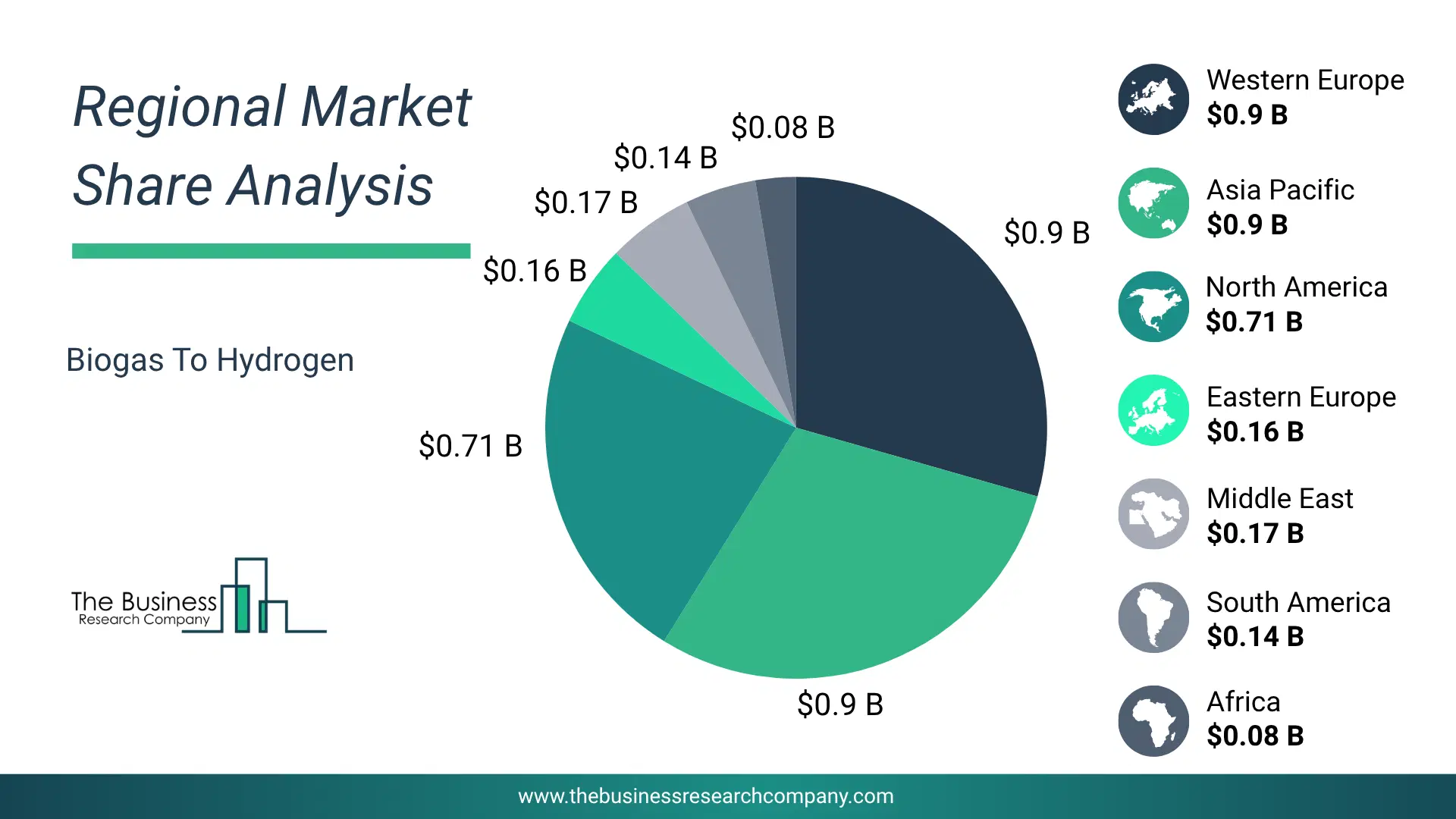
Regional Outlook
North America was the largest region in the biogas-to-hydrogen market in 2025. Asia-Pacific is expected to be the fastest-growing region in the forecast period. The regions covered in this market report are Asia-Pacific, South East Asia, Western Europe, Eastern Europe, North America, South America, Middle East, Africa. The countries covered in this market report are Australia, Brazil, China, France, Germany, India, Indonesia, Japan, Taiwan, Russia, South Korea, UK, USA, Canada, Italy, SpainWhat Defines the Biogas To Hydrogen Market?
The biogas to hydrogen market consists of sales of electrolyzers, fuel cells, gas compressors, hydrogen pipelines, and reforming catalysts. Values in this market are ‘factory gate’ values, that is, the value of goods sold by the manufacturers or creators of the goods, whether to other entities (including downstream manufacturers, wholesalers, distributors, and retailers) or directly to end customers. The value of goods in this market includes related services sold by the creators of the goods.How is Market Value Defined and Measured?
The market value is defined as the revenues that enterprises gain from the sale of goods and/or services within the specified market and geography through sales, grants, or donations in terms of the currency (in USD unless otherwise specified). The revenues for a specified geography are consumption values that are revenues generated by organizations in the specified geography within the market, irrespective of where they are produced. It does not include revenues from resales along the supply chain, either further along the supply chain or as part of other products.
This chart presents market attractiveness based on a quantitative evaluation of growth, competition, strategic alignment, and risk, offering a clear view of opportunity areas for decision-making. This chart is for illustrative purposes; the full report contains the complete analysis.

This chart highlights the Total Addressable Market (TAM) by estimating the maximum revenue opportunity using an assumption-driven approach, supporting strategic planning and opportunity sizing across markets. The chart is illustrative; the full report provides a more comprehensive analysis.
What Key Data and Analysis Are Included in the Biogas To Hydrogen Market Report 2026?
The biogas to hydrogen market research report is one of a series of new reports from The Business Research Company that provides market statistics, including Market Report 2026?global market size, regional shares, competitors with the market share, detailed market segments, market trends and opportunities, and any further data you may need to thrive in the biogas to hydrogen Market Report 2026? The market research report delivers a complete perspective of everything you need, with an in-depth analysis of the current and future state of the Market Report 2026?Biogas To Hydrogen Market Report Forecast Analysis
| Report Attribute | Details |
|---|---|
| Market Size Value In 2026 | $1.97 billion |
| Revenue Forecast In 2030 | $3.14 billion |
| Growth Rate | CAGR of 12.6% from 2026 to 2030 |
| Base Year For Estimation | 2025 |
| Actual Estimates/Historical Data | 2020-2025 |
| Forecast Period | 2026 - 2030 |
| Market Representation | Revenue in USD Billion and CAGR from 2026 to 2030 |
| Segments Covered | Biogas Input, Hydrogen Purification technology, Production Process, Hydrogen Storage Method, Application |
| Regional Scope | Asia-Pacific, Western Europe, Eastern Europe, North America, South America, Middle East, Africa |
| Country Scope | The countries covered in the report are Australia, Brazil, China, France, Germany, India, Indonesia, Japan, Taiwan, Russia, South Korea, UK, USA, Canada, Italy, Spain. |
| Key Companies Profiled | Air Liquide SA, Air Products and Chemicals Inc, Linde plc, Siemens Energy AG, Thyssenkrupp AG, Xebec Adsorption Inc, Hitachi Zosen Inova AG, ENGIE SA, Shell plc, Bioenergy DevCo, Greenlane Renewables Inc, EnviTec Biogas AG, Nel ASA, ITM Power plc, McPhy Energy SA, Plug Power Inc, Snam S.pA, BASF SE, Green Hydrogen Systems A/S, Ballard Power Systems Inc. |
| Customization Scope | Request for Customization |
| Pricing And Purchase Options | Explore Purchase Options |