
K12 Foodservice Market Report 2026
Global Outlook – By Service Type (Cafeteria Services, Catering Services, Vending Services, Mobile Food Services), By Food Type (Plant-Based, Dairy Products, Meat And Poultry, Grains, Snacks), By Distribution Channel (Direct Supply, Wholesale Distribution, Online Ordering, Food Delivery Services), By End User (Public Schools, Private Schools, Charter Schools, Online Schools) – Market Size, Trends, Strategies, and Forecast to 2030
K12 Foodservice Market Overview
• K12 Foodservice market size has reached to $39.79 billion in 2025 • Expected to grow to $51.29 billion in 2030 at a compound annual growth rate (CAGR) of 5.1% • Growth Driver: Government Support For School Meal Initiatives Driving Expansion With Enhanced Funding And Universal Meal Policies • Market Trend: Innovative Portion-Controlled Roll Enhances Nutrition And Convenience In School Meal Programs • North America was the largest region in 2025 and Asia-Pacific is the fastest growing region.Market Gains By 2030 – Top Opportunities By Segment
Market Gain identifies the most promising market opportunities by highlighting the segments or products expected to generate the highest incremental revenue growth over the next five years.
What Is Covered Under K12 Foodservice Market?
Kindergarten through 12th grade (K12) foodservice refers to the organized management and operation of food preparation and distribution systems within the education sector. Its primary purpose is to ensure students have access to healthy, balanced, and safe meals that support growth, learning, and overall well-being. The K–12 foodservice system includes meal planning, preparation, distribution, and compliance with nutritional standards. It also promotes nutrition education and healthy eating habits among students. The main service types of kindergarten through 12th grade (K12) foodservice are cafeteria services, catering services, vending services, and mobile food services. Cafeteria services refer to self-service or semi-self-service meal operations where customers choose from prepared food options in a communal dining area. It includes various food types encompassing plant-based options, dairy products, meat and poultry, grains, and snacks, and is distributed through direct supply, wholesale distribution, online ordering, and food delivery services. It caters to various end users, such as public schools, private schools, charter schools, and online schools.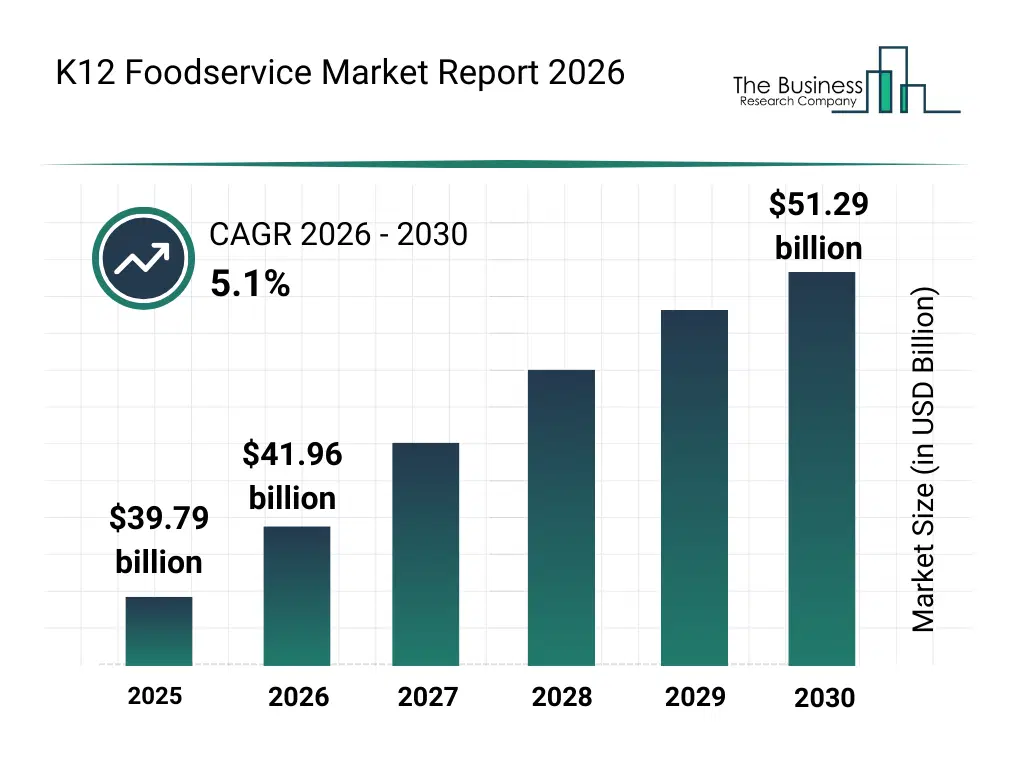
What Is The K12 Foodservice Market Size and Share 2026?
The k12 foodservice market size has grown strongly in recent years. It will grow from $39.79 billion in 2025 to $41.96 billion in 2026 at a compound annual growth rate (CAGR) of 5.5%. The growth in the historic period can be attributed to expansion of public school meal programs, increasing student enrollment levels, government funding for child nutrition initiatives, rising awareness of childhood nutrition, growth of centralized school kitchens.What Is The K12 Foodservice Market Growth Forecast?
The k12 foodservice market size is expected to see strong growth in the next few years. It will grow to $51.29 billion in 2030 at a compound annual growth rate (CAGR) of 5.1%. The growth in the forecast period can be attributed to increasing adoption of personalized nutrition programs, rising use of data-driven menu planning, expansion of sustainable food sourcing in schools, growing integration of cashless payment systems, increasing focus on allergy-safe meal services. Major trends in the forecast period include increasing adoption of digitized meal management systems, rising demand for health-focused school menus, growing integration of smart vending solutions, expansion of plant-based meal offerings, enhanced focus on food safety and nutrition compliance.
Global K12 Foodservice Market Segmentation
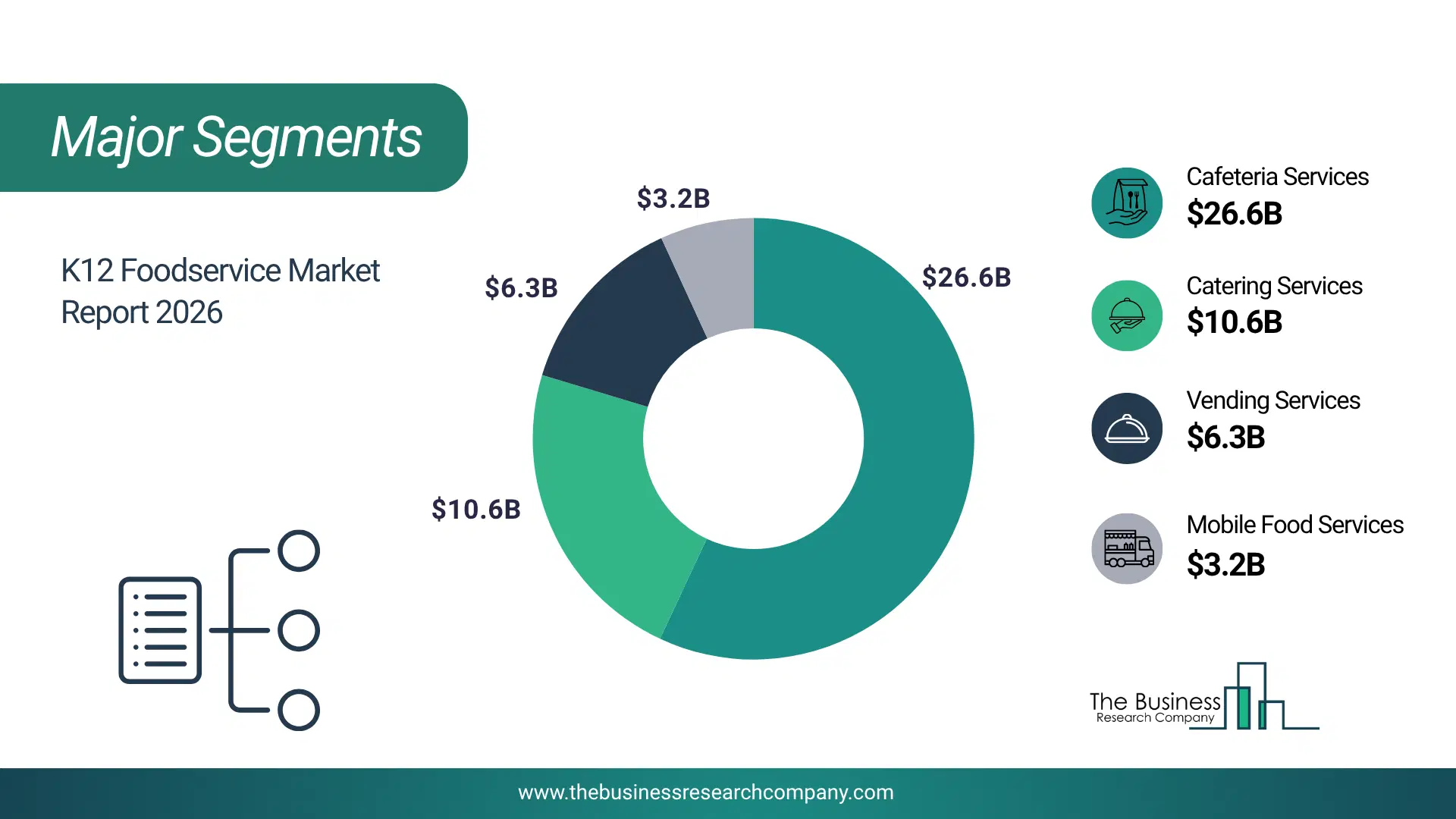
1) By Service Type: Cafeteria Services, Catering Services, Vending Services, Mobile Food Services 2) By Food Type: Plant-Based, Dairy Products, Meat And Poultry, Grains, Snacks 3) By Distribution Channel: Direct Supply, Wholesale Distribution, Online Ordering, Food Delivery Services 4) By End User: Public Schools, Private Schools, Charter Schools, Online Schools Subsegments: 1) By Cafeteria Services: Menu Planning Services, Meal Preparation Services, Food Serving Services, Cleaning And Sanitation Services, Nutrition Consultation Services, Student Meal Management Services, Food Quality Monitoring Services, Allergy Management Services 2) By Catering Services: Event Catering Services, Special Program Catering Services, Seasonal Catering Services, On Campus Catering Services, Off Campus Catering Services, Themed Meal Catering Services, Bulk Meal Catering Services, Customized Menu Catering Services 3) By Vending Services: Snack Vending Services, Beverage Vending Services, Healthy Food Vending Services, Automated Payment Vending Services, Smart Vending Solutions, Cold Food Vending Services, Hot Food Vending Services, On Demand Vending Services 4) By Mobile Food Services: Food Truck Services, Mobile Snack Services, Mobile Beverage Services, Pop Up Meal Services, Seasonal Mobile Food Services, On Campus Mobile Kitchens, Special Event Mobile Services, Healthy Mobile Meal Services The top segments in the k12 foodservice market will be: • Cafeteria Services will reach $26.56 billion by 2030. • Catering Services will reach $10.57 billion by 2030. • Vending Services will reach $6.22 billion by 2030. • Mobile Food Services will reach $3.13 billion by 2030.What Is The Driver Of The K12 Foodservice Market?
The government support for school meal initiatives propelled the growth of the k-12 foodservice market during the historic period. Government support for school meal initiatives refers to the financial aid, policies, and programs provided by the government to ensure students receive nutritious and affordable meals in schools. Growing government support for school meal initiatives is primarily due to increasing concerns about child nutrition, food insecurity, and the need to promote healthy eating habits among students. Government support for school meal initiatives helps K-12 foodservice by providing essential funding, resources, and policy backing that enable schools to improve meal quality, expand access, and promote better student nutrition. For instance, in March 2025, according to the California Legislative Analyst’s Office, a US-based government organization, in 2022-23, the first year of universal meals implementation, the number of meals increased to 831 million, rising further to 876 million in 2023-24. Therefore, the government support for school meal initiatives driven the growth of the K-12 foodservice market.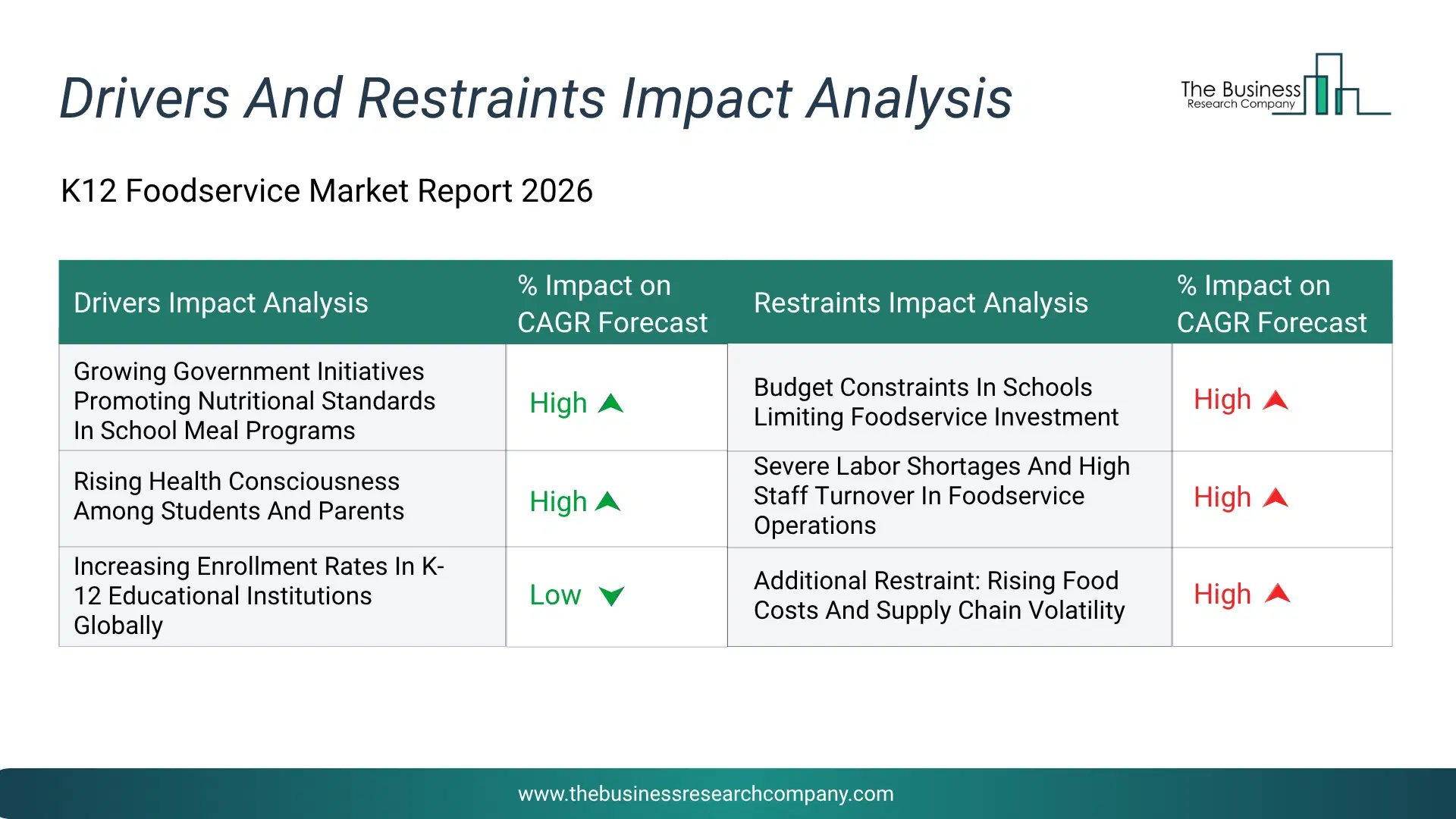
Infographic Chart Showing Key Market Drivers Analysis And Restraints For K12 Foodservice Market
The chart presents an impact analysis of key drivers and restraints, quantifying their relative influence on the market's growth rate and helping assess the balance between growth enablers and limiting factors. This chart offers a high-level perspective; the full report contains more detailed insights.
How Will The Drivers Impact Growth In The Global K12 Foodservice Market?
• Growing Government Initiatives Promoting Nutritional Standards In School Meal Programs (High) – During the forecast period, growing government initiatives are expected to become a key driver for the k -12 foodservice market by 2030. Increased federal and state funding allows schools to improve menu quality, upgrade kitchen infrastructure, and comply with stricter dietary regulations. These programs encourage partnerships with local farmers and suppliers to source fresh produce, ensuring balanced and nutritious meals for students. As more governments adopt wellness -focused education policies, public spending on school food programs continues to rise. • Rising Health Consciousness Among Students And Parents (High) – During the forecast period, rising health consciousness among students and parents is expected to act as a significant driver for the k-12 foodservice market by 2030. Awareness of the link between nutrition, learning outcomes, and physical well-being is prompting schools to adopt menus rich in fresh fruits, vegetables, whole grains, and plant-based ingredients. Parents increasingly demand transparency in ingredients and nutrition content, driving adoption of clean-label, allergen-free, and sustainable meal options. • Increasing Enrollment Rates In K-12 Educational Institutions Globally (Low) – During the forecast period, increasing enrollment rates are expected to be another key factor driving the k-12 foodservice market by 2030. Higher student populations, particularly in emerging economies, are expanding the scale and demand for organized foodservice operations. This growth supports investments in centralized kitchen facilities, efficient food distribution logistics, and digital meal management systems. Additionally, participation in free and subsidized meal programs further increases daily meal volumes.How Will The Restraints Impact Growth In The Global K12 Foodservice Market?
• Budget Constraints In Schools Limiting Foodservice Investment (High) – During the forecast period, the budget constraints act as a major restraint for the k–12 foodservice market by restricting schools’ ability to upgrade meal programs and facilities. With limited funding allocated to foodservice operations, many districts struggle to afford quality ingredients, new kitchen equipment, or modern serving infrastructure. Rising food prices and inflation further squeeze already tight budgets, forcing schools to prioritize cost over nutrition and variety. This financial pressure often delays menu innovation, limits adoption of fresh and organic foods, and reduces participation in healthy meal initiatives. Overall, constrained budgets restrict program expansion and slow progress toward higher-quality school meal standards. • Severe Labor Shortages And High Staff Turnover In Foodservice Operations (High) – During the forecast period, the labor shortages act as a significant restraint for the k–12 foodservice market, creating challenges in maintaining consistent meal preparation and service quality. Many schools face difficulties recruiting and retaining qualified cafeteria staff due to low wages, limited benefits, and physically demanding work environments. High turnover rates increase training costs and disrupt daily operations, often leading to simplified menus and reduced meal options. The shortage of skilled workers also impacts compliance with safety and nutrition regulations. Overall, persistent staffing challenges limit operational efficiency and hinder the ability of schools to deliver diverse and nutritious meals effectively. • Additional Restraint: Rising Food Costs And Supply Chain Volatility (High) – During the forecast period, the the k–12 foodservice programs are highly vulnerable to fluctuations in food prices and supply chain disruptions. Rising costs for ingredients, transportation, and packaging can strain already limited school meal budgets. Supply shortages may also affect menu planning and the consistent availability of nutritious meal options. These challenges make it difficult for schools to maintain food quality while controlling operational expenses.Key Players In The Global K12 Foodservice Market
Major companies operating in the k12 foodservice market are Compass Group PLC, Chartwells K12, Sodexo S.A., Aramark Corporation, US Foods Holding Corp., Metz Culinary Management Inc., Schwan’s Food Service Inc., Whitsons Culinary Group Inc., Taher Inc., Fresh Ideas Food Service Management LLC, Basic American Foods Inc., C.H. Guenther & Son Inc., General Mills Inc., Campbell Soup Company, Kellanova Away From Home, ARYZTA AG, Land O’Lakes Inc., Revolution Foods Inc., Butterball LLC, JJ Foodservice Limited, Bridgford Foods Corporation, Gourmet Gorilla Inc., Elior Group S.A., Bake Crafters Food Company LLC, PepsiCo Inc., Ben’s Original, SLA Management LLC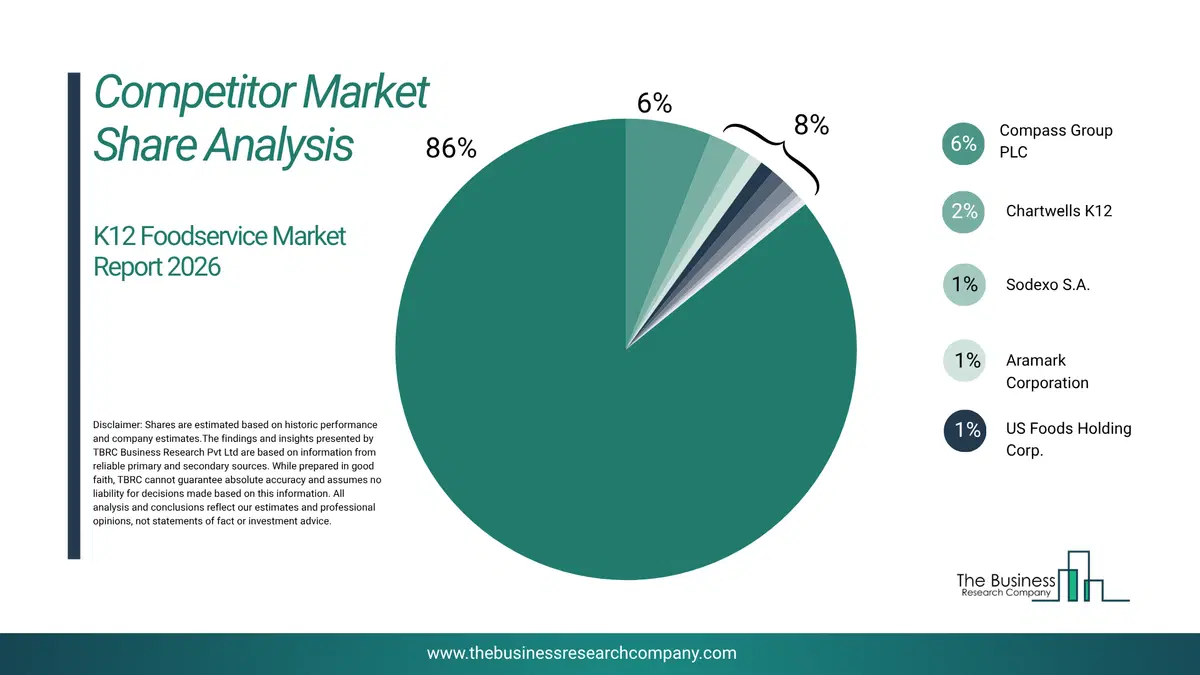
This chart is for illustrative purposes; the full report includes a detailed competitor analysis and comprehensive overview of the top 10 companies in the market.
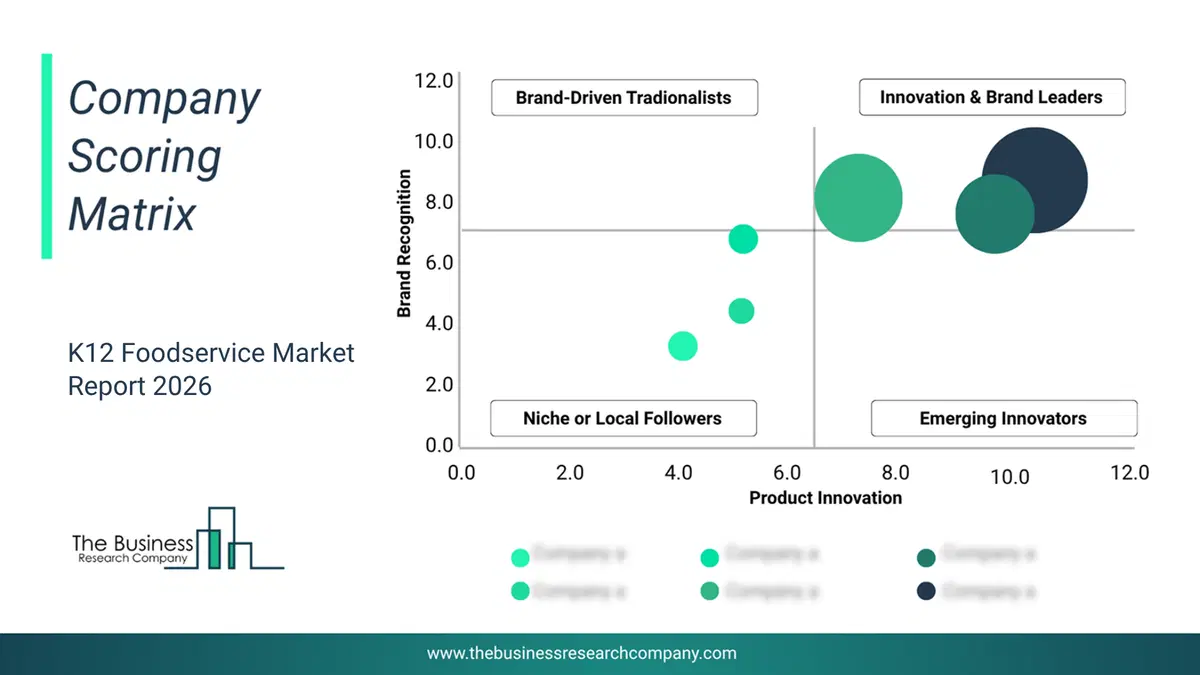
This chart maps companies by product innovation and brand strength, with bubble size indicating relative revenue, helping identify market leaders, challengers, and niche players. This is an illustrative chart; the full report provides a complete and accurate competitive analysis.
Global K12 Foodservice Market Trends and Insights
Major companies operating in the K-12 foodservice market are focusing on product innovations such as portion-controlled items to meet nutritional standards and enhance convenience for school meal programs. Portion-controlled items refer to food products that are pre-measured or individually sized to provide a specific serving amount, helping schools manage nutrition, waste, and calorie intake effectively. For instance, in December 2024, Bimbo Bakeries USA, a US-based commercial baking company, launched a new whole-grain dinner roll tailored specifically for the K-12 foodservice market. The roll features a soft texture, clean-label formulation, and is baked to provide whole-grain equivalence per serving, aligning with federal school meal guidelines. It was designed for easy preparation, portion control, and menu flexibility across breakfast and lunch programs, helping schools improve meal participation rates while maintaining nutritional compliance.What Are Latest Mergers And Acquisitions In The K12 Foodservice Market?
In August 2024, Whitsons Culinary Group, a US-based food service and business services industry, acquired Arbor Management, Inc. for an undisclosed amount. With this acquisition, Whitsons Culinary Group aimed to expand its presence in the Midwest region, strengthen its K–12 foodservice portfolio, and enhance operational scale to better serve educational institutions with nutritious and locally sourced meal programs. Arbor Management Inc. is a US-based food service management company provider of foodservice management solutions specializing in K–12 school nutrition programs.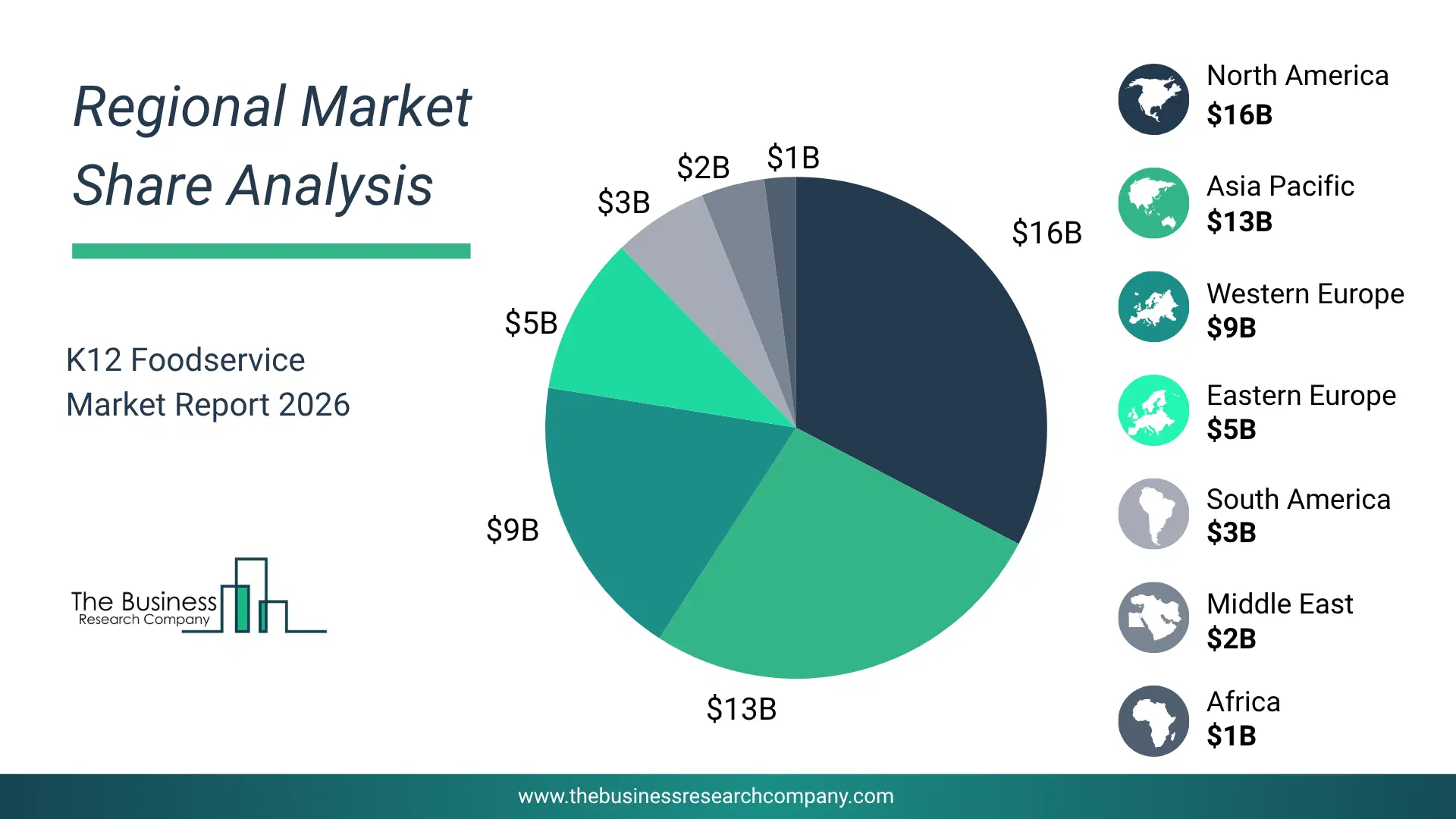
Regional Outlook
North America was the largest region in the kindergarten through 12th grade (K12) foodservice market in 2025. Asia-Pacific is expected to be the fastest-growing region in the forecast period. The regions covered in this market report are Asia-Pacific, South East Asia, Western Europe, Eastern Europe, North America, South America, Middle East and Africa. The countries covered in this market report are Australia, Brazil, China, France, Germany, India, Indonesia, Japan, Taiwan, Russia, South Korea, UK, USA, Italy, Spain, CanadaWhat Defines the K12 Foodservice Market?
The kindergarten through 12th grade (K12) foodservice market includes revenues earned by entities through meal planning, food preparation, nutrition education programs, vending services, and compliance with school nutrition standards. The market value includes the value of related goods sold by the service provider or included within the service offering. Only goods and services traded between entities or sold to end consumers are included.How is Market Value Defined and Measured?
The market value is defined as the revenues that enterprises gain from the sale of goods and/or services within the specified market and geography through sales, grants, or donations in terms of the currency (in USD unless otherwise specified). The revenues for a specified geography are consumption values that are revenues generated by organizations in the specified geography within the market, irrespective of where they are produced. It does not include revenues from resales along the supply chain, either further along the supply chain or as part of other products.
This chart presents market attractiveness based on a quantitative evaluation of growth, competition, strategic alignment, and risk, offering a clear view of opportunity areas for decision-making. This chart is for illustrative purposes; the full report contains the complete analysis.

This chart highlights the Total Addressable Market (TAM) by estimating the maximum revenue opportunity using an assumption-driven approach, supporting strategic planning and opportunity sizing across markets. The chart is illustrative; the full report provides a more comprehensive analysis.
What Key Data and Analysis Are Included in the K12 Foodservice Market Report 2026?
The k12 foodservice market research report is one of a series of new reports from The Business Research Company that provides market statistics, including industry global market size, regional shares, competitors with the market share, detailed market segments, market trends and opportunities, and any further data you may need to thrive in the k12 foodservice industry. The market research report delivers a complete perspective of everything you need, with an in-depth analysis of the current and future state of the industry.K12 Foodservice Market Report Forecast Analysis
| Report Attribute | Details |
|---|---|
| Market Size Value In 2026 | $41.96 billion |
| Revenue Forecast In 2030 | $51.29 billion |
| Growth Rate | CAGR of 5.1% from 2026 to 2030 |
| Base Year For Estimation | 2025 |
| Actual Estimates/Historical Data | 2020-2025 |
| Forecast Period | 2026 - 2030 |
| Market Representation | Revenue in USD Billion and CAGR from 2026 to 2030 |
| Segments Covered | Service Type, Food Type, Distribution Channel, End User |
| Regional Scope | Asia-Pacific, Western Europe, Eastern Europe, North America, South America, Middle East, Africa |
| Country Scope | The countries covered in the report are Australia, Brazil, China, France, Germany, India, ... |
| Key Companies Profiled | Compass Group PLC, Chartwells K12, Sodexo S.A., Aramark Corporation, US Foods Holding Corp., Metz Culinary Management Inc., Schwan’s Food Service Inc., Whitsons Culinary Group Inc., Taher Inc., Fresh Ideas Food Service Management LLC, Basic American Foods Inc., C.H. Guenther & Son Inc., General Mills Inc., Campbell Soup Company, Kellanova Away From Home, ARYZTA AG, Land O’Lakes Inc., Revolution Foods Inc., Butterball LLC, JJ Foodservice Limited, Bridgford Foods Corporation, Gourmet Gorilla Inc., Elior Group S.A., Bake Crafters Food Company LLC, PepsiCo Inc., Ben’s Original, SLA Management LLC |
| Customization Scope | Request for Customization |
| Pricing And Purchase Options | Explore Purchase Options |