
Next Generation Cancer Diagnostics Market Report 2026
Global Outlook – By Technology (Next-Generation Sequencing (NGS), Lab-On-A-Chip (LOAC) And Reverse Transcriptase-Polymerase Chain Reaction (RT-PCR), Circulating Tumor Deoxyribonucleic Acid (ctDNA) Assays, Protein Microarrays, Deoxyribonucleic Acid Microarrays, Other Multi-Omics Platforms), By Cancer Type (Lung Cancer, Breast Cancer, Colorectal Cancer, Cervical Cancer), By Function (Therapeutic Monitoring, Companion Diagnostics, Prognostics, Cancer Screening, Risk Analysis), By Application (Biomarker Development, Circulating Tumor Cell (CTC) Analysis, Proteomic Analysis, Epigenetic Analysis, Genetic Analysis), By End User (Hospitals And Clinics, Diagnostic Laboratories, Research And Academic Institutions, Pharmaceutical And Biotechnology Companies, Home Care Settings) - Market Size, Trends, Strategies, and Forecast to 2030
Next Generation Cancer Diagnostics Market Overview
• Next Generation Cancer Diagnostics market size has reached to $14.4 billion in 2025 • Expected to grow to $26.44 billion in 2030 at a compound annual growth rate (CAGR) of 12.9% • Growth Driver: The Rise In Demand For Personalized Medicines Driving The Growth Of The Market Due To Increasing Prevalence Of Chronic And Rare Diseases • Market Trend: Artificial Intelligence-Powered Multi-Modal Platforms Revolutionize Early Cancer Detection And Personalized Therapy • North America was the largest region in 2025 and Asia-Pacific is the fastest growing region.What Is Covered Under Next Generation Cancer Diagnostics Market?
Next generation cancer diagnostics refers to advanced diagnostic technologies that enable the precise detection, characterization, and monitoring of cancer at the molecular and genetic levels. These diagnostics utilize cutting-edge tools such as genomics, proteomics, and liquid biopsy to provide early detection, personalized treatment planning, and improved patient outcomes. The main technologies of next generation cancer diagnostics are next-generation sequencing (NGS), q-polymerase chain reaction and multiplexing, lab-on-a-chip (LOAC) and reverse transcriptase-polymerase chain reaction (RT-PCR), circulating tumor deoxyribonucleic acid (ctDNA) assays, protein microarrays, deoxyribonucleic acid microarrays, and others. Next-generation sequencing (NGS) refers to a high-throughput DNA sequencing technology that allows rapid and simultaneous sequencing of millions of DNA fragments, enabling comprehensive analysis of genomes, transcriptomes, and genetic variations. They target various cancer types, including lung cancer, breast cancer, colorectal cancer, and cervical cancer. Their functions include therapeutic monitoring, companion diagnostics, prognostics, cancer screening, and risk analysis. These are applied in biomarker development, circulating tumor cell (CTC) analysis, proteomic analysis, epigenetic analysis, and genetic analysis, and cater to various end users, such as hospitals and clinics, diagnostic laboratories, research and academic institutions, pharmaceutical and biotechnology companies, and home care settings.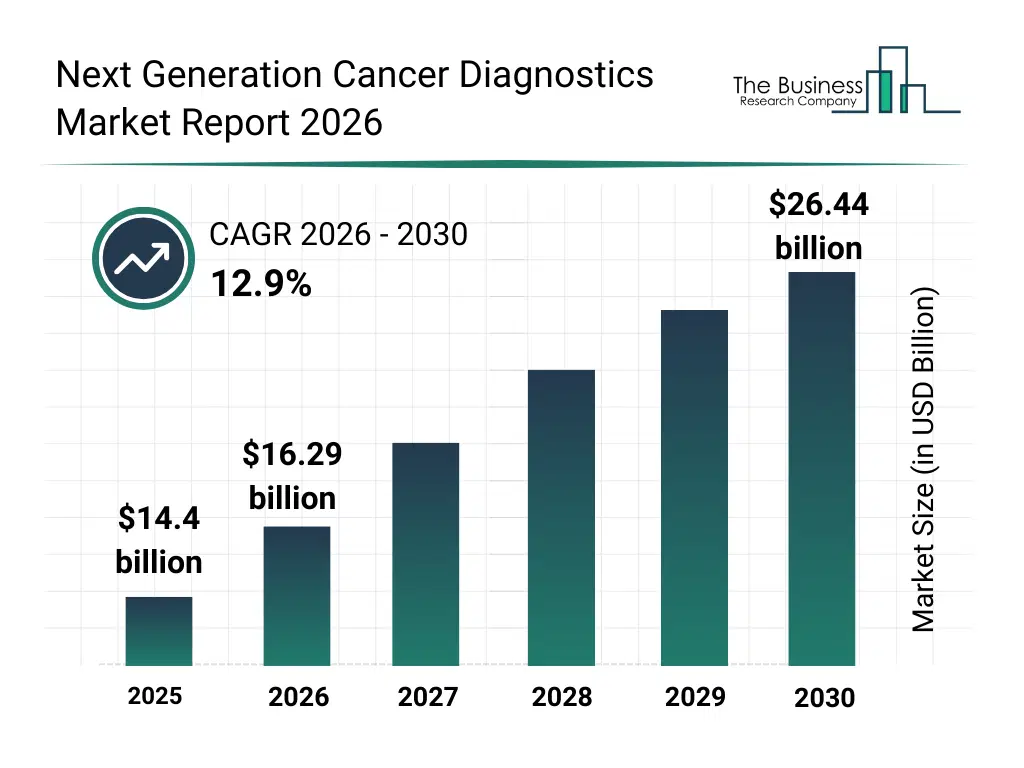
What Is The Next Generation Cancer Diagnostics Market Size and Share 2026?
The next generation cancer diagnostics market size has grown rapidly in recent years. It will grow from $14.4 billion in 2025 to $16.29 billion in 2026 at a compound annual growth rate (CAGR) of 13.2%. The growth in the historic period can be attributed to increasing cancer incidence rates, advancements in genomic sequencing technologies, growing clinical adoption of biomarker-based diagnostics, expansion of oncology research funding, rising demand for precision diagnostics.What Is The Next Generation Cancer Diagnostics Market Growth Forecast?
The next generation cancer diagnostics market size is expected to see rapid growth in the next few years. It will grow to $26.44 billion in 2030 at a compound annual growth rate (CAGR) of 12.9%. The growth in the forecast period can be attributed to increasing adoption of personalized medicine approaches, rising investments in advanced cancer screening programs, growing use of minimally invasive diagnostic methods, expansion of companion diagnostics development, increasing integration of ai-driven clinical decision support. Major trends in the forecast period include increasing adoption of liquid biopsy technologies, rising use of multi-omics diagnostic platforms, growing integration of AI-based cancer analytics, expansion of personalized oncology diagnostics, enhanced focus on early-stage cancer detection.
Global Next Generation Cancer Diagnostics Market Segmentation
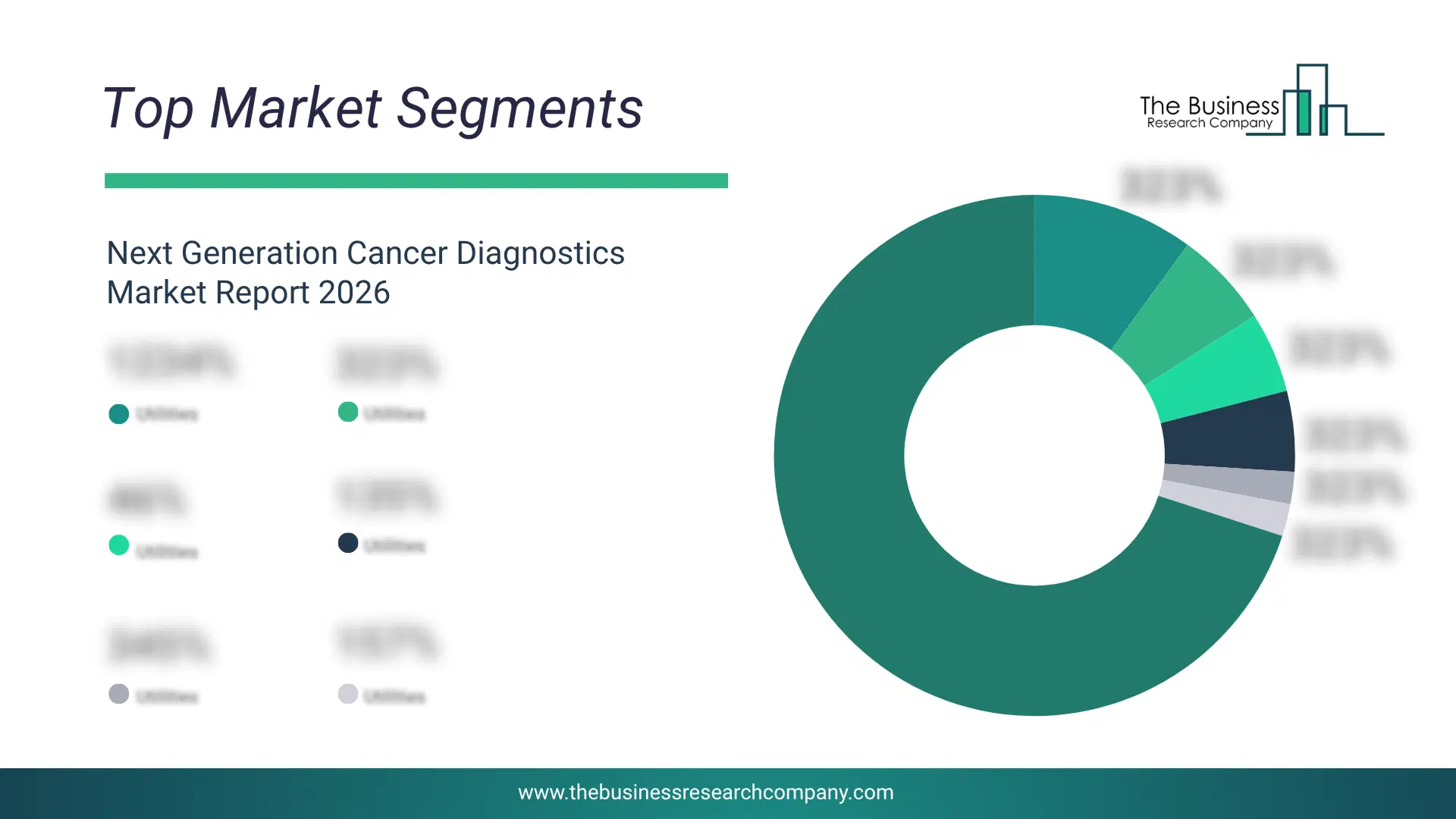
1) By Technology: Next-Generation Sequencing (NGS), Lab-On-A-Chip (LOAC) And Reverse Transcriptase-Polymerase Chain Reaction (RT-PCR), Circulating Tumor Deoxyribonucleic Acid (ctDNA) Assays, Protein Microarrays, Deoxyribonucleic Acid Microarrays, Other Multi-Omics Platforms 2) By Cancer Type: Lung Cancer, Breast Cancer, Colorectal Cancer, Cervical Cancer 3) By Function: Therapeutic Monitoring, Companion Diagnostics, Prognostics, Cancer Screening, Risk Analysis 4) By Application: Biomarker Development, Circulating Tumor Cell (CTC) Analysis, Proteomic Analysis, Epigenetic Analysis, Genetic Analysis 5) By End User: Hospitals And Clinics, Diagnostic Laboratories, Research And Academic Institutions, Pharmaceutical And Biotechnology Companies, Home Care Settings Subsegments: 1) By Next-Generation Sequencing: Whole Genome Sequencing, Targeted Gene Sequencing, Exome Sequencing, Transcriptome Sequencing 2) By Lab-On-A-Chip And Reverse Transcriptase-Polymerase Chain Reaction: Microfluidic Chip Assays, Integrated Reverse Transcriptase-Polymerase Chain Reaction Chips, Point-of-Care Lab-On-A-Chip Devices, High-Throughput Lab-On-A-Chip Systems 3) By Circulating Tumor Deoxyribonucleic Acid Assays: Single-Gene Circulating Tumor Deoxyribonucleic Acid Assays, Multi-Gene Circulating Tumor Deoxyribonucleic Acid Panels, Digital Droplet Circulating Tumor Deoxyribonucleic Acid Assays, Next-Generation Sequencing Circulating Tumor Deoxyribonucleic Acid Assays 4) By Protein Microarrays: Analytical Protein Microarrays, Functional Protein Microarrays, Reverse Phase Protein Microarrays, Antibody-Based Protein Microarrays 5) By Deoxyribonucleic Acid Microarrays: Gene Expression Deoxyribonucleic Acid Microarrays, Single Nucleotide Polymorphism Genotyping Deoxyribonucleic Acid Microarrays, Comparative Genomic Hybridization Deoxyribonucleic Acid Microarrays, Methylation Deoxyribonucleic Acid Microarrays 6) By Other Multi-Omics Platforms: Metabolomics Platforms, Epigenomics Platforms, Transcriptomics Platforms, Integrated Multi-Omics SystemsWhat Is The Driver Of The Next Generation Cancer Diagnostics Market?
The increasing demand for personalized medicines is expected to propel the growth of the next generation cancer diagnostics market going forward. Personalized medicines refer to medical treatments that are tailored to an individual’s genetic makeup, lifestyle, and environment to ensure the most effective therapy for that specific patient. The increasing demand for personalized medicines is due to the rising prevalence of chronic and rare diseases, which necessitate targeted, patient-specific therapies for more effective treatment outcomes. Next generation cancer diagnostics enable personalized medicine by providing precise molecular insights that guide tailored treatment strategies based on an individual patient’s unique genetic and tumor profile. For instance, in February 2024, according to the Personalized Medicine Coalition, a US-based non-profit organization, in 2023, the FDA approved 16 new personalized therapies for patients with rare diseases, marking a substantial rise from the six approvals recorded in 2022. Therefore, increasing demand for personalized medicines is driving the growth of the next generation cancer diagnostics industry.Key Players In The Global Next Generation Cancer Diagnostics Market
Major companies operating in the next generation cancer diagnostics market are F. Hoffmann-La Roche AG, Novartis AG, Thermo Fisher Scientific Inc., Abbott Laboratories Inc., Siemens Healthineers AG, Danaher Corporation, Koninklijke Philips N.V., General Electric Company, Becton, Dickinson and Company, Agilent Technologies Inc., Illumina Inc., Sysmex Corporation, Bio-Rad Laboratories Inc., Exact Sciences Corporation, QIAGEN N.V., Almac Group Ltd., Natera Inc., Myriad Genetics Inc., NeoGenomics Inc., Guardant Health Inc., Freenome Holdings Inc., Personalis Inc., Burning Rock Biotech Limited., SOPHiA GENETICS S.A., Singlera Genomics Co. Ltd.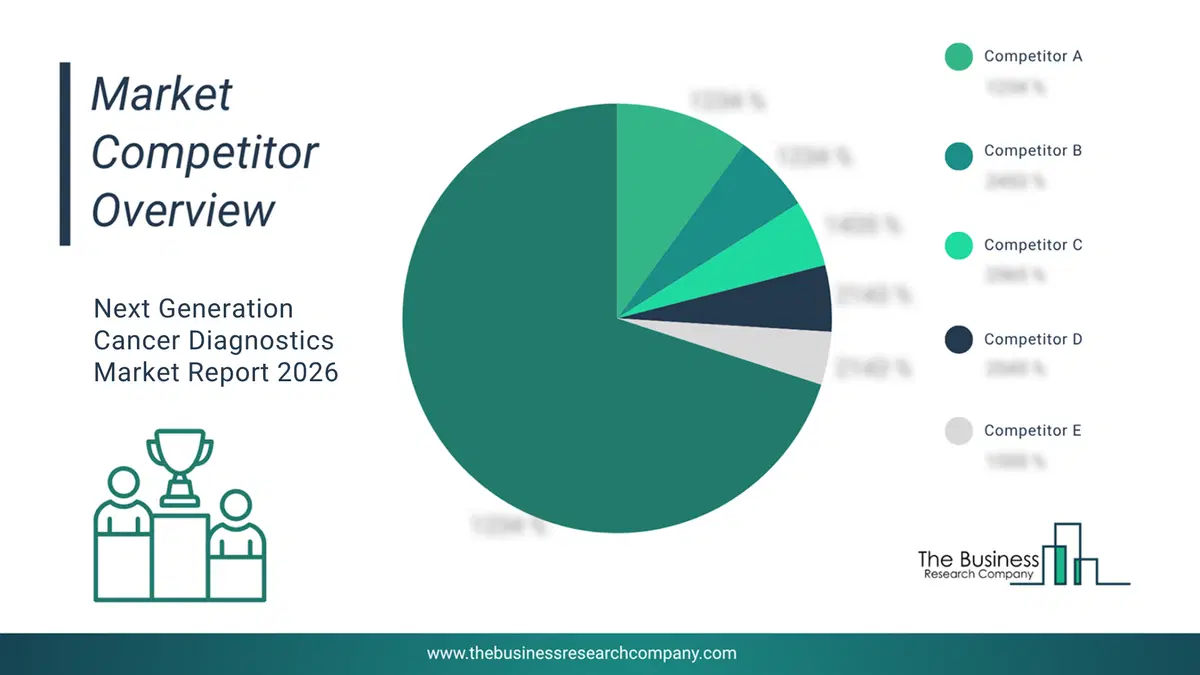
This chart is for illustrative purposes; the full report includes a detailed competitor analysis and comprehensive overview of the top 10 companies in the market.
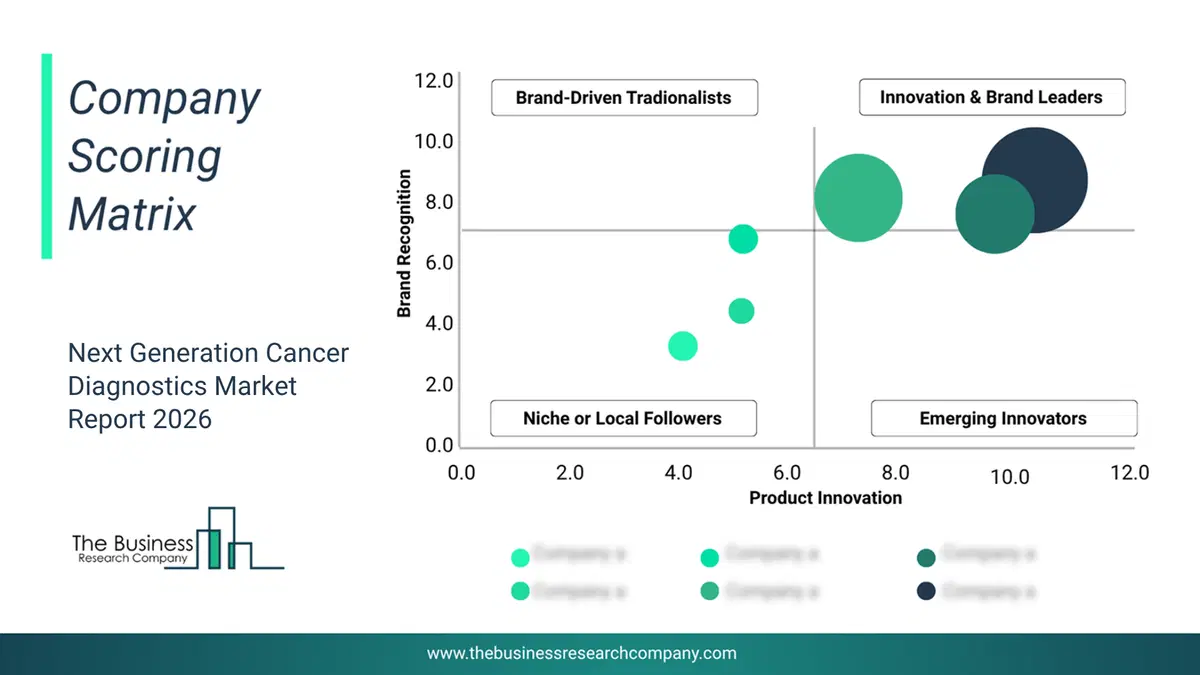
This chart maps companies by product innovation and brand strength, with bubble size indicating relative revenue, helping identify market leaders, challengers, and niche players. This is an illustrative chart; the full report provides a complete and accurate competitive analysis.
Global Next Generation Cancer Diagnostics Market Trends and Insights
Major companies operating in the next generation cancer diagnostics market are focusing on developing innovative solutions such as artificial intelligence-driven multi-modal diagnostic platforms to enhance early detection, personalized treatment, and clinical decision-making. Artificial intelligence-driven multi-modal diagnostic platforms are advanced systems that use artificial intelligence to integrate and analyze multiple types of biological data, such as genomic, proteomic, imaging, and clinical information, to provide more accurate and personalized cancer detection and diagnosis. For instance, in April 2025, OneCell Diagnostics Pvt Ltd., an India-based precision oncology company, launched OncoIncytes, a multi-modal cancer diagnostic platform tailored for precision oncology. The platform combines different types of data, such as circulating tumor DNA, single-cell circulating tumor cells, RNA information, and detailed protein profiles of 150 proteins at the single-cell level. Utilizing a 1080-gene panel powered by AI and machine learning, OncoIncytes delivers highly sensitive and specific insights to enhance clinical trial outcomes, particularly in early-stage research and antibody-drug conjugate development. The platform enables personalized cancer detection, therapy monitoring, and drug development through non-invasive, real-time, and scalable diagnostics, all accessible via OneCell’s proprietary iDiscover application from a CLIA-certified laboratory.What Are Latest Mergers And Acquisitions In The Next Generation Cancer Diagnostics Market?
In June 2023, Quest Diagnostics Inc., a US-based healthcare diagnostics company, acquired Haystack Oncology for an undisclosed amount. With this acquisition, Quest Diagnostics aimed to enhance its technological capabilities in the fast growing minimal residual disease (MRD) liquid biopsy market. Haystack Oncology Inc. is a US-based company that provides next-generation cancer diagnostics through its tumor-informed minimal residual disease (MRD) test, Haystack MRD.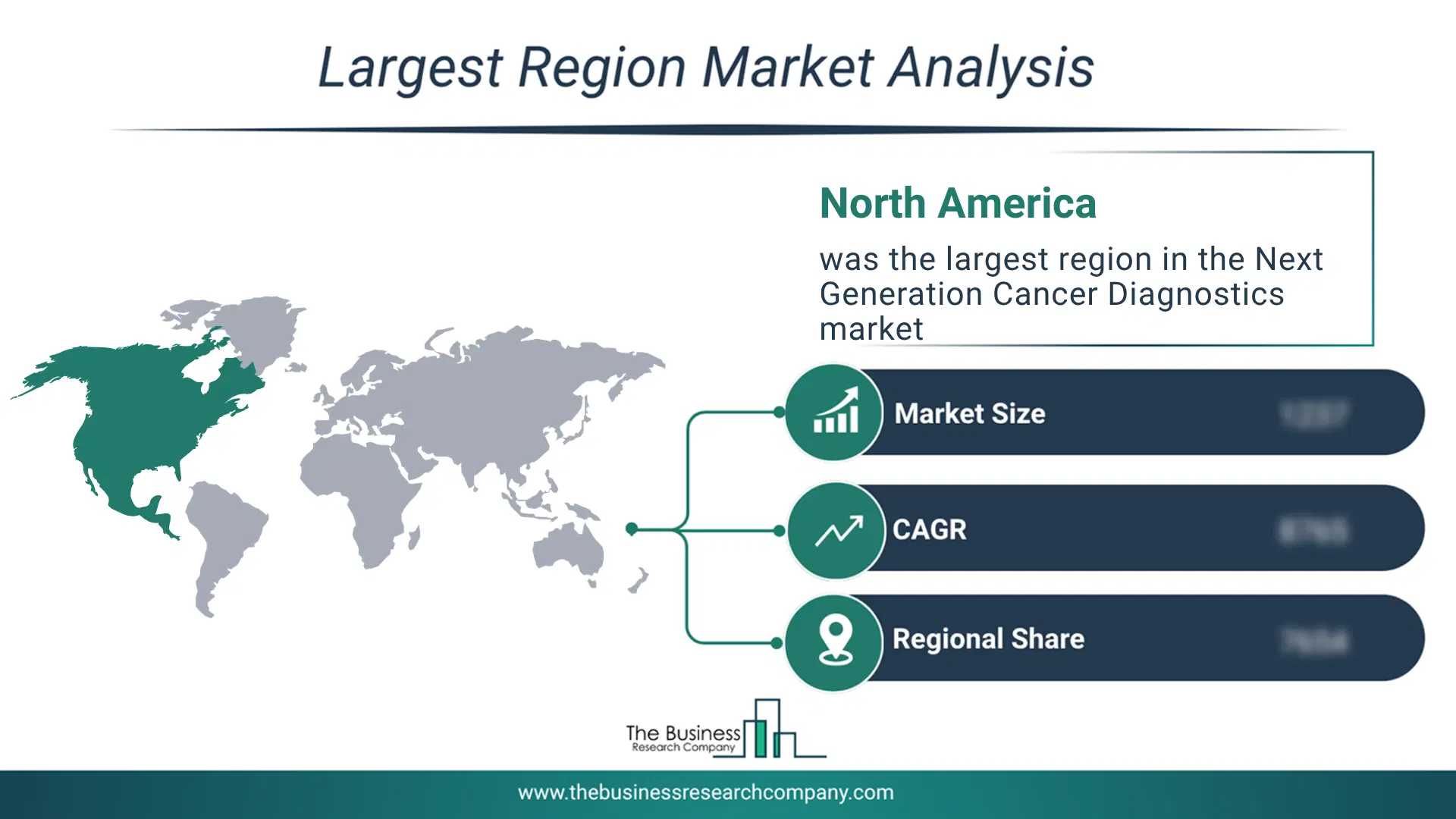
Regional Outlook
North America was the largest region in the next generation cancer diagnostics market in 2025. Asia-Pacific is expected to be the fastest-growing region in the forecast period. The regions covered in this market report are Asia-Pacific, South East Asia, Western Europe, Eastern Europe, North America, South America, Middle East, Africa. The countries covered in this market report are Australia, Brazil, China, France, Germany, India, Indonesia, Japan, Taiwan, Russia, South Korea, UK, USA, Canada, Italy, Spain.What Defines the Next Generation Cancer Diagnostics Market?
The next generation cancer diagnostics market consists of revenues earned by entities by providing services such as genomic and molecular profiling, liquid biopsy testing, next-generation sequencing (NGS) services, companion diagnostics development, and bioinformatics and data interpretation services. The market value includes the value of related goods sold by the service provider or included within the service offering. The next generation cancer diagnostics market also includes sales of gene panels, single-cell analysis systems, nanotechnology-based biosensors, molecular imaging agents, and exosome isolation kits. Values in this market are ‘factory gate’ values, that is the value of goods sold by the manufacturers or creators of the goods, whether to other entities (including downstream manufacturers, wholesalers, distributors and retailers) or directly to end customers. The value of goods in this market includes related services sold by the creators of the goods.How is Market Value Defined and Measured?
The market value is defined as the revenues that enterprises gain from the sale of goods and/or services within the specified market and geography through sales, grants, or donations in terms of the currency (in USD unless otherwise specified). The revenues for a specified geography are consumption values that are revenues generated by organizations in the specified geography within the market, irrespective of where they are produced. It does not include revenues from resales along the supply chain, either further along the supply chain or as part of other products.
This chart presents market attractiveness based on a quantitative evaluation of growth, competition, strategic alignment, and risk, offering a clear view of opportunity areas for decision-making. This chart is for illustrative purposes; the full report contains the complete analysis.

This chart highlights the Total Addressable Market (TAM) by estimating the maximum revenue opportunity using an assumption-driven approach, supporting strategic planning and opportunity sizing across markets. The chart is illustrative; the full report provides a more comprehensive analysis.
What Key Data and Analysis Are Included in the Next Generation Cancer Diagnostics Market Report 2026?
The next generation cancer diagnostics market research report is one of a series of new reports from The Business Research Company that provides market statistics, including industry global market size, regional shares, competitors with the market share, detailed market segments, market trends and opportunities, and any further data you may need to thrive in the next generation cancer diagnostics industry. The market research report delivers a complete perspective of everything you need, with an in-depth analysis of the current and future state of the industry.Next Generation Cancer Diagnostics Market Report Forecast Analysis
| Report Attribute | Details |
|---|---|
| Market Size Value In 2026 | $16.29 billion |
| Revenue Forecast In 2030 | $26.44 billion |
| Growth Rate | CAGR of 12.9% from 2026 to 2030 |
| Base Year For Estimation | 2025 |
| Actual Estimates/Historical Data | 2020-2025 |
| Forecast Period | 2026 - 2030 |
| Market Representation | Revenue in USD Billion and CAGR from 2026 to 2030 |
| Segments Covered | Technology, Cancer Type, Function, Application, End User |
| Regional Scope | Asia-Pacific, Western Europe, Eastern Europe, North America, South America, Middle East, Africa |
| Country Scope | The countries covered in the report are Australia, Brazil, China, France, Germany, India, Indonesia, Japan, Taiwan, Russia, South Korea, UK, USA, Canada, Italy, Spain |
| Key Companies Profiled | F. Hoffmann-La Roche AG, Novartis AG, Thermo Fisher Scientific Inc., Abbott Laboratories Inc., Siemens Healthineers AG, Danaher Corporation, Koninklijke Philips N.V., General Electric Company, Becton, Dickinson and Company, Agilent Technologies Inc., Illumina Inc., Sysmex Corporation, Bio-Rad Laboratories Inc., Exact Sciences Corporation, QIAGEN N.V., Almac Group Ltd., Natera Inc., Myriad Genetics Inc., NeoGenomics Inc., Guardant Health Inc., Freenome Holdings Inc., Personalis Inc., Burning Rock Biotech Limited., SOPHiA GENETICS S.A., Singlera Genomics Co. Ltd. |
| Customization Scope | Request for Customization |
| Pricing And Purchase Options | Explore Purchase Options |