
Hydrolase Enzymes Market Report 2026
Global Outlook – By Product (Esterase, Glycosylases, Peptidases, Other Products), By Bond Type (Ester Bonds (Esterases), Sugars (DNA Glycosylases And Glycoside Hydrolase), Ether Bonds (Thioether And Trialkylsulfonium), Peptide Bonds (Peptidases), Carbon-Nitrogen Bonds (Other Than Peptide Bonds), Acid Anhydrides, Carbon-Carbon Bonds, Halide Bonds, Phosphorus-Nitrogen Bonds, Other Bond Types), By Application (Pharmaceutical, Food And Beverages, Laundry Detergents, Cosmetics, Textile, Pulp And Paper, Biofuel, Other Applications) – Market Size, Trends, Strategies, and Forecast to 2030
Hydrolase Enzymes Market Overview
• Hydrolase Enzymes market size has reached to $6.89 billion in 2025 • Expected to grow to $10.1 billion in 2030 at a compound annual growth rate (CAGR) of 8% • Growth Driver: Rising Demand In Processed Foods Drives The Hydrolase Enzymes Market • Market Trend: Revolutionizing Plastic Waste Management: Carbios Introduces Enzymatic Method Utilizing Hydrolase Enzymes • North America was the largest region in 2025 and Europe is the fastest growing region.What Is Covered Under Hydrolase Enzymes Market?
Hydrolase enzymes are a type of enzyme that functions as a biochemical catalyst by breaking a chemical bond with water, causing a larger molecule to be divided into smaller molecules. It is commonly used as a biochemical for substrate breakdown, degradation of toxins, and synthesis of biopolymers. The main types of hydrolase enzymes are esterase, glycosylases, peptidases, and others. Esterase is an enzyme that accelerates the hydrolysis or synthesis of esters and it is used in clinical pharmacotherapy and drug prodrug activation or detoxification of active compounds. The major bonds formed are ester bonds (esterases), sugars (DNA glycosylases and glycoside hydrolase), ether bonds (thioether and trialkyl sulfonium), peptide bonds (peptidases), carbon-nitrogen bonds (other than peptide bonds), acid anhydrides, carbon-carbon bonds, halide bonds, phosphorus-nitrogen bonds, and others and used in various applications such as pharmaceutical, food and beverages, laundry detergents, cosmetics, textile, pulp and paper, biofuel, and others.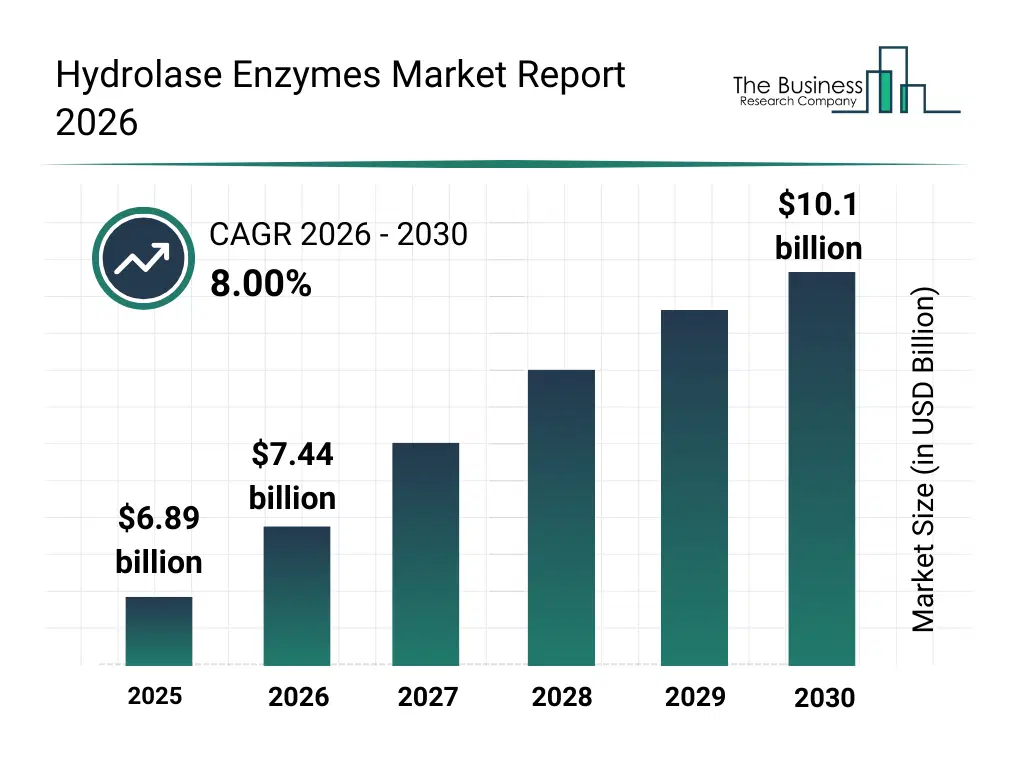
What Is The Hydrolase Enzymes Market Size and Share 2026?
The hydrolase enzymes market size has grown strongly in recent years. It will grow from $6.89 billion in 2025 to $7.44 billion in 2026 at a compound annual growth rate (CAGR) of 7.9%. The growth in the historic period can be attributed to growth of enzyme adoption in detergent formulations, expansion of pharmaceutical manufacturing, increased use of enzymes in food processing, advancements in fermentation technology, cost efficiency of enzymatic catalysis.What Is The Hydrolase Enzymes Market Growth Forecast?
The hydrolase enzymes market size is expected to see strong growth in the next few years. It will grow to $10.1 billion in 2030 at a compound annual growth rate (CAGR) of 8.0%. The growth in the forecast period can be attributed to rising demand for biopharmaceuticals, increasing focus on sustainable industrial processes, growth of biofuel production, expanding applications in cosmetics and personal care, continuous innovation in enzyme engineering. Major trends in the forecast period include rising use of hydrolase enzymes in biopharmaceutical drug development, growing adoption of enzyme-based processing in food and beverage manufacturing, increased demand for hydrolases in detergent and cleaning formulations, expansion of industrial enzymes in biofuel and biorefinery applications, product innovation focused on high-stability and high-specificity enzymes.
Global Hydrolase Enzymes Market Segmentation
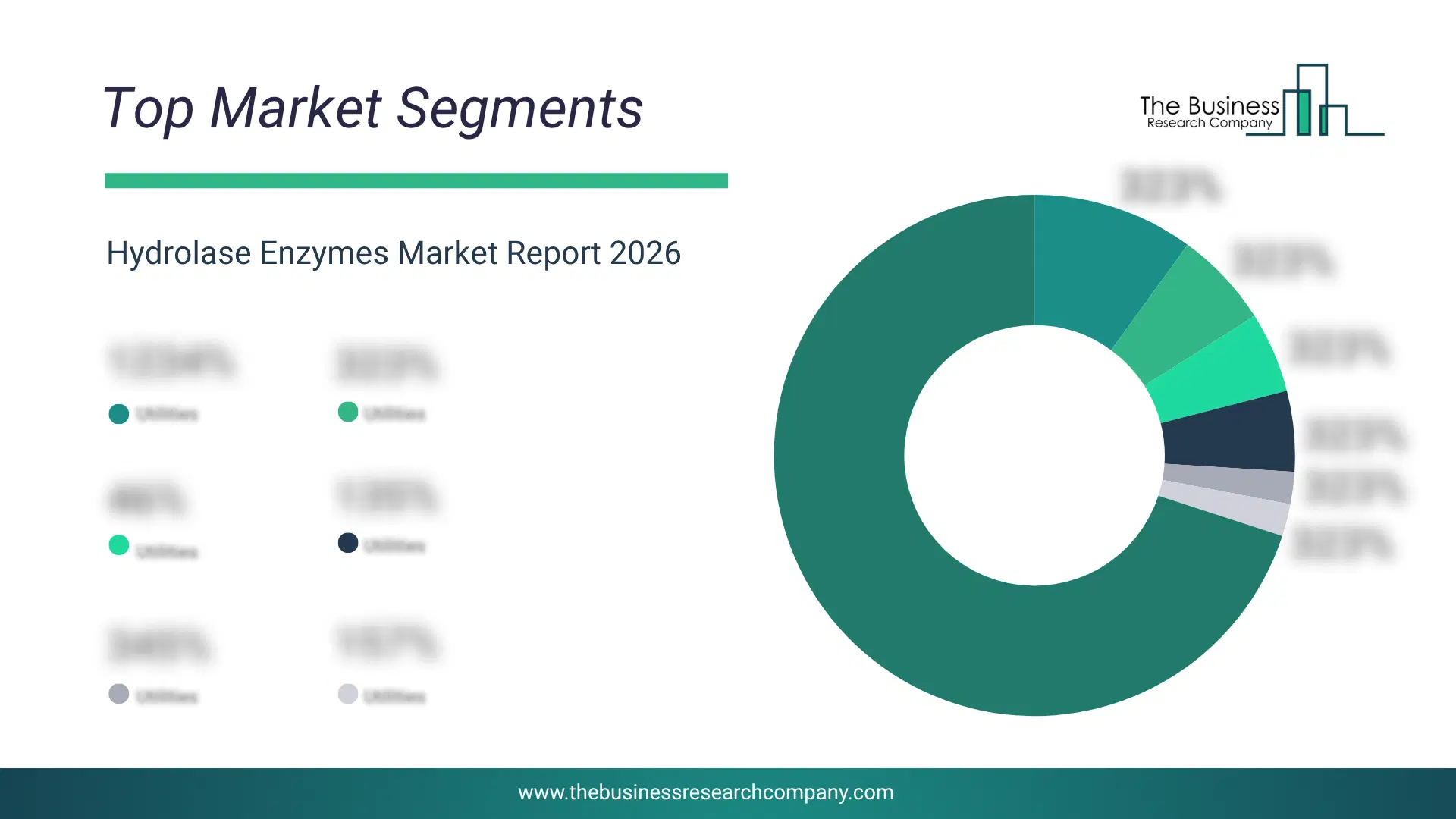
1) By Product: Esterase, Glycosylases, Peptidases, Other Products 2) By Bond Type: Ester Bonds (Esterases), Sugars (DNA Glycosylases And Glycoside Hydrolase), Ether Bonds (Thioether And Trialkylsulfonium), Peptide Bonds (Peptidases), Carbon-Nitrogen Bonds (Other Than Peptide Bonds), Acid Anhydrides, Carbon-Carbon Bonds, Halide Bonds, Phosphorus-Nitrogen Bonds, Other Bond Types 3) By Application: Pharmaceutical, Food And Beverages, Laundry Detergents, Cosmetics, Textile, Pulp And Paper, Biofuel, Other Applications Subsegments: 1) By Esterase: Acetylcholinesterase, Lipases, Carboxylesterases 2) By Glycosylases: Amylases, Cellulases, Glucosidases 3) By Peptidases: Serine Peptidases, Cysteine Peptidases, Aspartic Peptidases, Metallopeptidases 4) By Other Products: Phosphatases, Nucleotidases, Other HydrolasesWhat Is The Driver Of The Hydrolase Enzymes Market?
The growing demand in processed foods is anticipated to propel the growth of the hydrolase enzymes market going forward. Processed foods refer to food items that undergo deliberate changes to its natural state through various methods of preparation, preservation, cooking, or packaging. Hydrolase enzymes are used in processed food for the production of various sweeteners, such as high-fructose corn syrup and to break down complex carbohydrates, proteins, and fats, into simpler forms. For instance, in May 2024, according to the United States Department of Agriculture, a US-based federal agency, in 2023, the value of U.S. processed food exports increased by 0.2% year-over-year to $14.73 billion, setting a record for the third consecutive year. Therefore, the growing demand for processed foods is driving the growth of the hydrolase enzymes industry.Key Players In The Global Hydrolase Enzymes Market
Major companies operating in the hydrolase enzymes market are Creative Enzymes Holdings Limited, Advanced Enzyme Technologies Limited, Specialty Enzymes & Probiotics, Novozymes A/S, Antozyme Biotech Private Limited, Infinita Biotech Private Limited, Aumgene Biosciences (Shanghai) Co. Ltd., AB Enzymes GmbH, Dyadic International Inc., Sisco Research Laboratories Pvt Ltd., Amano Enzyme Inc., Codexis Inc., Merck KGaA, BESTZYME BIO-ENGINEERING CO. Ltd., Bioseutica Group, BASF SE, Kemin Industries Inc., Epygen Labs FZ LLC, DuPont de Nemours Inc., Biovet Private Limited, Enzyme Development Corporation, Associated British Foods, Chr. Hansen Holding A/S, Thermo Fisher Scientific Inc., Koninklijke DSM N.V., Enzymes Biotec Limited, Kerry Group plc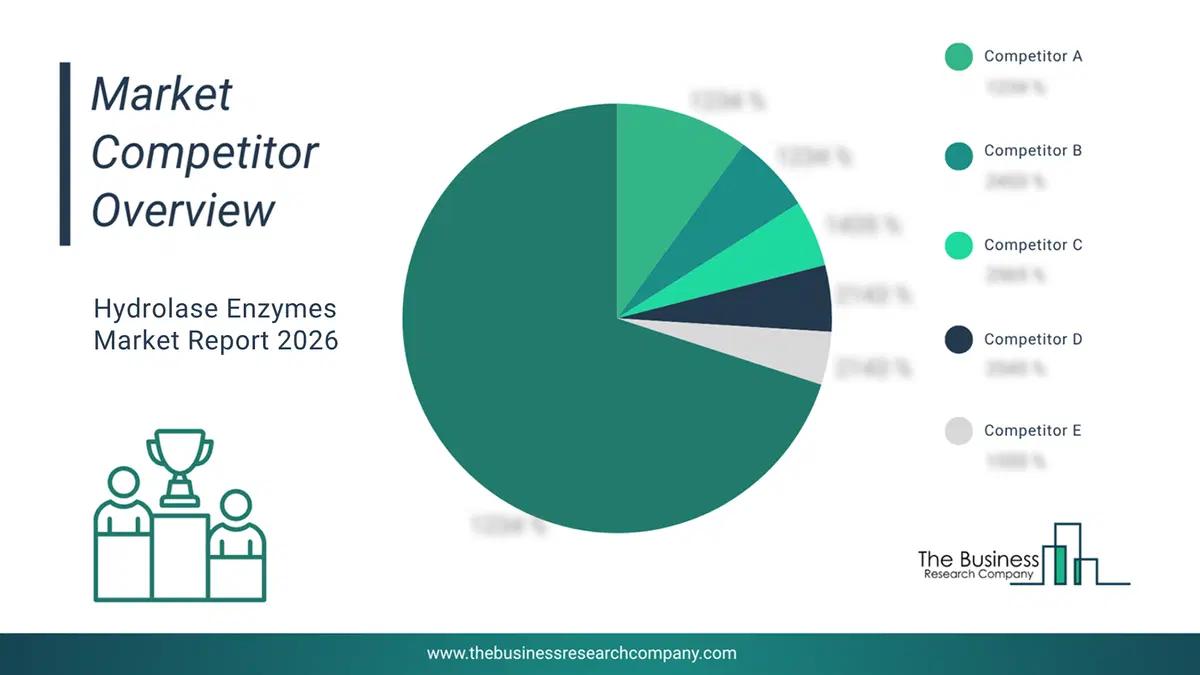
This chart is for illustrative purposes; the full report includes a detailed competitor analysis and comprehensive overview of the top 10 companies in the market.
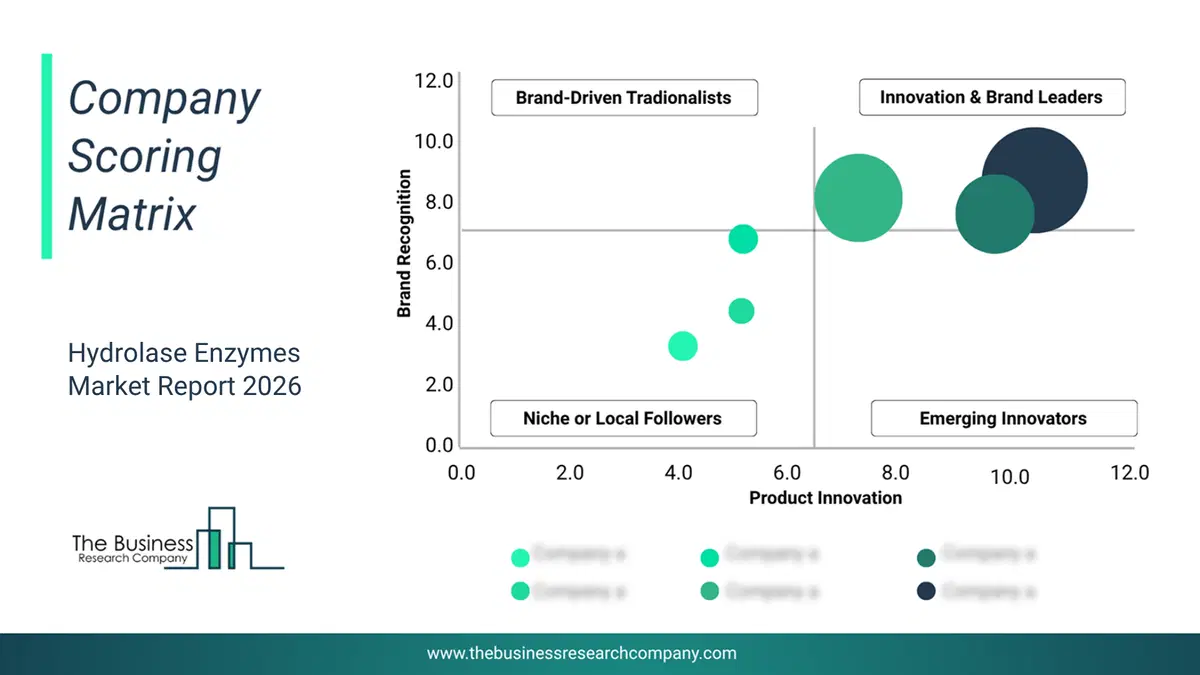
This chart maps companies by product innovation and brand strength, with bubble size indicating relative revenue, helping identify market leaders, challengers, and niche players. This is an illustrative chart; the full report provides a complete and accurate competitive analysis.
Global Hydrolase Enzymes Market Trends and Insights
Major companies operating in the hydrolase enzymes market are focusing on innovations, such as advanced enzyme engineering, to improve the efficiency and sustainability of industrial processes, including plastic recycling and bio-based product manufacturing. Enzymatic recycling is a process that uses naturally occurring enzymes to break down plastics, such as PET, into their basic components, allowing them to be reprocessed into new materials without degrading their quality. For instance, in August 2023, Carbios, a France-based biotech company, unveiled a pioneering enzymatic recycling process, marking a new era in how PET (polyethylene terephthalate) waste is managed. This innovative method allows the conversion of waste into recycled and recyclable products without any degradation in quality, utilising naturally occurring enzymes to turn plastic and textile waste into new products.What Are Latest Mergers And Acquisitions In The Hydrolase Enzymes Market?
In December 2023, Kerry Group plc, an Ireland-based company that manufacturesfood products, acquired Chr Hansen Holding A/S for an undisclosed amount. With this acquisition, Kerry Group aims to enhance its biotechnology solutions capabilities by expanding its portfolio of lactase enzymes, thereby meeting the growing global demand for lactose-free dairy products and improving its position in the functional ingredients market. Chr. Hansen Holding A/S is a Denmark-based bioscience company thatmanufactures hydrolase enzymes.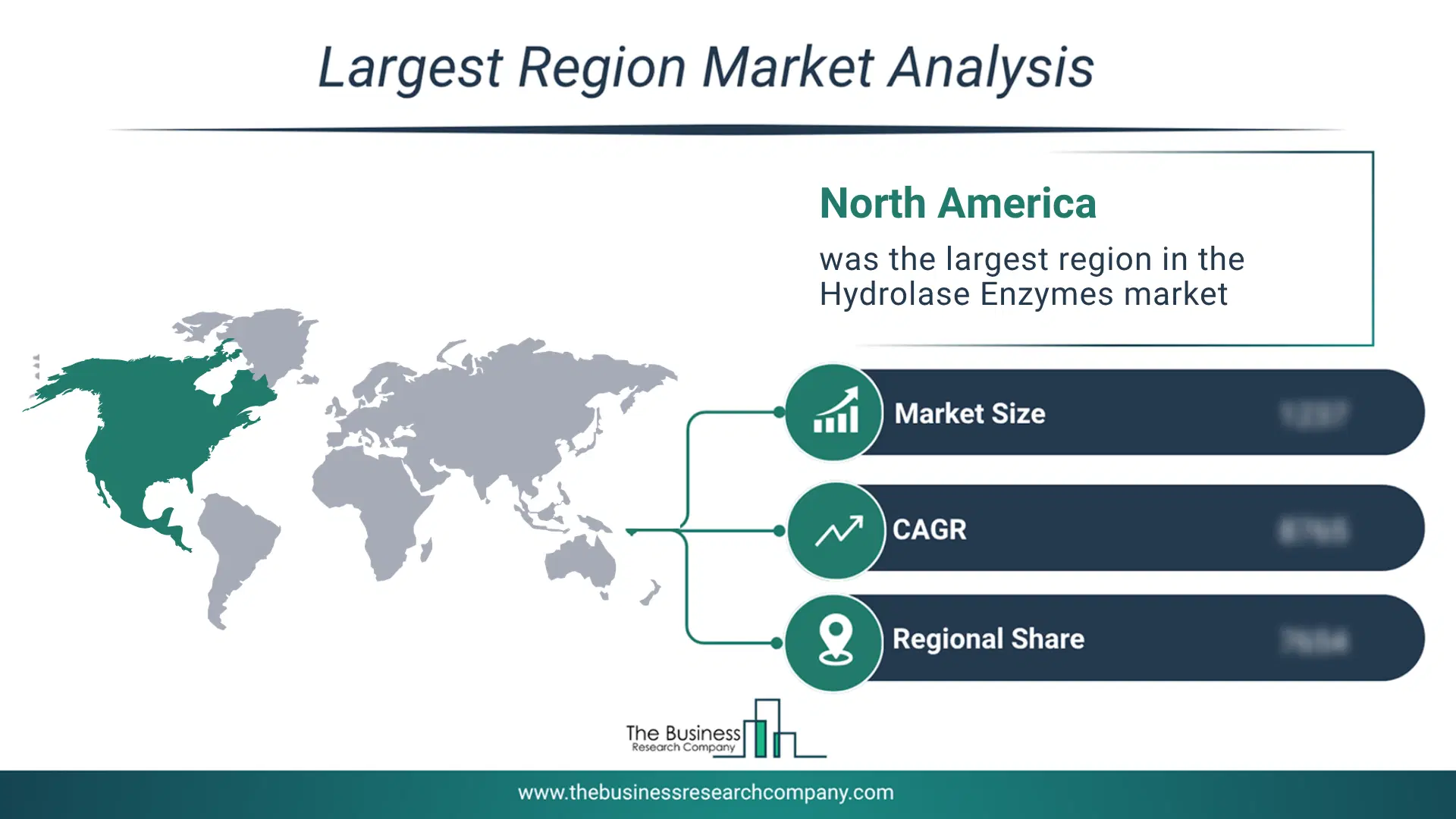
Regional Insights
North America was the largest region in the hydrolase enzymes market in 2025. Europe is expected to be the fastest-growing region in the hydrolase enzymes market report during the forecast period. The regions covered in this market report are Asia-Pacific, South East Asia, Western Europe, Eastern Europe, North America, South America, Middle East, Africa. The countries covered in this market report are Australia, Brazil, China, France, Germany, India, Indonesia, Japan, Taiwan, Russia, South Korea, UK, USA, Canada, Italy, Spain.What Defines the Hydrolase Enzymes Market?
The hydrolase enzymes market consists of sales of lipases, proteases, epoxide, hydrolases, and nitrile hydrolases. Values in this market are ‘factory gate’ values, that is, the value of goods sold by the manufacturers or creators of the goods, whether to other entities (including downstream manufacturers, wholesalers, distributors, and retailers) or directly to end customers. The value of goods in this market includes related services sold by the creators of the goods.How is Market Value Defined and Measured?
The market value is defined as the revenues that enterprises gain from the sale of goods and/or services within the specified market and geography through sales, grants, or donations in terms of the currency (in USD unless otherwise specified). The revenues for a specified geography are consumption values that are revenues generated by organizations in the specified geography within the market, irrespective of where they are produced. It does not include revenues from resales along the supply chain, either further along the supply chain or as part of other products.
This chart presents market attractiveness based on a quantitative evaluation of growth, competition, strategic alignment, and risk, offering a clear view of opportunity areas for decision-making. This chart is for illustrative purposes; the full report contains the complete analysis.

This chart highlights the Total Addressable Market (TAM) by estimating the maximum revenue opportunity using an assumption-driven approach, supporting strategic planning and opportunity sizing across markets. The chart is illustrative; the full report provides a more comprehensive analysis.
What Key Data and Analysis Are Included in the Hydrolase Enzymes Market Report 2026?
The hydrolase enzymes market research report is one of a series of new reports from The Business Research Company that provides market statistics, including industry global market size, regional shares, competitors with the market share, detailed market segments, market trends and opportunities, and any further data you may need to thrive in the hydrolase enzymes industry. The market research report delivers a complete perspective of everything you need, with an in-depth analysis of the current and future state of the industry.Hydrolase Enzymes Market Report Forecast Analysis
| Report Attribute | Details |
|---|---|
| Market Size Value In 2026 | $7.44 billion |
| Revenue Forecast In 2030 | $10.1 billion |
| Growth Rate | CAGR of 7.9% from 2026 to 2030 |
| Base Year For Estimation | 2025 |
| Actual Estimates/Historical Data | 2020-2025 |
| Forecast Period | 2026 - 2030 |
| Market Representation | Revenue in USD Billion and CAGR from 2026 to 2030 |
| Segments Covered | Product, Bond Type, Application |
| Regional Scope | Asia-Pacific, Western Europe, Eastern Europe, North America, South America, Middle East, Africa |
| Country Scope | The countries covered in the report are Australia, Brazil, China, France, Germany, India, Indonesia, Japan, Taiwan, Russia, South Korea, UK, USA, Canada, Italy, Spain. |
| Key Companies Profiled | Creative Enzymes Holdings Limited, Advanced Enzyme Technologies Limited, Specialty Enzymes & Probiotics, Novozymes A/S, Antozyme Biotech Private Limited, Infinita Biotech Private Limited, Aumgene Biosciences (Shanghai) Co. Ltd., AB Enzymes GmbH, Dyadic International Inc., Sisco Research Laboratories Pvt Ltd., Amano Enzyme Inc., Codexis Inc., Merck KGaA, BESTZYME BIO-ENGINEERING CO. Ltd., Bioseutica Group, BASF SE, Kemin Industries Inc., Epygen Labs FZ LLC, DuPont de Nemours Inc., Biovet Private Limited, Enzyme Development Corporation, Associated British Foods, Chr. Hansen Holding A/S, Thermo Fisher Scientific Inc., Koninklijke DSM N.V., Enzymes Biotec Limited, Kerry Group plc |
| Customization Scope | Request for Customization |
| Pricing And Purchase Options | Explore Purchase Options |