
Immunology Biosimilars Market Report 2026
Global Outlook – By Drug Type (Monoclonal Antibodies, Fusion Proteins, Recombinant Proteins, Interferons, Other Biosimilar Immunomodulators), By Disease (Inflammatory Bowel Disease, Arthritis, Other Diseases), By Distribution Channel (Hospital Pharmacies, Retail Pharmacies, Online Pharmacies, Other Distribution Channels), By End User (Hospitals, Clinics, Homecare Settings, Ambulatory Surgical Centers (ASCs)) – Market Size, Trends, Strategies, and Forecast to 2030
Immunology Biosimilars Market Overview
• Immunology Biosimilars market size has reached to $8.35 billion in 2025 • Expected to grow to $15.3 billion in 2030 at a compound annual growth rate (CAGR) of 12.8% • Growth Driver: Rising Prevalence Of Chronic Immunological Conditions Fueling The Growth Of The Market Due To Growing Need For Long-Term Disease Management • Market Trend: Advancements In Next-Generation Biosimilars Drive Improved Patient Access And Treatment Options • North America was the largest region in 2025 and Asia-Pacific is the fastest growing region.What Is Covered Under Immunology Biosimilars Market?
Immunology biosimilars are biologic medical products that are highly similar to already approved original biologic drugs used to treat immune-related diseases, with no significant differences in safety, purity, or potency. It provides more affordable treatment options for patients suffering from conditions such as rheumatoid arthritis, psoriasis, and inflammatory bowel disease, helping to increase access to essential therapies. The main drug types of immunology biosimilars are monoclonal antibodies, fusion proteins, recombinant proteins, interferons, and others. Monoclonal antibodies are laboratory-produced molecules designed to mimic the immune system's ability to fight off harmful pathogens such as viruses or bacteria. The multiple diseases are inflammatory bowel disease, arthritis, and others. The various distribution channels involved are hospital pharmacies, retail pharmacies, online pharmacies, and others, and they are used by several end users such as hospitals, clinics, homecare settings, and ambulatory surgical centers (ASCs).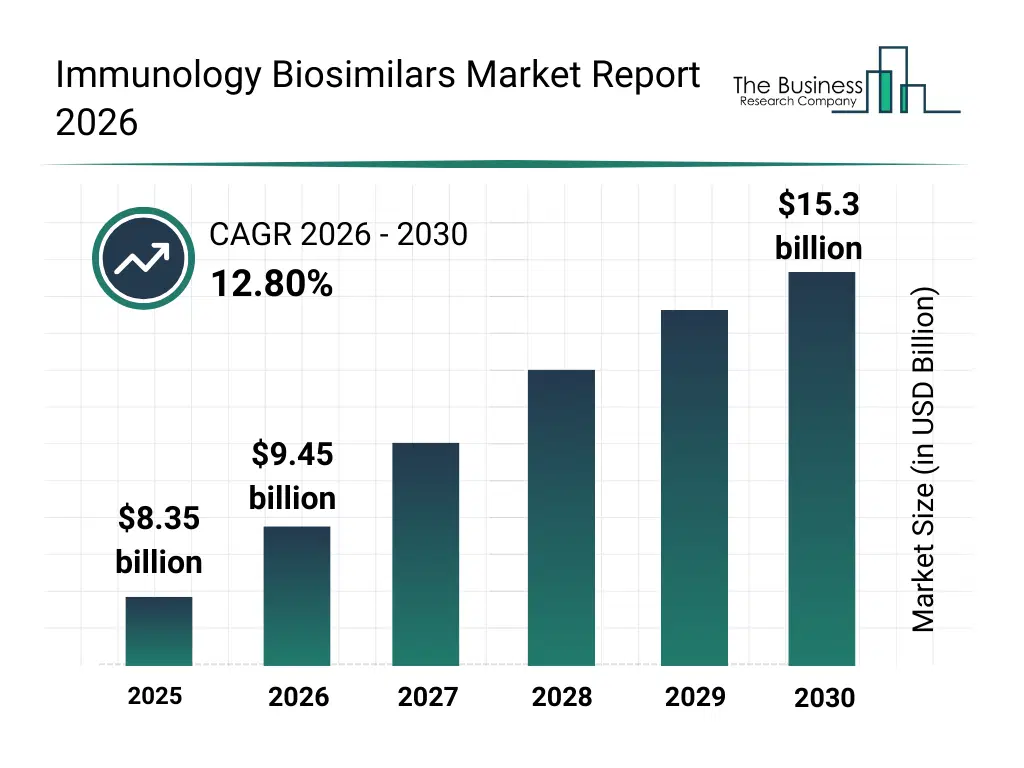
What Is The Immunology Biosimilars Market Size and Share 2026?
The immunology biosimilars market size has grown rapidly in recent years. It will grow from $8.35 billion in 2025 to $9.45 billion in 2026 at a compound annual growth rate (CAGR) of 13.2%. The growth in the historic period can be attributed to high cost of original biologics, limited availability of biosimilar alternatives, growing prevalence of autoimmune diseases, increasing hospital and clinical adoption of biologics, stringent regulatory approvals for biosimilars.What Is The Immunology Biosimilars Market Growth Forecast?
The immunology biosimilars market size is expected to see rapid growth in the next few years. It will grow to $15.3 billion in 2030 at a compound annual growth rate (CAGR) of 12.8%. The growth in the forecast period can be attributed to development of advanced biosimilar molecules, expansion of homecare and outpatient treatment options, increasing regulatory harmonization, rising patient awareness and acceptance, growth of online and hospital pharmacy distribution channels. Major trends in the forecast period include rising adoption of monoclonal antibody biosimilars, increasing use of fusion protein biosimilars, expansion of recombinant protein therapies, growing market for interferon-based treatments, enhanced access to affordable immunology therapies.
Global Immunology Biosimilars Market Segmentation
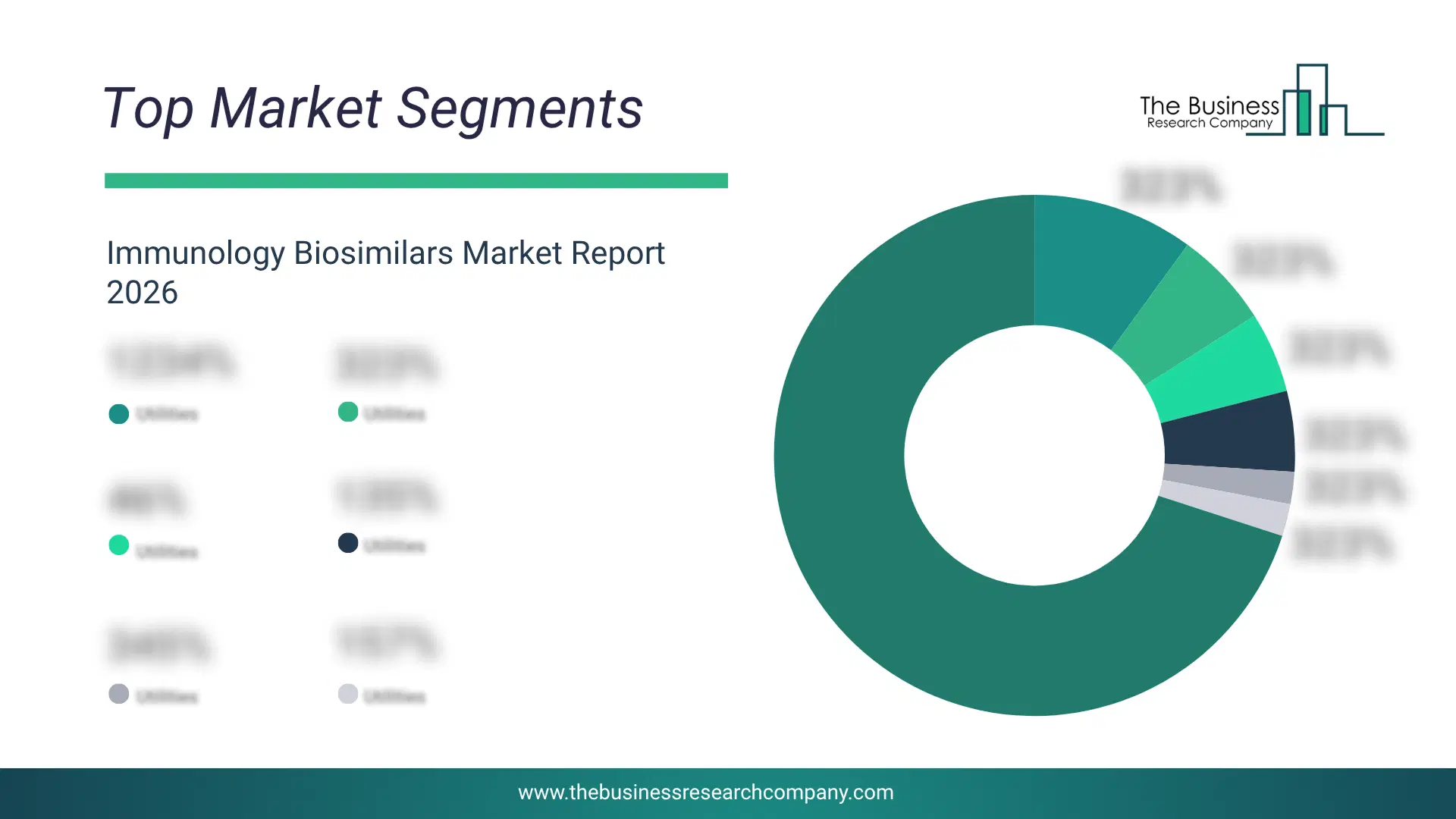
1) By Drug Type: Monoclonal Antibodies, Fusion Proteins, Recombinant Proteins, Interferons, Other Biosimilar Immunomodulators 2) By Disease: Inflammatory Bowel Disease, Arthritis, Other Diseases 3) By Distribution Channel: Hospital Pharmacies, Retail Pharmacies, Online Pharmacies, Other Distribution Channels 4) By End User: Hospitals, Clinics, Homecare Settings, Ambulatory Surgical Centers (ASCs) Subsegments: 1) By Monoclonal Antibodies: Anti-Tumor Necrosis Factor Agents, Anti-Interleukin-6 Agents, Anti-Cluster of Differentiation 20 Agents, Anti-Interleukin-12/23 Agents, Other Monoclonal Antibodies 2) By Fusion Proteins: Etanercept Biosimilars, Other Fusion Protein Biosimilars 3) By Recombinant Proteins: Recombinant Human Insulin, Recombinant Human Growth Hormone, Recombinant Human Erythropoietin, Other Recombinant Protein Biosimilars 4) By Interferons: Interferon Alpha, Interferon Beta, Interferon Gamma 5) By Other Biosimilar Immunomodulators: Interleukin Inhibitors, Janus Kinase Inhibitors, Other Immunomodulatory BiosimilarsWhat Is The Driver Of The Immunology Biosimilars Market?
The increasing prevalence of chronic immunological conditions is expected to propel the growth of the immunology biosimilars market going forward. Chronic immunological conditions are long-lasting disorders in which the immune system malfunctions, either attacking the body’s tissues or failing to protect it effectively. The rise in chronic immunological conditions is due to the growing number of individuals affected by long-term immune system disorders that require continuous treatment, proactive disease management, and ongoing healthcare support. Immunology biosimilars support chronic immunological conditions by providing affordable and effective treatment alternatives, supporting long-term disease management, and improving patient access to essential therapies that control immune system dysfunction. For instance, in November 2023, according to the Multiple Sclerosis International Federation (MSIF), a UK-based international nonprofit organization, global MS research and advocacy, an estimated 2.9 million people worldwide were living with multiple sclerosis in 2023. Therefore, the increasing prevalence of chronic immunological conditions is driving growth in the immunology biosimilars industry.Key Players In The Global Immunology Biosimilars Market
Major companies operating in the immunology biosimilars market are Pfizer Inc., Novartis AG, Amgen Inc., Sandoz Group AG, Fresenius Kabi AG, Intas Pharmaceuticals Ltd., Dr. Reddy's Laboratories Ltd., Samsung Bioepis Co. Ltd., Gedeon Richter Plc, Celltrion Inc., Biocon Ltd., Innovent Biologics Inc., Biocad, Mabion S.A.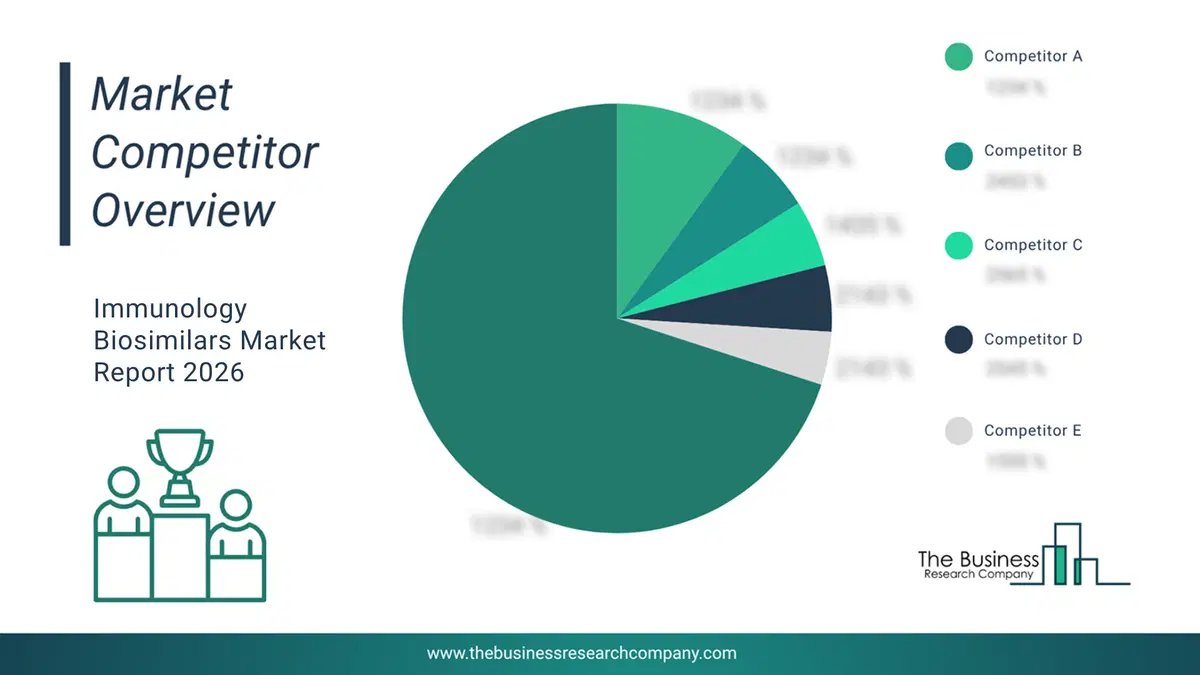
This chart is for illustrative purposes; the full report includes a detailed competitor analysis and comprehensive overview of the top 10 companies in the market.
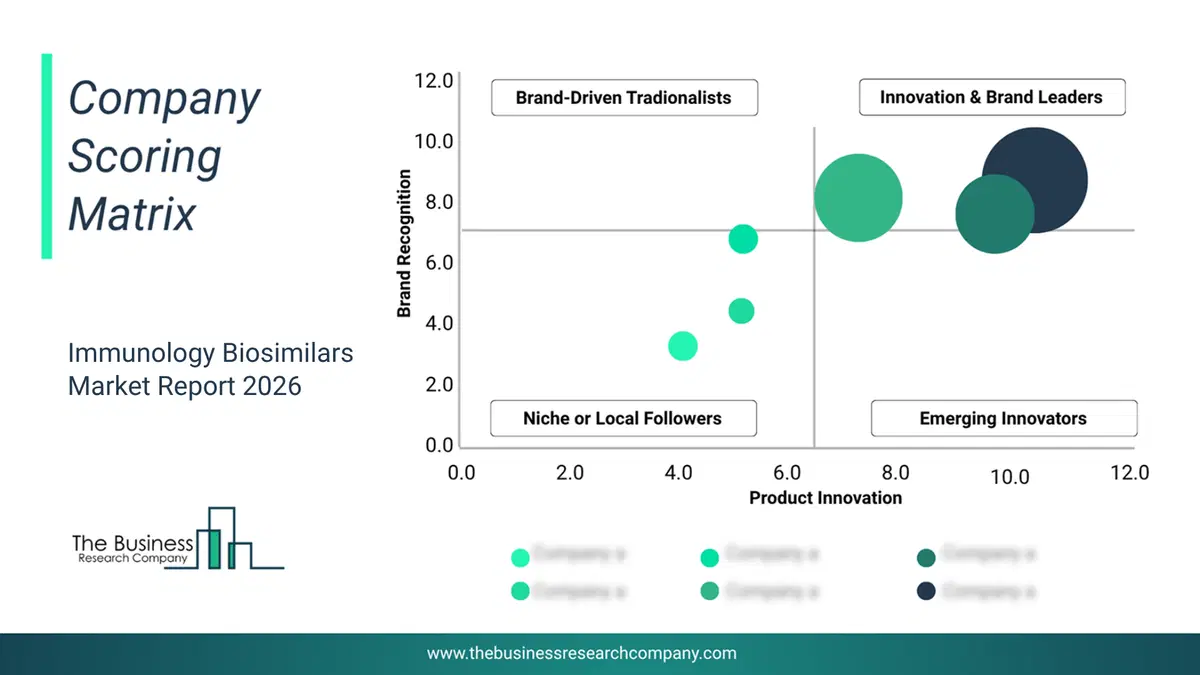
This chart maps companies by product innovation and brand strength, with bubble size indicating relative revenue, helping identify market leaders, challengers, and niche players. This is an illustrative chart; the full report provides a complete and accurate competitive analysis.
Global Immunology Biosimilars Market Trends and Insights
Major companies operating in the immunology biosimilars market are focusing on the development of next-generation biosimilar innovations, such as anticipated interchangeability designation, advanced formulations with enhanced stability, and novel delivery systems, to provide patients with more accessible and effective treatment options. Anticipated interchangeability designation means the biosimilar is expected to meet regulatory standards, allowing it to be substituted for the reference biologic at the pharmacy level without the prescriber’s intervention. For instance, in February 2025, Sandoz Group AG, a Switzerland-based pharmaceutical company, launched Pyzchiva (ustekinumab-ttwe), a biosimilar to Stelara, for the treatment of chronic autoimmune conditions including plaque psoriasis, psoriatic arthritis, Crohn’s disease, and ulcerative colitis. The launch, in partnership with Samsung Bioepis Co. Ltd., a South Korea-based biopharmaceutical company, reinforces Sandoz’s commitment to expanding access to immunology biosimilars by offering a cost-effective and patient-centric therapy with multiple dosing options, extended stability, and the unique ability to be re-refrigerated after initial refrigeration.What Are Latest Mergers And Acquisitions In The Immunology Biosimilars Market?
In February 2025, Accord BioPharma Inc., a U.S.-based healthcare company, partnered with Bio‑Thera Solutions Co., Ltd. for BAT2506, a proposed golimumab biosimilar. With this agreement, Accord BioPharma, Inc. aimed to expand its immunology biosimilar portfolio in the U.S. by obtaining commercialization rights for a late-stage TNF‑α–blocking biosimilar. Bio‑Thera Solutions Co. Ltd. is a China-based biopharmaceutical company that specializes in developing, manufacturing, and supplying innovative biosimilars, including immunology assets such as BAT2506.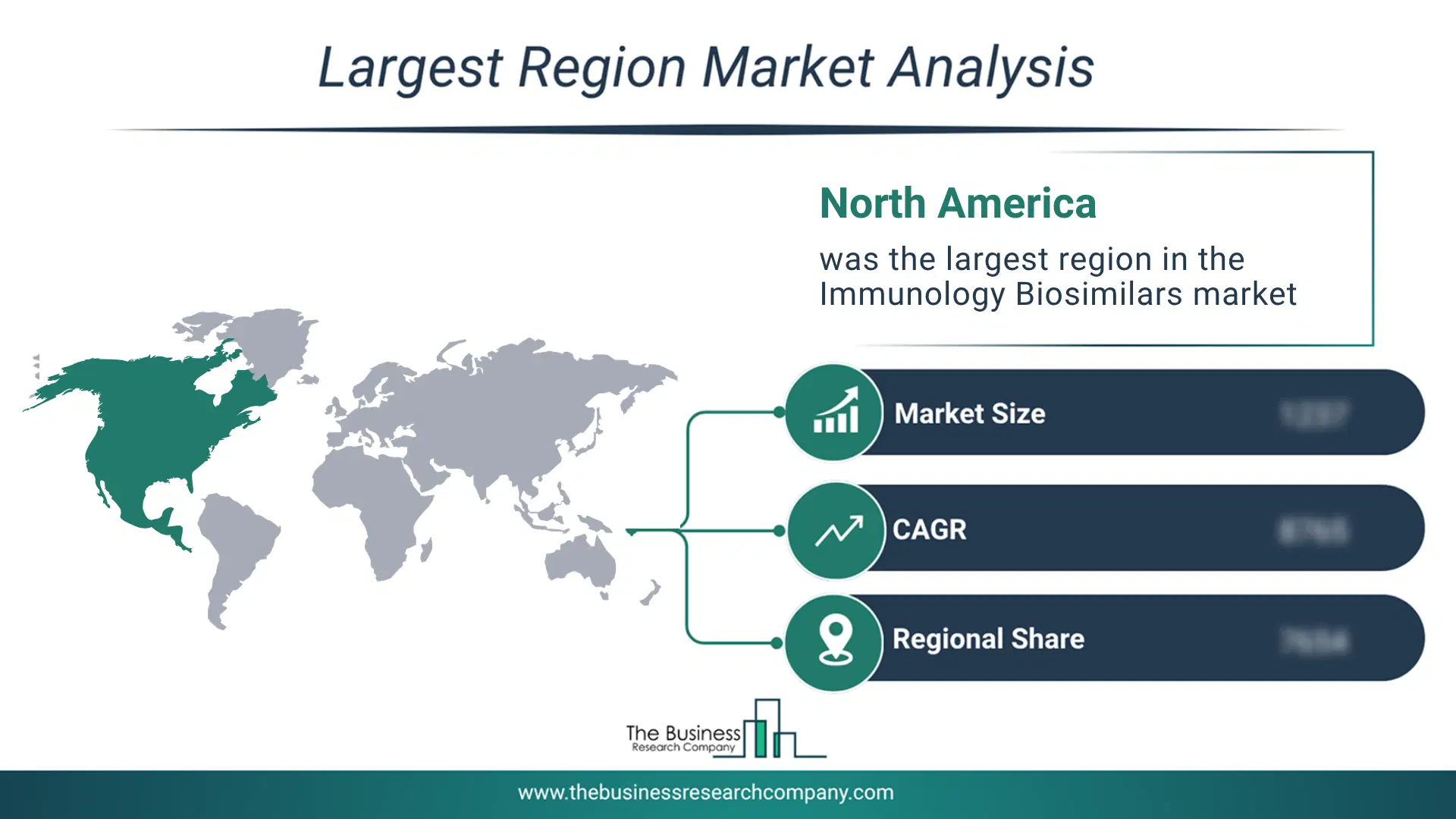
Regional Insights
North America was the largest region in the immunology biosimilars market in 2025. Asia-Pacific is expected to be the fastest-growing region in the forecast period. The regions covered in this market report are Asia-Pacific, South East Asia, Western Europe, Eastern Europe, North America, South America, Middle East, Africa. The countries covered in this market report are Australia, Brazil, China, France, Germany, India, Indonesia, Japan, Taiwan, Russia, South Korea, UK, USA, Canada, Italy, Spain.What Defines the Immunology Biosimilars Market?
The immunology biosimilars market consists of sales of tumor necrosis factor inhibitors, recombinant cytokines, t-cell co-stimulation modulators, and monoclonal antibodies. Values in this market are ‘factory gate’ values, that is, the value of goods sold by the manufacturers or creators of the goods, whether to other entities (including downstream manufacturers, wholesalers, distributors, and retailers) or directly to end customers. The value of goods in this market includes related services sold by the creators of the goods.How is Market Value Defined and Measured?
The market value is defined as the revenues that enterprises gain from the sale of goods and/or services within the specified market and geography through sales, grants, or donations in terms of the currency (in USD unless otherwise specified). The revenues for a specified geography are consumption values that are revenues generated by organizations in the specified geography within the market, irrespective of where they are produced. It does not include revenues from resales along the supply chain, either further along the supply chain or as part of other products.
This chart presents market attractiveness based on a quantitative evaluation of growth, competition, strategic alignment, and risk, offering a clear view of opportunity areas for decision-making. This chart is for illustrative purposes; the full report contains the complete analysis.

This chart highlights the Total Addressable Market (TAM) by estimating the maximum revenue opportunity using an assumption-driven approach, supporting strategic planning and opportunity sizing across markets. The chart is illustrative; the full report provides a more comprehensive analysis.
What Key Data and Analysis Are Included in the Immunology Biosimilars Market Report 2026?
The immunology biosimilars market research report is one of a series of new reports from The Business Research Company that provides market statistics, including industry global market size, regional shares, competitors with the market share, detailed market segments, market trends and opportunities, and any further data you may need to thrive in the immunology biosimilars industry. The market research report delivers a complete perspective of everything you need, with an in-depth analysis of the current and future state of the industry.Immunology Biosimilars Market Report Forecast Analysis
| Report Attribute | Details |
|---|---|
| Market Size Value In 2026 | $9.45 billion |
| Revenue Forecast In 2030 | $15.3 billion |
| Growth Rate | CAGR of 13.2% from 2026 to 2030 |
| Base Year For Estimation | 2025 |
| Actual Estimates/Historical Data | 2020-2025 |
| Forecast Period | 2026 - 2030 |
| Market Representation | Revenue in USD Billion and CAGR from 2026 to 2030 |
| Segments Covered | Drug Type, Disease, Distribution Channel, End User |
| Regional Scope | Asia-Pacific, Western Europe, Eastern Europe, North America, South America, Middle East, Africa |
| Country Scope | The countries covered in the report are Australia, Brazil, China, France, Germany, India, Indonesia, Japan, Taiwan, Russia, South Korea, UK, USA, Canada, Italy, Spain. |
| Key Companies Profiled | Pfizer Inc., Novartis AG, Amgen Inc., Sandoz Group AG, Fresenius Kabi AG, Intas Pharmaceuticals Ltd., Dr. Reddy's Laboratories Ltd., Samsung Bioepis Co. Ltd., Gedeon Richter Plc, Celltrion Inc., Biocon Ltd., Innovent Biologics Inc., Biocad, Mabion S.A. |
| Customization Scope | Request for Customization |
| Pricing And Purchase Options | Explore Purchase Options |