
Kosher Food Market Report 2026
Global Outlook – By Type (Buckwheat, Lamb, Pulses, Other Types), By Distribution Channel (Supermarkets And Hypermarkets, Grocery Stores, Online Stores), By Application (Culinary Products, Snacks and Savory, Bakery And Confectionery Products, Meat, Beverages Supplements, Dietary) – Market Size, Trends, Strategies, and Forecast to 2030
Kosher Food Market Overview
• Kosher Food market size has reached to $21.93 billion in 2025 • Expected to grow to $26.27 billion in 2030 at a compound annual growth rate (CAGR) of 3.6% • Growth Driver: Growing Consumption Of Meat And Dairy Products Fueling Kosher Food Market Growth • Market Trend: Major Companies Embrace Plant-Based Alternatives To Meet Growing Health And Sustainability Demands • North America was the largest region in 2025 and Asia Pacific is the fastest growing region.What Is Covered Under Kosher Food Market?
Kosher food refers to food prepared and consumed per Jewish dietary laws, known as kashrut. These laws are derived from the Torah, the central reference of the Jewish religion, and further elaborated upon in the Talmud and other rabbinic literature. Kosher food includes meat from certain animals that have been slaughtered and prepared in a specific way, as well as dairy products, fruits, vegetables, and grains that meet kashrut requirements. The main types of kosher food are buckwheat, seafood, lamb, pulses, and other types. Buckwheat refers to a gluten-free grain known for its nutty flavor and nutritional benefits that range from flour and noodles to breakfast cereals and snacks. These are distributed through supermarkets and hypermarkets, grocery stores, and online stores and are used in various applications such as culinary products, snacks, and savory, bakery and confectionery products, meat, beverages supplements, dietary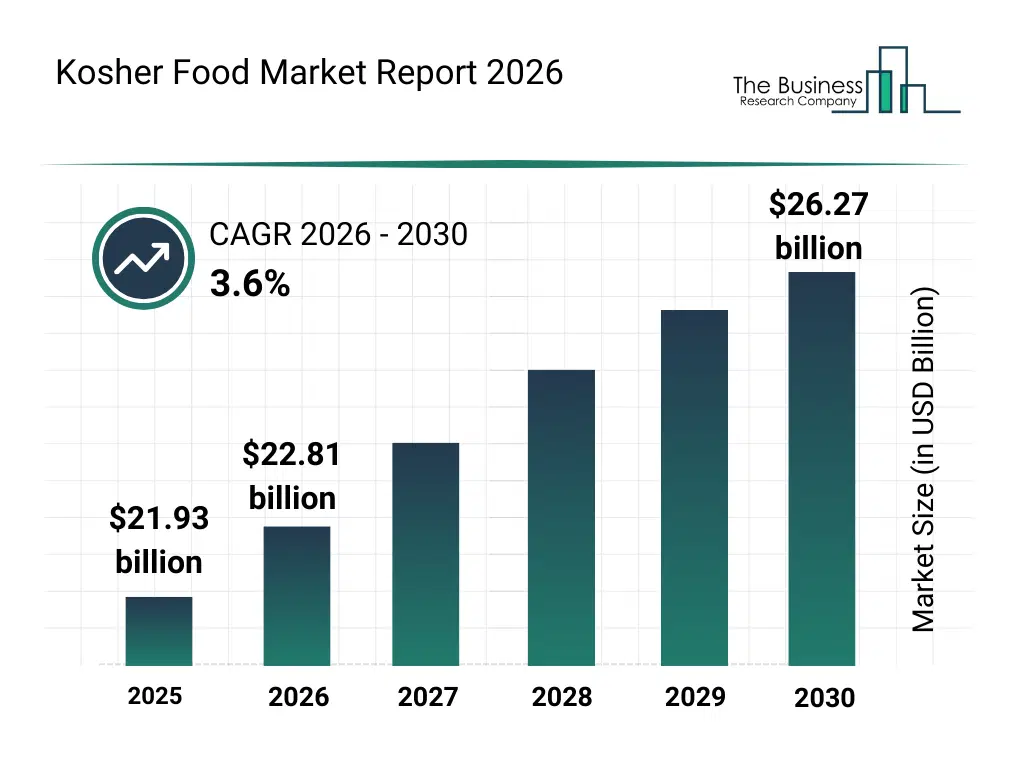
What Is The Kosher Food Market Size and Share 2026?
The kosher food market size has grown steadily in recent years. It will grow from $21.93 billion in 2025 to $22.81 billion in 2026 at a compound annual growth rate (CAGR) of 4.0%. The growth in the historic period can be attributed to expansion of jewish population consumption needs, development of kosher certification systems, growth of specialty food retailing, rising demand for trusted food standards, globalization of kosher food supply.What Is The Kosher Food Market Growth Forecast?
The kosher food market size is expected to see steady growth in the next few years. It will grow to $26.27 billion in 2030 at a compound annual growth rate (CAGR) of 3.6%. The growth in the forecast period can be attributed to rising non-religious adoption of kosher foods, expansion of premium kosher product lines, growth of cross-border kosher trade, increasing digital verification of certifications, rising demand for clean-label foods. Major trends in the forecast period include increasing demand for certified kosher products, expansion of kosher food offerings beyond religious consumers, growing availability through online retail channels, rising popularity of kosher snacks and ready foods, enhanced focus on traceability and certification compliance.
Global Kosher Food Market Segmentation
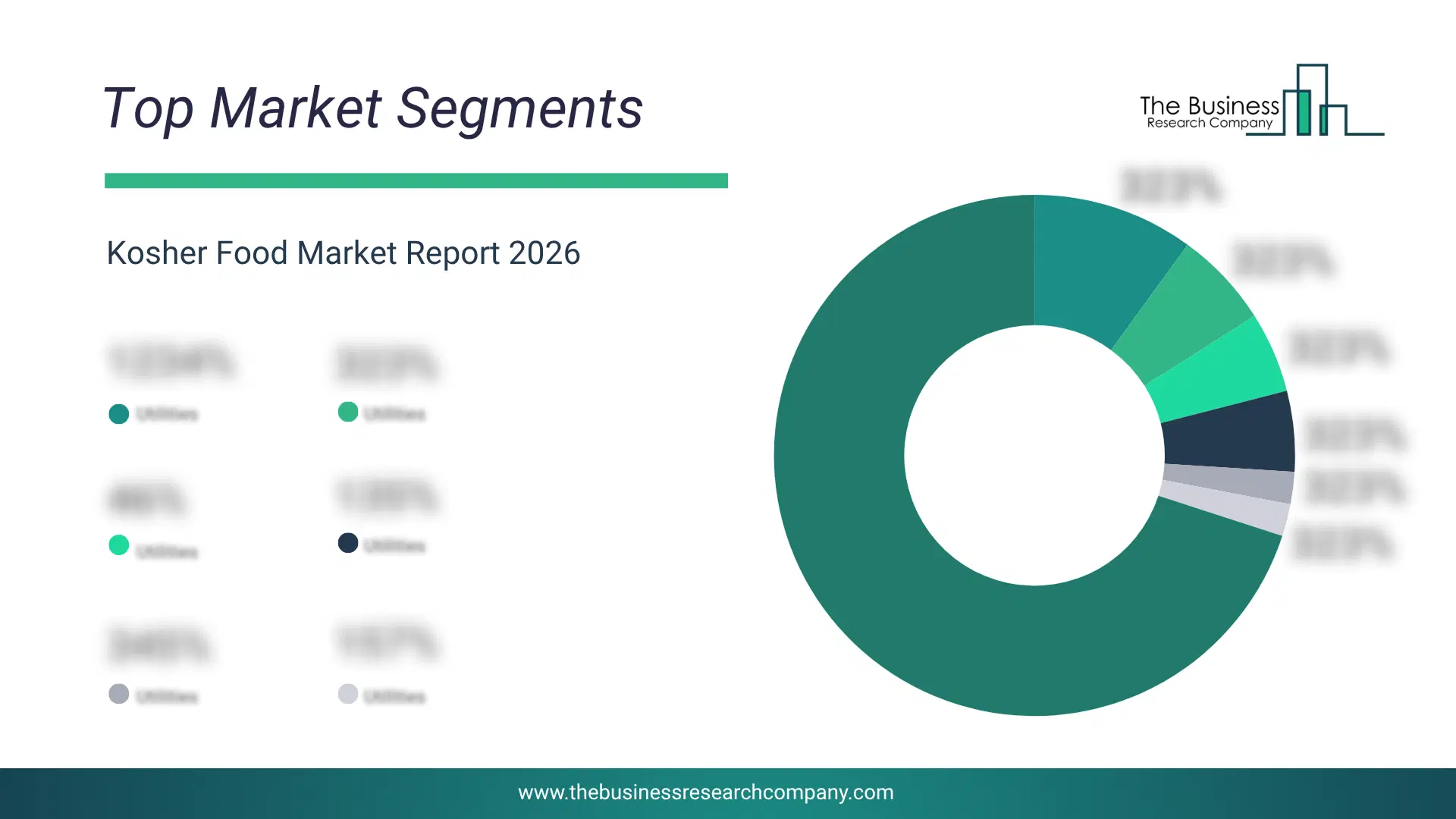
1) By Type: Buckwheat, Lamb, Pulses, Other Types 2) By Distribution Channel: Supermarkets And Hypermarkets, Grocery Stores, Online Stores 3) By Application: Culinary Products, Snacks and Savory, Bakery And Confectionery Products, Meat, Beverages Supplements, Dietary Subsegments: 1) By Buckwheat: Organic Buckwheat, Conventional Buckwheat, Buckwheat Flour 2) By Lamb: Fresh Lamb Cuts, Processed Lamb, Frozen Lamb 3) By Pulses: Lentils, Chickpeas, Beans, Peas 4) By Other Types: Dairy Products, Grains, Processed FoodsWhat Is The Driver Of The Kosher Food Market?
The growing consumption of meat and dairy products is expected to propel the growth of the kosher food market going forward. The meat and dairy products include the flesh of kosher-slaughtered mammals or birds prepared, and they must not be cooked or eaten with dairy products. Dairy products, including milk, cheese, butter, and yogurt from kosher-slaughtered animals, must also be kept separate from meat according to kosher laws. The demand for meat and dairy products is fueled by increasing population growth and urbanization, rising income levels, changing diets, and cultural and culinary preferences. Kosher dietary laws help manage the consumption and preparation of meat and dairy products by clearly defining rules that prevent their mixing and ensure their purity. These dietary laws help ensure that meat and dairy products are prepared and consumed in a way that aligns with Jewish religious principles. For instance, in July 2024, according to Carlisle Technology, a US-based company providing software and hardware solutions for the food industry, chicken consumption, currently at 98.90 pounds per person, is expected to grow to 107.50 pounds by 2033, driven by its affordability and health advantages. In 2022, per capita consumption of broiler chicken in the U.S. was 98.90 pounds, with a notable increase projected by 2033. Therefore, the growing consumption of meat and dairy products is driving the growth of the kosher food industry.Key Players In The Global Kosher Food Market
Major companies operating in the kosher food market are Cargill Incorporated, Nestlé S.A., Archer Daniels Midland Company, PepsiCo Inc., Unilever PLC, Tyson Foods Inc., Mars Incorporated, Coca-Cola Company, Danone S.A., The Kraft Heinz Company, Hormel Foods Corporation, The Hershey Company, Hain Celestial Group Inc., Blommer Chocolate Company, Eden Foods Inc., Kayco, Manischewitz Company, Kellogg Company, Kosher Valley LLC, Brooklyn Cookie Company LLC, Ice Chips Candy LLC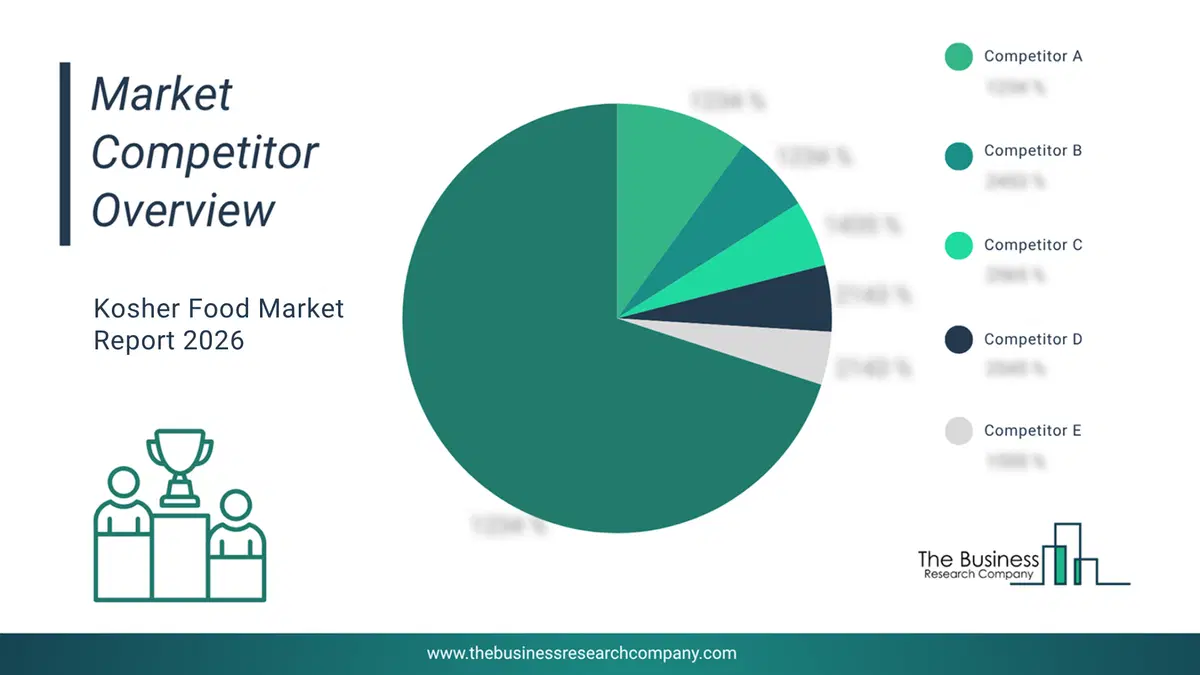
This chart is for illustrative purposes; the full report includes a detailed competitor analysis and comprehensive overview of the top 10 companies in the market.
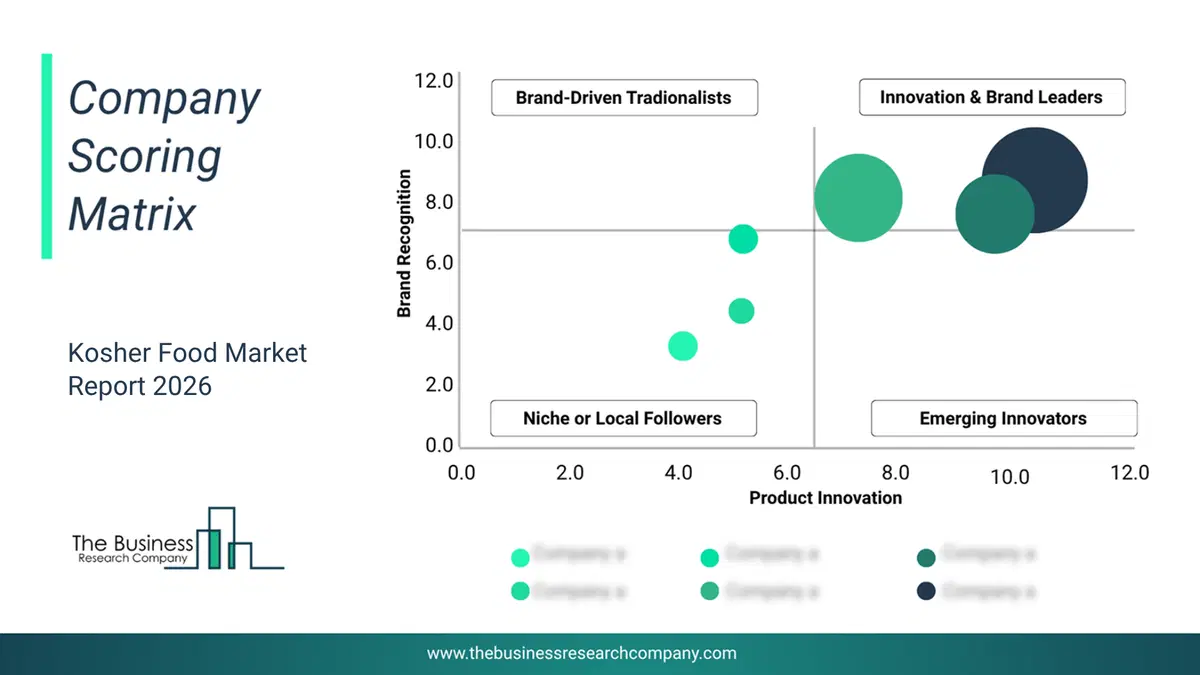
This chart maps companies by product innovation and brand strength, with bubble size indicating relative revenue, helping identify market leaders, challengers, and niche players. This is an illustrative chart; the full report provides a complete and accurate competitive analysis.
Global Kosher Food Market Trends and Insights
Major companies operating in the kosher food market focus on innovative products, such as plant-based alternatives, to cater to the growing demand for health-conscious and environmentally friendly options while adhering to strict kosher guidelines. Plant-based kosher foods are products that adhere to kosher dietary laws while mimicking the taste and texture of animal-based foods using only plant ingredients. For instance, in May 2024, Tofurky, a US-based producer of plant-based meat substitutes, launched next-generation plant-based Deli Slices. The roasts are pre-seasoned, ready to heat and serve, and provide a convenient plant-based alternative for kosher consumers seeking to reduce meat consumption. The new products expand Tofurky's existing kosher plant-based offerings, including deli slices, sausages, and grounds.What Are Latest Mergers And Acquisitions In The Kosher Food Market?
In April 2024, Forward Consumer Partners (FCP), a US-based private equity firm, acquired Firehook Bakery for an undisclosed amount. The acquisition allows Firehook to further leverage FCP's expertise and resources to expand its reach as an artisanal baked goods brand. Firehook Bakery is a US-based company that manufactures kosher food.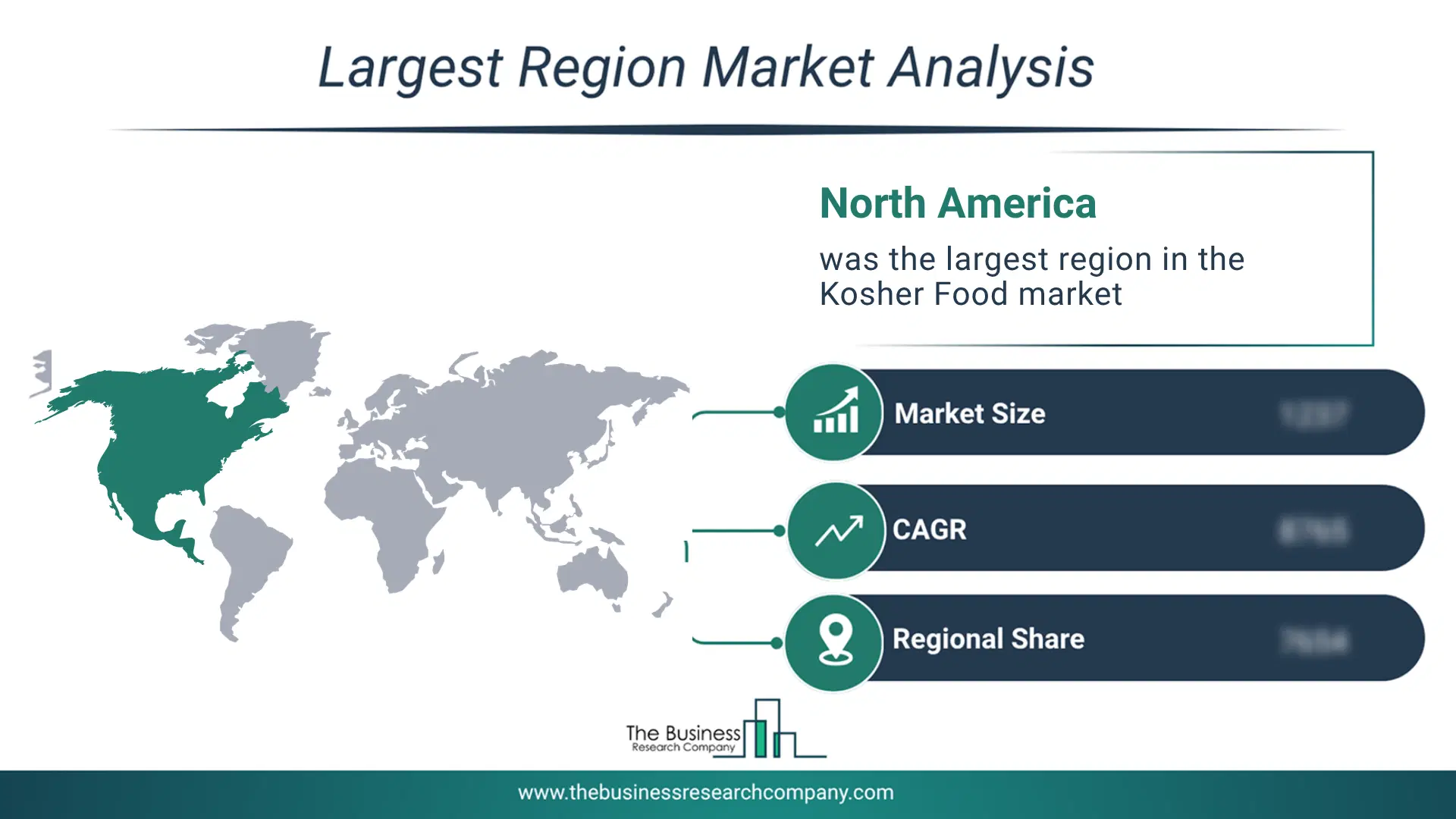
Regional Outlook
North America was the largest region in the kosher food market in 2025. Asia Pacific is expected to be the fastest-growing region in the forecast period. The regions covered in this market report are Asia-Pacific, South East Asia, Western Europe, Eastern Europe, North America, South America, Middle East and Africa. The countries covered in this market report are Australia, Brazil, China, France, Germany, India, Indonesia, Japan, Taiwan, Russia, South Korea, UK, USA, Italy, Spain, CanadaWhat Defines the Kosher Food Market?
The kosher food market consists of sales of kosher beverages, processed food, and packaged food. Values in this market are ‘factory gate’ values, that is, the value of goods sold by the manufacturers or creators of the goods, whether to other entities (including downstream manufacturers, wholesalers, distributors, and retailers) or directly to end customers. The value of goods in this market includes related services sold by the creators of the goods.How is Market Value Defined and Measured?
The market value is defined as the revenues that enterprises gain from the sale of goods and/or services within the specified market and geography through sales, grants, or donations in terms of the currency (in USD unless otherwise specified). The revenues for a specified geography are consumption values that are revenues generated by organizations in the specified geography within the market, irrespective of where they are produced. It does not include revenues from resales along the supply chain, either further along the supply chain or as part of other products.
This chart presents market attractiveness based on a quantitative evaluation of growth, competition, strategic alignment, and risk, offering a clear view of opportunity areas for decision-making. This chart is for illustrative purposes; the full report contains the complete analysis.

This chart highlights the Total Addressable Market (TAM) by estimating the maximum revenue opportunity using an assumption-driven approach, supporting strategic planning and opportunity sizing across markets. The chart is illustrative; the full report provides a more comprehensive analysis.
What Key Data and Analysis Are Included in the Kosher Food Market Report 2026?
The kosher food market research report is one of a series of new reports from The Business Research Company that provides market statistics, including industry global market size, regional shares, competitors with the market share, detailed market segments, market trends and opportunities, and any further data you may need to thrive in the kosher food industry. The market research report delivers a complete perspective of everything you need, with an in-depth analysis of the current and future state of the industry.Kosher Food Market Report Forecast Analysis
| Report Attribute | Details |
|---|---|
| Market Size Value In 2026 | $22.81 billion |
| Revenue Forecast In 2030 | $26.27 billion |
| Growth Rate | CAGR of 4.0% from 2026 to 2030 |
| Base Year For Estimation | 2025 |
| Actual Estimates/Historical Data | 2020-2025 |
| Forecast Period | 2026 - 2030 |
| Market Representation | Revenue in USD Billion and CAGR from 2026 to 2030 |
| Segments Covered | Type, Distribution Channel, Application |
| Regional Scope | Asia-Pacific, Western Europe, Eastern Europe, North America, South America, Middle East, Africa |
| Country Scope | The countries covered in the report are Australia, Brazil, China, France, Germany, India, Indonesia, Japan, Taiwan, Russia, South Korea, UK, USA, Canada, Italy, Spain. |
| Key Companies Profiled | Cargill Incorporated, Nestlé S.A., Archer Daniels Midland Company, PepsiCo Inc., Unilever PLC, Tyson Foods Inc., Mars Incorporated, Coca-Cola Company, Danone S.A., The Kraft Heinz Company, Hormel Foods Corporation, The Hershey Company, Hain Celestial Group Inc., Blommer Chocolate Company, Eden Foods Inc., Kayco, Manischewitz Company, Kellogg Company, Kosher Valley LLC, Brooklyn Cookie Company LLC, Ice Chips Candy LLC |
| Customization Scope | Request for Customization |
| Pricing And Purchase Options | Explore Purchase Options |