
Protein Labeling Market Report 2026
Global Outlook – By Product (Reagents, Protein, Enzymes, Probes/ Tags, Monoclonal Antibodies), By Labeling Method (In-vitro Labeling, In-vivo Labeling), By Application (Cell Based-Assay, Fluorescence Microscopy, Immunological Techniques, Mass Spectrometry, Protein Micro Assay) – Market Size, Trends, Strategies, and Forecast to 2030
Protein Labeling Market Overview
• Protein Labeling market size has reached to $2.84 billion in 2025 • Expected to grow to $4.89 billion in 2030 at a compound annual growth rate (CAGR) of 11.8% • Growth Driver: Rising R&D Investment In Proteomics-Global-Market-Report" target="_blank">Proteomics And Genomics-Global-Market-Report" target="_blank">Genomics Boosts Protein Labelling Reagents Market • Market Trend: Innovative Technologies Like Kerrynutri Innovations In Antibody Conjugation For Enhanced Protein Labeling • North America was the largest region in 2025.What Is Covered Under Protein Labeling Market?
Protein labelling refers to the process of detecting or purifying the labelled protein and its binding partners by using the proper molecular labels. Most biological research uses one of three basic categories of protein labels: biotin, enzyme conjugates, or fluorescence probes. The main types of products in protein labelling are reagents, proteins, enzymes, probes or tags, and monoclonal antibodies. Monoclonal antibodies are created by cloning a single white blood cell. Every subsequent antibody generated in this manner may be traced back to a single parent cell. The different labelling methods include in-vitro labelling, and in-vivo labelling and are used in cell-based assays, fluorescence microscopy, immunological techniques, mass spectrometry, and protein micro assays.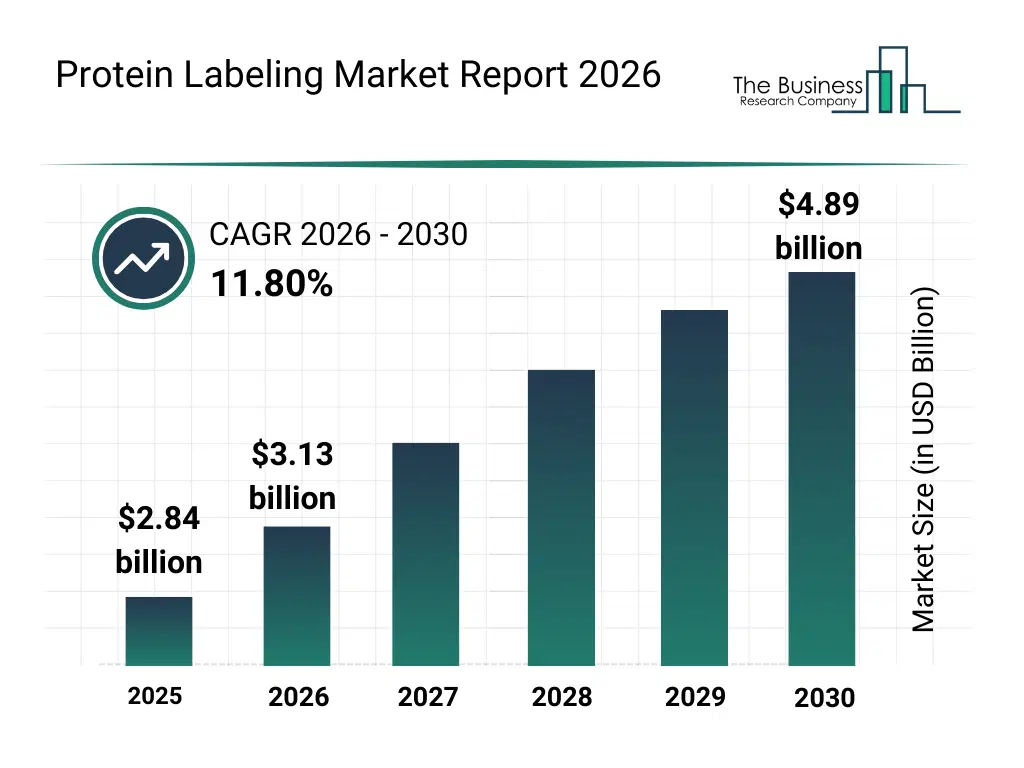
What Is The Protein Labeling Market Size and Share 2026?
The protein labeling market size has grown rapidly in recent years. It will grow from $2.84 billion in 2025 to $3.13 billion in 2026 at a compound annual growth rate (CAGR) of 10.1%. The growth in the historic period can be attributed to limited availability of specialized protein labels, reliance on traditional fluorescent dyes, growing demand for cell-based assays, increasing research in proteomics, adoption of enzyme-conjugated labeling techniques.What Is The Protein Labeling Market Growth Forecast?
The protein labeling market size is expected to see rapid growth in the next few years. It will grow to $4.89 billion in 2030 at a compound annual growth rate (CAGR) of 11.8%. The growth in the forecast period can be attributed to development of novel fluorophore probes, expansion in recombinant and modified protein usage, increasing adoption of automated labeling platforms, growth in proteomics and genomics research, rising integration of protein labeling with mass spectrometry and high-throughput assays. Major trends in the forecast period include rising demand for fluorescent and chemiluminescent protein labels, growth in use of recombinant and modified proteins for research, increasing adoption of in-vitro and in-vivo labeling techniques, expansion of applications in cell-based assays and fluorescence microscopy, rising use of monoclonal antibodies in immunological techniques and protein micro assays.
Global Protein Labeling Market Segmentation
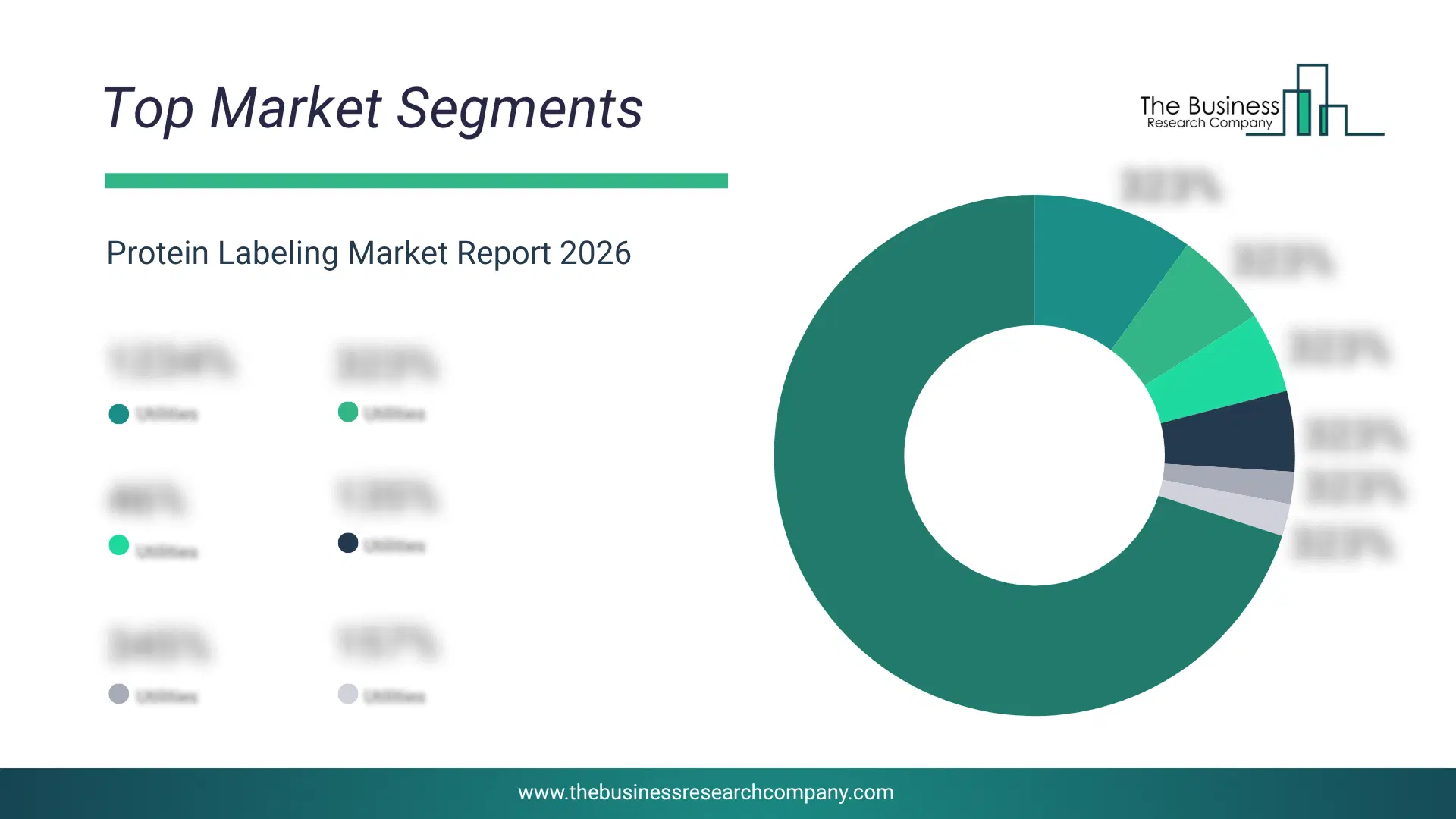
1) By Product: Reagents, Protein, Enzymes, Probes/ Tags, Monoclonal Antibodies 2) By Labeling Method: In-vitro Labeling, In-vivo Labeling 3) By Application: Cell Based-Assay, Fluorescence Microscopy, Immunological Techniques, Mass Spectrometry, Protein Micro Assay Subsegments: 1) By Reagents: Fluorescent Dyes, Enzyme Labels, Chemiluminescent Reagents, Radioactive Labels 2) By Protein: Recombinant Proteins, Native Proteins, Modified Proteins 3) By Enzymes: Alkaline Phosphatase, Horseradish Peroxidase, Other Enzymatic Labels 4) By Probes Or Tags: Biotin Labels, Antibody Tags, Fluorophore Probes, Affinity Tags 5) By Monoclonal Antibodies: Primary Monoclonal Antibodies, Secondary Monoclonal Antibodies, Conjugated Monoclonal AntibodiesWhat Is The Driver Of The Protein Labeling Market?
Increased spending on the R&D of proteomics and genomics is driving the growth of the protein labeling reagents market. Proteomics is the study of the overall protein content of a cell, tissue, or organism. Protein labeling methods before separation and analysis are essential during proteomic profiling approaches. For instance, in 2023, according to Office for National Statistics, a UK-based, government agency, the UK government’s net spending on research and development (R&D) increased to £17.4 ($22.1 billion) billion in 2023, up from £16.1 billion ($20.45 billion) in 2022, marking an 8.2% rise. Therefore, the increased spending on research and development of proteomics and genomics is driving the market.Key Players In The Global Protein Labeling Market
Major companies operating in the protein labeling market are Thermo Fisher Scientific Inc., Merck KGaA, PerkinElmer Inc., GE HealthCare Technologies Inc., F. Hoffmann-La Roche AG, Agilent Technologies Inc., BIO-RAD LABORATORIES, LI-COR Inc., Promega Corporation, Eurogentec S.A., Luminex Corporation, New England Biolabs Inc., Abcam plc., TriLink BioTechnologies LLC., Waters Corporation, AMETEK Inc., HORIBA Ltd., Spectris plc., METTLER TOLEDO International Inc., Shimadzu Corporation, Hitachi High-Tech Corporation.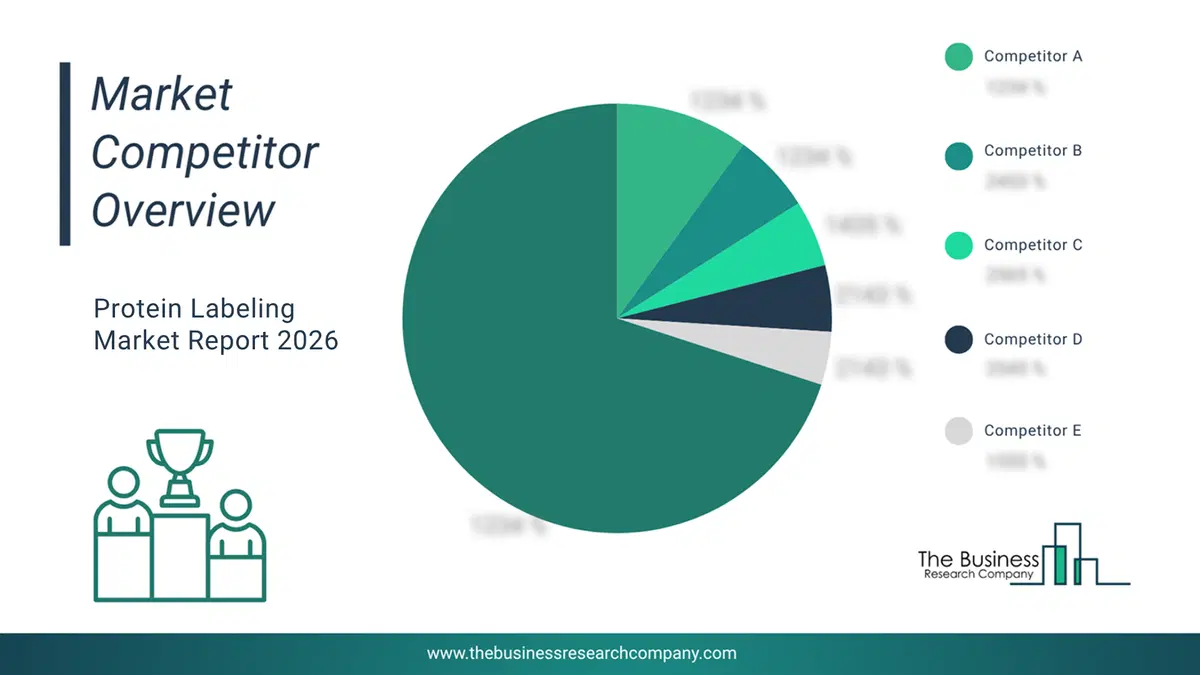
This chart is for illustrative purposes; the full report includes a detailed competitor analysis and comprehensive overview of the top 10 companies in the market.
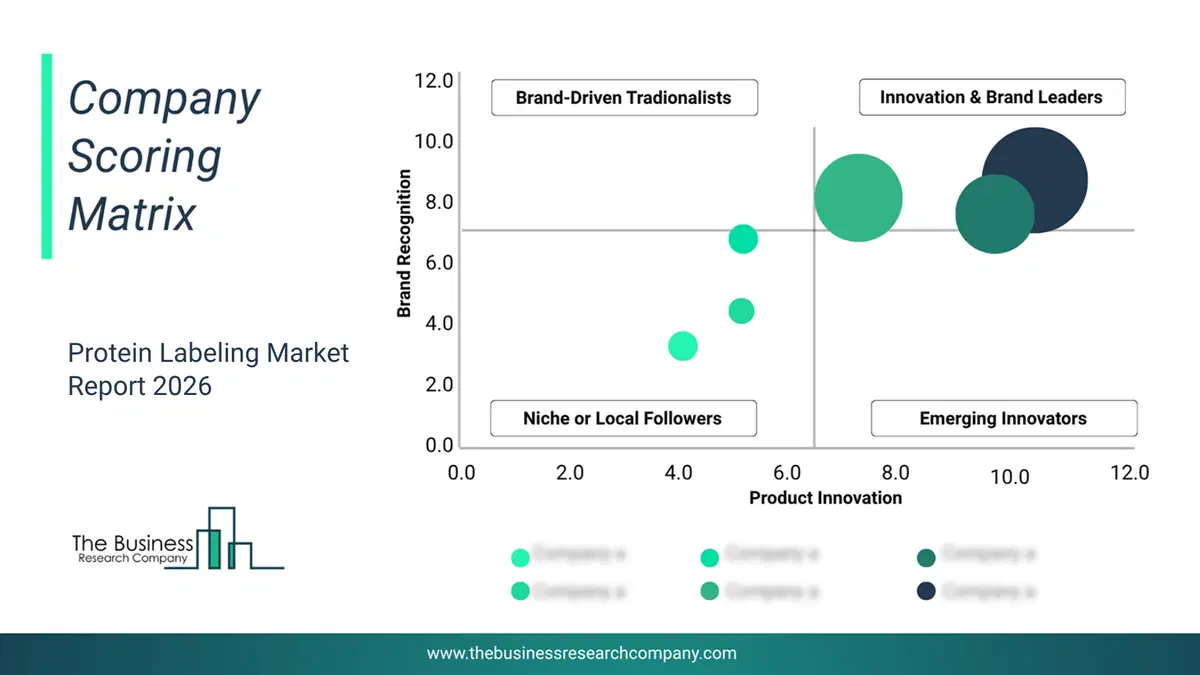
This chart maps companies by product innovation and brand strength, with bubble size indicating relative revenue, helping identify market leaders, challengers, and niche players. This is an illustrative chart; the full report provides a complete and accurate competitive analysis.
Global Protein Labeling Market Trends and Insights
Major companies operating in the protein labeling market are focusing on developing innovative solutions such as antibody conjugation to StarBright dyes to enhance detection sensitivity, multiplexing capabilities, and overall assay performance. StarBright dyes are bright, photostable fluorescent dyes designed for high-performance labeling of antibodies and proteins. For instance, in January 2025, Bio-Rad Laboratories Inc., a US-based life sciences company, launched the TrailBlazer Tag and TrailBlazer StarBright Dye Label Kits, enabling researchers to efficiently conjugate antibodies to StarBright dyes for advanced flow cytometry and imaging applications. These kits streamline the labeling process, improve signal clarity, and support complex multi-color experiments in biomedical research.What Are Latest Mergers And Acquisitions In The Protein Labeling Market?
In December 2023, Danaher Corporation, a US-based science and technology company, acquired Abcam plc, for an undisclosed amount. With this acquisition, Danaher aims to expand its life sciences portfolio, enhance its research and development capabilities, increase access to high-quality antibody products, and strengthen its position in the global life sciences and diagnostics market. Abcam plc is a UK-based life sciences company, that offers protein labeling services.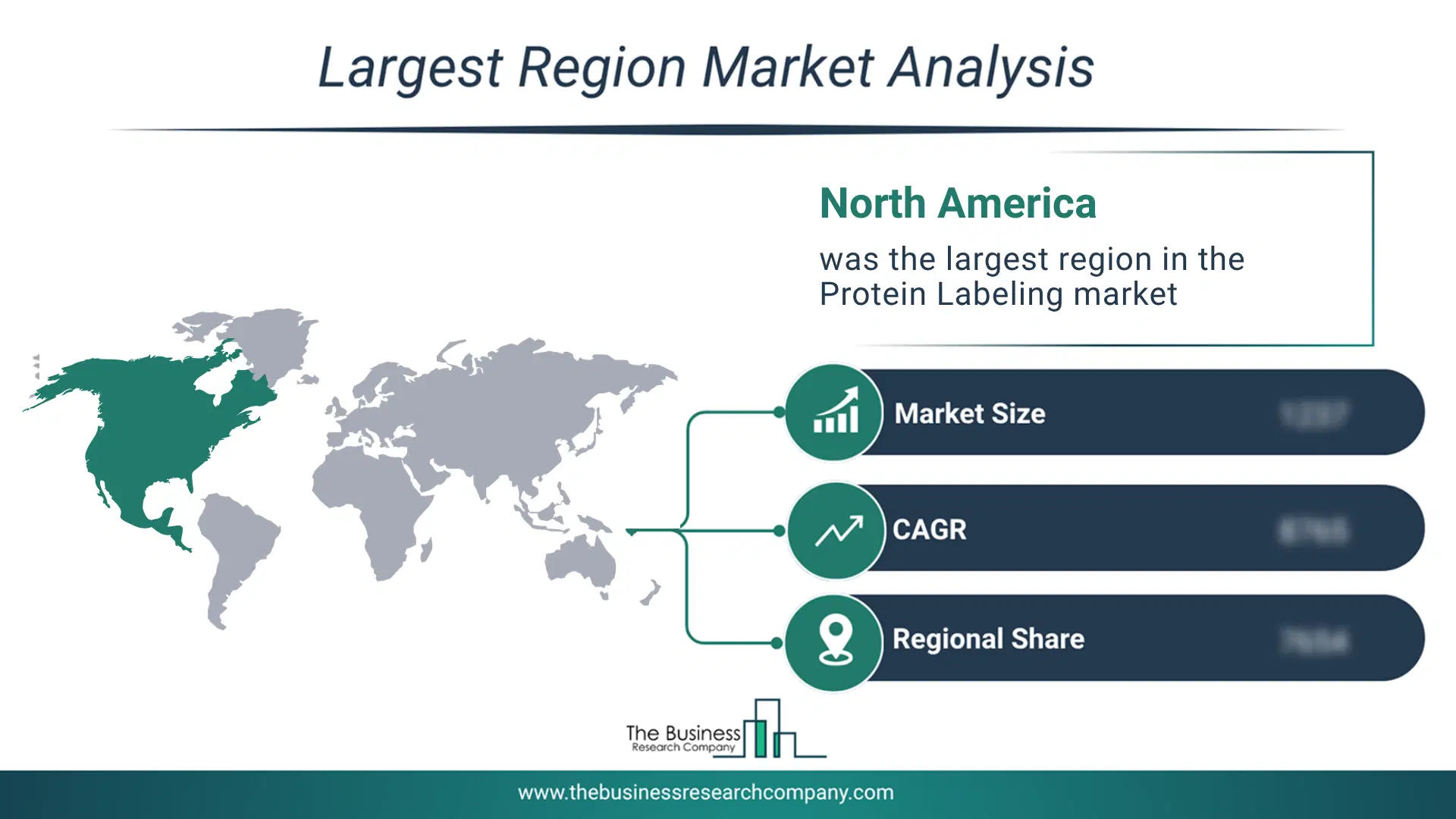
Regional Insights
North America was the largest region in the protein labeling market in 2025. The regions covered in this market report are Asia-Pacific, South East Asia, Western Europe, Eastern Europe, North America, South America, Middle East, Africa. The countries covered in this market report are Australia, Brazil, China, France, Germany, India, Indonesia, Japan, Taiwan, Russia, South Korea, UK, USA, Canada, Italy, Spain.What Defines the Protein Labeling Market?
The protein labeling market includes revenues earned by entities by detecting or purifying the labeled protein and its binding partners. The market value includes the value of related goods sold by the service provider or included within the service offering. Only goods and services traded between entities or sold to end consumers are included.How is Market Value Defined and Measured?
The market value is defined as the revenues that enterprises gain from the sale of goods and/or services within the specified market and geography through sales, grants, or donations in terms of the currency (in USD unless otherwise specified). The revenues for a specified geography are consumption values that are revenues generated by organizations in the specified geography within the market, irrespective of where they are produced. It does not include revenues from resales along the supply chain, either further along the supply chain or as part of other products.
This chart presents market attractiveness based on a quantitative evaluation of growth, competition, strategic alignment, and risk, offering a clear view of opportunity areas for decision-making. This chart is for illustrative purposes; the full report contains the complete analysis.

This chart highlights the Total Addressable Market (TAM) by estimating the maximum revenue opportunity using an assumption-driven approach, supporting strategic planning and opportunity sizing across markets. The chart is illustrative; the full report provides a more comprehensive analysis.
What Key Data and Analysis Are Included in the Protein Labeling Market Report 2026?
The protein labeling market research report is one of a series of new reports from The Business Research Company that provides market statistics, including industry global market size, regional shares, competitors with the market share, detailed market segments, market trends and opportunities, and any further data you may need to thrive in the protein labeling industry. The market research report delivers a complete perspective of everything you need, with an in-depth analysis of the current and future state of the industry.Protein Labeling Market Report Forecast Analysis
| Report Attribute | Details |
|---|---|
| Market Size Value In 2026 | $3.13 billion |
| Revenue Forecast In 2030 | $4.89 billion |
| Growth Rate | CAGR of 10.1% from 2026 to 2030 |
| Base Year For Estimation | 2025 |
| Actual Estimates/Historical Data | 2020-2025 |
| Forecast Period | 2026 - 2030 |
| Market Representation | Revenue in USD Billion and CAGR from 2026 to 2030 |
| Segments Covered | Product, Labeling Method, Application |
| Regional Scope | Asia-Pacific, Western Europe, Eastern Europe, North America, South America, Middle East, Africa |
| Country Scope | The countries covered in the report are Australia, Brazil, China, France, Germany, India, Indonesia, Japan, Taiwan, Russia, South Korea, UK, USA, Canada, Italy, Spain. |
| Key Companies Profiled | Thermo Fisher Scientific Inc., Merck KGaA, PerkinElmer Inc., GE HealthCare Technologies Inc., F. Hoffmann-La Roche AG, Agilent Technologies Inc., BIO-RAD LABORATORIES, LI-COR Inc., Promega Corporation, Eurogentec S.A., Luminex Corporation, New England Biolabs Inc., Abcam plc., TriLink BioTechnologies LLC., Waters Corporation, AMETEK Inc., HORIBA Ltd., Spectris plc., METTLER TOLEDO International Inc., Shimadzu Corporation, Hitachi High-Tech Corporation. |
| Customization Scope | Request for Customization |
| Pricing And Purchase Options | Explore Purchase Options |