

Therapeutic Proteins Market Report 2026
Global Outlook – By Product Type (Insulin, Fusion Protein, Erythropoietin, Interferon, Human Growth Hormone, Follicle Stimulating Hormone), By Function (Enzymatic And Regulatory Activity, Special Targeting Activity, Vaccines), By Application (Metabolic Disorders, Immunologic Disorders, Hematological Disorders, Cancer, Hormonal Disorders, Genetic Disorders, Other Applications) – Market Size, Trends, Strategies, and Forecast to 2030
Therapeutic Proteins Market Overview
• Therapeutic Proteins market size has reached to $177.3 billion in 2025 • Expected to grow to $332.37 billion in 2030 at a compound annual growth rate (CAGR) of 13.5% • Growth Driver: Technological Advancements Fueling The Growth Of The Therapeutic Proteins Market • Market Trend: Expanding Production Capacities With Media Systems In The Therapeutic Protein Market • North America was the largest region in 2025.What Is Covered Under Therapeutic Proteins Market?
Therapeutic proteins refer to pharmaceuticals that are genetically modified versions of human proteins that are found naturally. These powerful, quick-acting medications were developed in a lab for pharmaceutical usage. Therapeutic proteins have altered how diseases are treated since they are very effective in vivo. The main types of products in therapeutic proteins market are insulin, fusion proteins, erythropoietin, interferon, human growth hormone, and follicle-stimulating hormone. Insulin is a peptide hormone produced by beta cells in the pancreatic cells that serves as the individual's primary anabolic hormone. It affects fat, carbohydrate, and protein metabolism by boosting glucose uptake from the blood into the fat, liver, and skeletal muscle cells. The different functions include enzymatic and regulatory activity, special targeting activity, vaccines, and protein diagnostics and are used in various applications such as metabolic disorders, immunologic disorders, hematological disorders, cancer, hormonal disorders, genetic disorders, and others.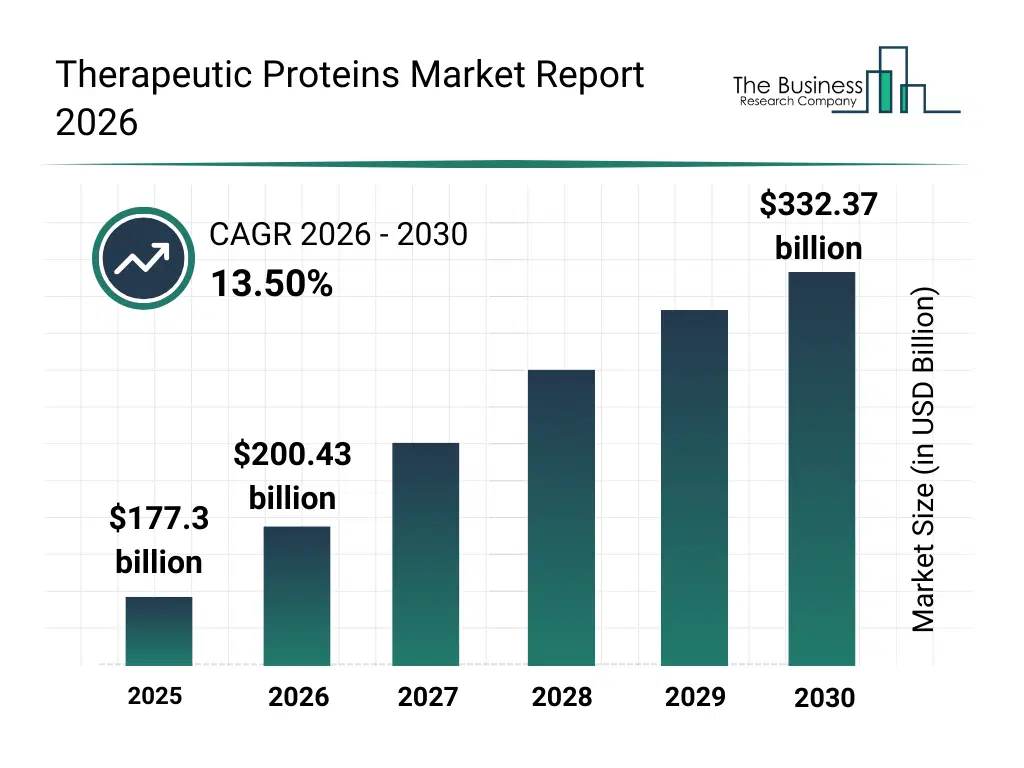
What Is The Therapeutic Proteins Market Size and Share 2026?
The therapeutic proteins market size has grown rapidly in recent years. It will grow from $177.3 billion in 2025 to $200.43 billion in 2026 at a compound annual growth rate (CAGR) of 13.0%. The growth in the historic period can be attributed to successful commercialization of insulin therapies, rising prevalence of chronic diseases, strong clinical efficacy of protein drugs, growth of biotechnology research, increased regulatory approvals.What Is The Therapeutic Proteins Market Growth Forecast?
The therapeutic proteins market size is expected to see rapid growth in the next few years. It will grow to $332.37 billion in 2030 at a compound annual growth rate (CAGR) of 13.5%. The growth in the forecast period can be attributed to expanding oncology and immunology pipelines, increasing biologics approvals, rising investment in biopharmaceutical R&D, growing adoption of biosimilars, improved manufacturing scalability. Major trends in the forecast period include expansion of recombinant protein therapies, rising demand for targeted biologics, growth of personalized protein medicines, increased adoption of long acting proteins, advancement in protein expression systems.
Global Therapeutic Proteins Market Segmentation
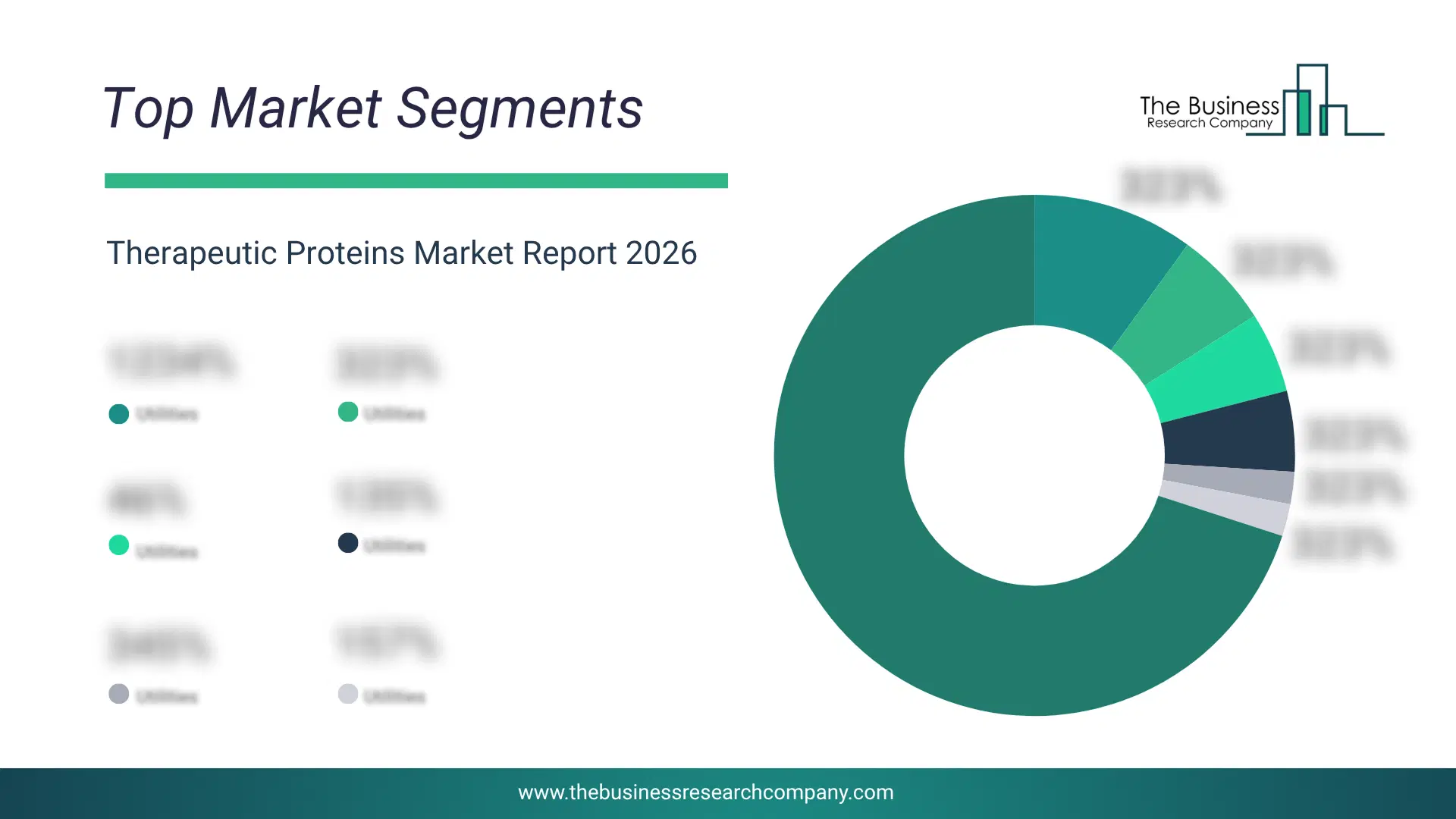
1) By Product Type: Insulin, Fusion Protein, Erythropoietin, Interferon, Human Growth Hormone, Follicle Stimulating Hormone 2) By Function: Enzymatic And Regulatory Activity, Special Targeting Activity, Vaccines 3) By Application: Metabolic Disorders, Immunologic Disorders, Hematological Disorders, Cancer, Hormonal Disorders, Genetic Disorders, Other Applications Subsegments: 1) By Insulin: Rapid-Acting Insulin, Short-Acting Insulin, Intermediate-Acting Insulin, Long-Acting Insulin 2) By Fusion Protein: Tnf-Alpha Inhibitors, Anti-Cd20 Fusion Proteins, Other Targeted Fusion Proteins 3) By Erythropoietin: Epoetin Alpha, Darbepoetin Alfa, Other Erythropoietin Variants 4) By Interferon: Interferon Alpha, Interferon Beta, Interferon Gamma 5) By Human Growth Hormone: Somatropin, Somatrem 6) By Follicle Stimulating Hormone: Follitropin Alpha, Follitropin BetaWhat Are The Drivers Of The Therapeutic Proteins Market?
The therapeutic proteins market is being driven by technological advancements in protein-based drug development. Therapeutic proteins cannot be synthesized chemically, they need to be produced by genetic engineering and recombinant DNA technology in living cells or organisms. Protein-engineering platform technologies such as glycoengineering, pegylation, Fc-fusion, albumin fusion, and albumin drug conjugation help to increase the production yield, product purity, circulating half-life, targeting, and functionality of therapeutic proteins drugs. Belimumab, ipilimumab, taliglucerase alfa, albiglutide, and recombinant human coagulation factor IX are some therapeutic proteins drugs developed using protein engineering technologies and approved by the FDA in the past five years. The increasing prevalence of chronic diseases, such as diabetes, is expected to propel the growth of the therapeutic protein market going forward. Chronic diseases refer to ailments that last for a year or longer, impede everyday activities, require continuing medical care, or both. Diabetes is a chronic health condition in which the body doesn’t make enough insulin or doesn’t use insulin properly. In diabetes, several protein therapeutics, such as insulin and GLP-1 receptor agonists, are used to regulate blood sugar levels and manage the disease. They stimulate the release of insulin in response to elevated blood glucose levels and also reduce the production of glucagon, another hormone that raises blood sugar. For instance, in May 2024, according to the British Diabetic Association (Diabetes UK), a UK-based patient, healthcare professional and research charity, around 4.4 million people in the UK are living with a diabetes diagnosis as of 2022-23. Among these cases, approximately 8% have type 1 diabetes, while type 2 diabetes accounts for about 90%. The remaining 2% includes other, less common types of diabetes. Therefore, the increasing prevalence of chronic diseases, such as diabetes, is driving the growth of the therapeutic protein industry.Key Players In The Global Therapeutic Proteins Market
Major companies operating in the therapeutic proteins market are Pfizer Inc., Johnson & Johnson Services Inc., F. Hoffmann-La Roche Ltd., Merck & Co. Inc., AbbVie Inc., Novartis International AG, Sanofi S.A, Bristol Myers Squibb Co., AstraZeneca plc, Abbott Laboratories, GlaxoSmithKline plc, Eli Lilly and Company, Boehringer Ingelheim International GmbH, Amgen Inc., Novo Nordisk A/S, Baxter International Inc., Teva Pharmaceutical Industries Ltd., CSL Behring LLC, Chugai Pharmaceutical Co. Ltd., Biogen Inc., Kyowa Kirin Co. Ltd., Oramed Pharmaceuticals Inc., Sandoz International GmbH, Hualan Biological Engineering Inc., Genentech Inc., ProBiogen AG, Diasome Pharmaceuticals Inc., Generex Biotechnology Corp., GeneScience Pharmaceuticals Co. Ltd.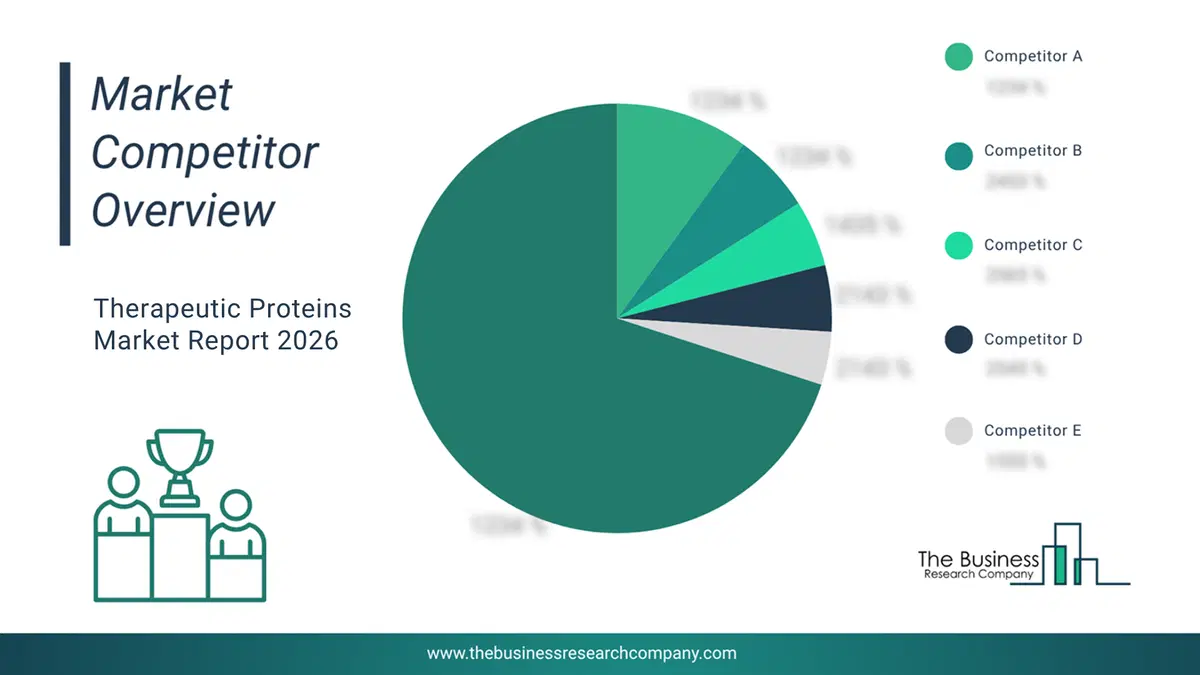
This chart is for illustrative purposes; the full report includes a detailed competitor analysis and comprehensive overview of the top 10 companies in the market.
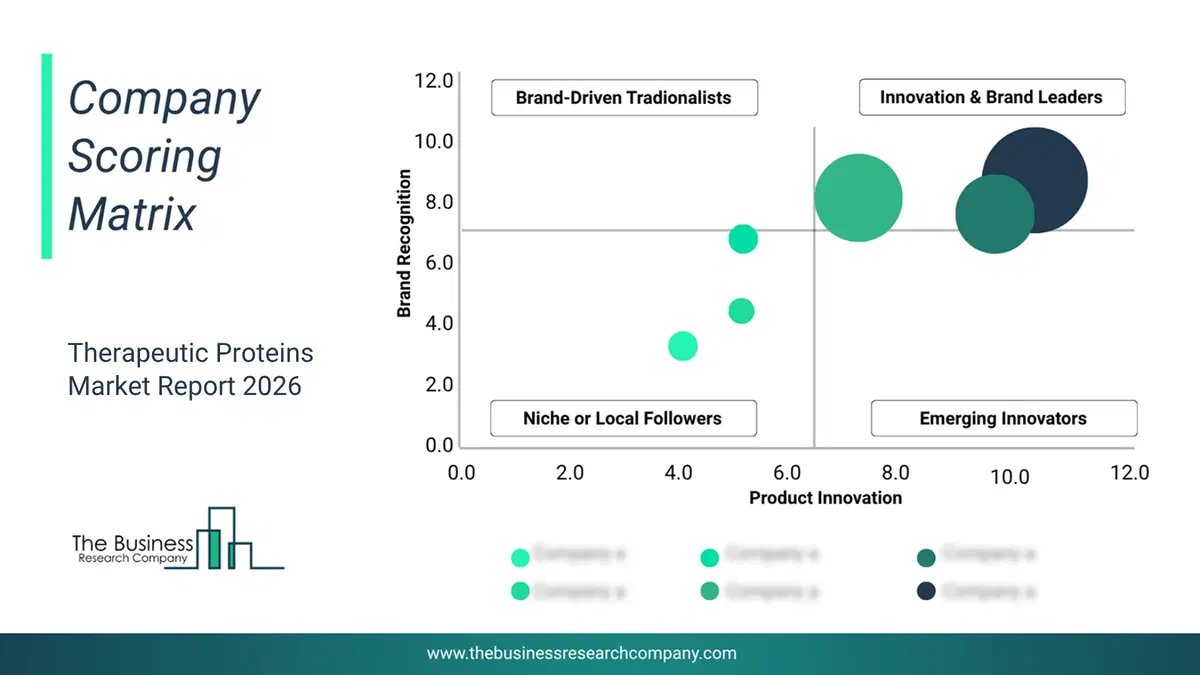
This chart maps companies by product innovation and brand strength, with bubble size indicating relative revenue, helping identify market leaders, challengers, and niche players. This is an illustrative chart; the full report provides a complete and accurate competitive analysis.
Global Therapeutic Proteins Market Trends and Insights
Major companies operating in the therapeutic protein market are focused on introducing media systems to meet growing demand for therapeutic proteins and gain a competitive edge in the market. The media system for therapeutic proteins is a production system designed to optimize the production of therapeutic monoclonal antibodies. For instance, in July 2023, Lonza Group AG, a Switzerland-based pharmaceutical manufacturing company, launched the TheraPRO CHO (Chinese Hamster Ovary) Media System, a new cell culture platform to improve productivity and quality in therapeutic protein manufacture. The two-part, chemically specified production technique is simple to use and makes media preparation easier. It has full scalability and is supported by technical professionals with in-depth troubleshooting knowledge.What Are Latest Mergers And Acquisitions In The Therapeutic Proteins Market?
In March 2024, Merck & Co. Inc., a US-based pharmaceutical company, acquired Harpoon Therapeutics for a deal of $680 million. The acquisition expands the oncology pipeline by adding a range of innovative T-cell engagers, including HPN328 (MK-6070). This investigational therapy targets delta-like ligand 3 (DLL3) to enhance T-cell engagement against cancer. Harpoon Therapeutics is a US-based provider of therapeutic proteins.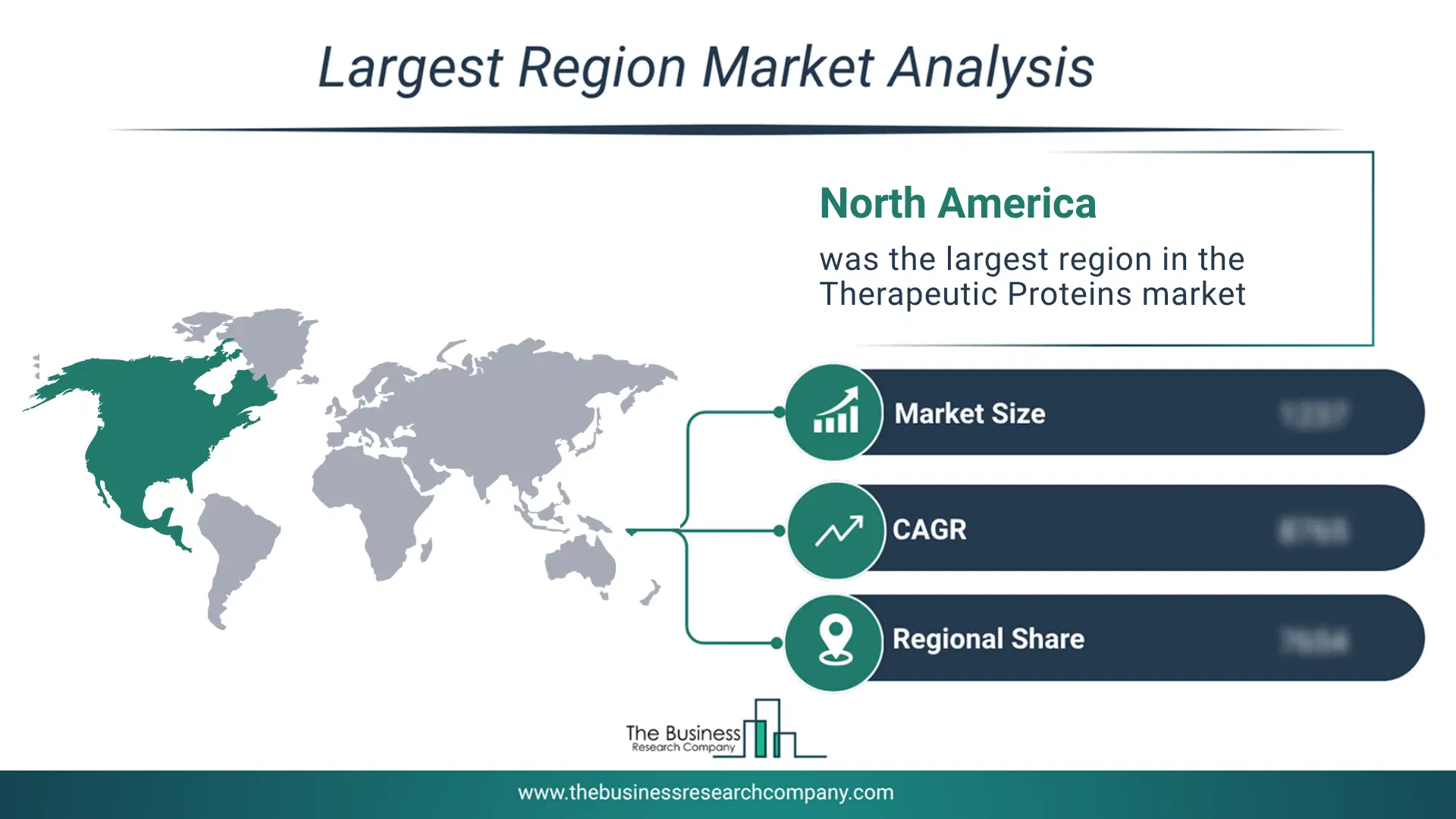
Regional Insights
North America was the largest region in the therapeutic proteins market in 2025. The regions covered in this market report are Asia-Pacific, South East Asia, Western Europe, Eastern Europe, North America, South America, Middle East, Africa. The countries covered in this market report are Australia, Brazil, China, France, Germany, India, Indonesia, Japan, Taiwan, Russia, South Korea, UK, USA, Canada, Italy, Spain.What Defines the Therapeutic Proteins Market?
The therapeutic proteins market consists of sales of antibody-based drugs, FC fusion proteins, and anticoagulants. Values in this market are ""factory gate values,"" that is, the value of goods sold by the manufacturers or creators of the goods, whether to other entities (including downstream manufacturers, wholesalers, distributors, and retailers) or directly to end customers. The value of goods in this market includes related services sold by the creators of the goods.How is Market Value Defined and Measured?
The market value is defined as the revenues that enterprises gain from the sale of goods and/or services within the specified market and geography through sales, grants, or donations in terms of the currency (in USD unless otherwise specified). The revenues for a specified geography are consumption values that are revenues generated by organizations in the specified geography within the market, irrespective of where they are produced. It does not include revenues from resales along the supply chain, either further along the supply chain or as part of other products.
This chart presents market attractiveness based on a quantitative evaluation of growth, competition, strategic alignment, and risk, offering a clear view of opportunity areas for decision-making. This chart is for illustrative purposes; the full report contains the complete analysis.

This chart highlights the Total Addressable Market (TAM) by estimating the maximum revenue opportunity using an assumption-driven approach, supporting strategic planning and opportunity sizing across markets. The chart is illustrative; the full report provides a more comprehensive analysis.
What Key Data and Analysis Are Included in the Therapeutic Proteins Market Report 2026?
The therapeutic proteins market research report is one of a series of new reports from The Business Research Company that provides market statistics, including industry global market size, regional shares, competitors with the market share, detailed market segments, market trends and opportunities, and any further data you may need to thrive in the therapeutic proteins industry. The market research report delivers a complete perspective of everything you need, with an in-depth analysis of the current and future state of the industry.Therapeutic Proteins Market Report Forecast Analysis
| Report Attribute | Details |
|---|---|
| Market Size Value In 2026 | $200.43 billion |
| Revenue Forecast In 2030 | $332.37 billion |
| Growth Rate | CAGR of 13.0% from 2026 to 2030 |
| Base Year For Estimation | 2025 |
| Actual Estimates/Historical Data | 2020-2025 |
| Forecast Period | 2026 - 2030 |
| Market Representation | Revenue in USD Billion and CAGR from 2026 to 2030 |
| Segments Covered | Product Type, Function, Application |
| Regional Scope | Asia-Pacific, Western Europe, Eastern Europe, North America, South America, Middle East, Africa |
| Country Scope | The countries covered in the report are Australia, Brazil, China, France, Germany, India, Indonesia, Japan, Taiwan, Russia, South Korea, UK, USA, Canada, Italy, Spain. |
| Key Companies Profiled | Pfizer Inc., Johnson & Johnson Services Inc., F. Hoffmann-La Roche Ltd., Merck & Co. Inc., AbbVie Inc., Novartis International AG, Sanofi S.A, Bristol Myers Squibb Co., AstraZeneca plc, Abbott Laboratories, GlaxoSmithKline plc, Eli Lilly and Company, Boehringer Ingelheim International GmbH, Amgen Inc., Novo Nordisk A/S, Baxter International Inc., Teva Pharmaceutical Industries Ltd., CSL Behring LLC, Chugai Pharmaceutical Co. Ltd., Biogen Inc., Kyowa Kirin Co. Ltd., Oramed Pharmaceuticals Inc., Sandoz International GmbH, Hualan Biological Engineering Inc., Genentech Inc., ProBiogen AG, Diasome Pharmaceuticals Inc., Generex Biotechnology Corp., GeneScience Pharmaceuticals Co. Ltd. |
| Customization Scope | Request for Customization |
| Pricing And Purchase Options | Explore Purchase Options |