
Ripening Culture Market Report 2026
Global Outlook – By Product Type (Mesophilic Cultures, Thermophilic Cultures, Probiotic Cultures), By Form (Liquid, Powder, Freeze-Dried), By Distribution Channel (Online Retail, Brick-And-Mortar Retail, Wholesale Distributors, Direct Sales), By Application (Cheese Production, Fermented Dairy Products, Meat Processing, Bakery Products), By End-User (Large-Scale Food Manufacturers, Artisanal Producers, Food Service Operators) – Market Size, Trends, Strategies, and Forecast to 2030
Ripening Culture Market Overview
• Ripening Culture market size has reached to $1.57 billion in 2025 • Expected to grow to $2.24 billion in 2030 at a compound annual growth rate (CAGR) of 7.3% • Growth Driver: The Increasing Demand For Fermented Dairy Products Is Driving The Growth Of The Market Due To Their Health Benefits And Role In Production • Market Trend: Accelerated Enzyme Release Solutions Revolutionize Cheese Ripening Efficiency And Flavor • North America was the largest region in 2025 and Asia-Pacific is the fastest growing region.What Is Covered Under Ripening Culture Market?
Ripening culture is a biological preparation that accelerates the natural ripening process of produce. It enhances the uniformity and speed of maturation, ensuring consistent quality and optimal texture. Ripening culture maintains the natural flavor and aroma while reducing post-harvest losses. Its use improves overall efficiency in managing the ripening cycle. The main product types of ripening cultures are mesophilic cultures, thermophilic cultures, and probiotic cultures. Mesophilic cultures are bacterial cultures that thrive at moderate temperatures and are primarily used to initiate fermentation in cheese and other dairy products. The ripening cultures are available in various forms, including liquid, powder, and freeze-dried, and they are distributed through online retail, brick-and-mortar retail, wholesale distributors, and direct sales channels. They are applied in cheese production, fermented dairy products, meat processing, and bakery products, and utilized by various end-users, including large-scale food manufacturers, artisanal producers, and food service operators.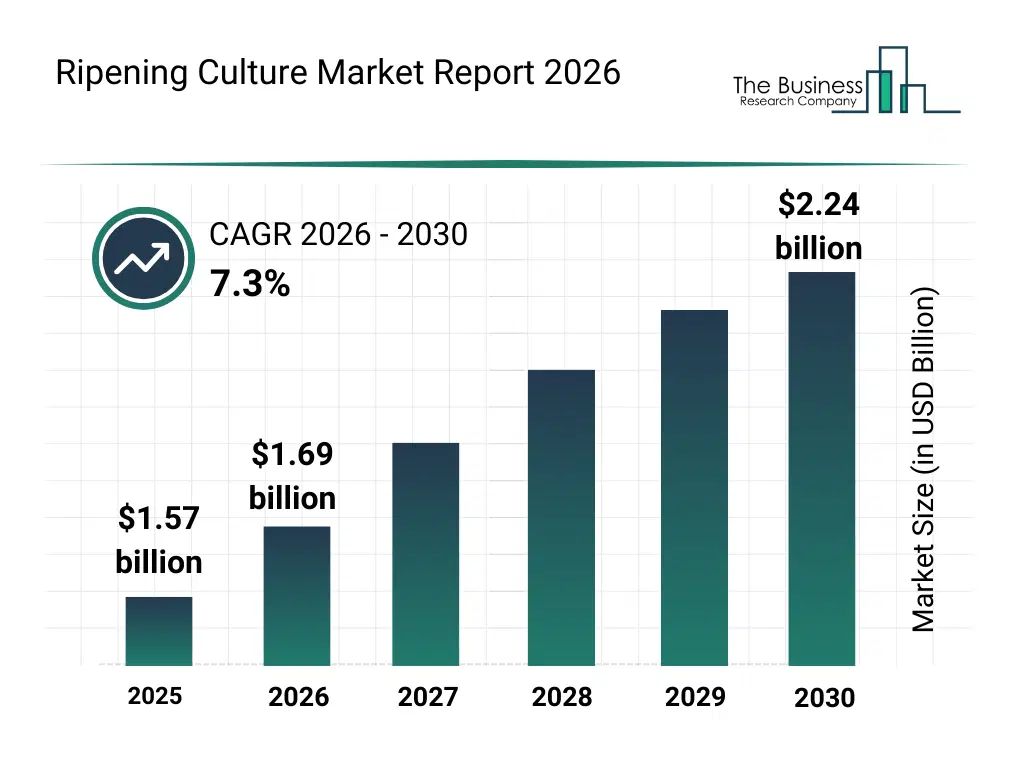
What Is The Ripening Culture Market Size and Share 2026?
The ripening culture market size has grown strongly in recent years. It will grow from $1.57 billion in 2025 to $1.69 billion in 2026 at a compound annual growth rate (CAGR) of 7.6%. The growth in the historic period can be attributed to expansion of global fruit and vegetable trade, increased use of commercial ripening chambers, rising demand for consistent produce quality, growth of organized food retail, adoption of biological cultures in food processing.What Is The Ripening Culture Market Growth Forecast?
The ripening culture market size is expected to see strong growth in the next few years. It will grow to $2.24 billion in 2030 at a compound annual growth rate (CAGR) of 7.3%. The growth in the forecast period can be attributed to rising focus on reducing food waste, increasing demand for residue-free ripening methods, expansion of cold chain infrastructure, growing adoption in emerging produce markets, advancements in biological culture formulations. Major trends in the forecast period include increasing adoption of controlled ripening solutions, growing demand for uniform produce quality, expansion of natural and clean-label ripening agents, enhanced focus on post-harvest loss reduction, integration of precision ripening protocols.
Global Ripening Culture Market Segmentation
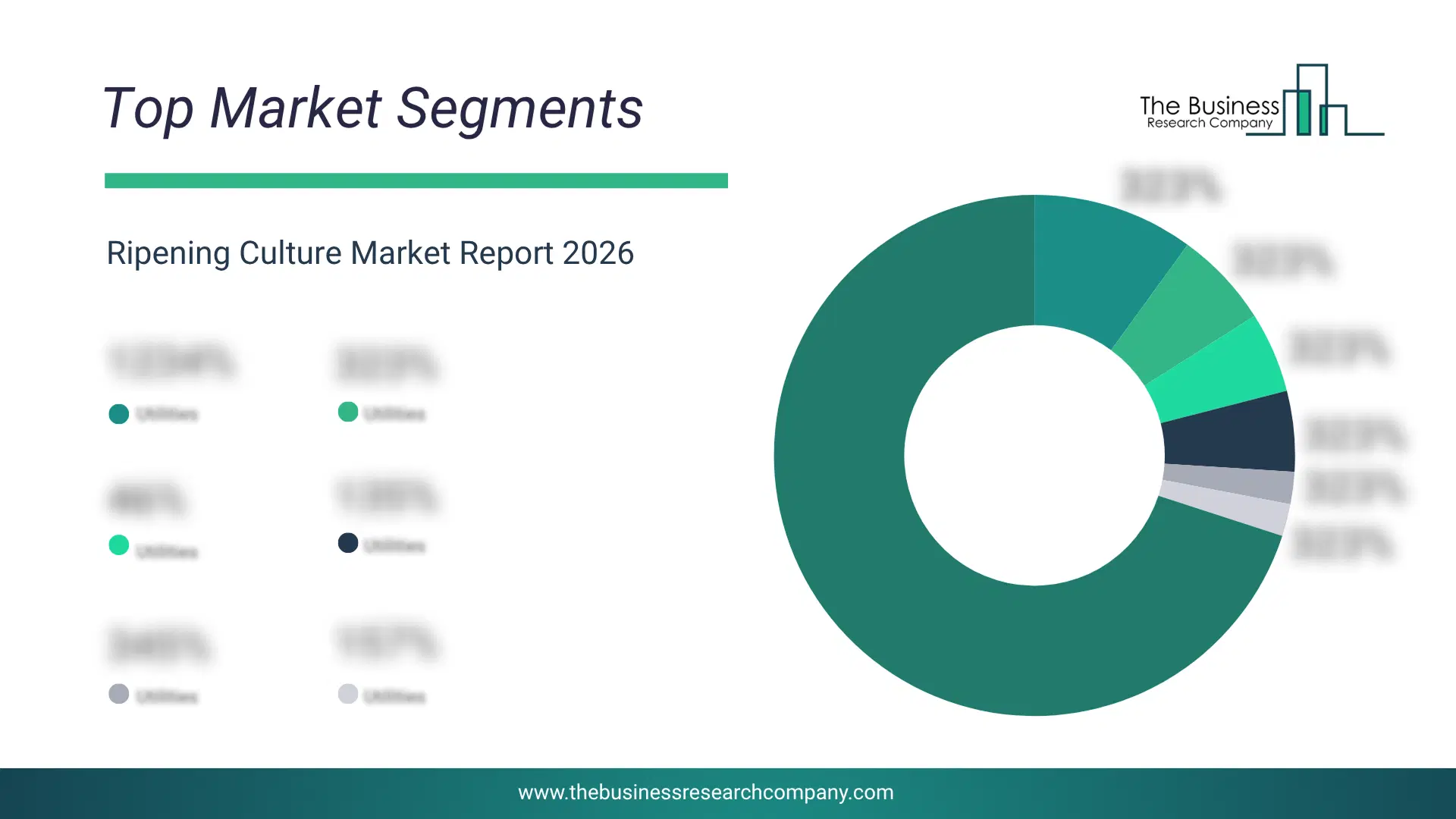
1) By Product Type: Mesophilic Cultures, Thermophilic Cultures, Probiotic Cultures 2) By Form: Liquid, Powder, Freeze-Dried 3) By Distribution Channel: Online Retail, Brick-And-Mortar Retail, Wholesale Distributors, Direct Sales 4) By Application: Cheese Production, Fermented Dairy Products, Meat Processing, Bakery Products 5) By End-User: Large-Scale Food Manufacturers, Artisanal Producers, Food Service Operators Subsegments: 1) By Mesophilic Cultures: Lactococcus Lactis Subsp. Lactis, Lactococcus Lactis Subsp. Cremoris, Leuconostoc Mesenteroides, Lactococcus Lactis Subsp. Lactis And Cremoris Blend 2) By Thermophilic Cultures: Streptococcus Thermophilus, Lactobacillus Delbrueckii Subsp. Bulgaricus, Lactobacillus Helveticus, Streptococcus Thermophilus And Lactobacillus Bulgaricus Blend 3) By Probiotic Cultures: Lactobacillus Acidophilus, Bifidobacterium Bifidum, Lactobacillus Casei, Lactobacillus Rhamnosus, Bifidobacterium LactisWhat Is The Driver Of The Ripening Culture Market?
The increasing demand for fermented dairy products is expected to propel the growth of the ripening culture market going forward. Fermented dairy products are dairy items produced through bacterial fermentation processes that transform lactose into lactic acid, creating products such as yogurt, cheese, and kefir. The growing demand for fermented dairy products is primarily driven by increasing consumer awareness of their health benefits, particularly their probiotic content that supports digestive health and immune function. The rising demand for fermented dairy products boosts the need for ripening cultures, as these specialized bacterial strains are essential for controlling fermentation, developing desired flavors and textures, and ensuring consistent quality in production. For instance, in September 2025, according to the United States Department of Agriculture, a US-based federal department, in 2023, American-type cheese production reached 5,749.4 million pounds, up from 5,672 million pounds in 2022. Therefore, increasing demand for fermented dairy products is driving the growth of the ripening culture industry.Key Players In The Global Ripening Culture Market
Major companies operating in the ripening culture market are DSM‑Firmenich AG, DuPont de Nemours Inc., Kerry Group plc, Lesaffre Group, Novozymes AS, Lallemand Inc., Arla Foods Ingredients Group P/S, Proxis Développement, Daiwa Fine Chemicals Co Ltd, Procudan, Bioprox, Sacco System Srl, Optiferm GmbH, Dairy Connection Inc, Biochem Srl, Dairy & Food Srl, New England Cheesemaking Supply Company, BIOVITEC, GALACTIC SA, Igea Cultures Srl, JKM Foods, Chr. Hansen A/S, CSK Food Enrichment B.V., Biena Inc., Vivolac Cultures Corporation, Dalton Biotecnologie Srl, Lactina Ltd., Lb Bulgaricum, BDF Ingredients, Angel Yeast, BioCare Copenhagen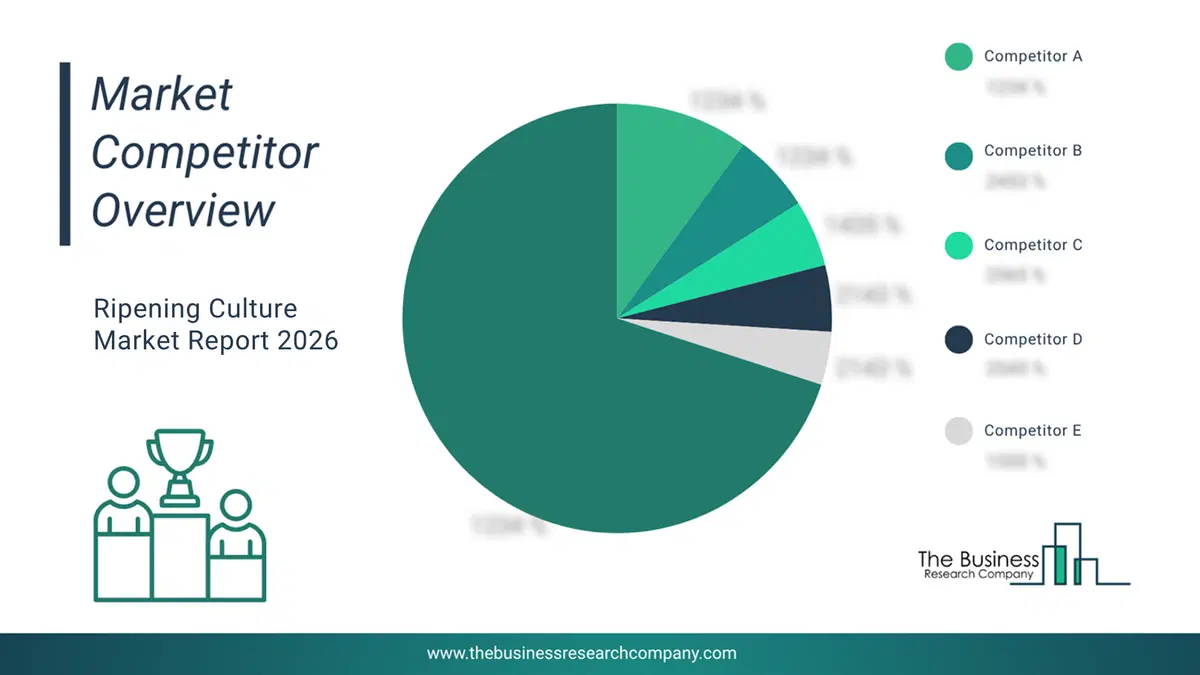
This chart is for illustrative purposes; the full report includes a detailed competitor analysis and comprehensive overview of the top 10 companies in the market.
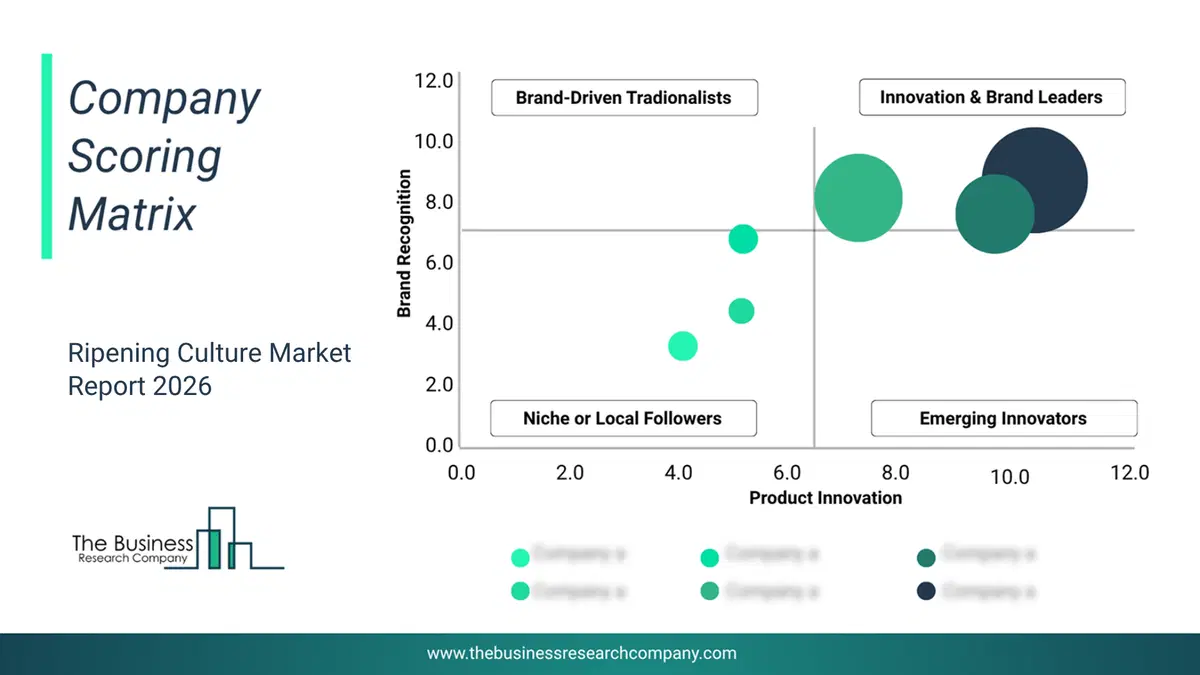
This chart maps companies by product innovation and brand strength, with bubble size indicating relative revenue, helping identify market leaders, challengers, and niche players. This is an illustrative chart; the full report provides a complete and accurate competitive analysis.
Global Ripening Culture Market Trends and Insights
Major companies operating in the ripening culture market are focusing on developing innovative, accelerated enzyme release solutions to enhance production efficiency and product quality. Accelerated enzyme release solutions involve lactic acid bacteria that release all ripening enzymes at once instead of gradually, significantly reducing ripening time and improving taste. For instance, in August 2023, researchers from DTU National Food Institute, a Denmark-based food research institute, developed a new cheese culture capable of halving the ripening period of Danbo cheese from approximately 25 to 13 weeks. The launched product features an accelerated enzyme release solution that delivers all ripening enzymes at once, ensuring faster maturation and richer flavor. It was successfully tested on mild Gouda and aged Danbo cheeses at a Danish dairy, demonstrating quicker ripening and enhanced taste. The culture produces lactic acid and ripening enzymes efficiently and can be used like any traditional cheese culture without additional equipment. The method is entirely natural, offering a sustainable approach to cheese production while delivering financial savings and quicker market readiness.What Are Latest Mergers And Acquisitions In The Ripening Culture Market?
In December 2024, Lallemand Specialty Cultures (LSC), a France-based company that offers ripening cultures for dairy, meat, and plant-based applications, partnered with Bel Group to accelerate the development of fermented and ripened plant-based cheese alternatives through the Cocagne project. Through this partnership, Lallemand Specialty Cultures aims to leverage microbial fermentation and ripening expertise to create high-quality, sustainable plant-based cheese alternatives with improved flavor, texture, and nutritional value. Bel Group is a France-based food company known for producing and marketing branded cheese and healthy snacking products.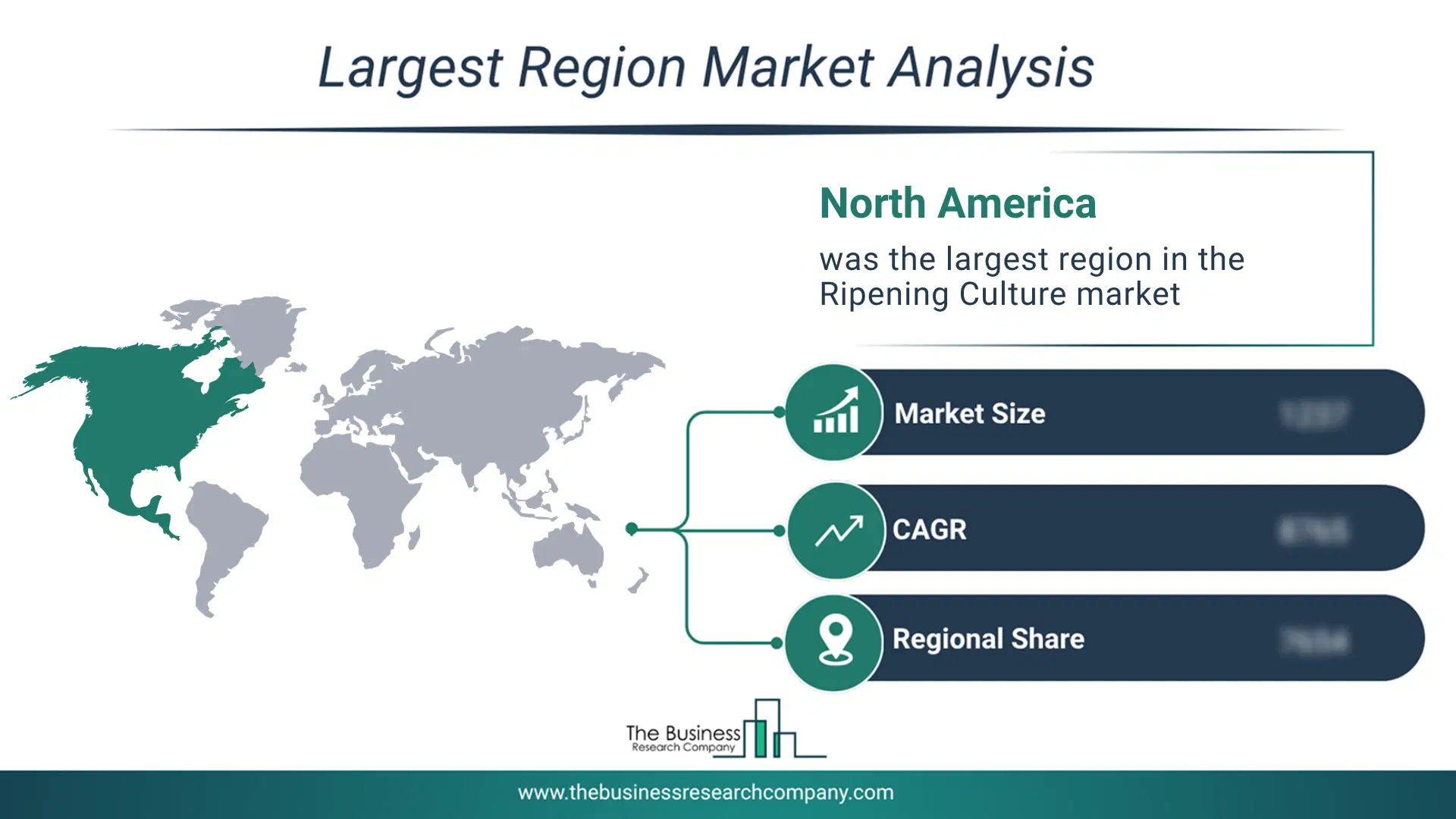
Regional Outlook
North America was the largest region in the ripening cultures market in 2025. Asia-Pacific is expected to be the fastest-growing region in the forecast period. The regions covered in this market report are Asia-Pacific, South East Asia, Western Europe, Eastern Europe, North America, South America, Middle East and Africa. The countries covered in this market report are Australia, Brazil, China, France, Germany, India, Indonesia, Japan, Taiwan, Russia, South Korea, UK, USA, Italy, Spain, CanadaWhat Defines the Ripening Culture Market?
The ripening culture market consists of sales of cheese ripening cultures, meat ripening cultures, mold cultures, and bacterial culture blends. Values in this market are ‘factory gate’ values, that is, the value of goods sold by the manufacturers or creators of the goods, whether to other entities (including downstream manufacturers, wholesalers, distributors, and retailers) or directly to end customers. The value of goods in this market includes related services sold by the creators of the goods.How is Market Value Defined and Measured?
The market value is defined as the revenues that enterprises gain from the sale of goods and/or services within the specified market and geography through sales, grants, or donations in terms of the currency (in USD unless otherwise specified). The revenues for a specified geography are consumption values that are revenues generated by organizations in the specified geography within the market, irrespective of where they are produced. It does not include revenues from resales along the supply chain, either further along the supply chain or as part of other products.
This chart presents market attractiveness based on a quantitative evaluation of growth, competition, strategic alignment, and risk, offering a clear view of opportunity areas for decision-making. This chart is for illustrative purposes; the full report contains the complete analysis.

This chart highlights the Total Addressable Market (TAM) by estimating the maximum revenue opportunity using an assumption-driven approach, supporting strategic planning and opportunity sizing across markets. The chart is illustrative; the full report provides a more comprehensive analysis.
What Key Data and Analysis Are Included in the Ripening Culture Market Report 2026?
The ripening culture market research report is one of a series of new reports from The Business Research Company that provides market statistics, including industry global market size, regional shares, competitors with the market share, detailed market segments, market trends and opportunities, and any further data you may need to thrive in the ripening culture industry. The market research report delivers a complete perspective of everything you need, with an in-depth analysis of the current and future state of the industry.Ripening Culture Market Report Forecast Analysis
| Report Attribute | Details |
|---|---|
| Market Size Value In 2026 | $1.69 billion |
| Revenue Forecast In 2030 | $2.24 billion |
| Growth Rate | CAGR of 7.6% from 2026 to 2030 |
| Base Year For Estimation | 2025 |
| Actual Estimates/Historical Data | 2020-2025 |
| Forecast Period | 2026 - 2030 |
| Market Representation | Revenue in USD Billion and CAGR from 2026 to 2030 |
| Segments Covered | Product Type, Form, Distribution Channel, Application, End-User |
| Regional Scope | Asia-Pacific, Western Europe, Eastern Europe, North America, South America, Middle East, Africa |
| Country Scope | The countries covered in the report are Australia, Brazil, China, France, Germany, India, Indonesia, Japan, Taiwan, Russia, South Korea, UK, USA, Canada, Italy, Spain. |
| Key Companies Profiled | DSM‑Firmenich AG, DuPont de Nemours Inc., Kerry Group plc, Lesaffre Group, Novozymes AS, Lallemand Inc., Arla Foods Ingredients Group P/S, Proxis Développement, Daiwa Fine Chemicals Co Ltd, Procudan, Bioprox, Sacco System Srl, Optiferm GmbH, Dairy Connection Inc, Biochem Srl, Dairy & Food Srl, New England Cheesemaking Supply Company, BIOVITEC, GALACTIC SA, Igea Cultures Srl, JKM Foods, Chr. Hansen A/S, CSK Food Enrichment B.V., Biena Inc., Vivolac Cultures Corporation, Dalton Biotecnologie Srl, Lactina Ltd., Lb Bulgaricum, BDF Ingredients, Angel Yeast, BioCare Copenhagen |
| Customization Scope | Request for Customization |
| Pricing And Purchase Options | Explore Purchase Options |