
Smart Agriculture Market Report 2026
Global Outlook – By Offering (Hardware, Software, Services), By Farm Size (Small, Medium, Large), By Application (Precision Farming, Livestock Monitoring, Precision Aquaculture, Precision Forestry, Smart Greenhouse, Other Applications) – Market Size, Trends, Strategies, and Forecast to 2035
Smart Agriculture Market Overview
• Smart Agriculture market size has reached to $18.75 billion in 2025 • Expected to grow to $31.9 billion in 2030 at a compound annual growth rate (CAGR) of 11.3% • Growth Driver: Population Growth Pressures Drive Smart Agriculture Market Growth • Market Trend: Artificial Intelligence-Powered Platform Revolutionizes Global Agricultural Decision-Making • North America was the largest region in 2025 and Asia-Pacific is the fastest growing region.Market Gains By 2030 – Top Opportunities By Segment
Market Gain identifies the most promising market opportunities by highlighting the segments or products expected to generate the highest incremental revenue growth over the next five years.
What Is Covered Under Smart Agriculture Market?
Smart agriculture is a modern method of doing agricultural activities that uses the Internet of Things (IoT), robots, artificial intelligence, sensors, and other cutting-edge technologies to boost farm output. It is a creative strategy for minimizing human work and maximizing the utilization of resources. The main components of smart agriculture are hardware, software, and services. Hardware is the collection of tangible parts that are combined or added to electronic devices like computers, cell phones, e-readers, and other gadgets. The various farms of different sizes, such as small, medium, and large, use smart agriculture for different applications such as precision farming, livestock monitoring, precision aquaculture, precision forestry, smart greenhouses, and others.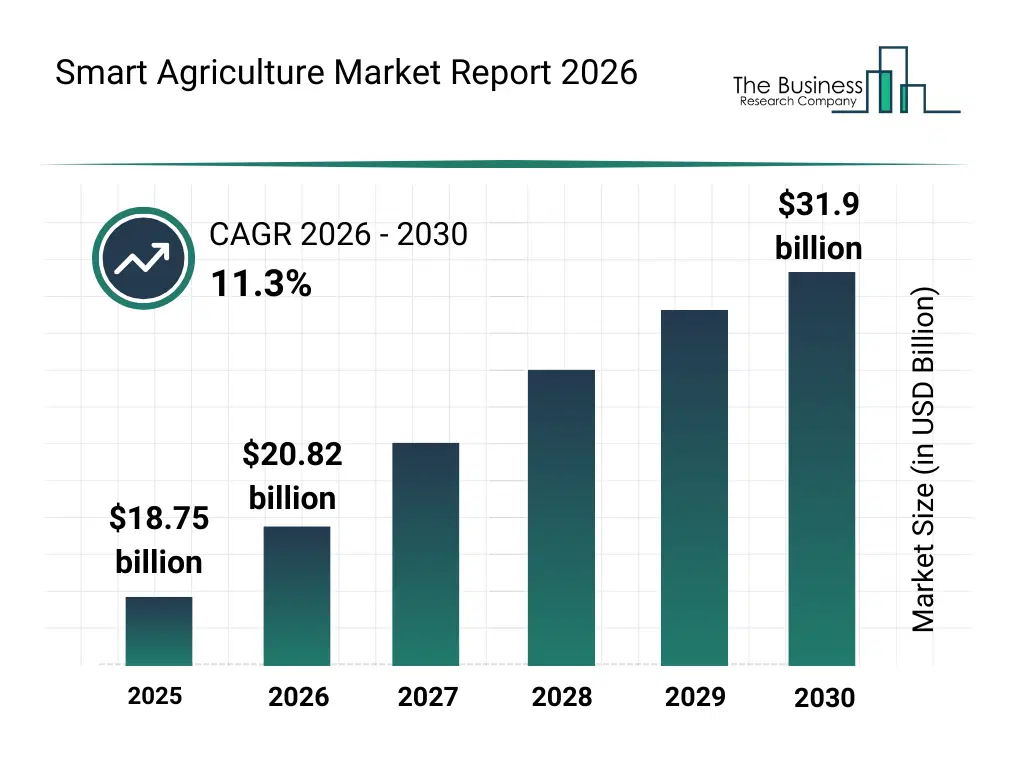
What Is The Smart Agriculture Market Size and Share 2026?
The smart agriculture market size has grown rapidly in recent years. It will grow from $18.75 billion in 2025 to $20.82 billion in 2026 at a compound annual growth rate (CAGR) of 11.0%. The growth in the historic period can be attributed to traditional reliance on manual farming methods, limited access to real-time farm data, early adoption of basic mechanization, rising pressure to increase crop yields, growing need for structured farm management.What Is The Smart Agriculture Market Growth Forecast?
The smart agriculture market size is expected to see rapid growth in the next few years. It will grow to $31.9 billion in 2030 at a compound annual growth rate (CAGR) of 11.3%. The growth in the forecast period can be attributed to increasing demand for precision agriculture tools, rapid expansion of agri-tech investments, growing need for climate-resilient farming, rising adoption of autonomous agricultural systems, expanding use of data-driven decision-making in agriculture. Major trends in the forecast period include rising adoption of sensor-based monitoring, increased use of automated farm machinery, growing shift toward resource-efficient farming, expansion of integrated farm management systems, heightened demand for real-time data insights.
Global Smart Agriculture Market Segmentation
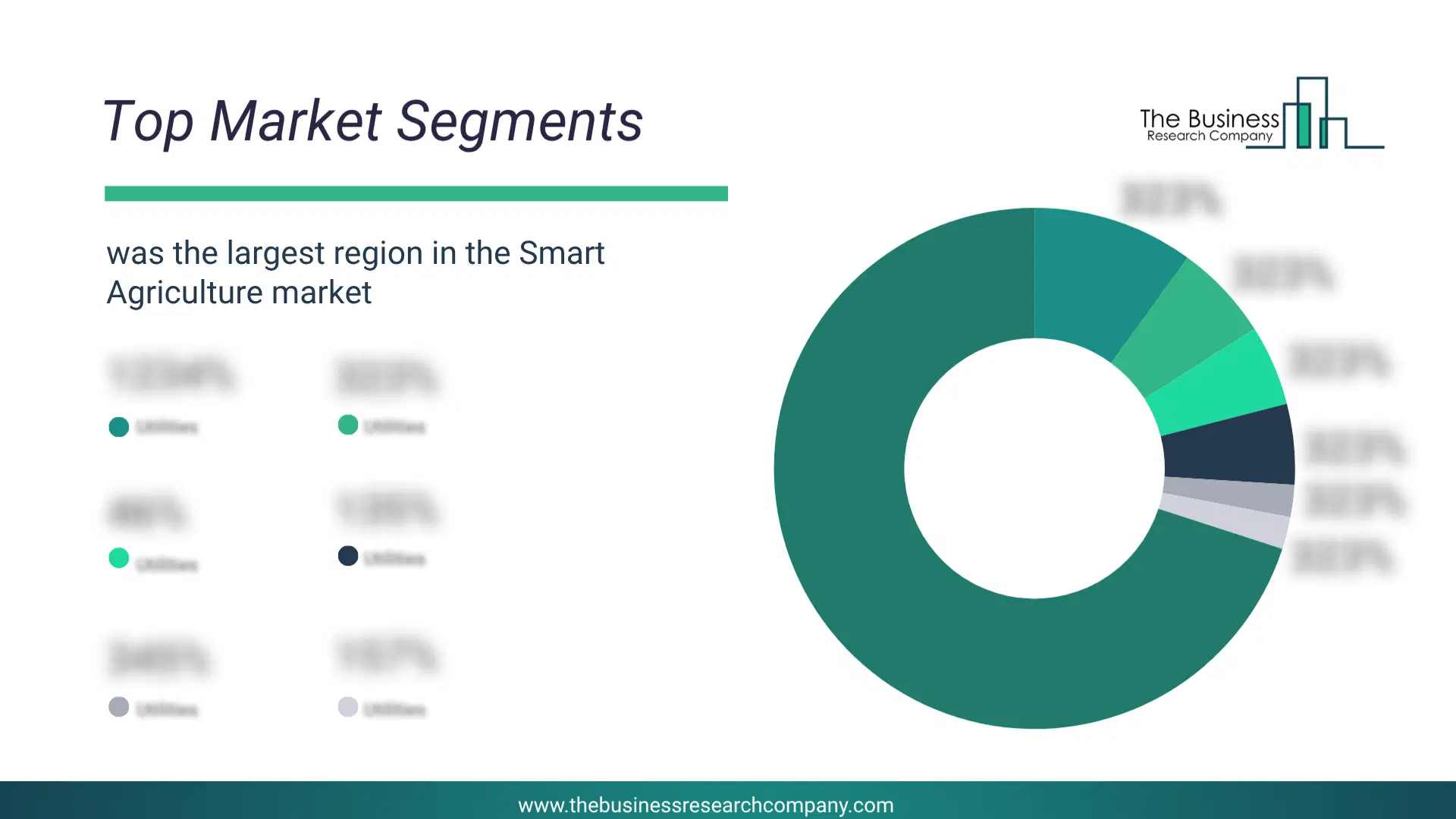
1) By Offering: Hardware, Software, Services 2) By Farm Size: Small, Medium, Large 3) By Application: Precision Farming, Livestock Monitoring, Precision Aquaculture, Precision Forestry, Smart Greenhouse, Other Applications Subsegments: 1) By Hardware: Sensors, Drones And Aerial Imaging, Automated Machinery, IoT Devices 2) By Software: Farm Management Software, Data Analytics Platforms, Precision Agriculture Software, Supply Chain Management Solutions 3) By Services: Consulting Services, Managed Services, Technical Support And Maintenance, Training And Education The top segments in the smart agriculture market will be: • Hardware will reach $10351.5 Million by 2025. • Precision Farming will reach $8323.3 Million by 2025. • Medium will reach $7094.5 Million by 2025. • Large will reach $6845.2 Million by 2025. • Small will reach $4741.8 Million by 2025.What Is Driver Of The Smart Agriculture Market?
Rising pressure on the food supply system due to the rapidly growing population is expected to propel the smart agriculture market going forward. Food supply systems are made up of all the individuals and interactions that take place along the food value chain, from the input supply to the production of crops, livestock, fish, and other agricultural products to the production, processing, wholesale, retail, and food preparation for consumption and disposal. By enabling an effective and equitable flow of information and thereby promoting better decision-making, smart farming provides a crucial link between all participants in the food supply chain. For instance, in April 2024, according to the Global Report on Food Crises (GRFC) 2024, released by the World Food Programme, an Italy-based non-profit organization, the challenge of ending hunger by 2030 is immense. In 2023, approximately 282 million people, or 21.5% of the population analyzed across 59 countries and territories, experienced severe food insecurity, needing urgent assistance for food and livelihoods. Therefore, rising pressure on the food supply system owing to the rapidly growing population is driving the growth of the smart agriculture industry.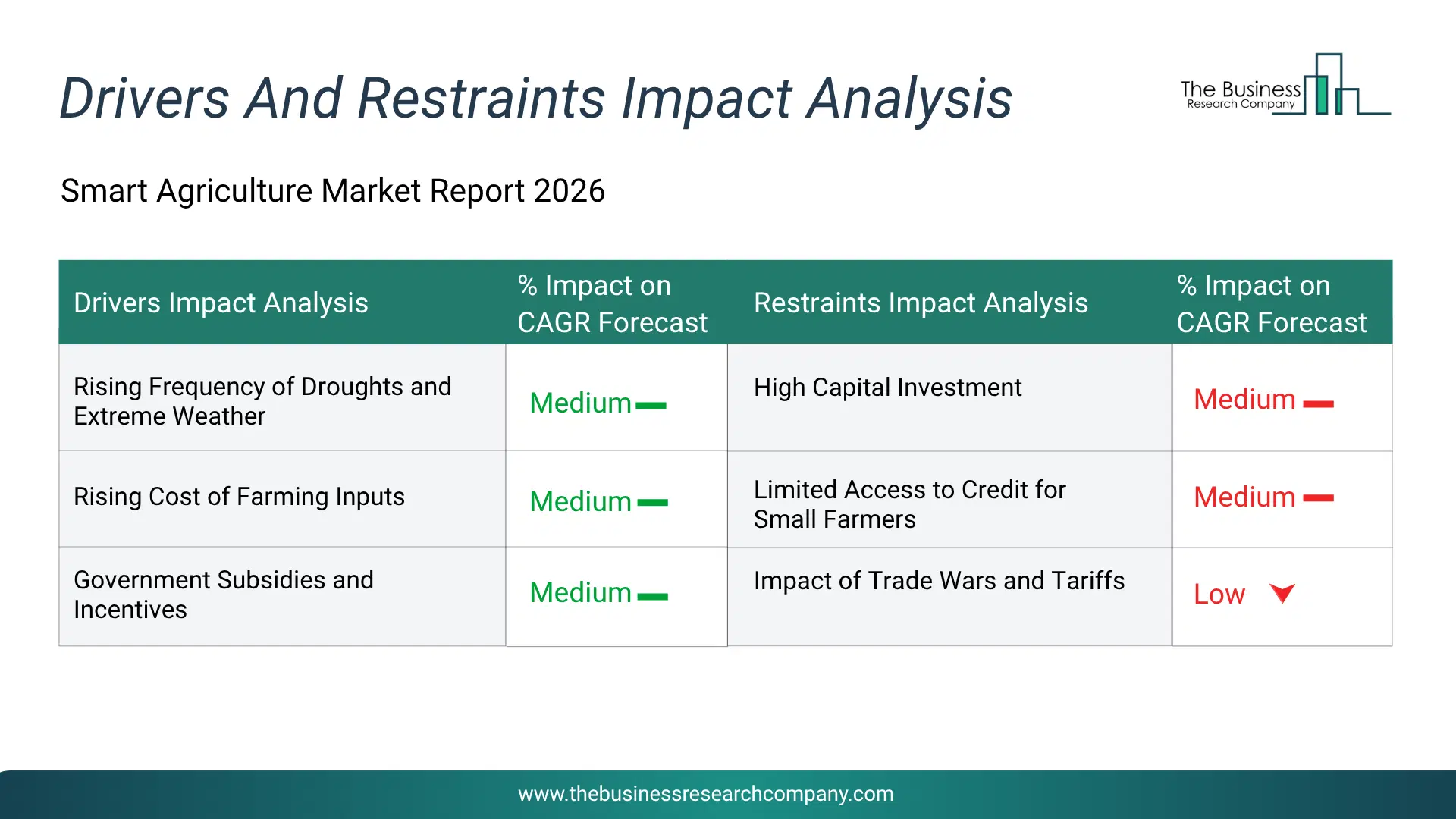
Infographic Chart Showing Key Market Drivers Analysis And Restraints For Smart Agriculture Market
The chart presents an impact analysis of key drivers and restraints, quantifying their relative influence on the market's growth rate and helping assess the balance between growth enablers and limiting factors. This chart offers a high-level perspective; the full report contains more detailed insights.
How Will The Drivers Impact Growth In The Global Smart Agriculture Market?
• Rising Frequency of Droughts and Extreme Weather (Medium) – The rising frequency of droughts and extreme weather will become a key driver of growth in the smart agriculture market by 2030. As climate change intensifies, agricultural systems are increasingly exposed to unpredictable weather patterns such as prolonged droughts, floods and heatwaves that disrupt crop yields and farming operations. The growing occurrence of extreme weather events is increasing the need for advanced monitoring, predictive analytics and adaptive farming techniques to manage risks and maintain productivity. The expansion of climate-related uncertainties increases the reliance on precision agriculture technologies and smart farming solutions, driving demand for efficient, data-driven agricultural systems. As a result, the rising frequency of droughts and extreme weather is anticipated to contributing to a 1.8% annual growth in the market. • Rising Cost of Farming Inputs (Medium) – The rising cost of farming inputs will emerge as a major factor driving the expansion of the smart agriculture market by 2030. As global supply chain disruptions and geopolitical tensions increase the prices of essential agricultural inputs such as fertilizers, fuel and chemicals, farmers are facing growing pressure to optimize costs and maintain productivity. The rising cost of inputs is encouraging the adoption of precision farming technologies and automated solutions that enable efficient resource utilization and reduce wastage. The expansion of input cost pressures increases the need for data-driven decision-making and smart resource management, driving demand for advanced smart agriculture systems. Consequently, the rising cost of farming inputs is projected to contributing to a 1.5% annual growth in the market. • Government Subsidies and Incentives (Medium) – The government subsidies and incentives will serve as a key growth catalyst for the smart agriculture market by 2030. As governments increasingly prioritize food security, sustainability and agricultural modernization, they are expanding financial support programs and policy incentives to encourage the adoption of advanced farming technologies. The growing availability of subsidies and funding is enabling farmers and agribusinesses to invest in precision agriculture tools, automation systems and digital farming solutions, increasing the adoption of smart agriculture practices. The expansion of government support and incentive programs increases investment in technology-driven farming systems, driving demand for efficient and innovative smart agriculture solutions. Therefore, this government subsidies and incentives is projected to supporting to a 1.0% annual growth in the market. • Growing Demand for Precision Agriculture (Low) – The growing demand for precision agriculture will become a significant driver contributing to the growth of the smart agriculture market by 2030. As agricultural systems increasingly focus on improving productivity, optimizing resource utilization and ensuring environmental sustainability, farmers are adopting precision agriculture technologies to enable data-driven and targeted farming practices. The growing adoption of advanced technologies such as artificial intelligence, sensors and digital monitoring systems is enhancing real-time decision-making and operational efficiency across farming activities. The expansion of precision agriculture practices increases the use of data and automation in agricultural operations, driving demand for advanced smart agriculture solutions. Consequently, the growing demand for precision agriculture is projected to contributing to a 0.5% annual growth in the market.How Will The Restraints Impact Growth In The Global Smart Agriculture Market?
• High Capital Investment (Medium) – High capital investment is expected to restrain market growth during the forecast period. It creates operational, financial, regulatory, or commercial challenges that can increase costs, delay projects, reduce investments, or discourage purchasing decisions depending on the market. These challenges can reduce product adoption, affect business confidence, and limit the ability of companies to expand efficiently across key regions. This can disrupt long-term growth strategies and reduce the ability of companies to capitalize on emerging market opportunities. • Limited Access to Credit for Small Farmers (Medium) – During the forecast period, limited access to credit for small farmers is likely to limit market expansion. It creates operational, financial, regulatory, or commercial challenges that can increase costs, delay projects, reduce investments, or discourage purchasing decisions depending on the market. These challenges can reduce product adoption, affect business confidence, and limit the ability of companies to expand efficiently across key regions. As a result, organizations may postpone purchasing decisions, limiting demand across both established and emerging markets. • Impact of Trade Wars and Tariffs (Medium) – The market is expected to face challenges due to impact of trade wars and tariffs over the forecast period. It creates operational, financial, regulatory, or commercial challenges that can increase costs, delay projects, reduce investments, or discourage purchasing decisions depending on the market. These challenges can reduce product adoption, affect business confidence, and limit the ability of companies to expand efficiently across key regions. This may reduce production efficiency, extend project timelines, and create challenges in meeting evolving customer requirements.Key Players In The Global Smart Agriculture Market
Major companies operating in the smart agriculture market are Deere & Company, AG Leader Technology Inc., Trimble Inc., Bayer Crop Science LP, Syngenta AG, Corteva Agriscience Inc., PrecisionHawk Inc., The Climate Corporation, Farmers Edge Inc., Taranis Inc., Raven Industries Inc., AeroFarms LLC, Granular Inc., AgriWebb Pty Ltd, Ecorobotix AG, CropX Inc., SmartFarm LLC, Indigo Ag Inc., Ceres Imaging Inc., Hexagon AB, FarmLogs Inc., Parrot Drones SAS, Vultus Inc., Prospera Technologies Inc., Fieldin Inc., Sentera Inc., Harvest CROO Robotics LLC, Blue River Technology Inc., AgroStar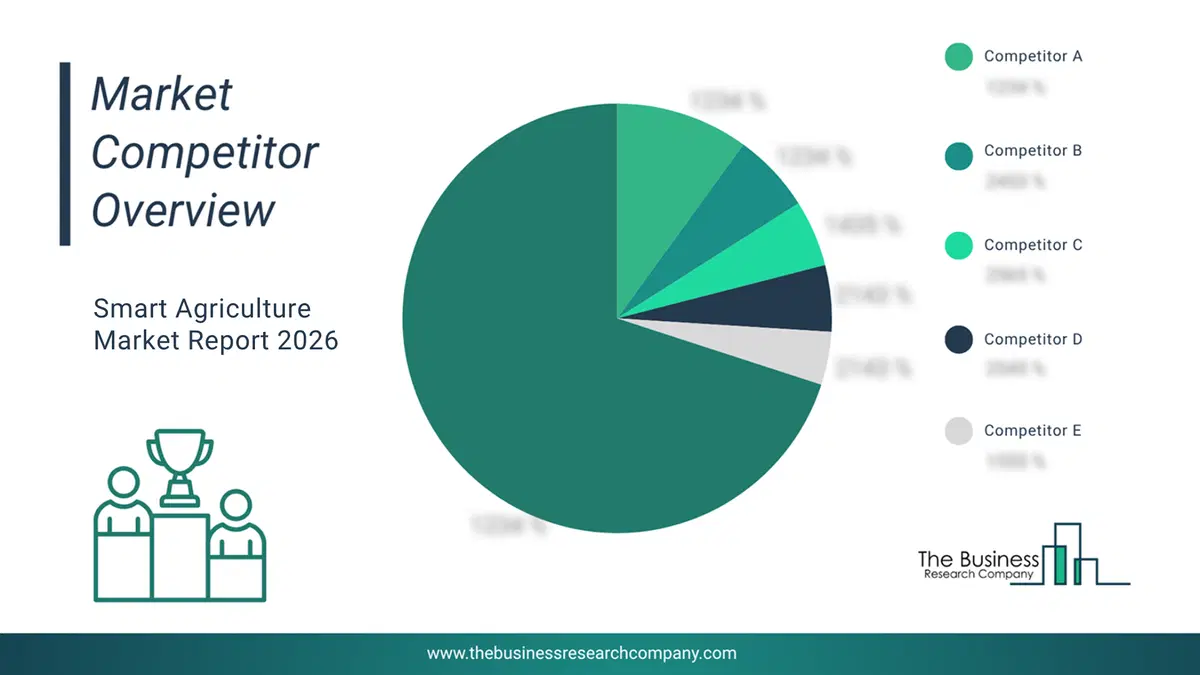
This chart is for illustrative purposes; the full report includes a detailed competitor analysis and comprehensive overview of the top 10 companies in the market.
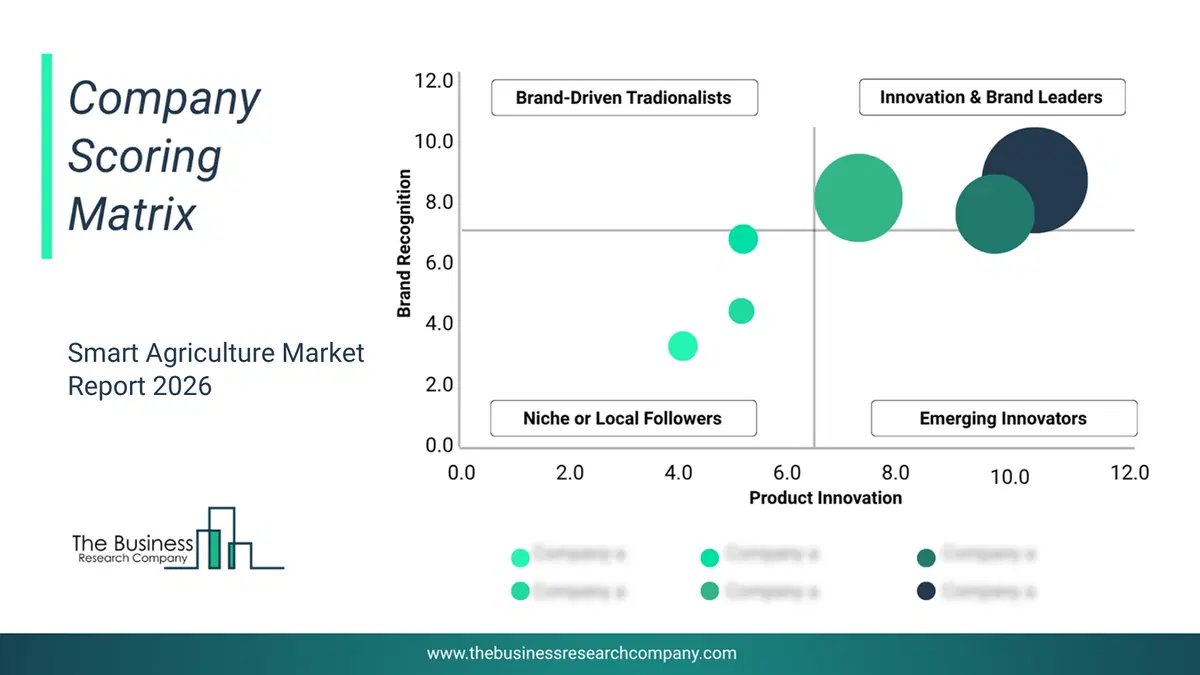
This chart maps companies by product innovation and brand strength, with bubble size indicating relative revenue, helping identify market leaders, challengers, and niche players. This is an illustrative chart; the full report provides a complete and accurate competitive analysis.
Global Smart Agriculture Market Trends and Insights
Major companies operating in the smart agriculture market are focusing on developing technological advancements, such as advanced AI integration that enables detailed forecasting of crop yields and helps identify optimal growing conditions globally. Advanced AI integration refers to seamlessly embedding AI technologies into various systems, enabling automated decision-making, data analysis, and enhanced user interactions. For instance, in July 2024, Cropin, an India-based software company, launched Sage, which aims to transform agricultural decision-making by providing comprehensive data and insights. A new AI-powered agri-intelligence platform combines generative AI, climate data, crop knowledge graphs, and advanced models. It offers real-time insights to forecast yields and identify optimal growing conditions globally. Using a grid-based mapping system, it provides precision data for 13 major crops, covering 80% of global food demand. The platform helps stakeholders make data-driven decisions to enhance food security.What Are Latest Mergers And Acquisitions In The Smart Agriculture Market? DeHaat Boosts Agritech Solutions With AgriCentral Acquisition
In January 2025, DeHaat, an India-based provider of full-stack agritech solutions, acquired AgriCentral for an undisclosed amount. With this acquisition, DeHaat aims to strengthen its position in smart agriculture by enhancing its digital advisory and precision farming capabilities through advanced data analytics and remote sensing technologies. AgriCentral is an India-based provider of digital agricultural advisory solutions to deliver real-time crop insights, market information, and decision-support tools for farmers.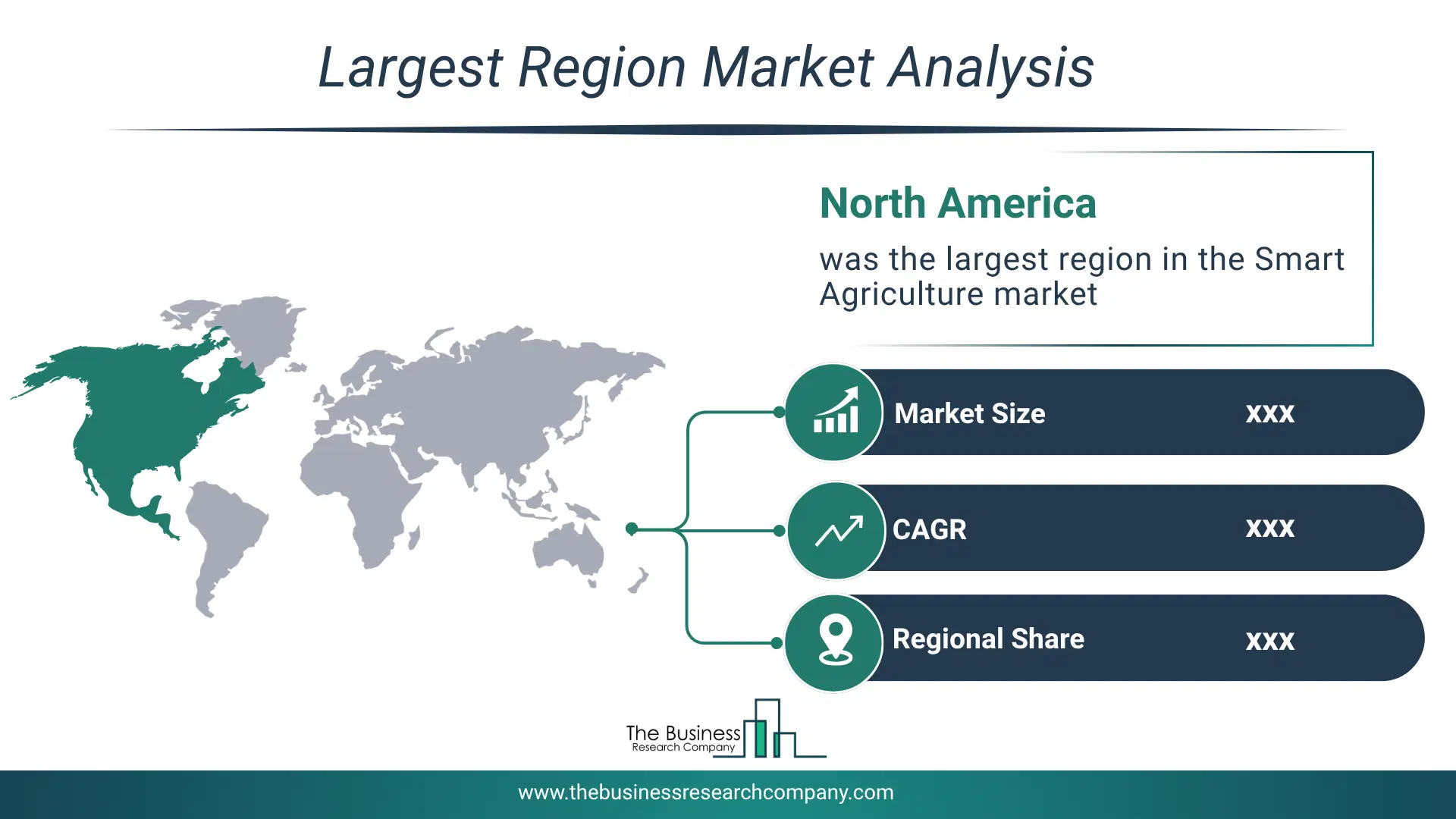
Regional Outlook
North America was the largest region in the smart agriculture market in 2025. Asia-Pacific is expected to be the fastest-growing region in the smart agriculture market report during the forecast period. The regions covered in this market report are Asia-Pacific, South East Asia, Western Europe, Eastern Europe, North America, South America, Middle East, Africa. The countries covered in this market report are Australia, Brazil, China, France, Germany, India, Indonesia, Japan, Taiwan, Russia, South Korea, UK, USA, Canada, Italy, SpainWhat Defines the Smart Agriculture Market?
The smart agriculture market consists of revenues earned by entities through system integration, consulting, and support and maintenance services. The market value includes the value of related goods sold by the service provider or included within the service offering. The smart agriculture market includes revenues earned by entities through precision aquaculture, livestock monitoring, precision forestry, smart greenhouses, and others. Values in this market are ‘factory gate’ values, that is, the value of goods sold by the manufacturers or creators of the goods, whether to other entities (including downstream manufacturers, wholesalers, distributors, and retailers) or directly to end customers. The value of goods in this market includes related services sold by the creators of the goods.How is Market Value Defined and Measured?
The market value is defined as the revenues that enterprises gain from the sale of goods and/or services within the specified market and geography through sales, grants, or donations in terms of the currency (in USD unless otherwise specified). The revenues for a specified geography are consumption values that are revenues generated by organizations in the specified geography within the market, irrespective of where they are produced. It does not include revenues from resales along the supply chain, either further along the supply chain or as part of other products.
This chart presents market attractiveness based on a quantitative evaluation of growth, competition, strategic alignment, and risk, offering a clear view of opportunity areas for decision-making. This chart is for illustrative purposes; the full report contains the complete analysis.

This chart highlights the Total Addressable Market (TAM) by estimating the maximum revenue opportunity using an assumption-driven approach, supporting strategic planning and opportunity sizing across markets. The chart is illustrative; the full report provides a more comprehensive analysis.
What Key Data and Analysis Are Included in the Smart Agriculture Market Report 2026?
The smart agriculture market research report is one of a series of new reports from The Business Research Company that provides market statistics, including industry global market size, regional shares, competitors with the market share, detailed market segments, market trends and opportunities, and any further data you may need to thrive in the smart agriculture industry. The market research report delivers a complete perspective of everything you need, with an in-depth analysis of the current and future state of the industry.Smart Agriculture Market Report Forecast Analysis
| Report Attribute | Details |
|---|---|
| Market Size Value In 2026 | $20.82 billion |
| Revenue Forecast In 2035 | $5.72 billion |
| Growth Rate | CAGR of 11.0% from 2026 to 2035 |
| Base Year For Estimation | 2025 |
| Actual Estimates/Historical Data | 2020-2025 |
| Forecast Period | 2026 - 2030 - 2035 |
| Market Representation | Revenue in USD Billion and CAGR from 2026 to 2035 |
| Segments Covered | Offering, Farm Size, Application |
| Regional Scope | Asia-Pacific, Western Europe, Eastern Europe, North America, South America, Middle East, Africa |
| Country Scope | The countries covered in the report are Australia, Brazil, China, France, Germany, India, ... |
| Key Companies Profiled | Deere & Company, AG Leader Technology Inc., Trimble Inc., Bayer Crop Science LP, Syngenta AG, Corteva Agriscience Inc., PrecisionHawk Inc., The Climate Corporation, Farmers Edge Inc., Taranis Inc., Raven Industries Inc., AeroFarms LLC, Granular Inc., AgriWebb Pty Ltd, Ecorobotix AG, CropX Inc., SmartFarm LLC, Indigo Ag Inc., Ceres Imaging Inc., Hexagon AB, FarmLogs Inc., Parrot Drones SAS, Vultus Inc., Prospera Technologies Inc., Fieldin Inc., Sentera Inc., Harvest CROO Robotics LLC, Blue River Technology Inc., AgroStar |
| Customization Scope | Request for Customization |
| Pricing And Purchase Options | Explore Purchase Options |