
Synthetic Polymers Market Report 2026
Global Outlook – By Type (Styrene Acrylic, Styrene Butadiene, Acrylic, Vinyl Acetate Copolymer, Polyvinyl Acetate, Vinyl Acetate Ethylene, Other Types), By Application (Paints And Coatings, Adhesives And Sealants, Nonwovens, Other Applications), By End User (Construction, Automotive, Electronics, Textile, Healthcare, Other End-Users) – Market Size, Trends, Strategies, and Forecast to 2030
Synthetic Polymers Market Overview
• Synthetic Polymers market size has reached to $34.69 billion in 2025 • Expected to grow to $48.43 billion in 2030 at a compound annual growth rate (CAGR) of 7% • Growth Driver: The Surge In Residential And Commercial Construction Fuels Synthetic Polymer Market Growth • Market Trend: A Biodegradable Rheology Modifier Redefines Performance In Skincare Formulations • Asia-Pacific was the largest region and fastest growing region.What Is Covered Under Synthetic Polymers Market?
Synthetic polymers are large molecules of repeating units called monomers that are chemically bonded together through polymerization. These polymers are artificially created through various chemical processes and are widely used in multiple industries due to their versatility, durability, and customizable properties. The main types of polymers in synthetic polymers are styrene acrylic, styrene-butadiene, acrylic, vinyl acetate copolymer, polyvinyl acetate, vinyl acetate ethylene, and others. Styrene-acrylic refers to a copolymer obtained by polymerizing styrene and acrylic monomers. These are used for several applications, including paints and coatings, adhesives and sealants, nonwovens, carpets, paper and paperboard, and others. The main end-users are construction, automotive, electronics, textiles, healthcare, and others.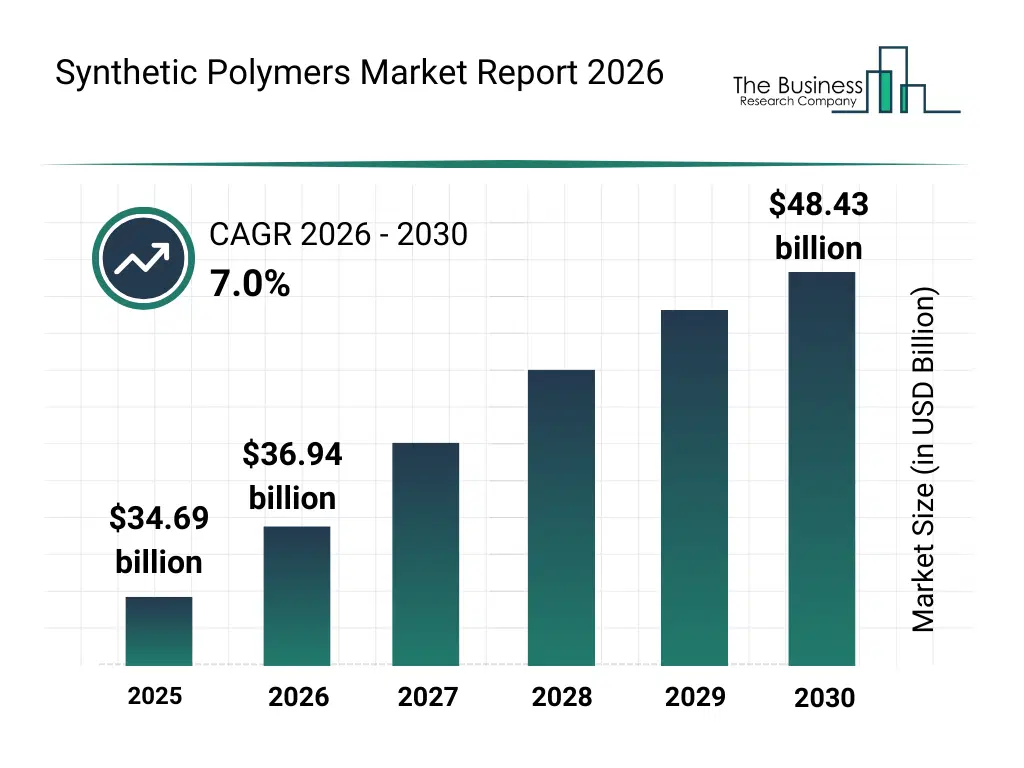
What Is The Synthetic Polymers Market Size and Share 2026?
The synthetic polymers market size has grown strongly in recent years. It will grow from $34.69 billion in 2025 to $36.94 billion in 2026 at a compound annual growth rate (CAGR) of 6.5%. The growth in the historic period can be attributed to expansion of construction and infrastructure activities, growth of automotive manufacturing, rising use of polymers in packaging and coatings, increasing availability of petrochemical feedstocks, advancements in polymer chemistry.What Is The Synthetic Polymers Market Growth Forecast?
The synthetic polymers market size is expected to see strong growth in the next few years. It will grow to $48.43 billion in 2030 at a compound annual growth rate (CAGR) of 7.0%. The growth in the forecast period can be attributed to increasing demand for sustainable and recyclable polymers, rising adoption in electric vehicle components, expansion of smart material applications, growing focus on circular economy materials, increasing investments in advanced polymer technologies. Major trends in the forecast period include growing demand for high-performance synthetic materials, rising adoption in lightweight automotive applications, expansion of polymer use in construction materials, increasing focus on recyclable polymer solutions, enhanced customization of polymer properties.
Global Synthetic Polymers Market Segmentation
1) By Type: Styrene Acrylic, Styrene Butadiene, Acrylic, Vinyl Acetate Copolymer, Polyvinyl Acetate, Vinyl Acetate Ethylene, Other Types 2) By Application: Paints And Coatings, Adhesives And Sealants, Nonwovens, Other Applications 3) By End User: Construction, Automotive, Electronics, Textile, Healthcare, Other End-Users Subsegments: 1) By Styrene Acrylic: Styrene Acrylic Emulsions, Styrene Acrylic Resins 2) By Styrene Butadiene: Styrene Butadiene Rubber (SBR), Styrene Butadiene Latex 3) By Acrylic: Acrylic Resins, Acrylic Polymers 4) By Vinyl Acetate Copolymer: Vinyl Acetate Ethylene Copolymer, Vinyl Acetate Butyl Acrylate Copolymer 5) By Polyvinyl Acetate: Polyvinyl Acetate Emulsions, Polyvinyl Acetate Films 6) By Vinyl Acetate Ethylene: Vinyl Acetate Ethylene Emulsions, Vinyl Acetate Ethylene Copolymers 7) By Other Types: Polyurethane, Polyethylene, Polypropylene, Other Specialty PolymersWhat Is The Driver Of The Synthetic Polymers Market?
Increasing residential and commercial construction is expected to propel the growth of the synthetic polymer market going forward. Residential and commercial construction refers to constructing buildings and structures for residential and commercial purposes. It involves the planning, design, and execution of construction projects that create living spaces, offices, retail spaces, hotels, and other commercial establishments. Synthetic polymers are extensively used in residential and commercial construction due to their versatility, durability, lightweight, cost-effectiveness, and reduced maintenance. These advantages make them a preferred choice in many construction applications. For instance, in July 2023, according to the Australian Bureau of Statistics, an Australian-based government administration, reported that in the March quarter of 2023, the number of dwellings under construction increased to 240,813, up from 240,065 in 2022. Among these, new houses made up 103,778, compared to 101,240 in the previous year. Therefore, increasing residential and commercial buildings is driving the growth of the synthetic polymer industry.Key Players In The Global Synthetic Polymers Market
Major companies operating in the synthetic polymers market are BASF SE, Dow Inc., ExxonMobil Chemical Company, SABIC, LyondellBasell Industries N.V., DuPont de Nemours, Inc., Mitsubishi Chemical Corporation, LG Chem Ltd., Evonik Industries AG, Toray Industries, Inc., Celanese Corporation, Wacker Chemie AG, Huntsman Corporation, Trinseo LLC, Asahi Kasei Corporation, Apcotex Industries Limited, Lubrizol Corporation, Covestro AG, Sumitomo Chemical Co., Ltd., Braskem S.A., Chevron Phillips Chemical Company LLC, Formosa Plastics Corporation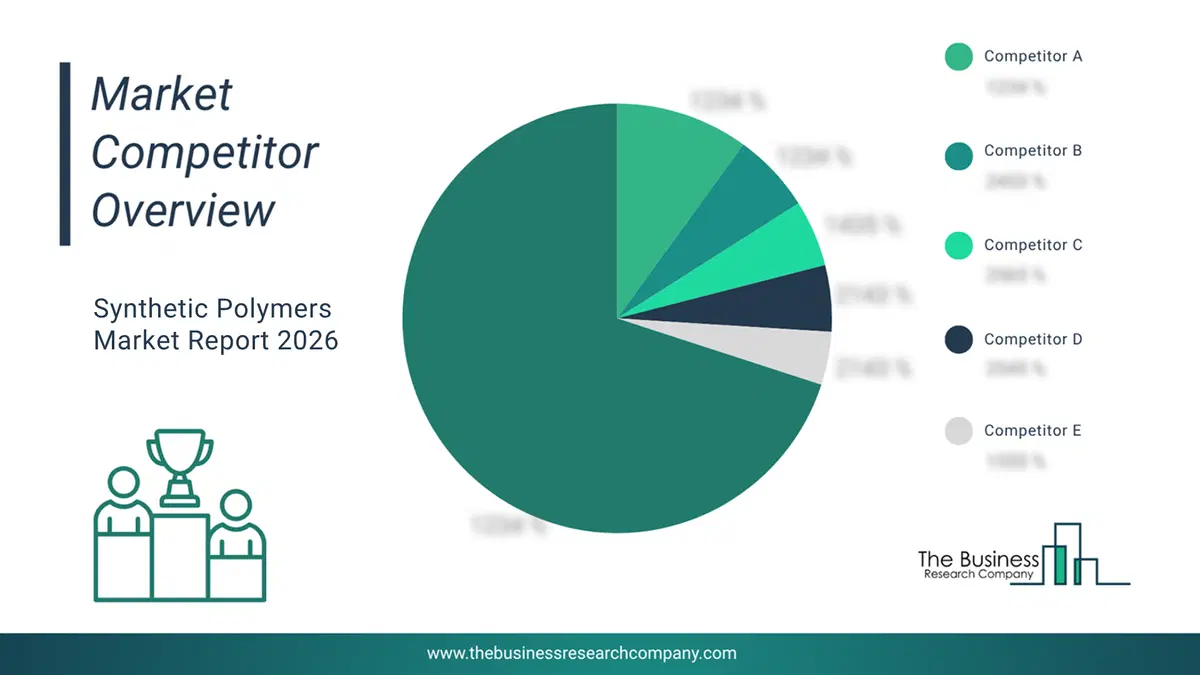
This chart is for illustrative purposes; the full report includes a detailed competitor analysis and comprehensive overview of the top 10 companies in the market.
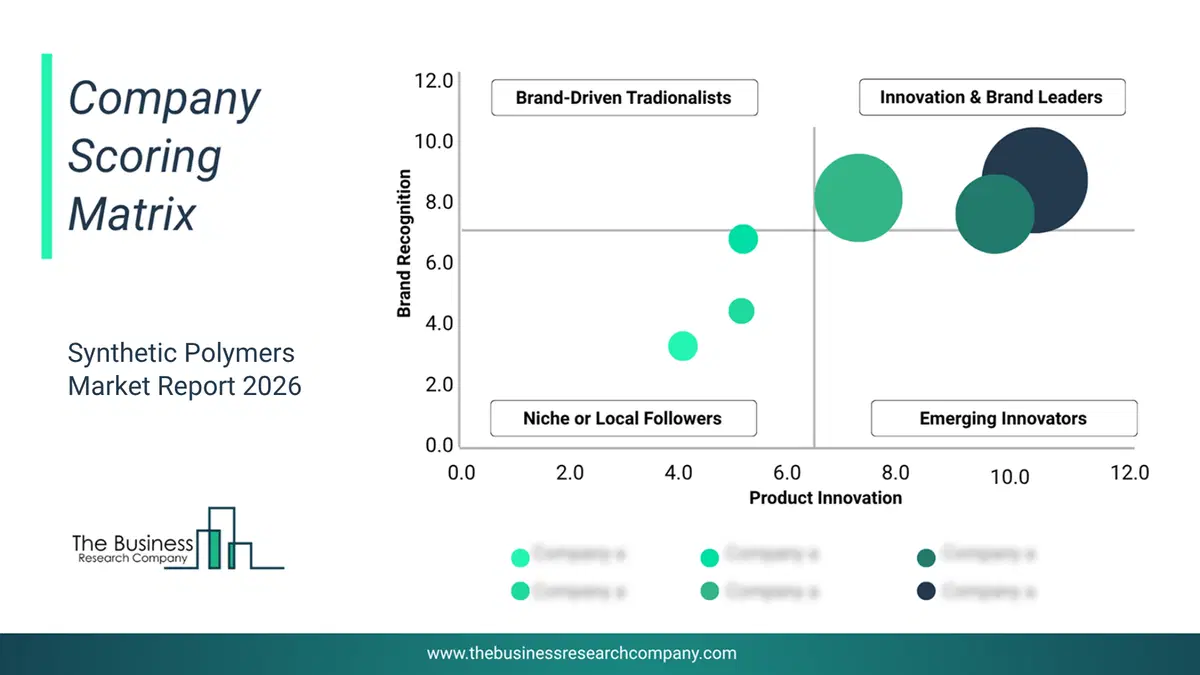
This chart maps companies by product innovation and brand strength, with bubble size indicating relative revenue, helping identify market leaders, challengers, and niche players. This is an illustrative chart; the full report provides a complete and accurate competitive analysis.
Global Synthetic Polymers Market Trends and Insights
Major companies operating in the synthetic polymer market are developing sustainable products, such as biodegradable rheology modifiers, to gain a competitive advantage. Biodegradable rheology modifiers are substances that alter the flow and deformation characteristics of materials and can naturally break down over time, contributing to environmental sustainability. For instance, in February 2023, Clariant AG, a Switzerland-based chemicals company, introduced a new rheology modifier called Aristoflex Eco T, which is a patented technology combining the performance of synthetic polymers with the environmental profile of biopolymers. This next-generation rheology modifier delivers strong thickening and stabilizing performance while being readily biodegradable and naturally derived, with a renewable carbon index (RCI) of 71%. It is made from tara gum and 2-acrylamido-2-methylpropane sulfonic acid (AMPS).What Are Latest Mergers And Acquisitions In The Synthetic Polymers Market?
In May 2023, DuPont de Nemours, Inc., a US–based provider of advanced materials, specialty chemicals, medical device materials, and polymer solutions, acquired Spectrum Plastics Group for $1.75 billion. With this acquisition, DuPont aims to strengthen and expand its presence in specialized polymer based manufacturing and healthcare materials markets gaining advanced manufacturing capabilities, deeper supply chain integration, and access to Spectrum’s long standing customer relationships in the medical devices segment. Spectrum Plastics Group is a US-based company that specializes in providing synthetic polymers such as melt-processed thermoplastic resins including high-performance thermoplastic elastomers.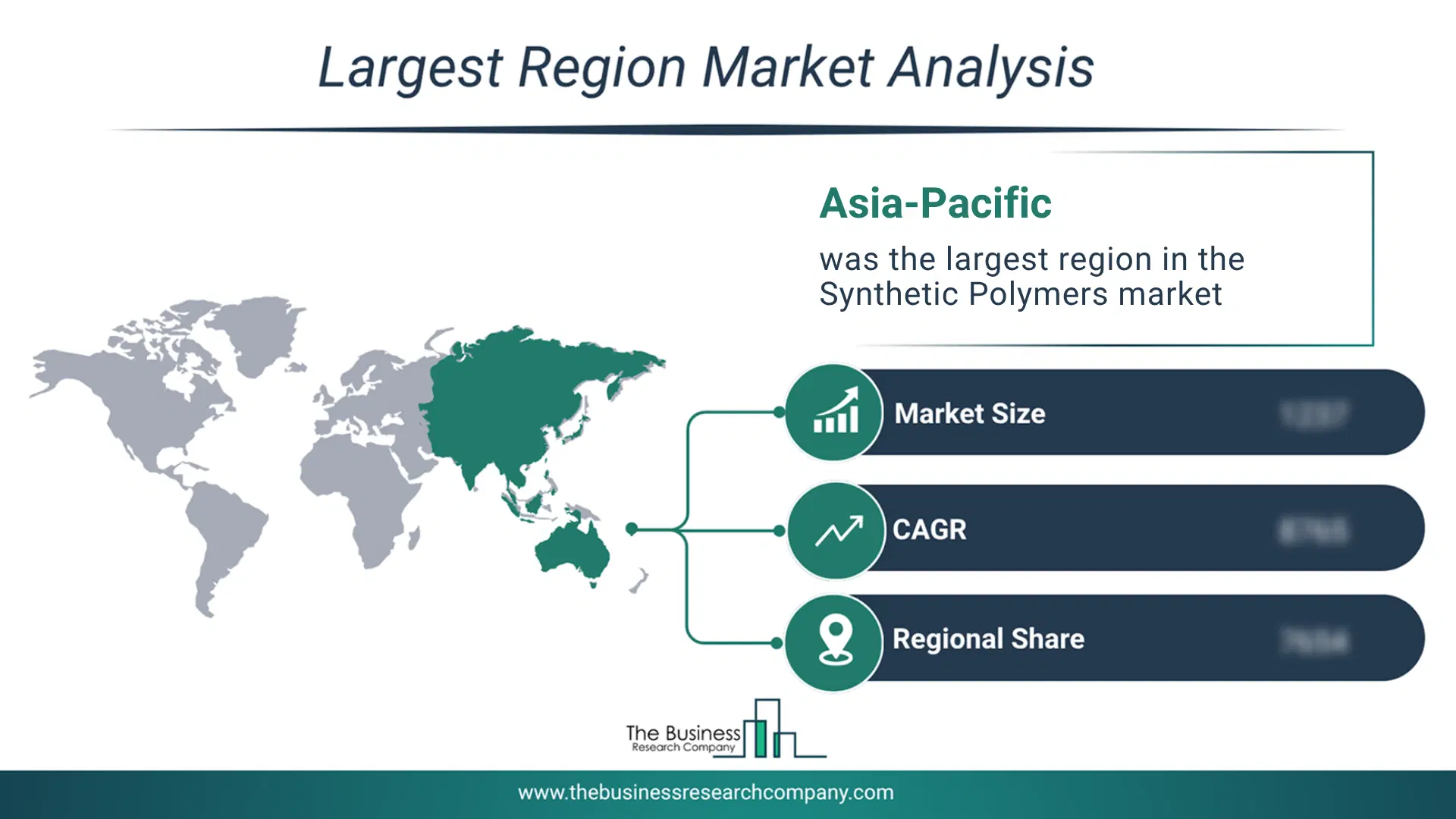
Regional Insights
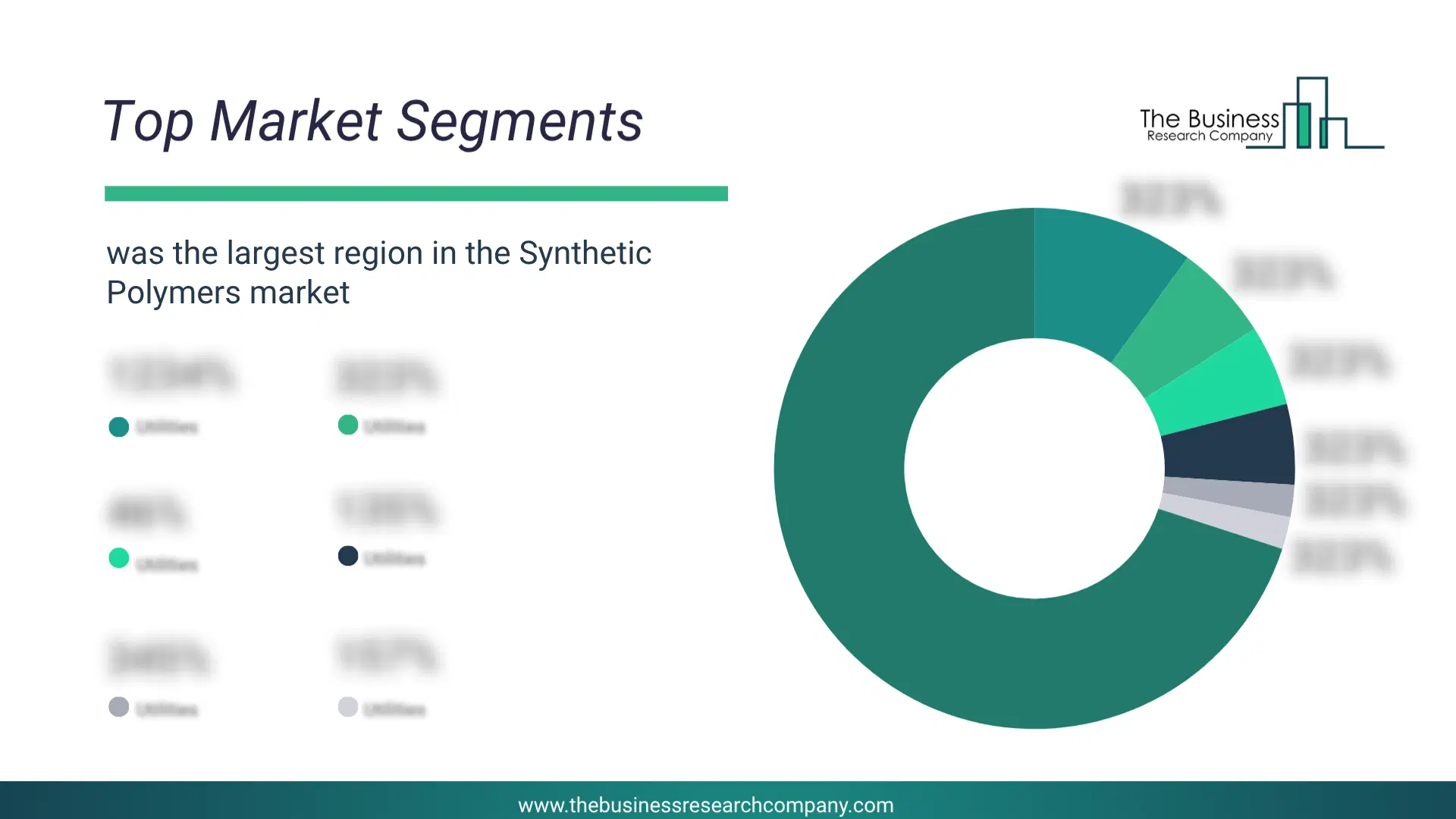
Asia-Pacific was the largest region in the synthetic polymers market in 2025. The regions covered in this market report are Asia-Pacific, South East Asia, Western Europe, Eastern Europe, North America, South America, Middle East, Africa The countries covered in this market report are Australia, Brazil, China, France, Germany, India, Indonesia, Japan, Taiwan, Russia, South Korea, UK, USA, Canada, Italy, SpainWhat Defines the Synthetic Polymers Market?
The synthetic polymers market consists of sales of polyethylene (PE), polypropylene (PP), polyvinyl chloride (PVC), and polystyrene (PS). Values in this market are ‘factory gate’ values, that is, the value of goods sold by the manufacturers or creators of the goods, whether to other entities (including downstream manufacturers, wholesalers, distributors, and retailers) or directly to end customers. The value of goods in this market includes related services sold by the creators of the goods.How is Market Value Defined and Measured?
The market value is defined as the revenues that enterprises gain from the sale of goods and/or services within the specified market and geography through sales, grants, or donations in terms of the currency (in USD unless otherwise specified). The revenues for a specified geography are consumption values that are revenues generated by organizations in the specified geography within the market, irrespective of where they are produced. It does not include revenues from resales along the supply chain, either further along the supply chain or as part of other products.
This chart presents market attractiveness based on a quantitative evaluation of growth, competition, strategic alignment, and risk, offering a clear view of opportunity areas for decision-making. This chart is for illustrative purposes; the full report contains the complete analysis.

This chart highlights the Total Addressable Market (TAM) by estimating the maximum revenue opportunity using an assumption-driven approach, supporting strategic planning and opportunity sizing across markets. The chart is illustrative; the full report provides a more comprehensive analysis.
What Key Data and Analysis Are Included in the Synthetic Polymers Market Report 2026?
The synthetic polymers market research report is one of a series of new reports from The Business Research Company that provides market statistics, including industry global market size, regional shares, competitors with the market share, detailed market segments, market trends and opportunities, and any further data you may need to thrive in the synthetic polymers industry. The market research report delivers a complete perspective of everything you need, with an in-depth analysis of the current and future state of the industry.Synthetic Polymers Market Report Forecast Analysis
| Report Attribute | Details |
|---|---|
| Market Size Value In 2026 | $36.94 billion |
| Revenue Forecast In 2030 | $48.43 billion |
| Growth Rate | CAGR of 6.5% from 2026 to 2030 |
| Base Year For Estimation | 2025 |
| Actual Estimates/Historical Data | 2020-2025 |
| Forecast Period | 2026 - 2030 |
| Market Representation | Revenue in USD Billion and CAGR from 2026 to 2030 |
| Segments Covered | Type, Application, End User |
| Regional Scope | Asia-Pacific, Western Europe, Eastern Europe, North America, South America, Middle East, Africa |
| Country Scope | The countries covered in this market report are Australia, Brazil, China, France, Germany, India, Indonesia, Japan, Taiwan, Russia, South Korea, UK, USA, Canada, Italy, Spain |
| Key Companies Profiled | BASF SE, Dow Inc., ExxonMobil Chemical Company, SABIC, LyondellBasell Industries N.V., DuPont de Nemours, Inc., Mitsubishi Chemical Corporation, LG Chem Ltd., Evonik Industries AG, Toray Industries, Inc., Celanese Corporation, Wacker Chemie AG, Huntsman Corporation, Trinseo LLC, Asahi Kasei Corporation, Apcotex Industries Limited, Lubrizol Corporation, Covestro AG, Sumitomo Chemical Co., Ltd., Braskem S.A., Chevron Phillips Chemical Company LLC, Formosa Plastics Corporation |
| Customization Scope | Request for Customization |
| Pricing And Purchase Options | Explore Purchase Options |