
Virtual Reality Shopping Market Report 2026
Global Outlook – By Device (Gesture-Tracking Device (GTD), Head-Mounted Display (HMD), Projectors And Display Wall (PDW)), By Technology (Semi And Fully Immersive, Non-Immersive), By Component (Hardware, Software), By Application (Aerospace And Defense, Commercial, Healthcare, Enterprise, Other Applications) – Market Size, Trends, Strategies, and Forecast to 2030
Virtual Reality Shopping Market Overview
• Virtual Reality Shopping market size has reached to $95.02 billion in 2025 • Expected to grow to $337.29 billion in 2030 at a compound annual growth rate (CAGR) of 28.9% • Growth Driver: Rising E-Commerce Industry Drives The Market • Market Trend: Partnership For Development Of Virtual Reality Integration To Drive Revenues • Asia-Pacific was the largest region in 2025.What Is Covered Under Virtual Reality Shopping Market?
Virtual reality shopping is a technology-driven retail experience that allows users to explore and purchase products in a simulated, immersive environment, enhancing the online shopping experience. The main purpose of virtual reality shopping is to offer unique product visualization and enable customers to try products before purchasing. The main devices in virtual reality shopping are gesture-tracking devices (GTD), head-mounted displays (HMD), projectors, and display walls (PDW). A gesture-tracking device (GTD) is a technology that captures and interprets human gestures for various applications, such as controlling electronic devices or interacting with virtual environments. The various technologies include semi- and fully immersive and non-immersive technologies along with several components used, including hardware and software. It is used for various applications such as aerospace and defense, commercial, healthcare, enterprise, and other applications.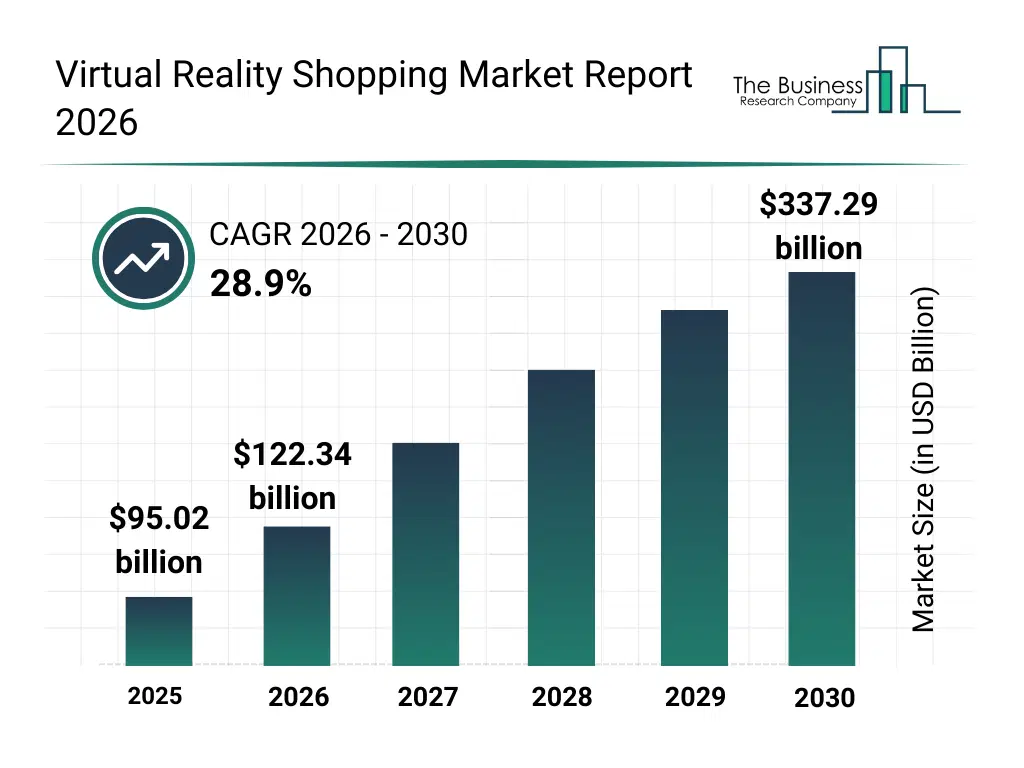
What Is The Virtual Reality Shopping Market Size and Share 2026?
The virtual reality shopping market size has grown exponentially in recent years. It will grow from $95.02 billion in 2025 to $122.34 billion in 2026 at a compound annual growth rate (CAGR) of 28.8%. The growth in the historic period can be attributed to growth of e-commerce adoption, increasing use of digital retail channels, rising demand for enhanced online shopping experiences, expansion of high-speed internet access, increasing consumer familiarity with vr technologies.What Is The Virtual Reality Shopping Market Growth Forecast?
The virtual reality shopping market size is expected to see exponential growth in the next few years. It will grow to $337.29 billion in 2030 at a compound annual growth rate (CAGR) of 28.9%. The growth in the forecast period can be attributed to increasing investments in metaverse commerce platforms, rising demand for experiential online retail, growing integration of vr with omnichannel strategies, expansion of immersive advertising solutions, increasing adoption of vr hardware among consumers. Major trends in the forecast period include increasing adoption of immersive product visualization platforms, growing demand for virtual storefront experiences, rising integration of AI-driven recommendation engines, expansion of vr-based retail engagement models, enhanced focus on interactive customer experiences.
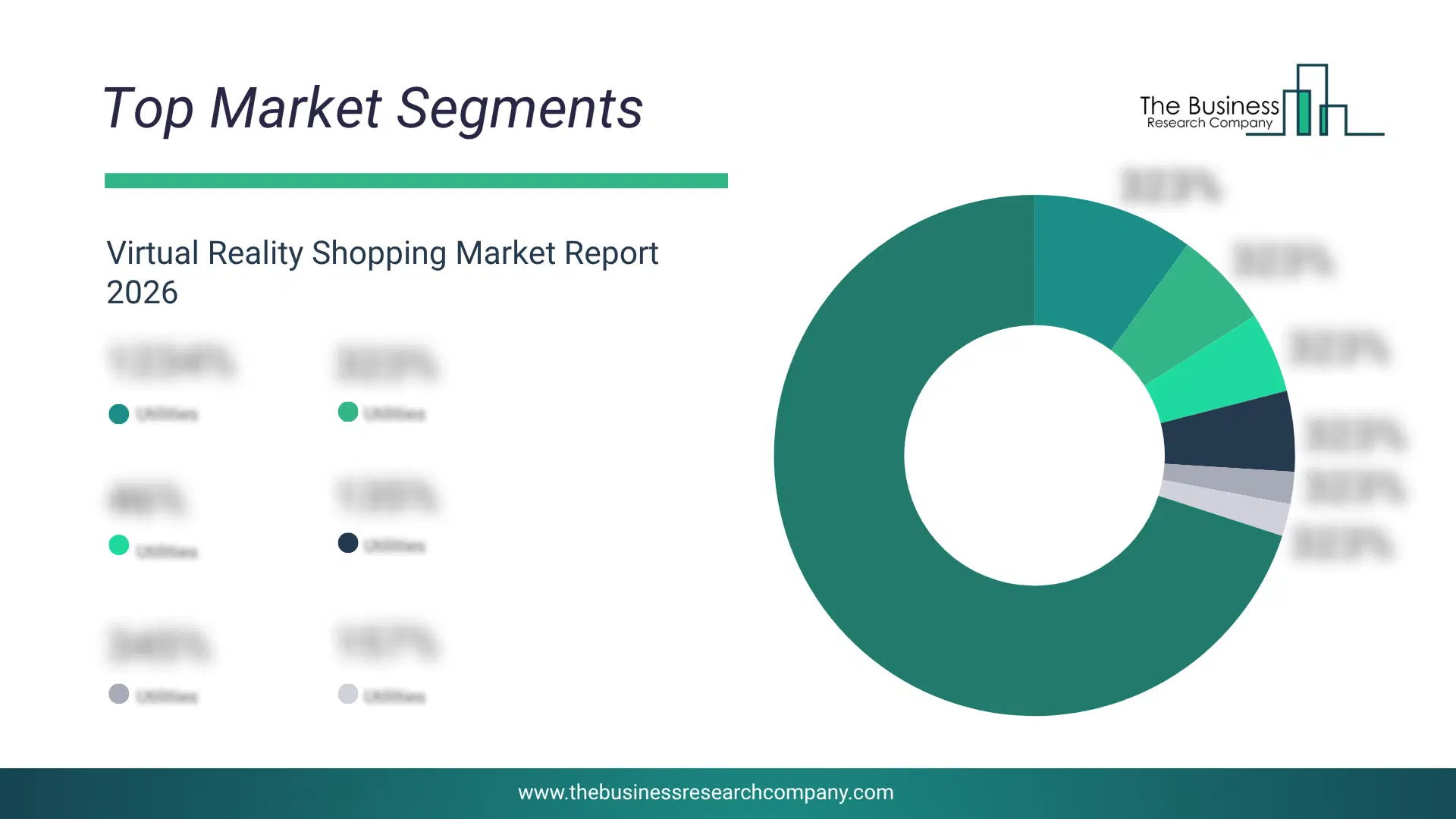
Global Virtual Reality Shopping Market Segmentation
1) By Device: Gesture-Tracking Device (GTD), Head-Mounted Display (HMD), Projectors And Display Wall (PDW) 2) By Technology: Semi And Fully Immersive, Non-Immersive 3) By Component: Hardware, Software 4) By Application: Aerospace And Defense, Commercial, Healthcare, Enterprise, Other Applications Subsegments: 1) By Gesture-Tracking Device (GTD): Handheld Gesture Controllers, Motion Sensing Gloves, Full-Body Gesture Tracking Systems 2) By Head-Mounted Display (HMD): Tethered HMD, Wireless HMD, Augmented Reality (AR) HMD 3) By Projectors And Display Wall (PDW): Large-Screen Projectors, Interactive Display Walls, 3D Projection SystemsWhat Is The Driver Of The Virtual Reality Shopping Market?
The rising e-commerce industry is expected to propel the growth of the virtual reality shopping market going forward. The e-commerce industry refers to the buying and selling of goods and services online, encompassing a wide range of online retail and digital transactions. Virtual reality shopping enhances the e-commerce experience by immersing customers in virtual stores, allowing them to explore products and make informed decisions from the comfort of their homes. For instance, in August 2023, according to the U.S. Department of Commerce, a US-based executive department of the federal government, on an unadjusted basis, the estimate of U.S. retail e-commerce sales for the second quarter of 2023 was $269.5 billion. This represented an increase of 6.6% from the first quarter of 2023. Comparatively, e-commerce sales for the second quarter of 2023 rose by 7.7% when compared to the same quarter in 2022. Therefore, the rising e-commerce industry is driving the growth of the virtual reality shopping industry.Key Players In The Global Virtual Reality Shopping Market
Major companies operating in the virtual reality shopping market are Amazon Inc., Alphabet Inc., Samsung Electronics Co. Ltd., Microsoft Corporation, JD.com Inc., Alibaba Group Holding Limited, Meta Platforms Inc., Target Corporation, Lowe's Companies Inc., Best Buy Co. Inc., IKEA Group, Macy's Inc., Adobe Inc., Wayfair Inc., eBay Inc., Pinterest Inc., PTC Inc., Unity Technologies Inc., Barco NV, HTC Corporation, EON Reality Inc., Ultraleap Ltd., Threekit Inc., Cappasity Inc., Newegg Inc., InContext Solutions Inc., Sixense Enterprises Inc., WorldViz Inc., Obsess VR Inc., Marxent Labs LLC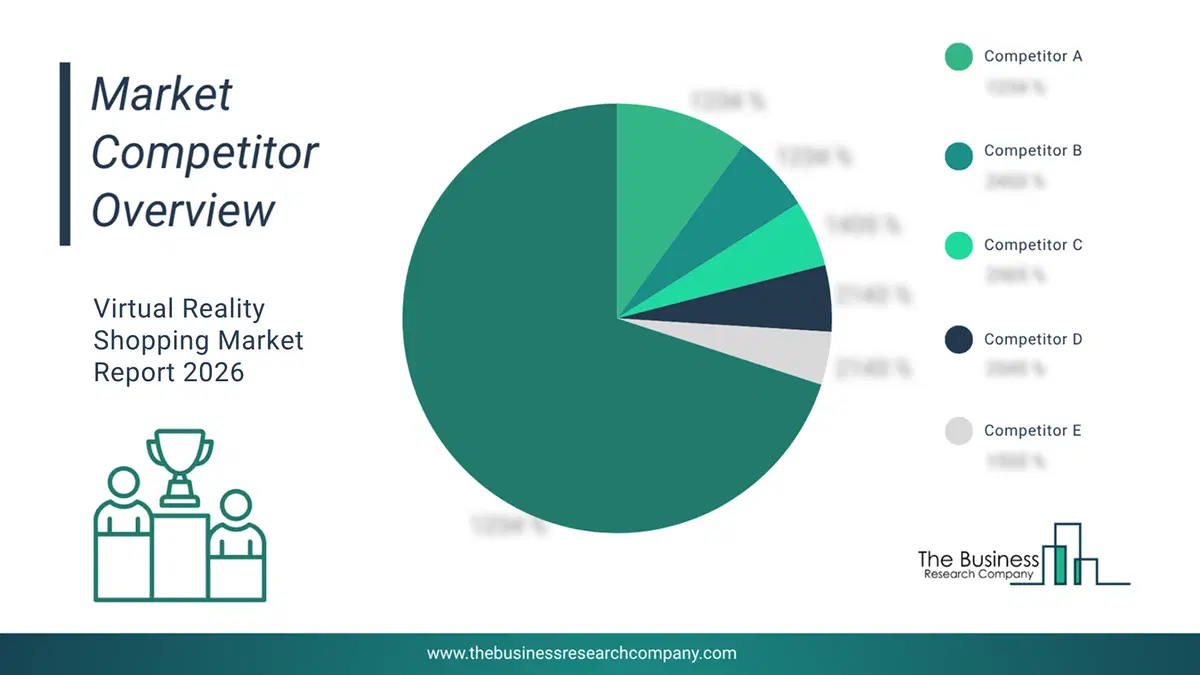
This chart is for illustrative purposes; the full report includes a detailed competitor analysis and comprehensive overview of the top 10 companies in the market.
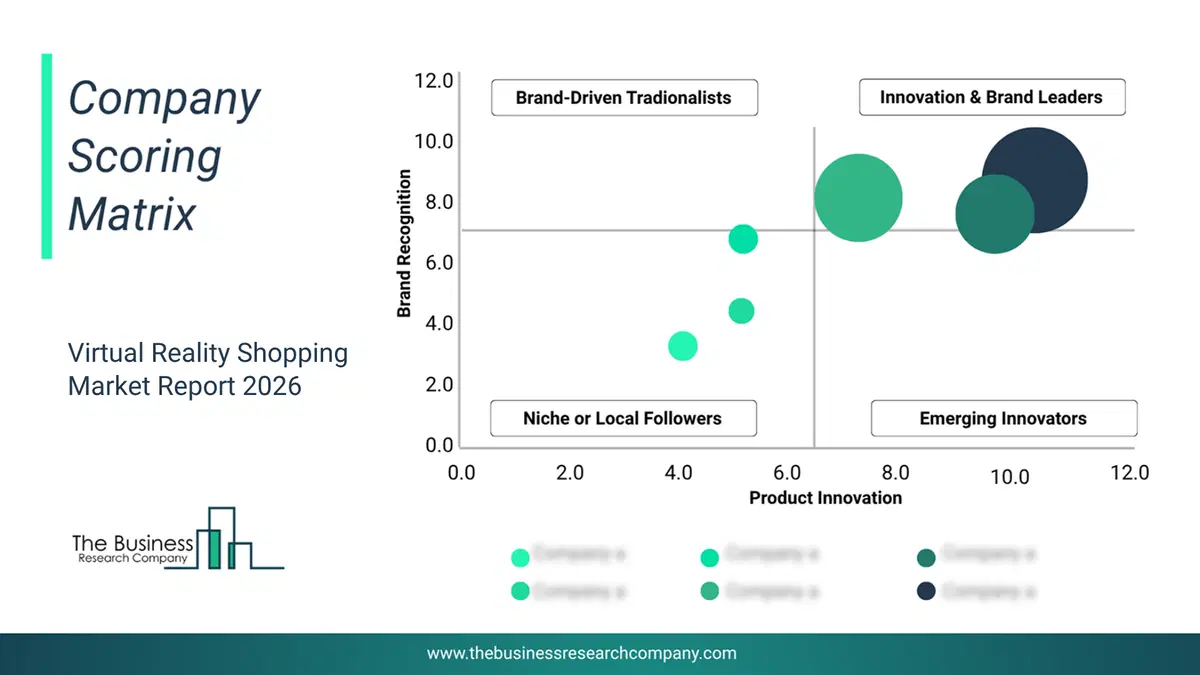
This chart maps companies by product innovation and brand strength, with bubble size indicating relative revenue, helping identify market leaders, challengers, and niche players. This is an illustrative chart; the full report provides a complete and accurate competitive analysis.
Global Virtual Reality Shopping Market Trends and Insights
Major companies operating in the virtual reality shopping market are adopting a strategic partnerships approach to enhance their capabilities and competitiveness. Strategic partnerships refer to a process in which companies leverage each other's strengths and resources to achieve mutual benefits and success. For instance, in February 2023, Alo LLC, a US-based activewear and lifestyle company, partnered with Obsess Inc., a US-based e-commerce platform company, to launch a virtual reality shopping experience with an experiential e-commerce platform. The virtual store can be accessed via desktop, mobile, or the Meta Quest 2 VR headset. The virtual store also includes beauty and wellness tutorials. The immersive digital shopping experience allows visitors to learn and shop Alo's collections, interact with a variety of content, and build custom outfits.What Are Latest Mergers And Acquisitions In The Virtual Reality Shopping Market?
In February 2023, Alo Yoga LLC, a US-based provider of luxury activewear and lifestyle products, partnered with Obsess Inc. to launch a VR shopping experience. The aim of this partnership is to launch a virtual reality shopping experience and to improve consumer engagement and interaction, transforming traditional e-commerce and connecting brands like Alo Yoga with consumers. Users can access the experience on desktop, mobile, and the Meta Quest 2 VR headset. The virtual shop will enable customers to explore Alo’s collections, engage with various types of content, and create custom outfits by virtually combining different tops and bottoms. Obsess Inc. is a US-based company that creates immersive virtual stores and experiences for brands and retailers.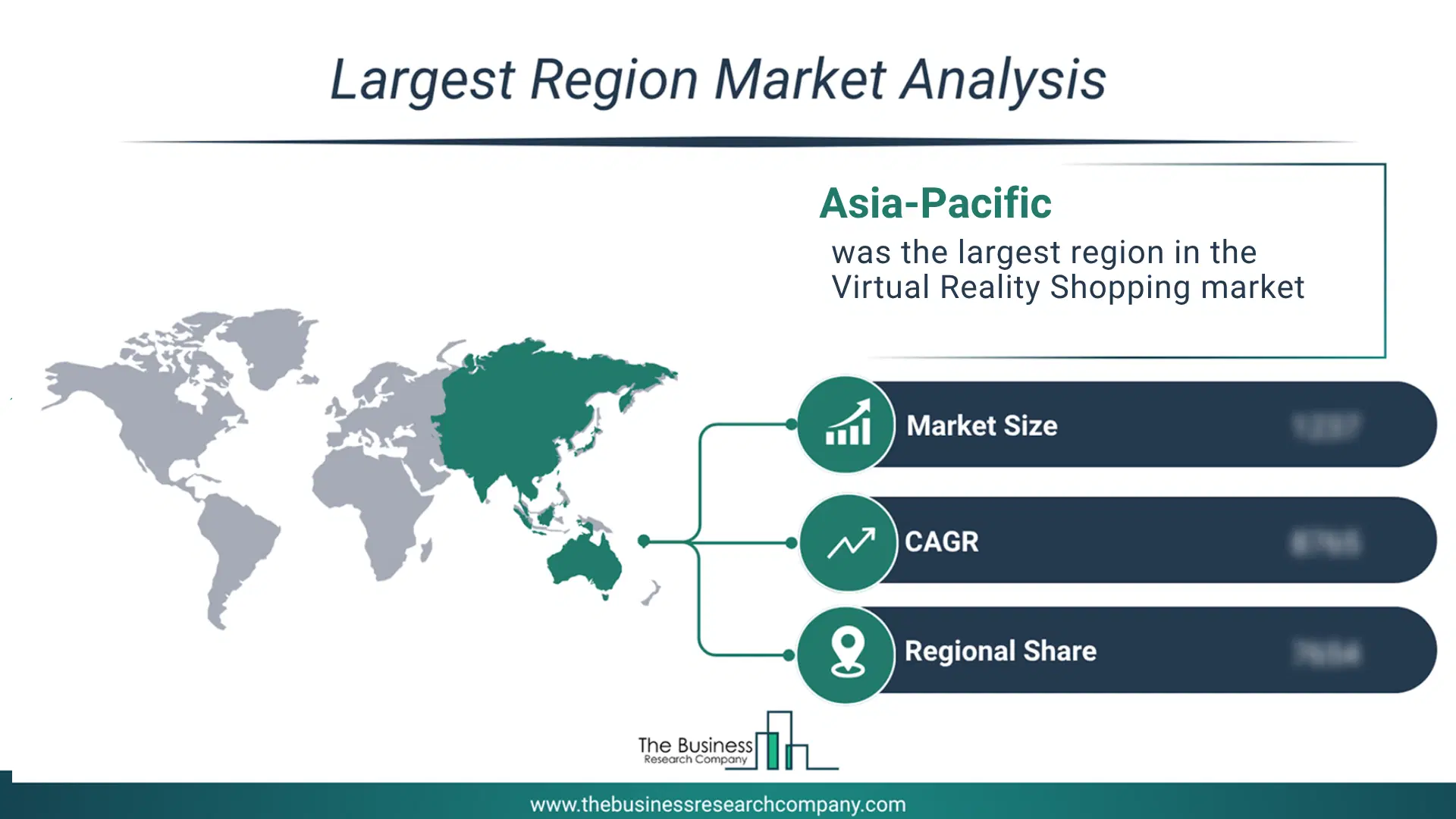
Regional Insights
Asia-Pacific was the largest region in the virtual reality shopping market in 2025. The regions covered in this market report are Asia-Pacific, South East Asia, Western Europe, Eastern Europe, North America, South America, Middle East, Africa. The countries covered in this market report are Australia, Brazil, China, France, Germany, India, Indonesia, Japan, Taiwan, Russia, South Korea, UK, USA, Canada, Italy, Spain.What Defines the Virtual Reality Shopping Market?
The virtual reality shopping market consists of revenues earned by entities by providing services such as product customization and personalization, product visualization, store layout testing, and more. The market value includes the value of related goods sold by the service provider or included within the service offering. The virtual reality shopping market also includes sales of VR headsets, helmets, gloves, and controllers that are used in providing services. Values in this market are ‘factory gate’ values, that is, the value of goods sold by the manufacturers or creators of the goods, whether to other entities (including downstream manufacturers, wholesalers, distributors, and retailers) or directly to end customers. The value of goods in this market includes related services sold by the creators of the goods.How is Market Value Defined and Measured?
The market value is defined as the revenues that enterprises gain from the sale of goods and/or services within the specified market and geography through sales, grants, or donations in terms of the currency (in USD unless otherwise specified). The revenues for a specified geography are consumption values that are revenues generated by organizations in the specified geography within the market, irrespective of where they are produced. It does not include revenues from resales along the supply chain, either further along the supply chain or as part of other products.
This chart presents market attractiveness based on a quantitative evaluation of growth, competition, strategic alignment, and risk, offering a clear view of opportunity areas for decision-making. This chart is for illustrative purposes; the full report contains the complete analysis.

This chart highlights the Total Addressable Market (TAM) by estimating the maximum revenue opportunity using an assumption-driven approach, supporting strategic planning and opportunity sizing across markets. The chart is illustrative; the full report provides a more comprehensive analysis.
What Key Data and Analysis Are Included in the Virtual Reality Shopping Market Report 2026?
The virtual reality shopping market research report is one of a series of new reports from The Business Research Company that provides market statistics, including industry global market size, regional shares, competitors with the market share, detailed market segments, market trends and opportunities, and any further data you may need to thrive in the virtual reality shopping industry. The market research report delivers a complete perspective of everything you need, with an in-depth analysis of the current and future state of the industry.Virtual Reality Shopping Market Report Forecast Analysis
| Report Attribute | Details |
|---|---|
| Market Size Value In 2026 | $122.34 billion |
| Revenue Forecast In 2030 | $337.29 billion |
| Growth Rate | CAGR of 28.9% from 2026 to 2030 |
| Base Year For Estimation | 2025 |
| Actual Estimates/Historical Data | 2020-2025 |
| Forecast Period | 2026 - 2030 |
| Market Representation | Revenue in USD Billion and CAGR from 2026 to 2030 |
| Segments Covered | Device, Technology, Component, Application |
| Regional Scope | Asia-Pacific, Western Europe, Eastern Europe, North America, South America, Middle East, Africa |
| Country Scope | The Countries Covered In This Market Report Are Australia, Brazil, China, France, Germany, India, Indonesia, Japan, Taiwan, Russia, South Korea, Uk, Usa, Canada, Italy, Spain. |
| Key Companies Profiled | Amazon Inc., Alphabet Inc., Samsung Electronics Co. Ltd., Microsoft Corporation, JD.com Inc., Alibaba Group Holding Limited, Meta Platforms Inc., Target Corporation, Lowe's Companies Inc., Best Buy Co. Inc., IKEA Group, Macy's Inc., Adobe Inc., Wayfair Inc., eBay Inc., Pinterest Inc., PTC Inc., Unity Technologies Inc., Barco NV, HTC Corporation, EON Reality Inc., Ultraleap Ltd., Threekit Inc., Cappasity Inc., Newegg Inc., InContext Solutions Inc., Sixense Enterprises Inc., WorldViz Inc., Obsess VR Inc., Marxent Labs LLC |
| Customization Scope | Request for Customization |
| Pricing And Purchase Options | Explore Purchase Options |