
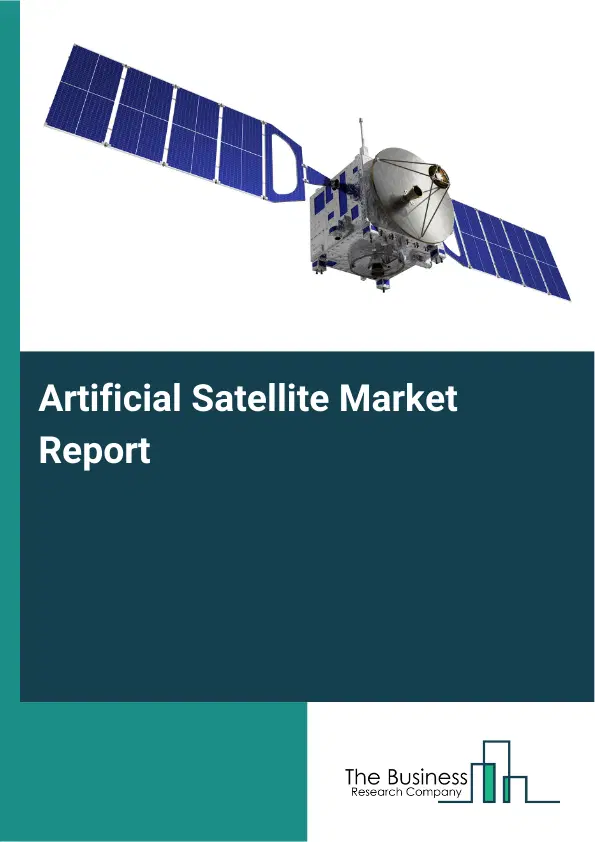
Artificial Satellite Market Report 2026
Global Outlook – By Satellite Type (Communication Satellites, Earth Observation Satellites, Navigational Satellites, Scientific Research Satellites, Military Satellites), By Orbit Type (Low Earth Orbit (LEO), Medium Earth Orbit (MEO), Geostationary Orbit (GEO), Highly Elliptical Orbit (HEO)), By Ownership (Government-Owned, Commercial Entities, Non-Profit Organizations, Educational Institutions), By Application (Space Exploration, Telecommunications, Weather Forecasting, Scientific Research), By End User (Telecommunications Companies, Government Agencies, Aerospace And Defense Contractors, Research Organizations, Media And Broadcasting Firms) – Market Size, Trends, Strategies, and Forecast to 2030
Artificial Satellite Market Overview
• Artificial Satellite market size has reached to $31.61 billion in 2025 • Expected to grow to $46.82 billion in 2030 at a compound annual growth rate (CAGR) of 8.1% • Growth Driver: Rising Interest In Space Exploration Fueling The Growth Of The Market Due To Increasing Demand For Advanced Communication And Earth Observation Capabilities • Market Trend: High-Resolution Data Enables Precise Planetary Health Analysis • North America was the largest region in 2025.What Is Covered Under Artificial Satellite Market?
An artificial satellite is a human-made object launched into orbit around Earth or other celestial bodies to perform designated tasks. It is equipped with advanced technologies such as sensors, antennas, communication systems, and power sources to withstand the extreme conditions of space. Its primary purpose is to perform specific functions such as communication, navigation, Earth observation, or scientific research. The main types of artificial satellite are communication satellites, Earth observation satellites, navigational satellites, scientific research satellites, and military satellites. Communication satellites are artificial satellites designed to relay and amplify telecommunication signals, enabling long-distance voice, data, and video transmission between Earth-based stations. It includes multiple orbit types such as low earth orbit (LEO), medium earth orbit (MEO), geostationary orbit (GEO), and highly elliptical orbit (HEO), and are owned by either government-owned, commercial entities, non-profit organizations, or educational institutions. It finds application in space exploration, telecommunications, weather forecasting, and scientific research, serving end users such as telecommunications companies, government agencies, aerospace and defense contractors, research organizations, and media and broadcasting firms.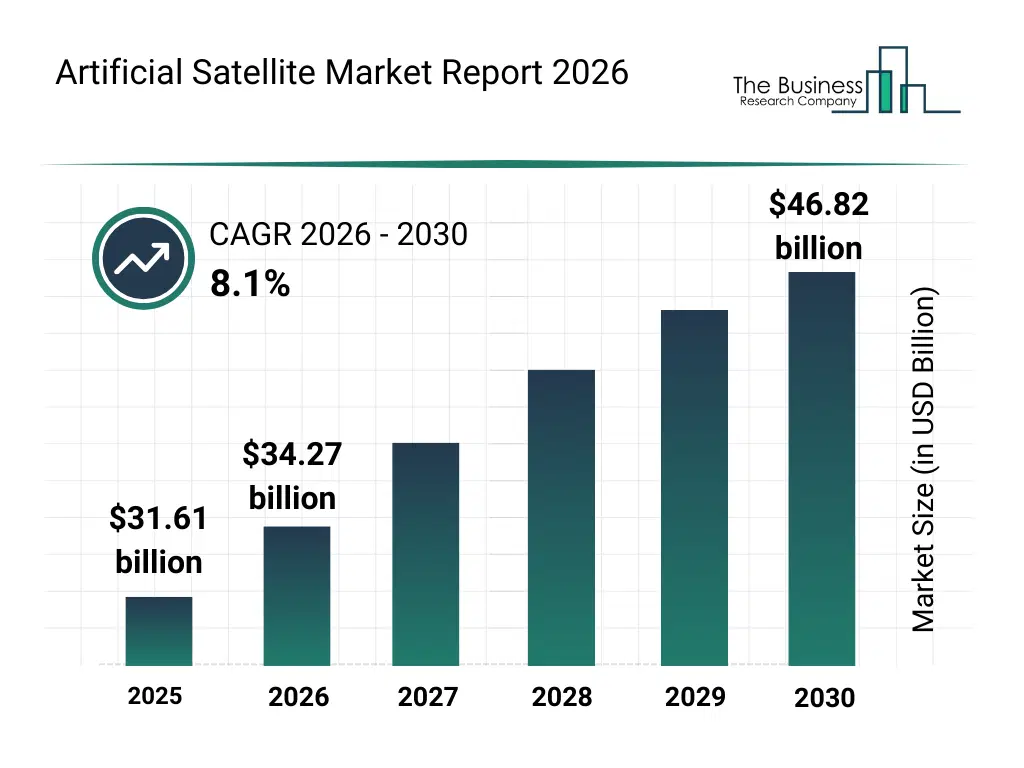
What Is The Artificial Satellite Market Size and Share 2026?
The artificial satellite market size has grown strongly in recent years. It will grow from $31.61 billion in 2025 to $34.27 billion in 2026 at a compound annual growth rate (CAGR) of 8.4%. The growth in the historic period can be attributed to increasing global demand for communication and navigation services, advancements in satellite bus and payload technologies, rising investment in earth observation and scientific research satellites, collaborations between aerospace manufacturers and space agencies, early adoption of small and medium satellite platforms.What Is The Artificial Satellite Market Growth Forecast?
The artificial satellite market size is expected to see strong growth in the next few years. It will grow to $46.82 billion in 2030 at a compound annual growth rate (CAGR) of 8.1%. The growth in the forecast period can be attributed to expansion of low-earth-orbit (LEO) and mega-constellation satellite networks, integration of ai and autonomous systems in satellite operations, rising demand for high-throughput and next-generation communication satellites, development of cost-efficient and modular satellite components, emphasis on lifecycle support, maintenance, and in-orbit servicing solutions. Major trends in the forecast period include rising demand for miniaturized satellite components, expansion of commercial satellite constellations, growth in multifunctional payload integration, increased adoption of standardized satellite buses, advancements in onboard power and thermal management systems,,.
Global Artificial Satellite Market Segmentation
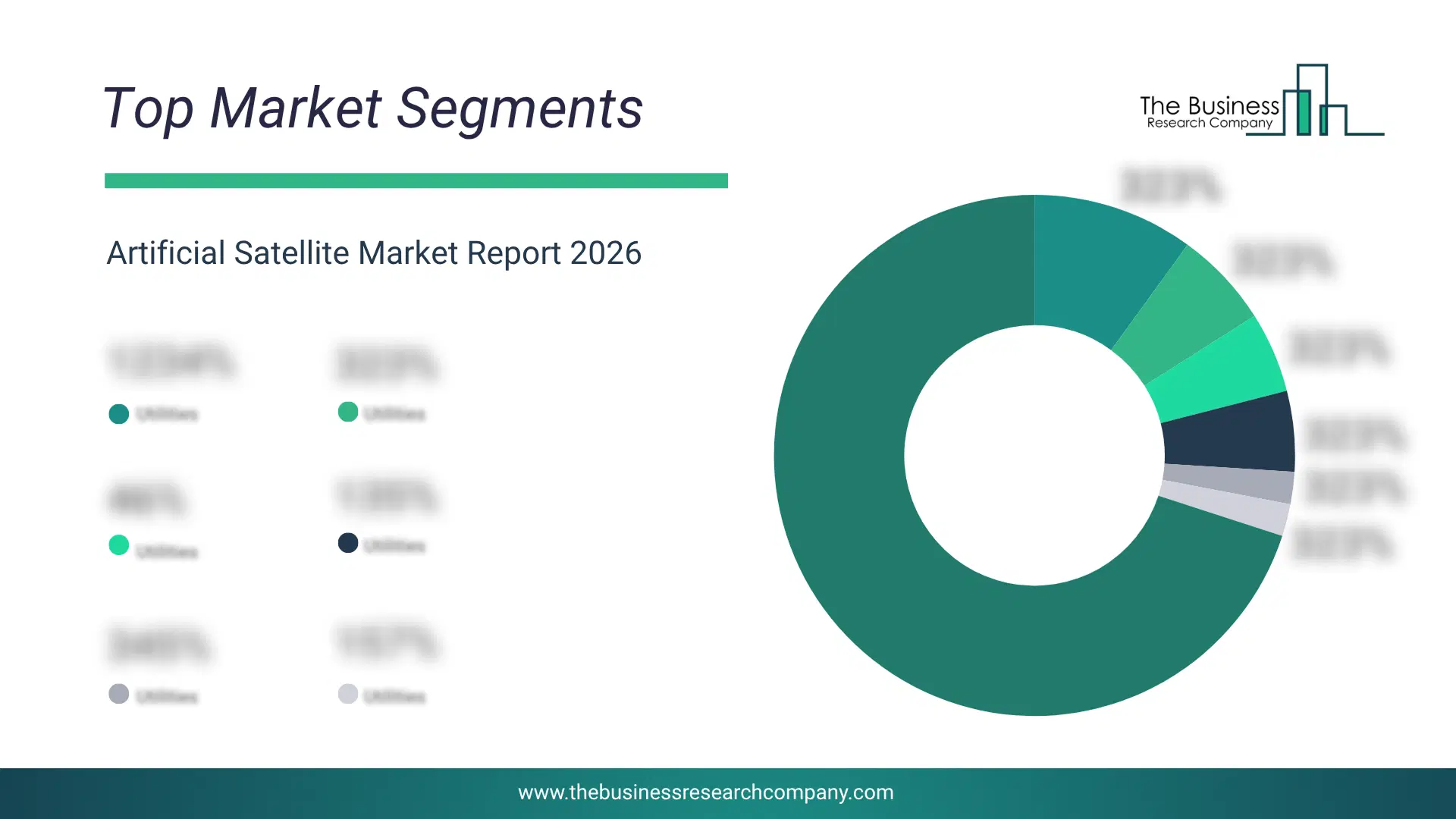
1) By Satellite Type: Communication Satellites, Earth Observation Satellites, Navigational Satellites, Scientific Research Satellites, Military Satellites 2) By Orbit Type: Low Earth Orbit (LEO), Medium Earth Orbit (MEO), Geostationary Orbit (GEO), Highly Elliptical Orbit (HEO) 3) By Ownership: Government-Owned, Commercial Entities, Non-Profit Organizations, Educational Institutions 4) By Application: Space Exploration, Telecommunications, Weather Forecasting, Scientific Research 5) By End User: Telecommunications Companies, Government Agencies, Aerospace And Defense Contractors, Research Organizations, Media And Broadcasting Firms Subsegments: 1) By Communication Satellites: Geostationary, Low Earth Orbit, Medium Earth Orbit 2) By Earth Observation Satellites: Optical Imaging, Radar Imaging, Hyperspectral Imaging 3) By Navigational Satellites: Global Positioning, Regional Navigation, Augmentation Systems 4) By Scientific Research Satellites: Space Telescopes, Atmospheric Monitoring, Microgravity Experiments 5) By Military Satellites: Reconnaissance, Surveillance, CommunicationWhat Is Driver Of The Artificial Satellite Market?
The rising interest in space exploration is expected to propel the growth of the artificial satellite market going forward. Space exploration is the discovery and study of outer space through the use of spacecraft, satellites, and advanced technology. The rising interest in space exploration is due to growing demand for advanced communication and Earth observation satellites, as they enable global connectivity, environmental monitoring, and enhanced security. Artificial satellites enhance space exploration by providing critical data on celestial bodies, orbital paths, and cosmic phenomena, enabling more precise mission planning. They expand scientific knowledge and support research in astronomy, planetary studies, and deep-space observation, advancing humanity’s understanding of the universe. For instance, in September 2023, according to Novaspace, a France-based space governance provider, government spending on space exploration reached $27 billion in 2024 and is anticipated to grow to almost $31 billion by 2034. Therefore, the rising interest in space exploration is driving the growth of the artificial satellite industry.Key Players In The Global Artificial Satellite Market
Major companies operating in the artificial satellite market are The Boeing Company, Airbus Group SE, Raytheon Technologies Corporation, Lockheed Martin Corporation, Northrop Grumman Corporation, Mitsubishi Electric Corporation, L3Harris Technologies Inc., Space Exploration Technologies Corp. (SpaceX), Blue Origin LLC, QinetiQ Group plc, Maxar Technologies Inc., OHB SE, Sierra Nevada Corporation, Iridium Communications Inc., OneWeb Satellites Limited, Planet Labs PBC, GomSpace Group AB, Dhruva Space Private Limited, NPO Lavochkin Association, Berlin Space Technologies GmbH, Indian Space Research Organisation, RKK Energiya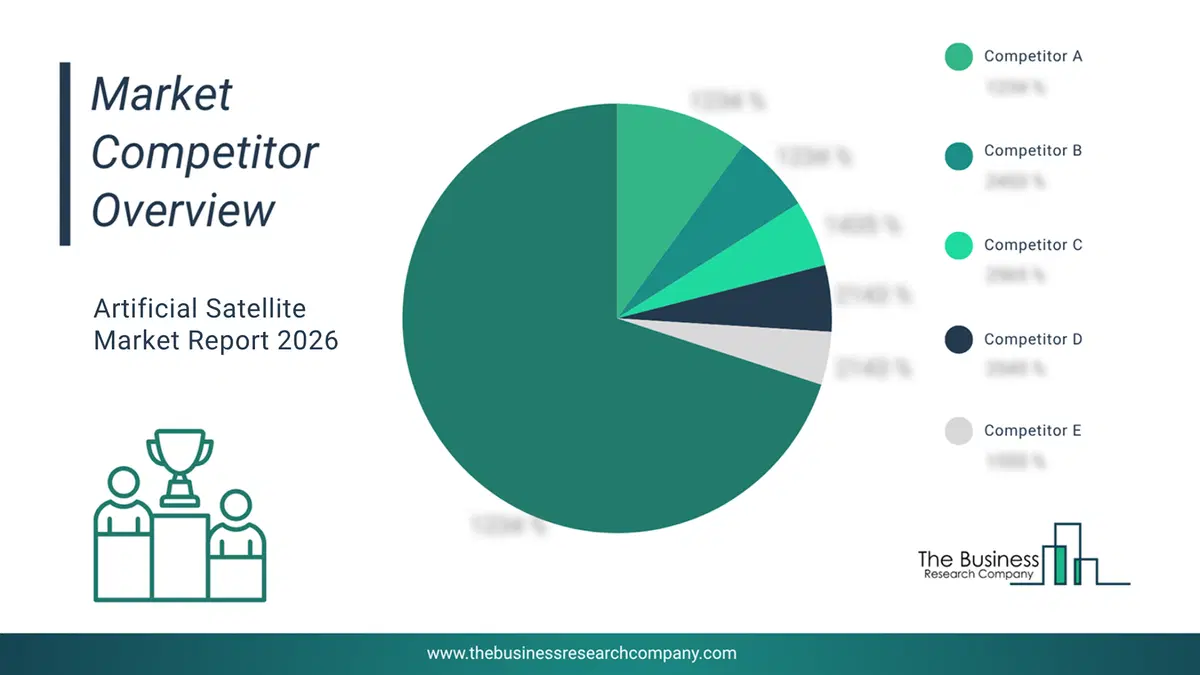
This chart is for illustrative purposes; the full report includes a detailed competitor analysis and comprehensive overview of the top 10 companies in the market.
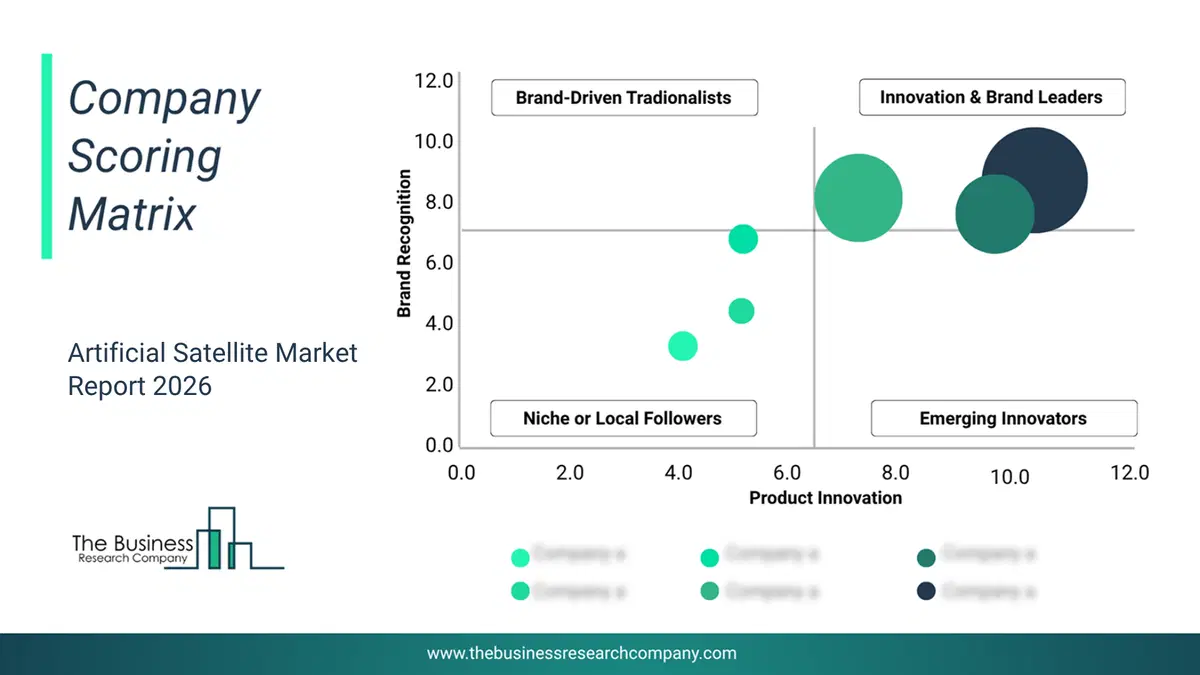
This chart maps companies by product innovation and brand strength, with bubble size indicating relative revenue, helping identify market leaders, challengers, and niche players. This is an illustrative chart; the full report provides a complete and accurate competitive analysis.
Global Artificial Satellite Market Trends and Insights
Major companies operating in the artificial satellite market are focusing on developing advanced solutions, such as hyperspectral satellite constellations, to provide high-resolution environmental data, enhance monitoring precision, and support global climate action initiatives. Hyperspectral satellite constellations refer to space platforms equipped with sensors that capture data across numerous narrow spectral bands, enabling detailed analysis of Earth’s surface, including chemical compositions, vegetation health, and atmospheric changes. For instance, in January 2025, Pixxel Space Technologies Inc., a US-based space technology company, launched the first three satellites of its Firefly constellation aboard a SpaceX Transporter-12 rideshare mission. This hyperspectral satellite features 5-meter spatial resolution, over 150 spectral bands, a 40-kilometer swath width, and daily revisit capability, enabling near-real-time, detailed monitoring of planetary health. The combination of high spatial resolution and rich spectral data allows for targeted environmental analysis, predictive modeling, and the detection of subtle changes in chemical compositions, water quality, vegetation health, and atmospheric conditions, providing critical insights for climate action and sustainable resource management.What Are Latest Mergers And Acquisitions In The Artificial Satellite Market? Rocket Lab Strengthens Defense Space Capabilities Through Geost Acquisition
In August 2025, Rocket Lab Corporation, a US-based aerospace company, acquired Geost LLC for $275 million. With this acquisition, Rocket Lab aims to strengthen its capabilities in defense space systems by integrating Geost’s electro-optical and infrared sensor payloads into its military satellite offerings. Geost LLC is a U.S.-based space technology company specializing in artificial satellite payloads.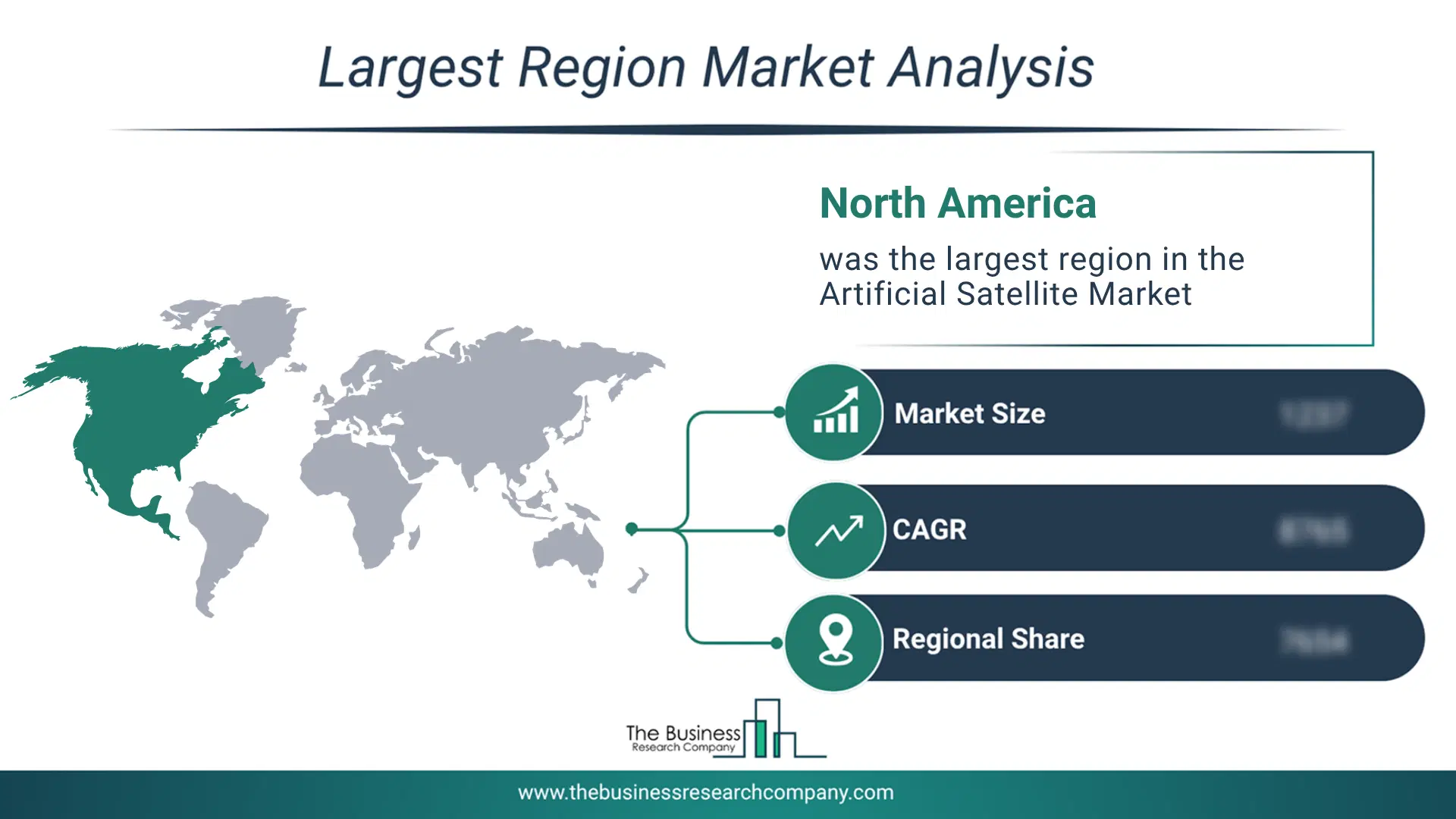
Regional Insights
North America was the largest region in the artificial satellite market in 2025. The regions covered in the artificial satellite market report are Asia-Pacific, South East Asia, Western Europe, Eastern Europe, North America, South America, Middle East, Africa. The countries covered in the artificial satellite market report are Australia, Brazil, China, France, Germany, India, Indonesia, Japan, Taiwan, Russia, South Korea, UK, USA, Canada, Italy, SpainWhat Defines the Artificial Satellite Market?
The artificial satellite market consists of sales of satellite buses, payload modules, antennas, solar panels, batteries, onboard computers, sensors, transponders, propulsion systems, thermal control systems, reaction wheels, star trackers, communication modules, and structural frames. Values in this market are ‘factory gate’ values, that is, the value of goods sold by the manufacturers or creators of the goods, whether to other entities (including downstream manufacturers, wholesalers, distributors, and retailers) or directly to end customers. The value of goods in this market includes related services sold by the creators of the goods.How is Market Value Defined and Measured?
The market value is defined as the revenues that enterprises gain from the sale of goods and/or services within the specified market and geography through sales, grants, or donations in terms of the currency (in USD unless otherwise specified). The revenues for a specified geography are consumption values that are revenues generated by organizations in the specified geography within the market, irrespective of where they are produced. It does not include revenues from resales along the supply chain, either further along the supply chain or as part of other products.
This chart presents market attractiveness based on a quantitative evaluation of growth, competition, strategic alignment, and risk, offering a clear view of opportunity areas for decision-making. This chart is for illustrative purposes; the full report contains the complete analysis.

This chart highlights the Total Addressable Market (TAM) by estimating the maximum revenue opportunity using an assumption-driven approach, supporting strategic planning and opportunity sizing across markets. The chart is illustrative; the full report provides a more comprehensive analysis.
What Key Data and Analysis Are Included in the Artificial Satellite Market Report 2026?
The artificial satellite market research report is one of a series of new reports from The Business Research Company that provides market statistics, including industry global market size, regional shares, competitors with the market share, detailed market segments, market trends and opportunities, and any further data you may need to thrive in the artificial satellite industry. The market research report delivers a complete perspective of everything you need, with an in-depth analysis of the current and future state of the industry.Artificial Satellite Market Report Forecast Analysis
| Report Attribute | Details |
|---|---|
| Market Size Value In 2026 | $34.27 billion |
| Revenue Forecast In 2030 | $46.82 billion |
| Growth Rate | CAGR of 8.1% from 2026 to 2030 |
| Base Year For Estimation | 2025 |
| Actual Estimates/Historical Data | 2020-2025 |
| Forecast Period | 2026 - 2030 |
| Market Representation | Revenue in USD Billion and CAGR from 2026 to 2030 |
| Segments Covered | Satellite Type, Orbit Type, Ownership, Application, End User |
| Regional Scope | Asia-Pacific, Western Europe, Eastern Europe, North America, South America, Middle East, Africa |
| Country Scope | The countries covered in the artificial satellite market report are Australia, Brazil, China, France, Germany, India, Indonesia, Japan, Taiwan, Russia, South Korea, UK, USA, Canada, Italy, Spain |
| Key Companies Profiled | The Boeing Company, Airbus Group SE, Raytheon Technologies Corporation, Lockheed Martin Corporation, Northrop Grumman Corporation, Mitsubishi Electric Corporation, L3Harris Technologies Inc., Space Exploration Technologies Corp. (SpaceX), Blue Origin LLC, QinetiQ Group plc, Maxar Technologies Inc., OHB SE, Sierra Nevada Corporation, Iridium Communications Inc., OneWeb Satellites Limited, Planet Labs PBC, GomSpace Group AB, Dhruva Space Private Limited, NPO Lavochkin Association, Berlin Space Technologies GmbH, Indian Space Research Organisation, RKK Energiya |
| Customization Scope | Request for Customization |
| Pricing And Purchase Options | Explore Purchase Options |