
Augmented Reality (AR) Shopping Market Report 2026
Global Outlook – By Offering (Hardware, Software, Services), By AR Technology (Marker-Based AR, Markerless AR), By Application (Automotive, Home Goods And Furniture, Beauty And Cosmetics, Apparel Fittings, Grocery Shopping, Footwear, Other Applications), By End Use (Retail And In-Store, E-Commerce And Out Of Store) – Market Size, Trends, Strategies, and Forecast to 2030
Augmented Reality (AR) Shopping Market Overview
• Augmented Reality (AR) Shopping market size has reached to $8.03 billion in 2025 • Expected to grow to $31.43 billion in 2030 at a compound annual growth rate (CAGR) of 31.3% • Growth Driver: Increasing Smartphone Adoption Fuels Growth Of The Market By Expanding Digital Connectivity Enhancing Consumer Engagement • Market Trend: Advancing Generative AI for Personalized Virtual Try-On Experiences • North America was the largest region in 2025.What Is Covered Under Augmented Reality (AR) Shopping Market?
Augmented reality (AR) shopping refers to the use of AR technology to enhance the consumer shopping experience by blending virtual elements with the real world. It allows users to visualize products in 3D, try on items virtually, and interact with interactive features through their smartphones or AR glasses. This technology enables a more immersive, personalized, and engaging shopping experience, particularly in eCommerce and retail environments. The main augmented reality (AR) shopping offerings include hardware, software, and services. Hardware refers to devices and equipment used to enable augmented reality experiences, including headsets, smart mirrors, and handheld devices. The technology includes marker-based AR and markerless AR, applied across industries such as automotive, home goods and furniture, beauty and cosmetics, apparel fittings, grocery shopping, footwear, and others. It is utilized in retail and in-store and e-commerce and out-of-store.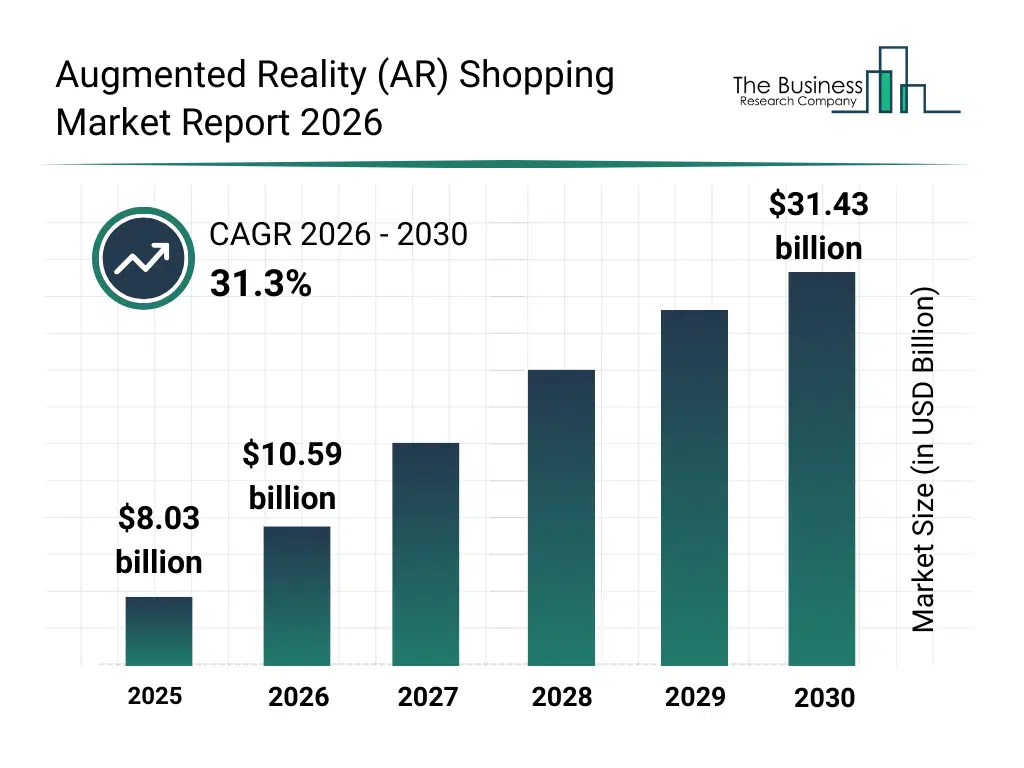
What Is The Augmented Reality (AR) Shopping Market Size and Share 2026?
The augmented reality (ar) shopping market size has grown exponentially in recent years. It will grow from $8.03 billion in 2025 to $10.59 billion in 2026 at a compound annual growth rate (CAGR) of 31.9%. The growth in the historic period can be attributed to growth of online retail platforms, increasing smartphone usage, demand for interactive shopping, limitations of traditional e-commerce visuals, early adoption of virtual try-on tools.What Is The Augmented Reality (AR) Shopping Market Growth Forecast?
The augmented reality (ar) shopping market size is expected to see exponential growth in the next few years. It will grow to $31.43 billion in 2030 at a compound annual growth rate (CAGR) of 31.3%. The growth in the forecast period can be attributed to expansion of metaverse commerce, rising adoption of ar smart devices, increasing consumer preference for immersive shopping, integration of ar with payment platforms, growth of omnichannel retail strategies. Major trends in the forecast period include mobile-based ar shopping experiences, AI-powered virtual try-on solutions, web-based ar commerce platforms, personalized ar shopping interfaces, social commerce integration with ar.
Global Augmented Reality (AR) Shopping Market Segmentation
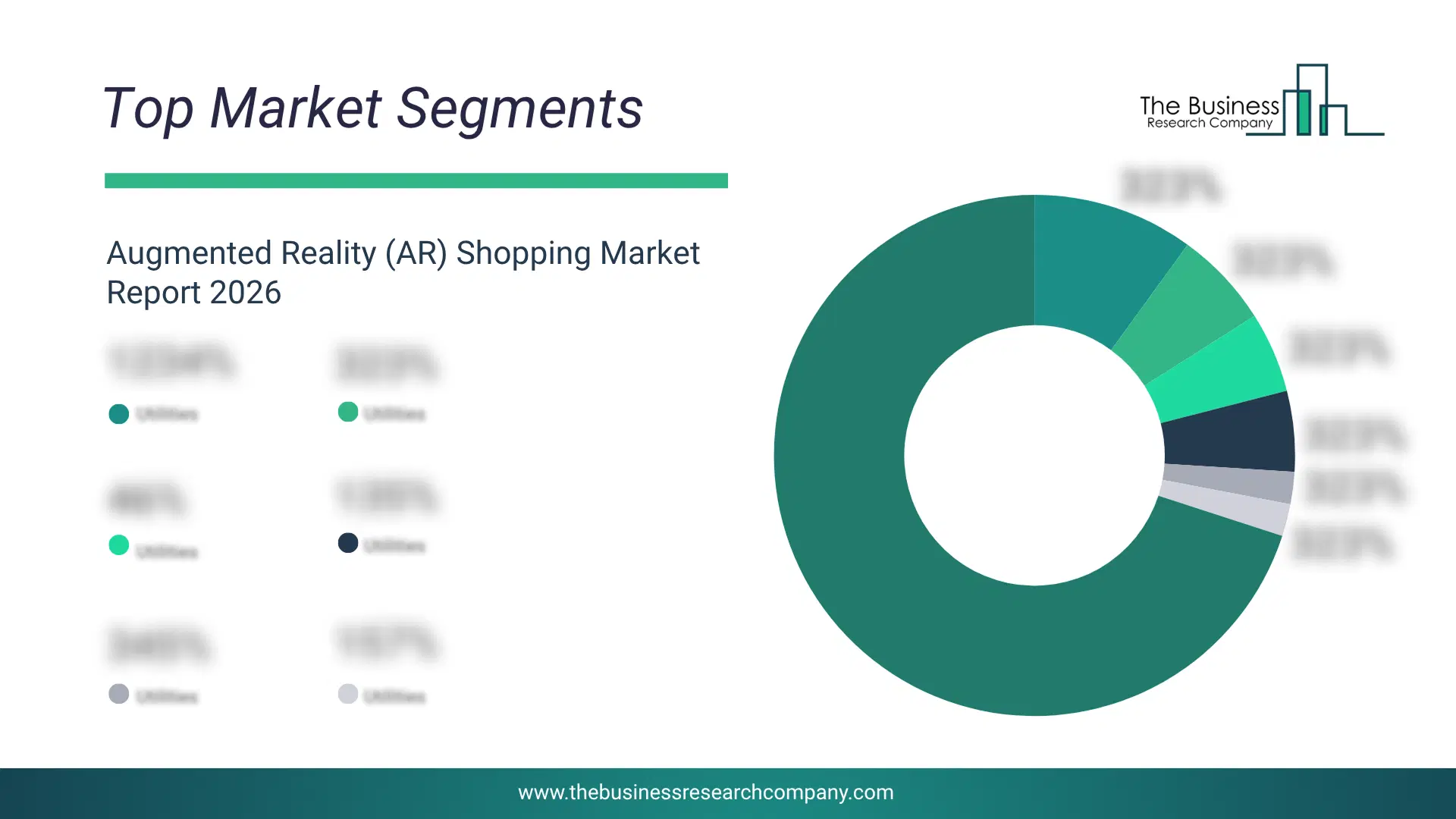
1) By Offering: Hardware, Software, Services 2) By AR Technology: Marker-Based AR, Markerless AR 3) By Application: Automotive, Home Goods And Furniture, Beauty And Cosmetics, Apparel Fittings, Grocery Shopping, Footwear, Other Applications 4) By End Use: Retail And In-Store, E-Commerce And Out Of Store Subsegments: 1) By Hardware: Augmented Reality Smart Glasses, Augmented Reality Head-Mounted Displays, Augmented Reality-Enabled Smartphones And Tablets, Augmented Reality Mirrors And Kiosks, Augmented Reality Sensors And Cameras 2) By Software: Augmented Reality Shopping Applications, Artificial Intelligence-Powered Virtual Try-On Solutions, Augmented Reality-Powered Product Visualization Tools, Web-Based Augmented Reality Shopping Platforms, Augmented Reality Content Creation And Management Software 3) By Services: Augmented Reality Integration And Deployment Services, Augmented Reality Shopping Experience Consulting, Custom Augmented Reality Application Development, Maintenance And Support Services For AR Solutions, Augmented Reality Marketing And Advertising SolutionsWhat Is The Driver Of The Augmented Reality (AR) Shopping Market?
The increasing availability of smartphones is expected to drive the growth of the augmented reality (AR) shopping market going forward. Smartphone adoption is high due to their affordability, multifunctionality, and seamless connectivity, meeting diverse consumer needs in a compact device. Smartphones enable augmented reality (AR) shopping by allowing users to visualize products in real-time, enhancing the online shopping experience with interactive and immersive features. For instance, in February 2024, according to Uswitch Limited, a UK-based provider of comparison and switching services, the UK had 71.8 million mobile connections at the beginning of 2022. By 2025, the UK population is projected to reach 68.3 million, with 95% (around 65 million people) expected to be smartphone users. Therefore, the increasing availability of smartphones will drive the growth of the augmented reality (AR) shopping industry.Key Players In The Global Augmented Reality (AR) Shopping Market
Major companies operating in the augmented reality (ar) shopping market are Amazon.com Inc., Apple Inc., Google LLC, Microsoft Corporation, Meta Platforms Inc., Inter Ikea Systems BV, Qualcomm Technologies, Inc., Wayfair Inc., Seiko Epson Corporation, Burberry Group Plc, PTC Inc., Converse Inc., Warby Parker Inc., Houzz Inc., Magic Leap Inc., Rebecca Minkoff LLC, StayinFront Inc., 3D Cloud by Marxent (Marxent Labs LLC), Blippar Ltd., Vuzix Corporation, Wikitude GmbH, Holition Ltd., ViewAR GmbH, Zugara Inc., Imaginate Technologies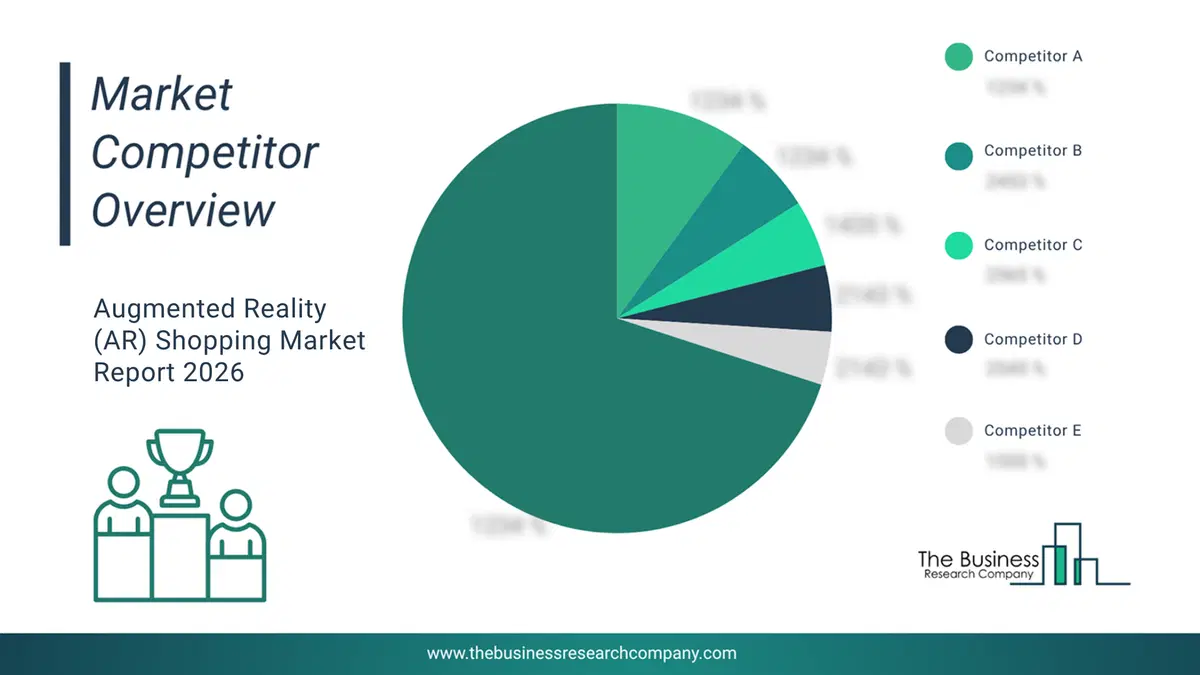
This chart is for illustrative purposes; the full report includes a detailed competitor analysis and comprehensive overview of the top 10 companies in the market.
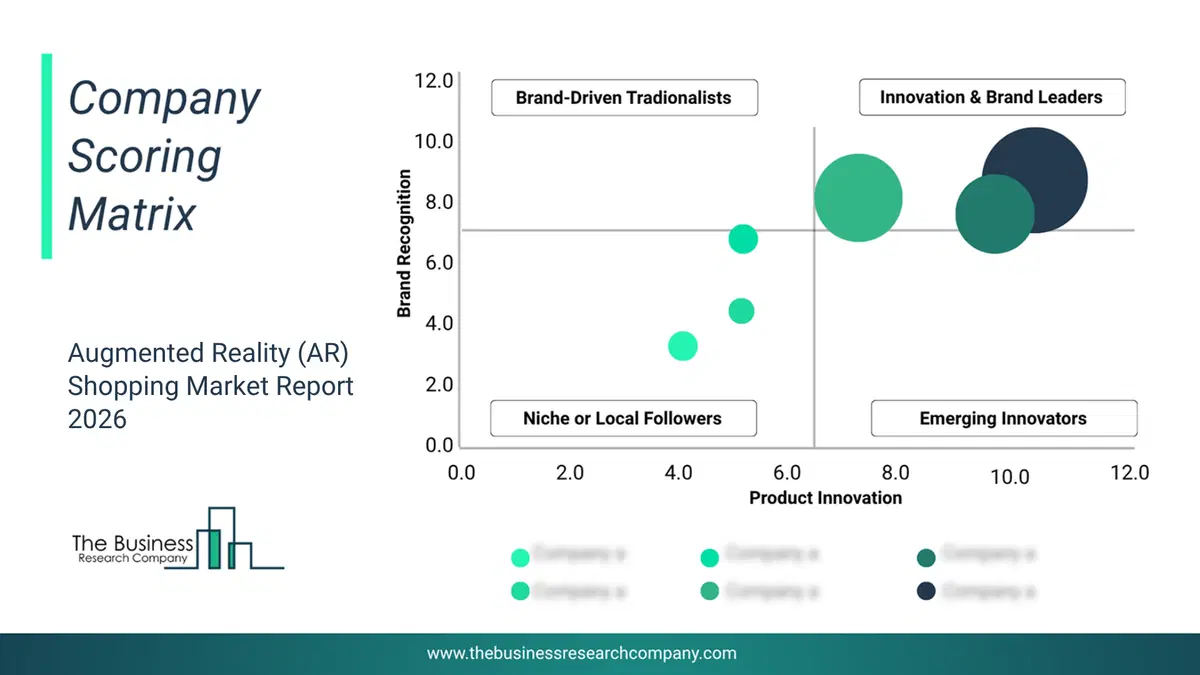
This chart maps companies by product innovation and brand strength, with bubble size indicating relative revenue, helping identify market leaders, challengers, and niche players. This is an illustrative chart; the full report provides a complete and accurate competitive analysis.
Global Augmented Reality (AR) Shopping Market Trends and Insights
Major companies operating in the augmented reality (AR) shopping market are focusing on technological advancements, such as generative AI driven AR try-on APIs, to meet the rising demand for highly personalized, immersive online shopping experiences that boost buyer confidence and reduce return rates. Generative-AI AR try-on APIs provide developers with pre-trained models that can render realistic virtual garments, makeup, or accessories on users’ photos or live video in real time. As opposed to traditional rule based AR overlays, these APIs use deep learning to understand body shape, lighting, and pose, enabling more accurate, lifelike previews. For instance, in December 2024, Perfect Corp., a Taiwan based SaaS company specializing in AI and AR beauty and fashion tech, launched its Generative AI APIs that include virtual hairstyle and wig try-on, AI makeup transfer, age-progression simulation, and more. These APIs are composed of generative deep learning models and image processing tools, enabling developers to integrate hyper-realistic virtual try-on experiences into e-commerce apps or websites without building complex AI pipelines from scratch. The solution supports real-time interactivity, scales with traffic, and offers a highly personalized user journey by tailoring looks to individual facial structure, lighting, and style, thus enhancing engagement, reducing returns, and enriching online retail.What Are Latest Mergers And Acquisitions In The Augmented Reality (AR) Shopping Market?
In December 2024, Perfect Corp., a Taiwan-based provider of AR and AI solutions for beauty diagnostics and virtual try-on experiences, acquired Wannaby for an undisclosed amount. With this acquisition, Perfect Corp. aims to expand its offerings into the luxury fashion segment, including shoes, bags, and apparel, while enhancing its technological capabilities in AR-based virtual try-on solutions. Wannaby is a Belarus-based provider of virtual try-on technology and digitalization solutions for the fashion industry, serving over 30 top-tier luxury brands with immersive AR experiences.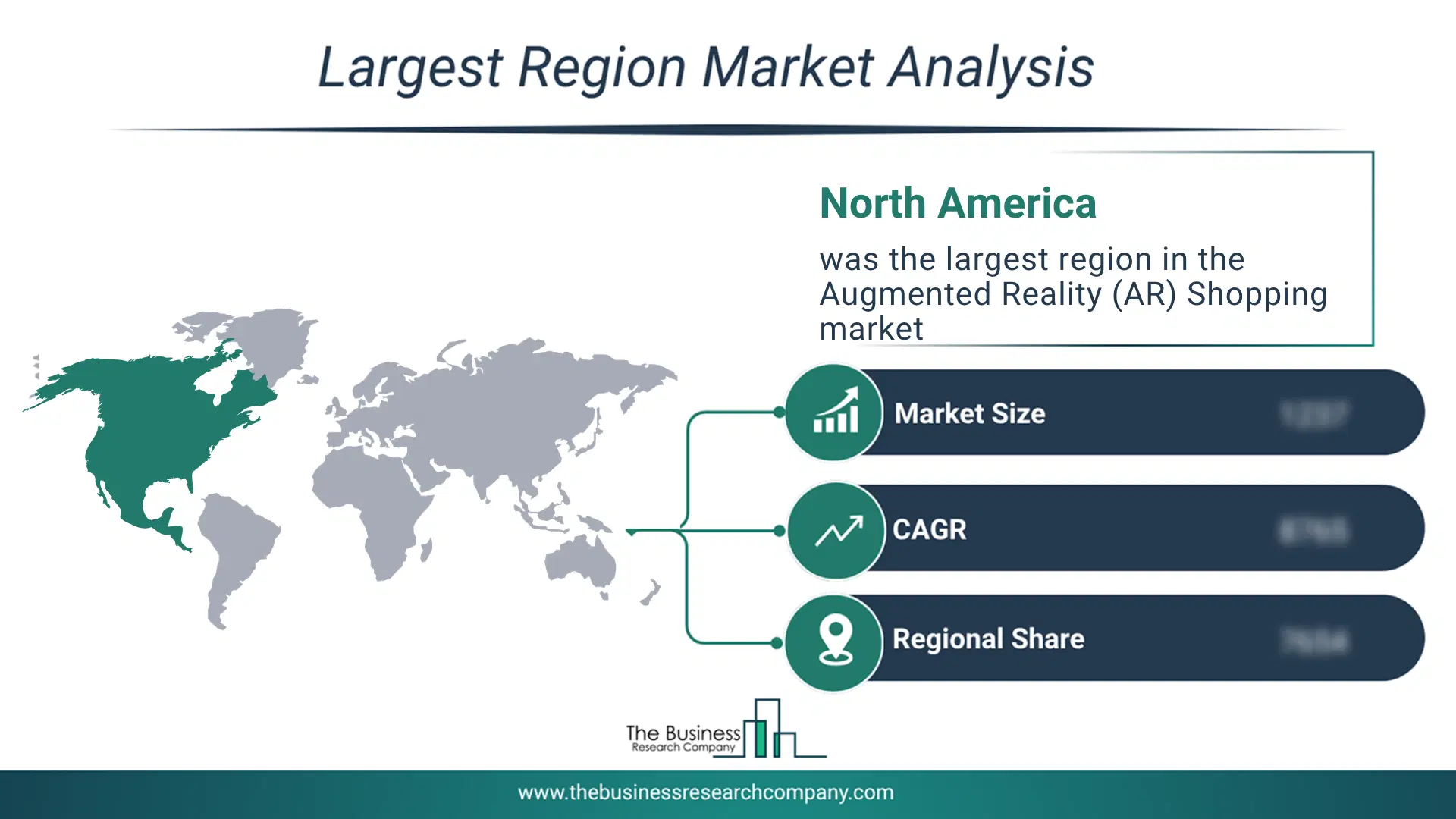
Regional Insights
North America was the largest region in the augmented reality (AR) shopping market in 2025. The regions covered in this market report are Asia-Pacific, South East Asia, Western Europe, Eastern Europe, North America, South America, Middle East, Africa. The countries covered in this market report are Australia, Brazil, China, France, Germany, India, Indonesia, Japan, Taiwan, Russia, South Korea, UK, USA, Canada, Italy, Spain.What Defines the Augmented Reality (AR) Shopping Market?
The augmented reality (AR) shopping market consists of revenues earned by entities by providing services such as personalized recommendations, customer support, and gamification of shopping experiences. The market value includes the value of related goods sold by the service provider or included within the service offering. The augmented reality (AR) shopping market also includes sales of interactive product customization tools, shopping apps, advertising displays, and navigation tools for retail stores. Values in this market are ‘factory gate’ values, that is the value of goods sold by the manufacturers or creators of the goods, whether to other entities (including downstream manufacturers, wholesalers, distributors and retailers) or directly to end customers. The value of goods in this market includes related services sold by the creators of the goods.How is Market Value Defined and Measured?
The market value is defined as the revenues that enterprises gain from the sale of goods and/or services within the specified market and geography through sales, grants, or donations in terms of the currency (in USD unless otherwise specified). The revenues for a specified geography are consumption values that are revenues generated by organizations in the specified geography within the market, irrespective of where they are produced. It does not include revenues from resales along the supply chain, either further along the supply chain or as part of other products.
This chart presents market attractiveness based on a quantitative evaluation of growth, competition, strategic alignment, and risk, offering a clear view of opportunity areas for decision-making. This chart is for illustrative purposes; the full report contains the complete analysis.

This chart highlights the Total Addressable Market (TAM) by estimating the maximum revenue opportunity using an assumption-driven approach, supporting strategic planning and opportunity sizing across markets. The chart is illustrative; the full report provides a more comprehensive analysis.
What Key Data and Analysis Are Included in the Augmented Reality (AR) Shopping Market Report 2026?
The augmented reality (ar) shopping market research report is one of a series of new reports from The Business Research Company that provides market statistics, including industry global market size, regional shares, competitors with the market share, detailed market segments, market trends and opportunities, and any further data you may need to thrive in the augmented reality (ar) shopping industry. The market research report delivers a complete perspective of everything you need, with an in-depth analysis of the current and future state of the industry.Augmented Reality (AR) Shopping Market Report Forecast Analysis
| Report Attribute | Details |
|---|---|
| Market Size Value In 2026 | $10.59 billion |
| Revenue Forecast In 2030 | $31.43 billion |
| Growth Rate | CAGR of 31.3% from 2026 to 2030 |
| Base Year For Estimation | 2025 |
| Actual Estimates/Historical Data | 2020-2025 |
| Forecast Period | 2026 - 2030 |
| Market Representation | Revenue in USD Billion and CAGR from 2026 to 2030 |
| Segments Covered | Offering, AR Technology, Application, End Use |
| Regional Scope | Asia-Pacific, Western Europe, Eastern Europe, North America, South America, Middle East, Africa |
| Country Scope | The Countries Covered In This Market Report Are Australia, Brazil, China, France, Germany, India, Indonesia, Japan, Taiwan, Russia, South Korea, Uk, Usa, Canada, Italy, Spain. |
| Key Companies Profiled | Amazon.com Inc., Apple Inc., Google LLC, Microsoft Corporation, Meta Platforms Inc., Inter Ikea Systems BV, Qualcomm Technologies, Inc., Wayfair Inc., Seiko Epson Corporation, Burberry Group Plc, PTC Inc., Converse Inc., Warby Parker Inc., Houzz Inc., Magic Leap Inc., Rebecca Minkoff LLC, StayinFront Inc., 3D Cloud by Marxent (Marxent Labs LLC), Blippar Ltd., Vuzix Corporation, Wikitude GmbH, Holition Ltd., ViewAR GmbH, Zugara Inc., Imaginate Technologies |
| Customization Scope | Request for Customization |
| Pricing And Purchase Options | Explore Purchase Options |