
Carbon Fiber Composites In Aerospace Market Report 2026
Global Outlook – By Type Of Carbon Fiber Composite (Polymer Matrix Composites, Ceramic Matrix Composites, Metal Matrix Composites), By Manufacturing Process (Hand Lay-Up, Spray-Up, Resin Transfer Molding (RTM), Filament Winding), By Application (Aircraft Structures, Aerospace Components, Spacecraft), By End-User (Commercial Aviation, Military Aviation, Space Exploration, Unmanned Aerial Vehicles) – Market Size, Trends, Strategies, and Forecast to 2030
Carbon Fiber Composites In Aerospace Market Overview
• Carbon Fiber Composites In Aerospace market size has reached to $2.91 billion in 2025 • Expected to grow to $4.37 billion in 2030 at a compound annual growth rate (CAGR) of 8.4% • Growth Driver: The Rise In Demand For Fuel-Efficient Aircraft Driving The Growth Of Carbon Fiber Composites Market Due To High Fuel Costs And Need For Weight Reduction • Market Trend: Advancements In High-Performance Intermediate Modulus Carbon Fibers Propel Aerospace Strength And Weight Reduction • North America was the largest region in 2025 and Asia-Pacific is the fastest growing region.Market Gains By 2030 – Top Opportunities By Segment
Market Gain identifies the most promising market opportunities by highlighting the segments or products expected to generate the highest incremental revenue growth over the next five years.
What Is Covered Under Carbon Fiber Composites In Aerospace Market?
Carbon fiber composites in aerospace refer to advanced materials made by embedding carbon fibers into a resin matrix, creating a lightweight yet strong composite. These composites are widely used in aerospace for their high strength-to-weight ratio, corrosion resistance, and durability. They help improve fuel efficiency, structural performance, and overall aircraft safety. The main types of carbon fiber composites in aerospace are polymer matrix composites, ceramic matrix composites, and metal matrix composites. Polymer matrix composites refer to materials made by combining a polymer resin with reinforcing fibers to improve strength, stiffness, and durability. These materials are manufactured through processes such as hand lay-up, spray-up, resin transfer molding (RTM), and filament winding. They are applied in aircraft structures, aerospace components, and spacecraft. These are used by various end users such as commercial aviation, military aviation, space exploration, and unmanned aerial vehicles (UAVs).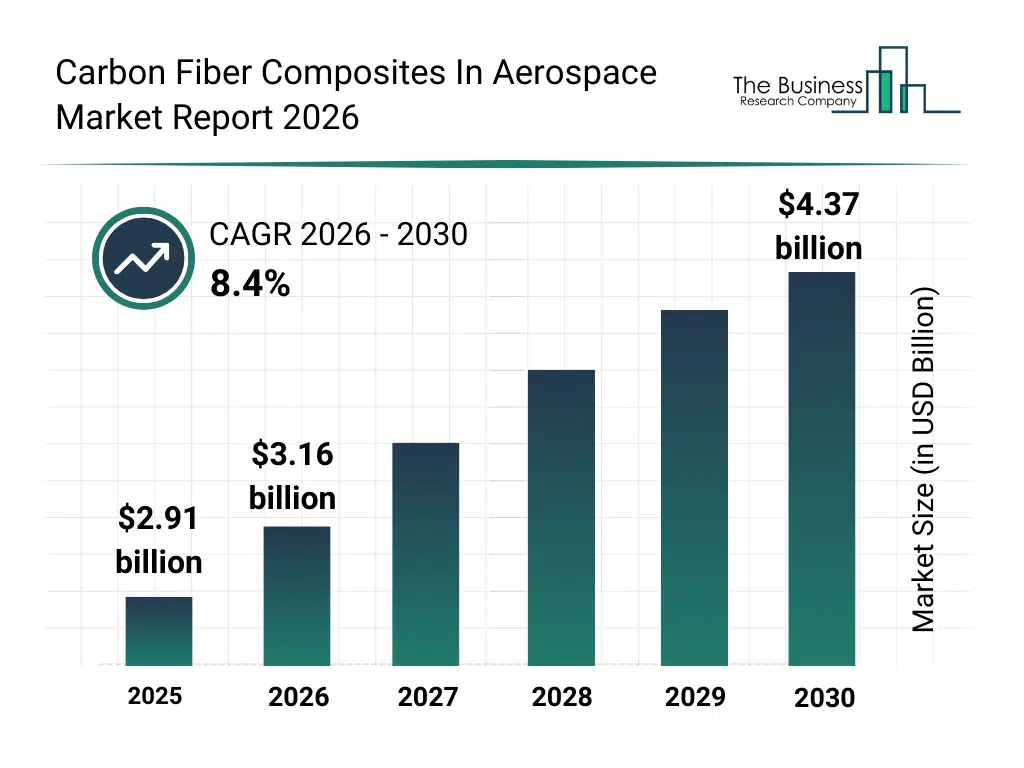
What Is The Carbon Fiber Composites In Aerospace Market Size and Share 2026?
The carbon fiber composites in aerospace market size has grown strongly in recent years. It will grow from $2.91 billion in 2025 to $3.16 billion in 2026 at a compound annual growth rate (CAGR) of 8.6%. The growth in the historic period can be attributed to adoption of carbon fiber reinforced polymer panels for lightweight aircraft structures, development of carbon fiber tow and prepregs for advanced manufacturing, rising use of composite structural components to enhance durability, integration of carbon fiber composite engine parts for performance improvement, implementation of interior aerospace components made from carbon fiber composites.What Is The Carbon Fiber Composites In Aerospace Market Growth Forecast?
The carbon fiber composites in aerospace market size is expected to see strong growth in the next few years. It will grow to $4.37 billion in 2030 at a compound annual growth rate (CAGR) of 8.4%. The growth in the forecast period can be attributed to growing demand for high-strength, lightweight carbon fiber composites in next-generation aircraft, expansion of carbon fiber composite applications in engine and propulsion systems, rising adoption of automated and additive manufacturing techniques for composite parts, focus on corrosion-resistant and fatigue-tolerant aerospace components, increasing procurement for commercial, military, and space aerospace programs. Major trends in the forecast period include rising shift toward lightweight aircraft structures, increased adoption of high-temperature composites for aerospace engines, growing demand for corrosion-resistant materials in space applications, expansion of composite use in next-generation uav platforms, improved fatigue performance requirements for advanced aerospace designs.
Global Carbon Fiber Composites In Aerospace Market Segmentation
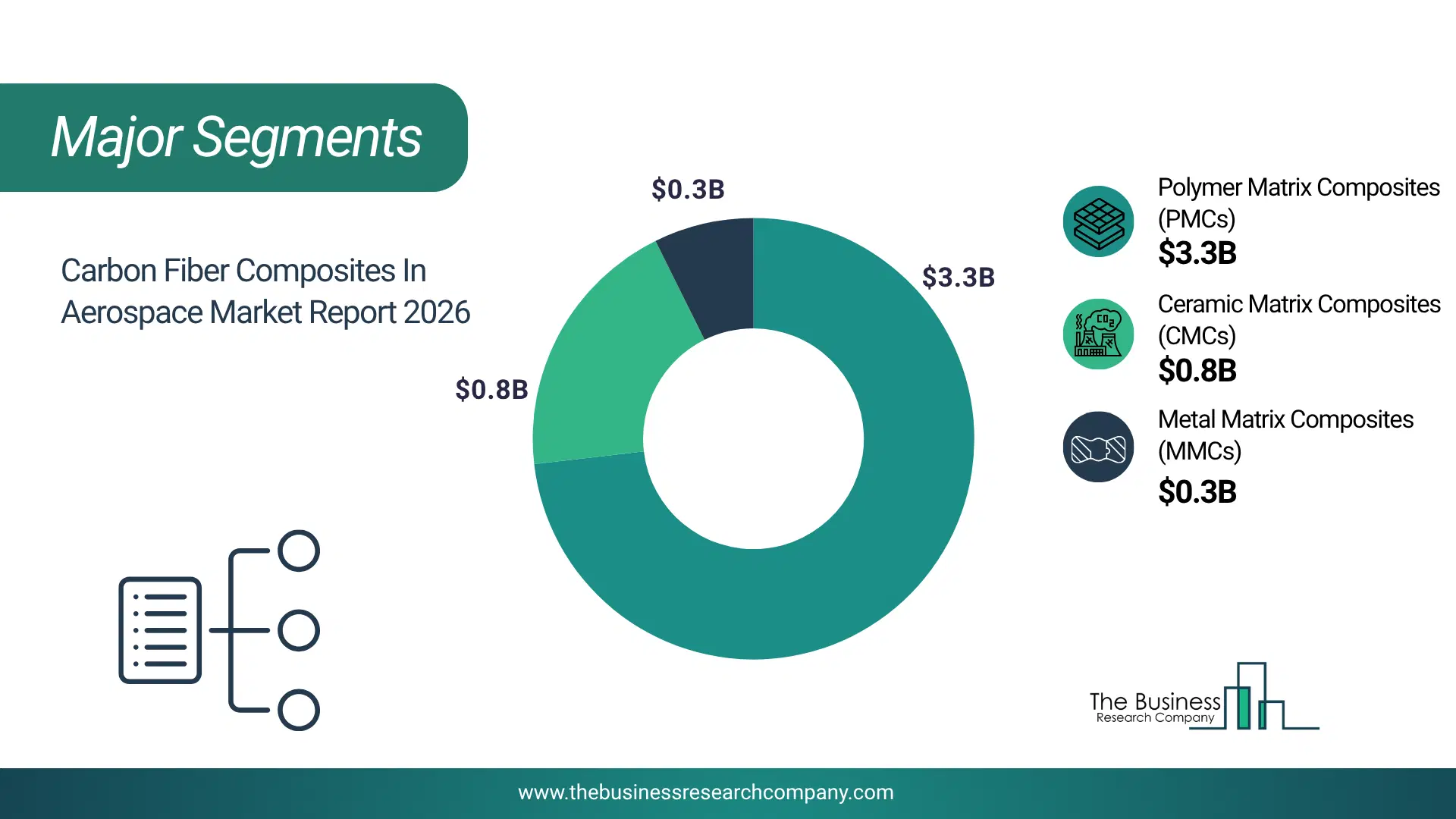
1) By Type Of Carbon Fiber Composite: Polymer Matrix Composites, Ceramic Matrix Composites, Metal Matrix Composites 2) By Manufacturing Process: Hand Lay-Up, Spray-Up, Resin Transfer Molding (RTM), Filament Winding 3) By Application: Aircraft Structures, Aerospace Components, Spacecraft 4) By End-User: Commercial Aviation, Military Aviation, Space Exploration, Unmanned Aerial Vehicles Subsegments: 1) By Polymer Matrix Composites: Epoxy-Based Carbon Fiber Composites, Thermoplastic Carbon Fiber Composites, Phenolic-Based Carbon Fiber Composites, Polyester-Based Carbon Fiber Composites 2) By Ceramic Matrix Composites: Carbon Or Carbon Composites, Carbo Or Silicon Carbide Composites, Silicon Carbide Or Silicon Carbide Composites 3) By Metal Matrix Composites: Aluminum-Based Carbon Fiber Composites, Titanium-Based Carbon Fiber Composites, Magnesium-Based Carbon Fiber Composites The top segments in the carbon fiber composites in aerospace market will be: • Polymer Matrix Composites (PMCs) will reach $3.3 billion by 2030. • Ceramic Matrix Composites (CMCs) will reach $0.78 billion by 2030. • Metal Matrix Composites (MMCs) will reach $0.29 billion by 2030.What Is Driver Of The Carbon Fiber Composites In Aerospace Market?
The rising demand for fuel-efficient aircraft is expected to propel the growth of carbon fiber composites in the aerospace market going forward. Fuel-efficient aircraft are airplanes designed to use less fuel per unit of distance or passenger carried, typically through advanced aerodynamics, lightweight materials, and efficient engines. The rising demand for fuel-efficient aircraft is due to growing environmental concerns, which have prompted airlines to seek lower carbon emissions and comply with stricter international regulations. Carbon fiber composites in aerospace significantly enhance fuel efficiency by reducing aircraft weight while maintaining strength and durability, resulting to lower fuel consumption and emissions. For instance, in September 2025, according to the Bureau of Transportation Statistics, a US-based government agency, U.S. airlines’ July 2025 fuel cost and consumption numbers indicating U.S. scheduled service airlines used 1.760 billion gallons of fuel, 4.3% more fuel than in June 2025 (1.688 billion gallons) and 1.6% more fuel than July 2024 (1,734 billion gallons).Therefore, the rising demand for fuel-efficient aircraft is driving the carbon fiber composites in the aerospace market.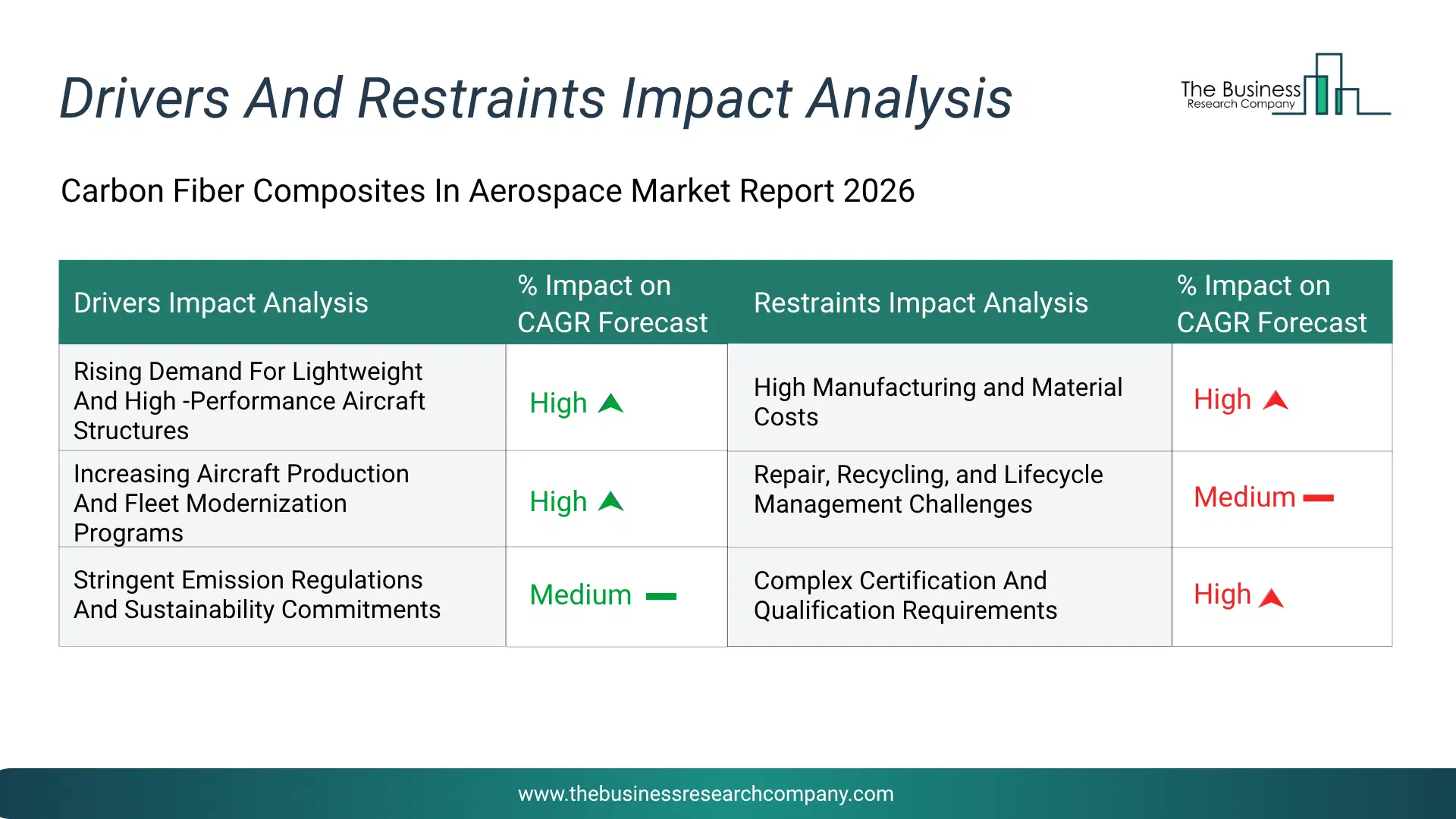
Infographic Chart Showing Key Market Drivers Analysis And Restraints For Carbon Fiber Composites In Aerospace Market
The chart presents an impact analysis of key drivers and restraints, quantifying their relative influence on the market's growth rate and helping assess the balance between growth enablers and limiting factors. This chart offers a high-level perspective; the full report contains more detailed insights.
How Will The Drivers Impact Growth In The Global Carbon Fiber Composites In Aerospace Market?
• Rising Demand For Lightweight And High -Performance Aircraft Structures (High) – During the forecast period, the rising demand for lightweight and high -performance aircraft structures is expected to become a key growth driver for the carbon fiber composites in aerospace market by 2030. Commercial aircraft manufacturers are increasingly incorporating composite materials in fuselage sections, wings, tail assemblies, and interior components to reduce overall aircraft weight and improve fuel efficiency. This weight reduction lowers operating costs and extends flight range, making composites a strategic choice for next -generation aircraft programs. Rising demand for lightweight, high -performance airframes across commercial, military, and business aviation continues to be a major driver of market growth. • Increasing Aircraft Production And Fleet Modernization Programs (High) – During the forecast period, the increasing aircraft production and fleet modernization programs are expected to emerge as a major factor driving the expansion of the carbon fiber composites in aerospace market by 2030. Global air passenger traffic growth, expanding low-cost carriers, and replacement of aging aircraft fleets are accelerating aircraft production rates. Aerospace oems are focusing on modern composite-intensive platforms to meet efficiency and sustainability targets. Military modernization programs and growing uav (unmanned aerial vehicle) deployments further strengthen demand for carbon fiber composites. As airlines and defense agencies invest in advanced aircraft platforms, the consumption of aerospace-grade carbon fiber composites increases significantly, supporting sustained market expansion over the forecast period. • Stringent Emission Regulations And Sustainability Commitments (Medium) – During the forecast period, the stringent emission regulations and sustainability commitments is expected to act as a key growth catalyst for the carbon fiber composites in aerospace market by 2030. The aviation industry faces increasing regulatory pressure to reduce carbon emissions and improve environmental performance. Carbon fiber composites contribute to lighter aircraft designs, leading to lower fuel consumption and reduced greenhouse gas emissions. Airlines and manufacturers are aligning with global sustainability goals and carbon neutrality commitments, which further encourages the adoption of advanced composite materials. As governments and aviation bodies implement stricter emission norms, the transition toward composite-intensive aircraft designs becomes a key strategic priority, acting as a strong growth catalyst.How Will The Restraints Impact Growth In The Global Carbon Fiber Composites In Aerospace Market?
• High Manufacturing and Material Costs (High) – During the forecast period, the carbon fiber composite production involves complex processes such as layup, curing, autoclave processing, and precision molding, which require high capital investment and skilled labor. Aerospace-grade composites must meet stringent certification standards, increasing testing and quality assurance costs. The high price of raw materials and specialized manufacturing infrastructure can limit adoption, particularly among smaller aircraft manufacturers. These cost constraints act as a major restraint, affecting overall market penetration in cost-sensitive aerospace segments. • Repair, Recycling, and Lifecycle Management Challenges (Medium) – During the forecast period, the although carbon fiber composites provide excellent durability, repair processes are more complex than conventional metallic structures. Damage detection, structural repairs, and maintenance require specialized tools, certified technicians, and advanced inspection technologies. Additionally, recycling and end-of-life disposal of carbon fiber composites remain technically challenging and costly. These lifecycle management issues may slow adoption and increase operational expenses for airlines and defense operators, acting as a restraint on long-term market growth. • Complex Certification And Qualification Requirements (High) – During the forecast period, the the aerospace industry requires extensive testing, validation, and certification before new carbon fiber composite materials can be approved for commercial or military aircraft applications. Regulatory authorities impose stringent safety and performance standards, increasing development timelines and costs. Manufacturers must conduct long-term durability and structural integrity assessments, which can delay product commercialization. These certification complexities limit the speed of innovation and market adoption of advanced composite solutions.Key Players In The Global Carbon Fiber Composites In Aerospace Market
Major companies operating in the carbon fiber composites in aerospace market are Mitsubishi Chemical Group, Toray Industries Inc., Solvay S.A., DuPont de Nemours Inc., Formosa Plastics Corporation, TEIJIN LIMITED, Hexcel Corporation, SGL Carbon, Zoltek Companies Inc., BGF Industries Inc, Bally Ribbon Mills, A&P Technology Inc., FDC Composites Inc., Hyosung Advanced Materials, Clearwater Composites LLC, Kineco Limited, DowAksa, Creedx Composites, Epsilon Composite, Jiangsu Hengshen Co. Ltd.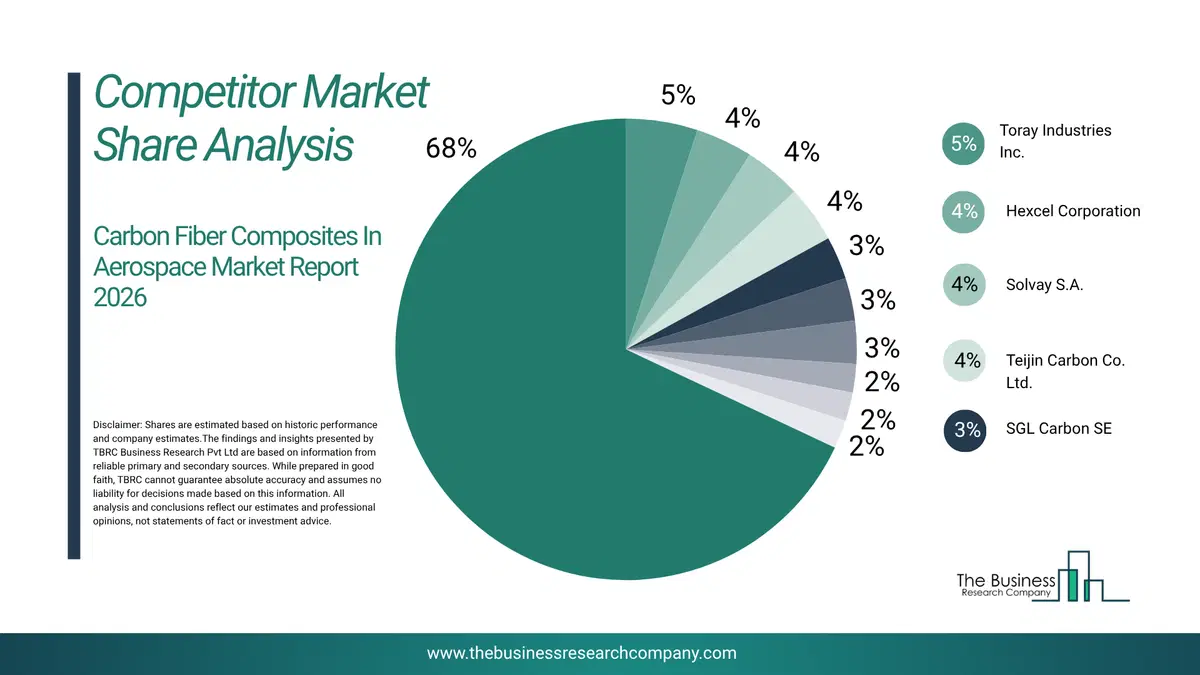
This chart is for illustrative purposes; the full report includes a detailed competitor analysis and comprehensive overview of the top 10 companies in the market.
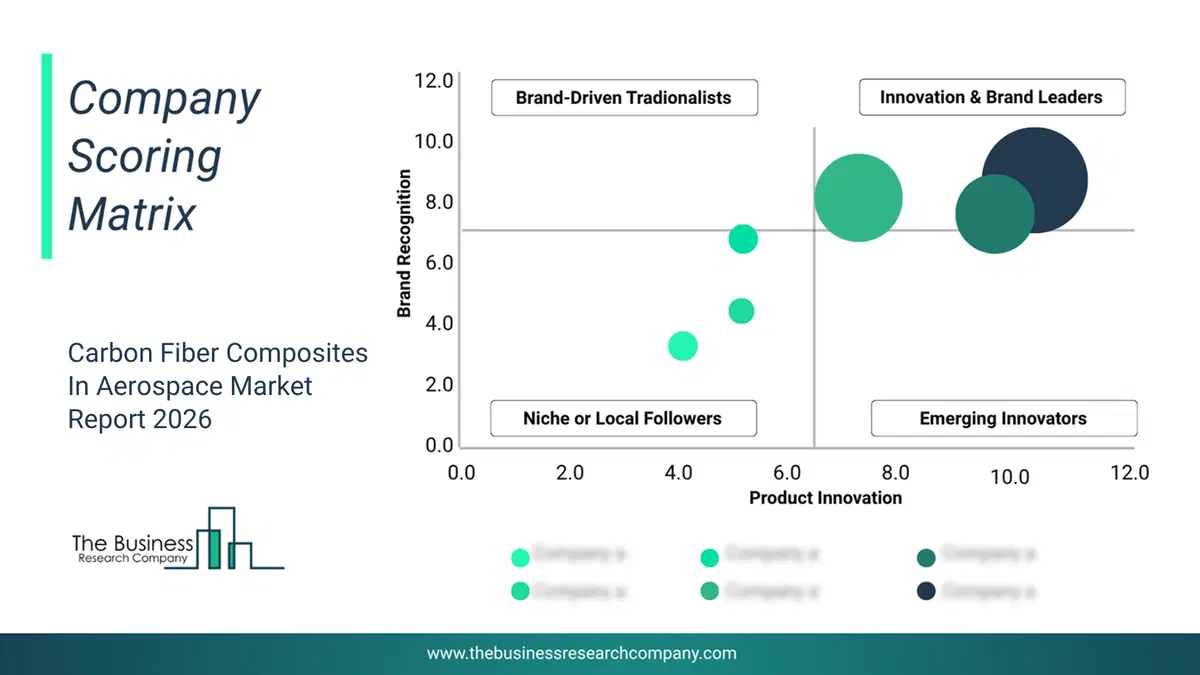
This chart maps companies by product innovation and brand strength, with bubble size indicating relative revenue, helping identify market leaders, challengers, and niche players. This is an illustrative chart; the full report provides a complete and accurate competitive analysis.
Global Carbon Fiber Composites In Aerospace Market Trends and Insights
Major companies operating in the carbon fiber composites in the aerospace market are focusing on developing innovative products such as high-performance intermediate modulus (IM) carbon fibers to enhance strength and reduce weight. High-performance intermediate modulus (IM) carbon fibers are lightweight, strong fibers with a balanced stiffness and tensile strength, optimized for aerospace applications requiring improved durability and weight reduction. For instance, In March 2024, Hexcel Corporation, a US-based aerospace and defense company, introduced the HexTow IM9 24K carbon fiber. This advanced composite material, featuring 24,000 filaments, delivers an average tensile strength exceeding 6,300 MPa, a modulus of 298 GPa, and a strain of 1.9%, significantly surpassing previous standards such as IM7. This is designed for high-rate manufacturing and demanding aerospace applications, the IM9 24K offers a 12% increase in tensile strength and improved productivity due to its larger tow size.What Are Latest Mergers And Acquisitions In The Carbon Fiber Composites In Aerospace Market? SK Capital Forms Axillon Aerospace To Deliver Advanced Composite Solutions For Defense And Commercial Aviation
In November 2024, SK Capital Partners, LP, a US-based capital market company, acquired Parker Hannifin Corporation's business as Axillon Aerospace for $2.95 billion. With this acquisition, SK Capital aims to transform Axillon Aerospace into a market-leading provider of advanced composite and fuel containment solutions for the defense and commercial aerospace sectors. Axillon Aerospace is a US-based aerospace and defense company that specializes in carbon fiber composites and fuel containment solutions for the aerospace industry.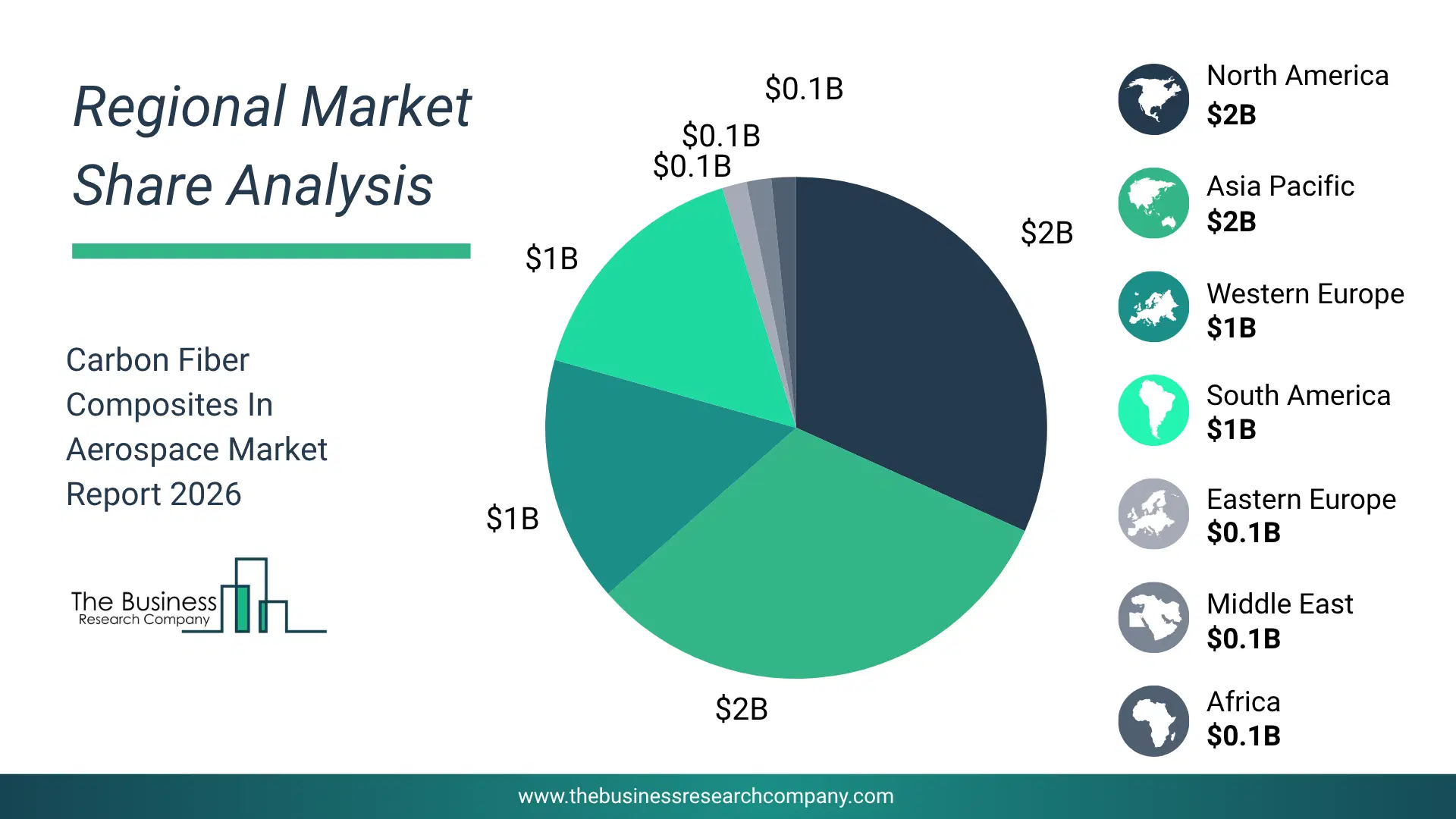
Regional Insights
North America was the largest region in the carbon fiber composites in aerospace market in 2025. Asia-Pacific is expected to be the fastest-growing region in the forecast period. The regions covered in this market report are Asia-Pacific, South East Asia, Western Europe, Eastern Europe, North America, South America, Middle East, Africa. The countries covered in this market report are Australia, Brazil, China, France, Germany, India, Indonesia, Japan, Taiwan, Russia, South Korea, UK, USA, Canada, Italy, SpainWhat Defines the Carbon Fiber Composites In Aerospace Market?
The carbon fiber composites in aerospace market consist of sales of carbon fiber reinforced polymer panels, carbon fiber tow and prepregs, composite structural components, carbon fiber composite engine parts, and interior aerospace components. Values in this market are ‘factory gate’ values, that is, the value of goods sold by the manufacturers or creators of the goods, whether to other entities (including downstream manufacturers, wholesalers, distributors, and retailers) or directly to end customers. The value of goods in this market includes related services sold by the creators of the goods.How is Market Value Defined and Measured?
The market value is defined as the revenues that enterprises gain from the sale of goods and/or services within the specified market and geography through sales, grants, or donations in terms of the currency (in USD unless otherwise specified). The revenues for a specified geography are consumption values that are revenues generated by organizations in the specified geography within the market, irrespective of where they are produced. It does not include revenues from resales along the supply chain, either further along the supply chain or as part of other products.
This chart presents market attractiveness based on a quantitative evaluation of growth, competition, strategic alignment, and risk, offering a clear view of opportunity areas for decision-making. This chart is for illustrative purposes; the full report contains the complete analysis.

This chart highlights the Total Addressable Market (TAM) by estimating the maximum revenue opportunity using an assumption-driven approach, supporting strategic planning and opportunity sizing across markets. The chart is illustrative; the full report provides a more comprehensive analysis.
What Key Data and Analysis Are Included in the Carbon Fiber Composites In Aerospace Market Report 2026?
The carbon fiber composites in aerospace market research report is one of a series of new reports from The Business Research Company that provides market statistics, including industry global market size, regional shares, competitors with the market share, detailed market segments, market trends and opportunities, and any further data you may need to thrive in the carbon fiber composites in aerospace industry. The market research report delivers a complete perspective of everything you need, with an in-depth analysis of the current and future state of the industry.Carbon Fiber Composites In Aerospace Market Report Forecast Analysis
| Report Attribute | Details |
|---|---|
| Market Size Value In 2026 | $3.16 billion |
| Revenue Forecast In 2030 | $4.37 billion |
| Growth Rate | CAGR of 8.4% from 2026 to 2030 |
| Base Year For Estimation | 2025 |
| Actual Estimates/Historical Data | 2020-2025 |
| Forecast Period | 2026 - 2030 |
| Market Representation | Revenue in USD Billion and CAGR from 2026 to 2030 |
| Segments Covered | Type Of Carbon Fiber Composite, Manufacturing Process, Application, End-User |
| Regional Scope | Asia-Pacific, Western Europe, Eastern Europe, North America, South America, Middle East, Africa |
| Country Scope | The countries covered in the report are Australia, Brazil, China, France, Germany, India, ... |
| Key Companies Profiled | Mitsubishi Chemical Group, Toray Industries Inc., Solvay S.A., DuPont de Nemours Inc., Formosa Plastics Corporation, TEIJIN LIMITED, Hexcel Corporation, SGL Carbon, Zoltek Companies Inc., BGF Industries Inc, Bally Ribbon Mills, A&P Technology Inc., FDC Composites Inc., Hyosung Advanced Materials, Clearwater Composites LLC, Kineco Limited, DowAksa, Creedx Composites, Epsilon Composite, Jiangsu Hengshen Co. Ltd. |
| Customization Scope | Request for Customization |
| Pricing And Purchase Options | Explore Purchase Options |