

Cellulosic Polymers Market Report 2026
Global Outlook – By Type (Cellulose Esters, Cellulose Ethers), By Application (Paints And Coatings, Flexible Packaging, Skin Care, Print Laminations, Other Applications), By End User (Food And Beverage, Building And Construction, Personal And Cosmetic Care, Medical And Pharmaceutical, Other End Users) – Market Size, Trends, Strategies, and Forecast to 2030
Cellulosic Polymers Market Overview
• Cellulosic Polymers market size has reached to $11.01 billion in 2025 • Expected to grow to $17.17 billion in 2030 at a compound annual growth rate (CAGR) of 9.3% • Growth Driver: Growing Popularity Of Personal Care Products Fuels Growth In The Market Due To Increasing Demand For Natural And Sustainable Ingredients • Market Trend: Membrane-Based Cellulosic Sugar Production Advances Sustainability And Bio-Based Polymer Manufacturing • Asia-Pacific was the largest region and fastest growing region.What Is Covered Under Cellulosic Polymers Market?
Cellulosic polymers are biodegradable materials derived from cellulose, primarily obtained from plant sources and utilized in diverse applications such as packaging, textiles, and pharmaceuticals due to their versatile properties. Their advantages include biodegradability, renewability, non-toxicity, and adaptability, making them ideal for various industries while contributing to environmental sustainability. The main types of cellulosic polymers are cellulose esters and cellulose ethers. Cellulose esters are derived from cellulose, a natural polymer found in plant cell walls. The applications are paints and coatings, flexible packaging, skin care, print laminations, and others, and they are used by various end users such as food and beverage, building and construction, personal and cosmetic care, medical and pharmaceutical, and others.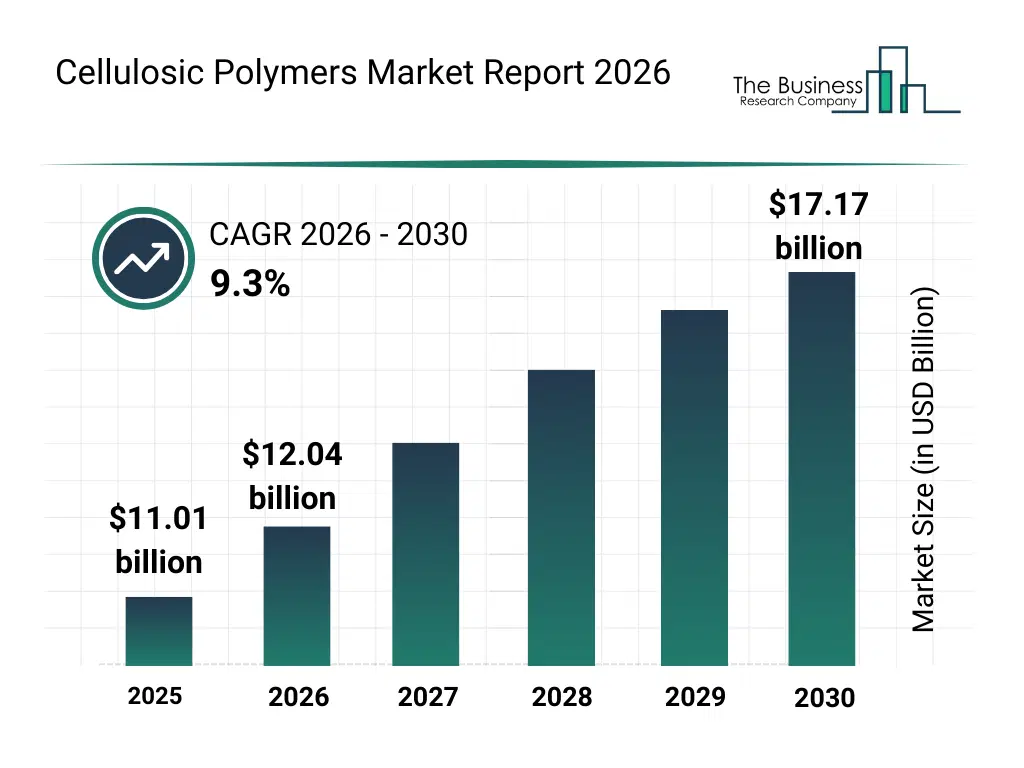
What Is The Cellulosic Polymers Market Size and Share 2026?
The cellulosic polymers market size has grown strongly in recent years. It will grow from $11.01 billion in 2025 to $12.04 billion in 2026 at a compound annual growth rate (CAGR) of 9.4%. The growth in the historic period can be attributed to availability of cellulose feedstock, packaging industry demand, pharmaceutical formulation usage, construction additive applications, chemical modification technologies.What Is The Cellulosic Polymers Market Growth Forecast?
The cellulosic polymers market size is expected to see strong growth in the next few years. It will grow to $17.17 billion in 2030 at a compound annual growth rate (CAGR) of 9.3%. The growth in the forecast period can be attributed to plastic replacement initiatives, sustainable packaging regulations, growth in personal care products, pharmaceutical manufacturing expansion, bio based material investments. Major trends in the forecast period include rising demand for biodegradable materials, growing use in sustainable packaging, expansion in pharmaceutical excipients, increased adoption in personal care products, focus on renewable polymer alternatives.
Global Cellulosic Polymers Market Segmentation
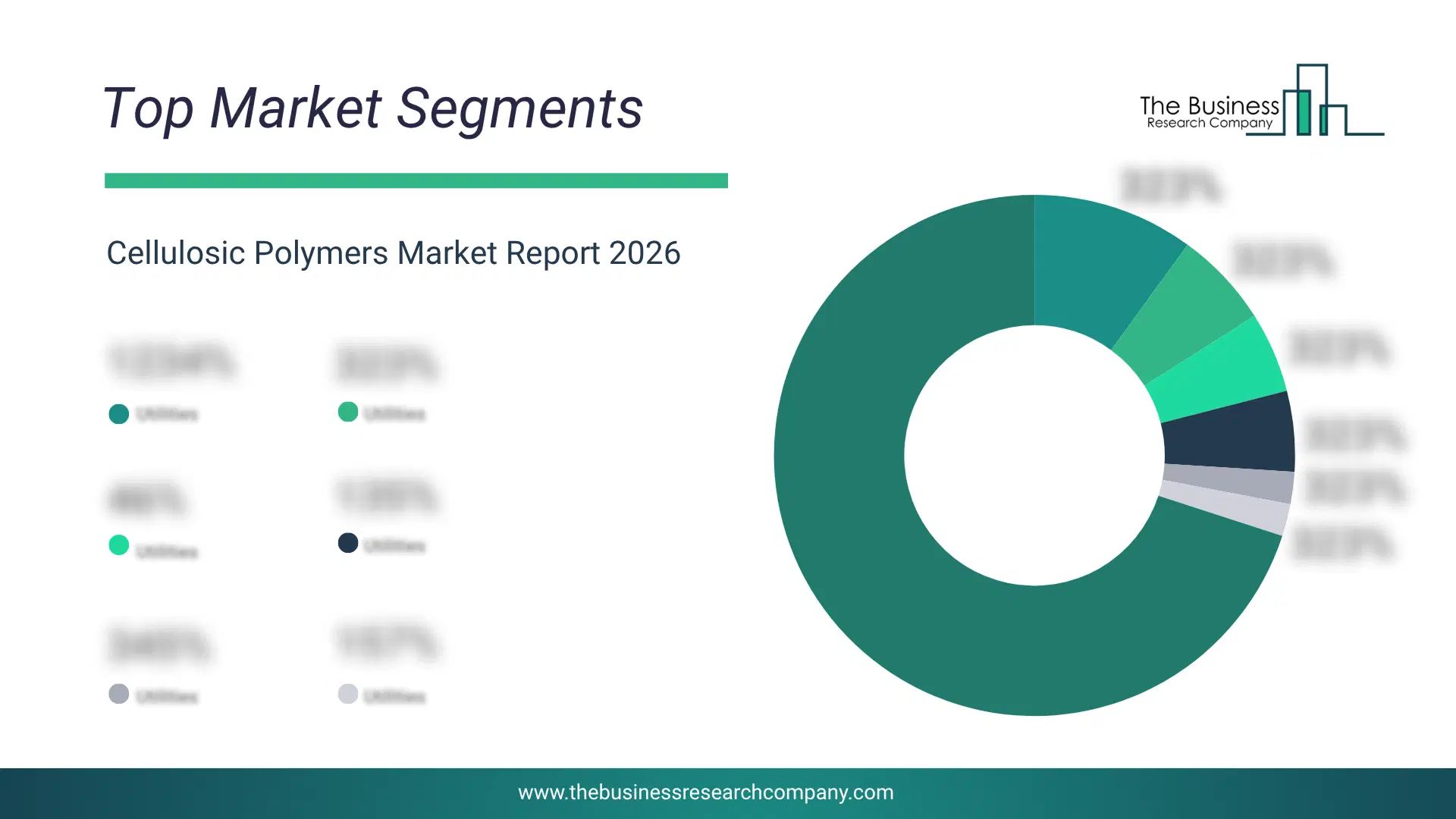
1) By Type: Cellulose Esters, Cellulose Ethers 2) By Application: Paints And Coatings, Flexible Packaging, Skin Care, Print Laminations, Other Applications 3) By End User: Food And Beverage, Building And Construction, Personal And Cosmetic Care, Medical And Pharmaceutical, Other End Users Subsegments: 1) By Cellulose Esters: Cellulose Acetate, Cellulose Propionate, Cellulose Butyrate, Cellulose Acetate Propionate, Cellulose Acetate Butyrate 2) By Cellulose Ethers: Methyl Cellulose (MC), Hydroxypropyl Methylcellulose (HPMC), Hydroxyethyl Cellulose (HEC), Carboxymethyl Cellulose (CMC), Ethyl Cellulose (EC)What Is The Driver Of The Cellulosic Polymers Market?
The growing popularity of personal care products is expected to propel the growth of the cellulosic polymer market going forward. Personal care products encompass a broad spectrum of items utilized for hygiene, grooming, and enhancing appearance, including skincare, haircare, oral care, cosmetics, and fragrances. This surge in popularity is fueled by heightened consumer awareness of health and wellness, an emphasis on personal grooming and aesthetics, and the impact of social media trends. Cellulosic polymers are widely used in personal care products as thickeners, stabilizers, and film-forming agents to enhance texture, viscosity, and product performance. For instance, in July 2024, according to a report published by the British Beauty Council, a UK-based organization, in 2023, the personal care sector contributed £27.2 billion ($30.44 billion) to the GDP, marking an 11% rise compared to 2022. This growth is attributed to a 10% increase in household spending on personal care products and services in the UK. Therefore, the growing popularity of personal care products is driving growth in the cellulosic polymer industry.Key Players In The Global Cellulosic Polymers Market
Major companies operating in the cellulosic polymers market are Dow Inc., Mitsubishi Chemical Group Corporation, Shin-Etsu Chemical Co. Ltd., Asahi Kasei Corporation, Grasim Industries Limited, DuPont de Nemours Inc., Eastman Chemical Company, Celanese Corporation, Nippon Paper Industries, Borregaard ASA, Sappi Limited, Nouryon Chemicals Holding B.V., Daicel Corporation, Lenzing AG, Rayonier Advanced Materials, CP Kelco ApS, Blanver Farmoquimica e Farmaceutica S.A., J. Rettenmaier & Söhne GmbH, Viscose Group, JNC Corporation.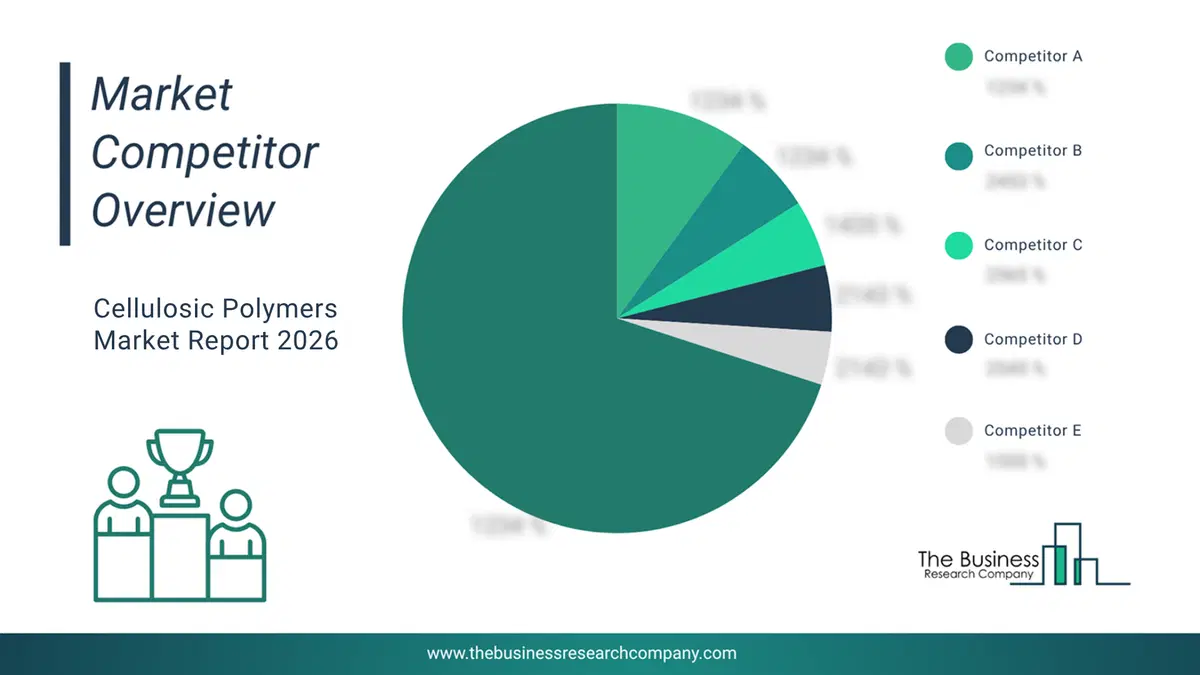
This chart is for illustrative purposes; the full report includes a detailed competitor analysis and comprehensive overview of the top 10 companies in the market.
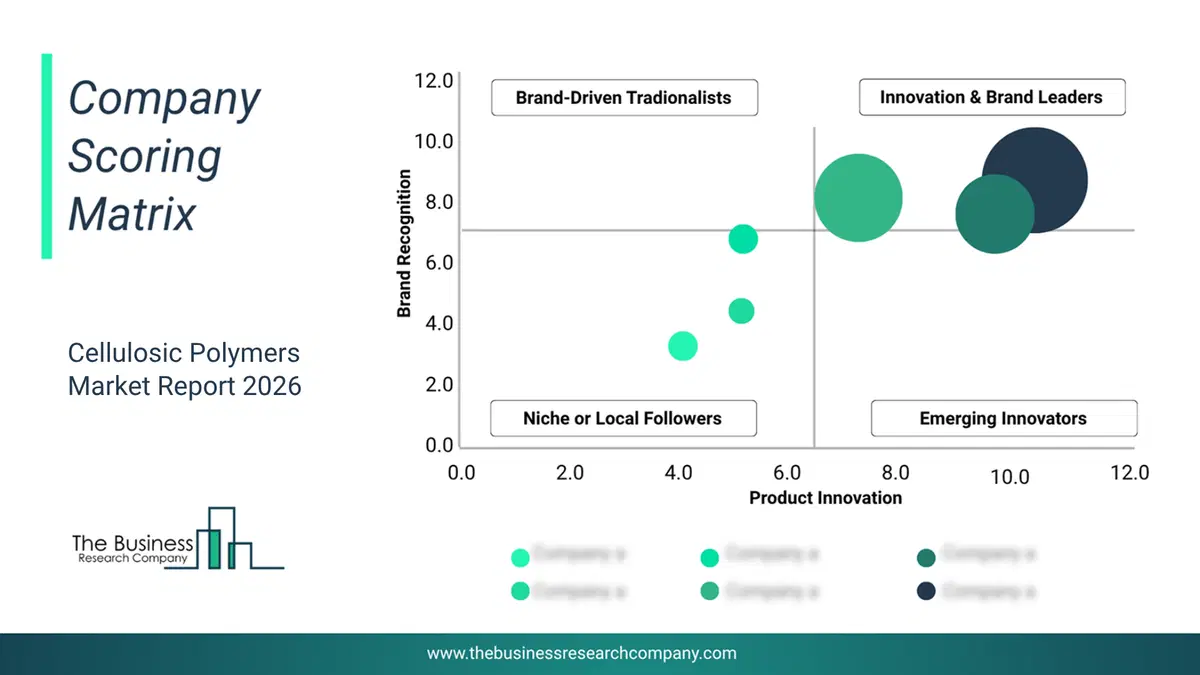
This chart maps companies by product innovation and brand strength, with bubble size indicating relative revenue, helping identify market leaders, challengers, and niche players. This is an illustrative chart; the full report provides a complete and accurate competitive analysis.
Global Cellulosic Polymers Market Trends and Insights
Major companies operating in the cellulosic polymers market are focusing on developing advanced solutions, such as membrane-based cellulosic sugar production, to enhance sustainability, diversify feedstock, and reduce reliance on fossil-based raw materials. Membrane-based cellulosic sugar production is a technology that converts inedible biomass, such as bagasse or cassava pulp, into fermentable sugars using enzyme treatment combined with membrane separation to purify and concentrate the resulting cellulosic sugar. For instance, in September 2023, Toray Industries, a Japan-based chemical and materials company, invested an additional US $8.2 million in its Thai-based subsidiary, Cellulosic Biomass Technology Co., Ltd., to expand its membrane-based saccharification process and scale up cellulosic sugar production. Through this expanded facility, Toray aims to increase daily production capacity from three tonnes of bagasse-derived sugar to five tonnes by adding cassava-pulp-derived sugar. The company plans to commercially produce approximately 100,000 tonnes per year of cellulosic sugar by 2030 and use it to manufacture bio-based polyamide, including 100% bio-based adipic acid produced in 2022 from inedible biomass sugars.What Are Latest Mergers And Acquisitions In The Cellulosic Polymers Market?
In September 2023, DuBois Chemicals, a US-based provider of customized specialty chemical solutions, acquired Cellulose Solutions for an undisclosed amount. With this acquisition, DuBois aims to expand its product offerings in the pulp and paper chemicals segment and strengthen its presence in the cellulosic polymers value chain. Cellulose Solutions is an India-based manufacturer of cellulosic polymers, or cellulose-derived polymers.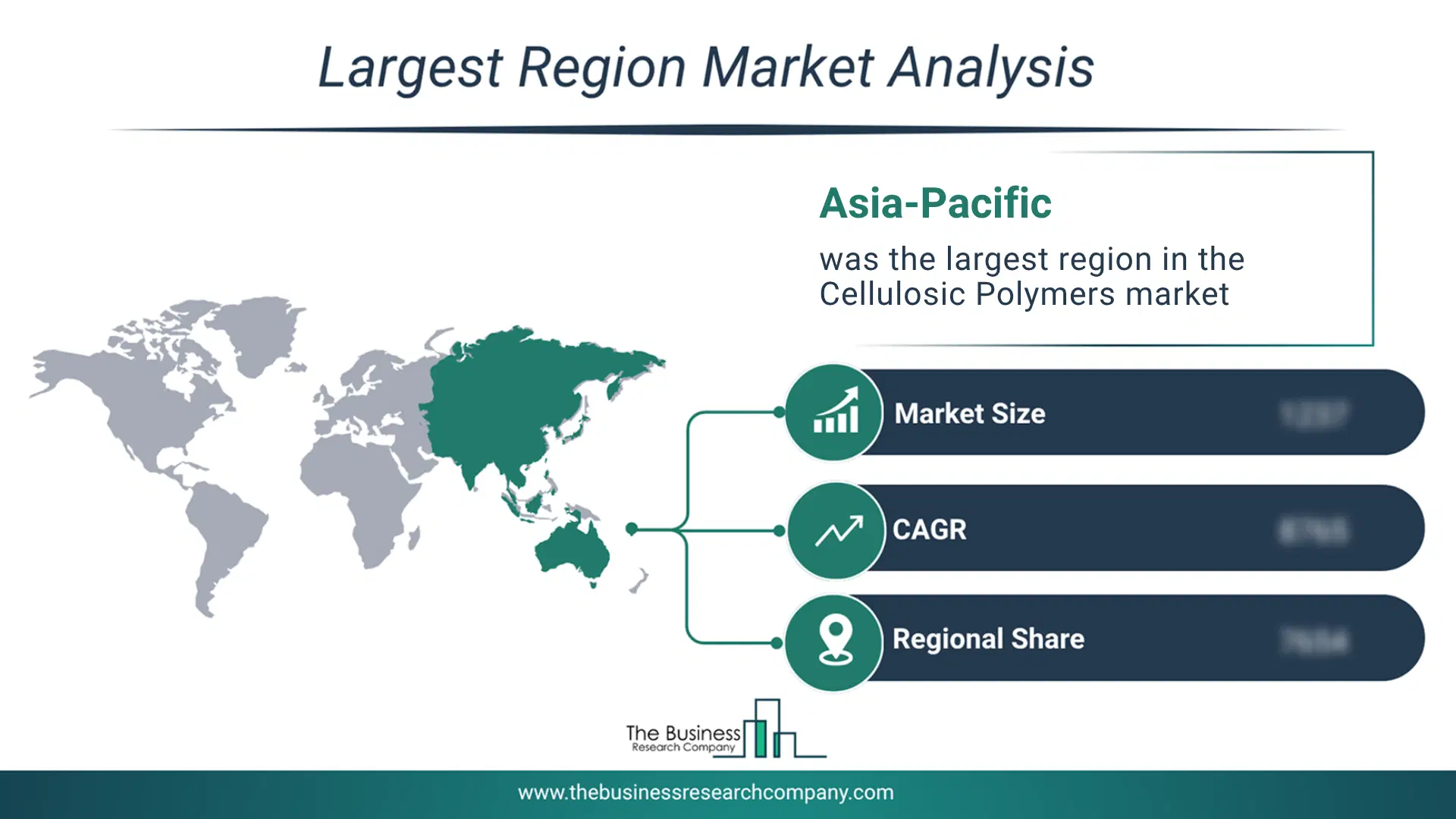
Regional Insights
Asia-Pacific was the largest region in the cellulosic polymers market in 2025. The regions covered in this market report are Asia-Pacific, South East Asia, Western Europe, Eastern Europe, North America, South America, Middle East, Africa The countries covered in this market report are Australia, Brazil, China, France, Germany, India, Indonesia, Japan, Taiwan, Russia, South Korea, UK, USA, Canada, Italy, SpainWhat Defines the Cellulosic Polymers Market?
The cellulosic polymer market consists of sales of microcrystalline cellulose (MCC), lyocell, sodium carboxymethylcellulose (Na-CMC), viscose (rayon), and cellulosic nanomaterials. Values in this market are ‘factory gate’ values, that is, the value of goods sold by the manufacturers or creators of the goods, whether to other entities (including downstream manufacturers, wholesalers, distributors, and retailers) or directly to end customers. The value of goods in this market includes related services sold by the creators of the goods.How is Market Value Defined and Measured?
The market value is defined as the revenues that enterprises gain from the sale of goods and/or services within the specified market and geography through sales, grants, or donations in terms of the currency (in USD unless otherwise specified). The revenues for a specified geography are consumption values that are revenues generated by organizations in the specified geography within the market, irrespective of where they are produced. It does not include revenues from resales along the supply chain, either further along the supply chain or as part of other products.
This chart presents market attractiveness based on a quantitative evaluation of growth, competition, strategic alignment, and risk, offering a clear view of opportunity areas for decision-making. This chart is for illustrative purposes; the full report contains the complete analysis.

This chart highlights the Total Addressable Market (TAM) by estimating the maximum revenue opportunity using an assumption-driven approach, supporting strategic planning and opportunity sizing across markets. The chart is illustrative; the full report provides a more comprehensive analysis.
What Key Data and Analysis Are Included in the Cellulosic Polymers Market Report 2026?
The cellulosic polymers market research report is one of a series of new reports from The Business Research Company that provides market statistics, including industry global market size, regional shares, competitors with the market share, detailed market segments, market trends and opportunities, and any further data you may need to thrive in the cellulosic polymers industry. The market research report delivers a complete perspective of everything you need, with an in-depth analysis of the current and future state of the industry.Cellulosic Polymers Market Report Forecast Analysis
| Report Attribute | Details |
|---|---|
| Market Size Value In 2026 | $12.04 billion |
| Revenue Forecast In 2030 | $17.17 billion |
| Growth Rate | CAGR of 9.4% from 2026 to 2030 |
| Base Year For Estimation | 2025 |
| Actual Estimates/Historical Data | 2020-2025 |
| Forecast Period | 2026 - 2030 |
| Market Representation | Revenue in USD Billion and CAGR from 2026 to 2030 |
| Segments Covered | Type, Application, End User |
| Regional Scope | Asia-Pacific, Western Europe, Eastern Europe, North America, South America, Middle East, Africa |
| Country Scope | The countries covered in this market report are Australia, Brazil, China, France, Germany, India, Indonesia, Japan, Taiwan, Russia, South Korea, UK, USA, Canada, Italy, Spain |
| Key Companies Profiled | Dow Inc., Mitsubishi Chemical Group Corporation, Shin-Etsu Chemical Co. Ltd., Asahi Kasei Corporation, Grasim Industries Limited, DuPont de Nemours Inc., Eastman Chemical Company, Celanese Corporation, Nippon Paper Industries, Borregaard ASA, Sappi Limited, Nouryon Chemicals Holding B.V., Daicel Corporation, Lenzing AG, Rayonier Advanced Materials, CP Kelco ApS, Blanver Farmoquimica e Farmaceutica S.A., J. Rettenmaier & Söhne GmbH, Viscose Group, JNC Corporation. |
| Customization Scope | Request for Customization |
| Pricing And Purchase Options | Explore Purchase Options |