
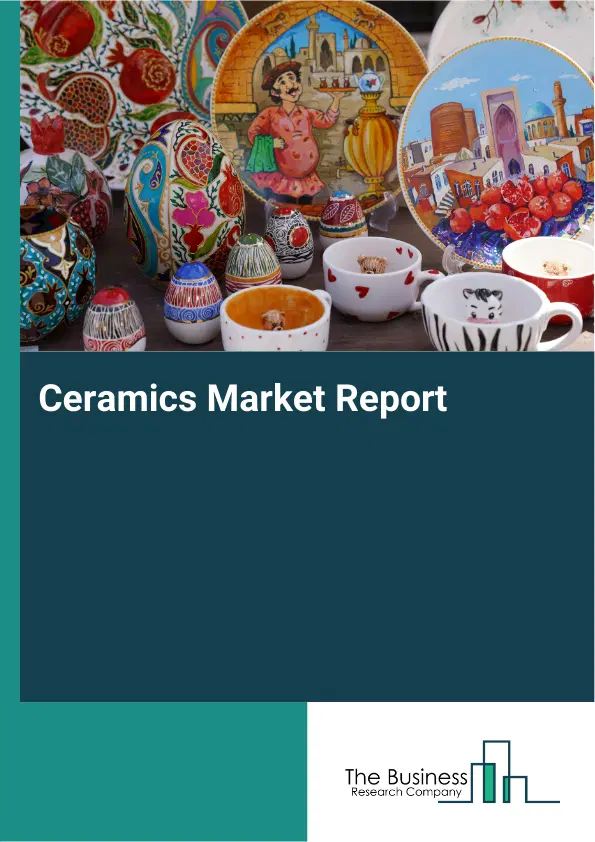
Ceramics Market Report 2026
Global Outlook – By Type (Traditional, Advanced), By End User (Building And Construction, Industrial, Medical), By Application (Tiles, Sanitary Wares, Abrasives, Pottery, Bricks And Pipes, Other Applications ) – Market Size, Trends, Strategies, and Forecast to 2030
Ceramics Market Overview
• Ceramics market size has reached to $248.82 billion in 2025 • Expected to grow to $322.43 billion in 2030 at a compound annual growth rate (CAGR) of 5.4% • Growth Driver: Construction Industry Boosting Ceramics Market Growth • Market Trend: 3D Technology Pioneers 3D Printing In Ceramic Construction Elements • Asia-Pacific was the largest region and fastest growing region.Market Gains By 2030 – Top Opportunities By Segment
Market Gain identifies the most promising market opportunities by highlighting the segments or products expected to generate the highest incremental revenue growth over the next five years.
What Is Covered Under Ceramics Market?
Ceramics refer to inorganic, non-metallic materials created by forming and sintering natural or synthetic compounds at high temperatures that are generally made by mixing clay, earthen elements, powders, and water and shaping them into desired forms due to their properties such as high melting temperatures, chemical inertness, ruggedness, and low thermal and electrical conductivity. The main types of ceramics are traditional and advanced. Traditional ceramics are derived from common, naturally occurring raw materials such as clay minerals, feldspar, and quartz sand. These are used in structural clay products such as bricks, tiles, and pipes. The end-users of ceramics include building and construction, industrial, and medical, which are used for various applications including tiles, sanitary wares, abrasives, pottery, bricks, pipes, and other applications. Ceramics Market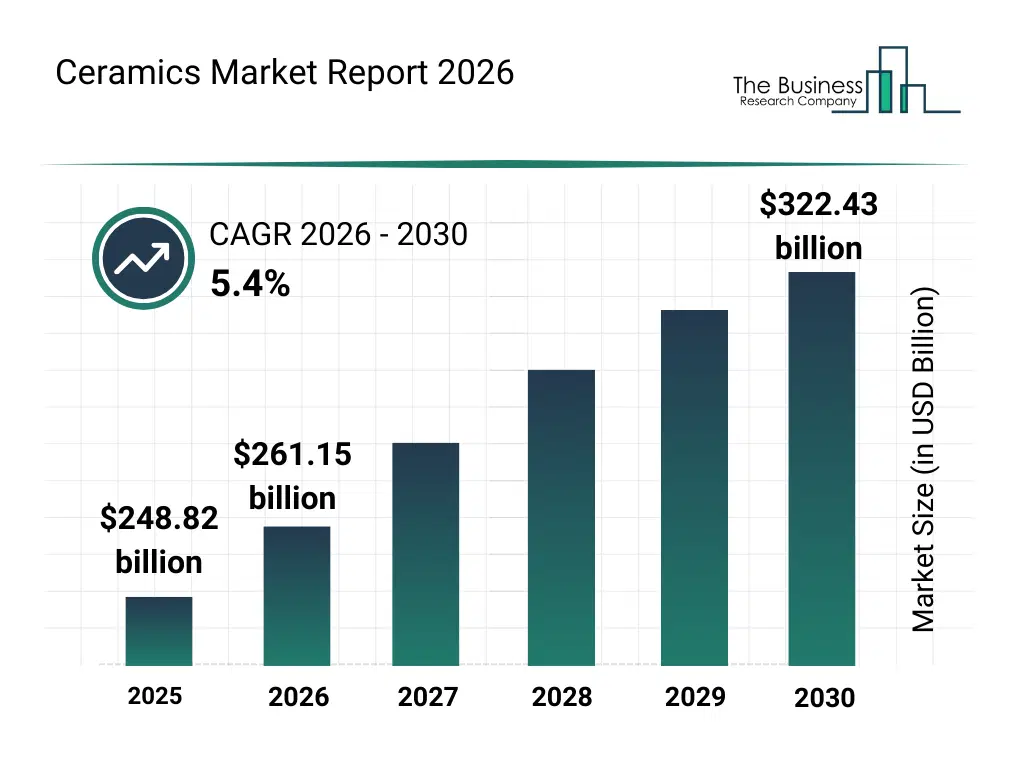
What Is The Ceramics Market Size and Share 2026?
The ceramics market size has grown steadily in recent years. It will grow from $248.82 billion in 2025 to $261.15 billion in 2026 at a compound annual growth rate (CAGR) of 5.0%. The growth in the historic period can be attributed to growth in traditional ceramic applications like tableware and pottery, rising demand in building and construction, increasing use in sanitary wares and tiles, expansion of structural clay products, adoption of ceramics in industrial applications.What Is The Ceramics Market Growth Forecast?
The ceramics market size is expected to see strong growth in the next few years. It will grow to $322.43 billion in 2030 at a compound annual growth rate (CAGR) of 5.4%. The growth in the forecast period can be attributed to increasing demand for advanced and technical ceramics, growth in bioceramics for healthcare, rising applications in aerospace and defense, expansion in electronics and energy sectors, adoption of eco-friendly and sustainable ceramic solutions. Major trends in the forecast period include rising demand for advanced ceramics in aerospace and defense, increasing use of bioceramics in medical applications, growth in technical ceramics for electronics and energy, expansion of eco-friendly and recycled ceramic products, rising adoption of high-performance refractory ceramics.
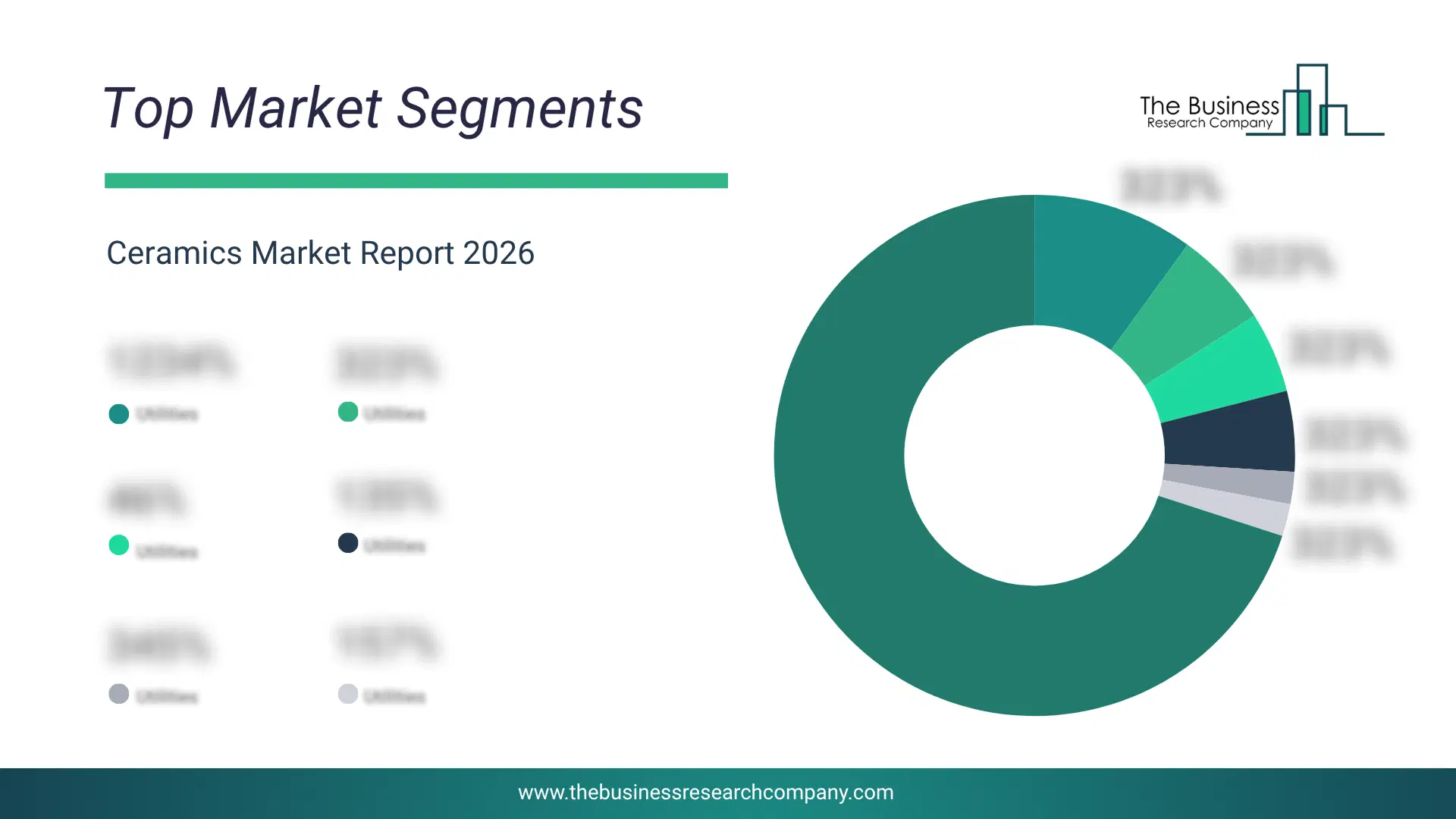
Global Ceramics Market Segmentation
1) By Type: Traditional, Advanced 2) By End User: Building And Construction, Industrial, Medical 3) By Application: Tiles, Sanitary Wares, Abrasives, Pottery, Bricks And Pipes, Other Applications Subsegments: 1) By Traditional: Tableware, Pottery, Sanitary Ware, Tiles, Structural Clay Products 2) By Advanced: Bioceramics, Electronics Ceramics, Refractories, Ceramics For Aerospace And Defense, Technical Ceramics The top segments in the ceramics market will be: • Traditional Ceramics will reach $190.28 Billion by 2030. • Advanced Ceramics will reach $148.52 Billion by 2030.What Is The Driver Of The Ceramics Market?
A rise in the construction industry is expected to propel the growth of the ceramics market. Due to the rapid increase in urbanization, more construction is being done in both developed and developing countries, which has increased the demand for ceramics and ceramics-related products. For instance, in November 2023, according to a report published by Office for National Statistics, United Kingdom, the value of construction work increased by 15.8% to to $161,129 million USD (£32,989 million) in 2022, with new orders rising by 11.4% to $97,813 USD (£80,837 million) in 2023. This surge in construction activity is fueling the demand for ceramics and ceramics-related products, which are essential for various building applications such as tiles and sanitary ware. Therefore, the rise in the construction industry is driving the growth of the ceramics industry.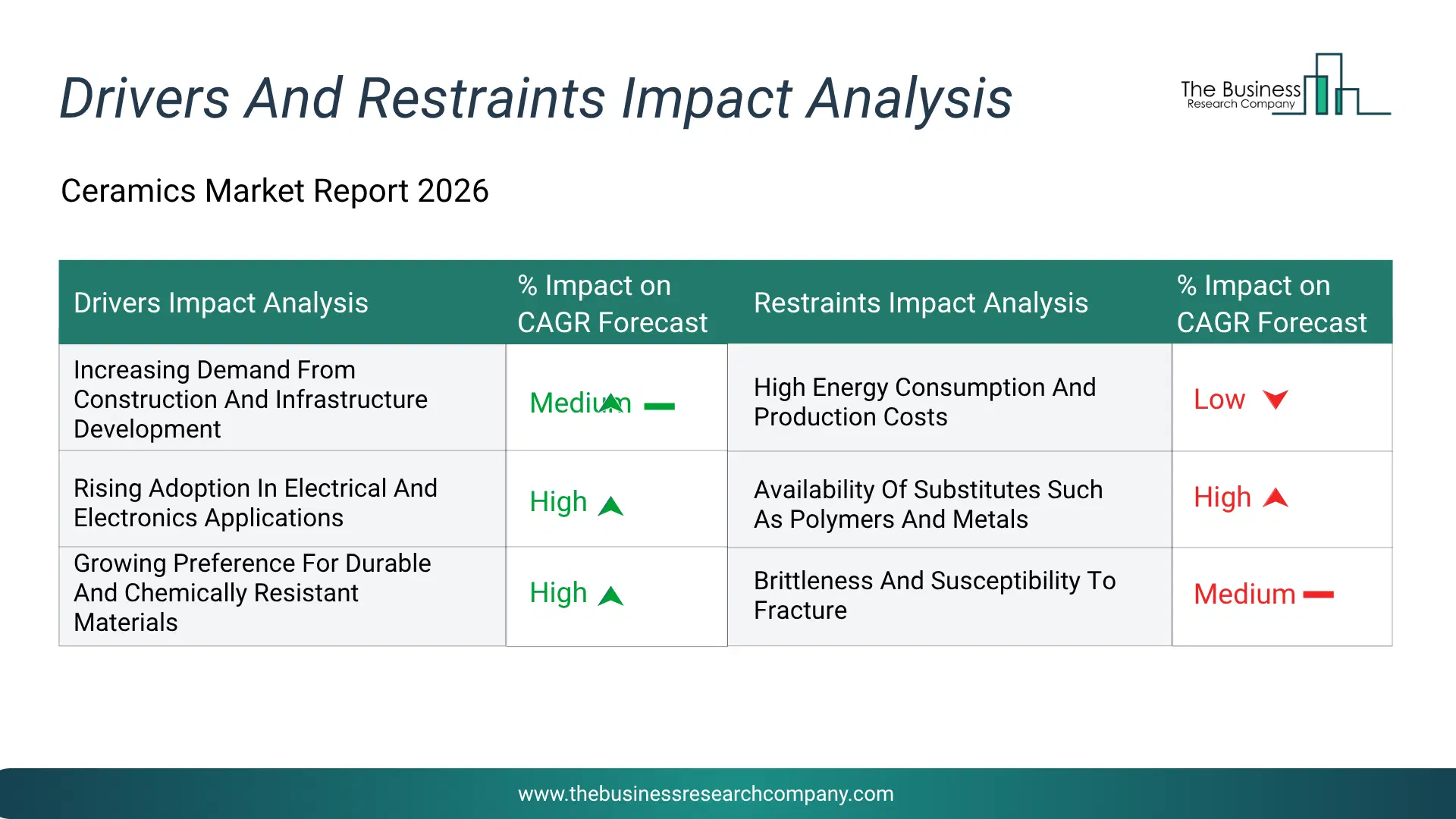
Infographic Chart Showing Key Market Drivers Analysis And Restraints For Ceramics Market
The chart presents an impact analysis of key drivers and restraints, quantifying their relative influence on the market's growth rate and helping assess the balance between growth enablers and limiting factors. This chart offers a high-level perspective; the full report contains more detailed insights.
How Will The Drivers Impact Growth In The Global Ceramics Market?
• Increasing Demand From Construction And Infrastructure Development (Medium) – During the forecast period, the increasing demand from construction and infrastructure development is expected to become a key growth driver for the ceramics market by 2030. The expansion of residential, commercial, and infrastructure projects is a major driver for the ceramics market. Ceramic products such as tiles, sanitary ware, and pipes are widely used due to their durability, moisture resistance, and cost-effectiveness. As urbanization accelerates across emerging and developed economies, demand for aesthetically appealing and long-lasting building materials rises. This directly increases consumption of ceramic-based products at the factory gate level. Additionally, government investments in smart cities and public infrastructure further stimulate bulk procurement. Hence, the construction sector acts as a strong demand engine, driving consistent growth in the ceramics market. • Rising Adoption In Electrical And Electronics Applications (High) – During the forecast period, the rising adoption in electrical and electronics applications is expected to emerge as a major factor driving the expansion of the ceramics market by 2030. Ceramics are widely used in electronic components such as capacitors, insulators, and substrates due to their excellent dielectric strength and thermal stability. With the growth of consumer electronics, electric vehicles, and renewable energy systems, demand for high-performance ceramic materials is rising significantly. Their ability to support miniaturization and high-efficiency performance makes them critical in modern devices. This expansion into advanced applications increases both volume demand and value addition in the ceramics market. • Growing Preference For Durable And Chemically Resistant Materials (High) – During the forecast period, the growing preference for durable and chemically resistant materials is expected to act as a key growth catalyst for the ceramics market by 2030. Ceramics are increasingly preferred across industries such as healthcare, chemicals, and energy due to their chemical inertness, corrosion resistance, and long lifecycle. These properties reduce maintenance requirements and improve operational efficiency, making ceramics a cost-effective long-term material. Their application in harsh environments such as power generation, industrial processing, and medical devices continues to expand. As industries prioritize durability and reliability, demand for ceramic materials rises steadily, supporting overall market growth.How Will The Restraints Impact Growth In The Global Ceramics Market?
• High Energy Consumption And Production Costs (Medium) – During the forecast period, the ceramics manufacturing process involves high-temperature kilns and energy-intensive sintering, which significantly increases production costs. Fluctuations in fuel and electricity prices directly impact manufacturers’ margins, especially in energy-sensitive regions. This cost pressure can limit profitability and discourage capacity expansion or new market entry. Smaller players may struggle to compete with larger firms that benefit from economies of scale. As a result, high energy dependency acts as a restraint by slowing down overall growth and investment in the ceramics market. • Availability Of Substitutes Such As Polymers And Metals (High) – During the forecast period, the ceramic materials face competition from alternative materials like plastics, composites, and metals that offer flexibility, lighter weight, and lower manufacturing costs. In applications such as packaging, construction, and automotive components, substitutes are often preferred due to ease of processing and reduced brittleness. This substitution effect reduces the demand for traditional ceramic products in several end-use industries. Additionally, advancements in polymer technology continue to enhance performance, further intensifying competition. Therefore, the presence of viable substitutes limits the market penetration and growth potential of ceramics. • Brittleness And Susceptibility To Fracture (High) – During the forecast period, the despite their strength and heat resistance, ceramics are inherently brittle and prone to cracking under mechanical stress or sudden impact. This limitation restricts their use in applications requiring high toughness or flexibility, such as structural components subjected to dynamic loads. The risk of breakage during transportation and installation also adds to handling costs and wastage. Industries may opt for alternative materials that offer better impact resistance and durability under stress. Consequently, the mechanical limitations of ceramics act as a barrier to wider adoption across certain sectors.Key Players In The Global Ceramics Market
Major companies operating in the ceramics market report are Saint Gobain, Minnesota Mining and Manufacturing Company, Kyocera Corporation, Corning Inc., Murata Manufacturing Co. Ltd., Mohawk Industries Inc., Caesar, McDanel Advanced Ceramic Technologies, Sisecam Group, Imerys Ceramics, Materion Corporation, Morgan Advanced Materials, China Glass Holding, SCHOTT AG, CoorsTek, American Standard, CeremTec, Kajaria Ceramics Limited, Momentive Performance Materials Inc., Blasch Precision Ceramics Inc., RAK Ceramics, Du-Co Ceramics Company, Unifrax, Applied Ceramics Inc., AGC Ceramics Co. Ltd., Rauschert GmbH, Ceramiche Caesar, Thermal Ceramics UK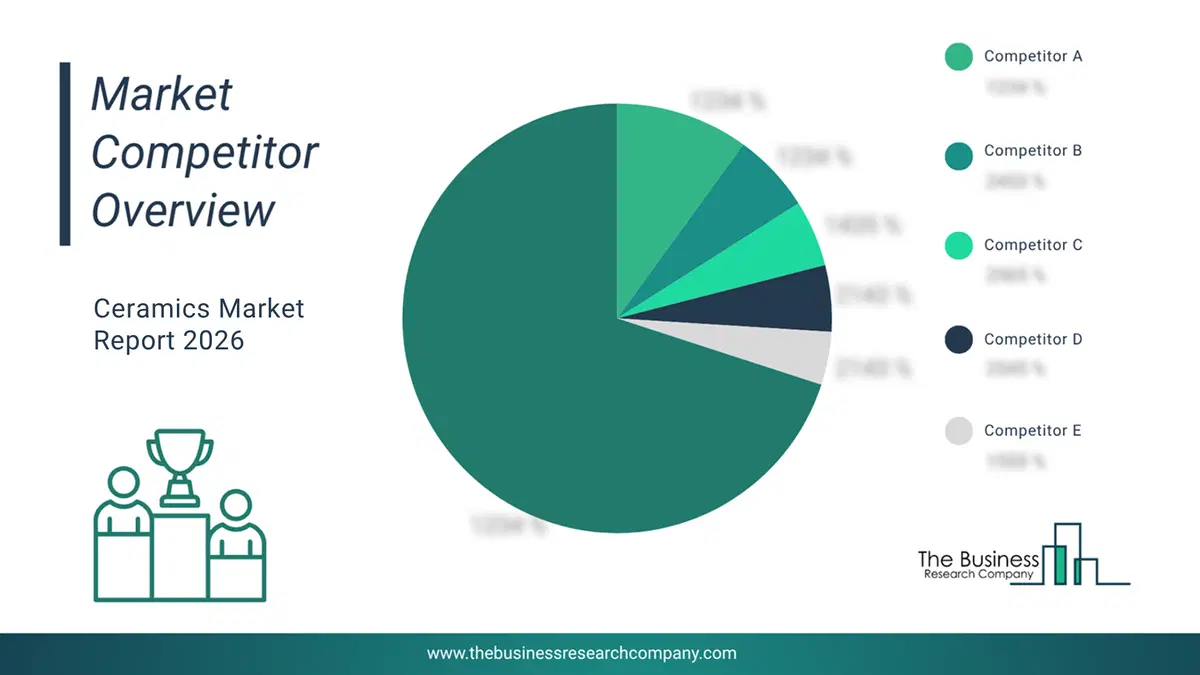
This chart is for illustrative purposes; the full report includes a detailed competitor analysis and comprehensive overview of the top 10 companies in the market.
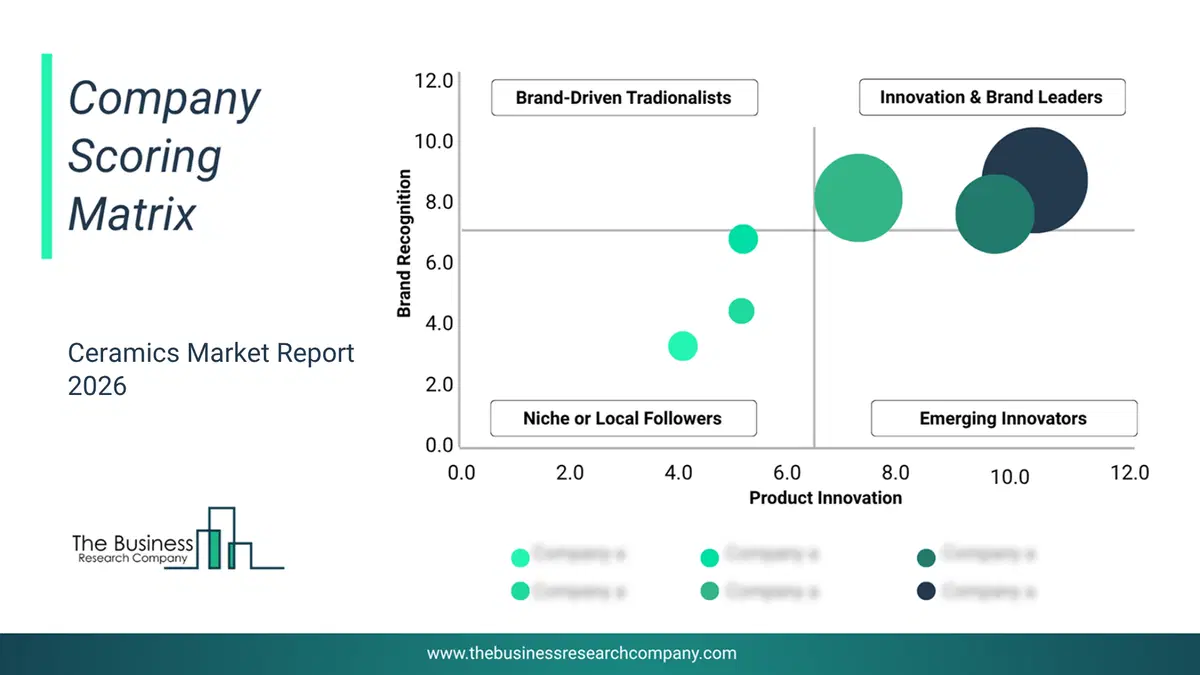
This chart maps companies by product innovation and brand strength, with bubble size indicating relative revenue, helping identify market leaders, challengers, and niche players. This is an illustrative chart; the full report provides a complete and accurate competitive analysis.
Global Ceramics Market Trends and Insights
Major players in the ceramics market are increasingly focusing on technological advancements such as ceramic 3D printing to improve production efficiency, design flexibility, and component performance. Ceramic 3D printing enables the fabrication of complex, high-precision structures with enhanced material properties and reduced processing time.For instance, in September 2024, Lithoz, an Austria-based, specializes in the development and production of high-performance and bioresorbable ceramics using their patented Lithography-based Ceramic Manufacturing (LCM) technology, has launched the CeraMax Vario V900, a ceramic 3D printer boasting the largest build volume in its class, with dimensions of 250 x 250 x 290 mm. This printer uses Laser-Induced Slipcasting (LIS) technology, which works with water-based ceramic slurries and can apply up to 1,000 µm of slurry per layer, enhancing printing speed and efficiency. The CeraMax Vario V900 also streamlines the debinding process, allowing for thicker walls and perfect density in the final products. Thus this new technology makes it ideal for producing high-quality, large-scale ceramic components for industries such as aerospace, medical, and research.What Are Latest Mergers And Acquisitions In The Ceramics Market?
In September 2025, SINTX TechnologiesInc., a US-based healthcare technology company, acquired SiNAPTIC Surgical, LLC for an undisclosed amount. With this acquisition, SINTX aims to strengthen its ceramic additive-manufacturing capabilities and accelerate commercialisation of silicon nitride-based orthopaedic and spinal implant technologies to expand its medical device product portfolio and go-to-market reach. SiNAPTIC SurgicalLLC is a US-based medical technology company that specialises in medical ceramic additive-manufacturing solutions and the development of silicon nitride spinal and orthopaedic implants.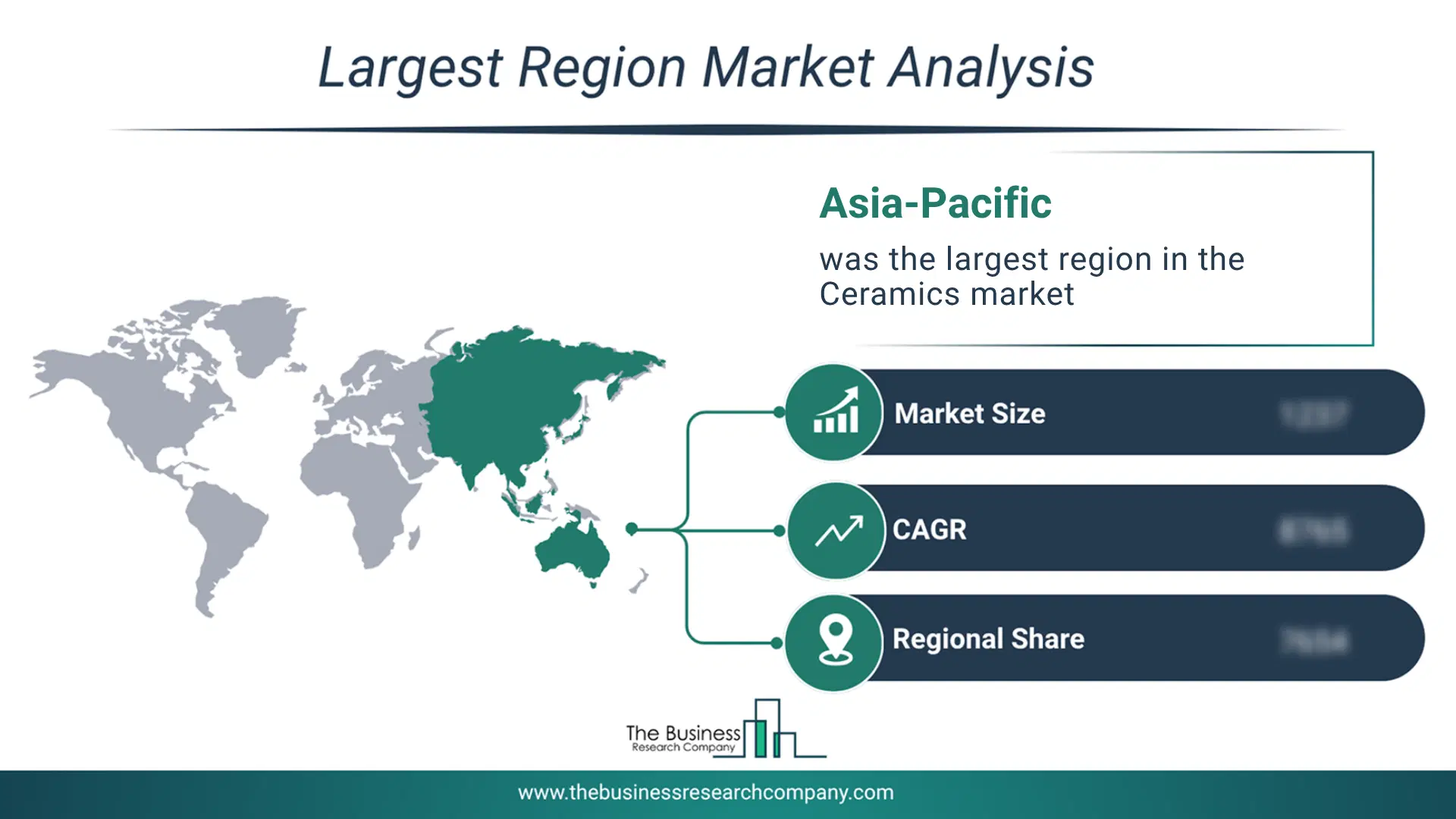
Regional Outlook
Asia-Pacific was the largest region in the ceramics market in 2025 and is also expected to be the fastest-growing region in the forecast period. The regions covered in the ceramics market are Asia-Pacific, South East Asia, Western Europe, Eastern Europe, North America, South America, Middle East, Africa. The countries covered in the ceramics market are Australia, Brazil, China, France, Germany, India, Indonesia, Japan, Taiwan, Russia, South Korea, UK, USA, Canada, Italy, Spain.What Defines the Ceramics Market?
The ceramics market consists of sales of earthenware, stoneware, and porcelain. Values in this market are ‘factory gate’ values, that is the value of goods sold by the manufacturers or creators of the goods, whether to other entities (including downstream manufacturers, wholesalers, distributors and retailers) or directly to end customers. The value of goods in this market includes related services sold by the creators of the goods.How is Market Value Defined and Measured?
The market value is defined as the revenues that enterprises gain from the sale of goods and/or services within the specified market and geography through sales, grants, or donations in terms of the currency (in USD unless otherwise specified). The revenues for a specified geography are consumption values that are revenues generated by organizations in the specified geography within the market, irrespective of where they are produced. It does not include revenues from resales along the supply chain, either further along the supply chain or as part of other products.
This chart presents market attractiveness based on a quantitative evaluation of growth, competition, strategic alignment, and risk, offering a clear view of opportunity areas for decision-making. This chart is for illustrative purposes; the full report contains the complete analysis.

This chart highlights the Total Addressable Market (TAM) by estimating the maximum revenue opportunity using an assumption-driven approach, supporting strategic planning and opportunity sizing across markets. The chart is illustrative; the full report provides a more comprehensive analysis.
What Key Data and Analysis Are Included in the Ceramics Market Report 2026?
The ceramics market research report is one of a series of new reports from The Business Research Company that provides market statistics, including Market Report 2026?global market size, regional shares, competitors with the market share, detailed market segments, market trends and opportunities, and any further data you may need to thrive in the ceramics Market Report 2026? The market research report delivers a complete perspective of everything you need, with an in-depth analysis of the current and future state of the Market Report 2026?Ceramics Market Report Forecast Analysis
| Report Attribute | Details |
|---|---|
| Market Size Value In 2026 | $261.15 billion |
| Revenue Forecast In 2030 | $322.43 billion |
| Growth Rate | CAGR of 5.0% from 2026 to 2030 |
| Base Year For Estimation | 2025 |
| Actual Estimates/Historical Data | 2020-2025 |
| Forecast Period | 2026 - 2030 |
| Market Representation | Revenue in USD Billion and CAGR from 2026 to 2030 |
| Segments Covered | Type, End User, Application |
| Regional Scope | Asia-Pacific, Western Europe, Eastern Europe, North America, South America, Middle East, Africa |
| Country Scope | The countries covered in the report are Australia, Brazil, China, France, Germany, India, Indonesia, Japan, Taiwan, Russia, South Korea, UK, USA, Canada, Italy, Spain. |
| Key Companies Profiled | Saint Gobain, Minnesota Mining and Manufacturing Company, Kyocera Corporation, Corning Inc., Murata Manufacturing Co. Ltd., Mohawk Industries Inc., Caesar, McDanel Advanced Ceramic Technologies, Sisecam Group, Imerys Ceramics, Materion Corporation, Morgan Advanced Materials, China Glass Holding, SCHOTT AG, CoorsTek, American Standard, CeremTec, Kajaria Ceramics Limited, Momentive Performance Materials Inc., Blasch Precision Ceramics Inc., RAK Ceramics, Du-Co Ceramics Company, Unifrax, Applied Ceramics Inc., AGC Ceramics Co. Ltd., Rauschert GmbH, Ceramiche Caesar, Thermal Ceramics UK |
| Customization Scope | Request for Customization |
| Pricing And Purchase Options | Explore Purchase Options |