
Food Antioxidants Market Report 2026
Global Outlook – By Type (Natural, Synthetic), By Form (Dry, Liquid), By Source (Fruits and Vegetables, Oils, Spices and Herbs, Botanical Extracts, Gallic Acid, Other Sources), By Application (Fats and Oils, Prepared Foods, Prepared Meat and Poultry, Seafood, Bakery and Confectionery, Plant Based Alternatives, Nutraceuticals, Other Applications) – Market Size, Trends, Strategies, and Forecast to 2030
Food Antioxidants Market Overview
• Food Antioxidants market size has reached to $2.14 billion in 2025 • Expected to grow to $3.68 billion in 2030 at a compound annual growth rate (CAGR) of 11.4% • Growth Driver: Rising Use Of Food Antioxidants To Enhance Shelf Life And Health Benefits • Market Trend: Mergers And Acquisitions Driving Expansion And Innovation In The Food Antioxidants Market • Asia-Pacific was the largest region and fastest growing region.What Is Covered Under Food Antioxidants Market?
Food antioxidants are the molecules that neutralize the free radicals and destabilize the molecules to protect cells from damage. Some major food antioxidants are mainly found in fruits, vegetables, vitamins such as E and C, and other plant-based foods. The primary types of food antioxidants are natural and synthetic antioxidants. They are available in dry and liquid forms. The food antioxidants are derived from fruits and vegetables, oils, spices and herbs, botanical extracts, and gallic acid and are used in fats and oils, prepared foods, prepared meat and poultry, seafood, bakery and confectionery, plant-based alternatives, and nutraceuticals.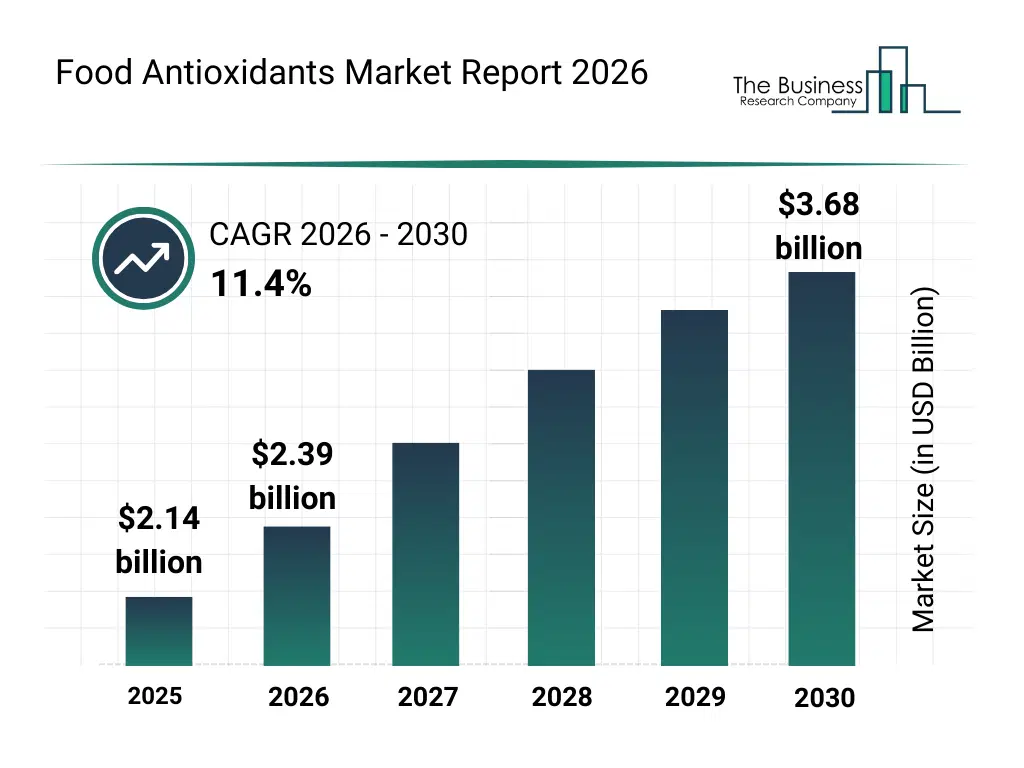
What Is The Food Antioxidants Market Size and Share 2026?
The food antioxidants market size has grown rapidly in recent years. It will grow from $2.14 billion in 2025 to $2.39 billion in 2026 at a compound annual growth rate (CAGR) of 11.6%. The growth in the historic period can be attributed to growth of processed food consumption, increasing awareness of food preservation, adoption of antioxidants in fats and oils, expansion of packaged food industries, availability of synthetic antioxidant solutions.What Is The Food Antioxidants Market Growth Forecast?
The food antioxidants market size is expected to see rapid growth in the next few years. It will grow to $3.68 billion in 2030 at a compound annual growth rate (CAGR) of 11.4%. The growth in the forecast period can be attributed to rising consumer preference for natural ingredients, expansion of nutraceutical and functional food markets, growing demand for plant-based food products, increasing regulatory scrutiny on synthetic additives, innovation in antioxidant extraction technologies. Major trends in the forecast period include increasing demand for natural food antioxidants, rising use of plant-based antioxidant sources, growing application in functional foods, expansion of clean-label food products, enhanced focus on shelf-life extension.
Global Food Antioxidants Market Segmentation
1) By Type: Natural, Synthetic 2) By Form: Dry, Liquid 3) By Source: Fruits and Vegetables, Oils, Spices and Herbs, Botanical Extracts, Gallic Acid, Other Sources 4) By Application: Fats and Oils, Prepared Foods, Prepared Meat and Poultry, Seafood, Bakery and Confectionery, Plant Based Alternatives, Nutraceuticals, Other Applications Subsegments: 1) By Natural: Vitamins, Phenolic Compounds, Flavonoids, Plant Extracts, Essential Oils 2) By Synthetic: BHT (Butylated Hydroxytoluene), BHA (Butylated Hydroxyanisole), TBHQ (Tert-Butylhydroquinone), Propyl GallateWhat Is The Driver Of The Food Antioxidants Market?
The rise in demand for fortified food and beverage products is expected to contribute to the growth of the food antioxidants market. Fortified foods are functional foods that lack natural nutrients; nutrients are added to them. The rise in demand for fortified food and beverage products is primarily driven by factors such as increased health consciousness among consumers, an aging population seeking better nutrition, and ongoing innovations in food technology. Antioxidants are recognized for their capability to neutralize free radicals that contribute to oxidative stress and various health issues, enabling manufacturers to market fortified products as health-promoting foods. For instance, in March 2024, the annual report from Nutrition International, a Canada-based global nutrition non-profit organization, indicated that roughly 379 million people gained improved access to fortified foods. Therefore, rise in demand for fortified food and beverage products will drive the growth of food antioxidants industry.Key Players In The Global Food Antioxidants Market
Major companies operating in the food antioxidants market are Archer-Daniels-Midland Company, BASF SE, Koninklijke DSM N.V, Kemin Industries Inc., Eastman Chemical Company, Frutarom Ltd., Barentz International B.V., Camlin Fine Sciences Ltd., Kalsec Inc., Cargill Inc., Advanced Organic Materials SA, VDH Chem Tech Pvt. Ltd., Vitablend Nederland BV, International Flavors & Fragrances Inc., DuPont de Nemours Inc., Naturex SA, Ajinomoto Co. Inc., Chr. Hansen Holding A/S, Yasho Industries Ltd., Givaudan SA, Global Specialty Ingredients (M) Sdn. Bhd., Riken Vitamin Co. Ltd., Zhengzhou Sigma Chemical Co. Ltd., Fenchem Biotek Ltd., Sumitomo Chemical Co. Ltd., Garuda International Inc., Döhler Group, Palsgaard A/S
This chart is for illustrative purposes; the full report includes a detailed competitor analysis and comprehensive overview of the top 10 companies in the market.
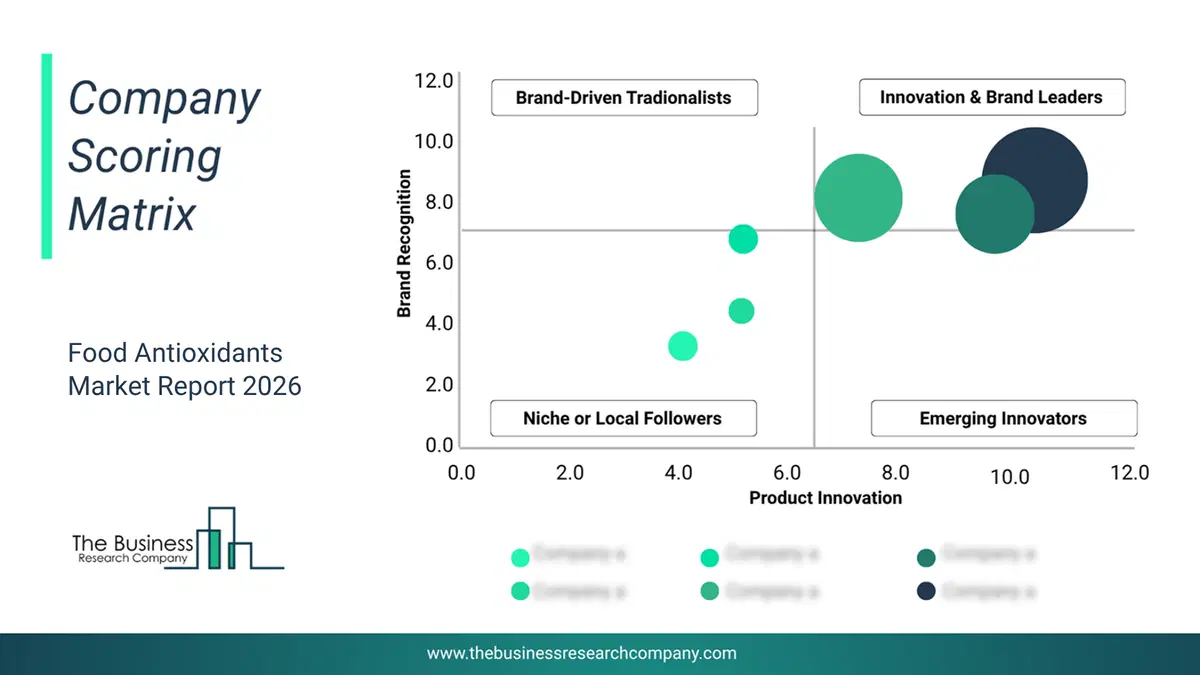
This chart maps companies by product innovation and brand strength, with bubble size indicating relative revenue, helping identify market leaders, challengers, and niche players. This is an illustrative chart; the full report provides a complete and accurate competitive analysis.
Global Food Antioxidants Market Trends and Insights
Major companies operating in the food antioxidants market are developing innovative products such as natural antioxidants to enhance product stability, extend shelf life, and maintain nutritional quality. Natural antioxidants are ingredients derived from plants or other natural sources, designed to prevent oxidation in food products. For instance, in September 2023, A&B Ingredients, an US-based food ingredient manufacturer company, launched CytoGUARD OX-WST, which is a natural antioxidant. that provides a focus on protein powders like whey and yeast protein. Sourced from natural tea extract, this antioxidant is vital for prolonging shelf life and ensuring the quality of protein-rich products. It effectively lowers hexanal levels, which serve as a key marker for lipid oxidation, thus helping to maintain the nutritional value and sensory characteristics of proteins. As a clean-label ingredient, CytoGUARD OX-WST responds to the growing consumer preference for natural and sustainable food additives, making it an essential choice for food manufacturers looking to improve product integrity while adhering to safety and quality standards.What Are Latest Mergers And Acquisitions In The Food Antioxidants Market?
In July 2024, Azerys, a Morocco-based natural products company, acquired Syensqo for an undisclosed amount. The aim of the acquisition is to enhance Azerys renewable consumer solutions by incorporating natural preservatives derived from rosemary extraction, thereby reinforcing its commitment to sustainable innovation in the food sector. Syensqo is a Belgium-based global science and technology company that operates within the realms of renewable materials and biotechnology, showcasing a diverse range of expertise across various sectors. The company is dedicated to developing eco-friendly alternatives to conventional chemicals and offers plant-based solutions for the food industry, including natural flavors and preservatives. Their commitment to sustainability drives innovation in advanced materials and sustainable chemicals, aligning with their mission to foster a greener future.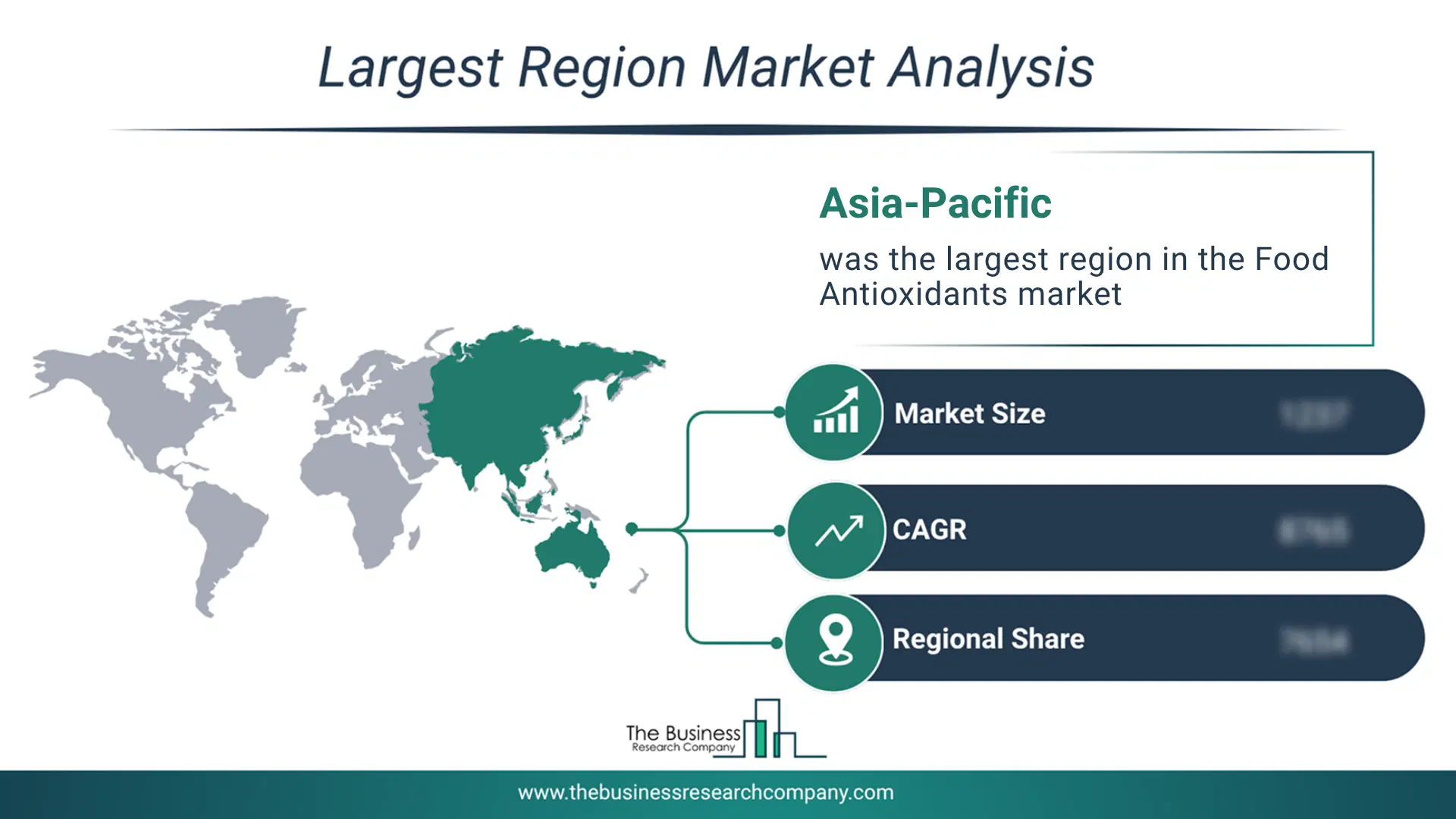
Regional Insights
Asia-Pacific was the largest region in the food antioxidants market in 2025. Asia-Pacific is expected to be the fastest-growing region in the forecast period. The regions covered in this market report are Asia-Pacific, South East Asia, Western Europe, Eastern Europe, North America, South America, Middle East, Africa The countries covered in this market report are Australia, Brazil, China, France, Germany, India, Indonesia, Japan, Taiwan, Russia, South Korea, UK, USA, Canada, Italy, SpainWhat Defines the Food Antioxidants Market?
The food antioxidants market consists of sales of synthetic food antioxidants such as butylated hydroxytoluene (BHT), butylated hydroxyanisole (BHA), and propyl gallate (PG). Values in this market are ‘factory gate’ values, that is, the value of goods sold by the manufacturers or creators of the goods, whether to other entities (including downstream manufacturers, wholesalers, distributors, and retailers) or directly to end customers. The value of goods in this market includes related services sold by the creators of the goods.How is Market Value Defined and Measured?
The market value is defined as the revenues that enterprises gain from the sale of goods and/or services within the specified market and geography through sales, grants, or donations in terms of the currency (in USD unless otherwise specified). The revenues for a specified geography are consumption values that are revenues generated by organizations in the specified geography within the market, irrespective of where they are produced. It does not include revenues from resales along the supply chain, either further along the supply chain or as part of other products.
This chart presents market attractiveness based on a quantitative evaluation of growth, competition, strategic alignment, and risk, offering a clear view of opportunity areas for decision-making. This chart is for illustrative purposes; the full report contains the complete analysis.

This chart highlights the Total Addressable Market (TAM) by estimating the maximum revenue opportunity using an assumption-driven approach, supporting strategic planning and opportunity sizing across markets. The chart is illustrative; the full report provides a more comprehensive analysis.
What Key Data and Analysis Are Included in the Food Antioxidants Market Report 2026?
The food antioxidants market research report is one of a series of new reports from The Business Research Company that provides market statistics, including industry global market size, regional shares, competitors with the market share, detailed market segments, market trends and opportunities, and any further data you may need to thrive in the food antioxidants industry. The market research report delivers a complete perspective of everything you need, with an in-depth analysis of the current and future state of the industry.Food Antioxidants Market Report Forecast Analysis
| Report Attribute | Details |
|---|---|
| Market Size Value In 2026 | $2.39 billion |
| Revenue Forecast In 2030 | $3.68 billion |
| Growth Rate | CAGR of 11.6% from 2026 to 2030 |
| Base Year For Estimation | 2025 |
| Actual Estimates/Historical Data | 2020-2025 |
| Forecast Period | 2026 - 2030 |
| Market Representation | Revenue in USD Billion and CAGR from 2026 to 2030 |
| Segments Covered | Type, Form, Source, Application |
| Regional Scope | Asia-Pacific, Western Europe, Eastern Europe, North America, South America, Middle East, Africa |
| Country Scope | The countries covered in this market report are Australia, Brazil, China, France, Germany, India, Indonesia, Japan, Taiwan, Russia, South Korea, UK, USA, Canada, Italy, Spain |
| Key Companies Profiled | Archer-Daniels-Midland Company, BASF SE, Koninklijke DSM N.V, Kemin Industries Inc., Eastman Chemical Company, Frutarom Ltd., Barentz International B.V., Camlin Fine Sciences Ltd., Kalsec Inc., Cargill Inc., Advanced Organic Materials SA, VDH Chem Tech Pvt. Ltd., Vitablend Nederland BV, International Flavors & Fragrances Inc., DuPont de Nemours Inc., Naturex SA, Ajinomoto Co. Inc., Chr. Hansen Holding A/S, Yasho Industries Ltd., Givaudan SA, Global Specialty Ingredients (M) Sdn. Bhd., Riken Vitamin Co. Ltd., Zhengzhou Sigma Chemical Co. Ltd., Fenchem Biotek Ltd., Sumitomo Chemical Co. Ltd., Garuda International Inc., Döhler Group, Palsgaard A/S |
| Customization Scope | Request for Customization |
| Pricing And Purchase Options | Explore Purchase Options |