
Frozen Food Logistics Market Report 2026
Global Outlook – By Product Type (Frozen Vegetables, Frozen Meat, Frozen Seafood, Frozen Ready Meals, Frozen Desserts), By Temperature Control (Chilled, Deep Frozen, Frozen), By Transportation Mode (Road, Rail, Air, Sea ), By Packaging (Bags, Boxes, Cans, Jars) – Market Size, Trends, Strategies, and Forecast to 2030
Frozen Food Logistics Market Overview
• Frozen Food Logistics market size has reached to $34.8 billion in 2025 • Expected to grow to $65.75 billion in 2030 at a compound annual growth rate (CAGR) of 13.6% • Growth Driver: Growing Preference For Ready-To-Eat Foods Accelerating Market Expansion Amid Increasing Demand For Fast And Hassle-Free Meal Options • Market Trend: Expansion Of Cold Chain Infrastructure With Advanced Temperature-Controlled Warehousing • North America was the largest region in 2025 and Asia-Pacific is the fastest growing region.What Is Covered Under Frozen Food Logistics Market?
Frozen food logistics refers to the specialized supply chain process that encompasses the management and coordination of transporting, storing, and distributing frozen food items. It requires strict adherence to a cold chain system to maintain low temperatures, safeguarding the quality, safety, and longevity of the products throughout the supply chain. The main product types of frozen food logistics are frozen vegetables, frozen meat, frozen seafood, frozen ready meals, and frozen desserts. Frozen vegetables are preserved through freezing to retain their freshness and nutritional value. Logistics operations involve various temperature-controlled methods, including chilled, deep-frozen, and frozen environments. Transportation is carried out through road, rail, air, and sea modes, while packaging options include bags, boxes, cans, and jars.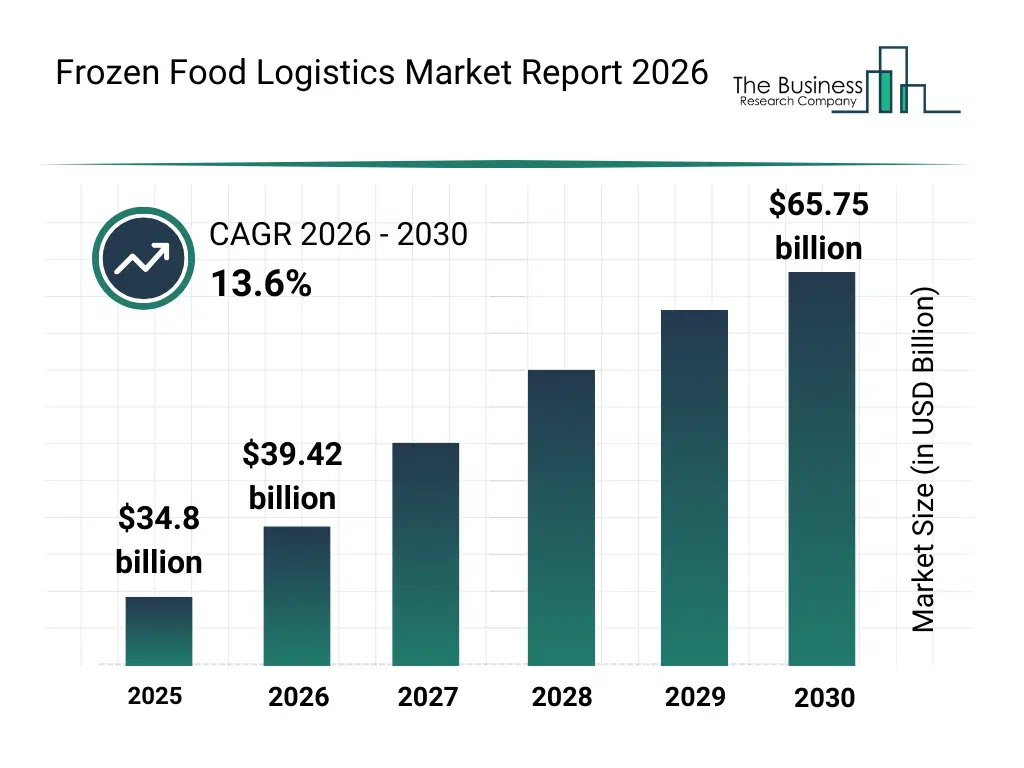
What Is The Frozen Food Logistics Market Size and Share 2026?
The frozen food logistics market size has grown rapidly in recent years. It will grow from $34.8 billion in 2025 to $39.42 billion in 2026 at a compound annual growth rate (CAGR) of 13.3%. The growth in the historic period can be attributed to growth in frozen food consumption, expansion of supermarket chains, early cold storage investments, rising urban population, globalization of food trade.What Is The Frozen Food Logistics Market Growth Forecast?
The frozen food logistics market size is expected to see rapid growth in the next few years. It will grow to $65.75 billion in 2030 at a compound annual growth rate (CAGR) of 13.6%. The growth in the forecast period can be attributed to online grocery demand growth, advancements in refrigeration technology, stricter food safety regulations, rising ready to eat food consumption, expansion of cold chain infrastructure. Major trends in the forecast period include cold chain temperature monitoring, expansion of deep freeze storage, growth of multimodal refrigerated transport, improved insulated packaging, rising demand for end to end cold chain visibility.
Global Frozen Food Logistics Market Segmentation
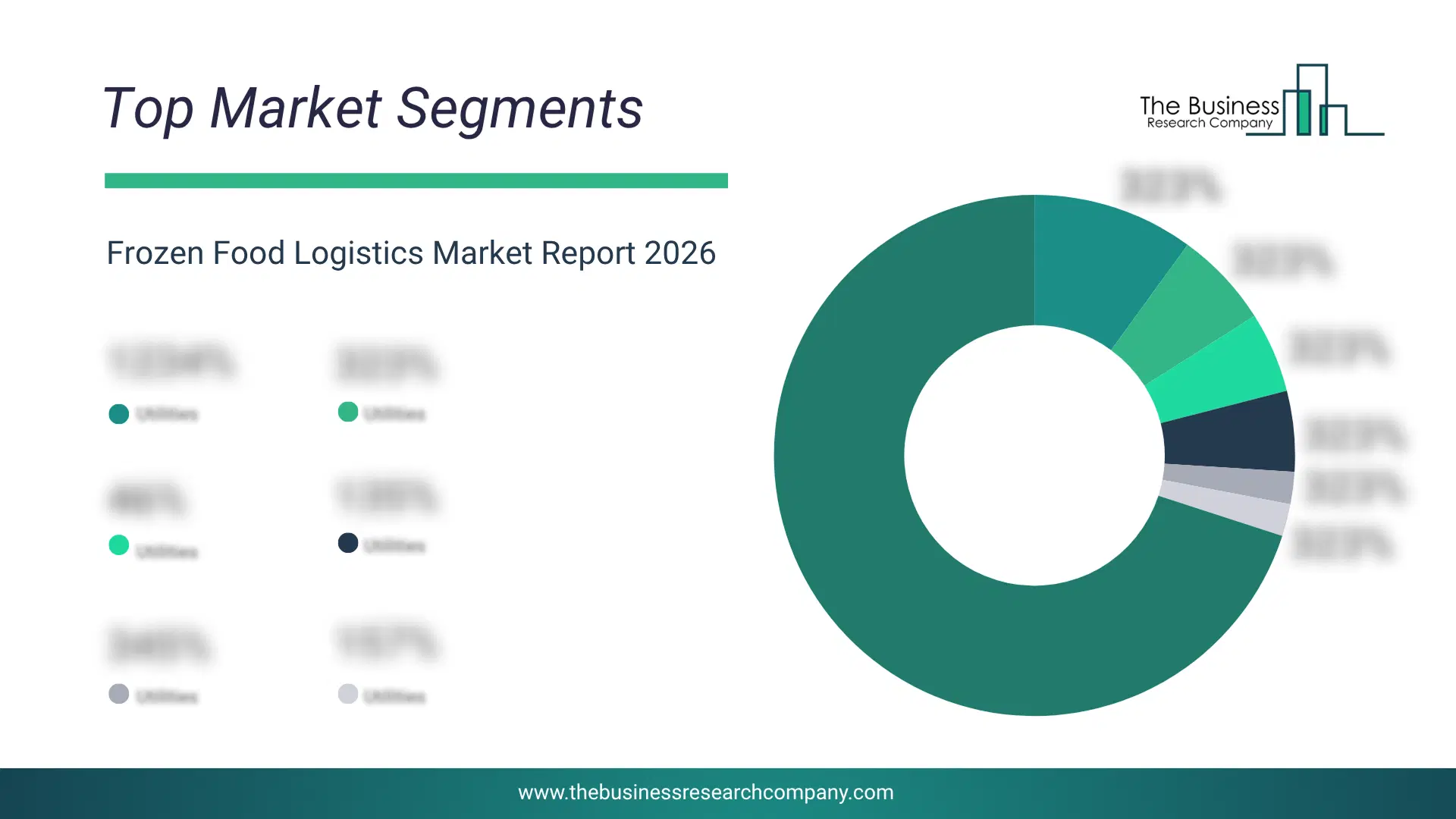
1) By Product Type: Frozen Vegetables, Frozen Meat, Frozen Seafood, Frozen Ready Meals, Frozen Desserts 2) By Temperature Control: Chilled, Deep Frozen, Frozen 3) By Transportation Mode: Road, Rail, Air, Sea 4) By Packaging: Bags, Boxes, Cans, Jars Subsegments: 1) By Frozen Vegetables: Frozen Peas, Frozen Corn, Frozen Broccoli, Frozen Carrots, Mixed Vegetables 2) By Frozen Meat: Frozen Chicken, Frozen Beef, Frozen Pork, Frozen Lamb, Processed And Packaged Meat 3) By Frozen Seafood: Frozen Fish Fillets, Frozen Shrimp, Frozen Crab, Frozen Lobster, Frozen Squid 4) By Frozen Ready Meals: Frozen Pizzas, Frozen Pasta Meals, Frozen Asian Meals, Frozen Burgers And Nuggets, Frozen Soups And Stews 5) By Frozen Desserts: Ice Cream & Gelato, Frozen Yogurt, Frozen Cakes And Pastries, Frozen Pies, Frozen Fruit BarsWhat Is The Driver Of The Frozen Food Logistics Market?
The increasing consumer demand for convenience foods is expected to propel the growth of the frozen food logistics market going forward. Convenience foods are pre-packaged or pre-prepared food products designed for quick and easy consumption, requiring minimal cooking, preparation, or effort. The increasing demand for convenience foods is driven by busy lifestyles, rising urbanization, and the need for quick, easy-to-prepare meal options without compromising taste or nutrition. Frozen food logistics ensures the efficient transportation and storage of convenience foods, maintaining their quality, safety, and shelf life through an unbroken cold chain. For instance, in April 2024, according to the National Association of Convenience Stores, a US-based trade association, reported that in 2023, foodservice sales, including prepared foods, commissary items, and dispensed beverages, accounted for 26.9% of in-store sales, up from 25.6% in 2022. Additionally, sales of prepared foods per store per month rose by 12.2% in 2023 compared to 2022. Therefore, the increasing consumer demand for convenience foods is driving the growth of the frozen food logistics industry.Key Players In The Global Frozen Food Logistics Market
Major companies operating in the frozen food logistics market report include Nippon Express, CJ Logistics Corporation, Dachser Group SE & Co. KG, Kintetsu World Express Inc., Lineage Logistics Holdings LLC, Hellmann Worldwide Logistics SE & Co. KG, STEF, Matson Inc., United States Cold Storage Inc, VersaCold Logistics Services Inc., Burris Logistics Inc., NewCold Advanced Cold Logistics, Americold Logistics LLC, C.H. Robinson Worldwide Inc., Seafrigo Group, Congebec Logistics Inc., RLS Logistics, Swire Cold Storage, Interstate Cold Storage Inc., Conestoga Cold Storage, Magnavale, Kloosterboer Group B.V., Confederation Freezers - Brampton, Interstate Warehousing Inc., Nichirei Logistics Group Inc.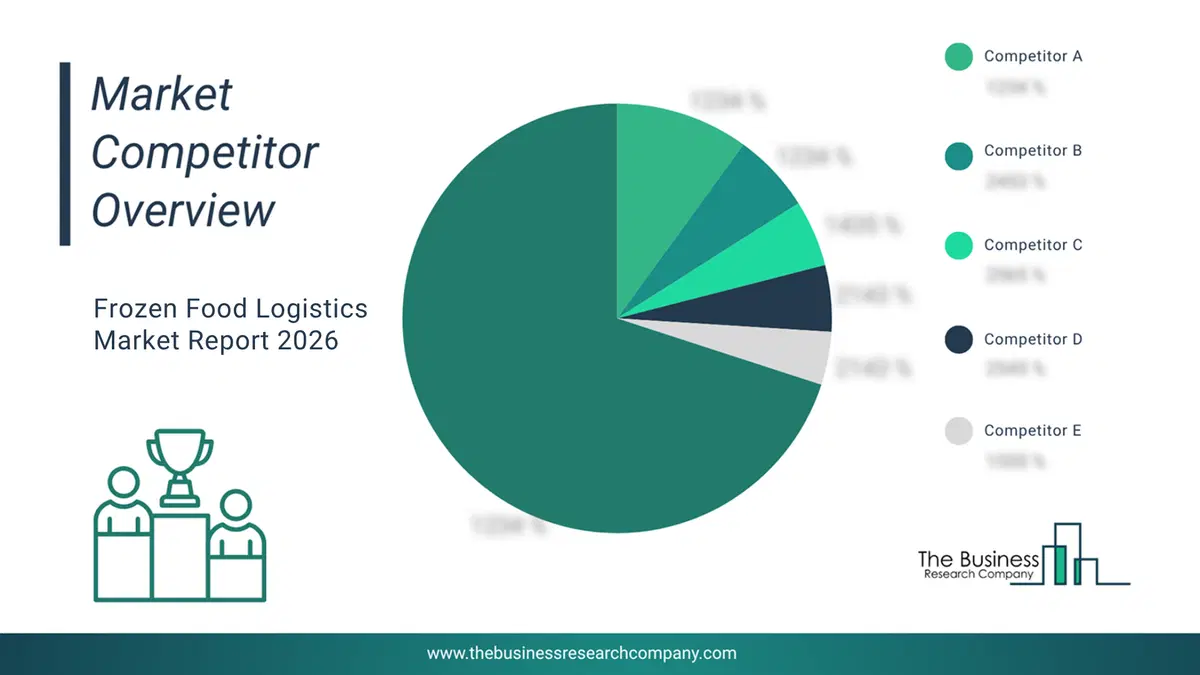
This chart is for illustrative purposes; the full report includes a detailed competitor analysis and comprehensive overview of the top 10 companies in the market.
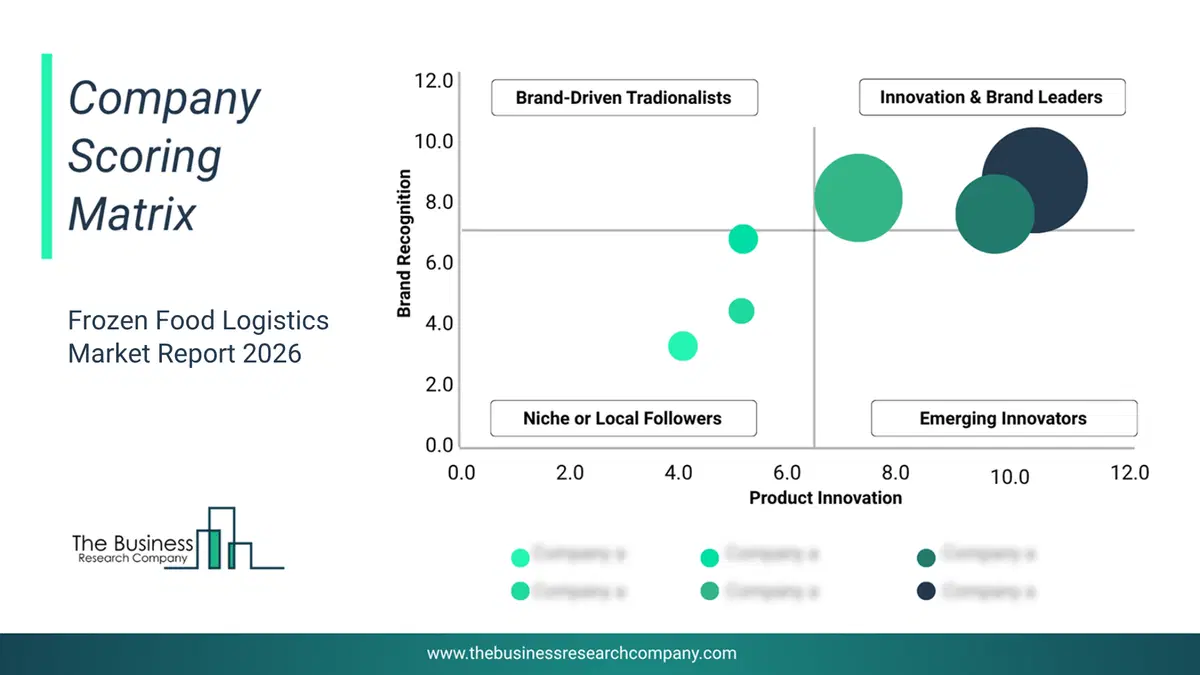
This chart maps companies by product innovation and brand strength, with bubble size indicating relative revenue, helping identify market leaders, challengers, and niche players. This is an illustrative chart; the full report provides a complete and accurate competitive analysis.
Global Frozen Food Logistics Market Trends and Insights
Major companies operating in the frozen food logistics market are focusing on technological advancements such as developing automated frozen storage facility, to enhance efficiency, reduce operational costs, and maintain optimal temperature control for preserving product quality. Automated frozen storage facilities leverage robotics and technology to streamline storage and retrieval of frozen products while maintaining consistent temperature control. For instance, in September 2024, Indicold Private Limited, an India-based cold storage company, has launched the nation's first rack-clad automated storage and retrieval system (ASRS) frozen facility in Ahmedabad, boosting cold chain capabilities. With a capacity of over 7,000 pallets, this facility addresses the rising demand for frozen foods. This initiative underscores Indicold's dedication to advancing the cold chain industry through automation and sustainability, solidifying India's position in frozen food logistics.What Are Latest Mergers And Acquisitions In The Frozen Food Logistics Market?
In July 2024, Dachser Group SE & Co. KG, a Germany-based company that offers logistics services, acquired Brummer Logistic Solutions GmbH & Co KG. for an undisclosed amount. With this acquisition, Dachser Group aims to strengthen its position in the food logistics sector by expanding its capabilities in temperature-controlled transportation and storage, enhancing its cold chain infrastructure, and improving service offerings across Europe. Brummer Logistic Solutions GmbH & Co KG. is a Austria-based logistics service company that specializes in providing temperature-controlled solutions for perishable goods.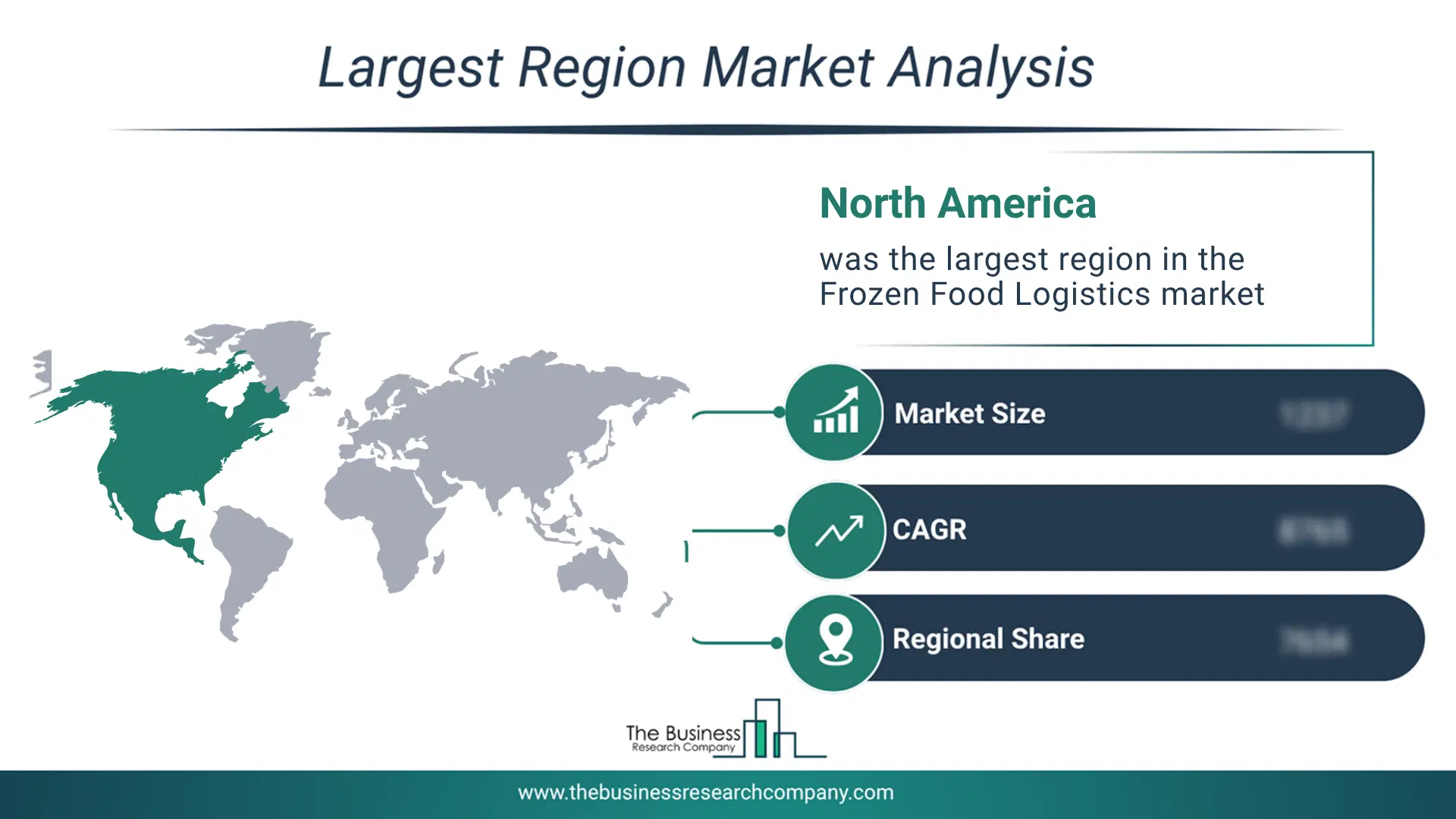
Regional Outlook
North America was the largest region in the frozen food logistics market in 2025. Asia-Pacific is expected to be the fastest-growing region in the forecast period. The regions covered in this market report include Asia-Pacific, South East Asia, Western Europe, Eastern Europe, North America, South America, Middle East, Africa. The countries covered in this market report include Australia, Brazil, China, France, Germany, India, Indonesia, Japan, Taiwan, Russia, South Korea, UK, USA, Canada, Italy, SpainWhat Defines the Frozen Food Logistics Market?
The frozen food logistics market includes revenues earned by providing services such as temperature-controlled storage, transportation, distribution, and supply chain. The market value includes the value of related goods sold by the service provider or included within the service offering. Only goods and services traded between entities or sold to end consumers are included.How is Market Value Defined and Measured?
The market value is defined as the revenues that enterprises gain from the sale of goods and/or services within the specified market and geography through sales, grants, or donations in terms of the currency (in USD unless otherwise specified). The revenues for a specified geography are consumption values that are revenues generated by organizations in the specified geography within the market, irrespective of where they are produced. It does not include revenues from resales along the supply chain, either further along the supply chain or as part of other products.
This chart presents market attractiveness based on a quantitative evaluation of growth, competition, strategic alignment, and risk, offering a clear view of opportunity areas for decision-making. This chart is for illustrative purposes; the full report contains the complete analysis.

This chart highlights the Total Addressable Market (TAM) by estimating the maximum revenue opportunity using an assumption-driven approach, supporting strategic planning and opportunity sizing across markets. The chart is illustrative; the full report provides a more comprehensive analysis.
What Key Data and Analysis Are Included in the Frozen Food Logistics Market Report 2026?
The frozen food logistics market research report is one of a series of new reports from The Business Research Company that provides market statistics, including industry global market size, regional shares, competitors with the market share, detailed market segments, market trends and opportunities, and any further data you may need to thrive in the frozen food logistics industry. The market research report delivers a complete perspective of everything you need, with an in-depth analysis of the current and future state of the industry.Frozen Food Logistics Market Report Forecast Analysis
| Report Attribute | Details |
|---|---|
| Market Size Value In 2026 | $39.42 billion |
| Revenue Forecast In 2030 | $65.75 billion |
| Growth Rate | CAGR of 13.3% from 2026 to 2030 |
| Base Year For Estimation | 2025 |
| Actual Estimates/Historical Data | 2020-2025 |
| Forecast Period | 2026 - 2030 - 2030 |
| Market Representation | Revenue in USD Billion and CAGR from 2026 to 2030 |
| Segments Covered | Product Type, Temperature Control, Transportation Mode, Packaging |
| Regional Scope | Asia-Pacific, Western Europe, Eastern Europe, North America, South America, Middle East, Africa |
| Country Scope | The countries covered in the report are Australia, Brazil, China, France, Germany, India, Indonesia, Japan, Taiwan, Russia, South Korea, UK, USA, Canada, Italy, Spain. |
| Key Companies Profiled | Nippon Express, CJ Logistics Corporation, Dachser Group SE & Co. KG, Kintetsu World Express Inc., Lineage Logistics Holdings LLC, Hellmann Worldwide Logistics SE & Co. KG, STEF, Matson Inc., United States Cold Storage Inc, VersaCold Logistics Services Inc., Burris Logistics Inc., NewCold Advanced Cold Logistics, Americold Logistics LLC, C.H. Robinson Worldwide Inc., Seafrigo Group, Congebec Logistics Inc., RLS Logistics, Swire Cold Storage, Interstate Cold Storage Inc., Conestoga Cold Storage, Magnavale, Kloosterboer Group B.V., Confederation Freezers - Brampton, Interstate Warehousing Inc., Nichirei Logistics Group Inc. |
| Customization Scope | Request for Customization |
| Pricing And Purchase Options | Explore Purchase Options |