

Electric Propulsion Systems For Rockets Market Report 2026
Global Outlook – By Type (Electrothermal, Electrostatic, Electromagnetic), By Application (Commercial, Military, Scientific), By End-User (Satellite Operators, Space Agencies, Defense Organizations, Other End-Users) – Market Size, Trends, Strategies, and Forecast to 2030
Electric Propulsion Systems For Rockets Market Overview
• Electric Propulsion Systems For Rockets market size has reached to $0.79 billion in 2025 • Expected to grow to $1.69 billion in 2030 at a compound annual growth rate (CAGR) of 16.4% • Growth Driver: Increase In Satellite Launches Fueling The Growth Of The Market Due To Rising Demand For Fuel-Efficient And Precise In-Orbit Maneuvering • Market Trend: Advancements In In-Orbit Propulsion Technologies Enhancing Satellite Maneuverability And Control • North America was the largest region in 2025.What Is Covered Under Electric Propulsion Systems For Rockets Market?
Electric propulsion systems for rockets refer to advanced propulsion technologies that use electrical energy to accelerate propellant and produce thrust. These systems are designed to provide high efficiency and precise control during spaceflight by converting electrical power into kinetic energy. They offer sustained low thrust over extended periods, making them suitable for efficient maneuvering in space. The main types of electric propulsion systems for rockets include electrothermal, electrostatic, and electromagnetic. Electrothermal propulsion systems work by heating a propellant using electrical energy and then expelling it through a nozzle to create thrust. It is applied for commercial, military, and scientific purposes by several end-users, including satellite operators, space agencies, defense organizations, and others.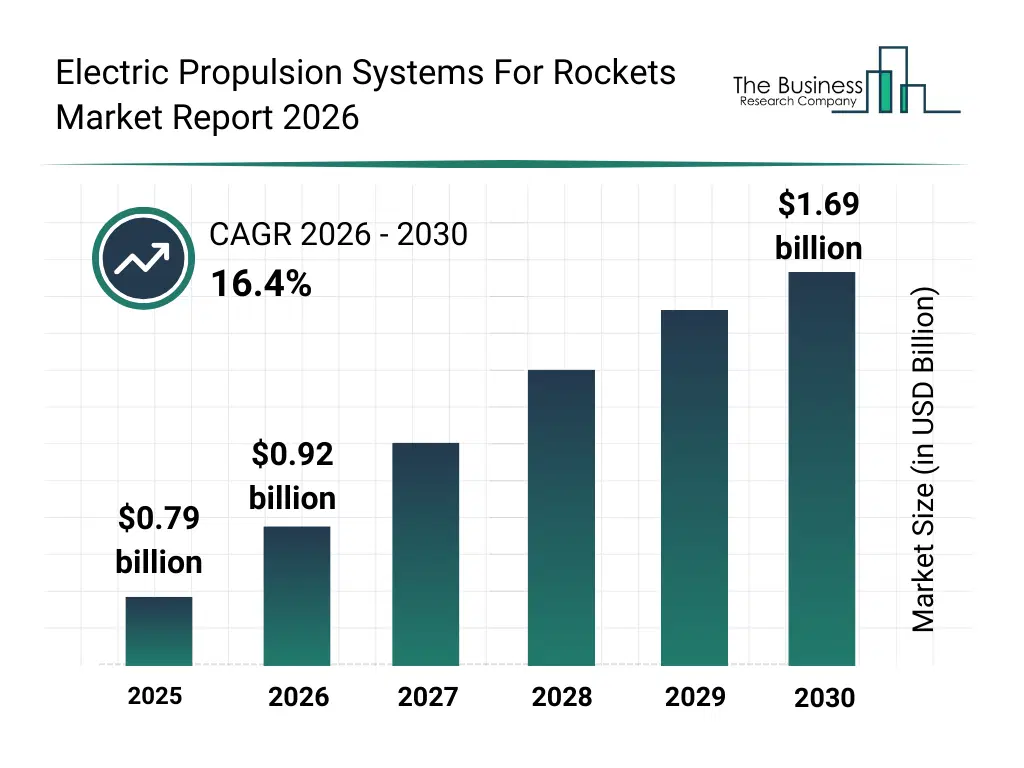
What Is The Electric Propulsion Systems For Rockets Market Size and Share 2026?
The electric propulsion systems for rockets market size has grown rapidly in recent years. It will grow from $0.79 billion in 2025 to $0.92 billion in 2026 at a compound annual growth rate (CAGR) of 16.5%. The growth in the historic period can be attributed to rising use of in-orbit maneuvering systems, increasing deployment of satellites, reliance on high-precision propulsion materials, growth in commercial space missions, expansion of early electric propulsion testing initiatives.What Is The Electric Propulsion Systems For Rockets Market Growth Forecast?
The electric propulsion systems for rockets market size is expected to see rapid growth in the next few years. It will grow to $1.69 billion in 2030 at a compound annual growth rate (CAGR) of 16.4%. The growth in the forecast period can be attributed to increasing adoption of advanced electric thrusters, rising investment in commercial space exploration, development of high-efficiency propulsion materials, expansion of defense space programs, growth in global satellite constellation projects. Major trends in the forecast period include integration of AI-enhanced propulsion control, advancement of electrified space propulsion technologies, expansion of automated thruster manufacturing, adoption of secure digital propulsion diagnostics, development of autonomous in-orbit maneuvering systems.
Global Electric Propulsion Systems For Rockets Market Segmentation
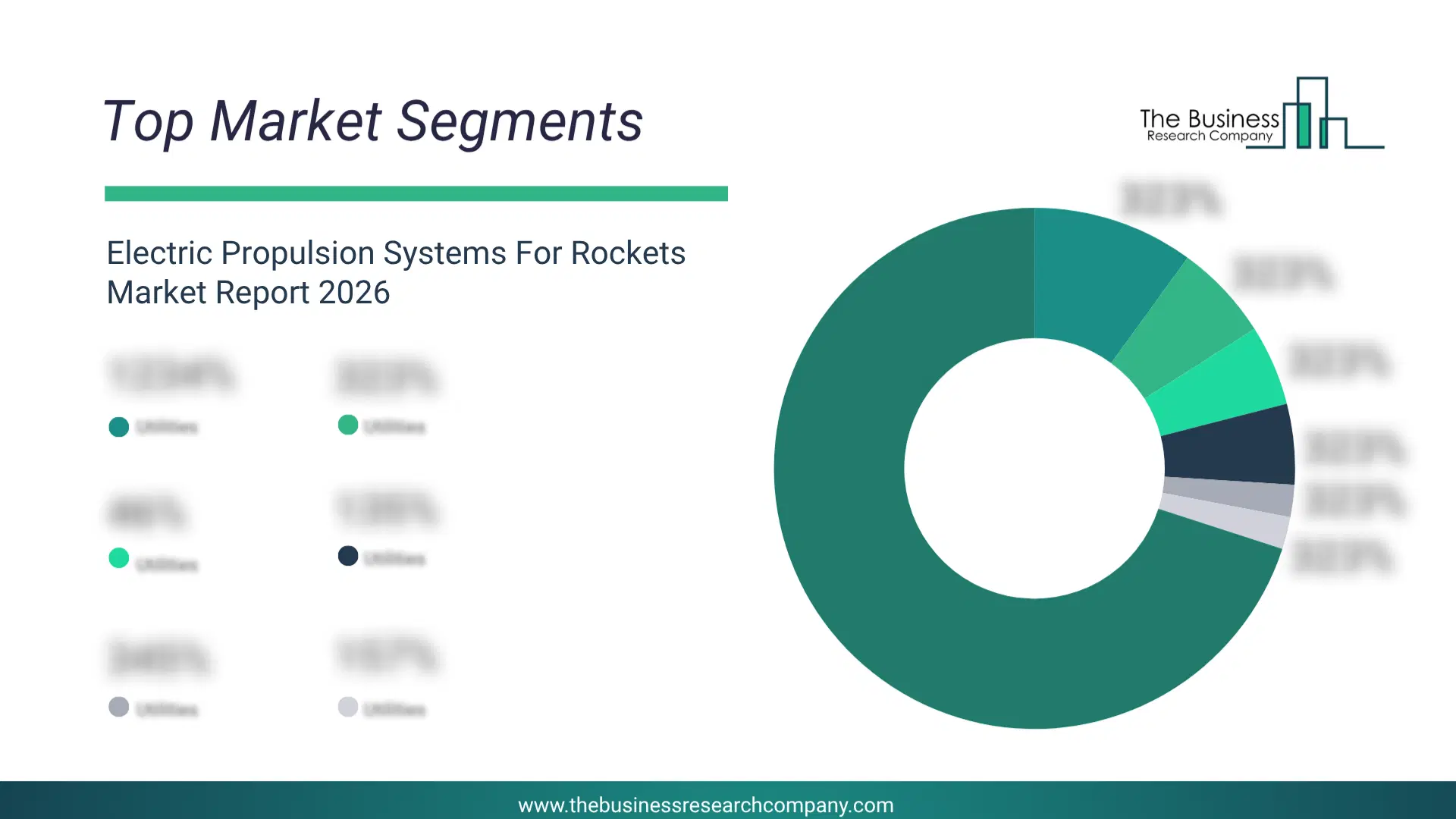
1) By Type: Electrothermal, Electrostatic, Electromagnetic 2) By Application: Commercial, Military, Scientific 3) By End-User: Satellite Operators, Space Agencies, Defense Organizations, Other End-Users Subsegments: 1) By Electrothermal: Resistojets, Arcjets, Microwave Electrothermal Thrusters (METs) 2) By Electrostatic: Gridded Ion Thrusters, Hall Effect Thrusters, Colloid Thrusters 3) By Electromagnetic: Magnetoplasmadynamic (MPD) Thrusters, Pulsed Plasma Thrusters (PPTs), Field-Reversed Configuration Thrusters (FRCs)What Is The Driver Of The Electric Propulsion Systems For Rockets Market?
The increasing number of satellite launches is anticipated to propel the growth of the electric propulsion systems for rockets market in the coming years. Satellite launches refer to the process of sending satellites into space using launch vehicles to place them into designated orbits for operational deployment. Satellite launches are rising due to the increasing demand for global connectivity, as growing reliance on internet access, communication services, and data transmission drives the need for more satellite networks in orbit. The rise in satellite launches supports the demand for electric propulsion systems for rockets, as more satellites in orbit require efficient, long-duration propulsion for station-keeping, orbit raising, and maneuvering, which electric systems provide with superior fuel efficiency and precise control. For instance, in May 2024, according to the National Space Operations Centre (NSpOC), a UK-based organization focused on space surveillance and protection, there were more than 9,000 active satellites in orbit by April 2024, and estimates suggest this number could grow to over 60,000 by the year 2030. Therefore, the increasing number of satellite launches will boost the growth of the electric propulsion systems for rockets industry.Key Players In The Global Electric Propulsion Systems For Rockets Market
Major companies operating in the electric propulsion systems for rockets market are Airbus SE, Northrop Grumman Corp., Safran SA, Thales Group, L3Harris Technologies Inc., IHI Corporation, Moog Inc., ArianeGroup SAS, OHB System AG, Sierra Nevada Corporation, Phase Four Inc., Dawn Aerospace B.V., Bradford Space Group, Pulsar Fusion Ltd., Exotrail SA, Busek Co. Inc., ThrustMe SAS, Enpulsion GmbH, Orbion Space Technology Inc., Space Electric Thruster Systems (SETs).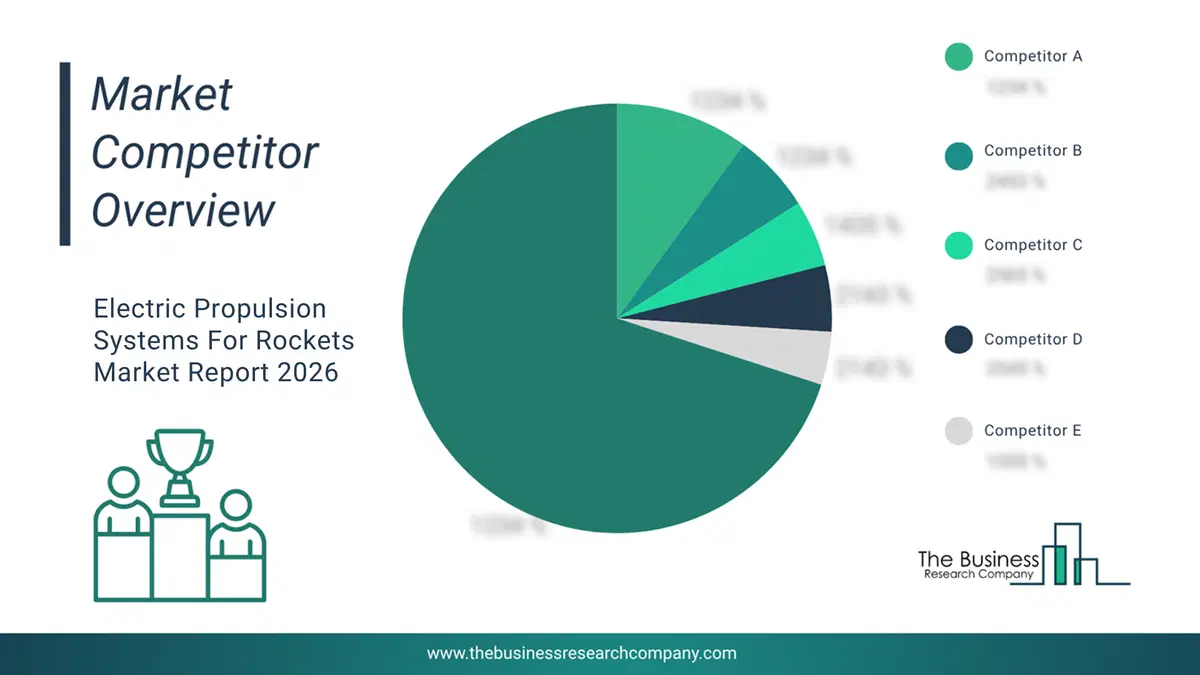
This chart is for illustrative purposes; the full report includes a detailed competitor analysis and comprehensive overview of the top 10 companies in the market.
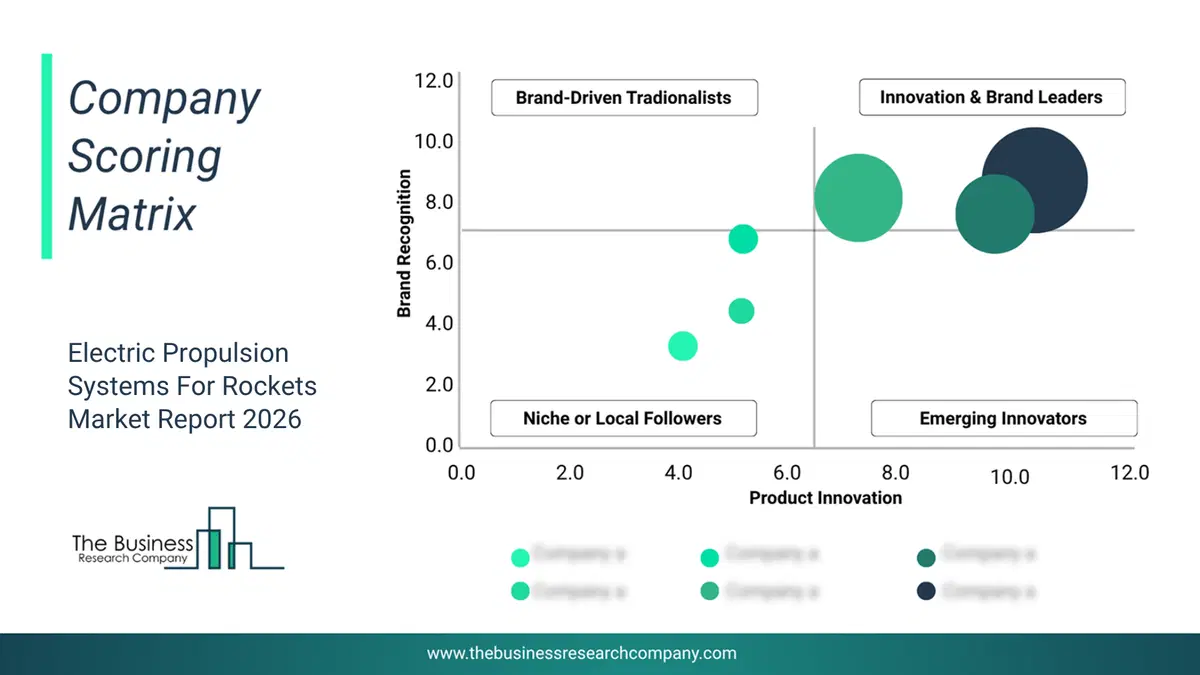
This chart maps companies by product innovation and brand strength, with bubble size indicating relative revenue, helping identify market leaders, challengers, and niche players. This is an illustrative chart; the full report provides a complete and accurate competitive analysis.
Global Electric Propulsion Systems For Rockets Market Trends and Insights
Major companies operating in the electric propulsion systems for rockets market are focusing on developing advanced solutions, such as electric propulsion thrusters, to enable precise and continuous thrust control. Electric propulsion thrusters are systems that use electrical power to accelerate a propellant and produce thrust, allowing spacecraft to maneuver efficiently in space. For instance, in March 2024, Benchmark Space Systems, a US-based in-space mobility provider, announced the deployment of the Xantus electric propulsion system. The Xantus system stands out as an electric propulsion solution that utilizes solid metal to produce a plasma plume, which is then electrically accelerated to create thrust. It is tailored for compact spacecraft like CubeSats and microsatellites. This system is intended for in-space use, supporting functions such as orbital adjustments, maintaining position, and safe deorbiting. It does not contribute to launch operations but plays a key role in satellite maneuverability once in orbit.What Are Latest Mergers And Acquisitions In The Electric Propulsion Systems For Rockets Market?
In January 2024, RocketStar Inc., a US-based developer of advanced propulsion and launch systems, acquired Miles Space Inc. for an undisclosed amount. The acquisition enables RocketStar to adopt Miles Space’s advanced electric propulsion technologies, including its distinct plasma-based systems, for use in future launch vehicles and orbital servicing operations. It also contributes to RocketStar’s objective of providing affordable, reusable, and efficient access to space. Miles Space Inc. is a US-based provider of electric propulsion systems for rockets.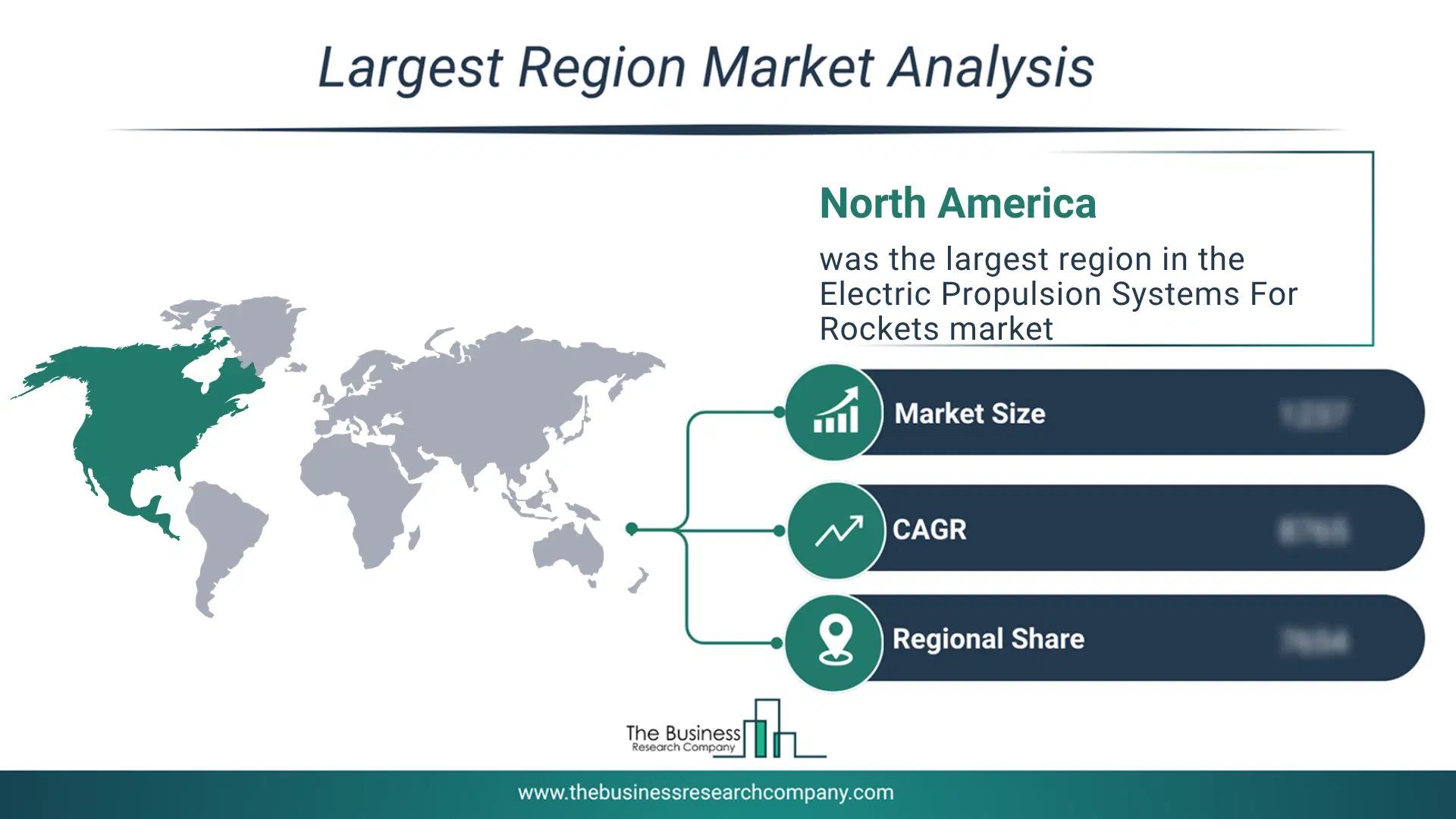
Regional Insights
North America was the largest region in the electric propulsion systems for rockets market in 2025. The regions covered in this market report are Asia-Pacific, South East Asia, Western Europe, Eastern Europe, North America, South America, Middle East, Africa. The countries covered in this market report are Australia, Brazil, China, France, Germany, India, Indonesia, Japan, Taiwan, Russia, South Korea, UK, USA, Canada, Italy, Spain.What Defines the Electric Propulsion Systems For Rockets Market?
The electric propulsion systems for rockets market consists of sales of structural mounting kits, testing equipment, propellant tanks, vacuum chamber equipment, and radiation-hardened electronics. Values in this market are ‘factory gate’ values, that is the value of goods sold by the manufacturers or creators of the goods, whether to other entities (including downstream manufacturers, wholesalers, distributors and retailers) or directly to end customers. The value of goods in this market includes related services sold by the creators of the goods.How is Market Value Defined and Measured?
The market value is defined as the revenues that enterprises gain from the sale of goods and/or services within the specified market and geography through sales, grants, or donations in terms of the currency (in USD unless otherwise specified). The revenues for a specified geography are consumption values that are revenues generated by organizations in the specified geography within the market, irrespective of where they are produced. It does not include revenues from resales along the supply chain, either further along the supply chain or as part of other products.
This chart presents market attractiveness based on a quantitative evaluation of growth, competition, strategic alignment, and risk, offering a clear view of opportunity areas for decision-making. This chart is for illustrative purposes; the full report contains the complete analysis.

This chart highlights the Total Addressable Market (TAM) by estimating the maximum revenue opportunity using an assumption-driven approach, supporting strategic planning and opportunity sizing across markets. The chart is illustrative; the full report provides a more comprehensive analysis.
What Key Data and Analysis Are Included in theElectric Propulsion Systems For Rockets Market Report 2026?
The electric propulsion systems for rockets market research report is one of a series of new reports from The Business Research Company that provides market statistics, including industry global market size, regional shares, competitors with the market share, detailed market segments, market trends and opportunities, and any further data you may need to thrive in the electric propulsion systems for rockets industry. The market research report delivers a complete perspective of everything you need, with an in-depth analysis of the current and future state of the industry.Electric Propulsion Systems For Rockets Market Report Forecast Analysis
| Report Attribute | Details |
|---|---|
| Market Size Value In 2026 | $0.92 billion |
| Revenue Forecast In 2030 | $1.69 billion |
| Growth Rate | CAGR of 16.5% from 2026 to 2030 |
| Base Year For Estimation | 2025 |
| Actual Estimates/Historical Data | 2020-2025 |
| Forecast Period | 2026 - 2030 |
| Market Representation | Revenue in USD Billion and CAGR from 2026 to 2030 |
| Segments Covered | Type, Application, End-User |
| Regional Scope | Asia-Pacific, Western Europe, Eastern Europe, North America, South America, Middle East, Africa |
| Country Scope | The countries covered in this market report are Australia, Brazil, China, France, Germany, India, Indonesia, Japan, Taiwan, Russia, South Korea, UK, USA, Canada, Italy, Spain |
| Key Companies Profiled | Airbus SE, Northrop Grumman Corp., Safran SA, Thales Group, L3Harris Technologies Inc., IHI Corporation, Moog Inc., ArianeGroup SAS, OHB System AG, Sierra Nevada Corporation, Phase Four Inc., Dawn Aerospace B.V., Bradford Space Group, Pulsar Fusion Ltd., Exotrail SA, Busek Co. Inc., ThrustMe SAS, Enpulsion GmbH, Orbion Space Technology Inc., Space Electric Thruster Systems (SETs). |
| Customization Scope | Request for Customization |
| Pricing And Purchase Options | Explore Purchase Options |