
Television Station Market Report 2026
Global Outlook – By Platform (Digital Terrestrial Broadcast, Satellite Broadcast, Cable Television Broadcasting Services, Internet Protocol Television (IPTV), Over-The-Top Television (OTT)), By Revenue Model (Subscription, Pay-per View, On Demand, Advertisement), By Broadcaster Type (Public, Commercial) – Market Size, Trends, Strategies, and Forecast to 2030
Television Station Market Overview
• Television Station market size has reached to $149.69 billion in 2025 • Expected to grow to $200.76 billion in 2030 at a compound annual growth rate (CAGR) of 6.1% • Growth Driver: Internet Penetration Fuels Television Station Market Growth With Streaming Platforms And On-Demand Services Surge • Market Trend: Atsc 3.0 Revolutionizes Television Viewing Experience With Enhanced Quality And Mobility • Western Europe was the largest region in 2025 and Eastern Europe is the fastest growing region.What Is Covered Under Television Station Market?
Television station refers to a broadcast facility or organization that transmits television programming to the public over terrestrial, cable, satellite, or digital networks. It is used for producing, scheduling, and broadcasting audio-visual content such as news, entertainment, sports, educational programs, and advertisements to a defined geographic or network-based audience. The main types of broadcasters in television stations are public and commercial. Commercial broadcasting refers to the broadcasting of television programs and radio programming by privately owned corporate media. The different platforms include digital terrestrial broadcast, satellite broadcast, cable television broadcasting services, internet protocol television (IPTV), over-the-top television (OTT), and involve various revenue models such as subscription, pay-per-view, on-demand, advertisement.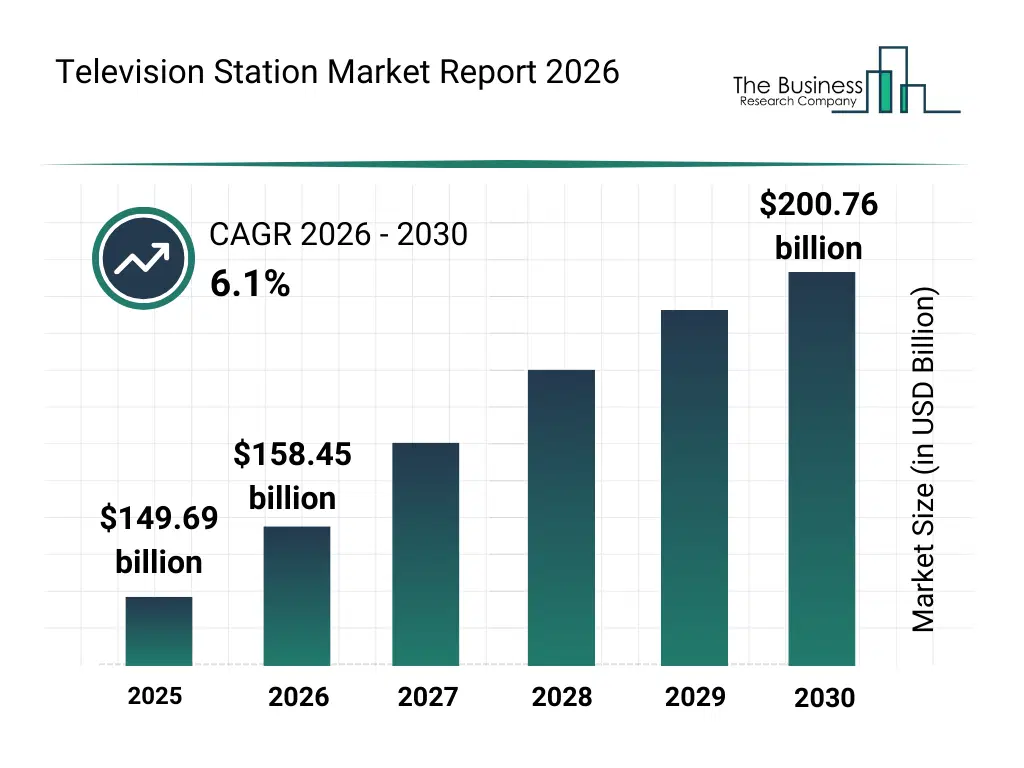
What Is The Television Station Market Size and Share 2026?
The television station market size has grown strongly in recent years. It will grow from $149.69 billion in 2025 to $158.45 billion in 2026 at a compound annual growth rate (CAGR) of 5.9%. The growth in the historic period can be attributed to increasing adoption of cable and satellite tv, growth of advertising revenue, expansion of broadcasting infrastructure, rising number of tv households, emergence of pay-per-view services.What Is The Television Station Market Growth Forecast?
The television station market size is expected to see strong growth in the next few years. It will grow to $200.76 billion in 2030 at a compound annual growth rate (CAGR) of 6.1%. The growth in the forecast period can be attributed to shift towards iptv and ott platforms, integration of ai-driven content analytics, growth in immersive technologies adoption, increasing demand for interactive and on-demand content, expansion of regional broadcasting networks. Major trends in the forecast period include personalized content delivery, multi-platform broadcasting, interactive viewer engagement, cloud-based content management, social media integration.
Global Television Station Market Segmentation
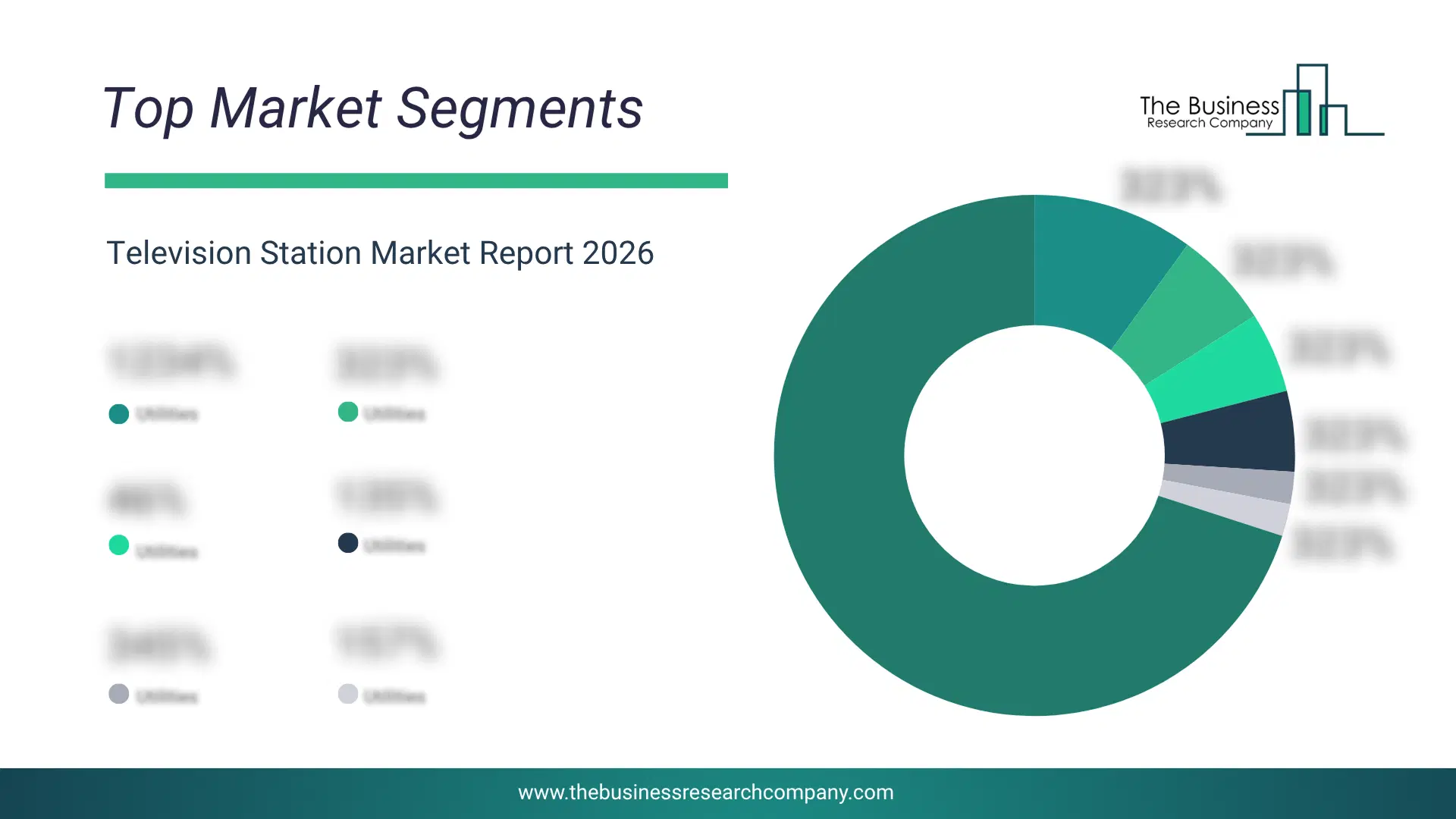
1) By Platform: Digital Terrestrial Broadcast, Satellite Broadcast, Cable Television Broadcasting Services, Internet Protocol Television (IPTV), Over-The-Top Television (OTT) 2) By Revenue Model: Subscription, Pay-per View, On Demand, Advertisement 3) By Broadcaster Type: Public, Commercial Subsegments: 1) By Digital Terrestrial Broadcast: Free-To-Air Digital Channels, Subscription-Based Digital Channels 2) By Satellite Broadcast: Direct Broadcast Satellite (DBS), Satellite Television Channels 3) By Cable Television Broadcasting Services: Standard Cable Services, Premium Cable Services, Hybrid Cable Or IPTV Services 4) By Internet Protocol Television (IPTV): Live IPTV Services, On-Demand IPTV Services 5) By Over-The-Top Television (OTT): Subscription Video on Demand (SVOD), Advertising-Based Video On Demand (AVOD), Transactional Video On Demand (TVOD)What Is The Driver Of The Television Station Market?
Increasing internet penetration is driving the growth of the television station market. Internet penetration, often referred to as internet penetration rate or internet adoption rate, is a measurement that expresses the percentage of the total population of a specific geographic area, demographic group, or organization that has access to and uses the internet. Increasing internet penetration expands the reach of streaming platforms, encouraging the development of online content and video-on-demand services. This, in turn, boosts the television station market, facilitating greater access to TV shows, live events, and on-demand programming for a wider audience. For instance, in June 2024, according to the SAMENA Telecommunications Council, UAE-Based non-profit, tri-regional association, The global number of Internet users reached 5.4 billion in 2023 and is projected to rise to 5.5 billion by the end of 2024. Therefore, increasing internet penetration drives the television station industry.Key Players In The Global Television Station Market
Major companies operating in the television station market are Comcast Corporation, British Broadcasting Corporation, The Walt Disney Company, Cox Media Group, Fox Corporation, Hearst Television Inc., TEGNA Inc., RTL Group, CANAL+ Group, Nexstar Media Group Inc., National Amusements Inc., Univision Communications Inc., Graham Media Group, Sinclair Broadcast Group, Gray Television Inc., E.W. Scripps Company, Channel Four Television Corporation, Entravision Communications Corporation, Canadian Broadcasting Corporation, Sun Broadcasting Inc., Heartland Media, Weigel Broadcasting Co.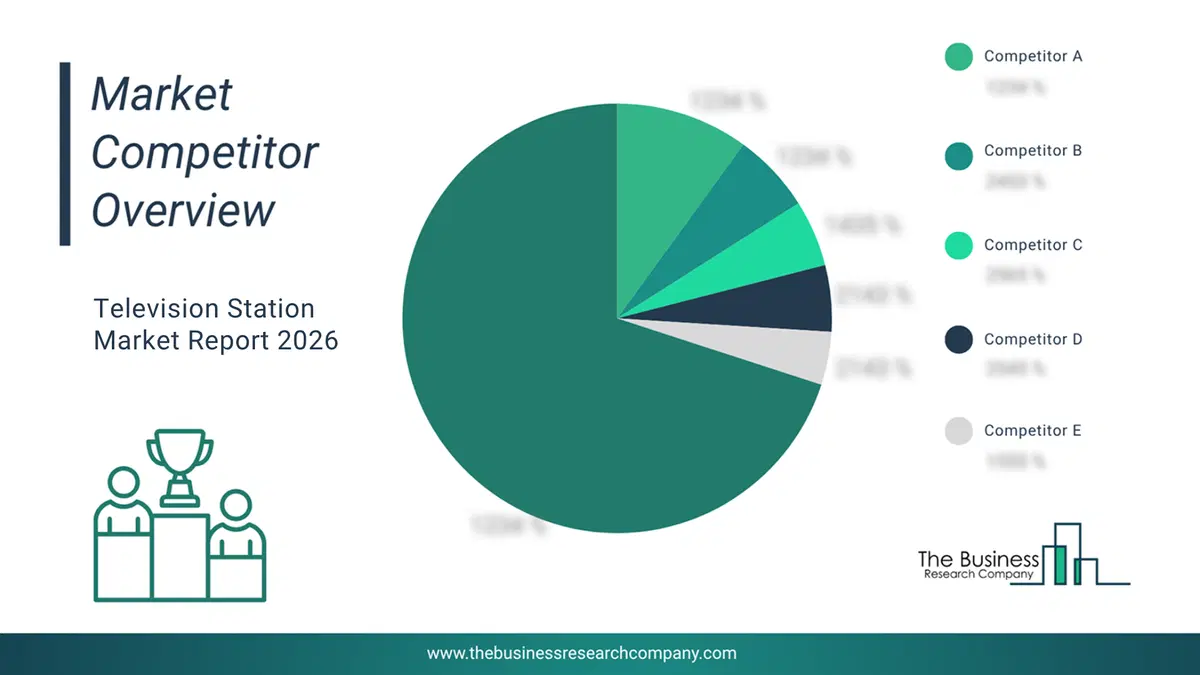
This chart is for illustrative purposes; the full report includes a detailed competitor analysis and comprehensive overview of the top 10 companies in the market.
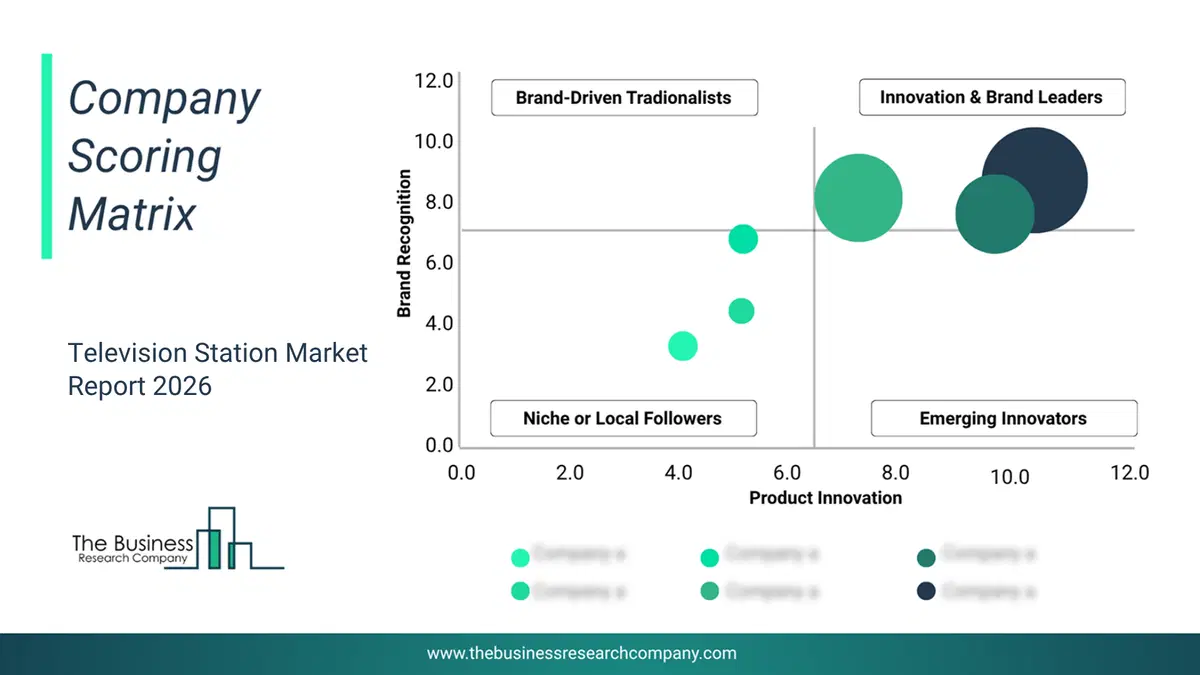
This chart maps companies by product innovation and brand strength, with bubble size indicating relative revenue, helping identify market leaders, challengers, and niche players. This is an illustrative chart; the full report provides a complete and accurate competitive analysis.
Global Television Station Market Trends and Insights
Major companies operating in the television station market are increasingly focusing on the adoption of advanced broadcasting technologies, such as ATSC 3.0, to enhance viewing quality, expand device compatibility, and deliver more immersive consumer experiences. ATSC 3.0, the latest standard developed by the Advanced Television Systems Committee, enables superior picture quality through features such as high dynamic range (HDR), wide color gamut (WCG), and high frame rate (HFR), while also improving audio performance and transmission efficiency For instance, in January 2023, Samsung, a South Korea-based electronics company, introduced its 2023 Neo QLED, Micro LED, and Samsung OLED lineup, showcasing next-generation display technologies designed to deliver powerful performance, secure connectivity, and personalized viewing experiences aligned with evolving broadcast standards. These innovations support seamless content delivery across a wide range of devices, including smartphones, tablets, and in-vehicle entertainment systems, enabling broadcasters to extend their reach beyond traditional television platforms. As a result, the adoption of ATSC 3.0 and compatible display technologies is expected to drive greater audience engagement and open new monetization opportunities for television stations through interactive and data-enabled services.What Are Latest Mergers And Acquisitions In The Television Station Market?
In August 2025, Nexstar Media Group Inc. a US-based provider of television broadcasting, digital media, and advertising services, acquired TEGNA Inc. for $6.2 billion. Through this acquisition, Nexstar aims to expand its geographic presence, strengthen its local media portfolio, and enhance its ability to compete with major tech and media companies while providing advertisers with broader solutions. TEGNA Inc. is a US-based provider of local television broadcasting, digital media services, and innovative marketing solutions.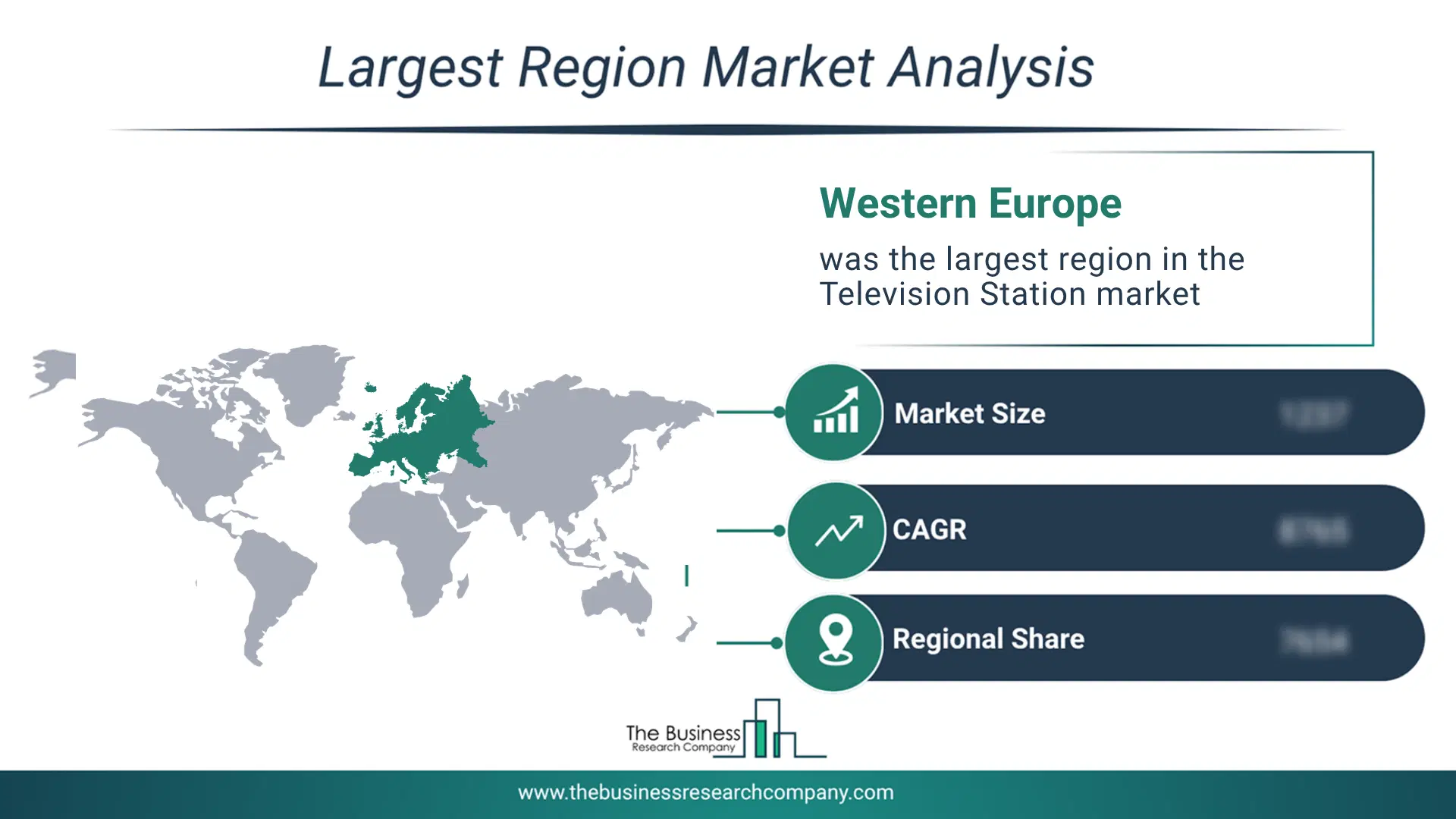
Regional Outlook
Western Europe was the largest region in the content streaming market in 2025. Eastern Europe is expected to be the fastest-growing region in the global television station market during the forecast period. The regions covered in this market report are Asia-Pacific, South East Asia, Western Europe, Eastern Europe, North America, South America, Middle East, Africa. The countries covered in this market report are Australia, Brazil, China, France, Germany, India, Indonesia, Japan, Taiwan, Russia, South Korea, UK, USA, Canada, Italy, Spain.What Defines the Television Station Market?
The television station market includes revenues earned by entities from broadcasting visual programs by television to the public, except cable and other pay television services. A TV station is a business, organization or other enterprise, such as an independent TV operator, that transmits content over terrestrial TV. A television transmission may take place via analog TV signals or, more recently, via digital TV signals. The market value includes the value of related goods sold by the service provider or included within the service offering. Only goods and services traded between entities or sold to end consumers are included.How is Market Value Defined and Measured?
The market value is defined as the revenues that enterprises gain from the sale of goods and/or services within the specified market and geography through sales, grants, or donations in terms of the currency (in USD unless otherwise specified). The revenues for a specified geography are consumption values that are revenues generated by organizations in the specified geography within the market, irrespective of where they are produced. It does not include revenues from resales along the supply chain, either further along the supply chain or as part of other products.
This chart presents market attractiveness based on a quantitative evaluation of growth, competition, strategic alignment, and risk, offering a clear view of opportunity areas for decision-making. This chart is for illustrative purposes; the full report contains the complete analysis.

This chart highlights the Total Addressable Market (TAM) by estimating the maximum revenue opportunity using an assumption-driven approach, supporting strategic planning and opportunity sizing across markets. The chart is illustrative; the full report provides a more comprehensive analysis.
What Key Data and Analysis Are Included in the Television Station Market Report 2026?
The television station market research report is one of a series of new reports from The Business Research Company that provides market statistics, including industry global market size, regional shares, competitors with the market share, detailed market segments, market trends and opportunities, and any further data you may need to thrive in the television station industry. The market research report delivers a complete perspective of everything you need, with an in-depth analysis of the current and future state of the industry.Television Station Market Report Forecast Analysis
| Report Attribute | Details |
|---|---|
| Market Size Value In 2026 | $158.45 billion |
| Revenue Forecast In 2030 | $200.76 billion |
| Growth Rate | CAGR of 6.1% from 2026 to 2030 |
| Base Year For Estimation | 2025 |
| Actual Estimates/Historical Data | 2020-2025 |
| Forecast Period | 2026 - 2030 |
| Market Representation | Revenue in USD Billion and CAGR from 2026 to 2030 |
| Segments Covered | Platform, Revenue Model, Broadcaster Type |
| Regional Scope | Asia-Pacific, Western Europe, Eastern Europe, North America, South America, Middle East, Africa |
| Key Companies Profiled | Comcast Corporation, British Broadcasting Corporation, The Walt Disney Company, Cox Media Group, Fox Corporation, Hearst Television Inc., TEGNA Inc., RTL Group, CANAL+ Group, Nexstar Media Group Inc., National Amusements Inc., Univision Communications Inc., Graham Media Group, Sinclair Broadcast Group, Gray Television Inc., E.W. Scripps Company, Channel Four Television Corporation, Entravision Communications Corporation, Canadian Broadcasting Corporation, Sun Broadcasting Inc., Heartland Media, Weigel Broadcasting Co. |
| Customization Scope | Request for Customization |
| Pricing And Purchase Options | Explore Purchase Options |